
Employee loans remain unpaid for a long time; how can finance keep tracking them? Kailing Technology enterprise AI expense control and reimbursement management system establishes a loan write-off ledger

Employee loans remain unpaid for a long time; how can finance keep tracking them? Kailing Technology enterprise AI expense control and reimbursement management system establishes a loan write-off ledger

When employee loans remain outstanding for a long time, what finance needs is not the same payment reminder sent repeatedly, but a continuous tracking ledger that can explain the balance, the reason, and the responsible person. Kailing Technology enterprise AI expense control and reimbursement management system can rely on forms, processes, payments, and voucher linkage capabilities, combined with enterprise policies, to configure loan linkage and write-off management. First distinguish "how much is still owed" from "why it has not been settled," and follow-ups are more likely to translate into actual progress.
▍The same outstanding balance may have completely different underlying reasons
Some employees have already finished business trips but have not yet collected all receipts; some projects are still ongoing and funds continue to be used according to approved arrangements; in other cases, remaining funds have already been returned but bank records have not yet been matched to the loan. If everything is marked "overdue and unpaid," finance cannot see the differences, and employees find it hard to understand what they actually need to do.
The ledger should retain both amounts and business context. Which task the original loan was used for, when settlement is expected, which expenses or repayments have already been linked, and which materials are currently awaited all determine who should be contacted in the next follow-up. The balance is the starting point for reminders, not the complete conclusion.
A practical change is to break "urging employees to repay" into more accurate to-dos. Those pending reimbursement should complete their materials, those pending supervisor confirmation should go to the approver, those pending receipt matching should be handled by finance, and those that truly need an extension should be explained and confirmed according to policy. When follow-ups refer to specific actions, they are less likely to become group messages that no one wants to answer.
▍The loan ledger in Kailing Technology's expense control and reimbursement system should first unify definitions
Enterprises can clarify during implementation how loan applications, actual payments, write-offs under approval, and completed write-offs are recorded separately. An application approved but not yet disbursed is different from funds already received; a reimbursement under approval should not be treated as a settled loan without confirmation.
Lingdong Reimbursement provides configurable business forms, approval processes, and fund handling linkage. Fields such as loan purpose, responsible person, affiliated legal entity, and original document number can be designed around enterprise requirements. The write-off order, installment linkage, and balance handling methods need to be determined by enterprise policy, and one unit's practice cannot be directly treated as the uniform standard for all enterprises.
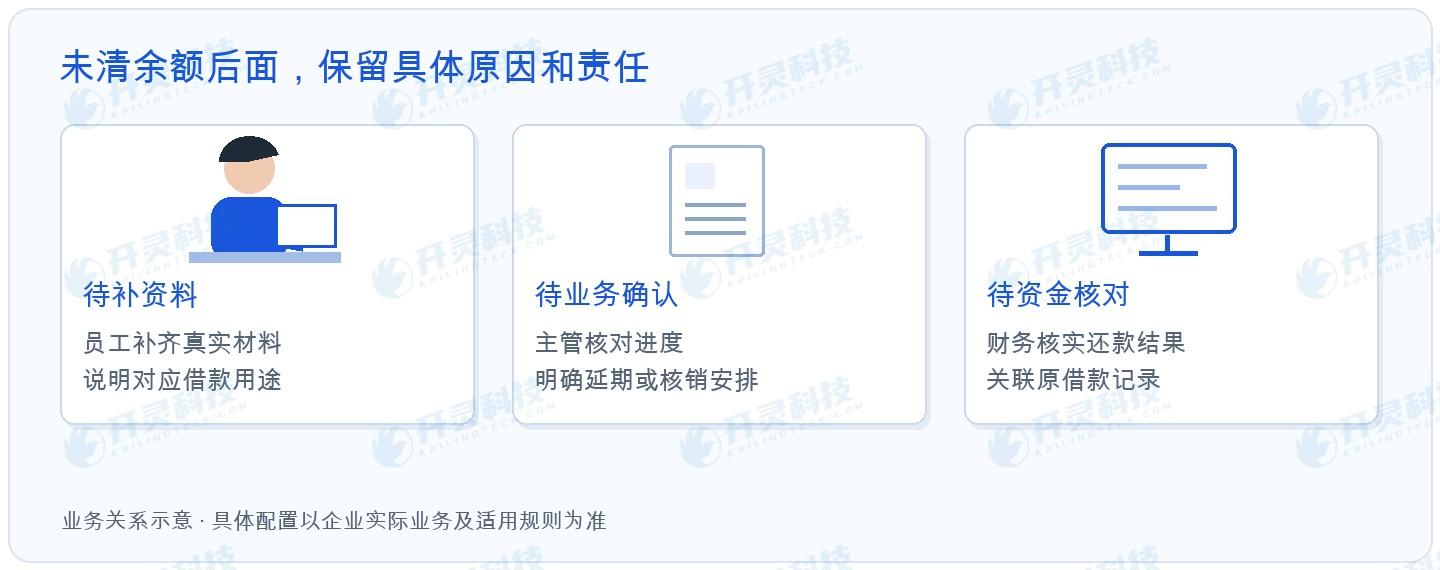
The ledger display should also distinguish the meaning of each type of amount. Which balances or statuses are affected by completed repayments, repayments awaiting bank confirmation, and reimbursements that have been linked but not finally approved should be clearly explained. In this way, when finance and employees view the same loan, they will not reach different conclusions due to differing definitions.
▍Aging helps with prioritization, while business reasons determine the follow-up method
The longer a matter remains outstanding, the more attention it usually deserves, but aging alone cannot determine whether there is a violation. Project cycles, approved extensions, and actual progress can all affect handling arrangements. Enterprises can set reminder tiers in combination with policy so that matters with long-term lack of progress or missing evidence enter the responsible person's view first.
Reminders should not merely say "handle as soon as possible." If they can explain the loan purpose, current balance, pending items, and contact person, employees are more likely to respond; supervisors can also judge whether materials need coordination or business needs confirmation. For matters whose reasons have been explained and for which clear arrangements exist, the next follow-up time should be recorded to avoid sending the same reminder every day.
For matters with no response or where handling plans continue to fall through, follow-up can be escalated according to enterprise authorization rules. Who contacts the employee, who confirms the business reason, and who decides subsequent management measures should be arranged by policy, rather than letting the system automatically impose penalties or payroll deductions beyond its authority based on aging.
▍When personnel change roles, loan responsibility cannot remain only in the old group chat
Employee transfers, changes in project leaders, or handovers among finance staff can all cause outstanding loans to lose their follow-up leads. Keeping responsible persons and historical handling records in the ledger allows the new role holder to continue understanding the business without having to ask everyone again.
When personnel departure is involved, outstanding loans, reimbursements, and repayments should be checked according to enterprise policy. The system can provide relevant records to help departments collaborate and confirm, but it cannot directly equate the ledger balance with an established personal debt, nor should it automatically deduct compensation on that basis. Disputed cases need to be handled according to applicable rules.
Changes in legal entity also deserve attention. An employee transferring within a group does not mean the original loan can be casually transferred to another company. The original paying entity and expense-bearing relationship need to be verified, and appropriate handling evidence retained. The convenience of multi-organization systems should help enterprises see the entity clearly, not merge transactions of different entities into a vague total.
▍Leave a conclusion after each follow-up so there is no need to start asking again next month
An effective follow-up can record the current reason, the committed action, and the expected completion time. On the next review, finance first checks whether the previous arrangement was completed, then decides whether to continue reminding or escalate. Continuous records turn follow-up into work with continuity, rather than resending the balance sheet every month.
When reimbursement or repayment is actually completed, the corresponding result should be linked back to the original loan and the outstanding portion updated. Only when bank receipts, write-off records, and voucher results can be checked against one another is it easy to confirm whether the matter is closed. Simply changing the status manually to "processed" without corresponding evidence still leaves problems for later audits.
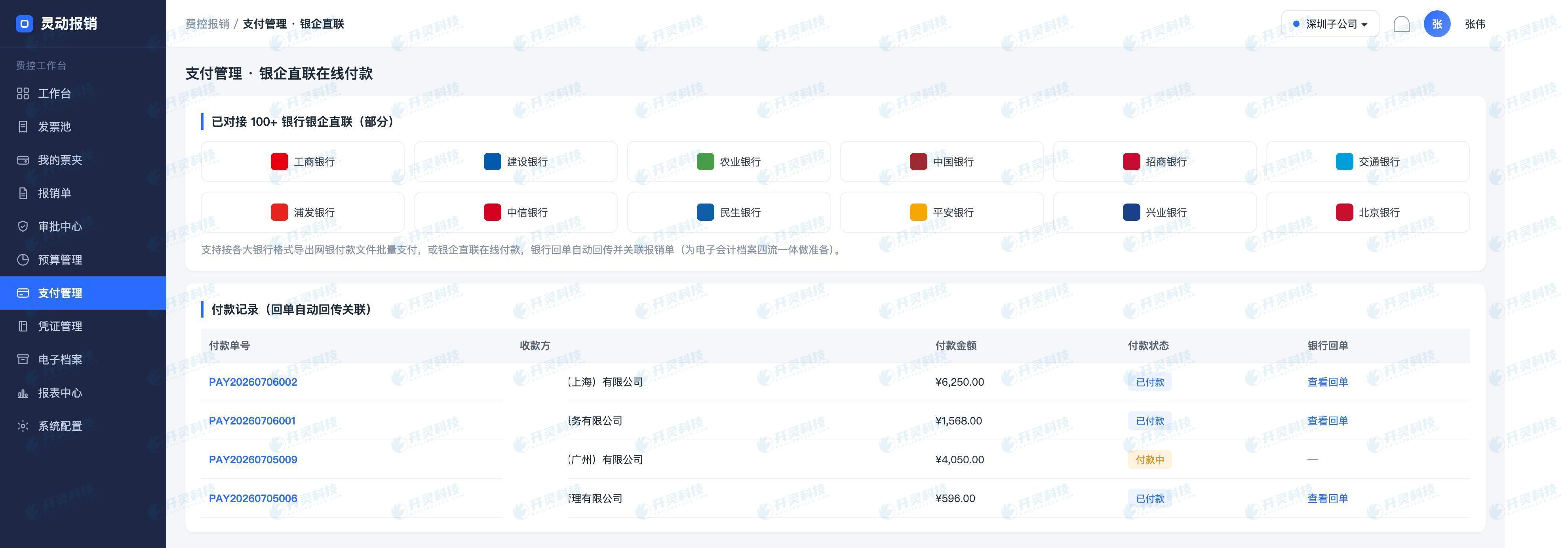
The connectivity foundation provided by Kailing Technology enterprise AI expense control and reimbursement management system can make this ledger closer to daily business. Employees submit materials in the original process, finance views progress from the corresponding documents, and managers coordinate around exceptions, without maintaining several personal spreadsheets that are out of sync with one another.
Enterprises can also periodically review the distribution of outstanding reasons. If many matters are waiting for documents, improve material collection; if they are often stuck at business confirmation, optimize approval collaboration; if repayments have arrived but are slow to be linked, adjust the fund reconciliation arrangement. Solving common causes often has more lasting value than simply increasing the frequency of reminders.
The employee side can also provide easy-to-understand query information. Which loans are still outstanding, what materials have been used to write them off, where the remaining funds were returned, and who checks each item are all more helpful than a table showing only balances. When employees can understand progress on their own, finance can spend less time explaining basic situations and focus on matters that truly require coordination.
For reserve funds planned for long-term use, it is even more important to distinguish routine working capital arrangements from temporary loans. Enterprises can determine the corresponding responsibilities, review frequency, and material requirements according to management policies, rather than placing funds of different natures into the same collection method. With clear classification, reminders will not disturb normal business, nor will they miss balances that need handling.
▍FAQ Common questions about long-term loan tracking
Q: Must a uniform repayment period be specified?
A: Enterprises may manage by category according to their own policies, and it is not advisable to rely on a single deadline to cover all business. The deadline, extension conditions, and confirmation responsibilities should all be explained to employees.
Q: The employee says the repayment has been made; why does the ledger still show it as outstanding?
A: The actual accounting records and whether they are linked to the original loan should be checked. First distinguish whether the funds were received from whether internal matching was completed, then handle the corresponding differences.
Q: If the supervisor agrees to an extension, does that mean no further attention is needed?
A: An extension should retain the basis and a new follow-up arrangement, and business progress should continue to be monitored. It is not about making the matter disappear from the ledger, but about clarifying the next handling plan.
Let every outstanding loan have a reason, a responsible person, and a follow-up. Welcome to learn about Kailing Technology Lingdong Reimbursement: https://www.kailingteck.com/feikong/ .
As a national high-tech enterprise, Kailing Technology focuses on the digital and intelligent transformation of enterprise business-finance-tax and operations management, providing software products, system integration, implementation and delivery, and operational services for various government agencies, institutions, group enterprises, and SMEs.
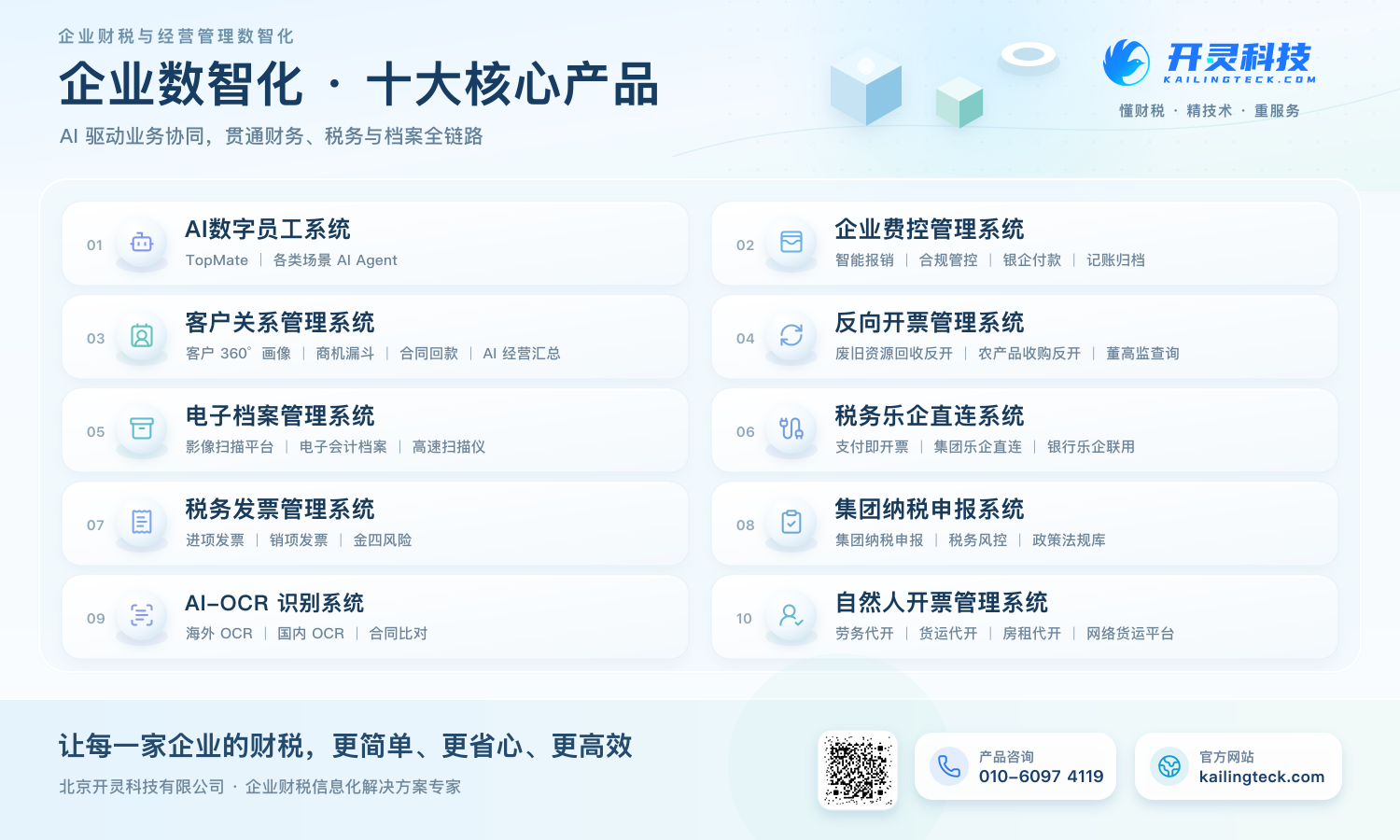
The company has now formed ten core product lines, including: AI digital employee system, enterprise expense control management system, customer relationship management system, reverse invoicing management system, invoice issuance for individuals management system, electronic archives management system, tax fully digitalized e-invoice Leqi system, tax invoice management system, group tax filing system, and AI OCR recognition system. It is committed to connecting enterprise business, finance, tax, funds, and archive data to help customers improve operational efficiency, business-finance-tax compliance capabilities, and digital management levels.
If you have any business-finance-tax digital transformation needs, welcome to contact us. Beijing Kailing Technology will serve you wholeheartedly.
Keywords: Employee loan write-off ledger, long-term loan tracking, AI expense control and reimbursement management system, loan follow-up, employee loan settlement
As a comprehensive business-finance-tax digitalization solution service provider, Kailing Technology provides business-finance-tax management digital transformation products and operational services for various government agencies, institutions, and large, medium, and small enterprises. The product line includes: solutions for sales contract management system, procurement contract management system, fully digitalized Leqi interface project, automatic output invoicing system, reverse invoicing system, invoice issuance for individuals system, employee expense control and reimbursement system, input VAT invoice management system, supply chain collaborative reconciliation system, image AI OCR recognition system, automatic financial bookkeeping system, electronic accounting archives system, etc., comprehensively driving the digitalization process across various fields.
Consultation Hotline: 18513895936 / 010-60974119 Location: Beijing