
When an enterprise invites an external lecturer for training, how should the lecture fee invoice be handled? Kailing Technology's invoice issuance system for individuals links courses, service confirmation, and payment

When an enterprise pays lecture fees to an external individual lecturer, the invoicing materials should be organized around the real teaching relationship: who provides the service, what the training agreement is, whether the course has been completed, and to whom the payment is made. Kailing Technology's invoice issuance system for individuals can connect this information under applicable service and processing conditions, helping training organizers and finance collaboratively prepare materials. The expense handling for individual lecturers, training institutions, and enterprise employees cannot be mixed into the same scenario.
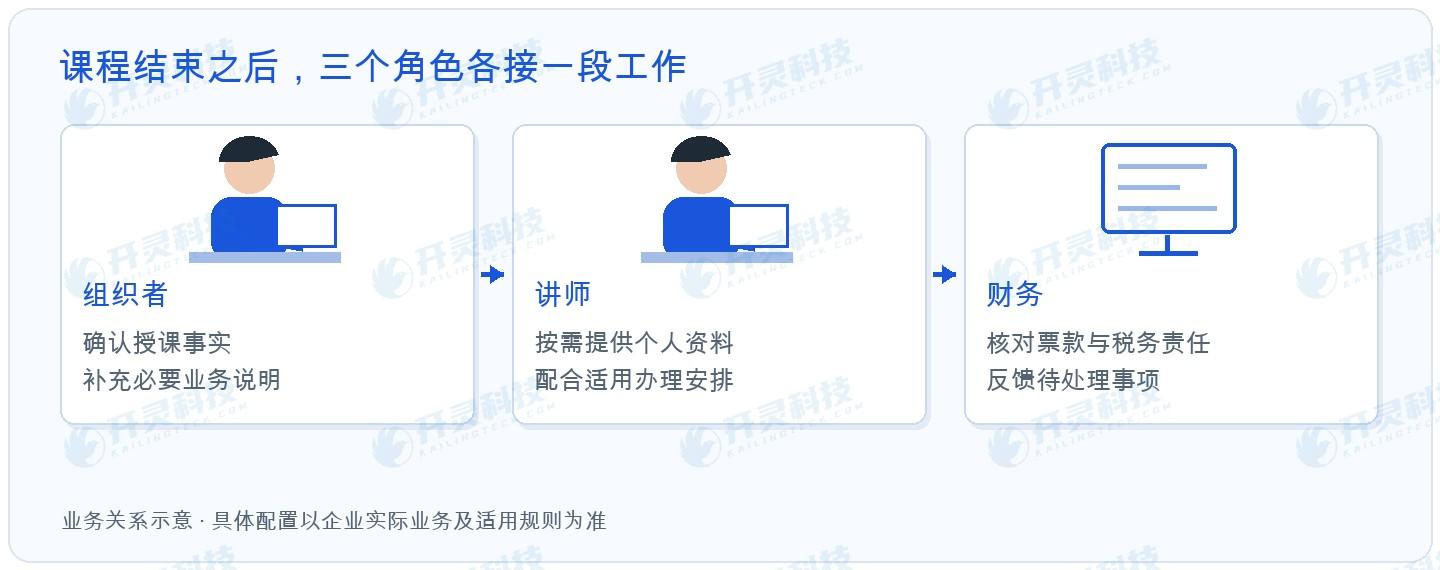
▍"The lecture is over—what else does finance need me to provide?"
This is a handover problem that training organizers easily encounter. The business department has already completed registration, venue, and course arrangements and feels the work is done; finance receives a payment request but still needs to understand the contract counterparty, service content, and invoicing entity. The two sides are not concerned with the same set of information, so materials are supplemented back and forth in chat.
The solution can be moved earlier to the invitation stage. Confirm whether the instructor provides services as an individual or undertakes the course on behalf of an institution; what the agreed fee includes; and whether there are separate arrangements such as travel beyond the teaching. The earlier this information is clarified, the less likely it is that after the course ends there will be the awkward situation where "the actual contracting party and the invoice applicant are not the same person."
For internal enterprise employees participating in teaching, handling should be based on the labor relationship and internal policies; it cannot be simply converted into an external individual service just to obtain an invoice. Whether and how a lecturer needs to handle invoicing should also be confirmed based on the real business and locally applicable processing rules; the enterprise's own material checklist does not replace tax processing eligibility.
▍"What we bought—is it a single course, or a set of ongoing services?"
A single lecture, a series of training sessions, and long-term coaching may require different business explanations. A completed course can organize materials around the agreed content and actual completion; for continuous projects, the scope of each stage needs to be clarified, avoiding all materials merely stating a vague "training fee" that prevents finance from determining which part of the service this payment corresponds to.
Course records do not need to be turned into thick reports. Materials that can explain the teaching topic, service recipients, actual arrangements, and completion confirmation are usually closer to business needs. Organizers are responsible for confirming the real service, finance verifies information according to invoicing and payment requirements, and each role does not need to repeatedly produce several certificates with the same meaning.
When temporary rescheduling, instructor replacement, or partial cancellation is involved, the relevant agreements and confirmation records should be updated promptly. In particular, if another individual actually completes the teaching, the original instructor's information should not continue to be used for subsequent matters. Respecting the service facts is what allows the contract, confirmation, invoicing, and payment to form an explainable relationship.
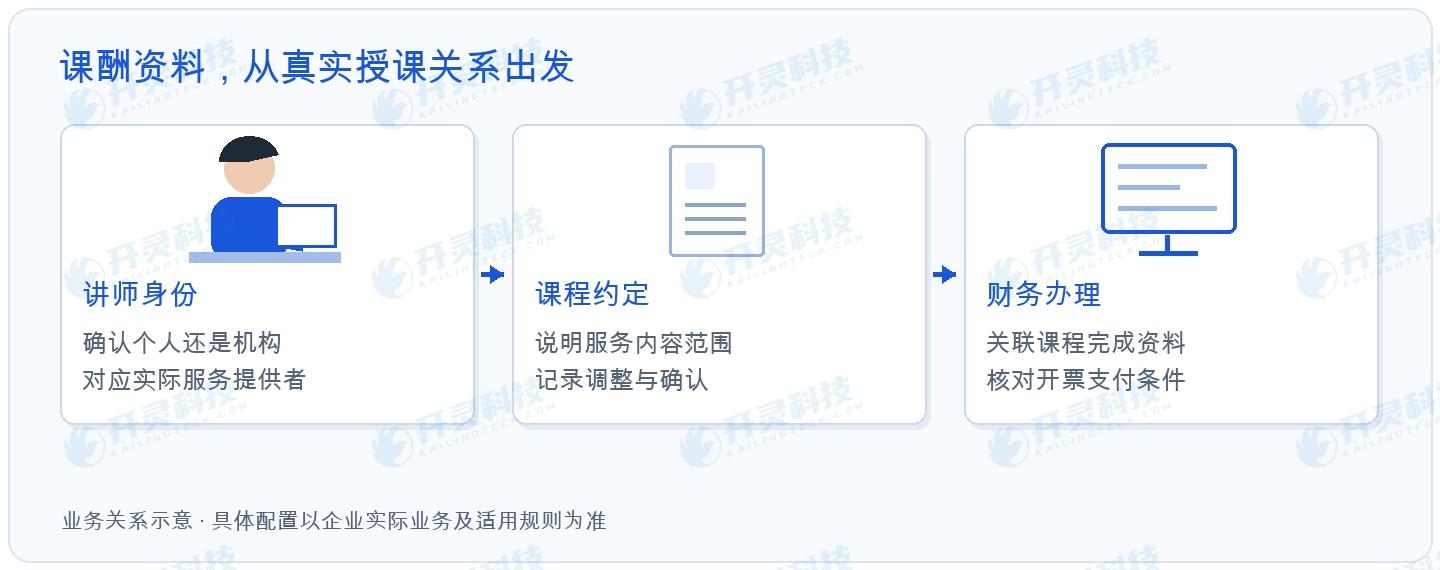
▍Kailing Technology's invoice issuance system for individuals connects course materials to financial processing
Enterprises can link lecturer information, course arrangements, service confirmation, and payment applications, so that when invoicing needs to be handled, the relevant personnel can view the same set of information. Kailing Technology's invoice issuance solution for individuals provides a collaborative approach between business materials and invoicing processing; specific regions, invoice types, identity verification, and channel conditions need to be confirmed item by item before implementation.
For training organizers, the convenience lies in not having to reassemble materials after the course ends; for finance, the convenience lies in finding the corresponding service records from the application; for lecturers, the convenience lies in knowing what information to provide and which processing stage they are currently in. The system makes each party's waiting visible and allows supplementary materials to reach the people who need them directly.
In form design, personal information unrelated to the current business should be avoided. The scope of use, viewable positions, and retention arrangements for identity information and contact details should comply with the enterprise's data protection requirements. Centralized collaboration does not mean letting everyone participating in the training see the lecturer's complete personal information.
▍"After receiving the invoice, can we pay the full amount directly?"
Invoices, service confirmation, and tax handling answer different questions. An invoice does not automatically prove that the course was completed as agreed, and business confirmation does not automatically fulfill individual-related tax obligations. When paying lecture fees, the enterprise should also verify the applicable withholding responsibilities and processing requirements based on the specific situation; the invoice issuance step cannot be understood as eliminating all other responsibilities.
If the contract is unclear about tax burden, tax-inclusive and tax-exclusive wording, disputes are likely to arise at final payment. Both parties should clarify the agreement in advance, and then finance should verify it according to applicable regulations. The system connections described in the article only help organize materials; they do not provide a single tax calculation method applicable to all lecturers and all regions.
If payment has already been completed and only later is it discovered that invoice information or service materials need correction, the original processing records should be retained and handled separately according to the actual problem. It is not acceptable to simply upload a new invoice to overwrite the old attachment and assume all correspondence has been corrected in sync. Only when the status of each step is clear can the enterprise and lecturer conveniently verify together.
For organizations that frequently invite external experts, this collaboration can also reduce unnecessary follow-ups. Lecturers know whether materials are complete, business owners know whether course confirmation is still needed, and finance knows which applications meet processing conditions. Everyone does not need to repeatedly ask in group chats "where is it stuck" and can directly handle the matters they are responsible for.
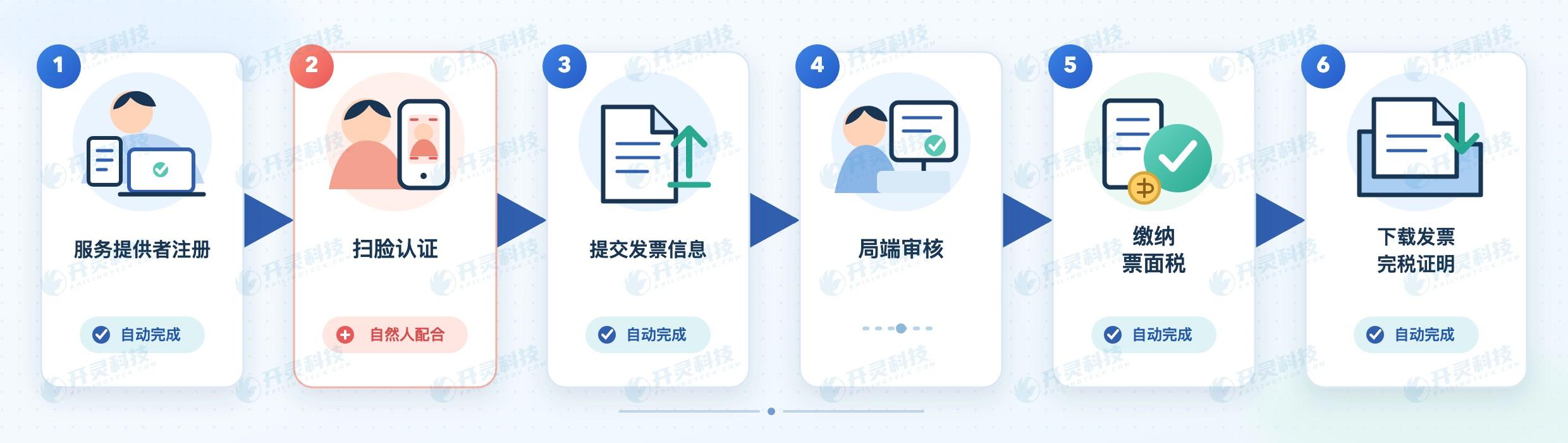
▍Make lecturer collaboration professional, and make the settlement experience smooth
The experience of a training session does not only happen in the classroom. Clear invitation information, appropriate material requirements, timely completion confirmation, and well-founded settlement communication all affect how lecturers feel about collaborating with the enterprise. Organizing back-end processes well is a professional way of expressing respect to external partners.
Enterprises can first organize high-frequency course types, agree on the necessary materials and responsible persons for each, and then carry out system integration based on the actual service scope of invoice issuance for individuals. Existing training or procurement systems do not necessarily need to be replaced; the key is to let relevant data enter financial processing without manual re-copying.
For lecturers collaborating for the first time, it is recommended to explain the materials and processing arrangements before course confirmation; for ongoing individual collaborators, focus on whether the materials are still valid and whether the current service is consistent with historical agreements. Reusing basic information can reduce repetitive work, but each real service should still have its own corresponding record.
Training organizers can also compile common questions into brief explanations and send them along with the invitation. When lecturers know in advance the purpose of the materials and the contact person, and can directly confirm with the corresponding position if they have questions, it reduces the pressure of supplementary submissions after the course and makes first-time collaboration more relaxed.
▍FAQ: Q&A on handling lecture fees for external lecturers
Q: If a training institution is invited, should it still be handled as an individual?
A: It should be handled based on the actual service provider. Where an institution undertakes and provides the service, the identity information of an individual should not be used for processing merely for operational convenience.
Q: Must the teaching proof be made into a lengthy report?
A: There is no need to mechanically pursue length. The key is to record service facts consistent with the agreement and to meet enterprise management and applicable processing requirements; materials should be authentic, necessary, and mutually consistent.
Q: If the lecturer has already handled the invoice, does the enterprise still need to pay attention to individual income tax?
A: Statutory responsibilities should be verified against actual business. Obtaining an invoice does not automatically exempt the payer from possible withholding obligations; specific handling must be confirmed by finance based on current regulations.
Q: Can the system issue invoices in the same way in all regions?
A: Complete consistency cannot be presumed. Regional services, available invoice types, and identity verification methods may differ; projects should first confirm available conditions, then design internal enterprise connections.
Let course arrangements, service confirmation, and lecture fee processing proceed smoothly in relay; learn about the Kailing Technology invoice issuance for individuals collaboration solution: https://www.kailingteck.com/laowu/ .
As a national high-tech enterprise, Kailing Technology focuses on the digital and intelligent transformation of enterprise business-finance-tax and operations management, providing software products, system integration, implementation and delivery, and operational services for various government agencies, institutions, group enterprises, and SMEs.
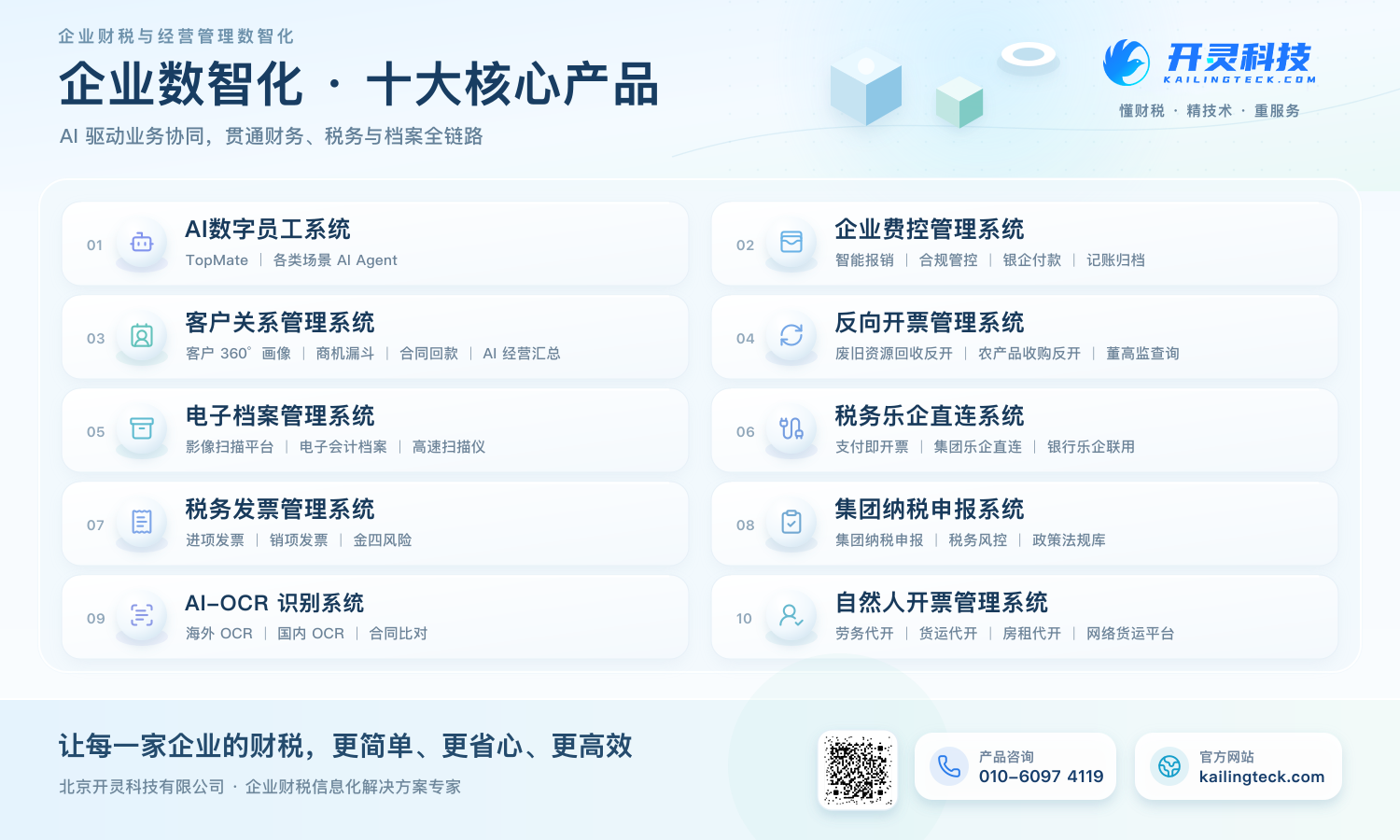
The company has now formed ten core product lines, including: AI digital employee system, enterprise expense control management system, customer relationship management system, reverse invoicing management system, invoice issuance for individuals management system, electronic archives management system, tax fully digitalized e-invoice Leqi system, tax invoice management system, group tax filing system, and AI OCR recognition system. It is committed to connecting enterprise business, finance, tax, funds, and archive data to help customers improve operational efficiency, business-finance-tax compliance capabilities, and digital management levels.
If you have any business-finance-tax digital transformation needs, welcome to contact us. Beijing Kailing Technology will serve you wholeheartedly.
Keywords: Invoice issuance system for individuals, external instructor course remuneration, training fee invoices, invoice issuance for individual services, course service confirmation
As a comprehensive business-finance-tax digitalization solution service provider, Kailing Technology provides business-finance-tax management digital transformation products and operational services for various government agencies, institutions, and large, medium, and small enterprises. The product line includes: solutions for sales contract management system, procurement contract management system, fully digitalized Leqi interface project, automatic output invoicing system, reverse invoicing system, invoice issuance for individuals system, employee expense control and reimbursement system, input VAT invoice management system, supply chain collaborative reconciliation system, image AI OCR recognition system, automatic financial bookkeeping system, electronic accounting archives system, etc., comprehensively driving the digitalization process across various fields.
Consultation Hotline: 18513895936 / 010-60974119 Location: Beijing