
How to prevent duplication when hospital windows, self-service kiosks, and official accounts issue invoices at the same time? Kailing Technology hospital HIS automatic invoicing platform shares orders and a status ledger
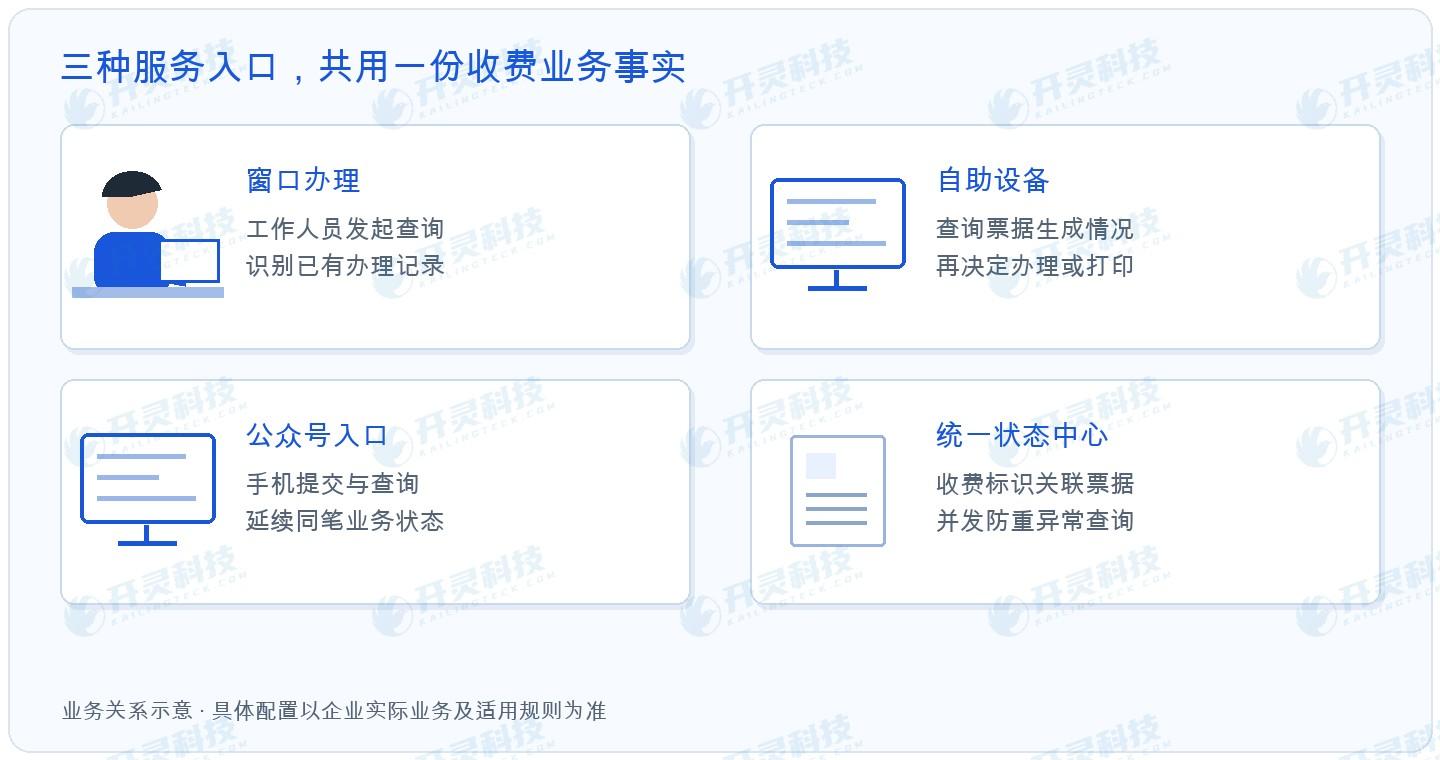
When hospital windows, self-service kiosks, and official accounts all provide invoicing, the key to preventing duplication is sharing the business order and invoice status, not requiring patients to choose only one entry point. The Kailing Technology hospital HIS automatic invoicing platform connects charging business and invoicing services, and can establish a unified query and handling mechanism around the same charge. No matter where the patient operates, the system should first identify whether this business has an invoice in process or already generated.
▍The patient changes entry point, but the hospital still faces the same charge
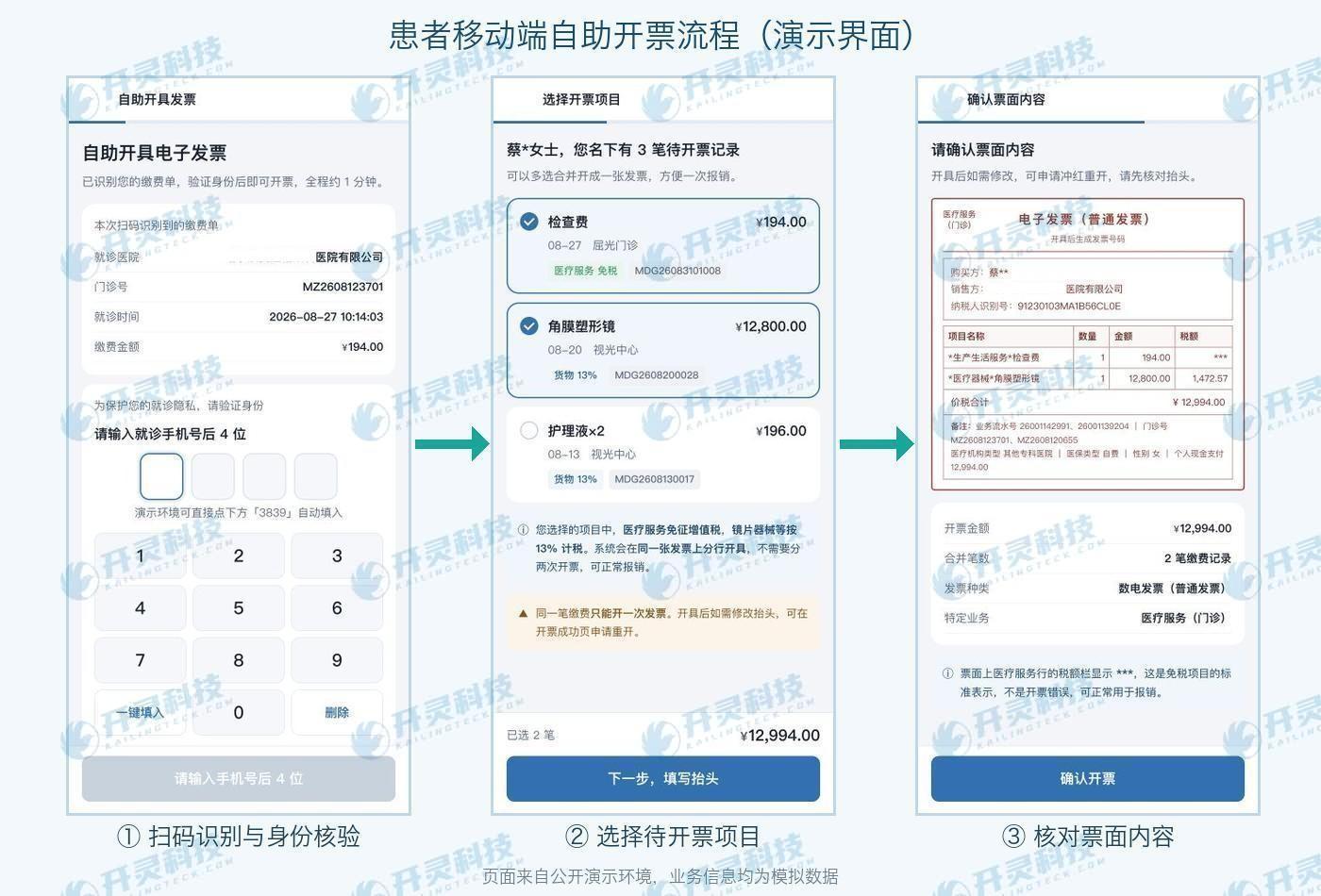
While queuing at the window, a patient discovered that invoices could also be requested through the official account, so he first submitted on his phone; the mobile page did not return for a long time, so he asked the window staff to operate it. Both sides were using the service normally, yet two requests may have formed within seconds. Simply attributing the problem to the patient clicking repeatedly cannot solve the actual need for multi-channel services.
Self-service machines have a similar situation. A printing interruption on the device does not mean the invoice was not issued; the phone not displaying a result may also simply mean the information is returning slowly. If each entry point decides whether to reissue based only on the page it sees, duplicate requests will pass through the gaps where they cannot see each other.
Therefore, duplicate prevention is first a cross-channel collaboration capability. Entry points can differ, but processing progress needs to return to the same business object. When patients switch devices, they should be able to continue searching for the original result, rather than being forced to start over or pushed back into the queue with "please return to the original channel."
▍Why the Kailing Technology hospital HIS automatic invoicing platform uses orders as the anchor
HIS charge records provide the business basis, and the invoicing service handles the corresponding invoice processing. When connecting the two, a stable business identifier should be selected, and the relationship between the charging entity, business type, and invoice should be clarified. Names, amounts, or visit dates may all be the same, so these display fields alone cannot determine whether it is the same transaction.
What invoice a transaction allows, whether part of it has already been issued, and which information can be modified should all be explained in unified rules. The invoice type also needs to be determined according to the hospital's nature, charge items, and applicable management requirements; all medical charges cannot be treated as the same type of tax invoice. Technical design should follow real business and invoice systems.
Each entry point no longer builds a separate isolated status, but instead calls the same query and processing capabilities. After a patient obtains a receipt at the window, the official account can query the corresponding result; when a self-service machine finds that an order already has a receipt, it should enter the query or delivery step rather than initiating a new issuance again. The specific interfaces and available channels depend on the hospital's existing systems and project scope.
▍When two requests collide, who can continue processing?
A unified ledger is not enough. If both entry points first find "not invoiced" and then each submits, competition may still occur. During implementation, business checks and request acceptance need to be connected, with clear duplicate-prevention identifiers and concurrency control rules set for the same handling matter, so that later requests can recognize existing processing rather than relying only on front-end buttons turning gray.
The status after acceptance should distinguish pending handling, processing, completed, and exceptions requiring handling. The statuses here are illustrative of business design; actual names can follow hospital habits, but the meanings must be consistent. When staff see "processing," they know to query the result first; only when they see a clear failure do they take follow-up action based on the failure reason.
Interface timeouts in particular should not be directly equated with invoicing failure. The invoicing side may already be complete, with only the return interrupted. A more reliable connection is to query the original request and invoice result, confirm there is no successful record, and then handle retries according to interface rules. Duplicate prevention occurs not only at submission, but also during exception recovery.
▍Separate issuance, printing, and sending so patients do not need to apply repeatedly
If an invoice has already been generated but the SMS was not delivered, or the self-service kiosk did not print it, this is usually a delivery issue. The system should help patients retrieve an existing invoice rather than remedying delivery failure by reissuing it. The clearer the business statuses are distinguished, the easier it is for window staff to give accurate answers.
The application value of Kailing Technology's hospital HIS automatic invoicing platform is reflected in reducing this cross-role information gap: the charging side knows whether the business is settled, the invoicing side knows whether the receipt is formed, and the service entry point knows how to deliver the result to the patient. The platform brings associated data to the processing site, so staff do not have to call the back office one by one to ask.
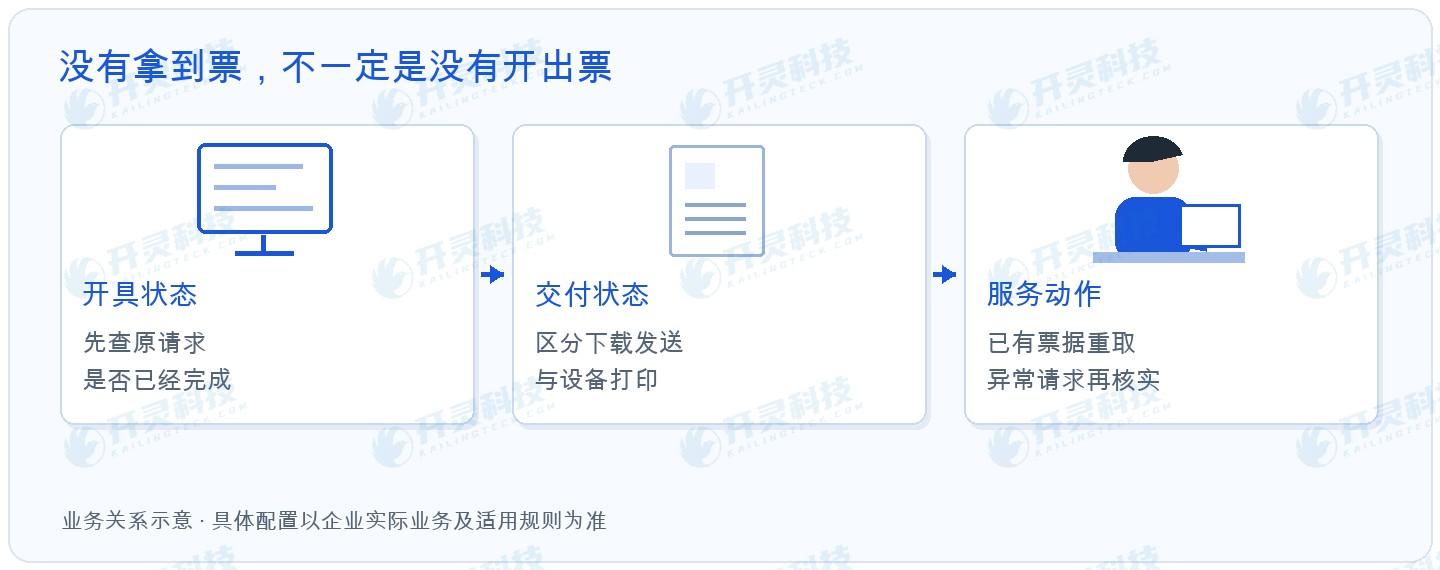
When a patient changes the receiving method, sending or downloading should also be prioritized, rather than changing the fact that an invoice has already been issued. When correcting invoice information such as the title, the corresponding procedure must be followed according to the invoice type and actual status, and it cannot be directly overwritten on the original result. Seemingly minor interface differences are behind the consistency of service experience and invoice records.
▍After a refund, do not let historical orders become new "uninvoiced" items
Medical charges may involve canceled items, partial refunds, or full refunds. In this case, the original charge, the refund business, and invoice handling should remain linked. You cannot clear the original invoice status just because the order amount changed, making other entry points mistakenly believe it was never handled.
Which situations require red-letter reversal or other receipt handling should be executed according to applicable regulations and platform requirements. Technically, the original result and subsequent changes need to be presented so that the inquirer can explain the scope of currently available receipts. Refund progress and receipt correction progress should also be retained separately, and it cannot be assumed that success on one side means the other side is completed simultaneously.
When hospitals build multi-channel services, they can review processes around common patient experiences such as "submitted but no response," "the machine did not print," and "it was already handled at the window but I clicked again on my phone." Designing these everyday hiccups clearly is what turns additional entry points into real convenience, rather than creating several extra sets of reconciliation work in the back office.
At the same time, patient information should be displayed according to job needs. Window staff processing business does not mean that all channel operations personnel should see complete visit information. Which fields are transmitted through interfaces, to what extent query results are displayed, and how operation records are retained can all be clarified when integrating multiple channels, avoiding expanding the flow of sensitive information just for convenient invoice lookup.
For hospital managers, unified status also provides a more direct way to observe service: which requests are stuck in charging confirmation, which are issuance exceptions, and which are merely incomplete delivery. Only by viewing these situations separately can appropriate roles be arranged to handle them, rather than piling all help requests onto the finance window.
▍FAQ Q&A on coordination between window and self-service invoicing
Q: Is it enough to restrict repeated clicks only on the official account?
A: Not enough. Windows and self-service kiosks may also initiate requests, so the backend needs to jointly prevent duplicates based on the same business transaction. Front-end prompts can reduce misoperations, but they cannot replace cross-channel control.
Q: If the self-service kiosk did not print paper, can another invoice be issued directly?
A: First check whether the invoice has already been generated. If it has been completed, the printing or retrieval issue should be handled; only after confirming the actual invoicing status can it be decided whether reprocessing is needed.
Q: If the same patient has multiple charges on the same day, will they be mistakenly blocked?
A: A reasonable design should not determine duplicates based only on patient identity. The specific charge transaction and its invoiceable scope should be identified so that genuinely different orders can be processed separately.
Q: Can the platform replace the hospital in determining all invoice applicability rules?
A: No. The hospital needs to confirm invoice requirements based on the nature of the charges, and the platform connects business and invoicing services accordingly, applying the rules to the processing logic of different entry points.
Windows, self-service machines, and official accounts let patients continue handling matters even when switching entry points. Learn about Kailing Technology hospital invoicing integration: https://www.kailingteck.com/xiaoxiang/ .
As a national high-tech enterprise, Kailing Technology focuses on the digital and intelligent transformation of enterprise business-finance-tax and operations management, providing software products, system integration, implementation and delivery, and operational services for various government agencies, institutions, group enterprises, and SMEs.
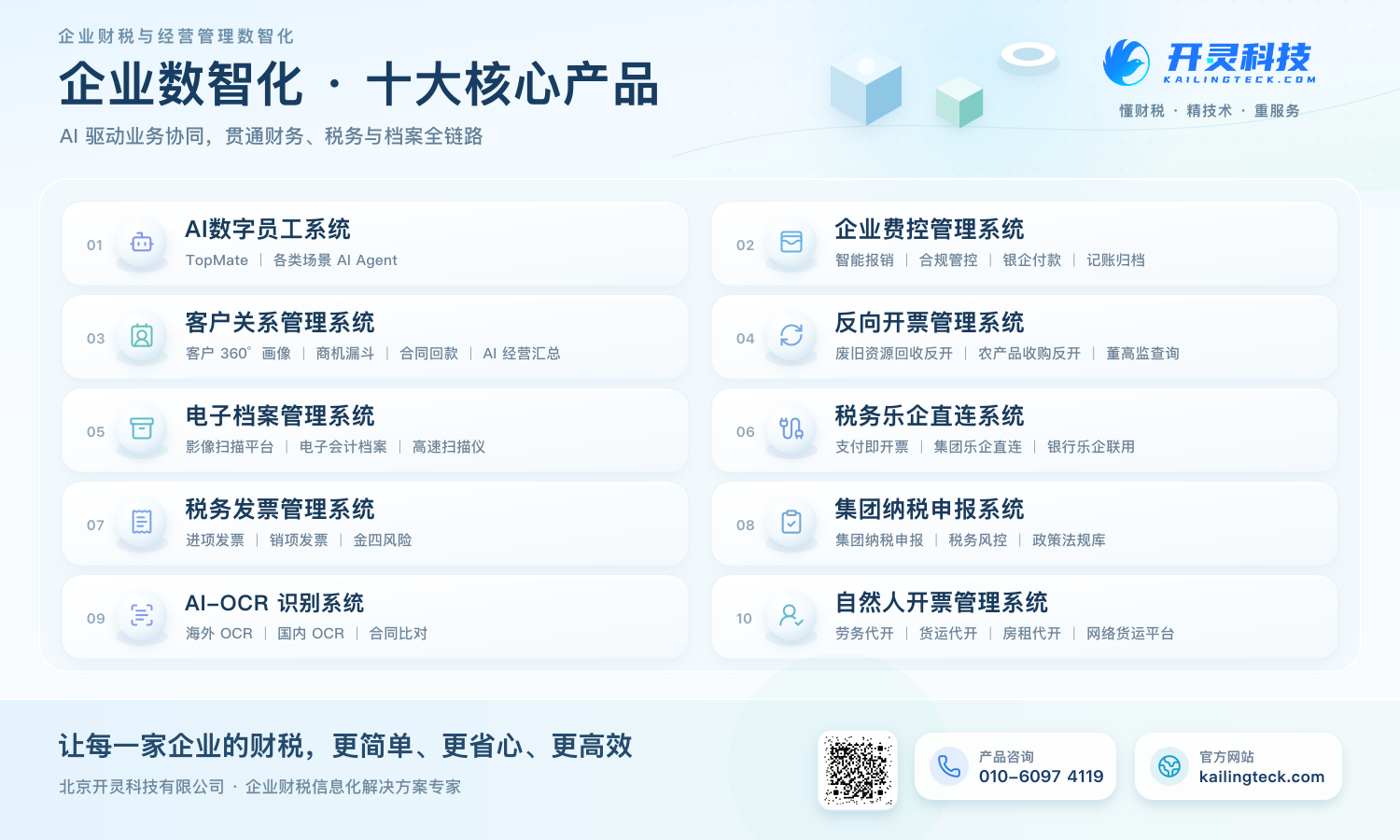
The company has now formed ten core product lines, including: AI digital employee system, enterprise expense control management system, customer relationship management system, reverse invoicing management system, invoice issuance for individuals management system, electronic archives management system, tax fully digitalized e-invoice Leqi system, tax invoice management system, group tax filing system, and AI OCR recognition system. It is committed to connecting enterprise business, finance, tax, funds, and archive data to help customers improve operational efficiency, business-finance-tax compliance capabilities, and digital management levels.
If you have any business-finance-tax digital transformation needs, welcome to contact us. Beijing Kailing Technology will serve you wholeheartedly.
Keywords: Hospital HIS automatic invoicing, hospital invoicing duplicate prevention, self-service kiosk invoicing, official account invoicing, invoice status ledger
As a comprehensive business-finance-tax digitalization solution service provider, Kailing Technology provides business-finance-tax management digital transformation products and operational services for various government agencies, institutions, and large, medium, and small enterprises. The product line includes: solutions for sales contract management system, procurement contract management system, fully digitalized Leqi interface project, automatic output invoicing system, reverse invoicing system, invoice issuance for individuals system, employee expense control and reimbursement system, input VAT invoice management system, supply chain collaborative reconciliation system, image AI OCR recognition system, automatic financial bookkeeping system, electronic accounting archives system, etc., comprehensively driving the digitalization process across various fields.
Consultation Hotline: 18513895936 / 010-60974119 Location: Beijing