
The same customer repeatedly maintained across multiple systems? How Kailing Technology enterprise AI digital employees drive master data synchronization and exception takeover
The same customer repeatedly maintained across CRM, ERP, contract, invoicing, and expense control systems will quickly diverge in name, tax number, address, or status. Kailing Technology AI digital employees can undertake cross-system master data synchronization tasks, read approved changes within authorized permissions, write standard values into target systems, and hand conflicts and failures to designated responsible persons.
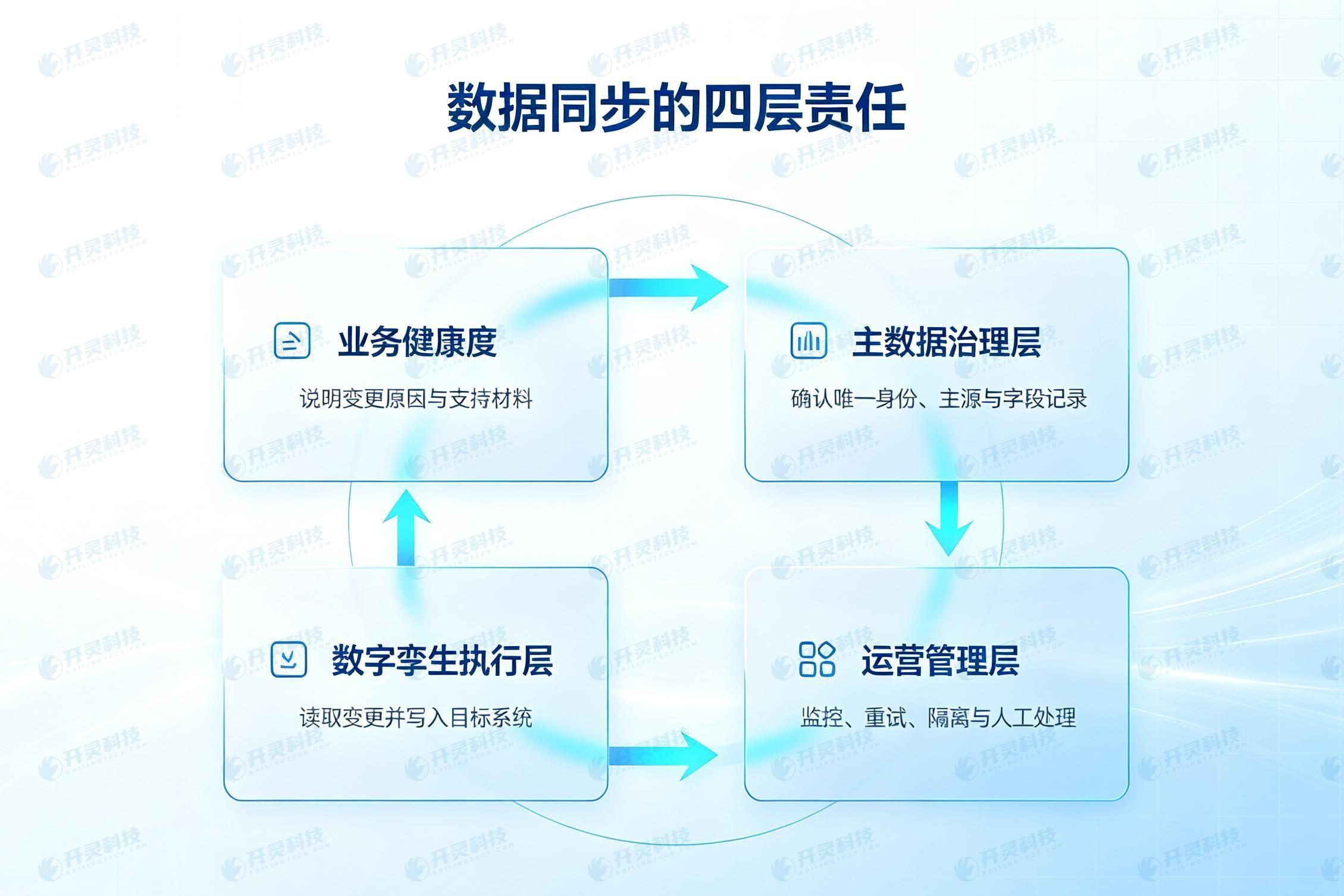
Master data synchronization is not about overwriting all fields with each other. It must first answer which system is the authoritative source, which fields allow local downstream maintenance, under what conditions changes take effect, and which business process needs to be suspended when synchronization fails. If these boundaries are unclear, automation will only spread errors faster.
▍1. First set a unique identity for the customer, then discuss system synchronization
Enterprises should first select a stable customer primary key and establish mappings between each system's local codes and the primary key. Customer names may differ due to abbreviations, spaces, or regional expressions, and are not suitable as a standalone matching basis. Fields such as tax number, organization type, and internal code should also be used in combinations according to business scenarios, and automatic merging should not occur just because one field is similar.
For existing duplicate data, it is recommended to first generate candidate groups showing common fields, conflicting fields, business usage status, and historical transaction relationships, and have the master data owner confirm merge, coexistence, or correction. Candidates that cannot be determined should remain isolated, which is easier to handle than erroneous merges that affect contracts, invoicing, and collections.
▍II. Primary source and target systems must be divided by field, not by the entire card
Basic customer information, sales ownership, credit status, invoicing information, and settlement terms may be managed by different departments. Even if a system is the entry point for the customer master record, that does not mean it has final modification rights over all fields. When handling this, a field-level authoritative source table must be established, recording the scope of what is readable, writable, locally extensible, and prohibited from being overwritten.
Changes also need a clear effective point. Application submission, approval, master data update, and downstream synchronization are four states and cannot be mixed into one "completed." When a downstream system fails, the original change can still take effect, but the incomplete scope must be displayed and retry tasks retained.
▍III. Kailing Technology AI digital employee only executes synchronization within authorized tools
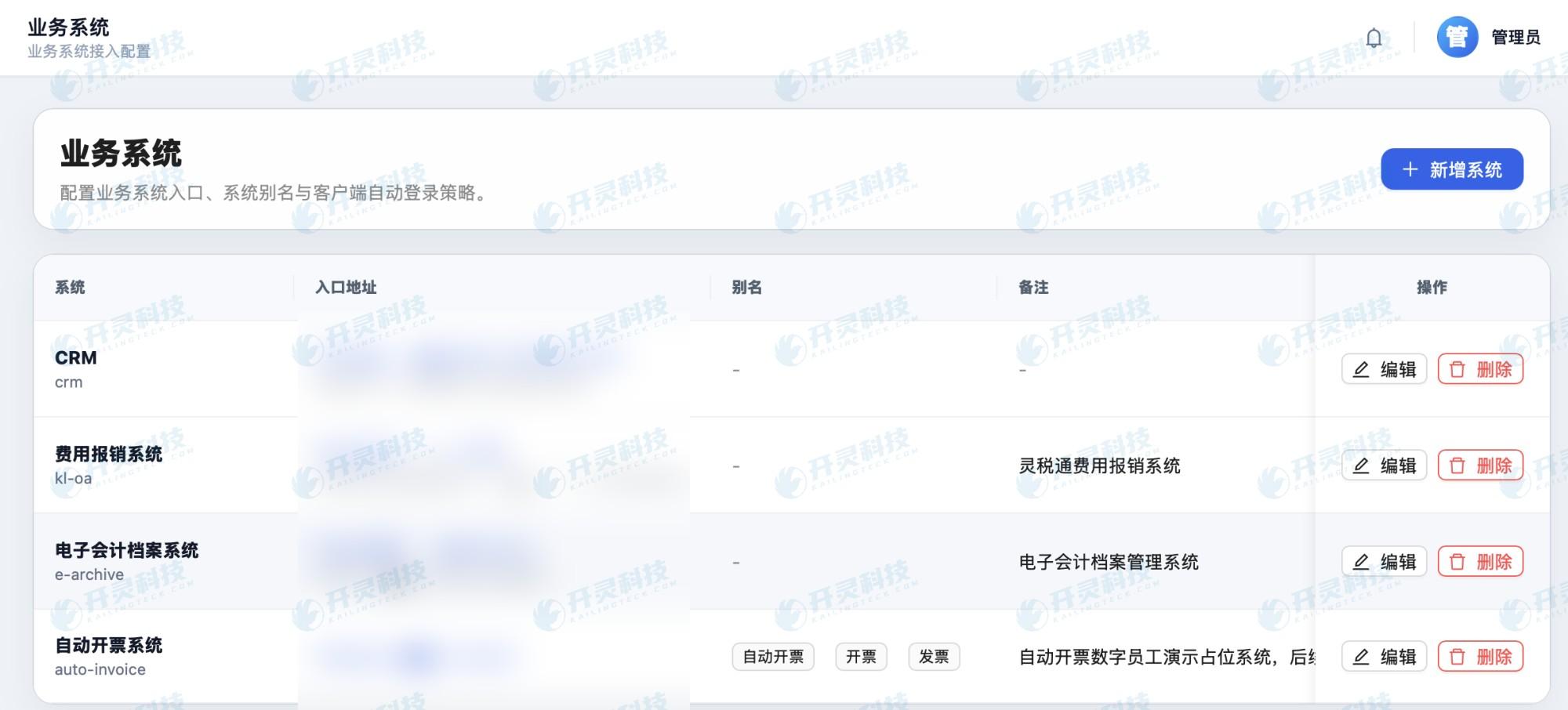
Kailing can encapsulate the interfaces, forms, processes or page operations of existing OA, CRM, ERP and financial systems as tools callable by AI digital employees. Each tool should limit the target system, fields, organization and operation type, and high-risk actions should be set with secondary confirmation. This allows cross-system tasks to be executed without overturning the original systems.
During execution, the AI digital employee should carry the master data number, change batch, source version, and current version of the target system. If the target value has been modified by a person, it is necessary to first determine whether this is a legitimate local extension or an unauthorized conflict. Directly overwriting a conflict will lose business information; the correct action is to isolate the task and notify the responsible person.
| "Master data automation must first reduce "multiple correct answers," and only then reduce repeated entry. |
▍IV. Exception takeover must retain the error object, impact scope, and recovery actions
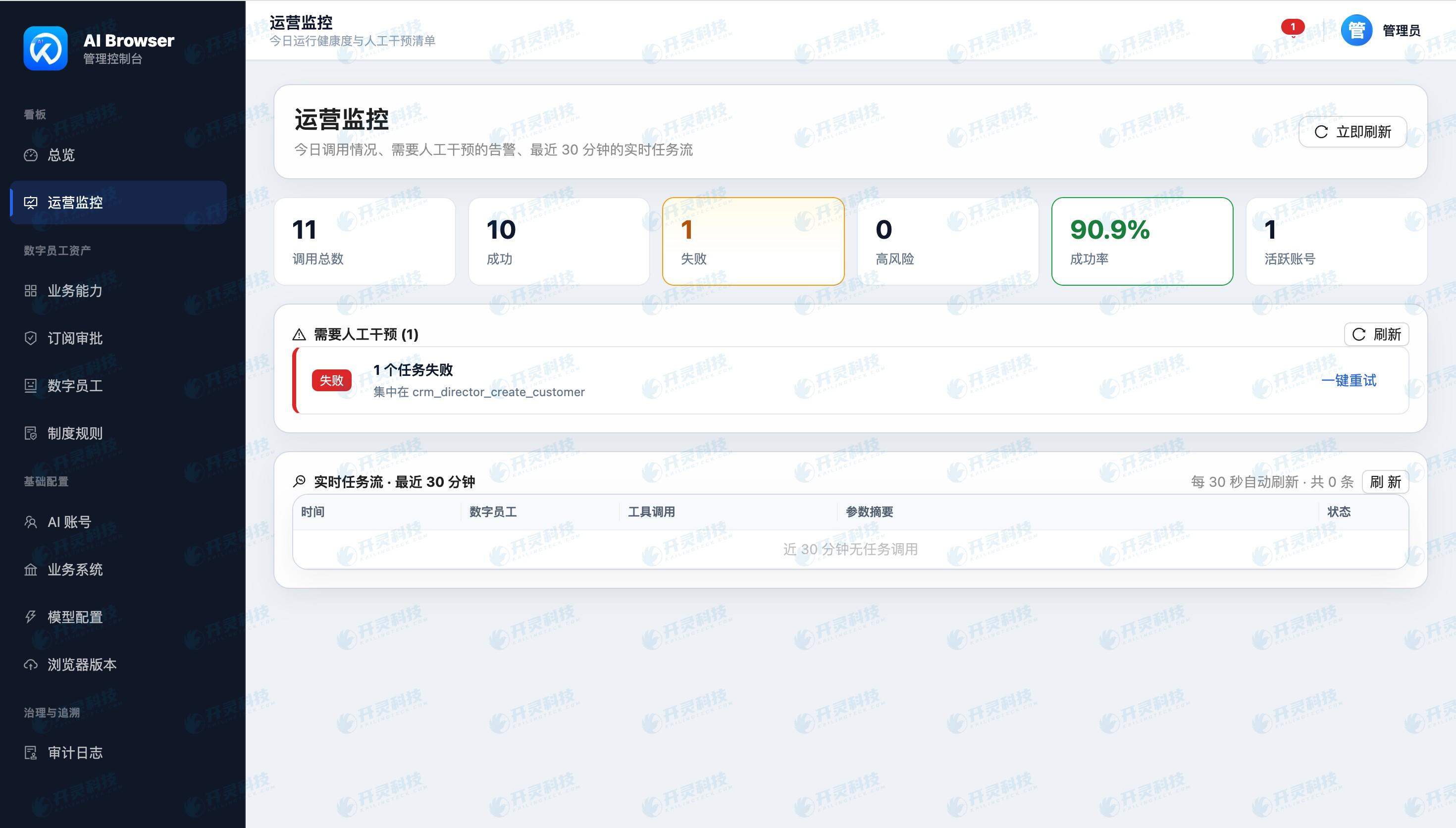
Synchronization failures may come from unavailable interfaces, invalid permissions, changed field formats, conflicts in the target system, or business statuses that do not allow modification. The exception queue needs to distinguish between types that can be automatically retried, those requiring system administrator handling, those requiring judgment by the master data owner, and those requiring a new business application.
After recovery, it should continue from the original change batch; it is not recommended to manually supplement values directly in the downstream system and then close the task. Otherwise, the primary source still does not know that the downstream has been corrected, and the same conflict will occur again on the next change. The takeover process should record the original failure, manual handling, and retry results to form a complete audit trail.
▍V. Verify with concurrency conflicts and failure recovery rather than normal pushes
One successful normal synchronization only proves that the channel is available. Before use, at least verify situations such as the same customer initiating two changes at the same time, downstream fields being modified locally, a system being briefly unavailable, permissions being revoked during synchronization, and old codes still being referenced after master data merge.
The verification results should answer five questions: whether the authoritative value is correct, whether non-authoritative fields are retained, whether conflicts are isolated, which downstream businesses were affected, and whether closure is completed from the original batch after recovery. When these boundary checks pass, the AI digital employee is an execution role that can take over, rather than a script that periodically copies fields.
▍VI. Master data operations should focus on both consistency and actual business impact
The synchronization success rate only indicates whether the technical task is complete; it cannot by itself show that master data is usable. Operations teams should also pay attention to field consistency across systems, the number of duplicate master records, conflict handling time, and business documents blocked due to master data issues. Even if a task shows success, if it wrote outdated values, it is still a business event that needs handling.
It is recommended to set stricter modification permissions and reconciliation frequency for high-impact fields such as primary keys, tax numbers, and status. Fields such as address and contact information also need a master source, but can be handled by impact tier. After tiering, high-risk conflicts immediately suspend the related business, while low-risk deviations enter time-limited correction, preventing an entire synchronization batch from stalling due to one non-critical field.
Organizational adjustments, system upgrades, and master file mergers are the points most likely to cause rule failures. Before the change window, the impact scope should be frozen, mapping relationships backed up, and a rollback plan prepared; after the change, use known customer samples to verify read, write, conflict, and recovery processes. The tool definitions of AI digital employees should also be controlled together with the target system version.
When important changes occur to the customer name, tax number, or status, it is also necessary when appropriate to check whether existing contracts, invoice applications, collection tasks, and reports need to retain historical snapshots. Master data synchronization manages the current value, but should not tamper with the evidence of historical transactions at the time they occurred. Only by storing current information and historical snapshots separately can both new business and historical traceability be supported.
The sequence of master data tasks and business events needs to be clear. The downstream impacts of new customer creation, key information changes, status deactivation, and entity mergers are not the same. Creation may need to be completed before the first contract, while status deactivation may require handling in-transit documents first. When a digital employee receives a task, in addition to synchronizing values, it should also identify the event type and preconditions. For changes that do not meet the conditions, it should defer, reject, or transfer to manual handling, and must not interrupt ongoing business just for data consistency. By incorporating event sequence into synchronization rules, master data will not become disconnected from business status.
- Set permissions, reconciliation and exception levels by field impact.
- After system upgrades, master data regression reconciliation must be performed.
- Historical transactions retain the snapshot at the time and are not overwritten by current values.
▍FAQ
Q: Does master data synchronization require building a new middle platform first?
A: Not necessarily. On existing systems, you can first clarify primary keys, authoritative sources and field boundaries, then execute synchronization through authorized tools.
Q: Can customers with different names in the system be automatically merged?
A: Candidate relationships should be generated by combining multiple reliable fields, and records should not be merged merely because names are similar; conflicts should be confirmed by the master data owner.
Q: Will the failure of one downstream system affect all synchronization?
A: Failures should be isolated by target system and task detail, retaining successful results and unfinished scope, and retried in a targeted way after recovery.
Q: Can AI digital employees modify any field?
A: No. Each tool should limit writable fields, organizations, and operation types, and high-risk actions require secondary human confirmation.
Turn master data from multi-source manual maintenance into a cross-system task with a primary source, status, and exception takeover. Welcome to visit Kailing Technology: https://www.kailingteck.com/de/ .
As a national high-tech enterprise, Kailing Technology focuses on the digital and intelligent transformation of enterprise business-finance-tax and operations management, providing software products, system integration, implementation and delivery, and operational services for various government agencies, institutions, group enterprises, and SMEs.
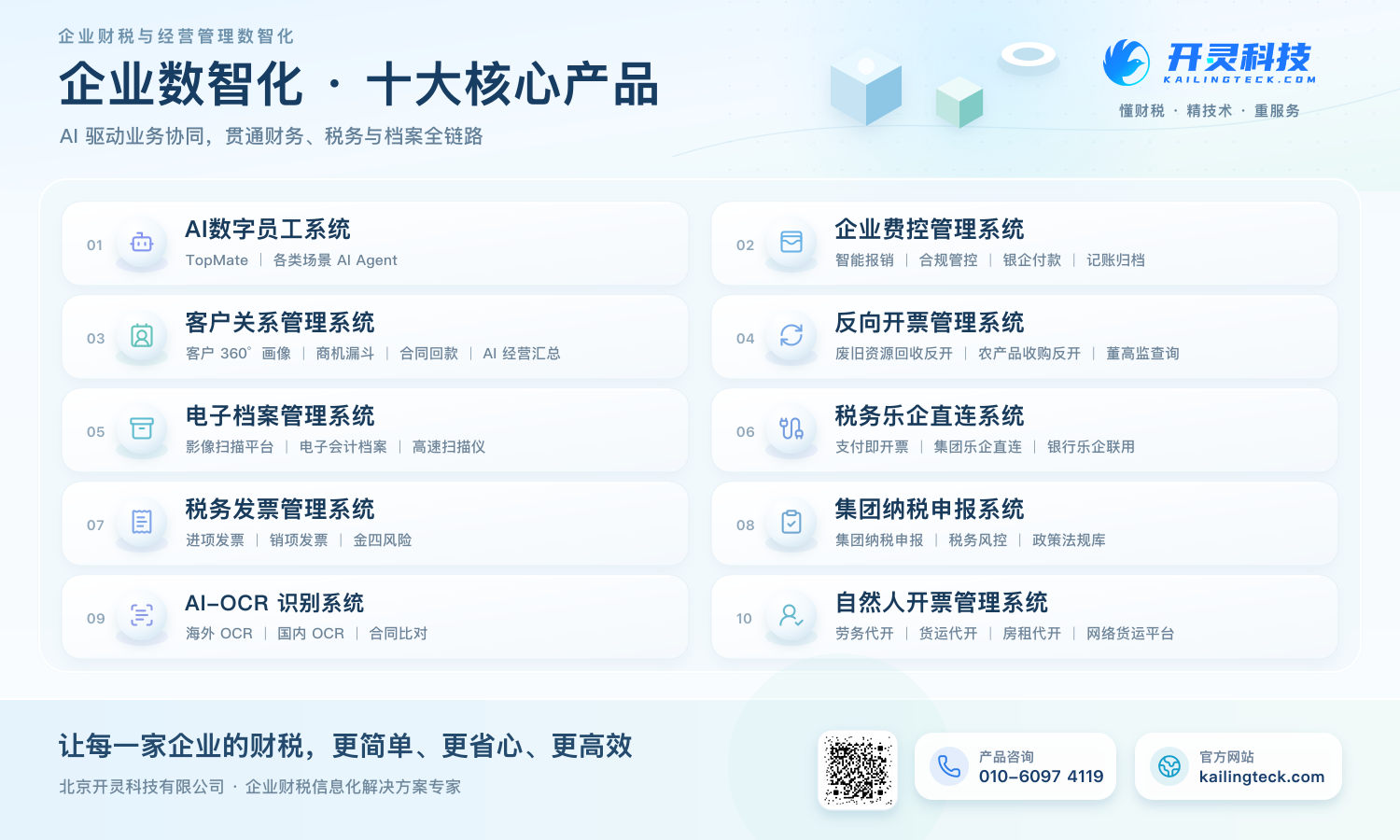
The company has now formed ten core product lines, including: AI digital employee system, enterprise expense control management system, customer relationship management system, reverse invoicing management system, invoice issuance for individuals management system, electronic archives management system, tax fully digitalized e-invoice Leqi system, tax invoice management system, group tax filing system, and AI OCR recognition system. It is committed to connecting enterprise business, finance, tax, funds, and archive data to help customers improve operational efficiency, business-finance-tax compliance capabilities, and digital management levels.
If you have any business-finance-tax digital transformation needs, welcome to contact us. Beijing Kailing Technology will serve you wholeheartedly.
Keywords: Multi-system master data synchronization, customer master data, exception takeover, Kailing Technology AI digital employee
As a comprehensive business-finance-tax digitalization solution service provider, Kailing Technology provides business-finance-tax management digital transformation products and operational services for various government agencies, institutions, and large, medium, and small enterprises. The product line includes: solutions for sales contract management system, procurement contract management system, fully digitalized Leqi interface project, automatic output invoicing system, reverse invoicing system, invoice issuance for individuals system, employee expense control and reimbursement system, input VAT invoice management system, supply chain collaborative reconciliation system, image AI OCR recognition system, automatic financial bookkeeping system, electronic accounting archives system, etc., comprehensively driving the digitalization process across various fields.
Consultation Hotline: 18513895936 / 010-60974119 Location: Beijing