
Worried about authenticity and duplication in reimbursement of fully digitalized e-invoices? How Kailing Technology's AI expense control management system completes authenticity verification, duplicate checks, and risk alerts
The biggest fear in reimbursement of fully digitalized e-invoices is authenticity and duplication; relying on manual checks across multiple pages is slow and makes it hard to leave complete evidence. Kailing Technology's AI expense control management system can perform compliance verification, status checks, and duplicate-use checks during invoice collection, aggregation, and reimbursement, provide risk alerts for anomalies, and link invoices to reimbursement forms, vouchers, and archive records.
Verification and duplicate checking do not end when the verification interface returns normal. Enterprises also need to pay attention to the header tax number, invoice status, business relationships involving repeated use, as well as the verification timing and exception handling. The system is responsible for centralizing evidence, while finance is responsible for judging exceptions.
▍1. First distinguish invoice face verification, tax verification, and business duplicate checking
Whether invoice face fields are complete and whether the buyer is correct are basic standardization checks; whether the invoice exists and whether its status is abnormal need to be combined with verification or source results; whether the same invoice has already been reimbursed or booked is business duplicate checking. The three conclusions are different and cannot be merged into one status.
The system should display the time, result, and abnormal object of each check. For electronic files, attention should also be paid to signature or file changes; for paper invoices, verification should be performed according to the actual source. When no valid result is obtained, it should enter pending processing rather than automatically being deemed passed.
▍II. Put reuse back into business relationships for judgment
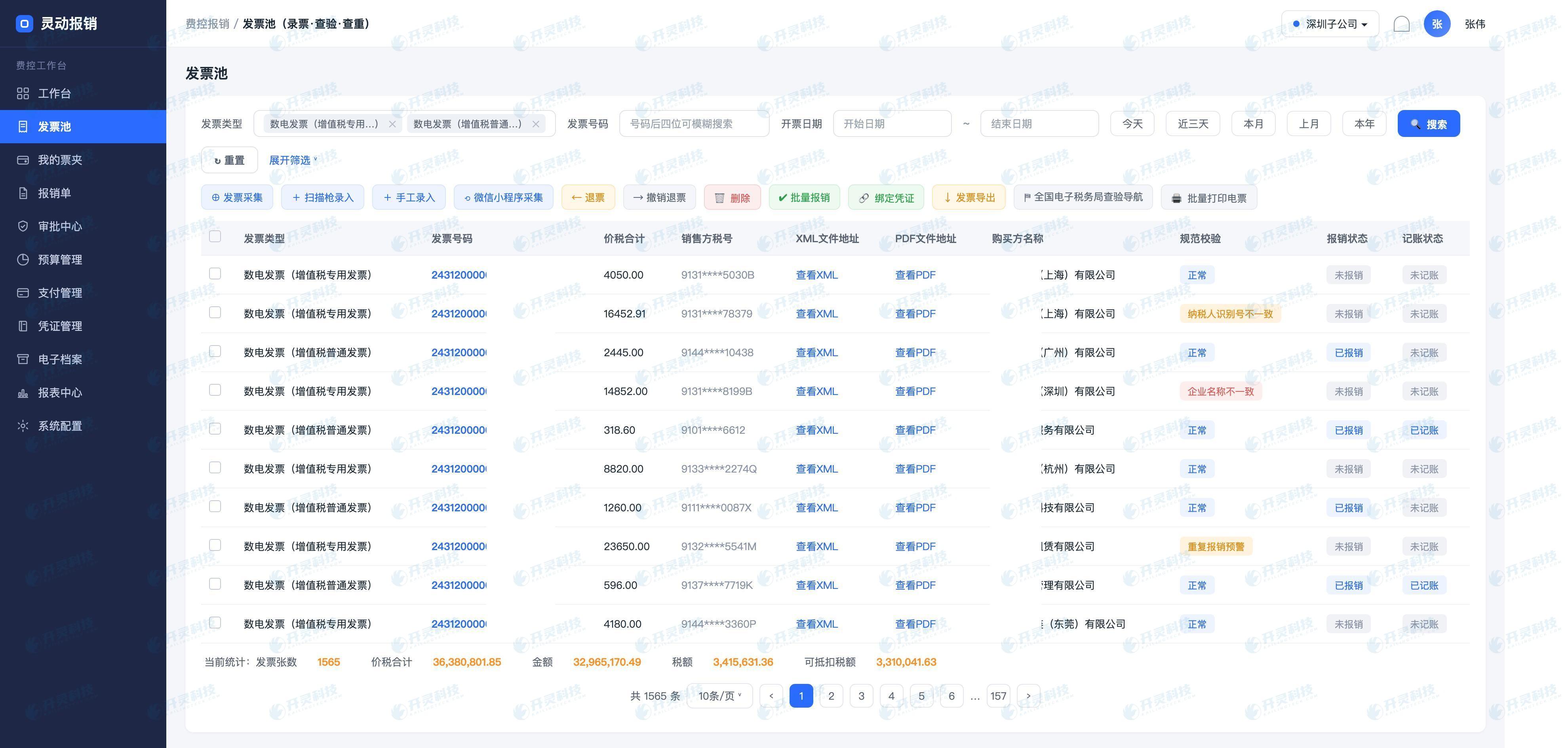
Duplicate upload of the same invoice usually indicates duplicate reimbursement risk; the same invoice linked across application, reimbursement, vouchers, and archives is a normal process reference. Duplicate checking cannot compare numbers only; it must also consider linked document status, organization, and purpose of use.
When the system prompts duplication, it should point to the existing application or voucher, letting the responsible person check whether it was mistakenly uploaded, withdrawn and resubmitted, or indeed used repeatedly. If it only shows "duplicated," employees will find it difficult to handle, and it is easy to bypass controls by changing the file name.
▍III. Kailing Technology AI expense control management system turns anomalies into risk alerts
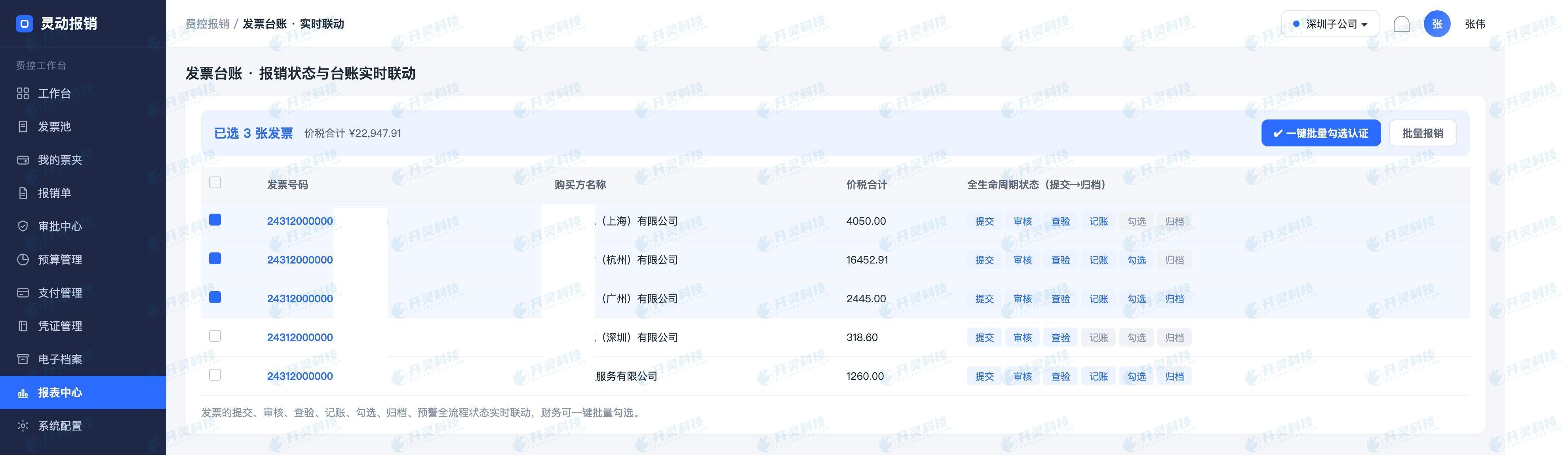
Risk alerts must explain where the problem is: inconsistent title, inconsistent tax number, abnormal status, missing source file, duplication with already reimbursed invoices, or mismatch between the invoice and business amount. Different risks correspond to actions such as supplementary collection, review, blocking, or transfer to manual handling.
For exceptions with genuine business justification, finance can review and record the basis per authorization; for invoices that cannot be proven, the system should retain an abnormal status. This avoids mechanical false blocking while also preventing the loss of follow-up clues due to manually clicking "ignore."
▍IV. Verification results must also sync with booking and archiving status
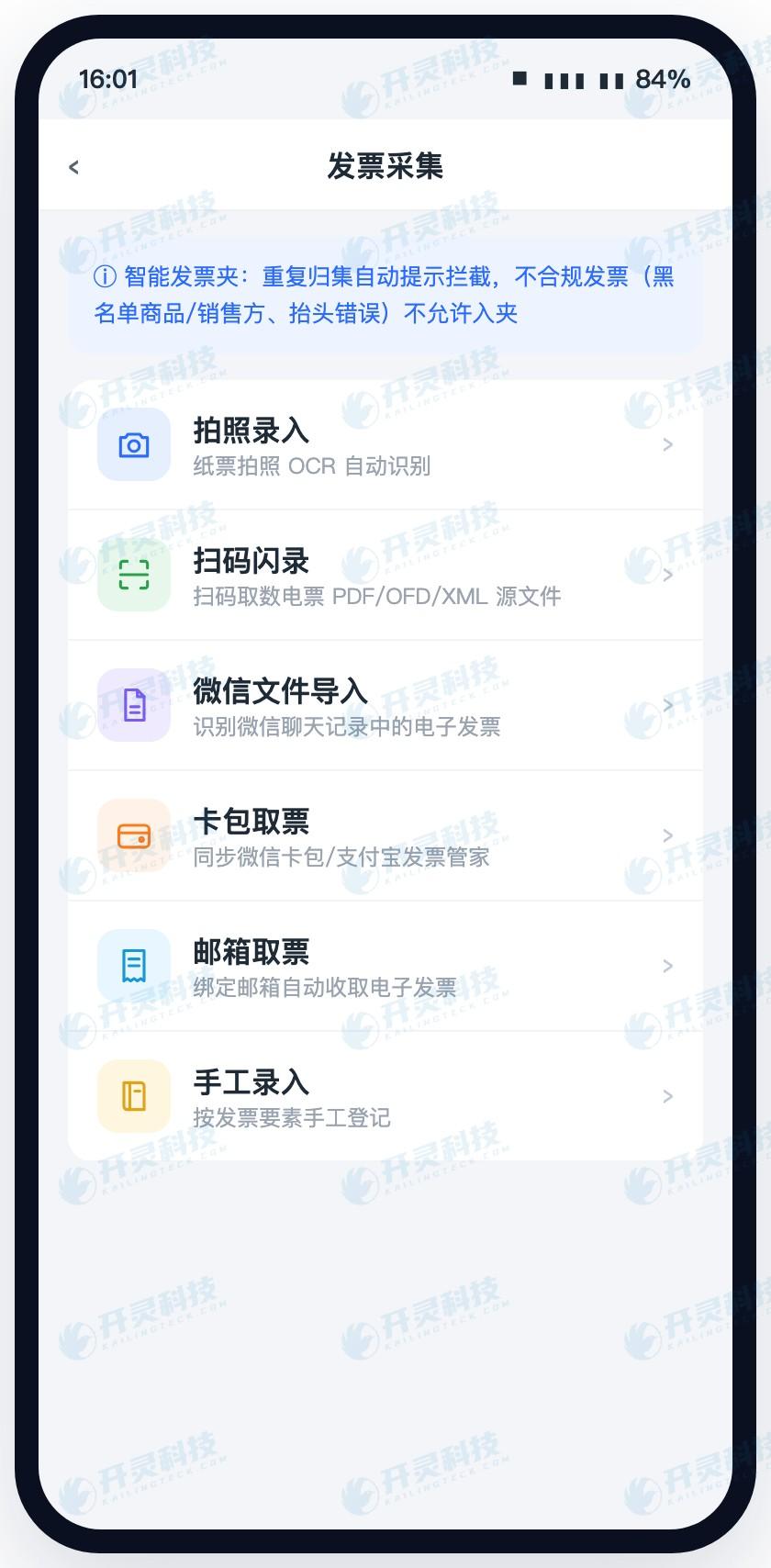
Even after invoices pass verification, reversal, voiding, or booking status changes may still occur. After a reimbursement form is submitted, invoices should remain linked to their usage status; during booking and archiving, source files, verification results, and business relationships should be retained, avoiding saving only a preview image from the approval time.
If an invoice is modified, re-uploaded, or replaced after verification, the system should identify changes in the file or key fields and re-verify when necessary. Historical results must not be silently overwritten by new files, and exception handling should also be recorded in the operation log.
▍V. Validate the risk control closed loop with failure and duplicate samples
Check that samples can be prepared for normal fully digitalized e-invoices, duplicate uploads, incorrect headers, abnormal status, missing source files, and already red-letter reversed, and observe whether the system prompts at the correct node, whether it can locate the responsible person, and check whether the results after correction or manual review are retained.
During operation, regularly analyze false positives and false negatives: false positives may come from insufficient business association, while false negatives may come from incomplete sources or too narrow a duplicate-checking scope. After adjusting rules, regression should be performed with historical samples, not just the newly added documents from this instance.
- Standard, tax, and business duplicate-check results are presented separately.
- Risk alerts include the object, basis, and handling action.
- Duplicate risks can be traced to the documents already linked.
- Verification, red-letter reversal, correction, and archiving status are traceable.
▍VI. Risk alerts should let finance quickly locate the problem
Fully digitalized e-invoice risks can come from invoice fields, tax status, electronic files or business associations. The system presents header inconsistency, abnormal status, missing source files and duplicate use separately, so finance can choose supplementary collection, review, blocking or manual explanation instead of facing a vague abnormality flag.
The same invoice normally linked across reimbursement, vouchers, and archives should not be misjudged as duplicate reimbursement; genuine duplicate use also cannot be eliminated by renaming files. Retaining the original hit and subsequent handling makes risk alerts a traceable business clue.
- Different risk types have different actions.
- Duplicate risks can be traced to the documents already used.
- Anomaly handling does not overwrite the original result.
- New documents or status changes trigger necessary re-verification.
▍7. Invoice risk control must avoid treating normal associations as duplicates
One invoice may simultaneously appear in the invoice pool, reimbursement form, accounting voucher, and electronic archives; these are normal associations of the same business. The same invoice being reimbursed repeatedly by different businesses is the risk that needs priority handling. Only when the system puts document identifiers, document status, and organizational relationships together will duplicate checking results avoid harming normal processes.
Risk alerts should also distinguish between issues that can be corrected and those that cannot be directly ignored. Missing source files can be supplemented, incorrect titles need to be returned, abnormal statuses require financial judgment, and suspected duplicates require finding the used document; different risks are handled differently, allowing finance to locate them faster.
After an invoice is reversed, corrected, or re-uploaded, the original verification record still has value. Retaining the before-and-after status and handling reasons makes it possible to explain later why it was approved or blocked at the time.
The results of invoice risk control should serve business processing. Normal invoices quickly enter subsequent processes, suspected duplicate invoices indicate already linked documents, missing source files prompt supplementary collection, and abnormal statuses are left for finance to judge. The more specific the risk prompt, the easier it is for staff to focus on the parts that truly require judgment.
Truly useful duplicate checking is not about adding a "duplicate" button, but about linking the usage of invoices across business stages. Only when finance knows which application it entered, whether it has been paid or booked, can it determine whether it is a normal reference, a mistaken upload, or duplicate reimbursement, and take appropriate action.
Lingdong Reimbursement supports invoice collection, compliance validation, verification, and duplicate checking, with the focus on exposing invoice risks as early as possible. After risk results are linked with applications, approvals, payments, booking, and archiving, finance has context when handling exceptions, without needing to piece together information across platforms.
Verification, duplicate checking, and status management together constitute invoice risk control. If any result lacks a source or time, subsequent review becomes difficult; only by retaining the relationship between results and documents can risk handling be continuous.
Risk alerts with a basis are easier for the business to accept than general blocking.
- Business association does not equal duplicate reimbursement.
- Different risks have different handling directions.
- Duplicate check scope and data sources can be viewed.
- Red-letter reversal corrections retain historical verification.
▍FAQ
Q: If verification is normal, can reimbursement definitely be made?
A: Not necessarily; checks should also combine title, business authenticity, duplicate use and enterprise policy.
Q: Is it considered a duplicate if the same invoice is linked to multiple records?
A: Not necessarily. A distinction should be made between process association and duplicate reimbursement, judged in combination with document status and purpose of use.
Q: Is it acceptable to save only screenshots of electronic invoices?
A: Not recommended. Electronic source files should be retained according to actual acquisition, and preview files should be associated with source files.
Q: Can abnormal alerts be manually ignored?
A: It should be handled according to authorization and policy, with the review basis recorded; anomalies cannot be cleared without reason.
Let fully digitalized e-invoice verification, duplicate checking, and accounting archiving form a complete evidence chain. Welcome to visit Kailing Technology: https://www.kailingteck.com/feikong/ .
As a national high-tech enterprise, Kailing Technology focuses on the digital and intelligent transformation of enterprise business-finance-tax and operations management, providing software products, system integration, implementation and delivery, and operational services for various government agencies, institutions, group enterprises, and SMEs.
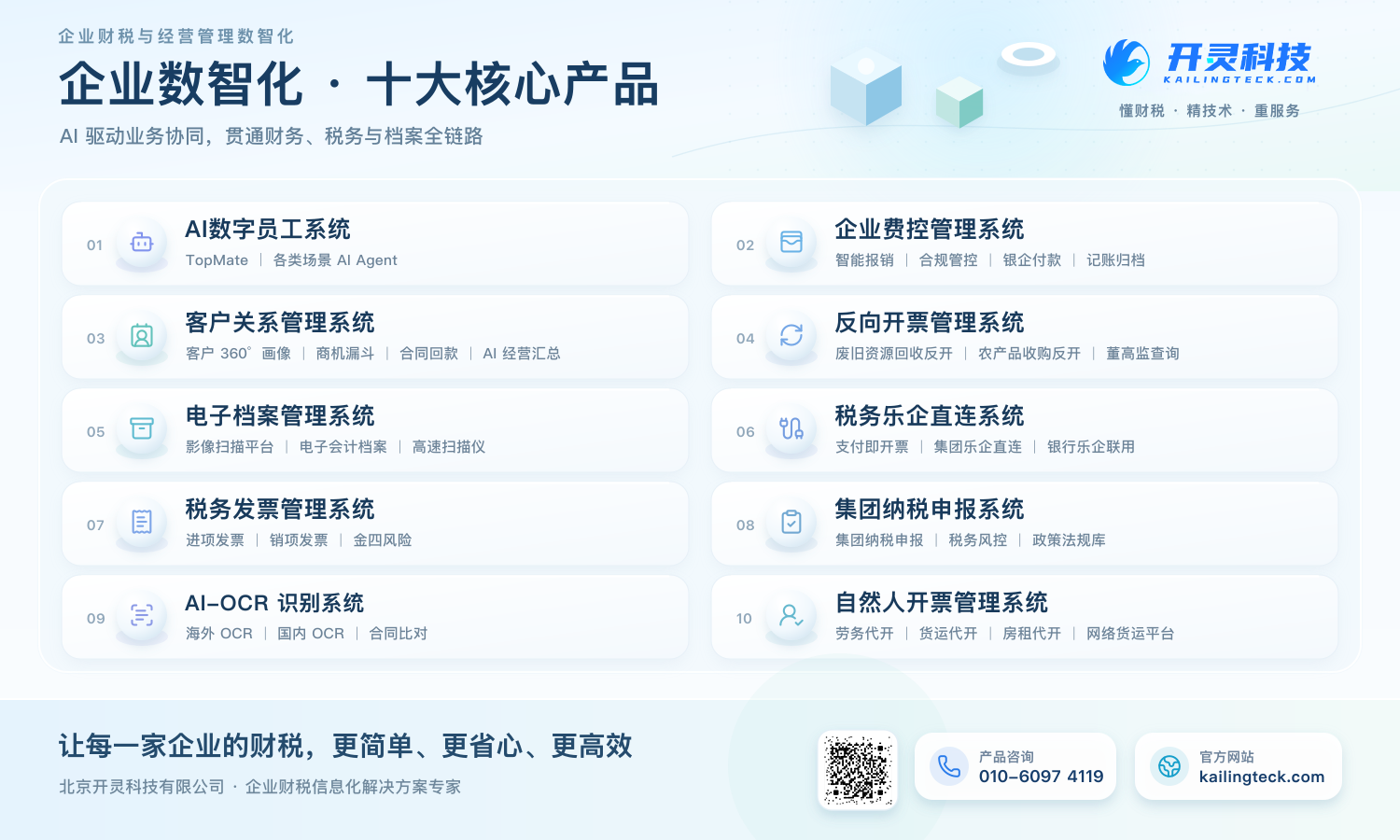
The company has now formed ten core product lines, including: AI digital employee system, enterprise expense control management system, customer relationship management system, reverse invoicing management system, invoice issuance for individuals management system, electronic archives management system, tax fully digitalized e-invoice Leqi system, tax invoice management system, group tax filing system, and AI OCR recognition system. It is committed to connecting enterprise business, finance, tax, funds, and archive data to help customers improve operational efficiency, business-finance-tax compliance capabilities, and digital management levels.
If you have any business-finance-tax digital transformation needs, welcome to contact us. Beijing Kailing Technology will serve you wholeheartedly.
Keywords: Fully digitalized e-invoice authenticity verification and duplicate checking, AI expense control management system, invoice risk alerts, LingDong reimbursement
As a comprehensive business-finance-tax digitalization solution service provider, Kailing Technology provides business-finance-tax management digital transformation products and operational services for various government agencies, institutions, and large, medium, and small enterprises. The product line includes: solutions for sales contract management system, procurement contract management system, fully digitalized Leqi interface project, automatic output invoicing system, reverse invoicing system, invoice issuance for individuals system, employee expense control and reimbursement system, input VAT invoice management system, supply chain collaborative reconciliation system, image AI OCR recognition system, automatic financial bookkeeping system, electronic accounting archives system, etc., comprehensively driving the digitalization process across various fields.
Consultation Hotline: 18513895936 / 010-60974119 Location: Beijing