
How to Implement Single-Set Electronic Accounting Archives? Kailing Technology AI Electronic Accounting Archives Management System Embeds Four-Property Testing into the Archiving Process

Implementing single-set electronic accounting archives does not end with abolishing paper binding; it requires electronic materials to independently prove authenticity, integrity, usability, and security throughout the entire process of sourcing, archiving, preservation, and utilization. The Kailing Technology electronic accounting archives management system can embed four-property testing at the receiving, organizing, archiving, preservation, and retrieval nodes, and retain test results and handling records.
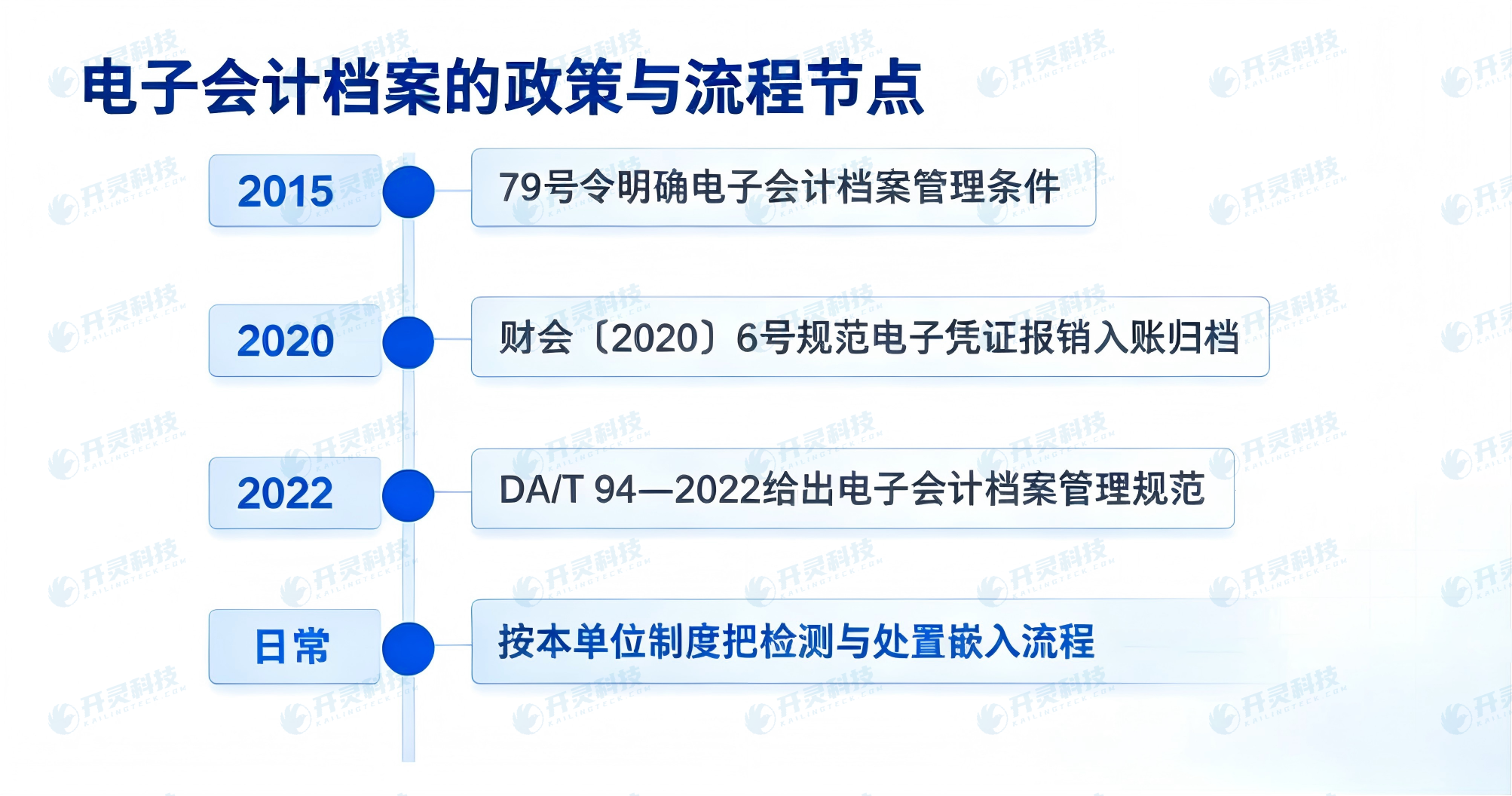
Both the "Measures for the Management of Accounting Archives" and the "Notice on Standardizing the Reimbursement, Booking, and Archiving of Electronic Accounting Vouchers" set conditions for electronic data management. Enterprises should judge the applicable scope based on their own system reliability, internal control, and backup capabilities, and cannot directly equate "already scanned" or "has PDF" with meeting the requirements for single-set management of electronic archives.
▍1. First clarify which materials are natively electronic and which are converted from paper
Native electronic vouchers, business system records, electronic signature documents and paper scans have different evidentiary attributes. At project initiation, the original carrier, acquisition channel, format, signature or verification information, whether paper must still be retained, and applicable rules should be recorded by material type; the same scanning process cannot be used to handle all materials.
For accounting vouchers whose source is electronic, Cai Kuai [2020] No. 6 emphasizes preserving electronic vouchers as required; saving only printed paper copies will lose electronic signatures, structured data, and other content. For digitization of paper originals, paper disposal and digitization quality requirements must also be determined according to the enterprise's archives system.
▍II. Authenticity detection focuses on source, identity, and formation process
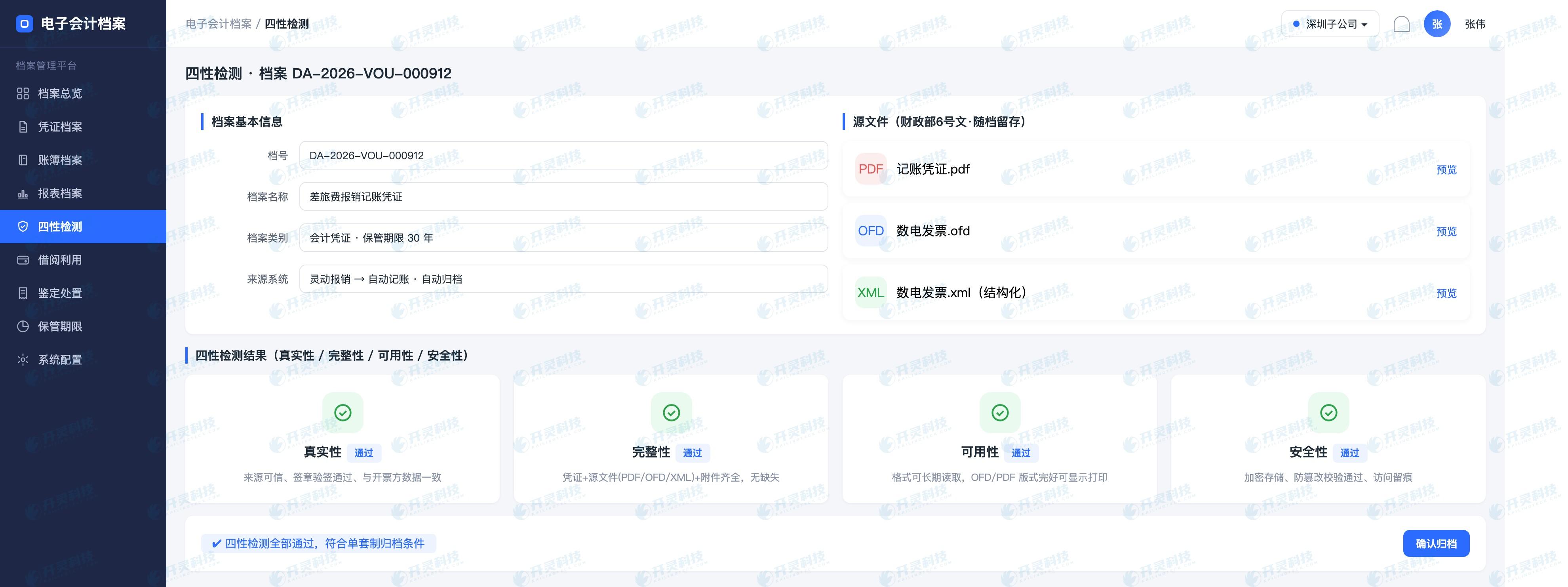
Authenticity does not mean judging that a business is definitely free of fraud, but verifying that the process of archive formation and acquisition is trustworthy. The system can record the source system, receiving interface, file digest, electronic signature or verification result, responsible party, and time, and stop archiving when the source is unknown, the signature is abnormal, or the file changes after receipt.
For manually uploaded materials, source evidence should be supplemented through permissions, operation logs and necessary review. The system cannot treat "upload successful" as a conclusion of authenticity, nor automatically generate a pass mark when verification is impossible; materials that cannot be confirmed must enter exception handling with reasons retained.
▍III. Completeness checks cover files, metadata, and business relationships
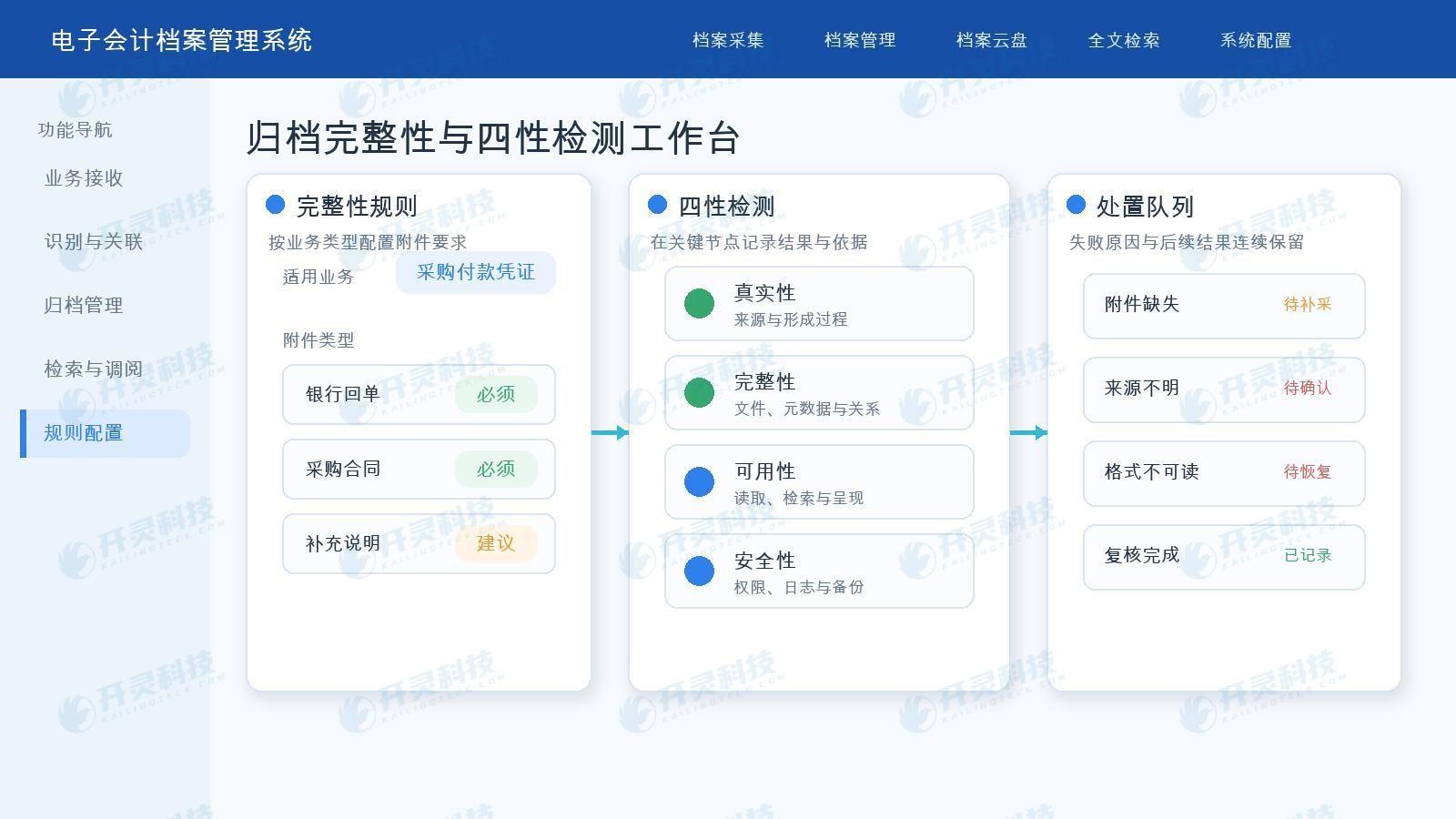
Completeness includes not only no missing pages or truncation in files, but also the presence of required attachments, metadata, and business associations. The system can check quantity, format, fields, volume directories, and voucher relationships by archive category and business type, and re-detect supplements, replacements, and version changes.
Detection rules should be explainable. When items are missing, the missing object, related business and correction responsible person should be indicated; when files change, the summaries before and after the change and the handling conclusion should be retained. A "complete" status that cannot explain what was checked is insufficient to support subsequent handover.
▍IV. Kailing Technology's electronic accounting archives management system extends usability and security through the retention period
Usability requires that archives can be read, retrieved, and presented when needed. In addition to being openable by current software, long-term formats, reading environments, index quality, and necessary migration must also be considered. Before and after migration, quantities, contents, and associations should be checked; it is not enough to only confirm that new files can be opened.
Security covers permissions, logs, backups, recovery, and anti-tampering measures. Key operations are authorized by role, access and export leave trails, backup copies are isolated according to regulations, and recovery is regularly verified. Security testing cannot be performed only on the day of archiving; it should also be rechecked after major changes in the storage environment or permissions.
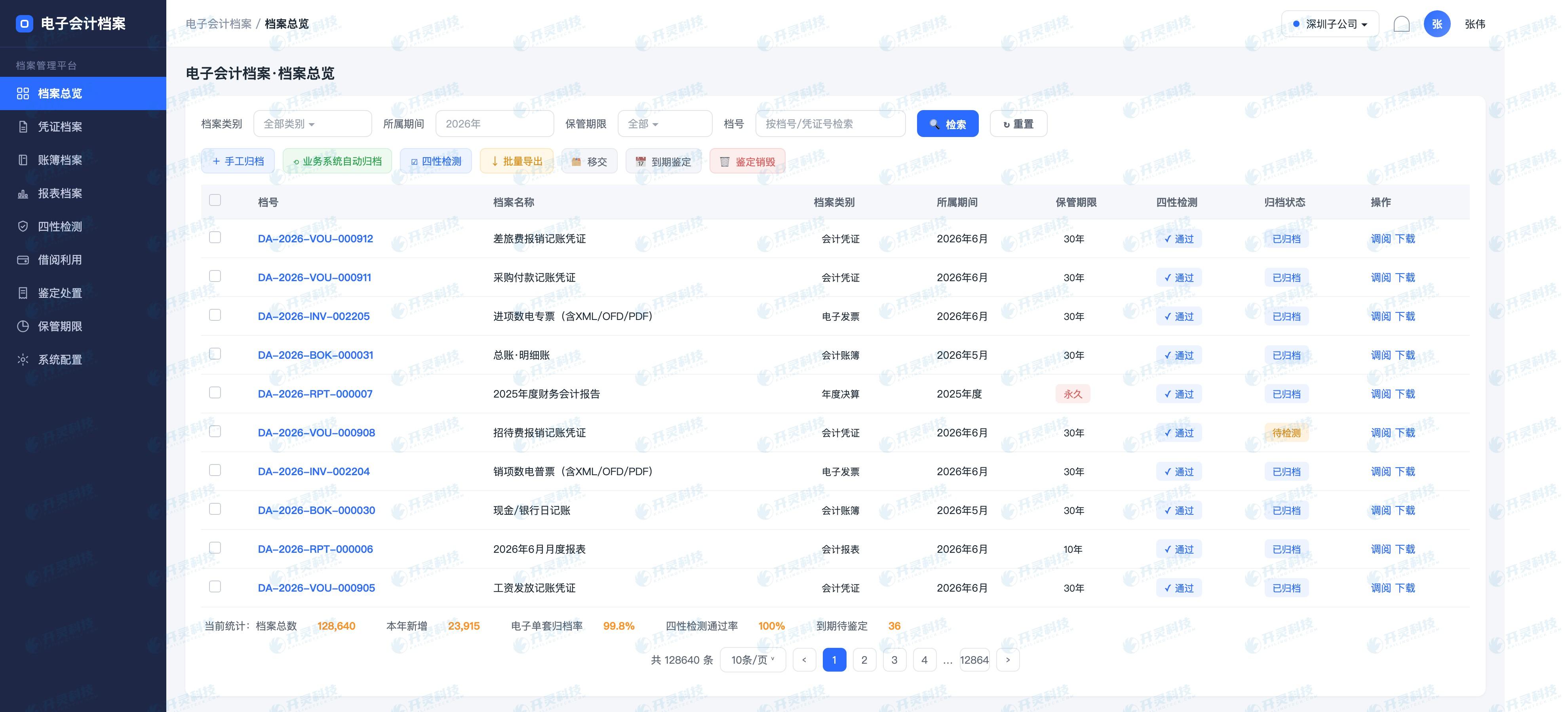
| "The four-property test is not four permanently fixed labels, but a set of checks executed at key nodes that are reviewable and actionable. |
▍V. Detection failures must enter a handling process rather than being manually checked through
Authenticity anomalies, file corruption, missing attachments, and unreadable formats are handled differently. The system should provide the failed items, basis, responsible roles, and executable actions, such as re-obtaining the source file, supplementing attachments, re-verifying signatures, or submitting to the archive manager for judgment.
When exceptional archiving is truly necessary, authorized personnel should also explain the reason, risk, and follow-up plan; ordinary operators should not directly change the result to passed. After handling is complete, re-test and retain the original failure, manual decision, and new result to form a continuous evidence trail.
▍VI. The single-set scope must match the archive conditions
Enterprises should determine the single-set scope based on source stability, rule clarity, availability of electronic originals, system reliability, archiving processes, four-property testing, backup and recovery, and retrieval needs. Paper disposal and division of responsibilities need to be clearly defined in the system and should not be decided solely by the technical department.
Situations such as file corruption, signature verification failure, index loss, backup recovery, and permission overreach may all change the usability of electronic archives. When viewing archives, it should be possible to return to the source file, detection records, and business relationships, and to learn from logs whether anomalies were handled as authorized.
- Clarify the archive categories and start time applicable to the single-set system.
- Retain the source files of electronic vouchers and necessary verification information.
- Failed four-property detection has a tiered handling and re-inspection process.
- Backup recovery, format migration, and permission audits have been drilled.
▍VI. Four-property testing should run through the entire electronic archive retention process
The single-set system relies on reliable electronic archives and full-process control. Authenticity, integrity, usability, and security are not four labels affixed on the day of archiving; source changes, format migration, backup recovery, permission adjustments, and long-term preservation can all affect the judgment, requiring reviewable records to be kept.
When detection fails, the specific object, basis and handling method should be stated. Handling for file corruption, missing attachments, abnormal signatures, unavailable indexes and permission overreach is not the same. After correction or recovery, the original status and subsequent results must still be retained so that electronic archives can independently support use and traceability.
- The single-set scope, start time, and responsibilities are written into the system.
- Failed four-property detection enters handling and re-inspection.
- Backup recovery can verify the relationship between files and business.
- Migration and permission changes trigger necessary reviews.
▍7. The core of the single-set system is that electronic archives can stand independently
Paper printouts can help with reading, but they cannot automatically prove that electronic archives already possess authenticity, integrity, usability, and security. The source, formation process, verification information, permissions, and preservation environment of electronic documents jointly determine whether they can be used independently, and companies need to preserve these relationships according to their own systems.
When software, storage environments, or permission systems change, archives should still be readable, retrievable, and interpretable. Inspection records, backup copies, recovery results, and migration relationships are continuously retained, so that the single-set system is not a one-time paper-reduction action, but a long-term reviewable management approach.
- Electronic archives have independent sources and verification information.
- Four-property issues have clear statuses and reasons.
- The changed file can still be read and located.
- Original relationships will not be lost due to migration.
▍FAQ
Q: Can a single-set system be implemented with scanned copies?
A: No. Judgment must also be made according to policy in combination with the original carrier, system reliability, internal controls, four-property testing, backup, and utilization conditions.
Q: Is the four-property check performed only once at the time of archiving?
A: It should not be done only once. Re-checks may be needed at nodes such as receipt, archiving, migration, recovery, and major changes in the storage environment.
Q: If detection fails, can it be manually changed to pass?
A: Disposition and re-inspection processes should be entered according to permissions, retaining the failure basis, manual decision, and new result; status cannot be changed without reason.
Q: After electronic vouchers are printed, can source files be omitted?
A: Cai Kuai [2020] No. 6 requires that electronic accounting vouchers within the applicable scope also be kept in electronic form, and cannot be retained only as printed copies.
Let the single-set system be built on verifiable electronic archives and full-process control. Welcome to visit Kailing Technology: https://www.kailingteck.com/eaa/ .
As a national high-tech enterprise, Kailing Technology focuses on the digital and intelligent transformation of enterprise business-finance-tax and operations management, providing software products, system integration, implementation and delivery, and operational services for various government agencies, institutions, group enterprises, and SMEs.
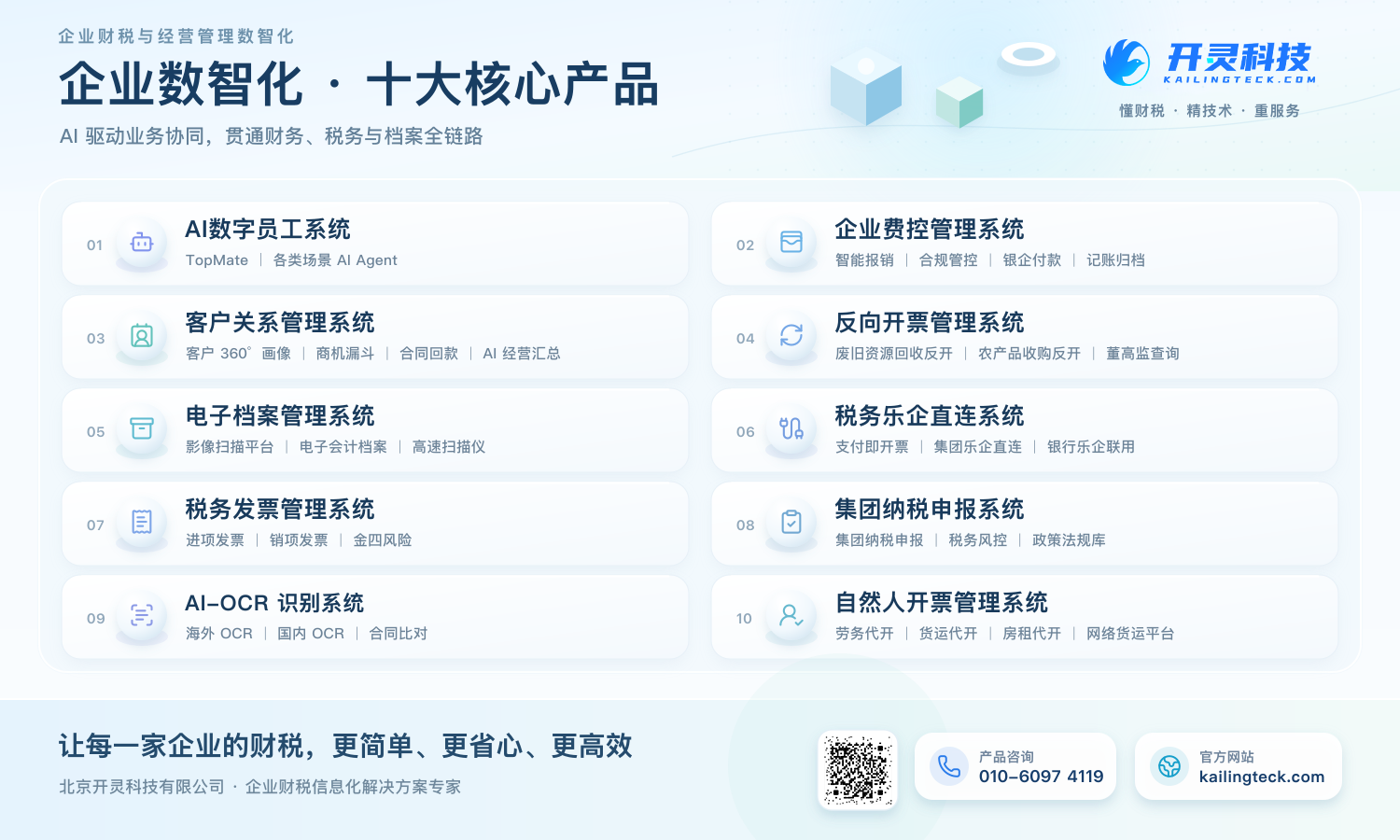
The company has now formed ten core product lines, including: AI digital employee system, enterprise expense control management system, customer relationship management system, reverse invoicing management system, invoice issuance for individuals management system, electronic archives management system, tax fully digitalized e-invoice Leqi system, tax invoice management system, group tax filing system, and AI OCR recognition system. It is committed to connecting enterprise business, finance, tax, funds, and archive data to help customers improve operational efficiency, business-finance-tax compliance capabilities, and digital management levels.
If you have any business-finance-tax digital transformation needs, welcome to contact us. Beijing Kailing Technology will serve you wholeheartedly.
Keywords: Single-set electronic accounting archives, four-property testing, electronic voucher archiving, Kailing Technology electronic accounting archives management system
As a comprehensive business-finance-tax digitalization solution service provider, Kailing Technology provides business-finance-tax management digital transformation products and operational services for various government agencies, institutions, and large, medium, and small enterprises. The product line includes: solutions for sales contract management system, procurement contract management system, fully digitalized Leqi interface project, automatic output invoicing system, reverse invoicing system, invoice issuance for individuals system, employee expense control and reimbursement system, input VAT invoice management system, supply chain collaborative reconciliation system, image AI OCR recognition system, automatic financial bookkeeping system, electronic accounting archives system, etc., comprehensively driving the digitalization process across various fields.
Consultation Hotline: 18513895936 / 010-60974119 Location: Beijing