
Vouchers and attachments always scattered and hard to link? Kailing Technology's AI electronic accounting archives management system automatically creates volumes and forms complete archives

The voucher has already been generated, but attachments are scattered across reimbursement, contracts, banks, and shared directories, and retrieval relies only on the handler's memory. Kailing Technology's electronic accounting archives management system can use identifiers such as voucher numbers, business document numbers, bill numbers, and payment transaction references to establish linkages, and after completeness verification passes, automatically create volumes according to classification and retention rules.
Automatic file creation is not compressing the documents of the same month into one package. A complete archive needs to explain the relationship between each material and voucher, how missing items are handled, why versions are retained, and whether the order within the file and metadata are consistent. Only when relationships can be reviewed can the archive withstand subsequent audits and transfers.
▍1. The root cause of scattering is that each system only knows its own document number
Accounting vouchers focus on voucher numbers, reimbursement systems focus on process numbers, procurement systems use order or contract numbers, and bank receipts are identified by transaction serial numbers. The same business has no shared association key across multiple systems. Even if all files are collected, it is difficult to automatically determine which voucher they belong to.
The business identifier chain needs to clarify which fields are generated upstream, at which node they are transmitted, and whether they can be uniquely located. For example, a payment application can carry the contract number and invoice number, and the voucher number is written in during voucher preparation. The earlier the association key enters the process, the less the archiving stage depends on file names.
▍II. The Kailing Technology electronic accounting archives management system matches first, then verifies
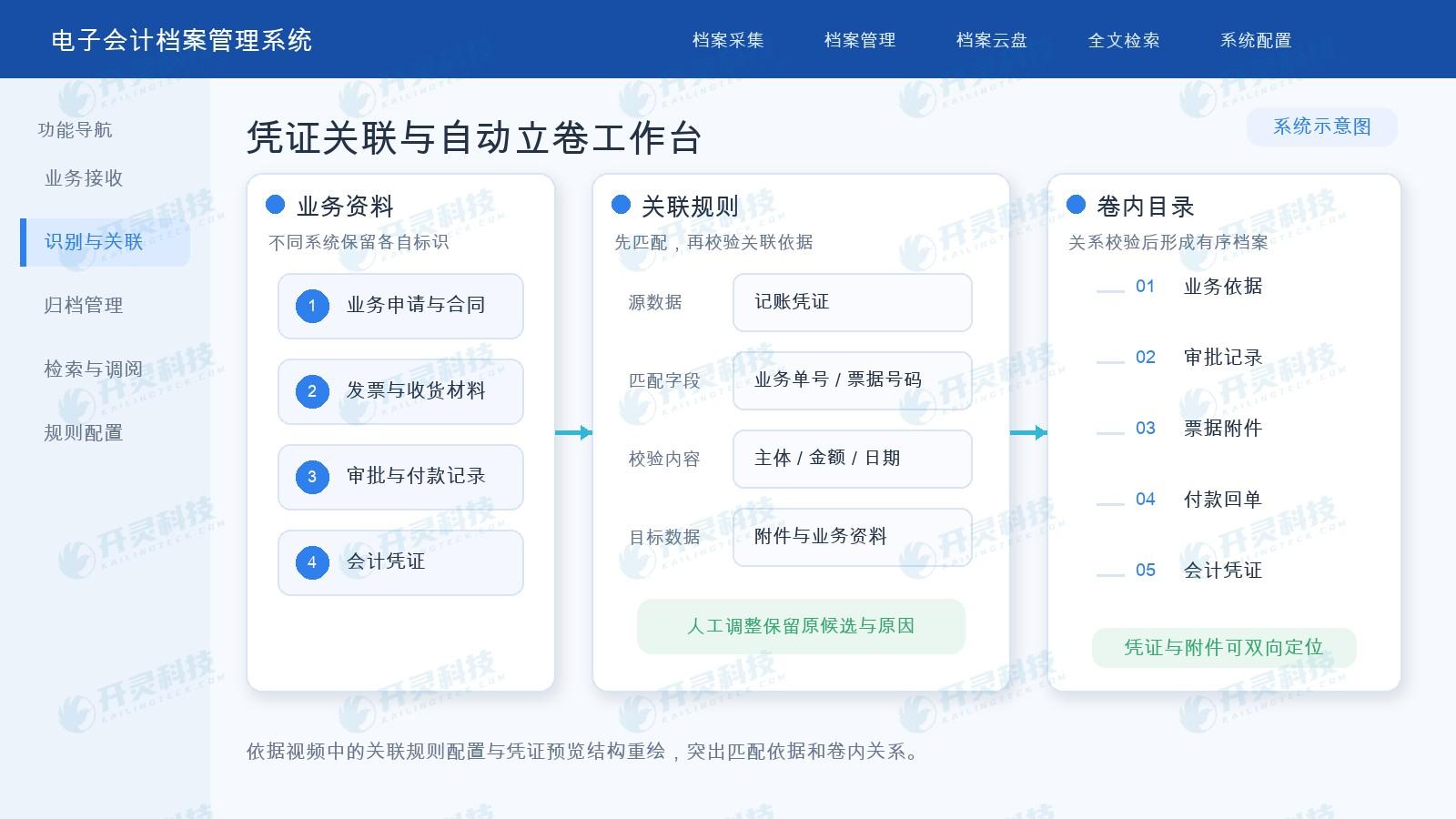
After receiving the materials, the system can first perform exact matching by stable identifiers, and then perform relationship verification on amount, date, entity, and business type. Files with only similar names but lacking reliable identifiers should enter the candidate queue; when multiple vouchers match at the same time, the archive or business responsible person should choose.
Matching results need to show the basis. For example, "the payment transaction references this application number" or "the invoice number appears in the reimbursement details" is easier to review than simply showing a percentage. After manual adjustment of associations, the original candidates, operator, and reason should also be retained to prevent subsequent batch processing from changing the files back.
▍III. Completeness rules must be judged by business type and archiving stage
The evidence sets for procurement, expenses, assets, and revenue businesses differ, and 'number of attachments greater than zero' cannot be used as a completeness standard. Rules should specify required materials, acceptable substitutes, conditions for permitted later supplementation, and the final responsible person, and distinguish between business in progress and the archive deadline.
When a certain document is missing, the system should indicate the name of the missing item and the source process. If it is not applicable because the business did not occur, the basis for non-applicability should be recorded; if supplementary submission is approved for extension, the approver and deadline should be recorded. The completeness conclusion formed in this way is not a checkbox, but a set of reviewable facts.
| "Completeness is not "the more attachments the better," but "everything required is present, nothing that should not be mixed in is included, and every material can explain its relationship." |
▍IV. Filing rules control classification, order, and version at the same time
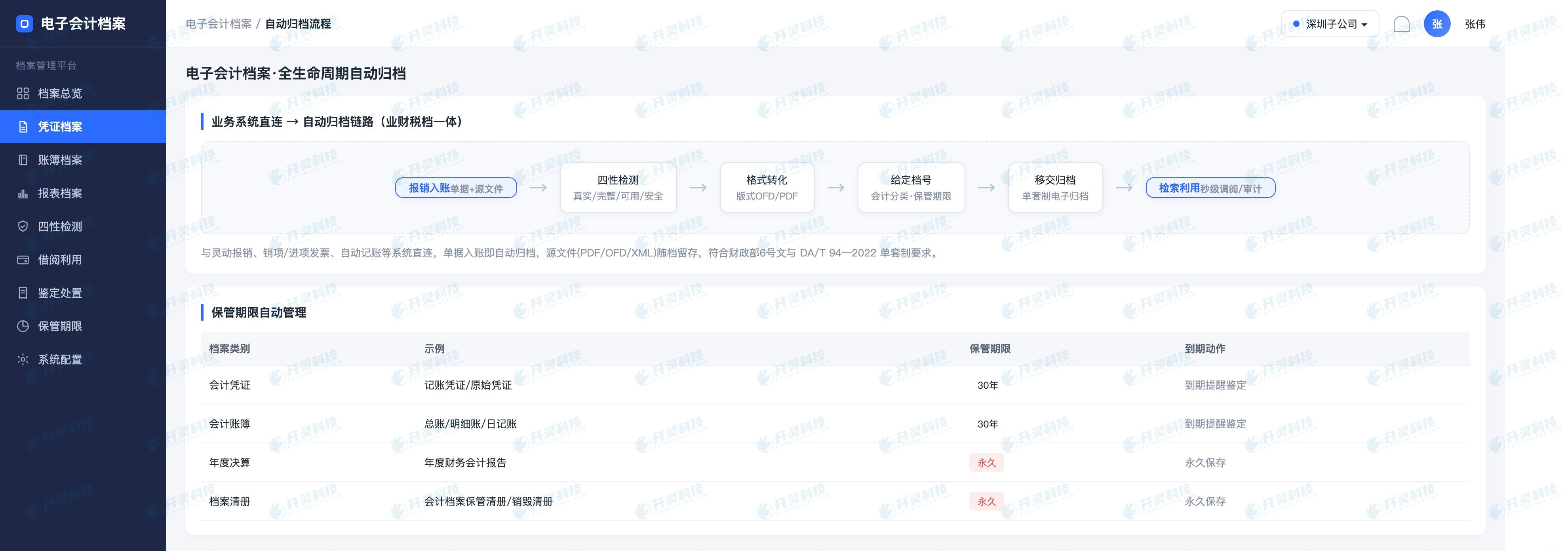
Automatic file creation should use approved classification schemes, retention periods, and naming rules, and write metadata such as accounting period, archive category, and organization into the file directory. The order within the file should serve reading and traceability, for example forming a stable structure from business basis to approval, invoices, payment, and vouchers.
Supplementary materials and revised documents cannot directly overwrite old content. The system must record the reason for addition or replacement, preserve version relationships, and determine whether to trigger re-detection or re-packaging. For archives that have already been transferred or sealed, modification permissions should be stricter, and if necessary, handled through a controlled correction process.
▍V. Cross-year and reversal transactions require separately designed relationships
A transaction may involve cross-period payment, and may also involve write-offs, red-letter reversals, refunds, or voucher adjustments. If automatic filing only aggregates by the current voucher number, the original business chain will be broken apart. The system should retain both the current-period voucher relationship and the original business relationship, so that reviewers can see the continuous evidence before and after adjustment.
For the situation where one attachment supports multiple vouchers, multiple unrelated files should not be copied out. One controlled object and multiple associated records may be retained, or reference copies may be created according to regulations, but regardless of the method used, the source file, version and scope of use must be traceable.
▍VI. When a link breaks, the system must clearly explain why
When situations such as missing document numbers, inconsistent amounts, one attachment linked to multiple transactions, supplementary materials, reversal vouchers, and cross-period payments occur, the system must not only identify the problem but also show which identifier is broken, what the conflict is, and who should correct it.
Open a volume and view files, metadata, association basis, and versions one by one from the catalog; then check in reverse from a business document whether it has entered the correct archive. Manual adjustments and batch reprocessing retain the original relationships, so automatic volume creation does not become an unexplainable file merge.
- Classification schemes and retention rules are already defined.
- The business identifier chain can be transmitted across systems.
- Missing items and non-applicability both have recorded reasons.
- Write-off, supplementary payment, and cross-period relationships remain clear.
▍VI. Automatic file creation is not simply merging files together
The core of automatic file creation is establishing explainable file assembly relationships. The accounting period, organization, voucher scope, archive category, and retention attributes jointly determine where documents should be filed; when attachments are missing, duplicated, or span periods, the system should point out relationship anomalies rather than forcibly merging them just to obtain a file volume number.
Vouchers and attachments must be cross-referenceable in both directions: users can see approvals, sources, and all attachments from the voucher, and can find the owning voucher, period, and filing batch from the attachment. When supplements, reorganization, or rule changes occur, prior relationships must be preserved so that archive use is not cut off by a single reorganization action.
- Archiving rules have clearly defined applicable organizations and periods.
- Vouchers, ledgers, and attachments can be cross-referenced in both directions.
- Supplementary documents and reorganization preserve the before-and-after relationship.
- Filing failures have explainable exception reasons.
▍7. Filing results must facilitate later lookup and explanation
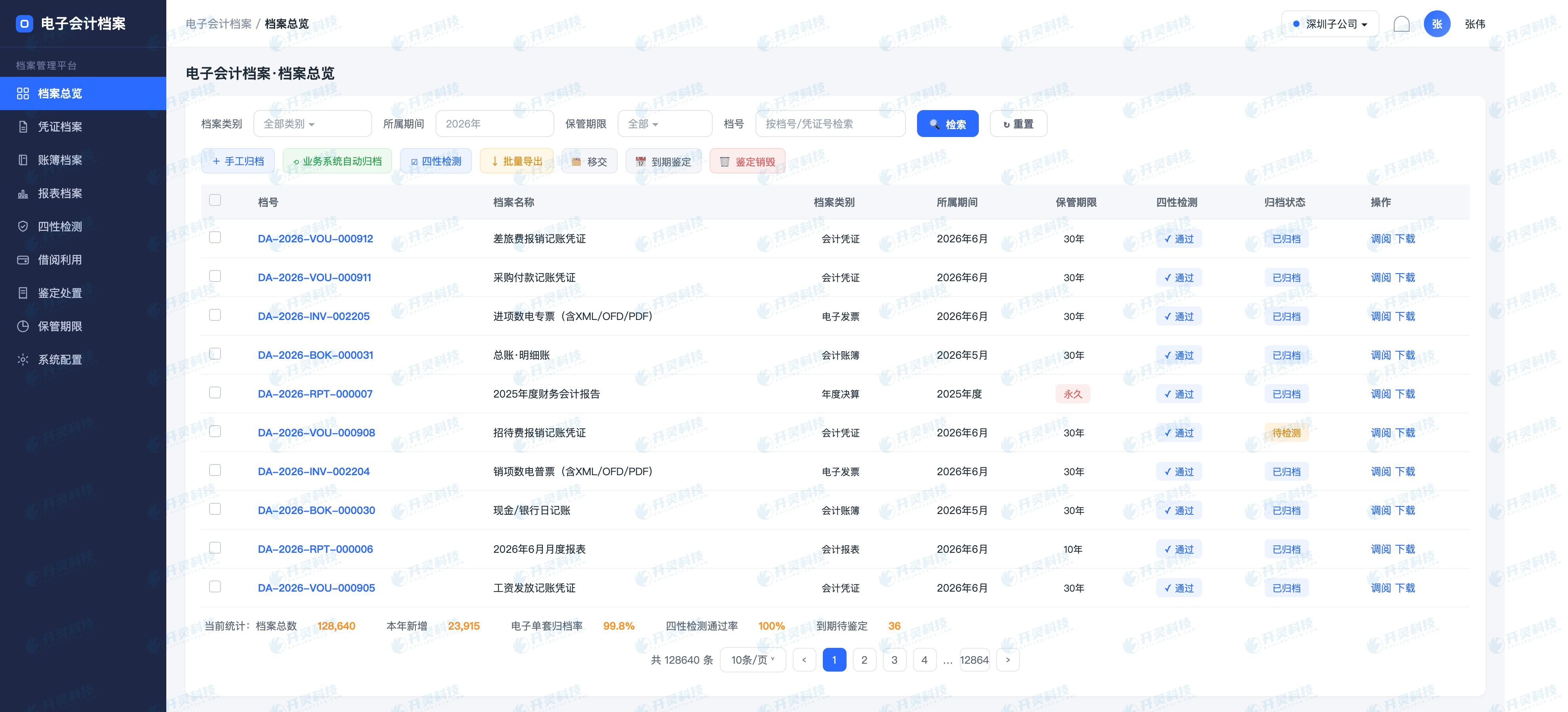
Volume binding is not the endpoint of the organization process. Catalogs, vouchers, attachments, and business relationships need stable identifiers so that when users search by period, organization, voucher number, or keyword, they can directly locate the original file. If the order within a volume is adjusted, the correspondence between the catalog and the files should also be preserved.
For materials spanning organizations, periods, or one business corresponding to multiple vouchers, the system should present associations rather than forcibly choosing a single attribution. Clear archiving relationships can reduce duplicate storage and also let reviewers understand why the same business appears at different archive nodes.
The clearer the filing relationships, the less subsequent retrieval depends on file naming. The period, organization, voucher, and business keywords in the directory stay consistent with the original files, so users can find complete materials from a single entry point and explain why an attachment belongs to a given voucher.
- The intra-volume catalog and the original files locate each other.
- Complex associations retain business context.
- Adjusting the order does not lose historical relationships.
- Search results can explain archive attribution.
▍FAQ
Q: Can attachments still be automatically linked without a business document number?
A: Yes, candidates can be generated from other reliable fields, but when there is no unique basis, the responsible person should confirm, and filing should not be automated based only on file names.
Q: What if one contract supports multiple vouchers?
A: Retain one controlled source file and multiple associations, or form reference copies according to policy, avoiding the generation of duplicate files that cannot be traced.
Q: Will adding supplementary attachments damage the original archives?
A: New versions and explanations should be added through a controlled supplement or correction process, and the completeness check should be re-executed according to the rules.
Q: Can changes still be made after filing is completed?
A: It needs to be controlled according to archive status and permissions; archives that have been sealed or transferred should use stricter correction and traceability mechanisms.
Let vouchers, attachments, and business evidence form a complete, reviewable archive. Welcome to visit Kailing Technology: https://www.kailingteck.com/eaa/ .
As a national high-tech enterprise, Kailing Technology focuses on the digital and intelligent transformation of enterprise business-finance-tax and operations management, providing software products, system integration, implementation and delivery, and operational services for various government agencies, institutions, group enterprises, and SMEs.
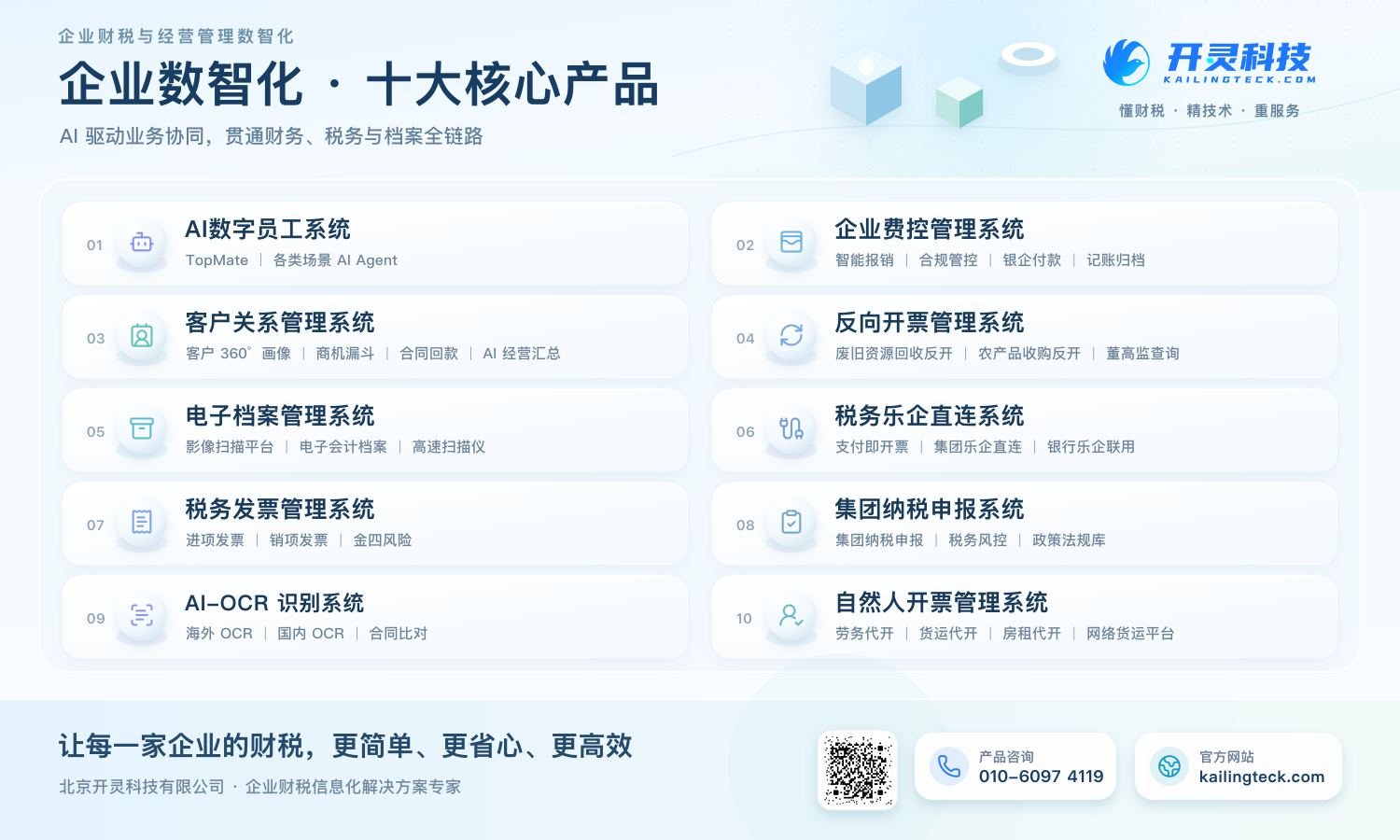
The company has now formed ten core product lines, including: AI digital employee system, enterprise expense control management system, customer relationship management system, reverse invoicing management system, invoice issuance for individuals management system, electronic archives management system, tax fully digitalized e-invoice Leqi system, tax invoice management system, group tax filing system, and AI OCR recognition system. It is committed to connecting enterprise business, finance, tax, funds, and archive data to help customers improve operational efficiency, business-finance-tax compliance capabilities, and digital management levels.
If you have any business-finance-tax digital transformation needs, welcome to contact us. Beijing Kailing Technology will serve you wholeheartedly.
Keywords: Electronic accounting archives automatic filing, voucher attachment association, archive integrity, Kailing Technology electronic accounting archives management system
As a comprehensive business-finance-tax digitalization solution service provider, Kailing Technology provides business-finance-tax management digital transformation products and operational services for various government agencies, institutions, and large, medium, and small enterprises. The product line includes: solutions for sales contract management system, procurement contract management system, fully digitalized Leqi interface project, automatic output invoicing system, reverse invoicing system, invoice issuance for individuals system, employee expense control and reimbursement system, input VAT invoice management system, supply chain collaborative reconciliation system, image AI OCR recognition system, automatic financial bookkeeping system, electronic accounting archives system, etc., comprehensively driving the digitalization process across various fields.
Consultation Hotline: 18513895936 / 010-60974119 Location: Beijing