
Reimbursement applicants fill out forms repeatedly and finance has to redo the work? Kailing Technology's enterprise AI digital employee turns receipts into auditable reimbursement forms

Reimbursement applicants have already left data in invoices, itineraries, emails, and business systems, yet they still have to re-enter amounts, reasons, and attribution information when submitting a form. Kailing Technology's AI digital employee is suited for exactly this kind of form-filling task—scattered sources, repetitive actions, and clear rules: extracting data from existing materials, validating against enterprise field requirements, and filling the results into the original reimbursement system.
The goal of auto-filling forms is not to save a keystroke, but to ensure inputs have a source, fields have mappings, and exceptions have a destination. If OCR results are simply moved directly into the form, the invoice information may be complete, but project attribution, business purpose, and policy exceptions will still push the problem back to finance.
▍1. Rework first appears between materials and forms
There are three common types of rework. The first is transcription errors, such as deviations in amount, date, or invoice number during multiple entries. The second is attribution errors, where employees know an expense occurred but may not accurately select the organization, project, or expense type. The third is incomplete evidence, where an invoice can prove the expenditure but cannot alone prove the purpose, personnel, and approval prerequisites.
Therefore, before processing, the authoritative source of each field should be clearly stated. Invoice fields are read from the source file, organization and project are obtained from the business system, expense purpose is confirmed by the reimburser, and policy judgments are prompted before submission. AI digital employees can speed up filling, but should not guess on their own when sources conflict.
- Establish a traceable relationship between recognized values and source files.
- Business dimensions are selected from controlled master data.
- Fields that cannot be determined are marked as pending confirmation and are not submitted with defects.
▍II. The Kailing Technology AI digital employee first organizes the input, then maps the fields
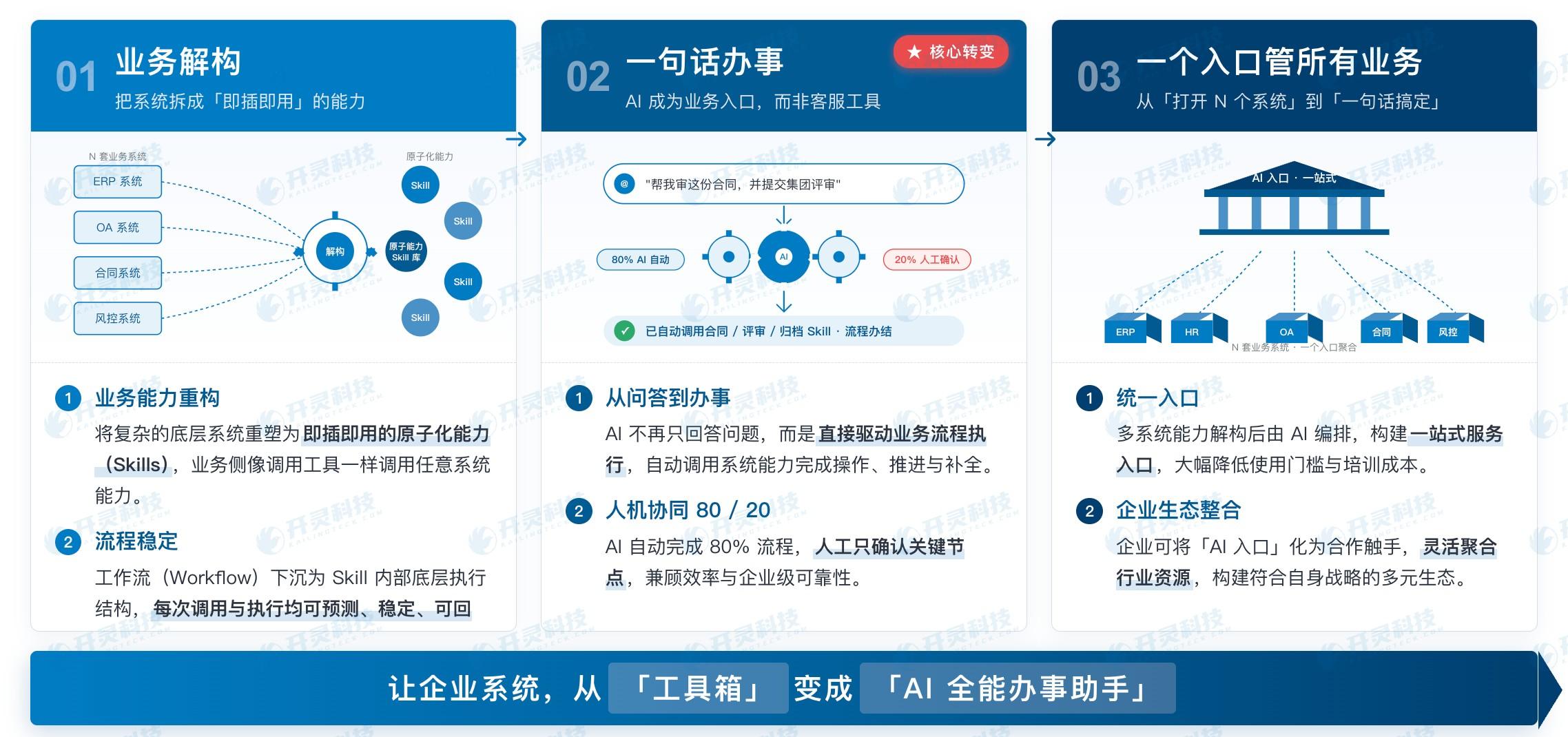
Completing an order in one go can be divided into four actions. The AI digital employee first receives the invoice and business attachments, then identifies the fields that can be obtained directly; it then fills them into the original reimbursement form according to the enterprise's preset mapping rules; finally, it hands conflicts, missing items, and items requiring business judgment to the employee for confirmation. This sequence avoids mistaking recognition capability for accounting judgment.
▍III. Cross-system data retrieval must obey existing permission boundaries
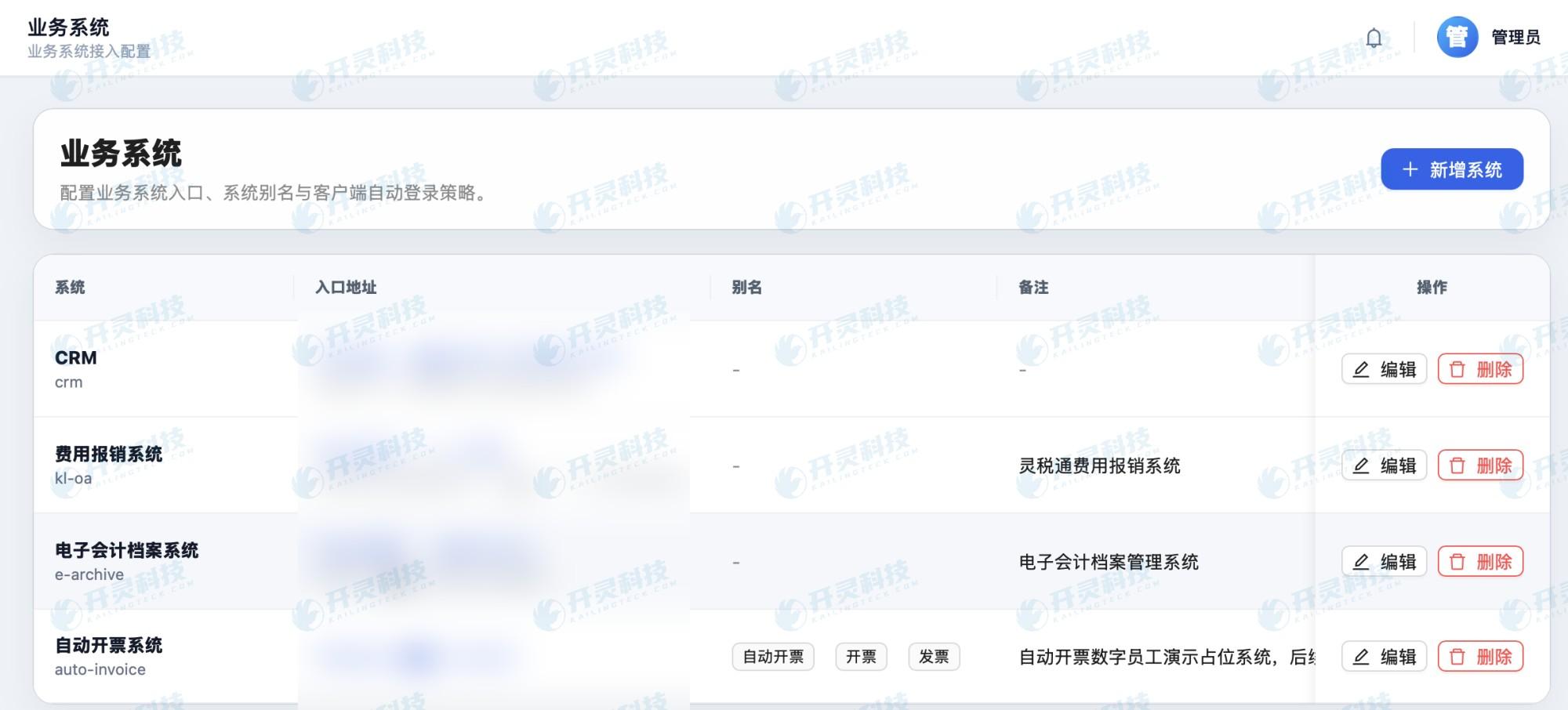
Department, project, customer/supplier, or application information in forms may be scattered across OA, ERP, and expense control systems. Kailing's integration approach is to encapsulate the original systems' interfaces, forms, and operations as callable tools, which the AI digital employee executes within authorized permissions. It should not, just because it can fill in forms, access data that employees originally had no right to view.
During the system registration phase, the readable scope, writable fields, and operations requiring secondary confirmation must be defined simultaneously. For example, reading a project name and formally submitting a document are two different risk levels; the former can be automatically completed based on permissions, while the latter can retain reimbursement applicant confirmation. This separation makes both efficiency and accountability clear.
| "The standard for a reviewable reimbursement form is not "all fields are filled," but "every value has a source, and every exception has a handler." |
▍IV. Send exceptions back to the right people, not to finance as the end point
Different exceptions should be handled at different nodes. If the invoice document is incomplete, it should be returned to the reimburser for supplementation; if the project or organization cannot be uniquely matched, the business personnel should select it; if there are clear mandatory conditions in the policy, they can be prompted before submission; situations requiring judgment of authenticity or exceptional authorization should be handed over to the approver or finance.
If the AI digital employee only reports errors at the front end, employees still do not know how to correct them. A more useful approach is to simultaneously provide the field, source, reason for conflict, and suggested action, and retain records before and after modification. What finance receives should be documents with complete materials and main fields already verified, not a batch of drafts waiting to be filled in.
▍V. Use five sample groups to verify whether the AI digital employee can truly close orders
For a POC, do not pick just one invoice with complete information. It is recommended to prepare five types of samples: normal invoices, missing fields, multi-item candidates, organizational permission mismatches, and policy exceptions, and separately check data retrieval, mapping, prompts, human handover, and submission results. After each change to policies or form fields, these samples can also serve as a regression checklist.
During verification, at least four results should be checked: whether the reimbursement applicant's duplicate input was reduced, whether the field sources were retained, whether uncertain items were handed to the correct role, and whether formal submission is still within the authorized scope. Only after these four items pass does "automatic form filling" change from a demo feature into a deliverable job capability.
▍VI. Operable rules must be established starting from a single form example
For examples, you can start with one type of reimbursement form that occurs frequently and has stable data sources, but adjustments should not revolve only around normal samples. The team should classify form fields into four categories: directly retrievable, requiring mapping, requiring employee confirmation, and prohibited from automatic filling, then specify the data source, validation method, and exception handler for each category. When fields change, this table is the basis for regression checks.
Accurate fields do not mean the entire document is usable. For example, the invoice amount may be recognized correctly, but the business purpose may be inconsistent with the project; the department may be pulled from the personnel file, but it should actually be borne by a temporary project. Therefore, single-field validation, inter-field relationship validation, and full-document checks should be performed in layers, rather than using one "recognition successful" status to replace all quality judgments.
The operations dashboard can analyze which fields are frequently modified by people, and whether the modifications are due to recognition errors, outdated mappings, incomplete master data, or ambiguous policies themselves. If the same cause occurs continuously, the data source or rules should be corrected, rather than treating manual supplementation as a normal process. This kind of review enables the digital employee's tasks to update along with forms and policies.
When expanding examples to other reimbursement types, it is recommended to reuse the five checklists of "input source—field mapping—relationship validation—manual node—submission permission" rather than copying a generic instruction. Travel, entertainment, and procurement documents have different evidence and attribution requirements, each requiring boundary samples. Only by maintaining this structured management can the scope of automatic form filling be expanded without amplifying risk.
Finally, operational traceability must also be verified. Take a submitted document and check which fields were populated by the AI digital employee, which were modified by the employee, which rules were triggered before submission, and what permissions the system used to complete the operation. If only the final document is retained, it will be impossible later to determine whether an error came from recognition, mapping, or manual modification. A complete record is both a basis for troubleshooting and a risk sample before expanding the scope of automation.
After new document types are put into use, a parallel observation period should also be arranged. Manual entry is no longer repeated, but sources, mappings, and submission records should be spot-checked to confirm that anomalies have not been hidden by automation. After the observation period ends, adjusting spot-check frequency by risk level is easier to operate stably than opening everything up all at once.
- Record frequently manually modified fields and reasons.
- Manage forms, mappings, and policy versions separately.
- Prepare boundary samples anew for new documents when scaling up.
▍FAQ
Q: Will AI digital employees directly submit incorrectly recognized amounts?
A: Format, totals, and source validation should be performed after mapping, and inconsistencies should be flagged as anomalies and routed to manual confirmation rather than completed by guesswork.
Q: Does the existing reimbursement system need to be rebuilt?
A: Existing systems can usually be connected through interfaces, forms, or page tools. The specific method needs to be determined after system investigation.
Q: Which fields must be confirmed by the employee?
A: Fields involving business purpose, multiple candidates, or responsibility judgment should retain manual confirmation; only fields that can be obtained directly from authoritative sources are suitable for automatic population.
Q: How do we determine whether rework is actually reduced after use?
A: Compare form-filling time, field modification rate, number of supplementary submissions, and reasons for finance returns, while also reviewing whether automatic submission exceeds authority.
Let reimbursement materials be organized and verified before entering approval. Welcome to visit Kailing Technology to learn about the enterprise AI digital employee solution: https://www.kailingteck.com/de/ .
As a national high-tech enterprise, Kailing Technology focuses on the digital and intelligent transformation of enterprise business-finance-tax and operations management, providing software products, system integration, implementation and delivery, and operational services for various government agencies, institutions, group enterprises, and SMEs.
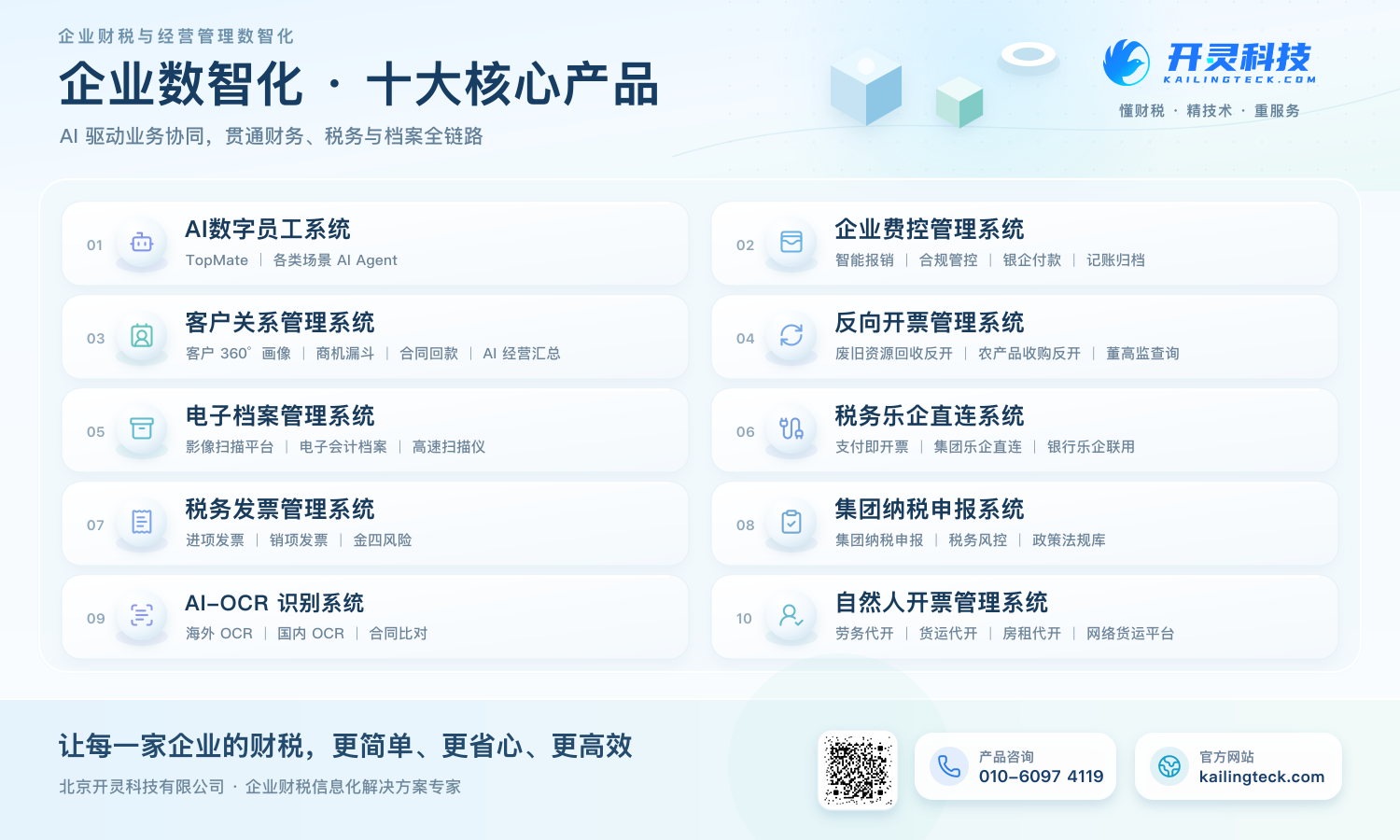
The company has now formed ten core product lines, including: AI digital employee system, enterprise expense control management system, customer relationship management system, reverse invoicing management system, invoice issuance for individuals management system, electronic archives management system, tax fully digitalized e-invoice Leqi system, tax invoice management system, group tax filing system, and AI OCR recognition system. It is committed to connecting enterprise business, finance, tax, funds, and archive data to help customers improve operational efficiency, business-finance-tax compliance capabilities, and digital management levels.
If you have any business-finance-tax digital transformation needs, welcome to contact us. Beijing Kailing Technology will serve you wholeheartedly.
Keywords: AI intelligently fills in reimbursement forms, enterprise digital employees, reimbursement automation, Kailing Technology AI digital employees
As a comprehensive business-finance-tax digitalization solution service provider, Kailing Technology provides business-finance-tax management digital transformation products and operational services for various government agencies, institutions, and large, medium, and small enterprises. The product line includes: solutions for sales contract management system, procurement contract management system, fully digitalized Leqi interface project, automatic output invoicing system, reverse invoicing system, invoice issuance for individuals system, employee expense control and reimbursement system, input VAT invoice management system, supply chain collaborative reconciliation system, image AI OCR recognition system, automatic financial bookkeeping system, electronic accounting archives system, etc., comprehensively driving the digitalization process across various fields.
Consultation Hotline: 18513895936 / 010-60974119 Location: Beijing