
SAP, Yonyou, Kingdee, and OA data being transferred back and forth? Kailing Technology's enterprise expense control reimbursement management system connects the expense data chain
The enterprise already has SAP, Yonyou, Kingdee, or other financial systems, as well as OA and bank connections, but after implementing expense control it is still importing and exporting. This is usually not because there are not enough interfaces, but because the systems have no agreement on the identity, master data, and status of the same expense. Employees apply in OA, reimburse in expense control, and the financial system receives vouchers. If the department, project, or document number is changed anywhere, subsequent write-back may fail to find the original record. Around "1. The more interfaces there are, the more data still has to be transferred, because responsibility boundaries are not defined," the Kailing Technology enterprise expense control reimbursement management system needs to incorporate the relevant relationships into the same business chain.
Kailing Technology enterprise expense control and reimbursement management system can connect ERP, OA, invoices, banks, vouchers, and archives, but "connection" cannot be simplified into bidirectional synchronization of all fields. First clarify which system maintains master data, which system generates transactions, who receives vouchers, and who is responsible for the final status, then design events, interfaces, and compensation, so that the expense data chain does not become a new replication chain.
▍1. More APIs still means dumping data because responsibility boundaries are undefined
When OA, expense control, and ERP can all modify departments, projects, or suppliers, the same field will have multiple versions; when each system generates its own document number but there is no global correlation key, status write-back can only be guessed by amount and time. Interfaces transmit differences faster, but they do not automatically eliminate differences.
The first diagram in the integration design should be system responsibilities, not an interface list. Employees and organizations may come from HR or master data platforms, applications from OA, expenses and invoices are formed in expense control, payments are executed through bank-enterprise connections, vouchers enter the financial system, and archives receive the final evidence. After selecting the authoritative source for each type of data, other systems read it as needed.
- Master data answers names, codes, and validity periods, and in principle is maintained only by the authoritative system.
- Transaction data records business occurrence; modifications must be completed in the source system and propagated downstream.
- Status data explains processing results and must return to the initiating end for personnel to view and assign responsibility.
▍II. Kailing Technology enterprise expense control and reimbursement management system: four types of data each determine the sync direction
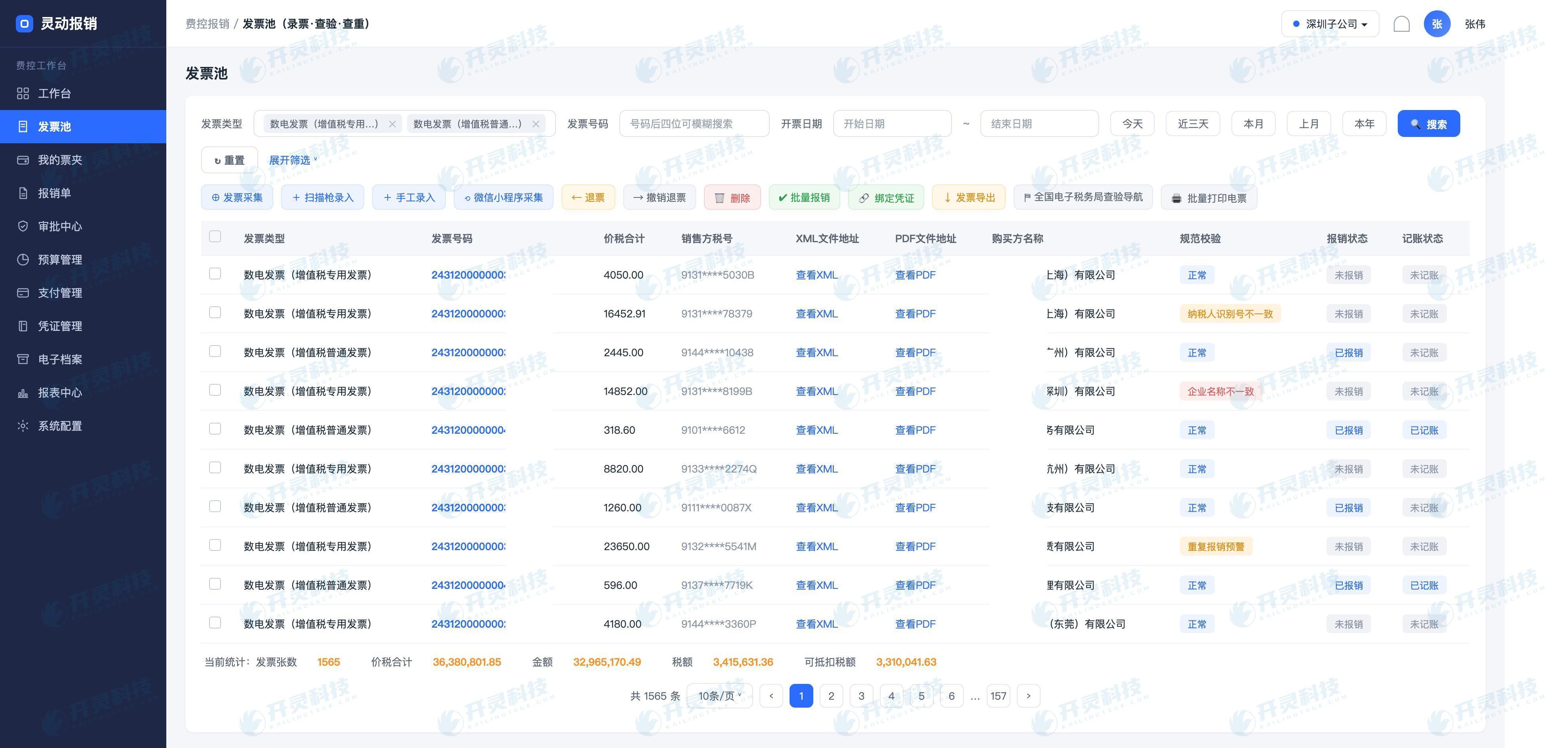
Organizations, personnel, departments, projects, and customers/suppliers are master data and usually enter expense control from a clear authoritative source; applications, reimbursements, invoices, and payment tasks are transaction data and need to retain the original system document number; approvals, payments, vouchers, and archiving results are status data and should be written back as required by subscribers; attachments and source files are evidence data, and transmission, permissions, and versions must be controlled.
Kailing Technology enterprise expense control and reimbursement management system supports connection with SAP, Oracle, D365, Yonyou U8 or NC, Kingdee, as well as OA, DingTalk, and other directions. Specific product versions, interface capabilities, and modification scope should be verified in the project. System names are only the starting point of boundaries; the actual interface contract must also specify fields, codes, timing, and failure responsibilities.
▍3. One expense form advances continuously through events and statuses
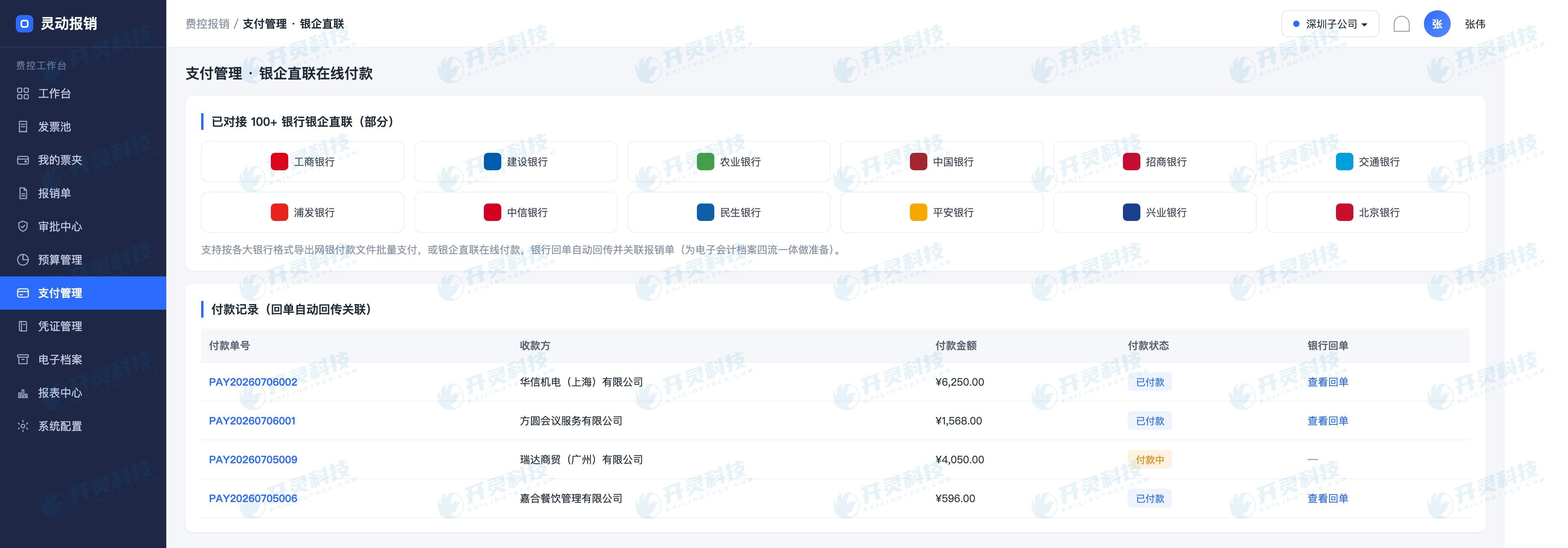
After an expense application is approved, it generates a business event recognizable by expense control; employees reference the original application and budget occupation when reimbursing. After invoice verification is completed, it forms an available status; after approval, a payment task is generated; after the bank returns a result, it triggers a voucher or pending exception, and finally writes the voucher number and archiving result back. Each event carries a stable business identifier and version.
Synchronization cannot consider only the success path. Approval withdrawal, payment return, voucher rejection, and archive failure will all change downstream processing. The system should agree with the target platform on replayable, queryable, and idempotent processing to prevent duplicate documents caused by network retries; "sent" and "accepted by the other party" should also be recorded separately.
| "The core of system integration is not moving fields, but ensuring the same business identity can still be found after every status change. |
▍IV. Before retrying failures, first ensure no duplicate posting
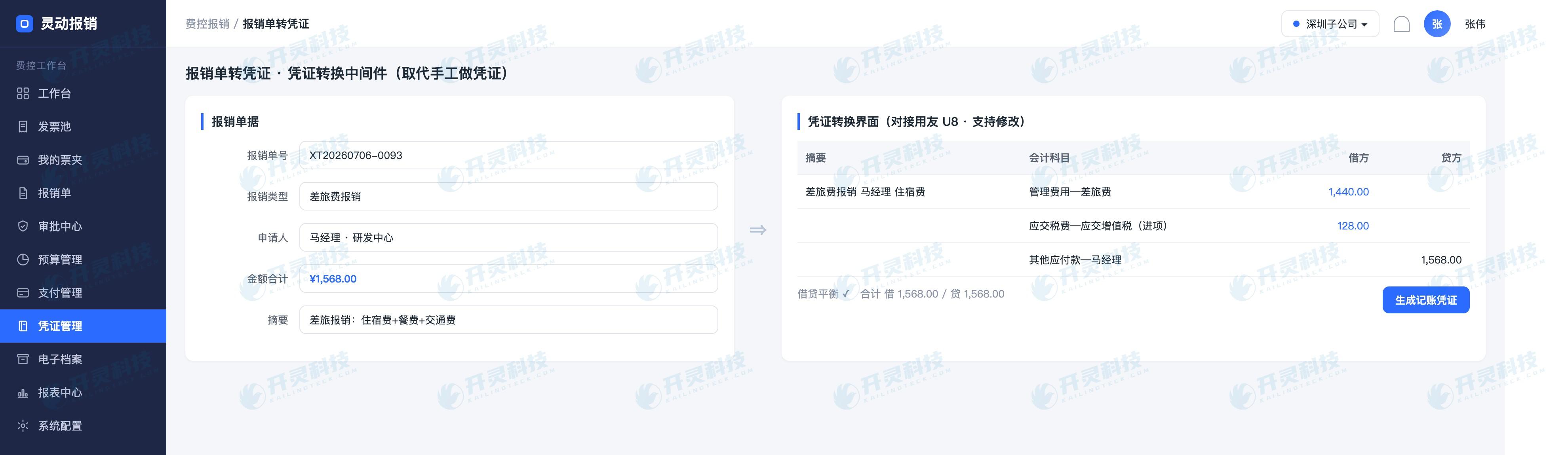
An API timeout does not mean the other party did not process it; directly resending may create two vouchers or two payments. Each write request should carry a unique business key, and the receiver should use the key to determine whether it is first-time processing or a duplicate arrival; when the result is unknown, the sender should query first, then decide whether to retry. The failure queue should also distinguish data validation errors, permission issues, closed accounting periods, and network anomalies.
Reconciliation tasks compare quantities, amounts, business keys, and statuses using both parties' records, and differences enter an assignable list. Finance personnel should not rely on Excel to overwrite differences; instead, they should confirm whether the source system needs correction, whether the interface missed transmission, whether the target system rejected it, and write the final conclusion back into the data chain.
- Duplicate requests return the original processing result and no longer create new financial or payment objects.
- Business errors are returned to the source for correction, technical errors are retried according to strategy, and the two queues are separated.
- Supplementary entry must also preserve source and approval, and cannot become a long-term hidden channel outside the interface.
▍V. Phased rollout is more controllable than connecting all systems at once
In the first phase, you can first connect the organizational personnel master data, expense forms, and vouchers of a single financial system to verify identity and status; in the second phase, connect invoices and banks to complete invoice and fund evidence; in the third phase, expand to multiple legal entities, multiple ERPs, or archives. Each phase should include tests for positive, withdrawal, failure, and duplicate events, and should not use a successful interface return as the acceptance endpoint.
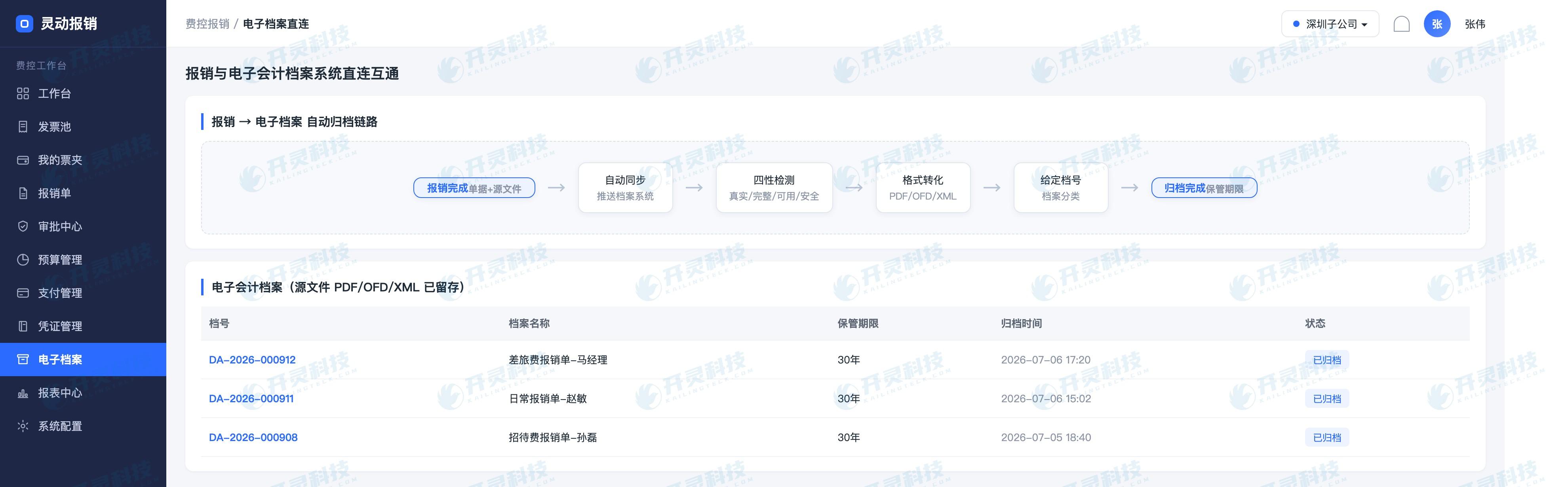
After the archiving system receives materials, it should write back the archive index, enabling business personnel and finance to view the final destination from the original expense form. Product integration scope should be subject to project verification, especially for old-version ERP, custom OA, and special bank interfaces, where fields and technical conditions need to be confirmed first.
- Establish an interface ledger, clearly stating data owners, call directions, frequency, and exception owners.
- Select one real expense chain for end-to-end regression, then replicate it across more organizations and systems.
- After launch, review by failure reason and number of manual supplementary entries, and continuously eliminate breakpoints in the data chain.
When responsibility boundaries, business identities, event statuses, and compensation mechanisms are all clear, SAP, Yonyou, Kingdee, or OA do not need to be forcibly transformed into the same kind of system. Each undertakes the responsibilities it excels at, while sharing necessary results around a single expense form, so that employees and finance truly bid farewell to exporting spreadsheets back and forth.
Interface security must also be included in the data contract. Only transmit fields needed for business, set access scopes for accounts, bank information, and document files, and separate keys and call permissions by environment. Test data should be desensitized, and production troubleshooting should not involve arbitrarily downloading complete attachments to personal devices. The more connections, the more unified auditing is needed.
Master data changes should carry an effective time. After a department merger or project closure, historical expenses still retain the meaning of the original code, new documents use the new version, and downstream recipients process according to the effective date. If only the latest name is synchronized, cross-period reports will incorrectly attribute past business to the current structure.
Final acceptance can set end-to-end observable metrics: when an event is sent, when the counterparty receives it, when the status is written back, and at which step a failure occurs. This way, troubleshooting does not require multiple vendors to simultaneously dig through logs guessing responsibility, and business personnel can also get clear progress.
▍FAQ
Q: We already have OA approval; does expense control still need to go through another round?
A: Not necessarily. You can clarify the authoritative source of application or approval, pass results through interfaces and let expense control take over subsequent invoices, reimbursement and payment, avoiding duplicate authorization.
Q: If system names are the same, can the interface definitely be reused directly?
A: It cannot be guaranteed. Product versions, deployment methods, custom fields, and open interfaces may all differ and need to be verified item by item in the project.
Q: Why can't an interface timeout be resent immediately?
A: The other party may have already processed it successfully. Query by unique business key or retry idempotently to prevent duplicate vouchers and duplicate payments.
Q: Which data is not suitable for two-way modification?
A: Master data such as organizations, personnel, and projects should usually have an authoritative maintenance owner; other systems read or request changes to avoid multi-source overwriting.
Keep expense data under the same identity across OA, ERP, banks, and archives. Welcome to visit Kailing Technology: https://www.kailingteck.com/feikong/ .
As a national high-tech enterprise, Kailing Technology focuses on the digital and intelligent transformation of enterprise business-finance-tax and operations management, providing software products, system integration, implementation and delivery, and operational services for various government agencies, institutions, group enterprises, and SMEs.
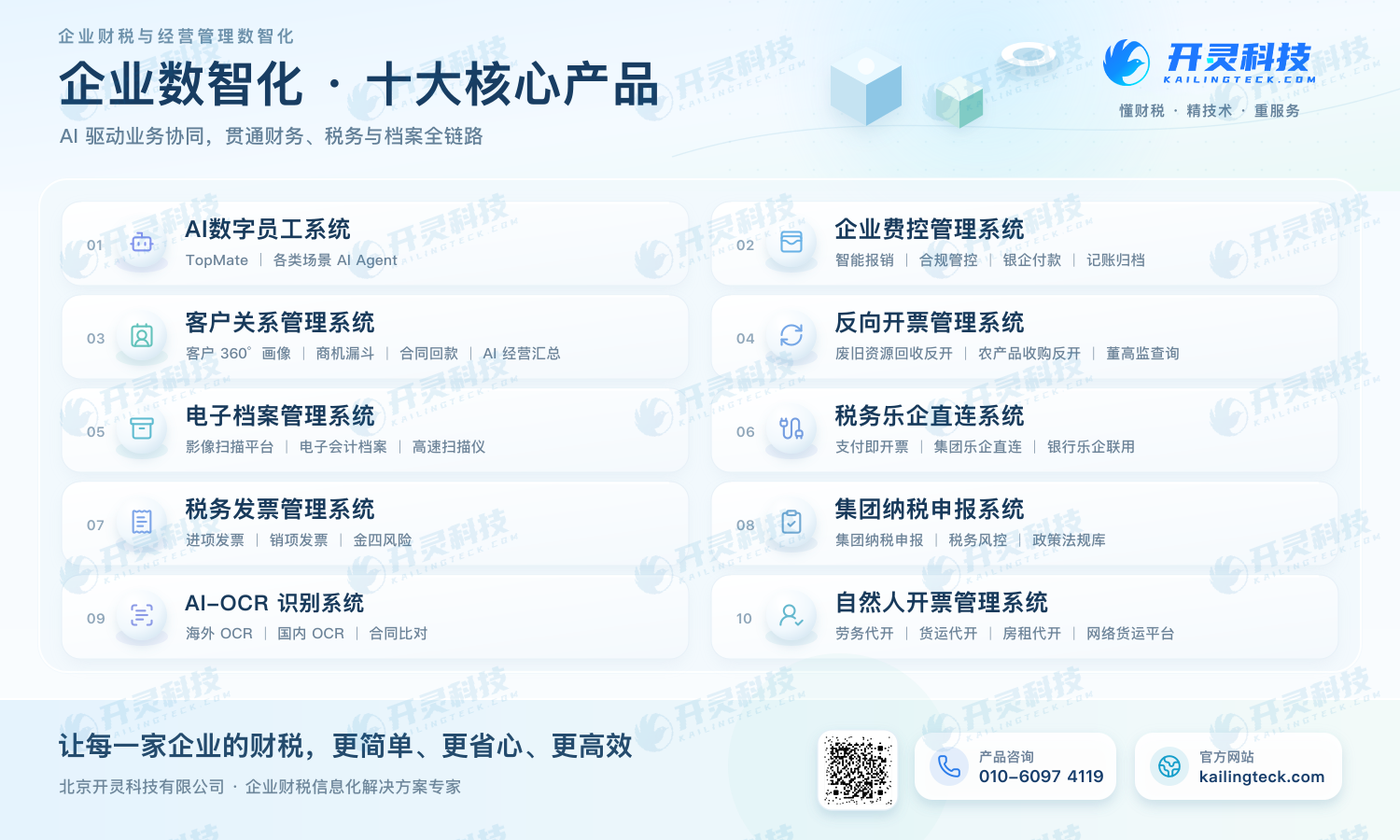
The company has now formed ten core product lines, including: AI digital employee system, enterprise expense control management system, customer relationship management system, reverse invoicing management system, invoice issuance for individuals management system, electronic archives management system, tax fully digitalized e-invoice Leqi system, tax invoice management system, group tax filing system, and AI OCR recognition system. It is committed to connecting enterprise business, finance, tax, funds, and archive data to help customers improve operational efficiency, business-finance-tax compliance capabilities, and digital management levels.
If you have any business-finance-tax digital transformation needs, welcome to contact us. Beijing Kailing Technology will serve you wholeheartedly.
Keywords: SAP expense control integration, Yonyou Kingdee integration, OA integration, Kailing Technology, enterprise expense control reimbursement management system
As a comprehensive business-finance-tax digitalization solution service provider, Kailing Technology provides business-finance-tax management digital transformation products and operational services for various government agencies, institutions, and large, medium, and small enterprises. The product line includes: solutions for sales contract management system, procurement contract management system, fully digitalized Leqi interface project, automatic output invoicing system, reverse invoicing system, invoice issuance for individuals system, employee expense control and reimbursement system, input VAT invoice management system, supply chain collaborative reconciliation system, image AI OCR recognition system, automatic financial bookkeeping system, electronic accounting archives system, etc., comprehensively driving the digitalization process across various fields.
Consultation Hotline: 18513895936 / 010-60974119 Location: Beijing