
The group expense policy is unified, but permissions cannot be mixed: Kailing Technology enterprise expense control and reimbursement management system's multi-organization control solution

The group wants to unify expense standards and reimbursement experience, but data from different legal entities, departments, and projects must not be visible to unrelated personnel; headquarters needs aggregated analysis, while subsidiaries need to retain their own accounts, approval authorities, and exception policies. If unification is understood as sharing one set of accounts and data, efficiency gains will come at the cost of unauthorized access risks and blurred responsibilities. Centering on "1. Unified policies do not mean all units share one set of permissions," Kailing Technology's enterprise expense control and reimbursement management system needs to incorporate the relevant relationships into the same business chain.
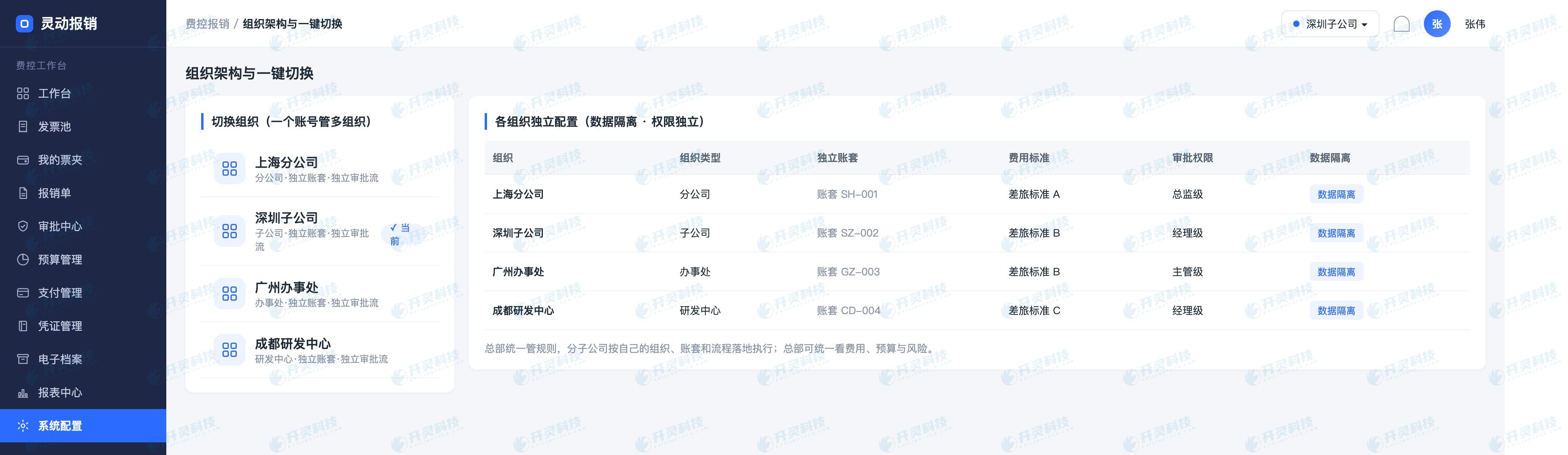
Kailing Technology enterprise expense control and reimbursement management system supports multi-organization scenarios and organization switching. During implementation, group standards, legal entity exceptions, role responsibilities, data scope, and authorization audits can be layered. The goal of multi-organization control is not to make all units identical, but to clearly answer on a common foundation who can enter which organization, see what, handle what, and leave what records.
▍1. Unified rules do not mean all units share one set of permissions
The group can unify invoice verification, expense classification, and the basic process framework, while legal entities may still retain differences due to accounting, bank accounts, tax entities, or business characteristics. If policy templates and data permissions are bound together, modifying one expense standard may unexpectedly expand the viewing scope; conversely, copying a large number of processes to isolate permissions makes versions difficult to maintain.
Therefore, "whether rules are unified" and "whether data is visible" should be designed separately. Headquarters is responsible for common rules and reporting standards, legal entities maintain authorized local parameters, positions handle documents according to responsibilities, and personnel work only within the organizational scope granted to them. Unification occurs at the standard layer, while isolation occurs at the identity, role, and data layers.
- Public expense categories are maintained by the group to avoid the same business using completely different names across different companies.
- Local exceptions must have an applicable organization and effective scope, and cannot override the processes of other units.
- Headquarters summary permissions are separated from subsidiary operation permissions; being able to view the whole picture does not mean being able to act on behalf of everyone.
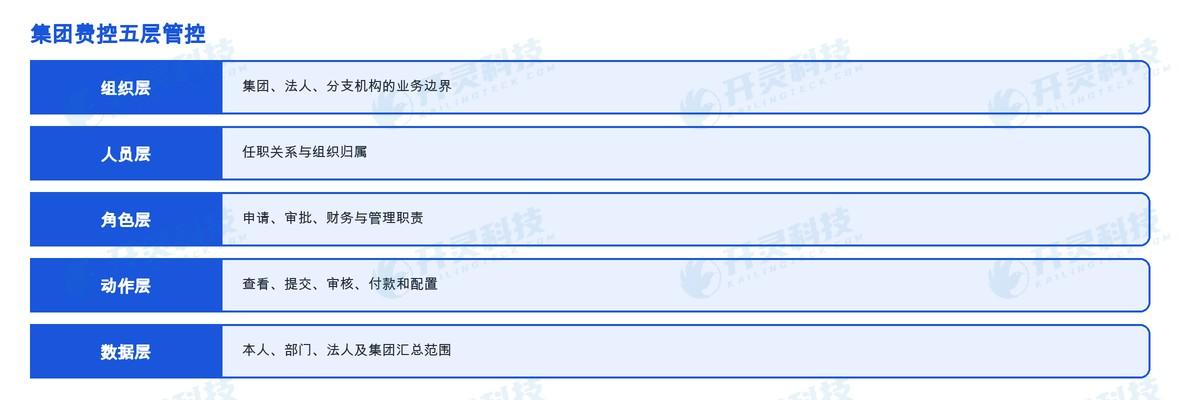
▍II. Kailing Technology enterprise expense control and reimbursement management system: only after the five-layer objects are separated can permission boundaries be tested
The first layer is organizational objects such as groups and legal entities; the second layer is personnel and their employment relationships; the third layer is positions or business roles; the fourth layer is specific action permissions; the fifth layer is data scope. Only when the five layers are defined separately can complex relationships be expressed, such as "a person, as a company's expense accountant, can review that company's documents, while as a group reporting user, can only view summaries."
This system provides switching and independent permission capabilities in multi-organization environments. The specific permission model should be designed according to the project and should not invent fixed names. Implementation documentation should list the matrix of organizations, roles, actions, and data scopes, and confirm each item using the principle of least privilege, rather than giving users a vague "administrator."
▍III. Organization switching and data isolation must take effect simultaneously
When one person holds positions in multiple organizations, they can switch work organizations in a clear interface, but each submission and approval must record the current identity. The system must not mix all data into the same list just because a user has multiple roles, nor bypass data scope in exports, searches, or mobile reminders. Switching is only the entry point; isolation must cover queries, operations, and output.
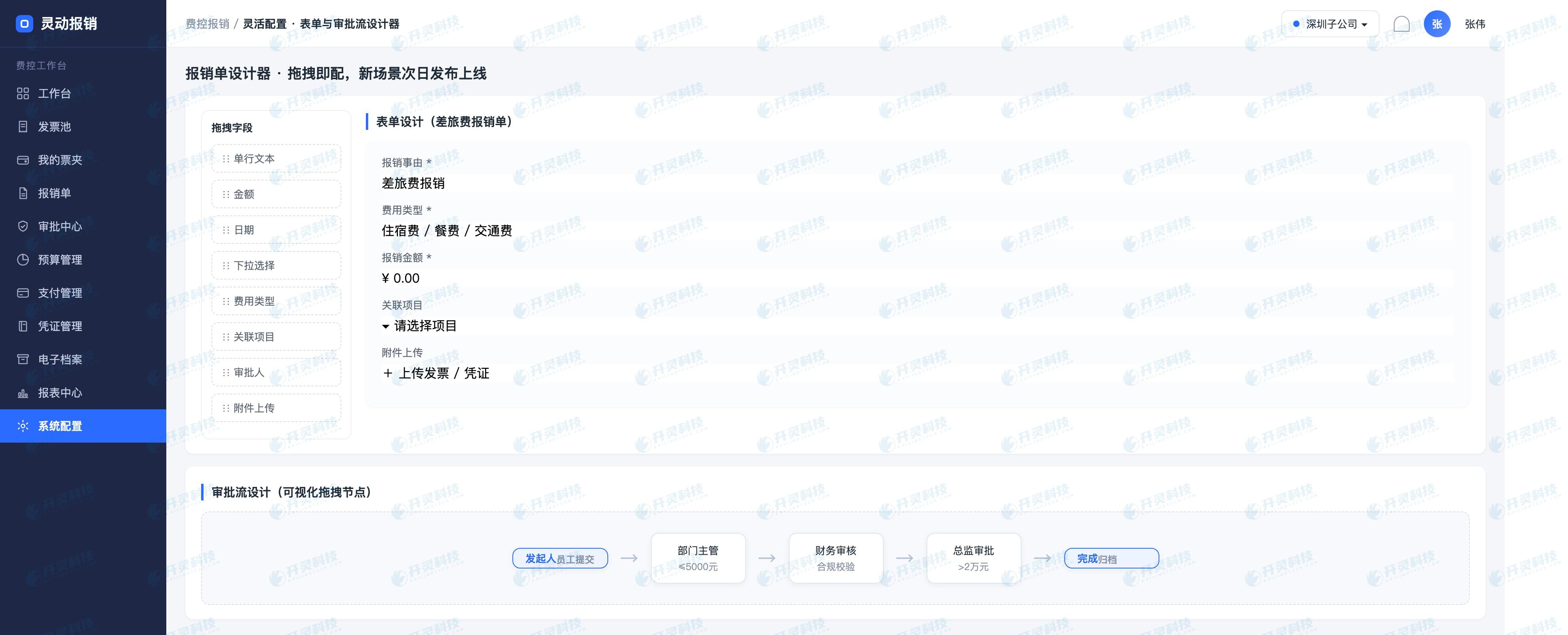
Forms and processes should also identify the organization. Group templates can provide common fields and nodes, and legal-entity exceptions are implemented through parameters or controlled branches. Kailing Technology's enterprise expense control and reimbursement management system supports flexible configuration, and enterprises need to establish template release and regression mechanisms to prevent a subsidiary's temporary modification from spreading to the group.
| "The qualified experience of multi-organization is that entry can be unified, identity must be clear, and data always flows within authorized boundaries. |
▍IV. Group consolidation must be drillable, but reports must not grant unauthorized access
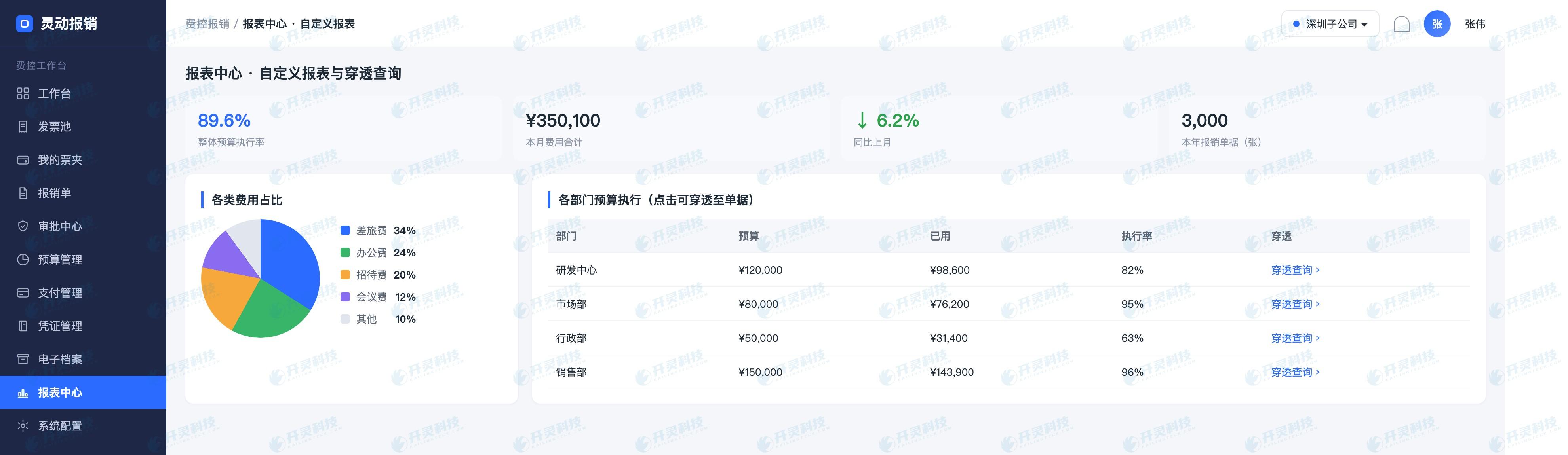
Headquarters managers need to compare expenses, budgets, and anomalies across legal entities, but summary reports should display organizational granularity according to authorization. Being able to view the group total does not necessarily mean being able to see each employee's invoices or bank information; when drill-down is needed, it should be limited to positions with the relevant responsibilities, and viewing and export actions should be logged.
Reporting standards also require unified field definitions, such as expense classification, period, and organizational attribution. If subsidiaries each maintain synonymous classifications, headquarters aggregation will splice data into numbers that appear precise but have different meanings. The system provides custom reports and mobile viewing capabilities, provided that master data mapping and permission filtering are designed in sync.
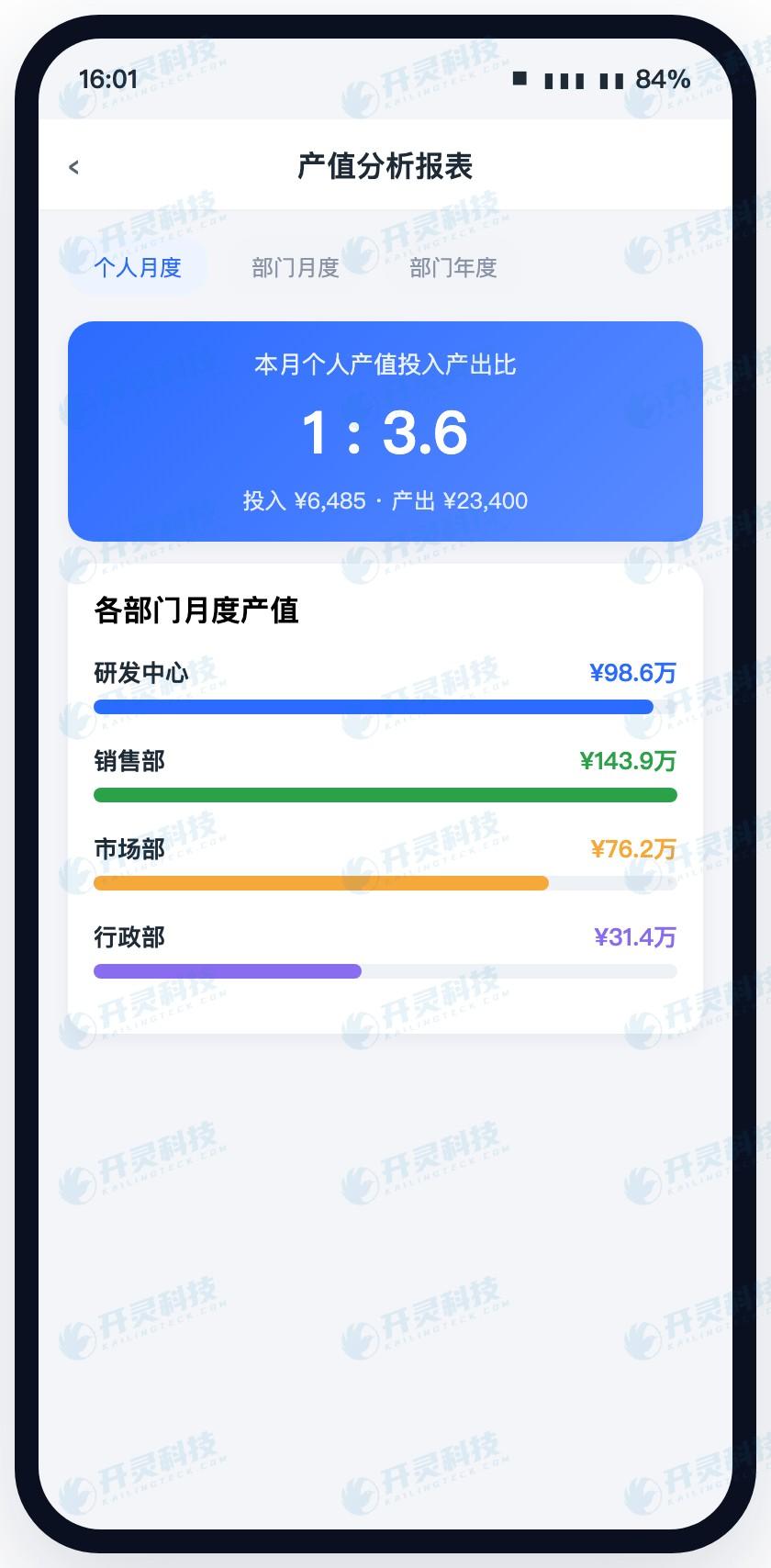
- Summary permissions, detail permissions, and export permissions are granted separately and are not included in each other by default.
- Sensitive fields can be hidden by role, even if a user has permission to view the organization's ordinary expenses.
- Retain historical ownership after organizational adjustments to avoid reattaching old documents to the new structure.
▍V. Implementation starts with an identity list and privilege escalation testing
The launch sequence can first clean up organizational master data and personnel assignments, then establish roles, then configure actions and data scopes, and finally publish processes and reports. Each step should be tested with real positions but desensitized accounts; do not accept it using only a super administrator. Part-time work, transfers, resignations, temporary authorization, and organizational mergers or dissolutions are the scenarios most likely to expose boundary issues.
Regression testing should include direct URL access, search, export, mobile reminders, process handover, and report drill-down, confirming that users cannot see unauthorized information through bypasses. Permission changes should have records of application, approval, effectiveness, and revocation; temporary authorization should automatically enter review upon expiration rather than remaining on the account long term.
- First test prohibited items: whether personnel not belonging to this organization can view, export, or process documents on behalf of others.
- Then test normal items: whether personnel with concurrent posts can complete the corresponding tasks with the correct identity after switching.
- Finally, test change items: whether old permissions are revoked in a timely manner after job transfers and departures, with records retained.
When group rules, legal entity exceptions, role responsibilities, and data scopes are each clear, a multi-organization platform can achieve both consistency and security boundaries. Headquarters sees comparable operating information, subsidiaries retain necessary autonomous space, and ordinary employees do not face chaotic entry points due to organizational complexity.
Multi-organization governance also requires regular reviews, rather than configuring once at launch. The end of concurrent staffing, project closure, addition of legal entities, or changes in shared service center responsibilities may all make the original authorization unreasonable. Triggering permission inventories quarterly or upon major changes, with organization heads confirming roles that still need to be retained, can promptly remove accumulated permissions.
The scope of log retention should cover login organization, viewing, export, approval, configuration, and authorization changes, and only personnel with audit or security responsibilities should be able to query them. Records are not meant to increase operational burden, but to accurately explain, in the event of a dispute, what someone saw and did at the time and in what capacity.
For group template upgrades, a small number of organizations can first be selected for gray-scale verification, then gradually released. During the gray-scale period, compare the process branches and permission results of the old and new versions to confirm that local exceptions have not been overridden. A unified system can remain consistent in the long term only when the change process is also controllable.
▍FAQ
Q: Can one employee belong to multiple organizations at the same time?
A: Yes, multiple organizational identities can be granted based on actual appointments, but each operation should specify the current organization, and roles and data scopes should be enforced separately.
Q: If headquarters can see the summary, does that mean it can see all details?
A: Not necessarily. Summary, drill-down and export can be authorized separately, and sensitive details are only open to positions with responsibility.
Q: Can subsidiaries modify the group's unified process?
A: Yes, local exceptions can be configured within a controlled scope, but the applicable organizations should be limited and release management should be applied, without affecting other legal entities.
Q: How are historical documents handled after organizational restructuring?
A: It is recommended to retain the organization and rule version at the time the document occurred, while letting new business run under the new structure, avoiding recalculation of historical attribution.
Unify group standards, keep legal entity boundaries clear, and record every authorization. Welcome to visit Kailing Technology: https://www.kailingteck.com/feikong/ .
As a national high-tech enterprise, Kailing Technology focuses on the digital and intelligent transformation of enterprise business-finance-tax and operations management, providing software products, system integration, implementation and delivery, and operational services for various government agencies, institutions, group enterprises, and SMEs.
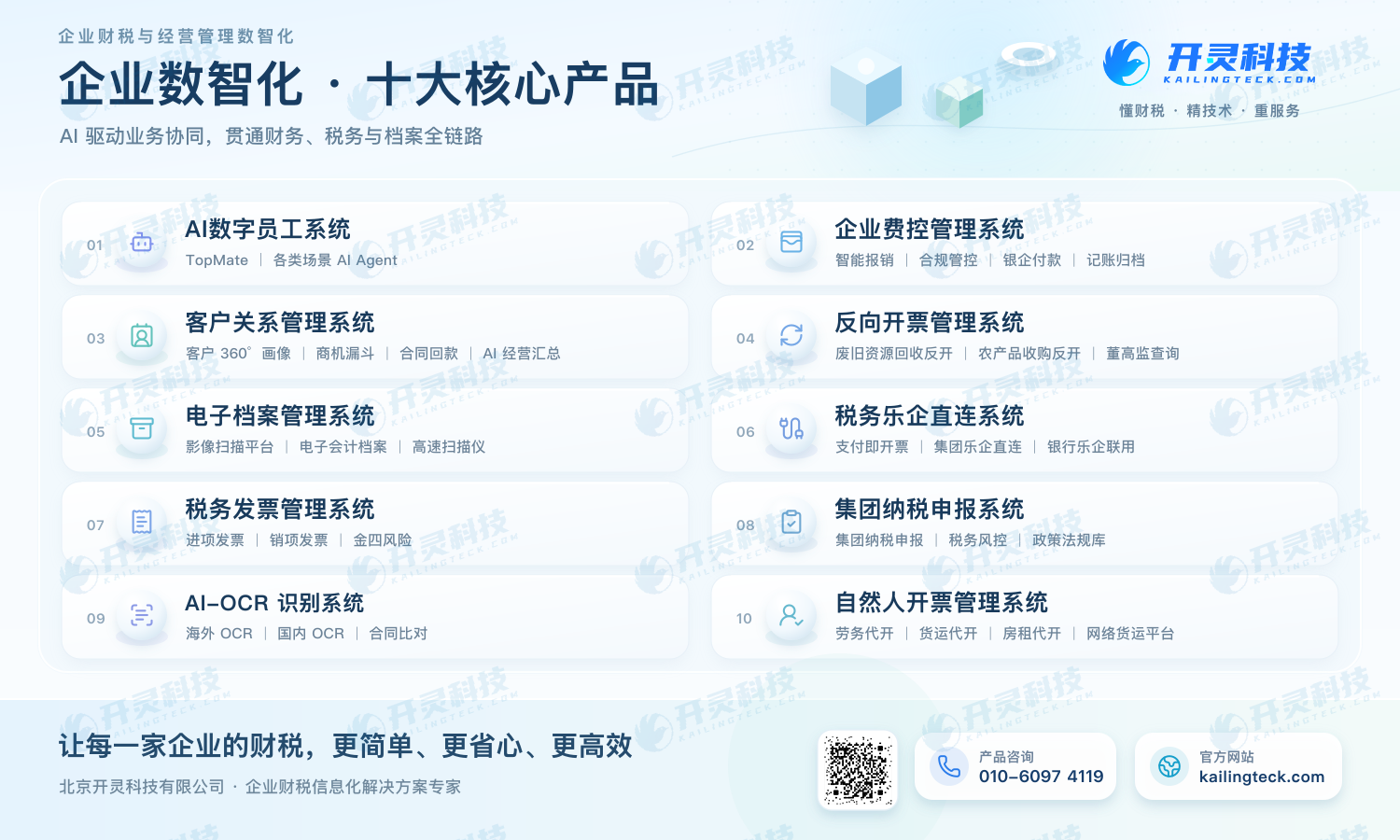
The company has now formed ten core product lines, including: AI digital employee system, enterprise expense control management system, customer relationship management system, reverse invoicing management system, invoice issuance for individuals management system, electronic archives management system, tax fully digitalized e-invoice Leqi system, tax invoice management system, group tax filing system, and AI OCR recognition system. It is committed to connecting enterprise business, finance, tax, funds, and archive data to help customers improve operational efficiency, business-finance-tax compliance capabilities, and digital management levels.
If you have any business-finance-tax digital transformation needs, welcome to contact us. Beijing Kailing Technology will serve you wholeheartedly.
Keywords: Multi-organization expense control, permission isolation, group expense management, Kailing Technology, enterprise expense control and reimbursement management system
As a comprehensive business-finance-tax digitalization solution service provider, Kailing Technology provides business-finance-tax management digital transformation products and operational services for various government agencies, institutions, and large, medium, and small enterprises. The product line includes: solutions for sales contract management system, procurement contract management system, fully digitalized Leqi interface project, automatic output invoicing system, reverse invoicing system, invoice issuance for individuals system, employee expense control and reimbursement system, input VAT invoice management system, supply chain collaborative reconciliation system, image AI OCR recognition system, automatic financial bookkeeping system, electronic accounting archives system, etc., comprehensively driving the digitalization process across various fields.
Consultation Hotline: 18513895936 / 010-60974119 Location: Beijing