
Sales data should not stop after the contract: Kailing Technology sales full-lifecycle CRM management system connects customers, leads, invoicing and collections
Many CRMs treat signing as the sales endpoint: customer and opportunity information is complete, but once a contract takes effect, the invoicing plan moves to a finance spreadsheet, collection progress stays in bank statements, and sales can only follow up via chat. Data breaks after the contract cause receivable responsibility, delivery pace, and renewal opportunities to lose context at the same time, and management dashboards can only show signed amounts, unable to answer whether the money has come back. Around "1. Why contracts often become the data break point between sales and finance," Kailing Technology's full sales lifecycle CRM management system needs to incorporate the relevant relationships into the same business chain.
Kailing Technology's sales full lifecycle CRM management system places customers, opportunities, contracts, invoices, receivables, receipts, write-offs, reminders, and business dashboards in a continuous chain. The system connects sales and finance through fields, statuses, and events, but specific approvals, contract terms, financial interfaces, and write-off rules still need to be configured per project; automatic association should not be understood as skipping business review.
▍1. Why do contracts often become the data breakpoint between sales and finance?
Before signing, sales continuously maintains contacts, requirements, opportunity stages, and quotations; after signing, performance, invoicing, and collection are often taken over by different positions. If the contract only stores the total amount and scanned copies, and payment milestones, invoicing plans, and responsible persons are not structurally recorded, every subsequent payment reminder requires asking sales and finance again.
Faults also affect business judgment. Winning a deal does not mean revenue or cash has been realized, and the total contract amount does not equal the current period's receivables. Managers need to distinguish between signed, invoiced but unpaid, uninvoiced and unpaid, paid, and pending renewal statuses, and these statuses must be formed from the same customer and contract relationship.
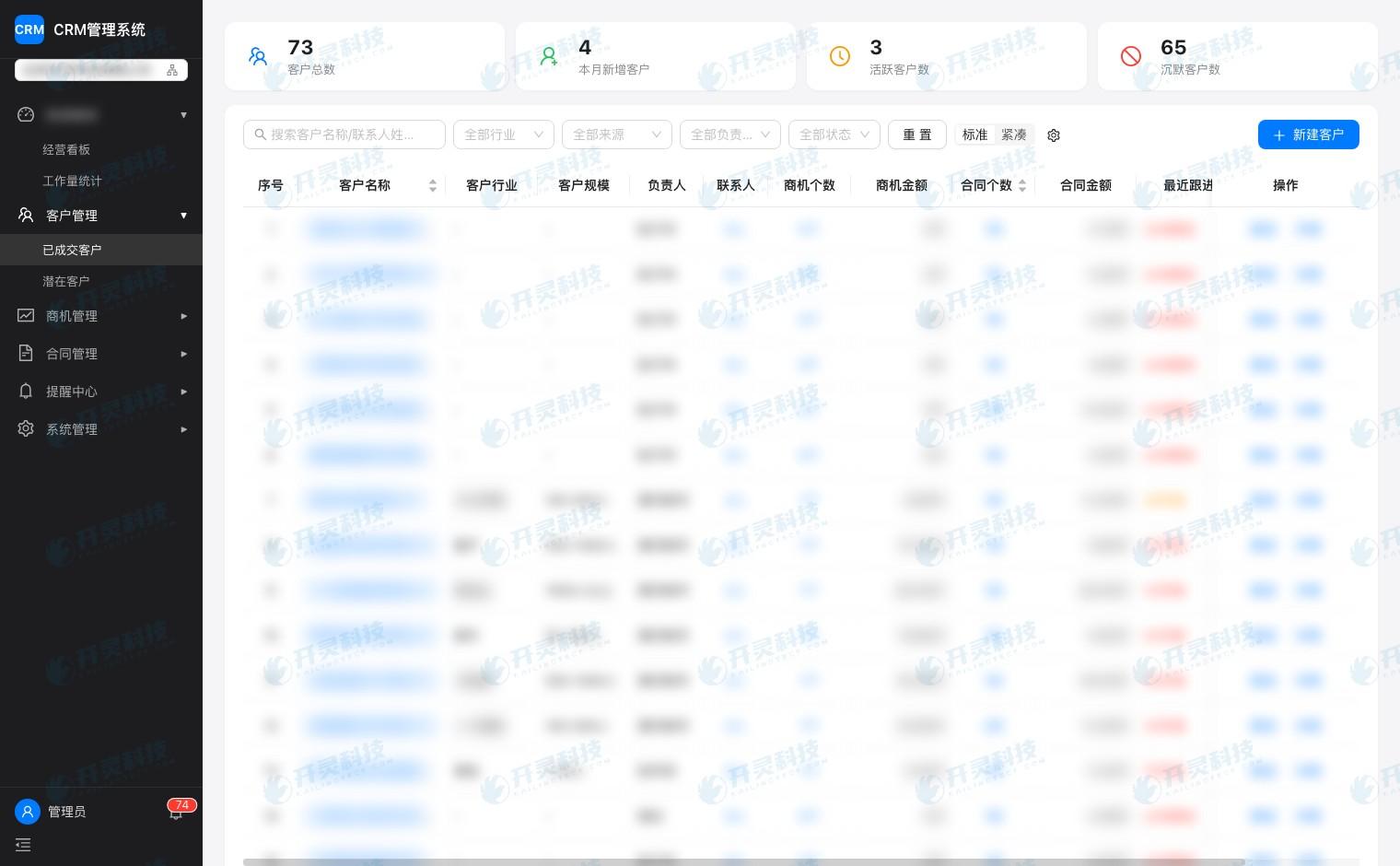
- The customer profile stores the entity, contacts, and decision chain, and is the common starting point for subsequent contracts.
- Opportunities record requirements, stages, and responsibilities, and after winning, the context is handed over to the contract.
- The contract continues to carry invoicing, receivables, and payment collection milestones, and does not end at signing.
▍II. Kailing Technology sales full-lifecycle CRM management system: customers and opportunities hand pre-signing context to contracts
The Customer 360° view is not just a profile card; it must also bring together contacts, recent follow-ups, opportunities, contracts, and subsequent financial status. When sales creates an opportunity, it references a unique customer, and stage changes and key communications leave records; when a win is converted into a contract, the customer entity, responsible salesperson, and business background continue along the original relationship, reducing re-entry and mis-binding.
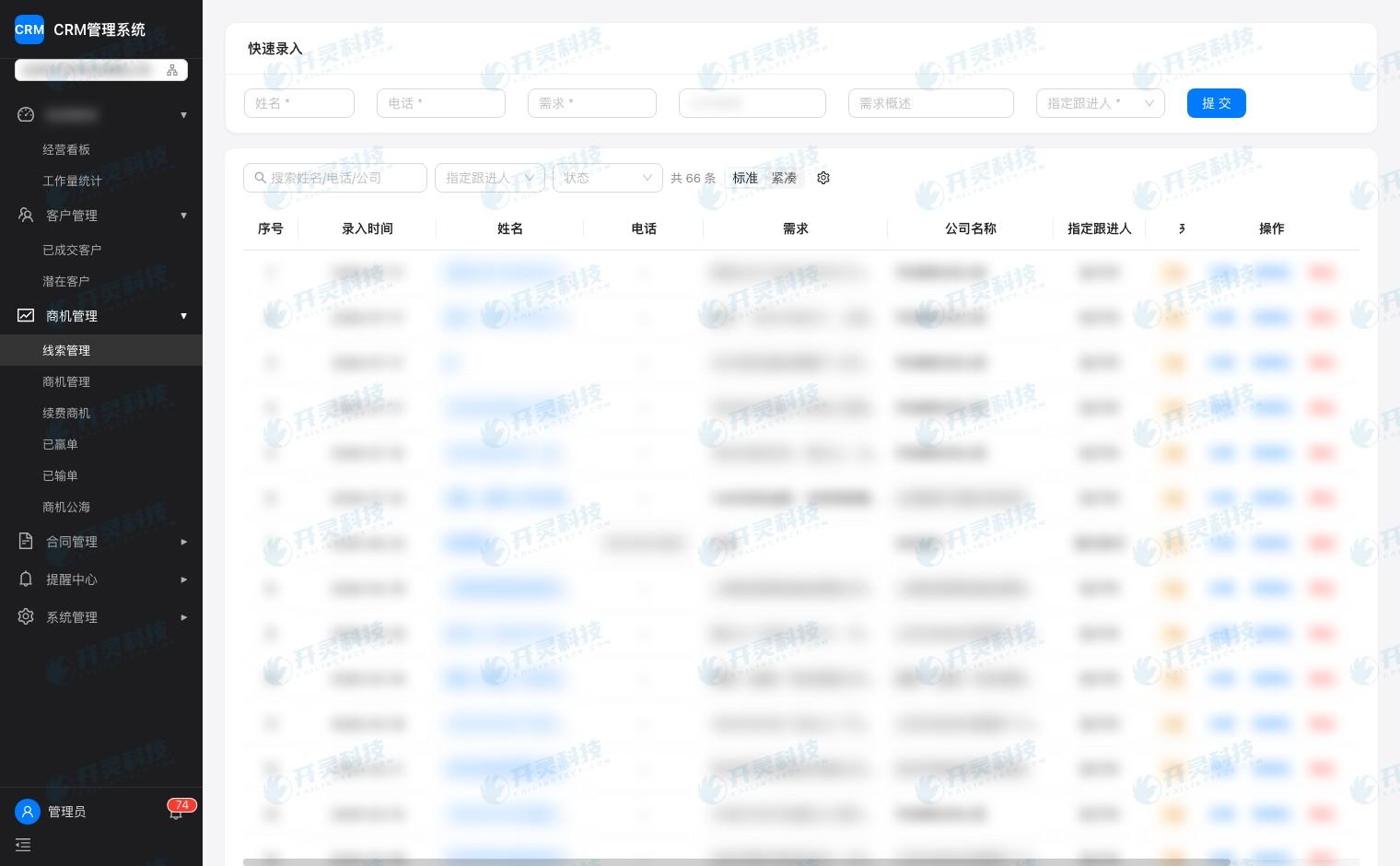
Kailing Technology's sales full lifecycle CRM management system provides modules such as customer management, leads and opportunities, and contracts. Before leads enter a customer or opportunity, duplicates and ownership must be handled, and they cannot be automatically merged based on name alone; contracts also need to go through the enterprise authorization process, and system linkage does not replace legal, business, and financial review of terms.
| "Full lifecycle is not arranging modules in a row, but letting each subsequent node inherit the customer, responsibility, and business context already confirmed by the previous node. |
▍III. The invoicing plan should carry forward performance and contract payment milestones
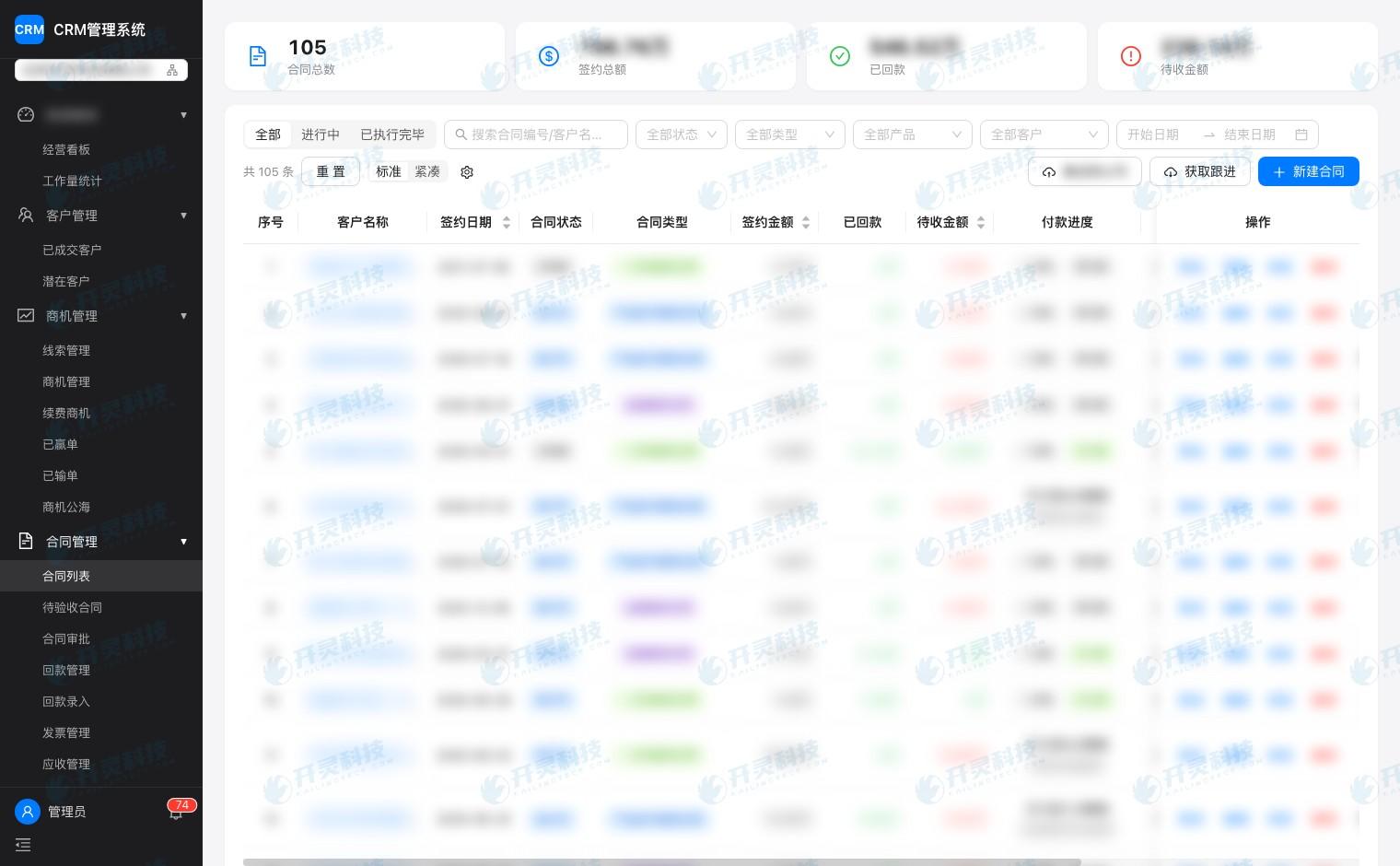
After the contract takes effect, establish payment milestones and necessary invoicing plans based on the actual clauses, recording the planned date, conditions, responsible person, and status. Due reminders are not simply the signing date plus a number of days; they should read the milestone agreements and business confirmations. For matters requiring acceptance or delivery conditions, they cannot be automatically judged as overdue receivables before the conditions are met.
Invoice requests reference customers and contracts; once generated, the invoice type, number, date, amount, and associated contract are saved. If the invoice face is adjusted or a red-letter reversal is issued, both the original and subsequent invoices remain in the original relationship. The system supports invoice management and synchronization direction; specific tax interfaces, approvals, and invoice face rules are subject to implementation verification.
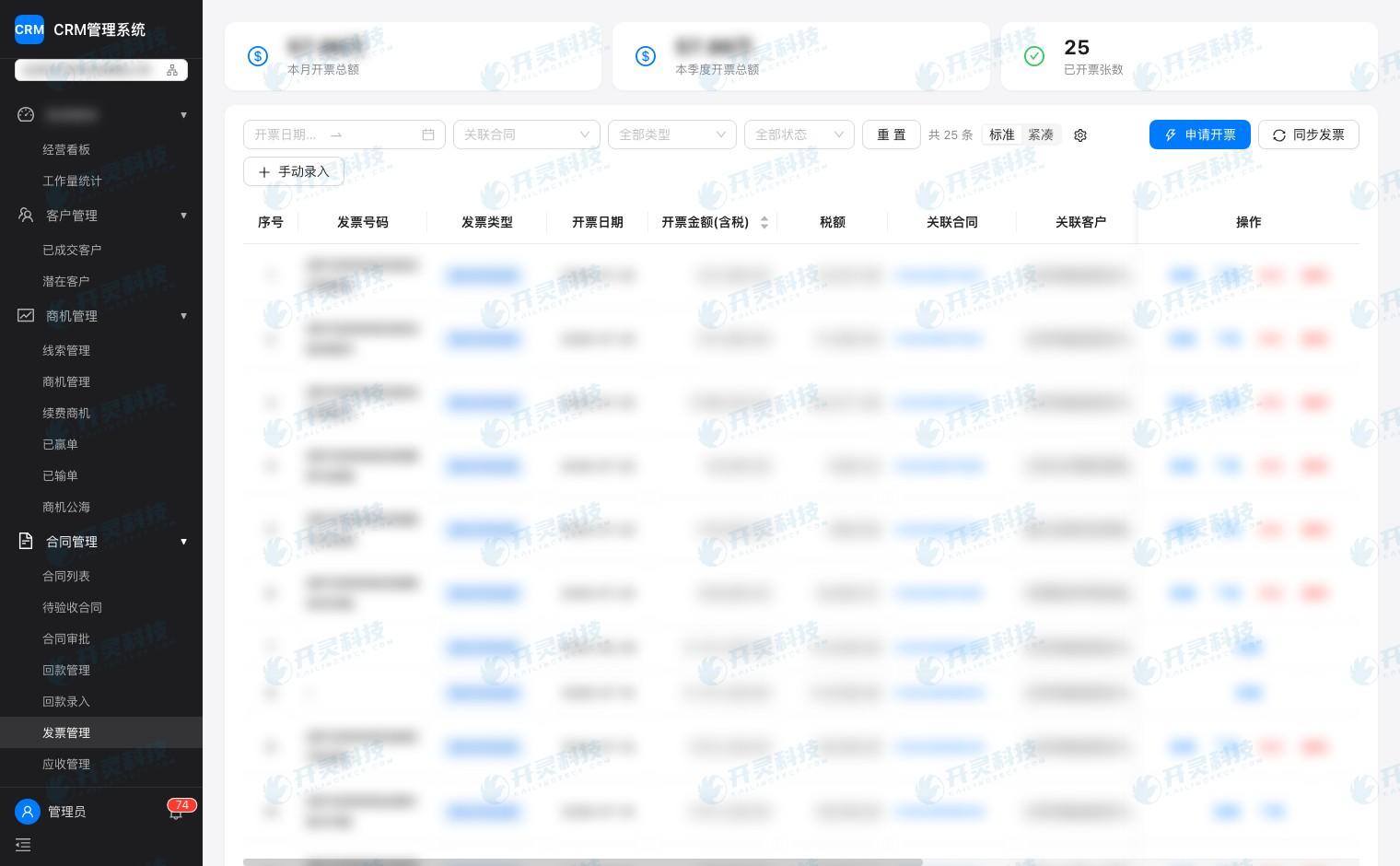
- Planned milestones come from contract terms and performance facts, not inferred by the system out of thin air.
- The invoicing amount is reconciled with the contract and milestones, and differences must be explained and authorized.
- Invoice changes retain versions to avoid the receivables dashboard still referencing invalid invoices.
▍IV. Payment collection must match contracts, invoices, and real bank statements
After the bank payment arrives, the system searches for matching relationships based on the remitter, amount, time, contract number, or other business information. Those that can be uniquely determined may be claimed or written off according to rules; when one payment corresponds to multiple contracts, the customer and remitter are inconsistent, amounts differ, or there is no remark, they should be listed as candidates for finance confirmation, and must not be forcibly linked in pursuit of automation rate.
Kailing Technology's sales full lifecycle CRM management system supports receipt entry, receipt acquisition, claiming, and automatic write-off via bank-enterprise direct connection. Receipt results are synchronized to contracts, receivables, and sales owners, so sales knows which milestones are completed and which still need follow-up; finance retains bank statements and confirmation evidence.
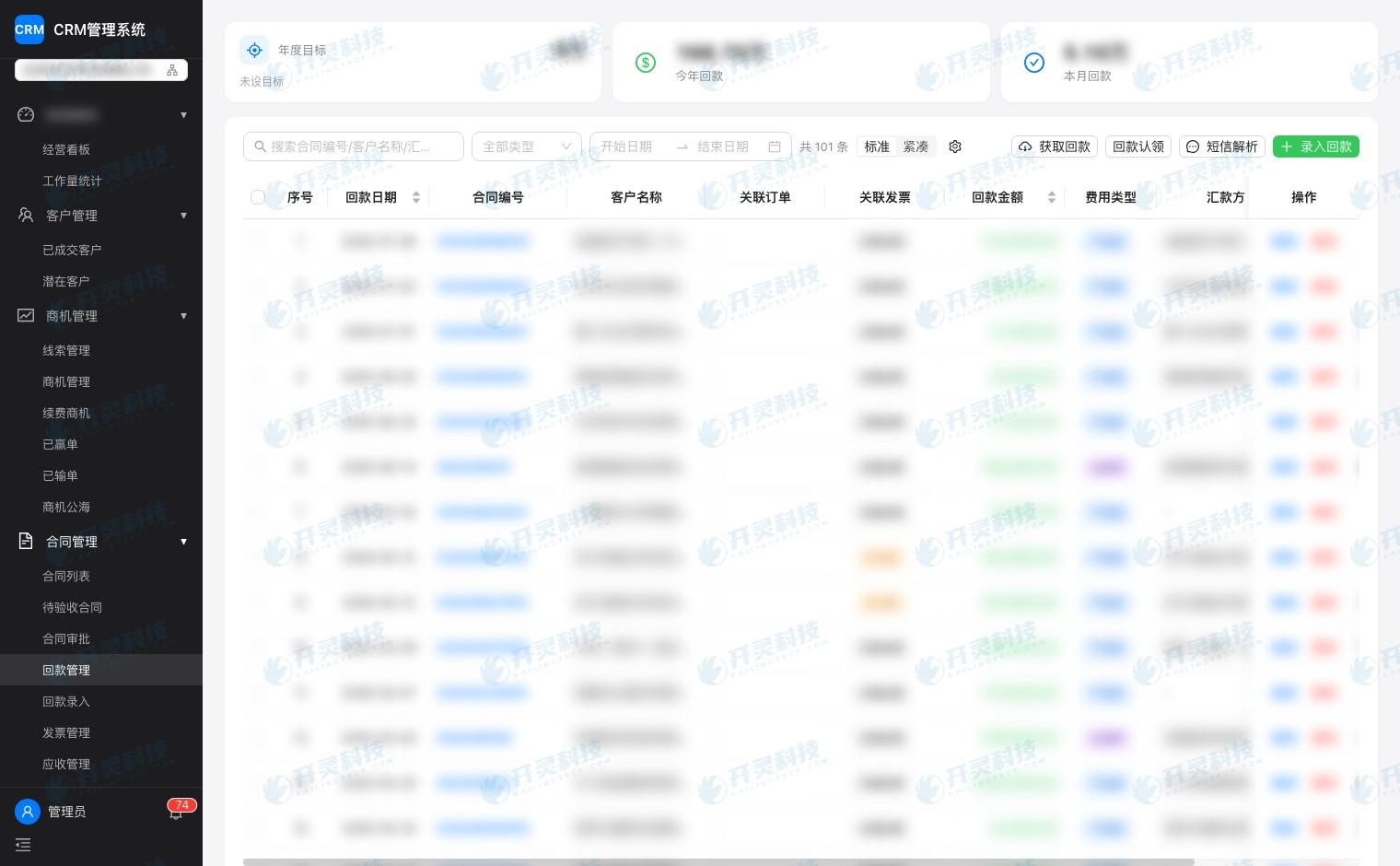
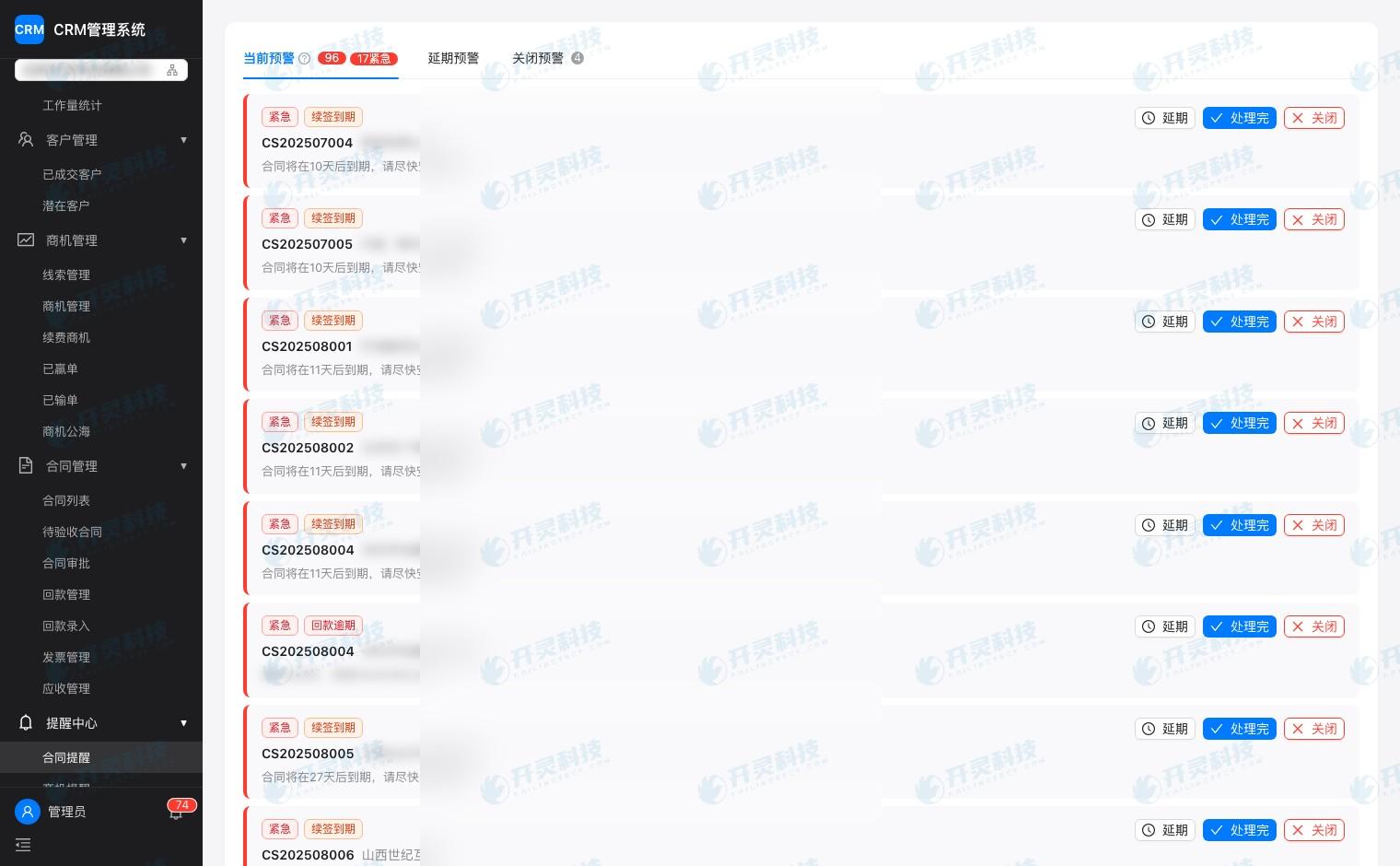
- Receipt does not equal automatic correct matching; candidate relationships must show their basis.
- Partial collections, merged collections, and refunds are recorded separately and do not overwrite the original nodes.
- Claims or rebinding retain the operator, reason, and before-and-after relationship for easy reconciliation.
▍V. The business dashboard looks at the responsibility chain, not just a single signing figure
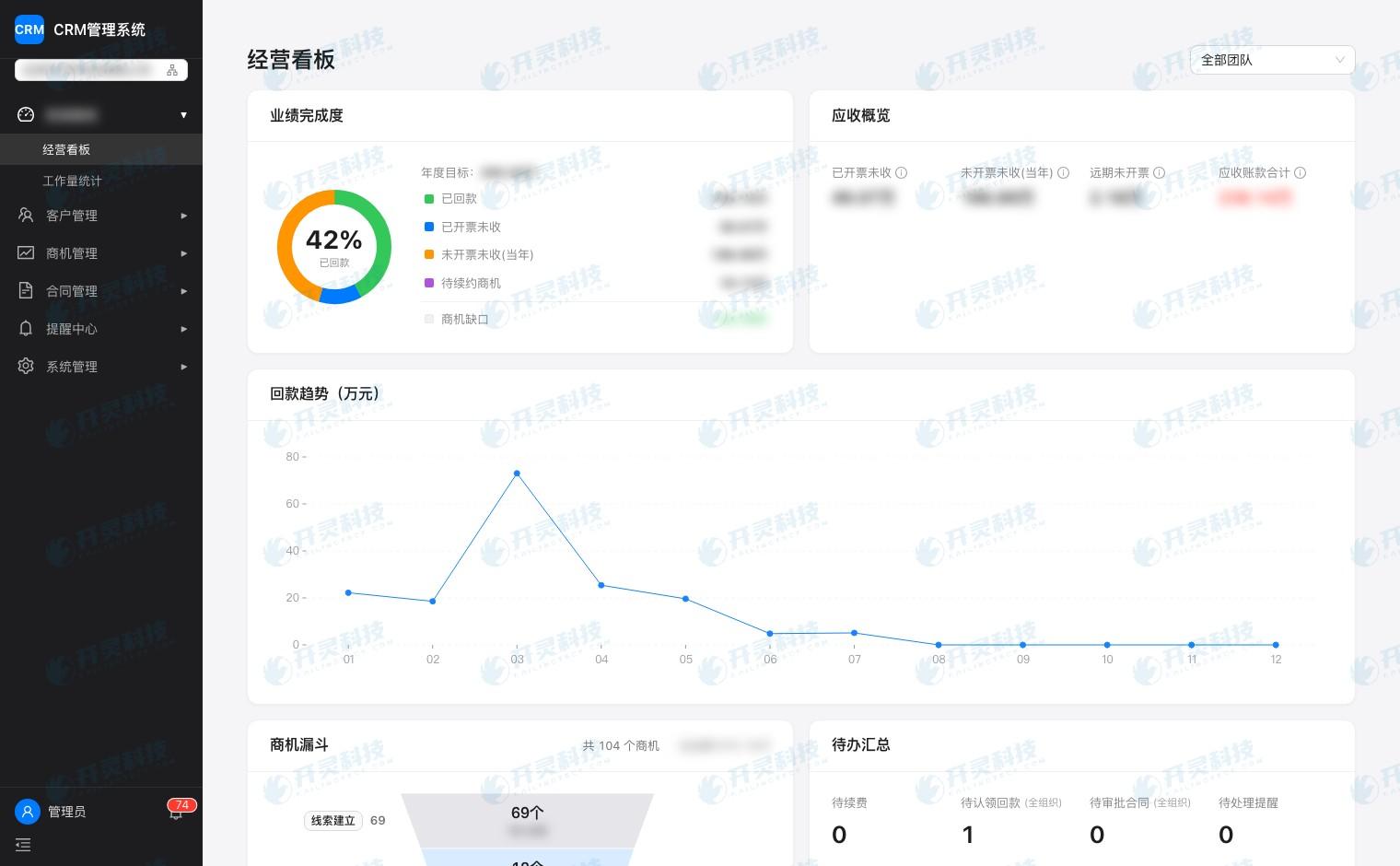
Managers can observe business status from annual targets, amounts collected, invoiced but uncollected, not invoiced and uncollected, opportunity funnel, and to-do summary, then drill through to customers, contracts, and responsible persons. The value of numbers comes from consistent status definitions; if sales counts by signing and finance counts by receipt, they cannot be compared even when placed in the same chart.
Kailing Technology's sales full lifecycle CRM management system displays receipt trends, receivables overview, opportunities, and to-dos through data dashboards. During implementation, enterprises should first define the data source, timing, and exclusions for each metric, and limit the viewing and export scope of sensitive amounts, without citing specific numbers in the demo interface as business commitments.
- Starting from one sales team and one type of contract, verify the complete relationship from customer to payment collection.
- Use installment payments, partial invoicing, consolidated repayments, and refund scenarios to test status.
- Review based on unclaimed transactions, overdue nodes and data breakpoints, and continuously correct master data.
After the post-contract link is connected, sales no longer need to repeatedly ask finance about payment receipt, and finance can directly find the customer, contract, and invoice basis. Managers can see not only how much was signed, but also which have been invoiced, which should be collected, and which require sales action, thereby making operational responsibility continuous.
Permission governance is also part of the lifecycle. Sales views their responsible customers, finance handles collections and invoices, and managers view summaries by organization; when there is a transfer, resignation, or customer handover, the system updates the current responsibility and retains historical owners, so past follow-up records are not lost with personnel changes.
After launch, regular spot checks can trace from a single bank transaction back to the contract and invoice, and also from a contract forward to invoicing, payment collection, and reminders. Only when both directions can be traced through does it show that the system is not simply aggregating multiple modules, but has established verifiable data relationships.
If spot checks find that the same customer has multiple archives or that payments have long been unclaimed, master data and responsibility allocation should be fixed first before discussing expanding the scope of automatic reconciliation. If the relationship foundation is unstable, automation will only produce erroneous attributions faster.
▍FAQ
Q: After a contract is signed, why does it still need to be maintained in the CRM?
A: Because invoicing, receivables, collections, reminders, and renewals all depend on contract terms and responsibilities; stopping at signing would cut off the operational and financial context.
Q: Can all incoming bank payments be automatically written off?
A: Those that can be uniquely matched can be processed by rules. Cases such as combined payments, amount differences, or inconsistent remitters should enter candidates and be confirmed by finance.
Q: Can sales see all company payments received?
A: Scope should be set by organization and responsibility. Sales views the customers they are responsible for, while finance and management positions receive the permissions needed to complete their work.
Let sales data continue past contracts to invoicing, receivables, collections, and renewals. Welcome to visit Kailing Technology: https://www.kailingteck.com/aicrm/ .
As a national high-tech enterprise, Kailing Technology focuses on the digital and intelligent transformation of enterprise business-finance-tax and operations management, providing software products, system integration, implementation and delivery, and operational services for various government agencies, institutions, group enterprises, and SMEs.
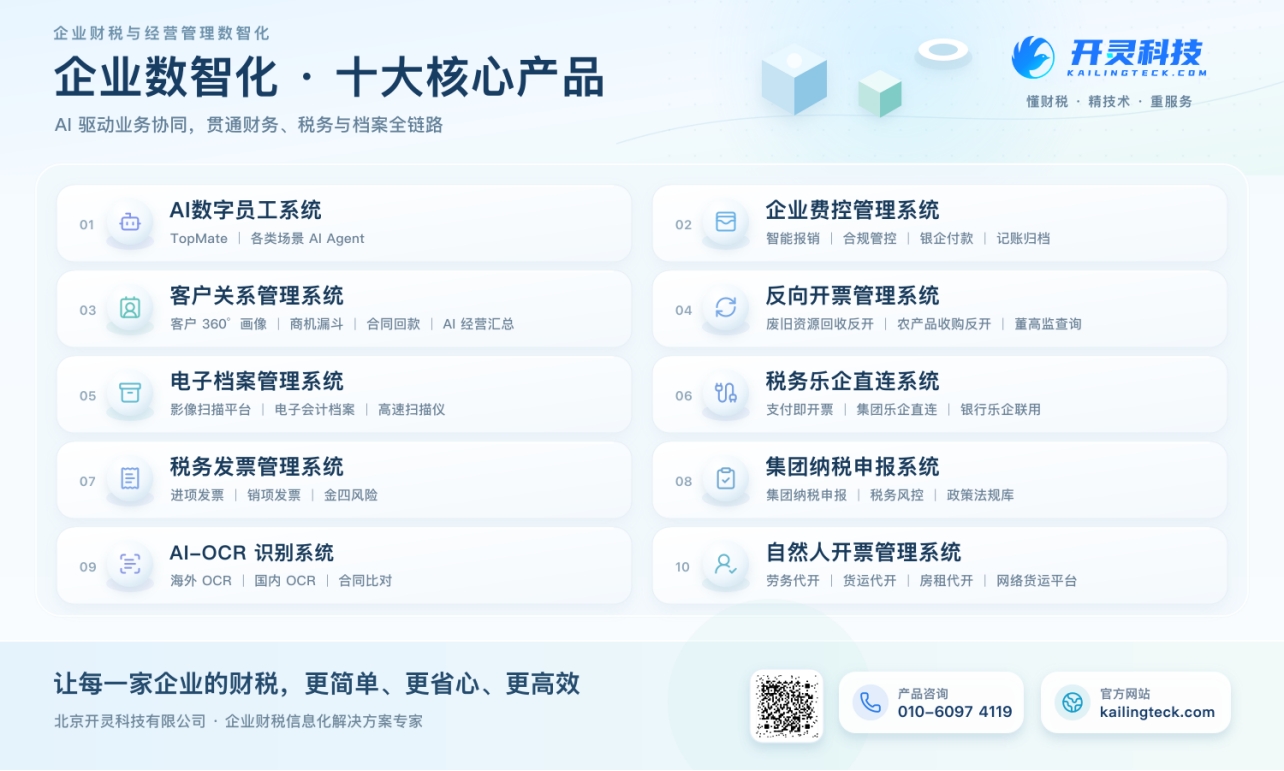
The company has now formed ten core product lines, including: AI digital employee system, enterprise expense control management system, customer relationship management system, reverse invoicing management system, invoice issuance for individuals management system, electronic archives management system, tax fully digitalized e-invoice Leqi system, tax invoice management system, group tax filing system, and AI OCR recognition system. It is committed to connecting enterprise business, finance, tax, funds, and archive data to help customers improve operational efficiency, business-finance-tax compliance capabilities, and digital management levels.
If you have any business-finance-tax digital transformation needs, welcome to contact us. Beijing Kailing Technology will serve you wholeheartedly.
 Keywords: Full sales lifecycle, contract invoicing and payment collection, CRM management system, Kailing Technology, full sales lifecycle CRM management system
As a comprehensive business-finance-tax digitalization solution service provider, Kailing Technology provides business-finance-tax management digital transformation products and operational services for various government agencies, institutions, and large, medium, and small enterprises. The product line includes: solutions for sales contract management system, procurement contract management system, fully digitalized Leqi interface project, automatic output invoicing system, reverse invoicing system, invoice issuance for individuals system, employee expense control and reimbursement system, input VAT invoice management system, supply chain collaborative reconciliation system, image AI OCR recognition system, automatic financial bookkeeping system, electronic accounting archives system, etc., comprehensively driving the digitalization process across various fields.
Consultation Hotline: 18513895936 / 010-60974119 Location: Beijing