
What to do when employee loans are not repaid for a long time? Kailing Technology enterprise expense control reimbursement management system manages loans, reimbursement, and offsets as a closed loop

When employee loans hang on the books for a long time, finance first thinks of urging repayment. But collection can only handle one person's current balance and cannot solve the disconnect among loan forms, expense occurrence, subsequent reimbursement, cash repayment, and difference supplementation. Once employees reimburse in multiple installments, use funds across projects, or approvers only see the current form and not the original loan, the book balance becomes increasingly difficult to explain. Around "1. The root cause of long-term hanging accounts is not that employees forget to repay," the Kailing Technology enterprise expense control reimbursement management system needs to incorporate the related relationships into the same business chain.
Kailing Technology enterprise expense control and reimbursement management system treats loans as a continuously changing business matter, rather than a document that ends after payment is completed. Starting from the original loan, the system collects reimbursement offsets, active repayments, difference supplements, approval opinions, payment results, and voucher aggregation into the same relationship chain, allowing finance to first see how the balance is formed before deciding whether to urge repayment, continue offsetting, or transfer to exception handling.
▍1. The root cause of long-term outstanding accounts is not that employees forget to repay
Overdue loans are only the result; the broken relationships before that are the cause. After employees receive petty cash, they may use it for travel, procurement, or temporary business, and expense occurrence and reimbursement submission are not synchronized; if the reimbursement form does not reference the original loan, finance can only see a new payable and cannot determine that it should offset the loan. Even if someone manually writes "offset loan" in the remarks, subsequent aggregation still requires re-verification.
Another common problem is registering only the total loan amount without retaining the offset amount, in-transit reimbursements, and available balance. Reimbursements not yet approved already occupy part of the loan, but the ledger still shows the full amount unpaid; the employee may submit repayment again based on this, causing duplicate processing. A truly reliable management standard must accommodate both the book balance and pending changes in the process.
- Loan matters must have stable numbers and cannot rely on fuzzy matching by employee name and transfer date.
- Balances must distinguish between written off, in process, returned, and pending return, to avoid treating process status as accounting results.
- The responsible person, purpose, expected return date, and affiliated organization should be retained with the original document to facilitate subsequent tracing.
▍II. The Kailing Technology enterprise expense control and reimbursement management system first establishes a loan relationship ledger
The first step of the closed loop is not adding a dunning table, but making each subsequent action select a verifiable original loan. When an employee creates an expense form, they select the associated item from their own outstanding loans, and the system brings out the loan purpose, project, and remaining offsettable amount; what the approver sees is no longer an isolated amount, but the complete context of "how much was originally borrowed, how much is being reimbursed this time, and how much remains after offset."
When a reimbursement form is automatically created on mobile, invoices and expense details first form the basis for reimbursement, and the borrowing relationship then determines the settlement method. This way, the invoice amount is not directly equated with the amount payable, and the source of funds is not lost just because an employee changes invoices. If one reimbursement form involves multiple borrowing matters, it should be split or clearly allocated according to enterprise policy, so that the same amount is not deducted repeatedly.
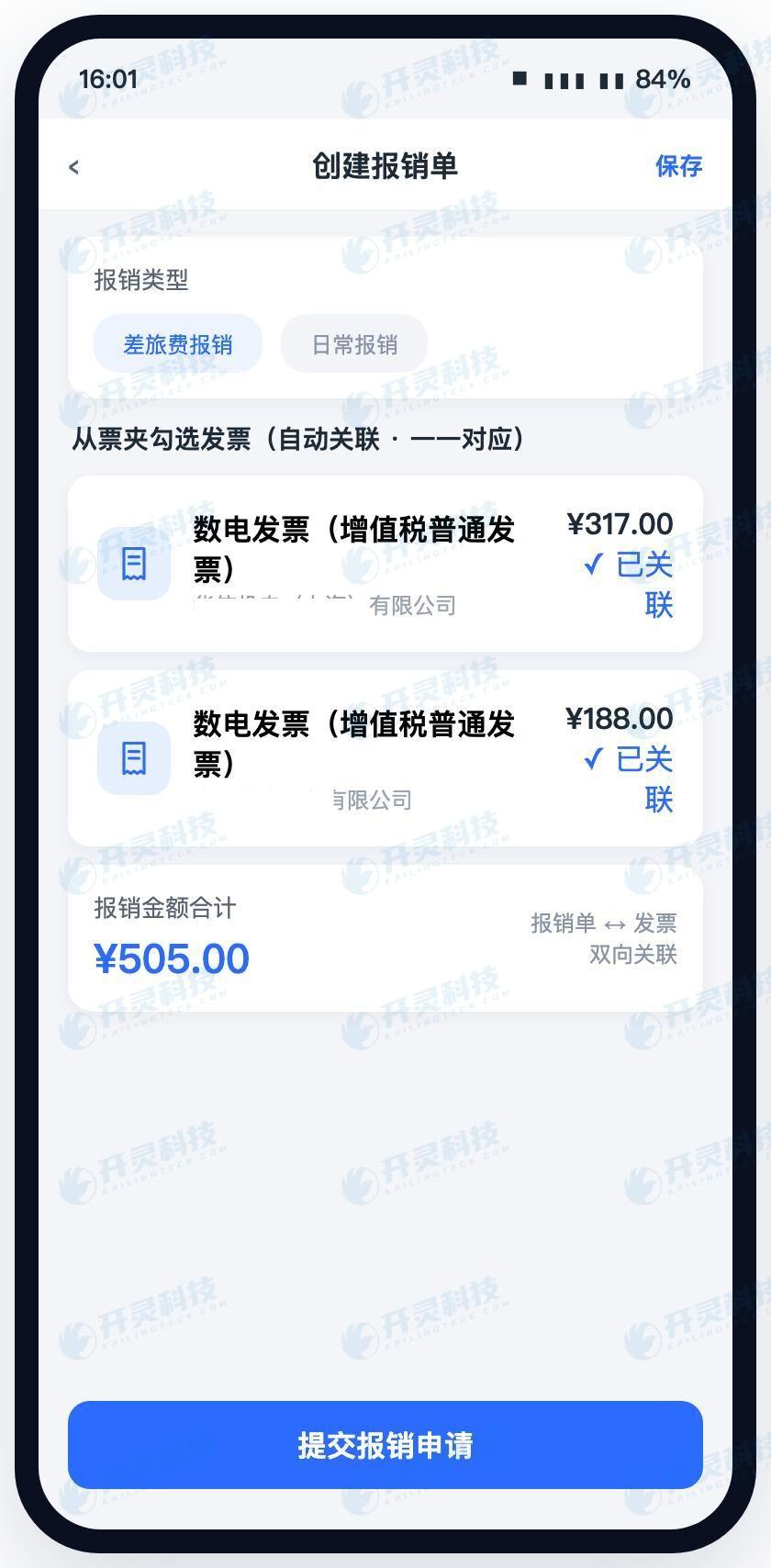

▍III. Reimbursement, repayment, and supplementary payment should follow different branches by difference amount
When the compliant reimbursement amount is less than the offsettable loan, after the reimbursement is approved, it first offsets the corresponding loan, and the remaining part continues to be recorded under the original matter, which the employee may reimburse later or repay voluntarily. When the reimbursement amount equals the loan balance, it can be settled once approval, payment conditions, and document verification are completed. When the reimbursement amount exceeds the offsettable balance, the borrowed portion is used for offset, and only the excess forms a supplementary payment to the employee.
These three branches must be based on the approved valid amount, not pre-settled based on the amount reported by the employee. After a document is rejected, withdrawn, or modified, the previously occupied loan limit should be released according to status; when payment fails, the supplementary payment cannot be marked as completed. Kailing Technology's enterprise expense control and reimbursement management system preserves these changes through document association and status linkage, but specific tolerances, rounding differences, and approval permissions still need to be configured according to enterprise policies.
| "The core of the loan closed loop is not quickly zeroing out the balance, but ensuring every balance change has documents, status, and responsibility basis. |
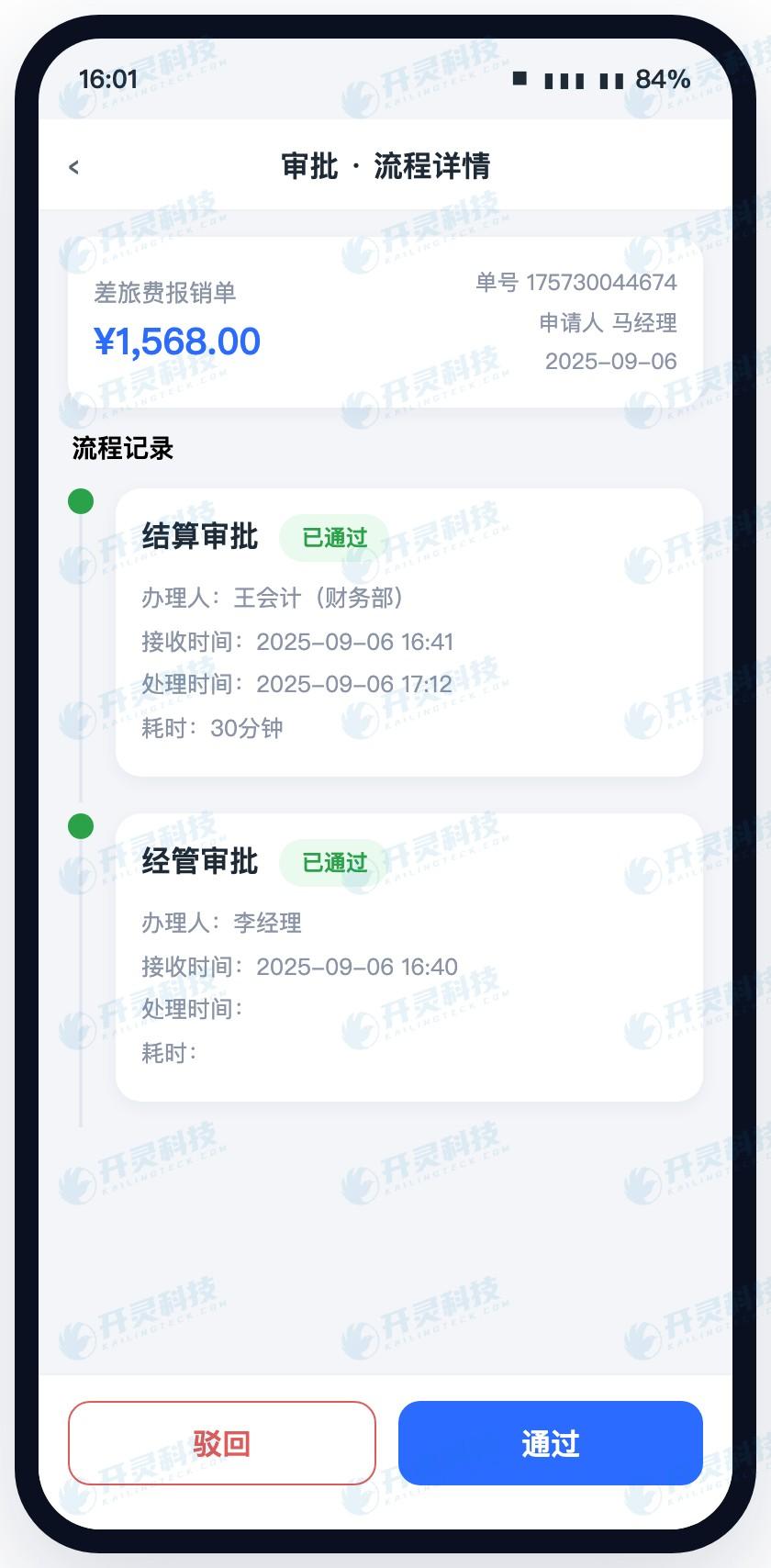
▍IV. Finance handles only exceptions; normal flows are driven by rules
Normal documents can complete approval, write-off, and payment along the established path, and finance focuses on situations that cannot be automatically closed, such as inconsistency between the original loan purpose and the reimbursement item, employees submitting across organizations, insufficient available write-off balance, returned payments, and unsettled loans before departure. Concentrating these situations into an exception queue makes it easier to discover real risks than having expense accountants flip through ledgers one by one.
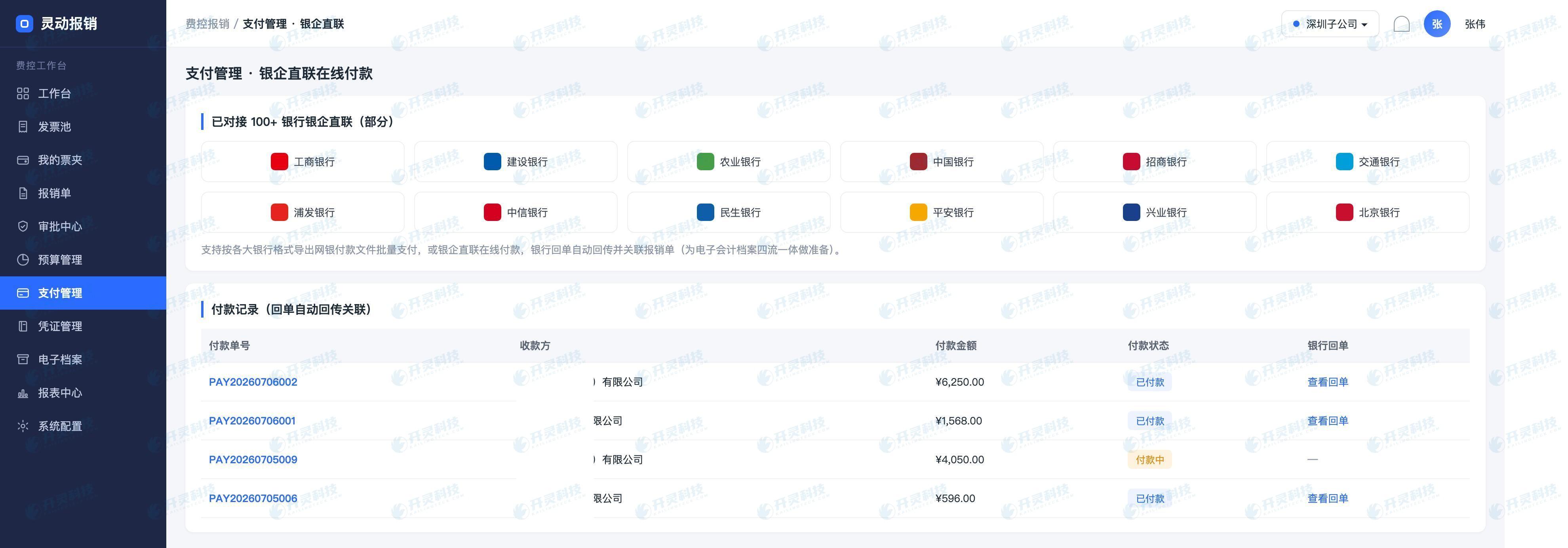
At the payment step, the supplementary payment result must be written back to the reimbursement matter; bank processing success, failure, or return cannot remain only on the online banking side. The voucher step separately reflects loan write-off and difference payment, avoiding double counting of the entire reimbursement as payable. The system can connect payment and voucher generation, but finance still needs to review the results based on the enterprise's accounts, accounting dimensions, and closing arrangements.

- Check newly added overdue and near-due items every day, prioritizing loans whose responsibility has not yet been clarified.
- At month-end, check the impact of in-transit reimbursements on the balance to avoid repeatedly chasing amounts that are about to be reversed.
- Trigger a special check before personnel departure or organizational transfer, handle unsettled matters first, then close permissions.
▍V. Freeze fields, statuses, and reconciliation calibers before go-live
During implementation, first sort out fields such as loan type, applicable purpose, responsible person, expected settlement date, affiliated organization, project, original amount, in-transit occupation, written-off amount, and remaining amount, then define statuses such as under application, paid, partially written off, pending repayment, settled, and abnormal. The clearer the fields, the easier the subsequent rules are to explain; if you copy the old spreadsheet first, the system will only move the original ambiguity online.
Step 2 is regression testing with real but desensitized boundary scenarios, including split reimbursement, borrowing less and reporting more, borrowing more and reporting less, resubmission after withdrawal, payment failure, cross-month settlement, and cross-organization personnel. Testing must not only check whether documents can be submitted, but also verify item by item whether balances, approval context, payment status, voucher results, and query criteria are consistent.
- Clarify who can create new loans, who can change the settlement date, and who has authority to approve difference handling.
- Agree on the reconciliation frequency between report balances and general ledger balances, and assign a responsible person to handle discrepancies.
- Retain records of rule changes to avoid being unable to explain why old documents circulated under old standards after institutional adjustments.
Only after the three layers of relationship, status, and responsibility are stable will payment collection change from repeated inquiries into evidence-based management actions. Employees know whether the next step is reimbursement or repayment, approvers can judge whether the current handling is reasonable, and finance can penetrate from details to the original loan without searching back and forth among chat records, online banking receipts, and paper ledgers for evidence.
▍FAQ
Q: After a loan is linked to reimbursement, will the book balance decrease immediately?
A: It should not be confirmed as written off merely upon submission. The system can record in-transit occupation, and the final balance should be updated after approval, invoice verification, and the effective node specified by the enterprise are satisfied; occupation should also be released upon withdrawal or rejection.
Q: Can an employee reimbursing the same loan in multiple installments be managed?
A: Yes, multiple reimbursement forms can be continuously linked to the same loan matter, with amounts in process and amounts already written off recorded separately; whether cross-purpose or cross-project use is allowed must be configured according to enterprise policy.
Q: Will a failed payment create the false impression that a loan has been repaid?
A: The closed-loop design should write bank results back to business documents. A failed supplementary payment cannot be regarded as complete; finance also needs to check whether the three statuses of write-off, payment, and voucher are consistent.
Q: How are historical loans migrated to the system?
A: It is recommended to first clean up the responsible person, original amount, offset amount, and remaining balance, establish a traceable starting point for each historical loan, then import in batches and reconcile with the general ledger.
Turn employee loans from a collection checklist into a traceable expense closed loop. Welcome to visit Kailing Technology: https://www.kailingteck.com/feikong/ .
As a national high-tech enterprise, Kailing Technology focuses on the digital and intelligent transformation of enterprise business-finance-tax and operations management, providing software products, system integration, implementation and delivery, and operational services for various government agencies, institutions, group enterprises, and SMEs.
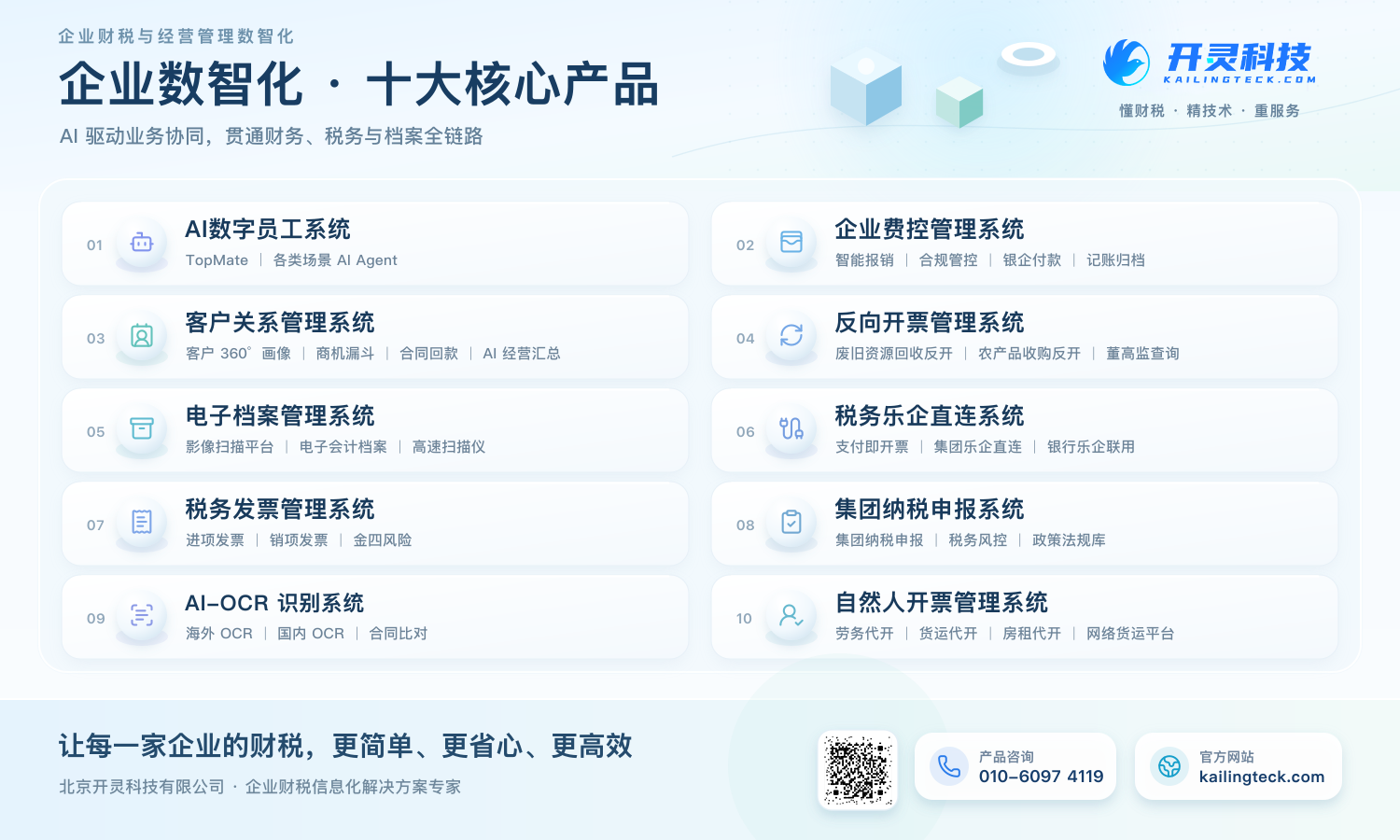
The company has now formed ten core product lines, including: AI digital employee system, enterprise expense control management system, customer relationship management system, reverse invoicing management system, invoice issuance for individuals management system, electronic archives management system, tax fully digitalized e-invoice Leqi system, tax invoice management system, group tax filing system, and AI OCR recognition system. It is committed to connecting enterprise business, finance, tax, funds, and archive data to help customers improve operational efficiency, business-finance-tax compliance capabilities, and digital management levels.
If you have any business-finance-tax digital transformation needs, welcome to contact us. Beijing Kailing Technology will serve you wholeheartedly.
Keywords: Employee loan management, loan offset, expense control reimbursement, Kailing Technology, enterprise expense control reimbursement management system
As a comprehensive business-finance-tax digitalization solution service provider, Kailing Technology provides business-finance-tax management digital transformation products and operational services for various government agencies, institutions, and large, medium, and small enterprises. The product line includes: solutions for sales contract management system, procurement contract management system, fully digitalized Leqi interface project, automatic output invoicing system, reverse invoicing system, invoice issuance for individuals system, employee expense control and reimbursement system, input VAT invoice management system, supply chain collaborative reconciliation system, image AI OCR recognition system, automatic financial bookkeeping system, electronic accounting archives system, etc., comprehensively driving the digitalization process across various fields.
Consultation Hotline: 18513895936 / 010-60974119 Location: Beijing