
Where do cross-month reimbursements easily go wrong? Kailing Technology enterprise expense control reimbursement management system automatically matches accounting periods and generates vouchers

When an expense document occurs at month-end, is approved the next month, and is paid on an even later date, "which month it belongs to" is not as simple as it appears. The business occurrence date, invoice issuance date, submission date, approval completion date, and booking date each explain different facts. If the system or a person captures only one of these dates, at best reports will be inconsistent before and after, and at worst unpostable vouchers will be generated after closing. Around "First, distinguish what question each of the five dates answers," Kailing Technology enterprise expense control and reimbursement management system needs to incorporate the relevant relationships into the same business chain.
Kailing Technology enterprise expense control and reimbursement management system can bring business fields into voucher rules and connect with archiving, but accounting periods should still comply with the enterprise's own accounting policies and closing arrangements. So-called automatic matching is not bypassing financial judgment, but solidifying the dates, period statuses, and exception conditions required for judgment into executable paths, allowing routine documents to advance automatically and cross-period documents to leave review evidence.
▍1. First distinguish what question the five dates each answer
The business occurrence date answers when the expense was incurred, the invoice date proves when the document was issued, the submission date reflects when the employee initiated the process, the approval completion date indicates when internal authorization ended, and the posting date determines which accounting period the voucher enters. They may be the same, or may span two or even more calendar months, and cannot be broadly replaced by a single field such as "reimbursement month."
The most common misjudgment at month-end is treating the approval completion date directly as the expense attribution date, or forcibly returning to the previous period upon seeing last month's invoice. The former may distort expense matching, while the latter may hit a closed accounting period. The correct approach is to first have the enterprise determine the attribution basis for different expense types, then have the system retrieve the corresponding fields from documents, contracts, applications, and invoices.
- For travel, conference, or project expenses, the attribution must be clearly confirmed based on itinerary, acceptance, or other business milestones.
- Cross-month documents do not naturally equal cross-period adjustments; they must be combined with whether the business has been accrued and whether the accounting period is open.
- Approval and payment dates are used for process control and cannot replace accounting judgment without rule definitions.
▍II. How does the Kailing Technology enterprise expense control and reimbursement management system prepare period determination fields
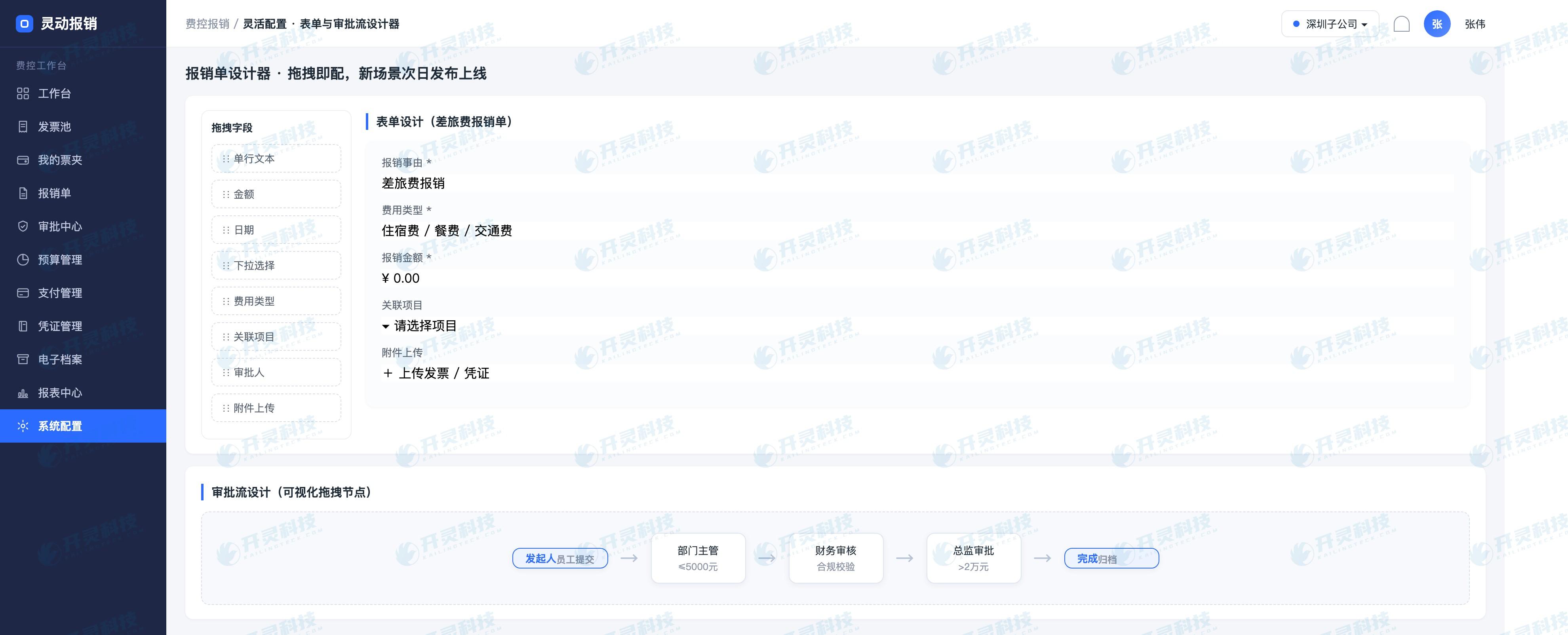
To make the rules executable, the reimbursement form must at least carry information such as expense type, business date, affiliated organization, cost center, project, invoice date, and whether it is linked to an application or accrual. Form design is not about having as many fields as possible, but about ensuring that each item can participate in judgment or traceability; duplicate fields that cannot generate management actions only increase the burden of filling out the form.
The system can display different fields by expense type and bring master data such as organization, personnel, and project into subsequent steps. Finance should break down period rules into explicit conditions, for example, when the accounting period is open, book according to the established business date; when the accounting period is closed, transfer to the current period while retaining the original business date; and when accrued items are involved, process them in association with the original document. Specific conditions should be confirmed by the enterprise's own accounting policy.

▍III. Opening and closing the accounting period must follow two traceable paths
When the target period has not yet been closed, documents can enter the corresponding period according to configured rules, but it is still necessary to check for duplicate accruals, incorrect organizations, or inconsistent expense attribution. When the target period has already been closed, the system should not quietly modify the business date, let alone unconditionally reverse the period close; instead, it should retain the original date and adjustment reason, and transfer to the current open period or initiate special cross-period processing according to authorization.
The common requirement of these two paths is explainability. Any automated result should be able to answer: which business field was used, what accounting period status was read, which rule was matched, who reviewed it, and which period it ultimately entered. This way, even if an audit inquiry comes months later, one can trace from the voucher back to the document, rather than relying on the operator's memory of why it was done that way at the time.
| "Automatic period matching is not making decisions for finance, but steadily executing the already approved accounting caliber. |
▍IV. After vouchers are generated automatically, four types of review remain
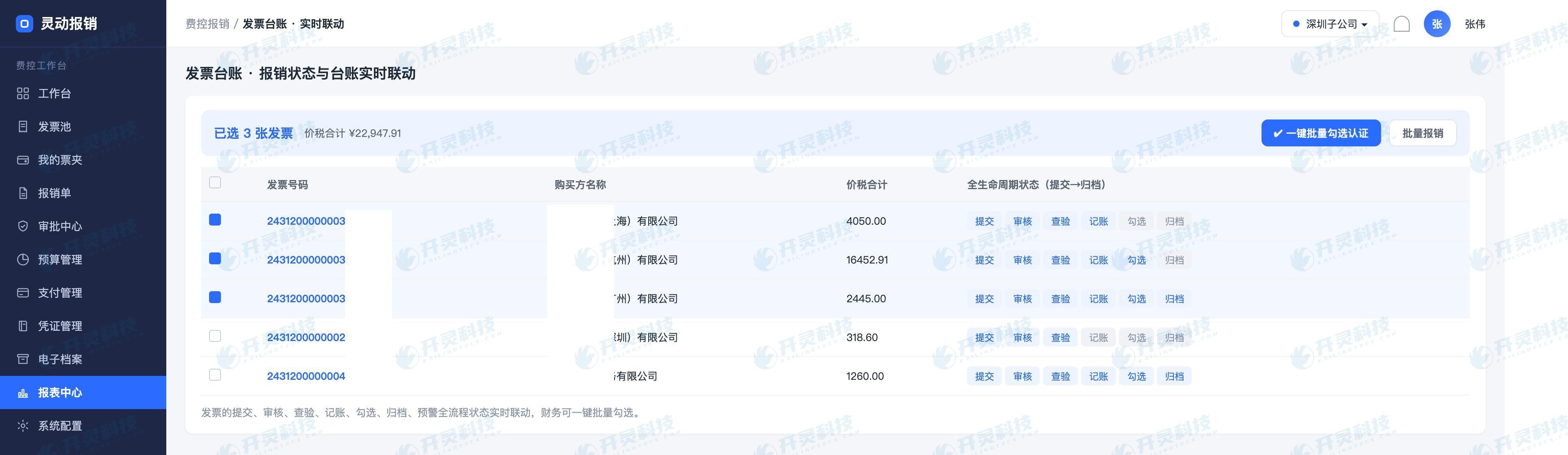
Voucher conversion middleware can map reimbursement form fields to the financial system, reducing duplicate entry, but automatic generation does not mean automatic correctness. The general ledger or expense accountant should review the accounting period, debit-credit direction, accounts and accounting dimensions, tax amount treatment, and counterparties. Cross-month documents also need to be checked for whether they were already accrued in the prior period, to avoid recognizing the same expense again in the current period.
If a voucher reports an error, four sources should be distinguished: source document field errors, missing master data mapping, incomplete rule configuration, and rejection by the target financial system. Directly modifying the voucher manually may temporarily post it, but it will disconnect business documents from the general ledger. The more reliable approach is to correct the source or rules, regenerate, and keep a version record.

- Period review: whether voucher dates are consistent with the enterprise's closing schedule.
- Dimension review: whether organization, department, project, and customer/supplier are correctly brought in from the source document.
- Cross-check review: whether duplicate confirmation or omitted reversal occurs among accrual, reimbursement, and payment.
- Interface review: whether the target system's returned status has been written back, and whether failed tasks have entered the to-do list.
▍V. The month-end launch checklist must cover generation, archiving, and retrieval
Before go-live, you can select samples such as normal current-month invoices, prior-month invoices reimbursed this month, closed accounting periods, invoices arriving after accrual, cross-month payments, and voucher interface failures, and rehearse them one by one. Test results should not only check whether vouchers are generated but also compare period, amount, tax amount, accounting dimensions, original document linkage, and status write-back, ensuring every exception has an owner.
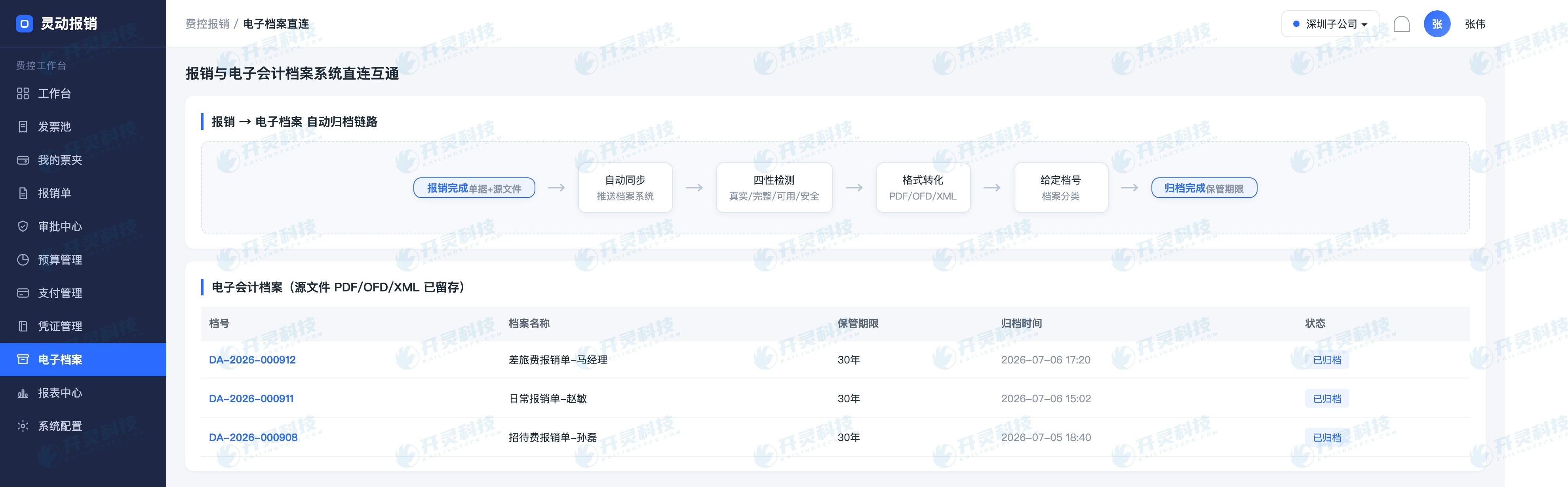
After vouchers are created, reimbursement forms, approval records, bill source files, and necessary attachments should be linked according to the enterprise's archiving requirements. Kailing Technology's enterprise expense control and reimbursement management system can connect with the electronic accounting archives process, enabling booked results to be traced back to business evidence; archiving rules and retention scope still need to be confirmed in light of enterprise policies and applicable standards.
- Before closing, list documents still under approval and still pending payment, and assess their impact on the current period's accounting.
- Classify and count the reasons for automatic voucher failures, prioritizing correction of high-frequency master data and mapping issues.
- Sample from the general ledger and trace back to the original reimbursement form to verify that both the business date and the posting period are visible.
Once the period rules, voucher mapping, and archiving relationships are connected together, cross-month reimbursement no longer relies on last-minute firefighting at month-end. Employees report according to business facts, the system enforces established boundaries, and finance centrally handles the few cases that truly require judgment, so that month-end closing efficiency and post-hoc explainability can improve simultaneously.
After official operation, the differences between rule hits and manual reclassification should also be compared. If a certain type of document is frequently rescheduled by accountants, it indicates that the expense type, date source, or closing exception may need to be redefined; if manual changes to results are allowed without reviewing the rules, cross-month errors will continue to accumulate in another form.
▍FAQ
Q: If the invoice date is last month, must the expense be recorded in last month?
A: Not necessarily. It should be judged comprehensively based on actual occurrence of expenses, enterprise accounting policy, whether accrual has been made and account period status, and cannot be automatically determined solely by invoice date.
Q: If the accounting period has already been closed, can the system automatically reverse the closing?
A: This article does not recommend treating reverse closing as a default automatic action. A common practice is to retain the original business date and enter the current open period according to authorization or go through a dedicated adjustment process.
Q: When an automatic voucher reports an error, can it be modified directly in the financial system?
A: Temporary modifications may cause inconsistency between the source document and the voucher. The issue should first be identified as a document, master data, rule, or interface problem, then corrected according to the governance process and regenerated.
Q: What should be retained when archiving cross-month reimbursements?
A: At minimum, vouchers should be able to link to reimbursement forms, approval records, invoice source files, and necessary attachments, and retain period selection and exception handling basis.
Give every period judgment for cross-month reimbursement a basis and make every voucher traceable. Welcome to visit Kailing Technology: https://www.kailingteck.com/feikong/ .
As a national high-tech enterprise, Kailing Technology focuses on the digital and intelligent transformation of enterprise business-finance-tax and operations management, providing software products, system integration, implementation and delivery, and operational services for various government agencies, institutions, group enterprises, and SMEs.
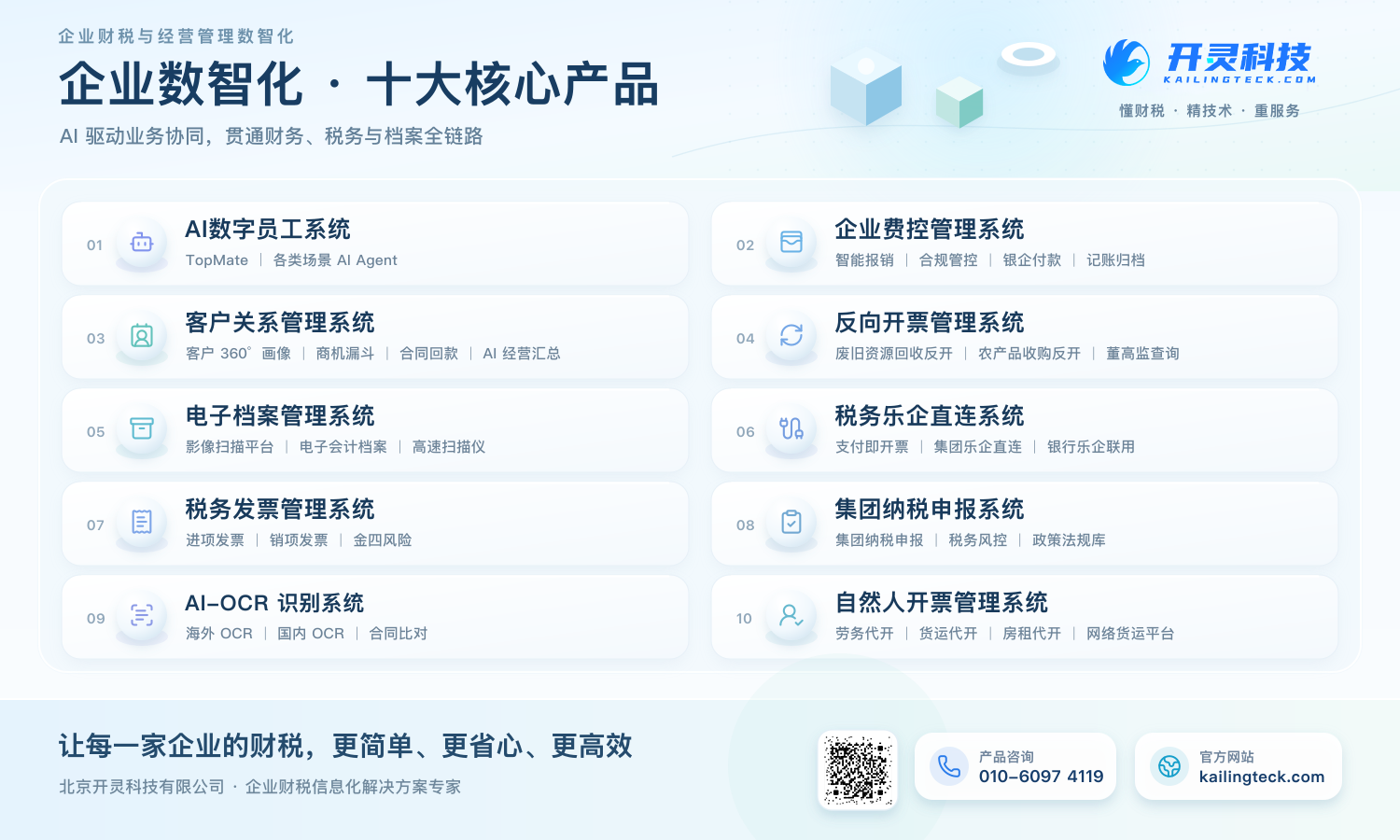
The company has now formed ten core product lines, including: AI digital employee system, enterprise expense control management system, customer relationship management system, reverse invoicing management system, invoice issuance for individuals management system, electronic archives management system, tax fully digitalized e-invoice Leqi system, tax invoice management system, group tax filing system, and AI OCR recognition system. It is committed to connecting enterprise business, finance, tax, funds, and archive data to help customers improve operational efficiency, business-finance-tax compliance capabilities, and digital management levels.
If you have any business-finance-tax digital transformation needs, welcome to contact us. Beijing Kailing Technology will serve you wholeheartedly.
Keywords: Cross-month reimbursement, accounting period, automatic voucher, Kailing Technology, enterprise expense control reimbursement management system
As a comprehensive business-finance-tax digitalization solution service provider, Kailing Technology provides business-finance-tax management digital transformation products and operational services for various government agencies, institutions, and large, medium, and small enterprises. The product line includes: solutions for sales contract management system, procurement contract management system, fully digitalized Leqi interface project, automatic output invoicing system, reverse invoicing system, invoice issuance for individuals system, employee expense control and reimbursement system, input VAT invoice management system, supply chain collaborative reconciliation system, image AI OCR recognition system, automatic financial bookkeeping system, electronic accounting archives system, etc., comprehensively driving the digitalization process across various fields.
Consultation Hotline: 18513895936 / 010-60974119 Location: Beijing