
Online reimbursement is not equal to expense control: Kailing Technology explains in one article why enterprises still need pre-budgeting and over-standard alerts

Many enterprises replace paper reimbursement forms with electronic forms and signatures with mobile approval, and then believe they have completed expense control. Employees indeed no longer need to run between floors, and leaders can click approve at any time, but at month-end there are still budget overruns, temporary additions, inconsistent standard enforcement, and finance passively blocking documents. The reason is straightforward: online approval solves how documents circulate, while expense control solves when resources are committed, occupied, and adjusted. The two are related, but they are not the same thing.
To judge whether an enterprise is doing "online reimbursement" or "expense control", push the timeline forward. If the system first sees an expense when the employee has already consumed and is preparing to reimburse, then no matter how fast the process is, it can only confirm a fait accompli; if the budget is visible before application, occupied at application, and a handling path is given when exceeded, then approval is a decision made within real resource boundaries.
▍Difference one: online approval starts at submission, while expense control starts when the budget is formed
Online approval usually starts with an employee submitting a form. Forms can be automatically routed, expedited, and recorded with comments, but the budget may just be an attachment or number that requires manual review. Professional expense control first defines budget objects: allocating amounts by company, department, project, account, period, or combination dimensions, and clarifying who can adjust them, when they take effect, and whether they can be carried forward. Only when the budget basis is consistent with the business basis does subsequent occupation become meaningful.
For example, the marketing department has an annual promotion budget, but activity expenses are actually managed by project. If employees can only select a department when submitting, the system cannot know whether a certain project has exceeded its budget even if it shows "sufficient budget". Therefore, enterprises should not only ask "does it support budget management", but confirm whether budget dimensions can be jointly referenced by applications, orders, reimbursements and vouchers. The Kailing Technology expense control system treats budget as pre-data in the expense chain, rather than a decorative field on the reimbursement form.

▍Difference two: whether it is occupied at application determines whether the balance can be trusted
Budget balance appears simple, but in reality there are at least several statuses: "issued, occupied, executed, available." If five employees simultaneously see a balance of CNY 100,000 and each submits a CNY 30,000 application, and the system deducts only at reimbursement, it may create CNY 150,000 in commitments. Pre-expense control pre-occupies resources at the agreed node of application approval or order confirmation, so subsequent personnel see the available balance after deducting committed amounts.
The timing of occupancy should be determined by the business. Ordinary expenses can be occupied after application approval, business travel can be adjusted according to the order amount upon booking confirmation, and long-term projects can be reserved in stages. The system must record the document and amount corresponding to each occupancy, so that finance does not see only an unexplainable total. Budget does not mean "cannot spend," but rather bringing committed but not yet reimbursed expenses into view in advance.
▍Difference three: over-limit alerts must give an action, not just flash a red light
After discovering insufficient budget or expenses exceeding standards, the system must at least answer four questions: which rule is exceeded, what is the difference, whether the employee can modify it, and which situations allow exceptions. Expenses explicitly prohibited by policy can be blocked from submission; those with adjustable amounts prompt the employee to modify; those with genuine business necessity can choose to add budget or enter special approval, and bring the reason to the budget owner.
If the system only prompts "over budget" without providing a handling path, employees will turn to chat tools to explain, the approver will verbally agree, and finance will still need to record manually in the end. Kailing Technology's expense control system connects alerts, exception explanations, approval nodes, and budget actions, so that special approval is not a bypass of the rules, but a traceable exception left within the rules.

▍Difference four: after rejection, withdrawal, or cancellation, is the budget released
Occupancy is only the beginning; the harder part is release. When an application is rejected, an employee withdraws, a business trip is canceled, an order is refunded, or the reimbursement amount is lower than the application, the budget needs to be returned or adjusted according to rules. If the system only deducts and never returns, the available balance will shrink, and business staff will have no choice but to keep applying for additional amounts; if it directly releases the full amount, it may ignore portions that have already occurred but have not yet been reimbursed.
The correct approach is to make budget actions follow business status: release the pre-occupation when an application is cancelled; convert pre-occupation to execution after actual consumption; confirm partially based on actuals and release the difference for partial reimbursement; and adjust the execution amount again for refunds or red-letter reversals. Each change is linked to the original document, operation time, and reason. The balance managers see can therefore be explained, rather than being a static figure manually reconciled by finance at month-end.
▍Difference five: after approval ends, can a budget execution analysis be produced
Online approval often ends with "approved/rejected"; expense control must also answer where the budget was spent, which commitments have not yet been reimbursed, which organizations frequently exceed limits, and which standards need adjustment. Analysis should not only look at booked amounts, but also simultaneously display budget release, pre-occupation, actual execution, released amounts, and available balance, distinguishing "not yet spent" from "committed but not yet reimbursed."
Frequent overruns do not necessarily mean employee violations. They may be due to overly tight budgeting, outdated expense standards, changes in project scope, or unreasonable organizational attribution settings. Through exception reasons and approval conclusions, enterprises can distinguish institutional problems from execution problems, and then decide whether to adjust budgets, optimize standards, or strengthen controls. The value of expense control ultimately lies in the management cycle, not merely moving the financial checkpoint forward.
▍How enterprises upgrade from online reimbursement: first add a budget closed loop
Step 1: Select one expense type and one budget dimension, such as departmental travel expenses; Step 2: Clarify the states of budget release, occupation, conversion to actual, and release; Step 3: Prepare sufficient, threshold, over-budget, withdrawal, cancellation, and partial reimbursement samples; Step 4: Verify that applications, business travel orders, reimbursements, payments, and vouchers use the same budget basis; Step 5: Then gradually expand to project, marketing, or procurement expenses.
Enterprises that already have OA and ERP do not need to rebuild all systems for expense control. OA can retain the collaboration entry point, ERP continues to handle financial accounting, and Kailing Technology Smart Reimbursement takes on budgets, standards, invoices, business travel, and reimbursement rules in between, and writes status back to upstream and downstream systems. The key is to clarify which system maintains the budget, which action triggers occupation, which status releases it, and who handles exceptions.
▍FAQ
Q: Does having a budget table mean upfront expense control has been done?
A: Not counted. The budget must also be referenced by applications and orders, able to be occupied, alerted, released, and converted into actual execution — only then does the balance have management significance.
Q: Must submission be prohibited when over budget?
A: Not necessarily. You can set prohibition, modification, addition or special approval according to policy, but the system must provide the difference, reason and handling path and leave a trail.
Q: What should be done if the applied amount and the final reimbursement amount differ?
A: First occupy it in advance according to rules, then convert it to execution and release the difference at actual reimbursement. Partial cancellation or refunds should also be adjusted synchronously.
Q: We already have online approval in OA; can expense control still be added?
A: Yes. OA retains the entry point and collaboration, expense control handles budgets and expense rules, and then connects with ERP accounting. The key is clear responsibility for master data and status.
Make budgets not only visible but also occupiable, releasable, and explainable. Kailing Technology helps you upgrade online reimbursement into true expense control: https://www.kailingteck.com/feikong/ .
As a national high-tech enterprise, Kailing Technology focuses on the digital and intelligent transformation of enterprise business-finance-tax and operations management, providing software products, system integration, implementation and delivery, and operational services for various government agencies, institutions, group enterprises, and SMEs.
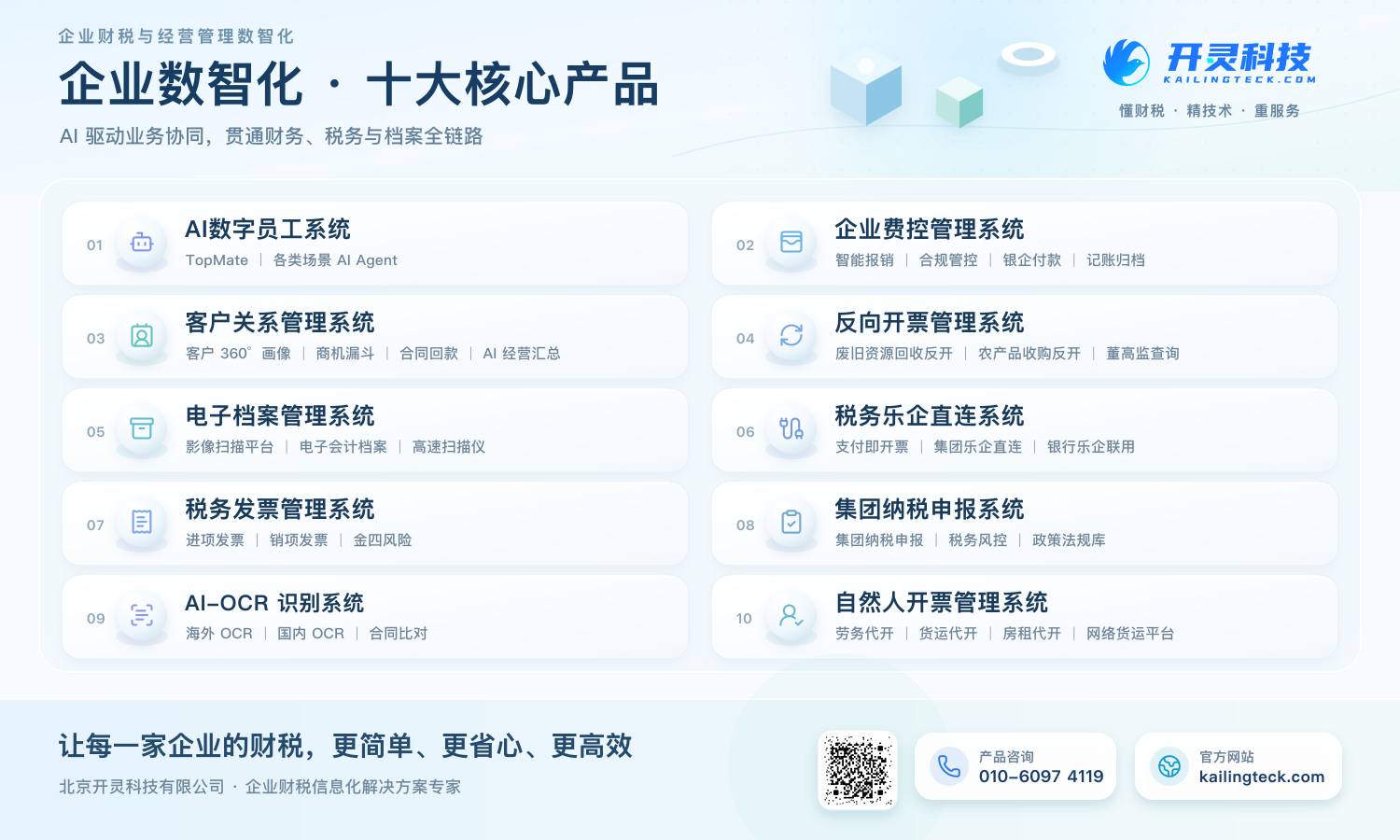
The company has now formed ten core product lines, including: AI digital employee system, enterprise expense control management system, customer relationship management system, reverse invoicing management system, invoice issuance for individuals management system, electronic archives management system, tax fully digitalized e-invoice Leqi system, tax invoice management system, group tax filing system, and AI OCR recognition system. It is committed to connecting enterprise business, finance, tax, funds, and archive data to help customers improve operational efficiency, business-finance-tax compliance capabilities, and digital management levels.
If you have any business-finance-tax digital transformation needs, welcome to contact us. Beijing Kailing Technology will serve you wholeheartedly.
Keywords: Online reimbursement, pre-budgeting, over-standard alerts, Kailing Technology expense control, Smart Reimbursement, budget occupation, enterprise expense control
As a comprehensive business-finance-tax digitalization solution service provider, Kailing Technology provides business-finance-tax management digital transformation products and operational services for various government agencies, institutions, and large, medium, and small enterprises. The product line includes: solutions for sales contract management system, procurement contract management system, fully digitalized Leqi interface project, automatic output invoicing system, reverse invoicing system, invoice issuance for individuals system, employee expense control and reimbursement system, input VAT invoice management system, supply chain collaborative reconciliation system, image AI OCR recognition system, automatic financial bookkeeping system, electronic accounting archives system, etc., comprehensively driving the digitalization process across various fields.
Consultation Hotline: 18513895936 / 010-60974119 Location: Beijing