
How can mid-to-large enterprises achieve a full-process closed loop in expense control? Kailing Technology's expense control system connects budgeting, invoices, business travel, and multi-organization control
For mid-to-large enterprises, the difficulty of expense management has never been just "moving reimbursement online." When legal entities, business units, regions, stores, and projects operate simultaneously, expense standards, approval authorities, budget calibers, payment accounts, and accounting rules are often all different. If applications, business travel, invoices, reimbursement, payments, vouchers, and archives are scattered across multiple systems, employees will repeatedly fill out forms, finance will repeatedly verify, and headquarters will find it difficult to see in time where expenses went, how much budget remains, and at which node risks occur.
Kailing Technology Lingdong Reimbursement builds a closed loop of expense management for medium and large enterprises, managing multiple organizations, budgets, business travel, invoices, approvals, payments, vouchers, and electronic archives in the same business chain. It does not merely handle a single reimbursement form, but enables expenses to enter rules before they occur, undergo verification while they occur, and automatically settle into financial data after they occur. Starting from six core capabilities below, see how the Kailing Technology expense control system helps group enterprises unify control standards while retaining the operational flexibility of each organization.
▍Kailing Technology expense control system: unifying the group expense management foundation with multi-organization capabilities
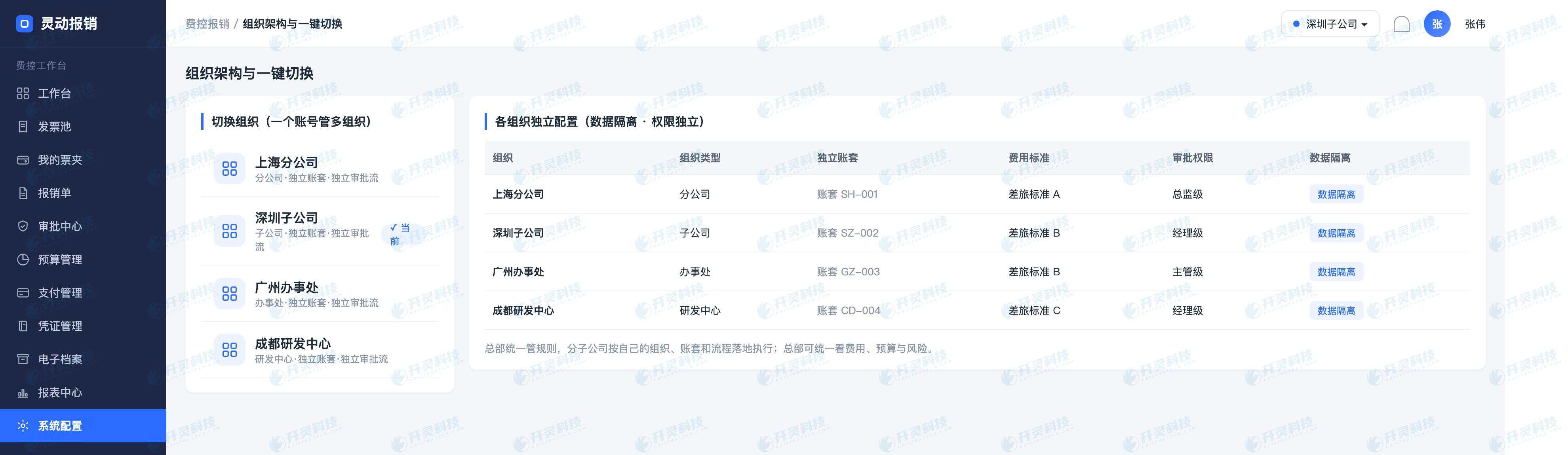
Group enterprises often simultaneously have multiple legal entities, multiple account sets, multiple departmental levels, and project-based organizations. Kailing Technology's Agile Reimbursement supports managing multiple organizations with one account; each organization can independently configure account sets, expense standards, approval permissions, and data scopes, and switch with one click within authorized scope. Headquarters can uniformly set the management framework, while subsidiaries, offices, and R&D centers operate according to their respective responsibilities, avoiding data mixing and reducing the maintenance burden of building multiple duplicate systems.
In scenarios such as concurrent staffing, cross-company business trips, cross-project allocation, or temporary authorization, the system can configure forms and approval flows around organizations, roles, and business relationships, allowing applicants, budget owners, business owners, and financial reviewers to each see the tasks they should handle. Historical documents continue to retain the organizational attribution at the time they occurred, and existing rules can be reused when new organizations go live, keeping the expense management standards continuous during group expansion.
▍Budget upfront: keep expenses running within the rules from application and consumption to reimbursement
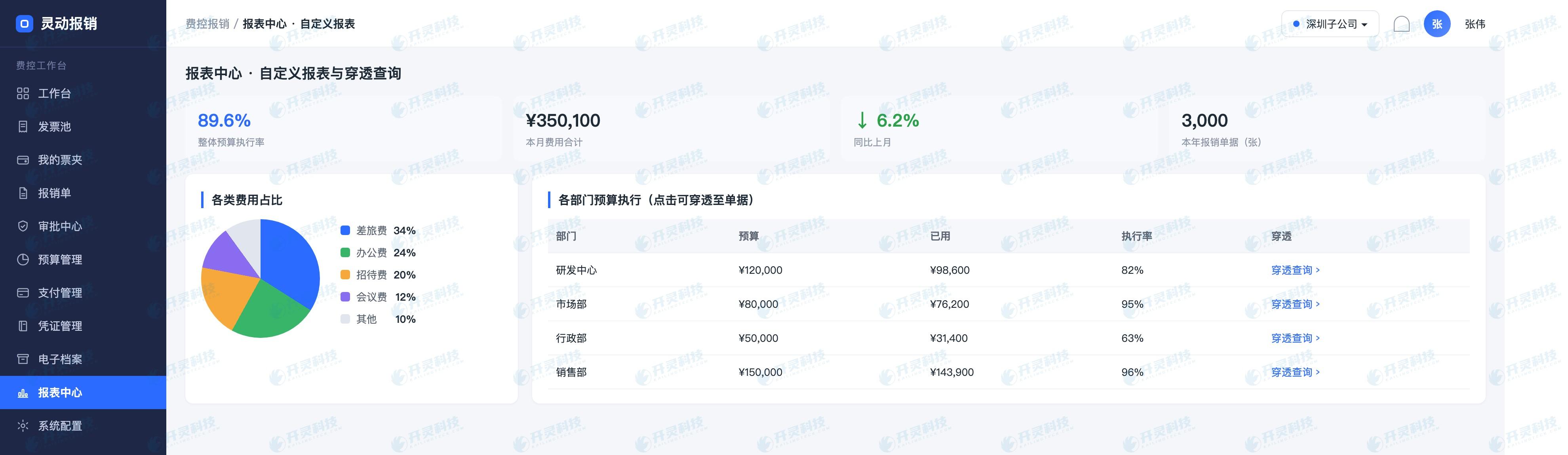
Truly effective budget management should impose constraints before expenses occur, rather than explaining overspending at month-end. Kailing Technology's expense control system can establish budget control criteria around organizations, departments, projects, and expense categories, connecting budget release, application occupation, reimbursement write-off, return release, and execution analysis. Employees can see the available quota when initiating an application, and approvers can simultaneously understand the spending rationale and budget status, reducing passive handling such as "spend first, make up later" and "centralized month-end adjustments."
For different statuses such as threshold, overage, additional, withdrawal, and cancellation, enterprises can set prompts, blocks, or escalated approvals in combination with policies. Budget execution data is synchronized into the report center, and headquarters can drill down by organization, department, project, and expense type to identify abnormal fluctuations in a timely manner. Kailing Technology places budget control and reimbursement processes in the same chain, so that every occupation, release, and write-off has a basis. What management sees is no longer lagging summary figures, but a traceable expense process.
▍Full invoice chain: from multi-terminal collection and intelligent verification to duplicate reimbursement interception
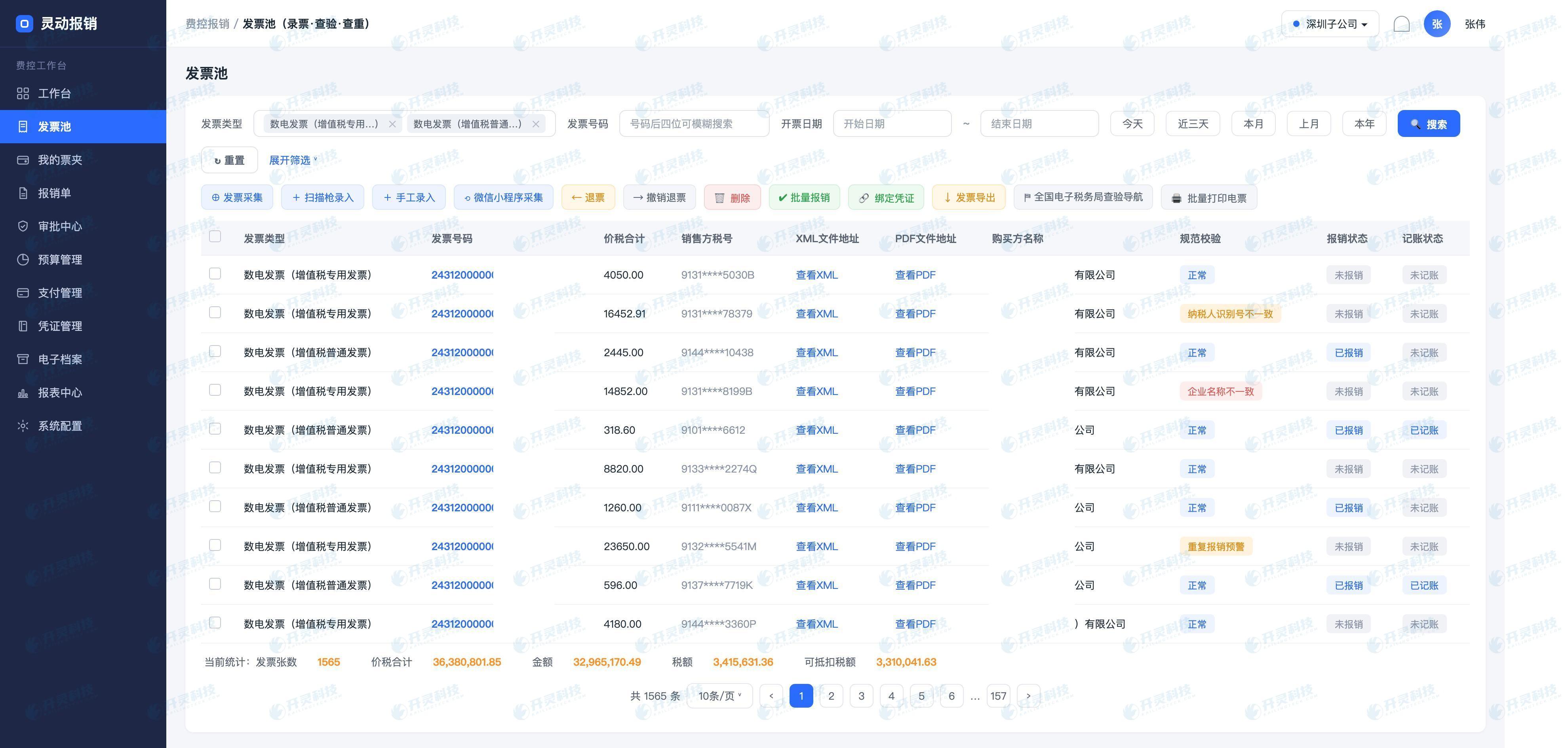
Invoices are the key entry point for expense compliance. LingDong reimbursement supports collection via mini-programs, APP, and web, and can also collect invoices through scanning codes, WeChat card wallet, chat record files, email invoice retrieval, and manual entry; paper invoices can be photographed and recognized, and fully digitalized e-invoices can obtain source files such as PDF, OFD, and XML. The system covers OCR recognition of multiple invoice types, so employees do not need to repeatedly copy invoice fields. After invoices enter the personal invoice folder, a two-way link with reimbursement forms can be established.
Kailing Technology Lingdong Reimbursement puts verification, duplicate checking, and rule validation at the reimbursement entry point. The system can check key information such as the header and tax number, identify anomalies such as duplicate aggregation, duplicate reimbursement, and inconsistent enterprise names, and set strong control or prompts according to enterprise policies. After reimbursement is initiated, invoice status and document status are linked, reducing problems such as the same invoice being used multiple times, unclear status after rejection, or missing source files. Finance can therefore focus its energy on the anomalies that truly require judgment.
▍Business travel and mobile reimbursement collaboration: let employees fill out fewer forms and finance check less
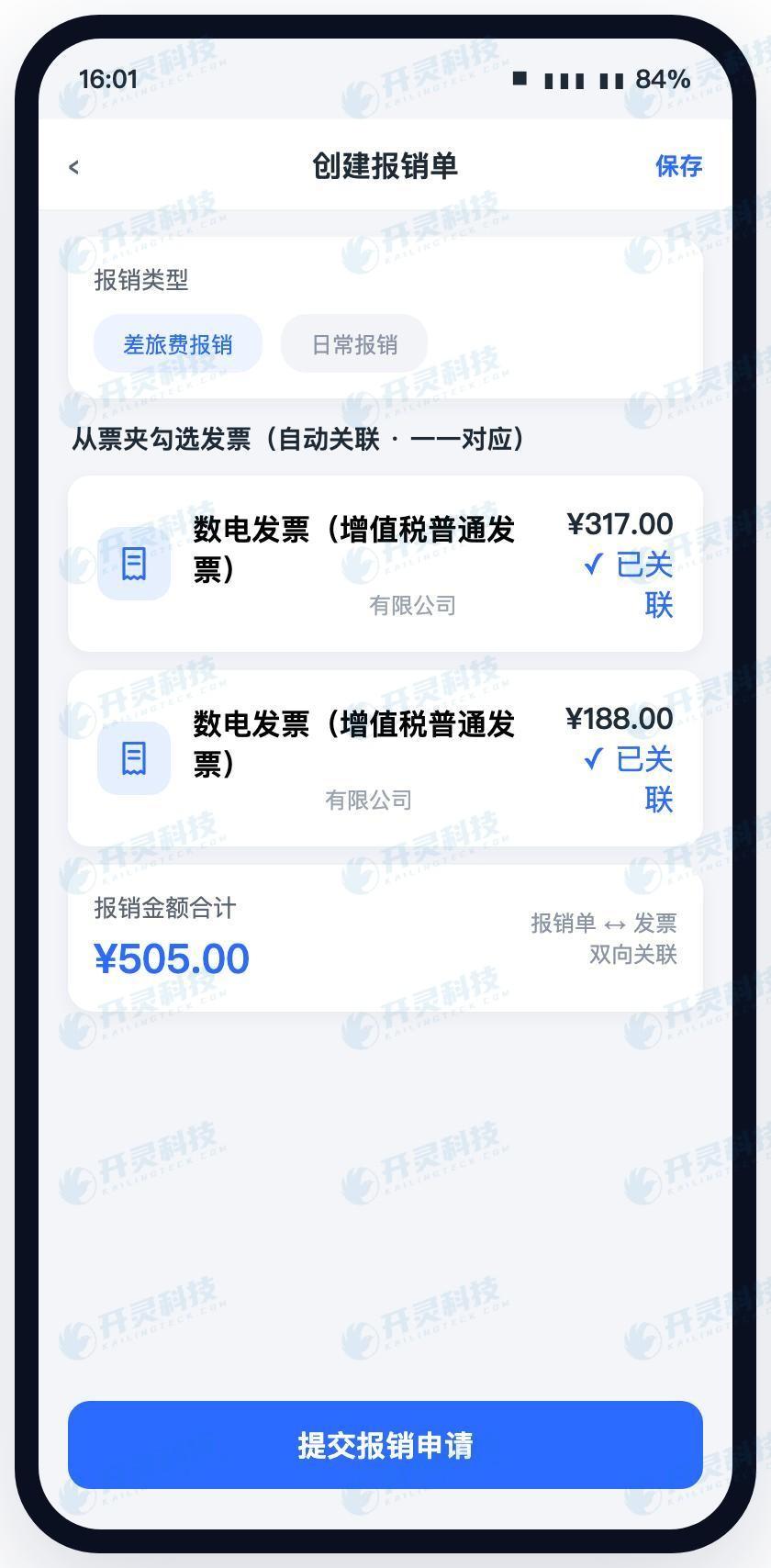
Business travel expenses involve travel applications, itinerary orders, receipts, expense standards, and approval records. Any broken link increases manual verification. Kailing Technology's expense control system can connect travel applications, business travel consumption, invoices, and reimbursement forms. Employees can automatically create reimbursement forms after selecting invoices from the invoice folder, with receipts and documents corresponding one-to-one. Different scenarios such as travel expenses and daily expenses can use different forms and rules, reducing duplicate entry by employees and making it easier for finance to reconstruct the background of expense occurrence.
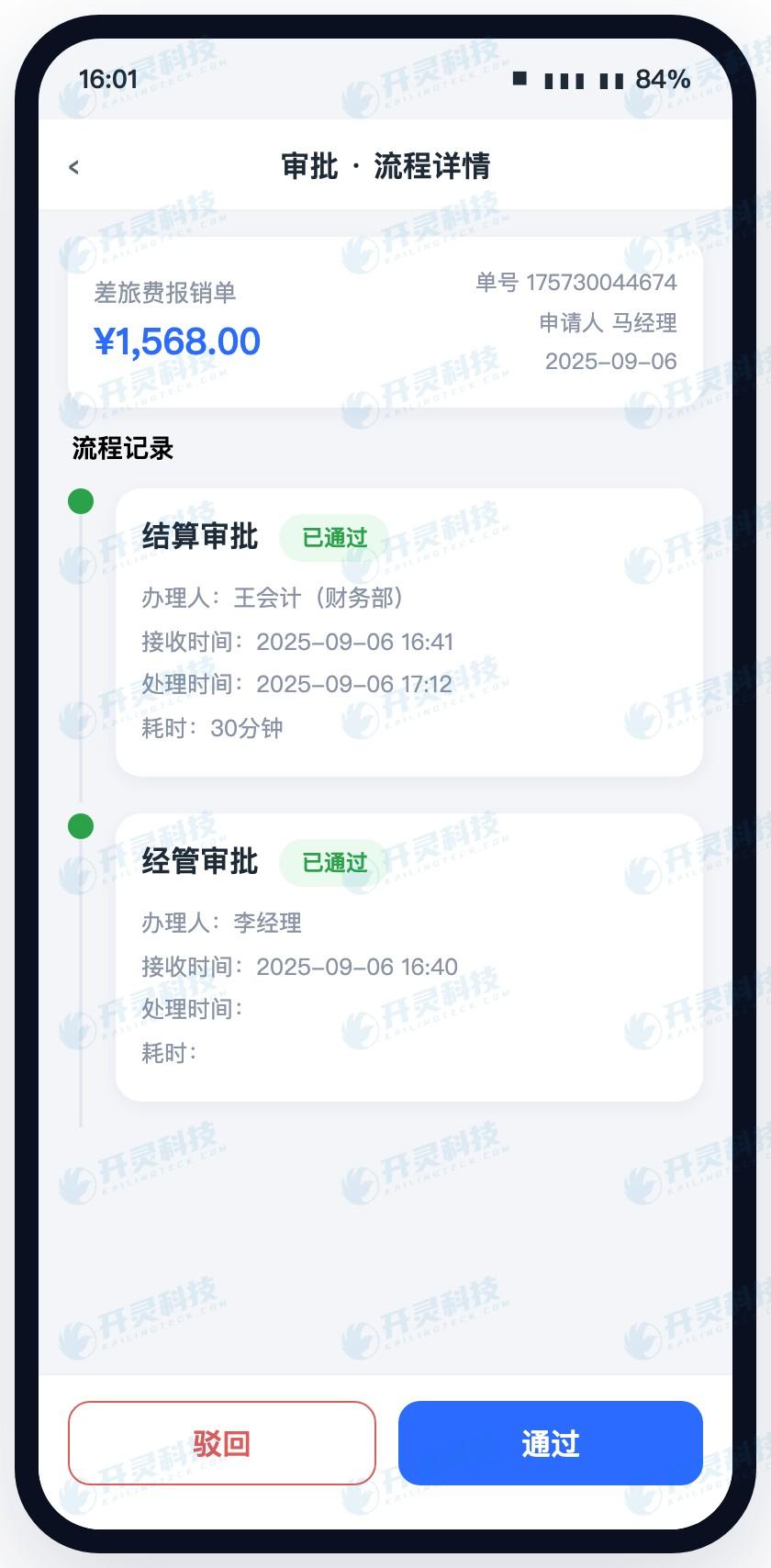
The mobile end covers invoice collection, reimbursement applications, process viewing, and approval processing. Employees can submit even when outside, and approvers can directly view documents, invoices, and process records. Enterprises can also introduce Kailing Technology AI digital employees to automatically check reimbursement content according to travel and subsidy policies, and transfer to manual review when anomalies are hit. Rules handle repetitive checks, while people handle exceptions, maintaining review quality and shortening business waiting time.
▍Payment, vouchers, and archives in one: extending the expense closed loop to financial processing
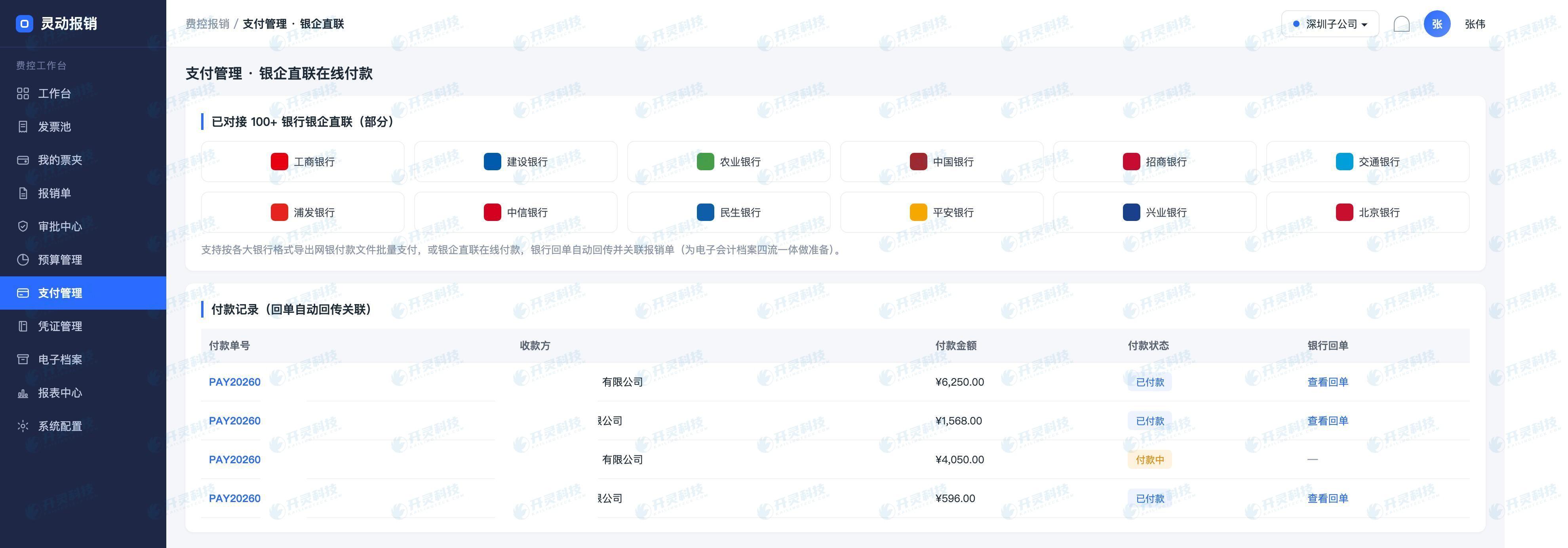
Approval does not mean the expense process is over. Lingdong Reimbursement supports exporting batch payment files in bank formats and can make online payments through direct bank-enterprise connections with more than 100 banks. Payment results and bank receipts are automatically returned and associated with reimbursement forms. Finance can view the application, approval, payment, and receipt in the same record, avoiding offline table export, manual matching, and duplicate payment risks, while also preserving complete evidence for subsequent voucher and archive collection.
In the accounting entry process, the voucher conversion middleware can map reimbursement form fields to mainstream financial software such as UFIDA U8 to generate accounting vouchers; eligible input VAT invoices can enter the selection and deduction process, and the invoice source files, reimbursement forms, approval records, payment receipts, and vouchers are then synchronized to the electronic accounting archives system. In this way, Kailing Technology connects the expense business flow, document flow, fund flow, and accounting treatment, reducing the need for finance to download, organize, and re-enter data across multiple systems.
▍Data analysis and flexible configuration: let the system evolve with management changes
The systems of mid-to-large enterprises do not remain unchanged. Lingdong Reimbursement provides a reimbursement form designer, approval flow configuration, expense ledgers, and custom reports. Enterprises can update form fields, approval nodes, and analysis dimensions based on new business, organizational adjustments, or management requirements. Expense progress and invoice ledgers are linked in real time. Headquarters can view execution by department, personnel, project, and expense type, and business leaders can also grasp their unit's expenditures within their authority.
The value of Kailing Technology lies not only in providing a set of software, but also in transforming expense policies into digital rules that are executable, traceable, and continuously adjustable. Through interfaces, the system collaborates with an enterprise's existing OA, ERP, banking, and archive platforms, preserving existing informatization investments while forming a unified workbench at the expense business layer. As the organization grows and business expands, enterprises can continue to reuse standard capabilities and configure them as needed, without having to rebuild an isolated process each time.
▍Kailing Technology smart reimbursement: making expense management fully controllable, not just online
For medium and large enterprises, the goal of expense control construction is not to add another approval step, but to ensure that every expenditure has a budget before it occurs, rules during it, and vouchers and data after it. Kailing Technology Lingdong Reimbursement uses multiple organizations as its foundation, with budget and invoice risk control as front-end capabilities, connecting forward to business travel and applications, backward to payment, vouchers and electronic accounting archives, and then feeding expense results back to business management through reports. Enterprises thereby gain a management closed loop with unified standards, clear responsibilities, complete evidence and continuous optimization, freeing finance from repetitive reconciliation, making employee reimbursement smoother, and enabling headquarters to truly see, manage and explain expenses clearly.
▍FAQ
Q1: Does Kailing Technology Lingdong Reimbursement support enterprises with multiple legal entities and multiple account sets?
Yes. Enterprises can manage multiple organizations under one account, with each organization independently configuring its ledger, expense standards, approval permissions, and data scope, while headquarters can view expenses, budgets, and risks uniformly within the authorized scope.
Q2: We already have OA and ERP. Can we still integrate with Kailing Technology's expense control system?
Yes. Lingdong Reimbursement can serve as a workbench for expense business and collaborate with existing OA, ERP, banking, and electronic archive platforms; specific interfaces, field mapping, and implementation scope should be confirmed based on the enterprise's current situation.
Q3: How does the system reduce the risk of duplicate reimbursement and abnormal invoices?
After an invoice enters the system, recognition, verification, duplicate checking, and rule validation can be performed, and it is linked with the reimbursement form status; when anomalies such as inconsistent enterprise names or duplicate use are hit, prompts or interception can be made according to policy.
Q4: Can employees complete reimbursement and approval directly on their phones while traveling on business?
Yes. The mobile end covers invoice collection, reimbursement form creation, process viewing, and approval processing. Invoices in the invoice folder can be automatically linked to reimbursement forms, reducing duplicate entry and offline transfer.
Want budget, invoices, business travel, reimbursement, payment, and archiving to truly form a closed loop? Welcome to learn about Kailing Technology Lingdong Reimbursement: www.kailingteck.com/feikong/ .
As a national high-tech enterprise, Kailing Technology focuses on the digital and intelligent transformation of enterprise business-finance-tax and operations management, providing software products, system integration, implementation and delivery, and operational services for various government agencies, institutions, group enterprises, and SMEs.
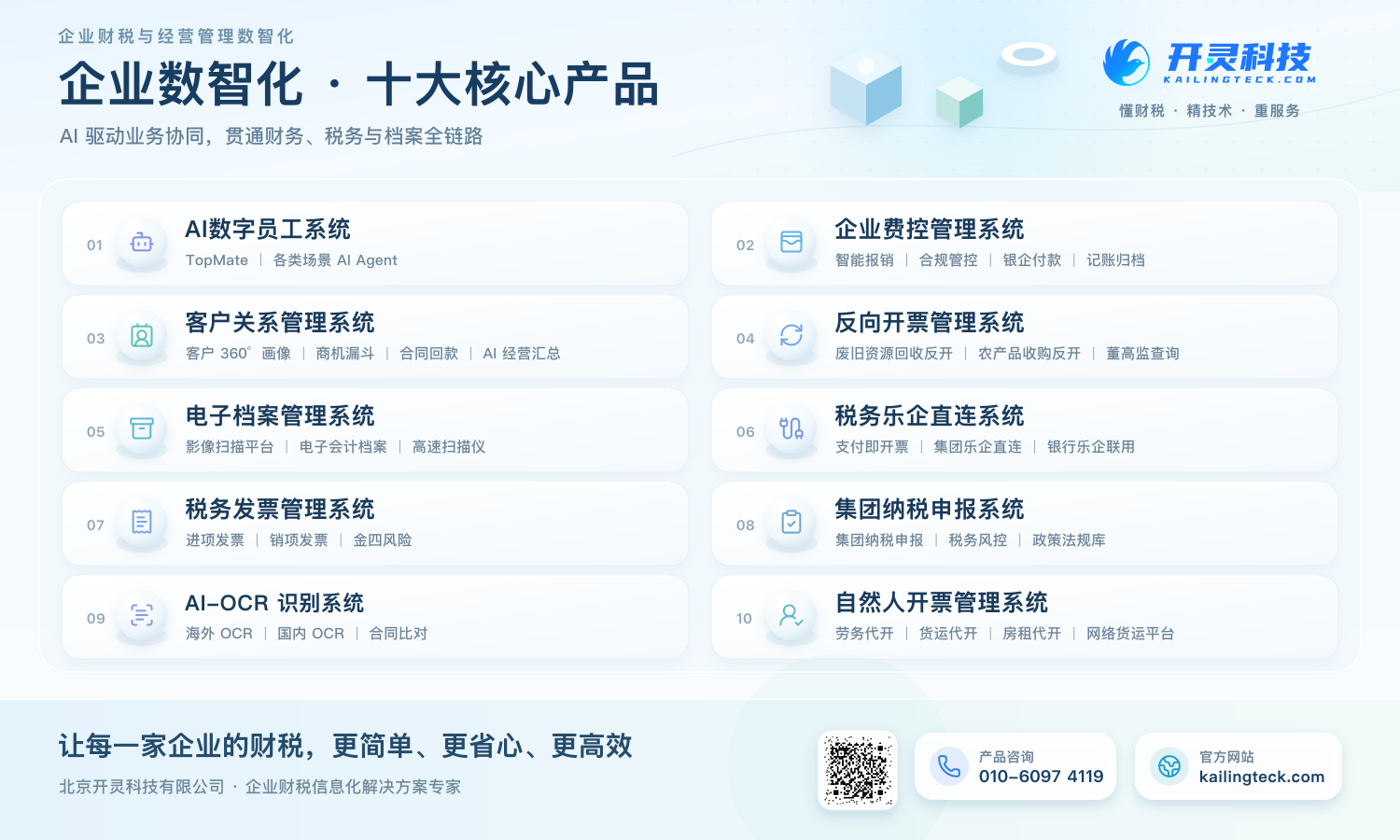
The company has now formed ten core product lines, including: AI digital employee system, enterprise expense control management system, customer relationship management system, reverse invoicing management system, invoice issuance for individuals management system, electronic archives management system, tax fully digitalized e-invoice Leqi system, tax invoice management system, group tax filing system, and AI OCR recognition system. It is committed to connecting enterprise business, finance, tax, funds, and archive data to help customers improve operational efficiency, business-finance-tax compliance capabilities, and digital management levels.
If you have any business-finance-tax digital transformation needs, welcome to contact us. Beijing Kailing Technology will serve you wholeheartedly.
Keywords: Mid-to-large enterprise expense control system, Kailing Technology expense control system, Lingdong Reimbursement, budget control, invoice management, business travel reimbursement, multi-organization control
As a comprehensive business-finance-tax digitalization solution service provider, Kailing Technology provides business-finance-tax management digital transformation products and operational services for various government agencies, institutions, and large, medium, and small enterprises. The product line includes: solutions for sales contract management system, procurement contract management system, fully digitalized Leqi interface project, automatic output invoicing system, reverse invoicing system, invoice issuance for individuals system, employee expense control and reimbursement system, input VAT invoice management system, supply chain collaborative reconciliation system, image AI OCR recognition system, automatic financial bookkeeping system, electronic accounting archives system, etc., comprehensively driving the digitalization process across various fields.
Consultation Hotline: 18513895936 / 010-60974119 Location: Beijing