
How much does Kailing Technology's expense control and reimbursement system cost? Don't just look at the quote—employee scale, processes, and invoice capabilities all affect the budget

Kailing Technology expense control and reimbursement system How much does it cost? Before confirming the number of employees, organizational structure, expense processes, invoice processing scope, and systems to be integrated, it is difficult to give a fixed number applicable to all enterprises. The budget for an expense control project is usually composed of software usage scope, implementation configuration, interface integration, deployment method, and ongoing services. Rather than asking for a total price first, it is better to first clarify "who will use it, which processes will go live, and which systems need to be connected," and then obtain comparable quotes.

▍I. Why do enterprises with the same expense control system have different budgets
A hundred-person enterprise may have only one legal entity, two types of reimbursement forms, and simple approvals; a group enterprise may include multiple legal entities, department levels, payment accounts, and budget dimensions. Both are called "expense control and reimbursement," yet their implementation scopes are completely different.
The number of employees affects usage scale and concurrency, the number of organizations determines permission and data isolation complexity, the number of processes affects form and approval configuration, and the number of invoices and invoice types relate to collection, OCR, verification, and source file processing. If it is also necessary to Bank-enterprise direct connection, voucher conversion or electronic archives, the project will involve more interfaces and joint debugging work.
Therefore, the quotation provided by suppliers should be breakable down, rather than only a total that is difficult to compare. Enterprises should also not compare only by "account unit price," because a low account price does not mean it includes invoice capabilities, implementation, and system integration.
▍II. How employee size and organizational structure affect software usage budget
First count the actual user population: which employees initiate reimbursements, which personnel approve, and which positions are responsible for financial review, payment and system management. Do not simply substitute the total number of employees, because some field staff, part-time or business cooperation personnel may use different entry points and permissions.
Next, confirm the organizational hierarchy. A single legal entity usually only needs one set of basic rules; group enterprises need to handle Multiple organizations Switching, data isolation, headquarters consolidation, and independent standards and payment accounts for subsidiaries. The more organizations there are, the more important initial configuration, permission testing, and subsequent change management become.
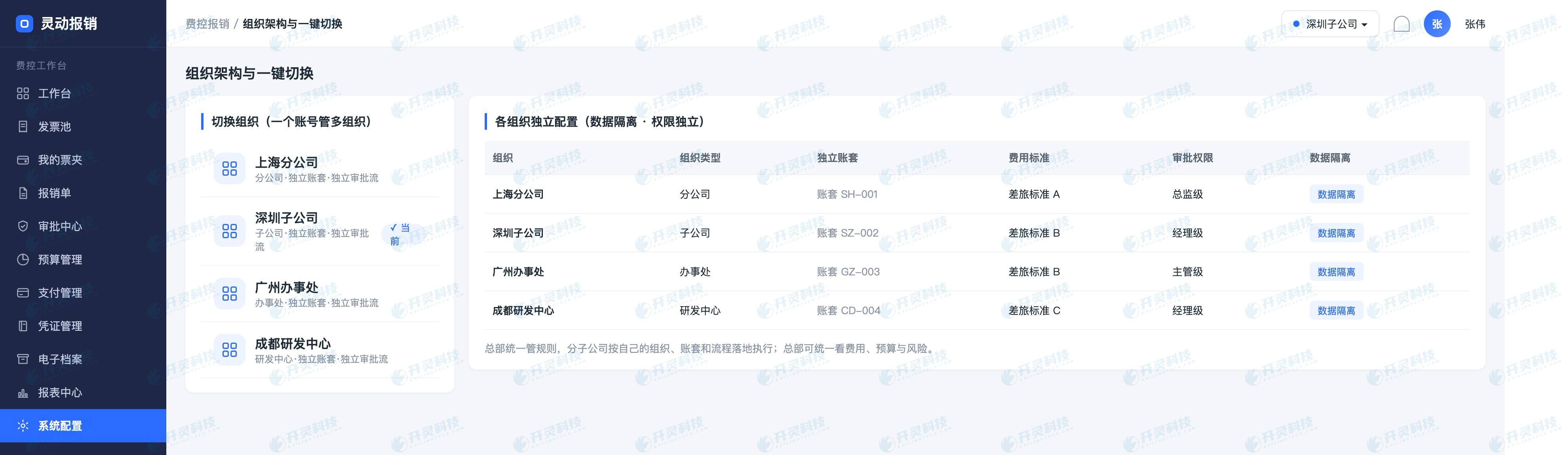
Budget estimation can first be divided into two layers, "basic organization" and "new organization," and then check whether accounts, processes, and reports are repeatedly configured with the organization. This shows both the initial investment and the estimated expansion cost of adding branches in the future.
▍III. Why process and invoicing capabilities often create pricing differences
If an enterprise only changes paper approvals into online forms, the configuration is relatively concentrated; if it needs to cover the entire chain of application, invoice collection, verification, reimbursement, approval, payment, booking, and archiving, both system capabilities and implementation work will increase.
The invoicing step especially needs to be clarified.Lingdong Reimbursement Supports multi-channel collection, all-category OCR recognition, header and tax number verification, duplicate reimbursement interception, and source file acquisition of fully digitalized e-invoices. Enterprises should confirm which document types, verification methods, processing volumes, and exception mechanisms are included in the quotation, to avoid discovering after launch that core document capabilities require additional purchase.
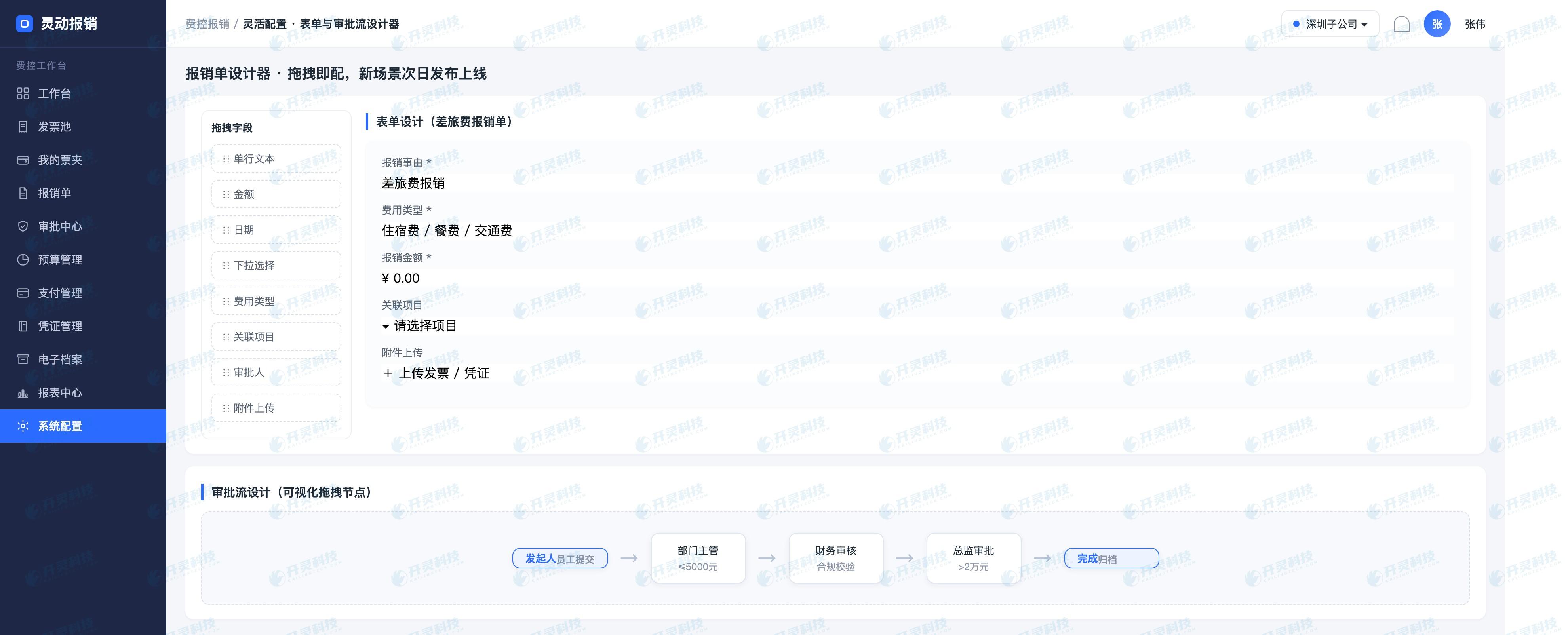
Process configuration also includes travel standards, budget occupation, multi-level approval, and special authorization. Standard processes can be quickly enabled, while complex project-based expenses, cross-organization approvals, or multiple budget dimensions require more detailed rule mapping and testing.
▍IV. Where implementation, interface, and deployment costs each go
Implementation services usually include requirements sorting, organization and personnel initialization, form and process configuration, historical basic data import, testing and training, and go-live support. The more fully prepared the enterprise is, the fewer repeated modifications there will be, and the easier the implementation scope is to control.
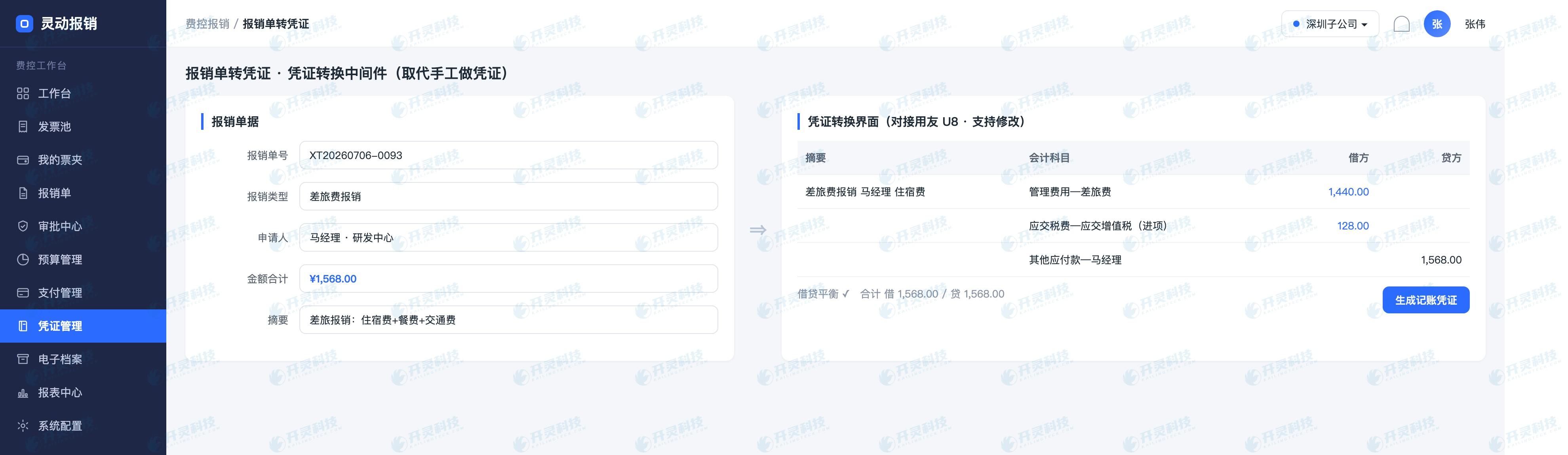
Interface costs come from data handover between systems. For example, OA provides application information, ERP receives vouchers, the bank returns payment receipts, and electronic accounting archives receive archiving materials. Each interface should specify fields, call direction, trigger timing, exception retry, and acceptance criteria, and cannot merely state "supports integration."
The deployment method also affects the budget. Enterprises need to confirm which deployment and environment configuration to adopt based on data security, IT operations, and internal compliance requirements, and calculate server, network, security assessment, backup, and operations resources. Software quotations and enterprise-side infrastructure investment should be listed separately.
▍V. How enterprises of different sizes form their own budget lists
SMEs can prioritize high-frequency, essential needs: mobile reimbursement, invoice collection and duplicate checking, custom approvals, and basic reports, then decide whether to simultaneously add bank-enterprise payments, voucher interfaces, and archive collection. The initial scope should be focused to avoid purchasing many modules that are not needed for the time being.
Growing enterprises should consider organizational expansion and process changes, focusing on confirming how new departments, legal entities, approval nodes, and reports are configured. Group enterprises, on the other hand, need to Multiple organizations Permissions, budget scope, bank accounts, ERP account sets, and unified data analysis are placed at the core of the budget.
It is recommended to divide the budget table into four columns: initial software, implementation and configuration, interfaces and deployment, and annual services. Each column should then be marked as "must go live," "can be added in phase two," and "borne by the enterprise," so that quotes are comparable.
▍FAQ
Q: Is there unified public pricing for expense control and reimbursement systems?
A: Different enterprises have different personnel, organizations, modules, interfaces, and deployment scopes, so pricing usually requires confirmation of requirements first. Suppliers can be asked to break down pricing by software, implementation, interfaces, deployment, and services.
Q: Is it accurate to estimate only by the number of employee accounts?
A: Not enough. Account count is one factor, but invoice processing, organizational complexity, number of processes, and external interfaces also significantly affect project scope.
Q: What work does the implementation fee usually include?
A: The common scope includes requirements analysis, initialization, process configuration, testing, training, and go-live support, and the specific scope should be based on the project scope list and contract terms.
Q: How can we avoid continuously increasing the budget after go-live?
A: Before inquiry, clarify the phase-one boundary, interface fields, acceptance scenarios, and subsequent change mechanism, and list optional modules separately from the enterprise-side infrastructure.
First calculate headcount, organization, processes, documents, and interface scope clearly, then obtain a comparable expense control budget. Welcome to contact Kailing Technology: https://www.kailingteck.com/feikong/ .
As a national high-tech enterprise, Kailing Technology focuses on the digital and intelligent transformation of enterprise business-finance-tax and operations management, providing software products, system integration, implementation and delivery, and operational services for various government agencies, institutions, group enterprises, and SMEs.
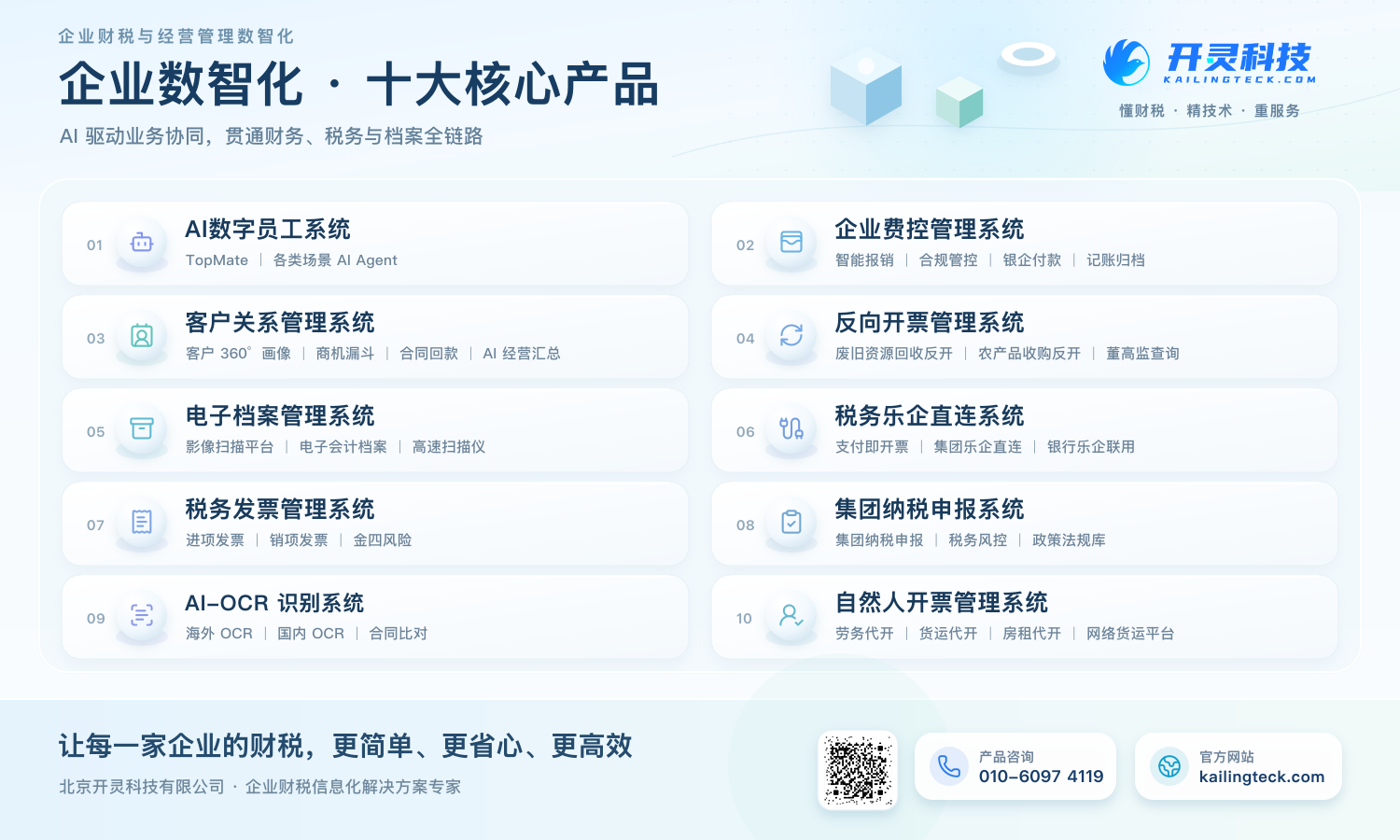
The company has now formed ten core product lines, including: AI digital employee system, enterprise expense control management system, customer relationship management system, reverse invoicing management system, invoice issuance for individuals management system, electronic archives management system, tax fully digitalized e-invoice Leqi system, tax invoice management system, group tax filing system, and AI OCR recognition system. It is committed to connecting enterprise business, finance, tax, funds, and archive data to help customers improve operational efficiency, business-finance-tax compliance capabilities, and digital management levels.
If you have any business-finance-tax digital transformation needs, welcome to contact us. Beijing Kailing Technology will serve you wholeheartedly.
Keywords: Kailing Technology expense control and reimbursement system pricing, expense control system price, reimbursement system quote, Lingdong Reimbursement, expense control implementation costs, system interface costs, private deployment, expense control budget
As a comprehensive business-finance-tax digitalization solution service provider, Kailing Technology provides business-finance-tax management digital transformation products and operational services for various government agencies, institutions, and large, medium, and small enterprises. The product line includes: solutions for sales contract management system, procurement contract management system, fully digitalized Leqi interface project, automatic output invoicing system, reverse invoicing system, invoice issuance for individuals system, employee expense control and reimbursement system, input VAT invoice management system, supply chain collaborative reconciliation system, image AI OCR recognition system, automatic financial bookkeeping system, electronic accounting archives system, etc., comprehensively driving the digitalization process across various fields.
Consultation Hotline: 18513895936 / 010-60974119 Location: Beijing