010-6097 4119Book a Demo


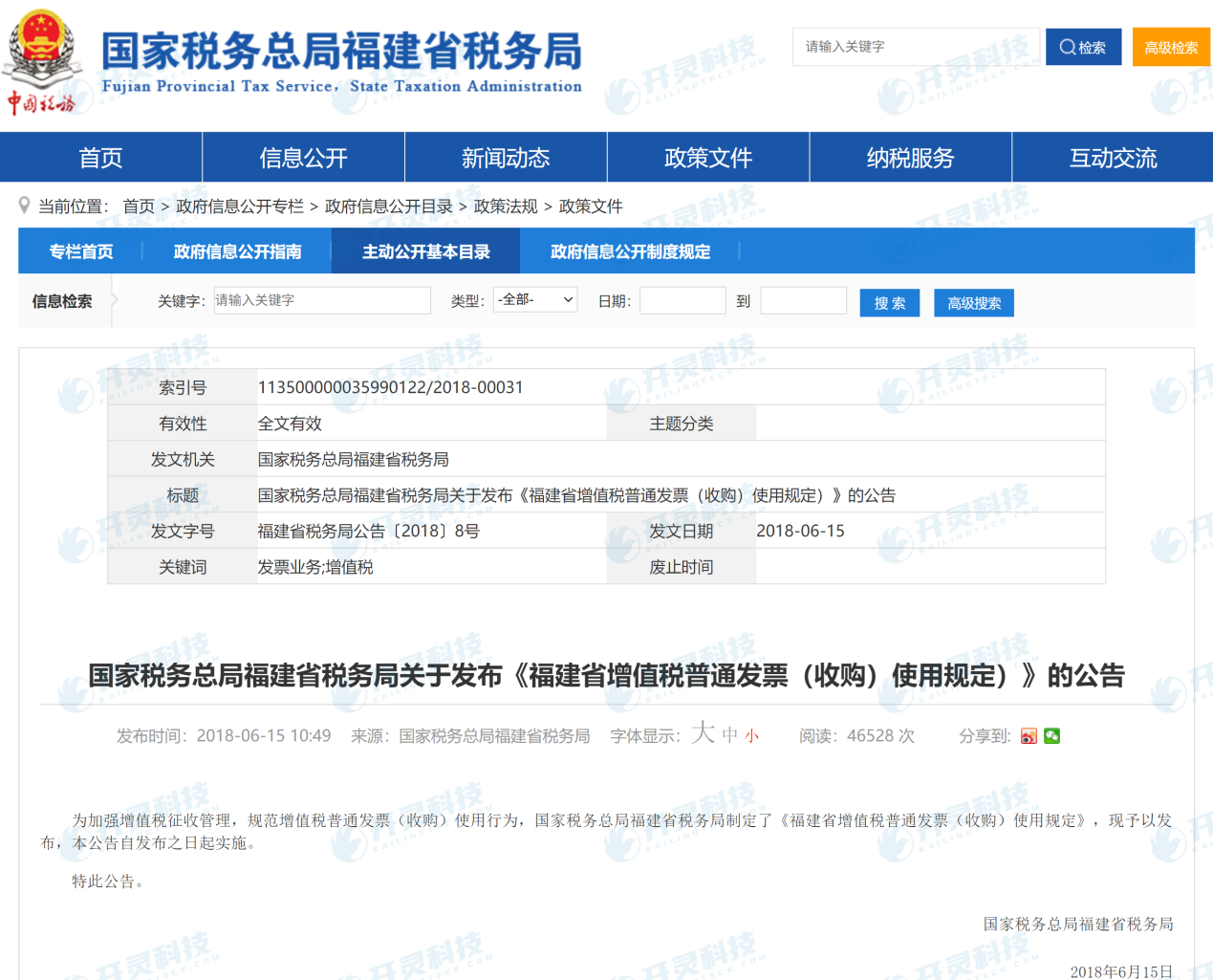
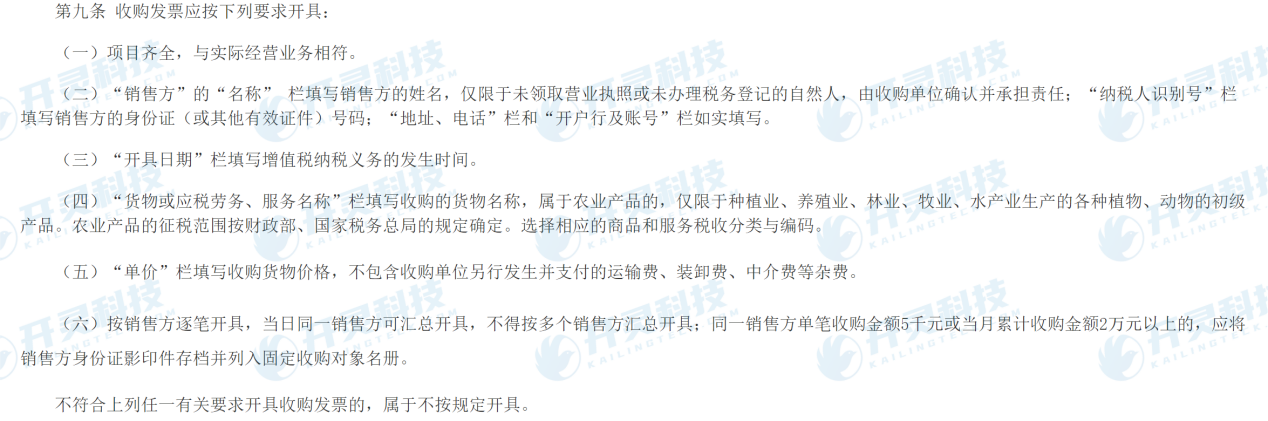
Kailing Technology Interpretation: How to compliantly obtain input VAT invoices when purchasing live cattle and live pigs? Full-process analysis of reverse invoicingPublished: 2025-10-13 17:34 In the livestock industry, the purchase of live cattle and live pigs is the core starting point of the meat industry chain, but their transaction model has long faced the pain point of "difficulty in obtaining input VAT invoices" — the purchase targets are mostly scattered smallholder farmers who cannot issue invoices themselves; at the same time, live cattle and live pig transactions involve multiple stages such as quarantine, transportation, and weighing, and transaction records are fragmented, making it easy for information on "orders, funds, invoices, and quarantine" to mismatch, which not only prevents enterprises from compliantly deducting VAT and corporate income tax, but also exposes them to tax audit risks. In response to this industry dilemma, the State Taxation Administration has continued to promote the implementation of the "reverse invoicing" policy in recent years, forLivestockAcquiring enterprises are provided with a compliant solution. Based on mature experience in reverse invoicing for agricultural product purchases and combined with the characteristics of the livestock industry, Kailing Technology has built an adaptedLivestockA full-process management system for purchasing, helping enterprises connect the entire chain of "compliant invoicing - tax deduction - risk prevention and control." I. Policy Support: Core Basis for Applying Reverse Invoicing to Live Cattle and Live Pig PurchasesReverse invoicing is not an industry "special case" but a compliant invoicing model formulated by the state for scenarios where individuals sell goods. Its core logic is "the purchaser (acquiring enterprise) issues an invoice to the seller (individual farmer)," and this model has a clear policy basis in the procurement of live cattle and live pigs: 1. Local policy basis:According to the Announcement of the Fujian Provincial Tax Service on Issuing the Provisions on the Use of Fujian VAT General Invoices (Purchases) (Fujian Provincial Tax Service Announcement No. 8 of 2018), purchase invoices may be issued to "individuals who have not obtained a business license or completed tax registration," and must be issued on a transaction-by-transaction basis for each seller (consolidation is permitted for the same seller on the same day). The goods name must be specified as "primary products such as crop farming and livestock farming" — live cattle and live pigs, as primary products of livestock farming, fully fall within the scope of invoice issuance.
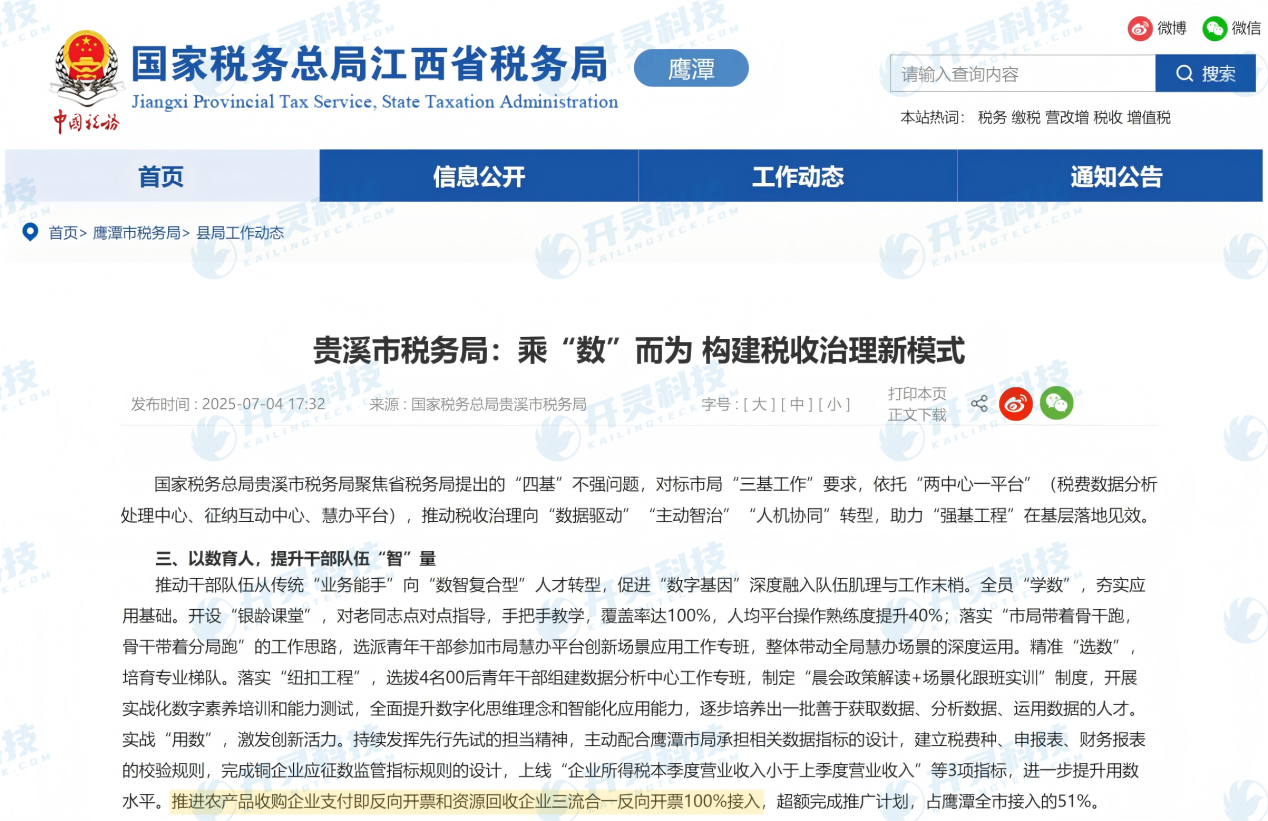
2. National policy advancement:In April 2024, the State Taxation Administration explicitly required that "reverse invoicing by resource recycling enterprises be achieved before the end of April," and extended this to the agricultural product procurement sector, proposing to "grant purchasing enterprises lawful pre-tax deduction vouchers while allowing individuals to enjoy the VAT exemption policy"; in July 2025, the Guixi Municipal Taxation Bureau further advanced "reverse invoicing upon payment by agricultural product purchasing enterprises," achieving 100% access, providingAgricultural product procurementThe industry provides a practical model.
II. Core pain points of live cattle and live pig procurement: Why has the input invoice issue become a "chronic industry problem"?Compared with ordinary agricultural products (such as grain and vegetables), the transaction chain for purchasing live cattle and live pigs is longer and the stages are more complex. Behind the input VAT invoice challenge is a combination of multiple pain points: - Difficult invoice acquisition: no invoices available for retail transactions The sellers of live cattle and live pigs are mostly rural individual farmers, over 90% of whom have not completed tax registration and cannot issue invoices themselves. If purchasing enterprises adopt a cash transaction + manual record model, they can only retain weighing slips and payment vouchers, and cannot form compliant input invoices, resulting in no basis for VAT deduction and no voucher for corporate income tax pre-tax deduction. - Scattered transaction records: difficult to align information across multiple links Live cattle and live pig procurement requires quarantine (animal quarantine certificate) - weighing - transportation - payment and other steps. The quarantine certificate is issued by the animal husbandry department, transportation records are provided by the logistics party, and payment is handled by the enterprise's finance department. Information is scattered among different parties, making it difficult to match one-to-one with orders and invoices, creating the risk of inconsistency among the four flows and making it easy for tax authorities to determine it as fake invoicing. - Cumbersome financial operations: Low efficiency in bulk procurement In peak season, an enterprise may purchase live cattle and live pigs from dozens of farming households in a single day, requiring item-by-item recording of farmers' ID numbers, bank accounts, quarantine numbers, and weighing data, then manually initiating payments; if returns occur, records must also be manually reversed and invoices voided. Finance staff handle fewer than 50 transactions per person per day, resulting in extremely low efficiency and high error rates. - High audit risk: manual records carry fraud risks Under the traditional model, procurement prices and weighing data rely on manual entry, creating fraudulent behaviors such as "colluding with farmers to inflate weight" and "modifying procurement prices to extract funds." At the same time, manual vouchers are easily lost or tampered with. If tax authorities conduct an audit, enterprises cannot provide a complete transaction chain proof and may face fines, tax back payments, or even criminal liability. III. Full-process analysis of reverse invoicing: the "five-step compliance method" adapted to live cattle and live pig procurement
Step 1: Preliminary preparation — "two-way compliance certification" between individuals and enterprises - Natural person farmer registration (mobile mini-program) Farmers complete real-name authentication through the WeChat mini-program: enter mobile phone number, verification code to log in, select the "individual farmer" identity, upload the front and back of the ID card, complete face recognition verification, and bind their own bank card. After authentication, the system automatically generates a "farmer profile", recording the ID number, bank card number, and commonly traded varieties, so subsequent transactions do not require repeated information entry. - Acquiring Enterprise Onboarding (Backend System) Enterprises need to complete the following operations: ① Fill in basic information (enterprise name, tax number, address, contact phone), upload business license and legal representative ID; ② Wait for platform review; ③ Complete the connection between the system and the tax bureau and activate the "reverse invoicing permission." Step 2: Transaction initiation — orders linked to key "quarantine + transportation" information Acquiring enterprises create a "live cattle/live pig purchase order" in the backend system, requiring entry of three core pieces of information: - Basic transaction information Select the farmer (filtered from certified archives, supporting quick matching of historical customers), fill in the livestock breed (e.g., "live pig - fattening pig", "live cattle - beef cattle"), quantity (head), unit price (yuan/head, excluding quarantine fees, transportation fees, and other miscellaneous charges); - Quarantine information Upload a photo of the "Animal Quarantine Certificate" and enter the quarantine certificate number (the system automatically verifies the certificate number format and validity period to avoid invalid quarantine certificates); - Transport information Fill in the license plate number of the transport vehicle, driver name and phone number, and upload a copy of the driving license. After an order is created, the system automatically generates a unique order number and sends a "confirmation notice" to the farmer mini-program. Step 3: Confirmation and payment — scan to collect payment, funds arrive in real time Farmers log into the mini-program, view order details (including quarantine and transportation information), and after confirming they are correct: - Two confirmation methods ① Scan the order QR code provided by the enterprise and confirm with one click; ② Click the "order link" pushed by the system to manually confirm the transaction; - Fund payment Enterprises initiate payment in the backend. The system transfers the payment directly to the bank card bound by the farmer through the UnionPay Merchant Services platform, without the farmer paying withdrawal fees, and with "real-time arrival" (no T+1 delay). There is no amount limit for a single transaction or single account (supporting single purchase payments at the ten-thousand-yuan level). After payment is completed, the system automatically generates a "payment voucher" and syncs it to the order details page, achieving real-time binding of "fund flow and order flow." Step 4: Automatic Invoicing - Connecting to the Tax Bureau for Instant Generation of Compliant Invoices After payment is completed, the system automatically initiates a reverse invoicing request to the tax authority without manual operation: - Invoice Content Standards In the "Seller" field, fill in the farmer's name + ID number; in the "Goods Name" field, mark "live cattle (beef cattle)" or "live pigs (fattening pigs)" (matching the tax classification code); in the "Unit Price" field, enter the purchase price (excluding miscellaneous fees); in the "Remarks" field, automatically fill in the quarantine certificate number and license plate number to ensure that invoice information is consistent with order, quarantine, and transportation information; - Invoice delivery methods After an e-invoice is generated, it is automatically sent to the enterprise email and the farmer mini-program; the enterprise can batch download and print in the backend without logging into the Electronic Tax Bureau to issue invoices manually; - Anomaly handling If "return due to livestock health issues" occurs, after the enterprise initiates a return request, the system automatically issues a red-letter invoice and synchronously updates the fund records, avoiding missed invoice voiding. Step 5: Record archiving—four-flow information is automatically summarized for worry-free inspection readiness The system automatically aggregates five items—"order records, quarantine certificates, transport documents, payment vouchers, and invoices"—to generate a "live cattle/live pig purchase compliance archive," which enterprises can retrieve at any time by "date, farmer, or order number"; meanwhile, the archive is synced to cloud storage, with a retention period that meets tax authority requirements, and can be exported with one click during audits, eliminating the need to manually organize paper documents. IV. Project Value: More Than "Invoicing Compliance"—A Digital Upgrade for Livestock EnterprisesKailing Technology's reverse invoicing system for live cattle and live pig procurement not only solves the single-point problem of input VAT invoices, but also creates value for enterprises from four dimensions: efficiency, risk control, cost, and decision-making: - Efficiency dimension: from "day-level" to "minute-level" Under the traditional model, one procurement transaction takes 2-3 hours from weighing to payment to invoicing. After the system goes live, it is compressed to within 10 minutes. During peak season, labor input can be reduced by 60%, freeing employees from manual order entry and reconciliation to focus on core work such as farmer development and cost control. - Risk control dimensions: building a "compliance firewall" The system forcibly verifies the consistency of the four flows, automatically intercepts invalid quarantine certificates and abnormal payments, and at the same time retains traces of all operations online, avoiding fraudulent acts such as price tampering and inflated weight, and protecting the security of enterprise assets. - Cost dimension: reduce hidden costs No handling fees required, while reducing overpaid taxes due to no-invoice deductions; cloud archiving replaces paper storage, saving approximately 20,000 yuan per year in archive management costs. - Decision dimension: data-driven procurement The system automatically aggregates data such as regional purchase prices, farmer repurchase rates, and quarantine pass rates to generate procurement analysis reports. Enterprises can accurately determine "which region has the best live cattle quality" and "how many farmer resources need to be locked in advance before peak season," improving the precision of procurement decisions. Reverse invoicing is not only a policy direction but also an inevitable choice for the digital transformation of agricultural product procurement enterprises. Live cattle and live pig procurement, as typical scenarios, can achieve compliant, efficient, and controllable input invoice management by connecting to Kailing Technology's full-process management system, helping enterprises develop steadily under policy benefits. Consult Kailing Technology to obtain more customized reverse invoicing solutions for various scenarios:https://www.kailingteck.com/h-col-127.html 。 As a comprehensive business-finance-tax digitalization solution service provider, Kailing Technology provides business-finance-tax management digital transformation products and operational services for various government agencies, institutions, and large, medium, and small enterprises. The product line includes: Solutions for sales contract management system, procurement contract management system, fully digitalized Leqi interface project, automatic output VAT invoicing system, invoice issuance for individuals system, employee expense control and reimbursement system, input VAT invoice management system, supply chain collaborative reconciliation system, imaging OCR recognition system, automatic financial bookkeeping system, electronic accounting archives system and other businesses, comprehensively advancing the digitalization process across various fields. If you have any business-finance-tax digital transformation needs, welcome to contact us. Beijing Kailing Technology will serve you wholeheartedly.
|