010-6097 4119Book a Demo


Kailing Technology: detailed explanation of Leqi interface compliance requirements, must-read for enterprise access in 2025Published: 2025-08-28 17:18 Content timeliness statement (updated 2026-08-29) This article was originally published on 2025-08-28. The following are changes to current regulations related to this article since publication:
Against the backdrop of continuously deepening precise regulation under China Golden Tax Phase IV's "tax governance by data," "Leqi fully digitalized e-invoice" has become a core lever for corporate tax digital transformation. As a key vehicle promoted by the State Taxation Administration to optimize the tax business environment, Leqi embeds tax rules into enterprise business systems through the tax-enterprise direct connection model, achieving deep integration of business-finance-tax. In 2025, with the full implementation of Leqi pilots nationwide, compliant access to Leqi is not only a "required question" for enterprises to meet regulatory requirements, but also a "bonus item" for improving tax management efficiency and reducing compliance risks. This article starts from Leqi interface compliance requirements and access pain points, and explains in detail how Kailing Technology's fully digitalized e-invoice Leqi solution helps enterprises efficiently and compliantly complete Leqi access and seize the opportunities of tax digitalization. I. Under the wave of tax digitalization, Leqi becomes a required course for enterprises in 2025Currently, the tax authorities' "tax governance through data" system has entered a mature stage, and the comprehensive replacement of traditional paper invoices by fully digitalized e-invoices has become an inevitable trend. As the "key piece" of China Golden Tax Phase IV construction, Leqi's core value lies in breaking down the barriers between tax and enterprise systems—embedding tax services (invoicing, verification, deduction, filing, etc.) into enterprises' own systems such as ERP, CRM, and financial sharing through standardized interfaces, realizing automated management of "tax response triggered by business." For enterprises, the necessity of connecting to Leqi in 2025 is reflected in three major dimensions: 1. Compliance imperative:Multiple tax authorities have made it clear that large groups and enterprises with high invoicing volumes need to achieve digital tax management and control through Leqi; failure to connect compliantly will face regulatory adaptation pressure; 2. Efficiency improvement:Leqi supports 365×24-hour offline invoicing with no need for frequent facial authentication, greatly reducing manual operations and solving business interruptions caused by electronic tax bureau lag at month-end/month-beginning; 3. Risk prevention and control:Leqi has built-in tax risk indicators that can monitor invoicing and invoice usage behavior in real time, achieving full-chain risk control of "pre-warning, in-process interception, and post-event tracing" to avoid tax red lines caused by manual operational errors. II. Leqi Interface Compliance Requirements: Dual-Dimension Analysis of Direct Connection Units and User UnitsLeqi connection requires distinguishing between "direct connection units" and "user units," each with different compliance requirements. Enterprises need to clarify their role positioning according to their own organizational structure to ensure qualifications meet standards. (1) Direct connection entity: compliance threshold for the core responsible subject The direct connection entity is usually the group headquarters, head office, or actual controlling entity, bearing the core responsibility of interfacing with the Leqi Platform and supervising user entities. Its compliance requirements are divided into two categories: basic conditions and technical/security conditions:
(2) User unit: compliance requirements for affiliated entities A user entity is usually a subsidiary, branch, or affiliated enterprise of the direct connection entity, and its compliance requirements revolve around "affiliation relationship" and "collaborative supervision": 1. Proof of affiliation:Relevant materials such as equity control and head office-branch relationships with the direct connection unit must be provided (such as the articles of association and equity structure chart); 2. Tax credit requirements:Credit rating of A, B, or M (B and M levels require regular reporting of goods flow and capital flow data), and no major tax violations in the past 3 years; 3. Collaboration obligations:Accept tax-related supervision of the direct connection entity, upload invoicing and invoice receipt data as required, and cooperate with tax authority information verification. III. The Full Leqi Connection Process: Key Milestones from Application to Go-LiveThe Leqi connection process involves three major stages: "access application - capability activation - testing and go-live." There are many steps and long cycles, so enterprises need to plan document preparation and timelines in advance to avoid delays. (1) Access Preparation: Document Checklist and Core Steps The direct connection entity needs to submit more than 10 core materials to the competent tax bureau, with key items including: - "Leqi Direct Connection Service Access Information Form" and "Agreement"; - Proof of software copyright/usage rights for enterprise-owned systems; - "Project Report" (including business planning, technical solutions, and operations and maintenance management); - Dedicated use certificate for fixed IP and network address filing form; - User unit access information form (including affiliation description). (II) Core Process: Complete Integration in 4 Steps 1. Access application:The direct connection entity submits materials through the Leqi Platform, and after review and approval by the tax bureau, obtains the "Leqi ID (ptbh)" and encryption key; 2. Invite user units:The direct connection entity initiates an invitation, the user entity confirms the information and submits the association proof, and joins after review and approval by its competent tax bureau; 3. Sandbox testing:The access entity must complete capability tests such as invoicing and deduction within 72 hours; if it fails, it must resubmit the application; 4. Official activation:After testing is passed, the tax authority enables Leqi's core capabilities (invoicing, collection, verification, etc.), and the system enters formal operation.
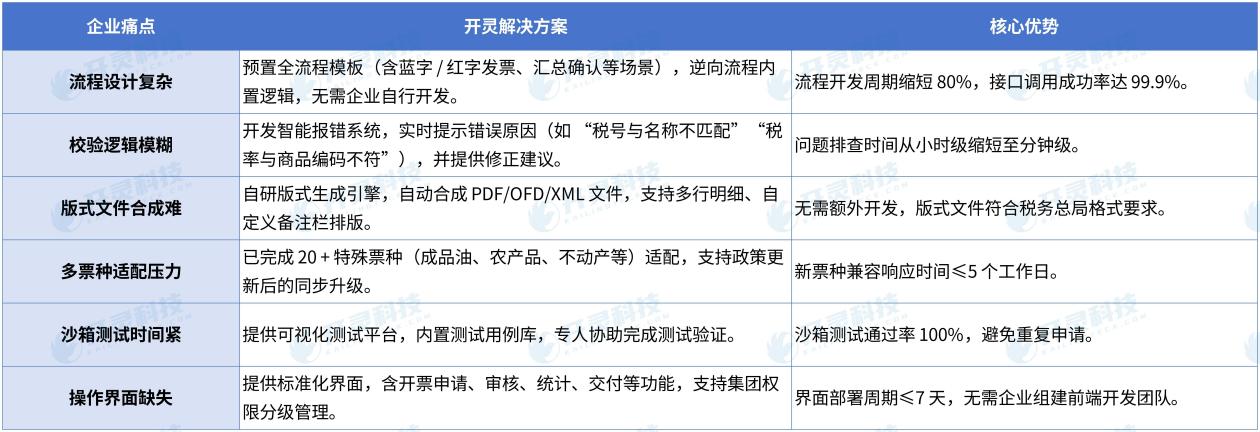
IV. The 6 core pain points of enterprises independently connecting to LeqiFrom practice, enterprises independently connecting to the Leqi interface face multiple technical and business challenges, often leading to extended access cycles and cost overruns: 1. Complex process design:Leqi only provides basic interfaces, and enterprises need to develop business logic themselves (such as red-letter invoice applications and pre-assigned code acquisition). Errors in reverse process design will directly cause invoicing failure; 2. Ambiguous validation logic:The interface only returns "success/failure" without indicating the specific error reason (such as incorrect tax ID or tax rate mismatch), requiring extensive manual troubleshooting; 3. Difficulty in layout file composition:Leqi does not provide PDF/OFD/XML composition tools, and enterprises need to develop multi-line detail layout and electronic signature embedding functions themselves; 4. Pressure of multi-invoice type adaptation:Different invoice types (refined oil, agricultural product procurement, real estate sales, etc.) have different validation rules and parameter passing formats, requiring repeated development and adaptation; 5. Tight sandbox testing timeline:Full capability testing must be completed within 72 hours. If an enterprise does not have a mature testing plan, it is prone to test failure due to operational errors; 6. Missing operation interface:Must self-develop invoicing review, permission management, and report statistics interfaces, with high development costs and poor usability. V. Kailing Technology's fully digitalized e-invoice Leqi solution: pain point resolution and value empowermentIn response to the pain points of enterprises' self-integration, Kailing Technology, relying on more than 10 years of business-finance-tax digital experience, has created a fully digitalized e-invoice Leqi solution of full-process compliance plus full-scenario adaptation plus full-cycle service, helping enterprises quickly implement Leqi Direct Connection. (1) Targeted resolution of pain points: all-dimensional support from technology to business
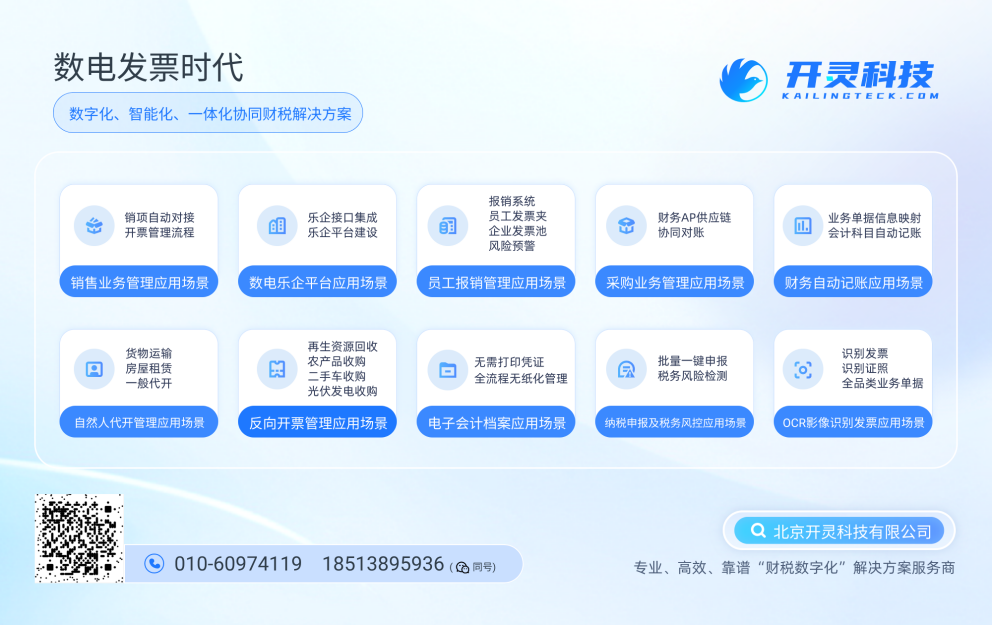
(II) Core value: beyond compliance, empowering business 1. Business-finance-tax integration:Connect business systems such as SAP, Oracle, and Yonyou to achieve full-process automation of "sales order-invoicing-bookkeeping-archiving" and reduce manual intervention; 2. Closed-loop risk control:Built-inInvoicingRules, real-time monitoring of risks such as "false invoicing, incorrect invoicing, and abnormal red-ink reversal," automatically triggering alerts; 3. Significantly reduced costs:Compared with in-house development (output VAT + input VAT requires an investment of over RMB 2 million), Kailing's solution reduces costs by 60% and shortens the go-live cycle to 30-90 working days; 4.Private deployment:Provides private deployment,SelectableDeliver the full source code of the "Fully Digitalized E-Invoice Management System", with knowledge transfer, ensuring the enterprise's subsequent independent O&M capability. With its deep technical accumulation, rich practical experience, and precise understanding of policies, Kailing Technology provides enterprises with full-lifecycle services from consulting, connection, development to operation and maintenance, helping enterprises complete Leqi access efficiently, smoothly, and compliantly, truly realizing business-finance-tax digital transformation under "tax governance by data." To customize a dedicated Leqi access solution, contact Kailing Technology for one-on-one consultation services.:https://www.kailingteck.com/h-col-123.html 。 As a comprehensive business-finance-tax digitalization solution service provider, Kailing Technology provides business-finance-tax management digital transformation products and operational services for various government agencies, institutions, and large, medium, and small enterprises. The product line includes: Solutions for sales contract management system, procurement contract management system, fully digitalized Leqi interface project, automatic output VAT invoicing system, invoice issuance for individuals system, employee expense control and reimbursement system, input VAT invoice management system, supply chain collaborative reconciliation system, imaging OCR recognition system, automatic financial bookkeeping system, electronic accounting archives system and other businesses, comprehensively advancing the digitalization process across various fields. If you have any business-finance-tax digital transformation needs, welcome to contact us. Beijing Kailing Technology will serve you wholeheartedly.
|