010-6097 4119Book a Demo


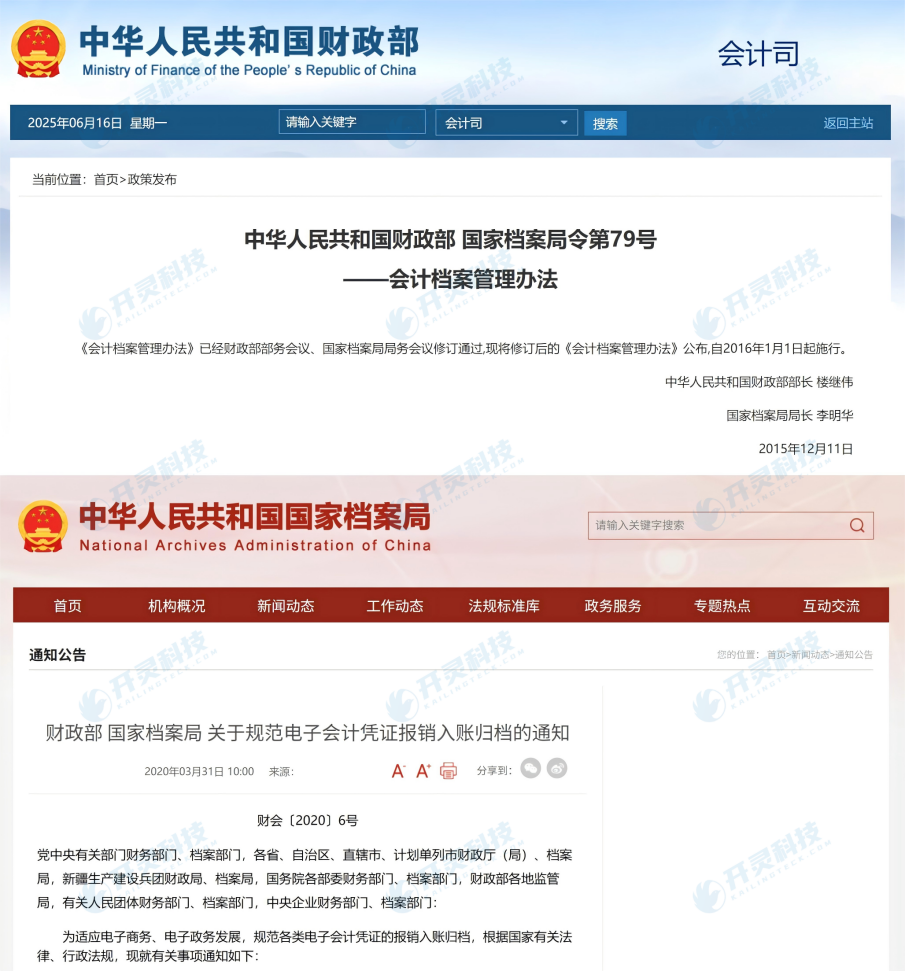
Practical guide to business-finance-tax integrated electronic archives: 1 system connects OA/ERP/expense control (Kailing Technology has empowered 35% of enterprises to implement)Published: 2025-06-17 17:04 I. Policy Drivers and Industry Trends: Electronic Archives Have Become a Rigid Need for Enterprises(1) Policy Compliance Requirements 1. Intensive introduction of national policies:The 2015 Measures for the Management of Accounting Archives (Order No. 79 of the National Archives Administration) clarified the legal status of electronic accounting archives, allowing eligible electronic accounting materials to be archived and preserved only in electronic form; the 2020 Notice on Standardizing the Reimbursement, Accounting, and Archiving of Electronic Accounting Vouchers (Cai Kuai [2020] No. 6) further required that when paper printouts of electronic accounting vouchers are used as reimbursement basis, the electronic originals must be preserved, accelerating the paperless management of accounting archives. 2. Compliance riskAdvanceTransformation:Some enterprises use only paper printouts of electronic invoices as the sole basis for bookkeeping, which carries risks such as easy tampering and duplicate reimbursement. Policy requires enterprises to establish an electronic accounting materials management system, build a management system, and properly keep electronic originals.
(II) Industry Development Trends Accounting archive management is rapidly advancing toward electronification and informatization, and the single-track electronic filing system (mainly electronic, supplemented by paper, with paper materials scanned to create electronic archive volumes) has become the mainstream direction. For example, after a pilot by an e-commerce enterprise, it achieved retrieval linkage between electronic archives and paper archives, gradually transitioning to fully electronic filing. II. Enterprise pain points and needs analysis: the "four major bottlenecks" of traditional archive management(1) Low Efficiency in Archive Collection Enterprises have a huge number of vouchers each month, and traditional manual matching and binding work is time-consuming and labor-intensive. An engineering consulting group, due to the large volume of vouchers, consumes a large amount of manpower for binding each month, and paper archives are difficult to search, with query permissions difficult to control. (II) Severe System Isolation Data in systems such as OA, ERP and expense control is scattered, making it difficult to establish associations between electronic archives and paper archives. A manufacturing enterprise has multiple business systems, with scattered electronic archives, and paper archive queries require cross-system retrieval, resulting in low efficiency. (3) High compliance verification costs Before archiving, tasks such as paper-electronic matching and invoice verification rely on manual work, which is error-prone and time-consuming. A group enterprise faced compliance risks because electronic invoice originals were not saved, requiring significant manpower for post-event verification. (4) High storage and management costs Paper archives occupy a large amount of warehouse space, with high preservation and retrieval costs. One company estimated that traditional paper archives have relatively high annual preservation costs, and as business grows, warehousing costs continue to rise.
III. Practical framework: the path to building Kailing Technology's business-finance-tax integrated electronic archives system(1) System architecture design: coordinated advancement of the trinity 1. Process optimization layer:Reconstruct business processes based on policy requirements. For example, the expense reimbursement process achieves full-process automation of "electronic voucher collection → intelligent document submission → financial accounting → intelligent archiving." Through process optimization, an enterprise reduced manual intervention steps and improved processing efficiency. 2. Data management layer:Establish a unified electronic voucher pool, supporting the collection, signature verification, and parsing of 9 types of electronic vouchers including VAT electronic invoices and fiscal electronic receipts, forming structured data. Adopt a distributed storage architecture to ensure data security and reliability. 3. System implementation layer:Use a low-code platform for rapid development, supporting custom forms and process configuration. For example, an enterprise quickly connected its archive system with existing OA and ERP systems through a low-code platform, shortening the implementation cycle. (II) Hands-on operation of core function modules 1. Full-process management of electronic vouchers▪ Intelligent collection: obtain electronic vouchers through multiple channels such as email, direct connection platforms, and interfaces, support OCR recognition of paper invoices into electronic images, and enable an enterprise to automatically download receipts from online banking via RPA technology, reducing manual operations. ▪ Compliance verification: Built-in rules for invoice authenticity checks, header comparison, consecutive number detection, etc. For example, an enterprise's system automatically verifies invoice status and provides real-time warnings for abnormal invoices, reducing compliance risks. ▪ Structured storage: convert electronic vouchers into XBRL-format structured data for easy retrieval and analysis, support generation of posting instance documents, and meet audit and filing requirements. 2. Business-finance-capital-tax data integration▪ Cross-system association: connect OA, ERP, expense control, treasury and other systems to automatically associate business documents, accounting vouchers, electronic receipts, tax filing forms and other data. A group enterprise, through integrated systems, achieved automatic matching of purchase orders, invoices, and payment orders, improving reconciliation efficiency. ▪ Intelligent volume creation: automatically assembles related documents such as accounting vouchers, reimbursement forms, and invoices into volumes according to business rules, supporting custom volume rules such as classification by accounting period and business type, reducing manual organization workload. 3. Full lifecycle archive management▪ Pre-archiving testing: conduct "four-property" testing (authenticity, integrity, usability, security) on electronic archives, such as ensuring files have not been tampered with through MD5 verification and electronic seal verification. Archives that fail testing for an enterprise are automatically returned for rectification. ▪ Online archiving and storage: supports unified archiving of electronic archives and paper archive images, establishes an index relationship between electronic and physical archives, and enables synchronized management of offline physical items and online data through barcode scanning for warehousing and shelving. ▪ Borrowing and Destruction: Apply online to borrow electronic archives, the system automatically records the borrowing trail, and permissions are revoked upon expiration; supports batch destruction of expired archives according to rules to ensure process compliance.
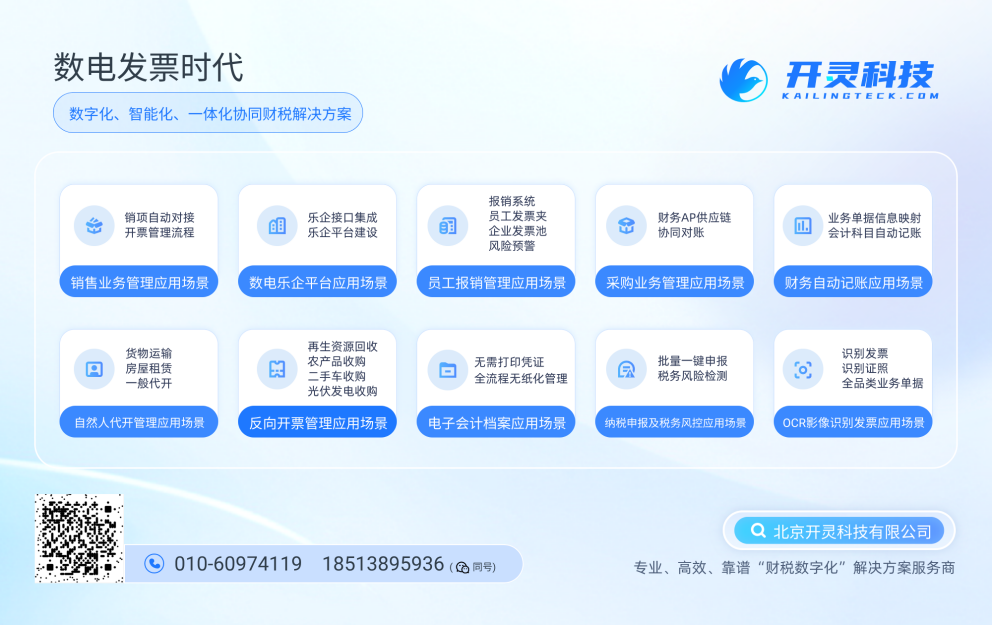
IV. Application scenario evidence: Kailing Technology empowers 35% of enterprises to achieve implementation results(1) An E-commerce Enterprise: Full-Process Electronification Improves Efficiency by 70% This enterprise took expense reimbursement and procurement business as its entry point, collecting data from OA, SAP, input VAT management, and other systems into the electronic archives system, achieving full-channel integration of electronic invoices from collection, reimbursement, and booking to archiving, with vouchers and their associated invoices stored in structured and electronic form, increasing review efficiency by 70% and saving more than one million yuan annually in consumables and labor costs. (II) An engineering consulting group: cross-system archive management reduces costs by 40% To address issues such as large voucher volumes and scattered data across multiple systems in groups, after launching the electronic archives system, online management of electronic accounting archives was achieved, with online tracking of archive transfer and handover, a 60% increase in borrowing efficiency, and an annual saving of 40% in costs such as paper and storage, while also avoiding external audit risks. (3) A manufacturing enterprise: imaging-based management improves review efficiency by 50% In the expense reimbursement process, through functions such as image scanning and recognition parsing, batch invoice processing and secondary comparison are achieved, improving financial review efficiency by 50%; original invoices and image files are stored in structured form, laying a data foundation for building a shared service center. Kailing TechnologyThe business-finance-tax integrated electronic archive system, by connecting OA/ERP/expense control and other systems, achieves full-lifecycle electronic management of accounting archives, which is both a policy compliance requirement and a key measure for enterprises to reduce costs, increase efficiency, and achieve digital transformation.Relying onKailing Technology'sProfessionalEmpower,Currently there are35% of enterprises have implemented electronic archives, and it is expected that in the next 3 years this proportion will rise to over 70%, driving enterprise financial management intoComprehensive electronificationEra. Consult Kailing Technology to obtainBusiness-finance-tax integrated electronic archivesDetailedSolution:https://www.kailingteck.com/h-col-110.html 。 As a comprehensive business-finance-tax digitalization solution service provider, Kailing Technology provides business-finance-tax management digital transformation products and operational services for various government agencies, institutions, and large, medium, and small enterprises. The product line includes: Solutions for sales contract management system, procurement contract management system, fully digitalized Leqi interface project, automatic output VAT invoicing system, invoice issuance for individuals system, employee expense control and reimbursement system, input VAT invoice management system, supply chain collaborative reconciliation system, imaging OCR recognition system, automatic financial bookkeeping system, electronic accounting archives system and other businesses, comprehensively advancing the digitalization process across various fields. If you have any business-finance-tax digital transformation needs, welcome to contact us. Beijing Kailing Technology will serve you wholeheartedly.
|