010-6097 4119Book a Demo


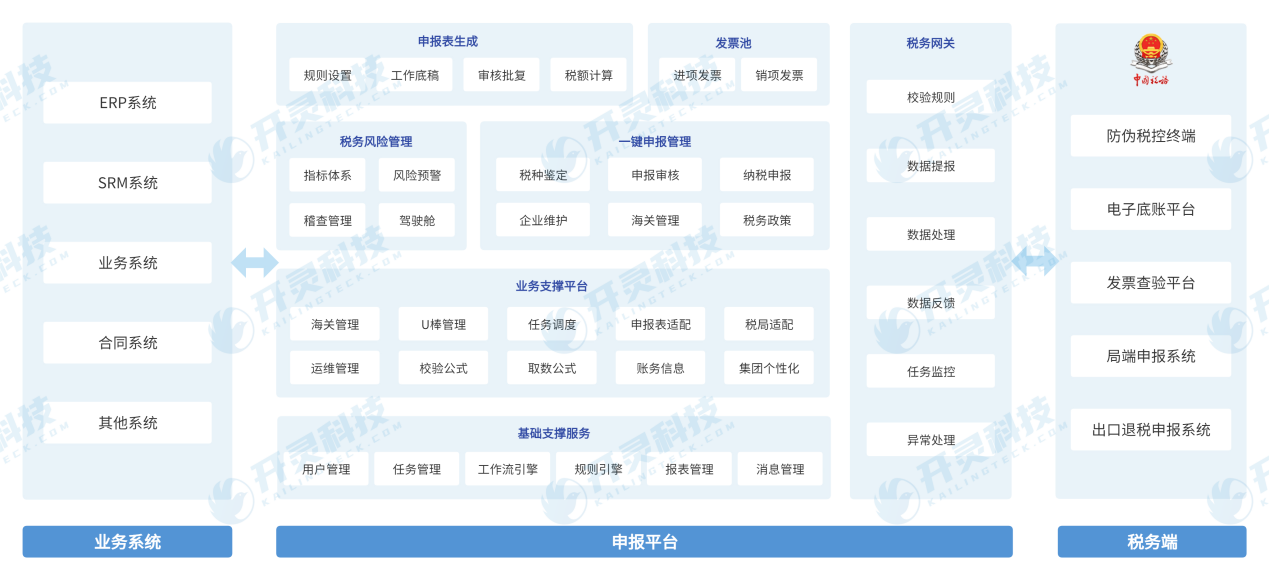
How can an enterprise tax compliance management system achieve full-process risk control? An in-depth analysis of the intelligent upgrade pathPublished: 2025-05-22 15:25 In today's complex and ever-changing business environment, enterprises face increasingly severe tax compliance challenges. Tax risks can not only lead to huge fines but may also seriously affect an enterprise's reputation and going concern. Therefore, building an efficient tax compliance management system to achieve full-process risk prevention and control has become an important guarantee for the steady development of enterprises. This article combines Kailing invoice risk management and enterprise tax compliance management-related content to deeply analyze the intelligent upgrade path of enterprise tax compliance management systems. I. Pain points of the traditional tax management model▪ Heavy and error-prone manual operations: repetitive tasks such as tax filing and data statistics rely on manual operations, with large workloads and prone to mistakes, not only consuming substantial labor costs but also potentially causing filing errors and triggering tax risks. ▪ Lagging tax risk identification: Tax risk identification mainly relies on manual judgment, making it difficult to fully cover the various tax risks enterprises face. Often, enterprises respond passively only after the tax bureau pushes risk alerts, by which time adverse impacts may already have occurred, and self-inspection discovers risks later than the regulatory side, easily putting enterprises in a passive position. ▪ Scattered tax data is difficult to manage: tax data is stored in different systems and departments, lacking unified ownership management, prone to loss and difficult to count. When reporting data externally, because standards are inconsistent, manual organization is time-consuming and labor-intensive, affecting the accuracy and timeliness of data. ▪ Difficult to cope with complex compliance requirements: with the upgrading of tax authority supervision methods and the expansion of audit inspection scope, enterprises need to meet more complex compliance requirements. Traditional management models are difficult to satisfy enterprise needs, and enterprises may face compliance risks due to failure to adapt to regulatory changes in a timely manner. II. Functional modules of Kailing intelligent tax compliance management▪ Invoice Risk Management - Risk Early Warning and Alerts: For related invoices directly associated with risk events, the system provides high-risk warnings and risk alerts for all involved invoices. For example, when a supplier has major tax violations, such as major tax violation information or being identified as an abnormal taxpayer, the system can promptly alert supplier risks, including abnormal enterprise information, tax arrears information, reasons for identification, types of tax arrears, etc., so that the buyer can respond immediately and avoid receiving risky invoices. - Invoice collection and storage: The system automatically synchronizes and saves collected original invoices, forming a double insurance of original documents in the system and original document storage in offline cabinets, effectively preventing offline invoice loss. At the same time, enterprises can customize detection and handling of invoice risks through inherent rule validation and custom risk validation, such as secondary input VAT invoice risk verification, quickly locating invoice risks, and customizing additional validation rules or disabling validation rules according to actual conditions. - Supplier status monitoring: displays in real time enterprises that have transactions with the company and appear on the tax bureau's blacklist. Once a supplier status change causes invoice anomalies, the system can promptly notify the buyer and output a visualized risk detection report, making invoice risks preventable and controllable so enterprises can take measures in advance to address potential invoice risks. ▪ Risk Monitoring and Early Warning - Preset risk indicators and real-time push: preset industry risk indicators, such as abnormal tax burden rate, invoice risk, etc., combined with network-wide data mining, push risk alerts in real time. Enterprises can customize alert frequency and recipients according to their own needs, meeting the needs of multi-level group management, promptly discovering potential tax risks and taking countermeasures. - Historical data aggregation and reference archive generation: the system automatically aggregates historical tax filing data and invoice information, generates standardized reference materials, and archives them to help enterprises quickly respond to tax authority inspection requirements and improve the efficiency and quality of handling tax inspections. ▪ Automatic tax calculation and filing - Automatic tax calculation and filing form generation: by connecting to financial systems, invoicing systems, and the Electronic Tax Bureau, it enables automatic tax calculation for VAT, corporate income tax, and other tax types, automatic generation of filing forms, and one-click filing, reducing manual intervention, greatly improving filing efficiency and accuracy, and lowering tax risks caused by manual operational errors. - Business registration information updates and data accuracy assurance: Automatically track changes in enterprise business registration information, update "tax household" data in real time, ensure the accuracy of basic filing information, and avoid tax issues caused by inaccurate information.
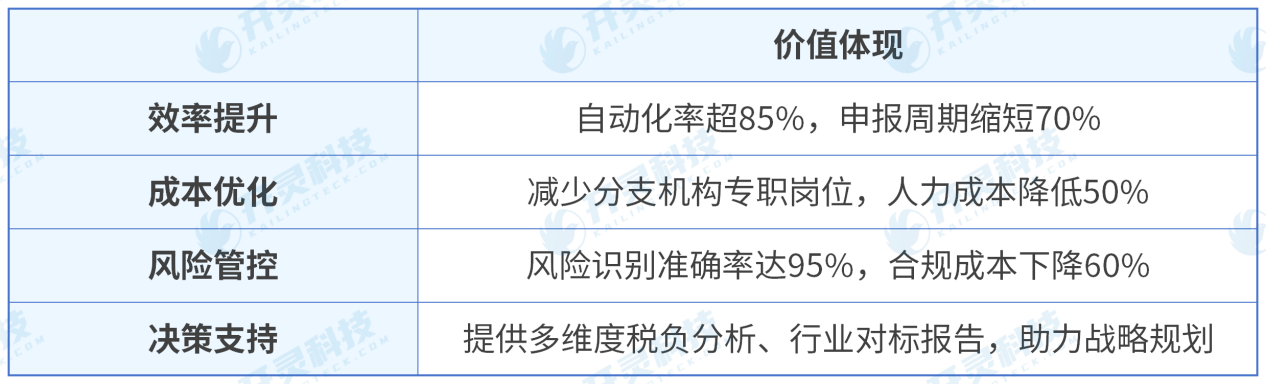
III. Advantages of Kailing intelligent tax compliance management system▪ Improve efficiency: cover the full process of automatic matching of input VAT invoices, centralized issuance of output VAT invoices, intelligent tax calculation, and one-click filing, reducing manual intervention and improving efficiency by more than 90%, enabling enterprises to invest more manpower and time in core business and improve overall operational efficiency. ▪ Accurate risk control: based on a 200+ risk indicator system, it monitors risks across all tax types such as VAT and income tax in real time, combines industry threshold warnings to avoid audit risks in advance, eliminates tax risks in the bud, and reduces the risk of economic losses and reputational damage enterprises face due to tax issues. ▪ Optimize decision-making: Use big data analysis to optimize tax burden from dimensions such as business model and organizational structure, link with tax incentive policies, provide management with a basis for strategic decisions, help enterprises formulate reasonable tax planning, maximize tax benefits, and enhance enterprises' competitiveness and profitability. ▪ Data interconnection: establish unified tax-accounting rules and data standards, connect business-finance-tax systems, achieve group-level data interconnection, break down information silos, improve the efficiency and accuracy of internal information transmission, and provide strong support for the enterprise's integrated management and coordinated development.
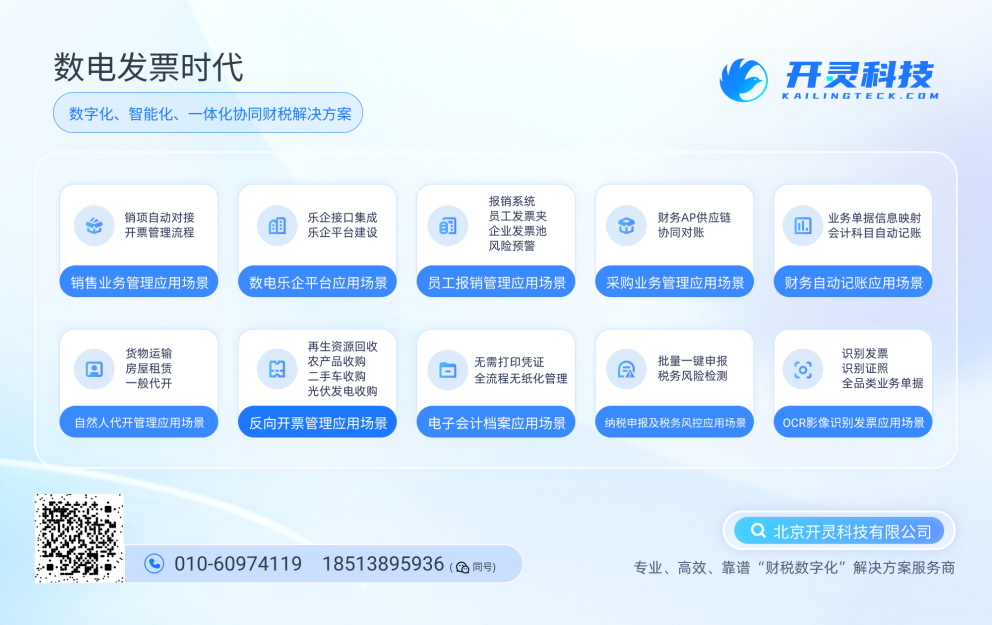
IV. Exploring the path to intelligent upgrading▪ Technical Application and Innovation - AI and machine learning: leveraging AI and machine learning technologies to analyze and mine large volumes of tax data, continuously optimizing risk identification models and algorithms to improve the accuracy and timeliness of risk alerts. Meanwhile, through intelligent voice recognition and natural language processing technologies, intelligent interaction with tax authorities is achieved, promptly obtaining the latest tax policies and information, providing enterprises with more precise tax services. - Big data and cloud computing: Leveraging big data and cloud computing technologies to achieve centralized storage, management, and analysis of tax data, improving data processing efficiency and storage security. Through cloud computing platforms, enterprises can access tax systems anytime and anywhere, obtain needed data and information, achieve mobile office and remote management, and improve work flexibility and convenience. ▪ Process optimization and collaboration - Business-finance-tax integration process reshaping: with an intelligent tax compliance management system as the core, optimize and integrate enterprises' existing business processes, financial processes, and tax processes to achieve business-finance-tax integrated management. Break down barriers between departments, strengthen information sharing and collaborative work, ensure close connection between various business activities and tax management, and improve enterprises' overall operational efficiency and management level. - Group control and collaboration: For group enterprises, establish a unified tax control platform to strengthen the headquarters' tax management over member enterprises, achieving unified formulation and execution of tax policies, centralized monitoring and prevention of tax risks, and optimized allocation and sharing of tax resources. Through group control and collaboration, improve the group's overall tax compliance level and efficiency, and prevent systemic tax risks. ▪ Talent development and team building - Introduction and cultivation of professional talent: introduce professionals with rich tax management experience and technical expertise, while strengthening training for existing finance and tax personnel to improve their informatization level and business capabilities, enabling them to proficiently master the operation and application of intelligent tax compliance management systems and provide professional tax services and management support for enterprises. - Cross-departmental team collaboration: establish a cross-departmental tax management team including finance personnel, business personnel, IT personnel, etc., and through team collaboration and communication, jointly advance the construction and application of the intelligent tax compliance management system, resolve various issues encountered during system implementation, and ensure the smooth operation and continuous optimization of the system. In short, the intelligent upgrade of enterprise tax compliance management systems is an inevitable trend.Kailing TechnologyBy building an intelligent tax compliance management system with complete functional modules such as invoice risk management, automatic tax calculation and filing, risk monitoring and warning, and tax data integration and analysis, it canHelpEnterprises achieve full-process risk prevention and control, improve the efficiency and effectiveness of tax management, reduce tax risks, and provide strong guarantees for sustainable development. In the future path of intelligent upgrading, enterprises should continuously explore and apply new technologies, optimize processes, and strengthen talent development to adapt to the constantly changing market environment and tax regulatory requirements, and achieve intelligent, efficient, and precise tax management. For more detailed solution information, please consult Kailing Technology:https://www.kailingteck.com/h-col-130.html 。 As a comprehensive business-finance-tax digitalization solution service provider, Kailing Technology provides business-finance-tax management digital transformation products and operational services for various government agencies, institutions, and large, medium, and small enterprises. The product line includes: Solutions for sales contract management system, procurement contract management system, fully digitalized Leqi interface project, automatic output VAT invoicing system, invoice issuance for individuals system, employee expense control and reimbursement system, input VAT invoice management system, supply chain collaborative reconciliation system, imaging OCR recognition system, automatic financial bookkeeping system, electronic accounting archives system and other businesses, comprehensively advancing the digitalization process across various fields. If you have any business-finance-tax digital transformation needs, welcome to contact us. Beijing Kailing Technology will serve you wholeheartedly.
|