010-6097 4119Book a Demo


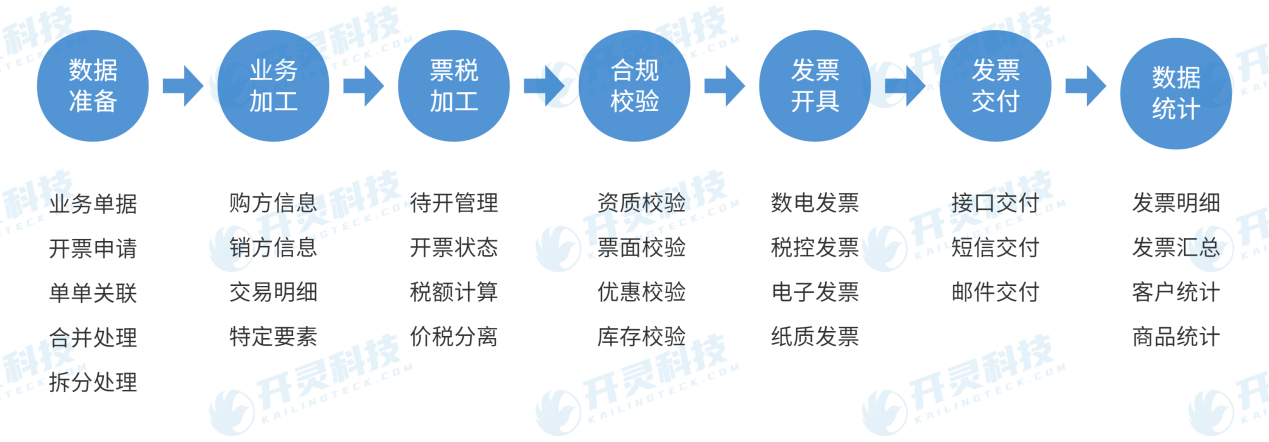
A Full-Process Design Guide for Enterprise Invoicing Business: Building an Efficient, Accurate Invoice Management SystemPublished: 2025-04-24 16:51 In today's wave of digital transformation, the efficiency and accuracy of enterprise invoice management have become key to financial operations. This article focuses on the full-process design of enterprise invoicing business, aiming to build an invoice management system that meets the needs of the digital era for enterprises, thereby improving financial processing efficiency and reducing operating costs. I. Overview of invoicing business processThe enterprise invoicing business process is an indispensable part of financial management and involves the coordinated operation of multiple stages. In enterprises across different industries, the person executing invoicing operations differs. For example, in service industries such as hotels and catering, front desk staff usually handle invoicing; in manufacturing and retail industries, business personnel initiate invoicing requests; and in property management and emerging technology industries, finance personnel assume invoicing responsibilities. In the scenario of manual invoicing in an invoice system, interconnection and data flow between multiple systems become necessary requirements, including methods such as invoicing through interfaces or import. Overall, common invoicing processes cover key steps such as data preparation, business processing, invoice-tax processing, compliance verification, invoice issuance, and invoice delivery. Although most enterprises have data statistics needs, different types of enterprises differ in the specific content and depth of statistics.
II. Invoicing business data processing
When building an invoicing system, business data processing is a fundamental and critical step. In the data preparation stage, enterprises need to determine whether business documents require invoicing and initiate invoicing requests, while linking business documents with invoicing request forms as needed, as well as merging and splitting documents. Note that different enterprises may adopt different data preparation logics, such as payment before invoice or invoice before payment. In addition, the system should support functions such as document merging and product detail merging, and allow document splitting by amount, quantity, detail line, and other methods. Business data may differ from the invoicing data required by the tax bureau, so before invoicing, business processing is needed to convert business data into the buyer information, seller information, transaction details, and specific element information required for invoices. In the fully digitalized e-invoice era, the tax bureau has added requirements for specific element information for refined management, and enterprises only need to translate or map the data according to the tax bureau's requirements. Invoice tax processing is another important part of data processing, including price-tax separation, rounding difference handling, invoicing status management, and pending issuance handling. When invoicing transaction details, price-tax separation must be completed, dividing the tax-inclusive total amount into the tax-exclusive amount and tax amount. Tax authorities allow a certain degree of rounding differences, such as 0.06 yuan per line and 1.27 yuan in total. The invoice system mainly contains two parts: pending invoicing data and invoiced data; the data after invoice tax processing is the pending invoicing data. Compliance verification is the last checkpoint before invoice issuance. Verification points include taxpayer qualification verification, invoice face verification, preferential policy verification, inventory verification, etc. Taxpayer qualifications must meet relevant requirements; preferential policies differ across regions and must be verified according to local conditions. In addition, different invoicing channels also differ in details, such as remark length, which need to be adjusted according to actual circumstances. III. Invoice issuance and subsequent processing
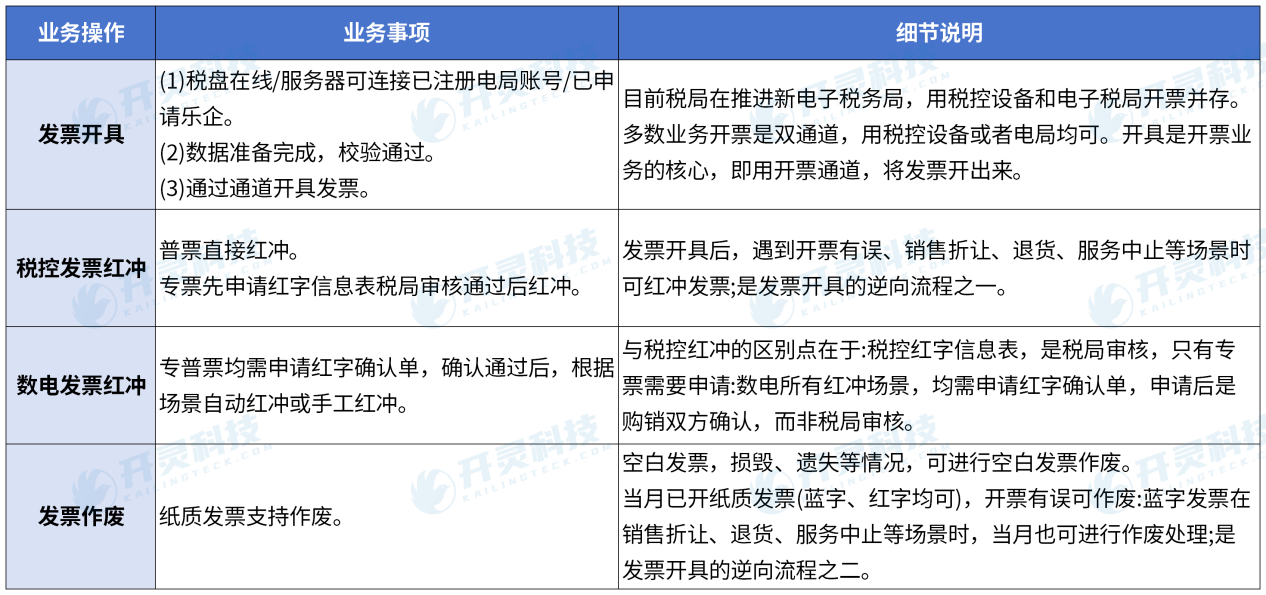
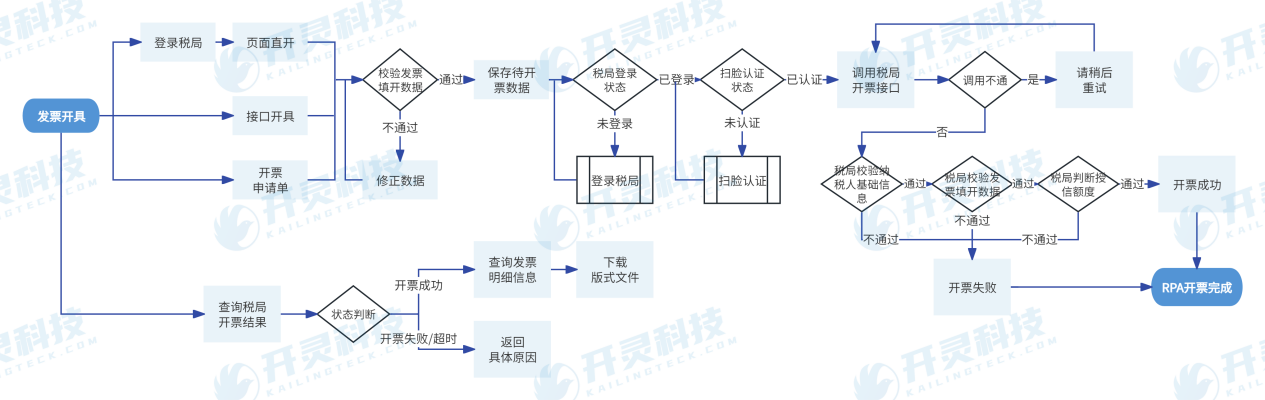
After data preparation is completed, enterprises can initiate forward or reverse invoice issuance services, including invoicing, red-letter reversal, and voiding. This is the core function of the invoicing system. In terms of invoice issuance, according to different channel selections, under the prerequisites of meeting tax disk online/server connectable/registered electronic tax bureau account/applied for Leqi, etc., the corresponding channel can be connected to issue invoices. After an invoice is issued, in scenarios such as invoicing errors, sales allowances, returns, and service suspension, invoice red reversal operations can be performed. For tax-controlled invoice red reversal, general invoices can be directly red-reversed, while special invoices require first applying for a red-letter information form and red-reversing after approval by the tax bureau. For fully digitalized e-invoice red reversal, both special and general invoices require applying for a red-letter confirmation form, and after confirmation, automatic or manual red reversal is performed according to the scenario. Unlike the tax-controlled red-letter information form, the fully digitalized red-letter confirmation form is confirmed by both the seller and buyer, rather than reviewed by the tax bureau (there are cases where confirmation is not required). Paper invoices support voiding operations. Blank invoices can be voided when damaged, lost, etc. Paper invoices already issued in the current month (both blue and red) can be voided if there is an invoicing error; blue invoices can also be voided in the current month in scenarios such as sales allowances, returns, and service termination. As paper invoices are gradually exiting the market, companies are advised to prioritize and guide customers to use electronic invoices to achieve advantages such as cost reduction and efficiency improvement, fast delivery, and convenient circulation.
IV. Invoice delivery and data statistics
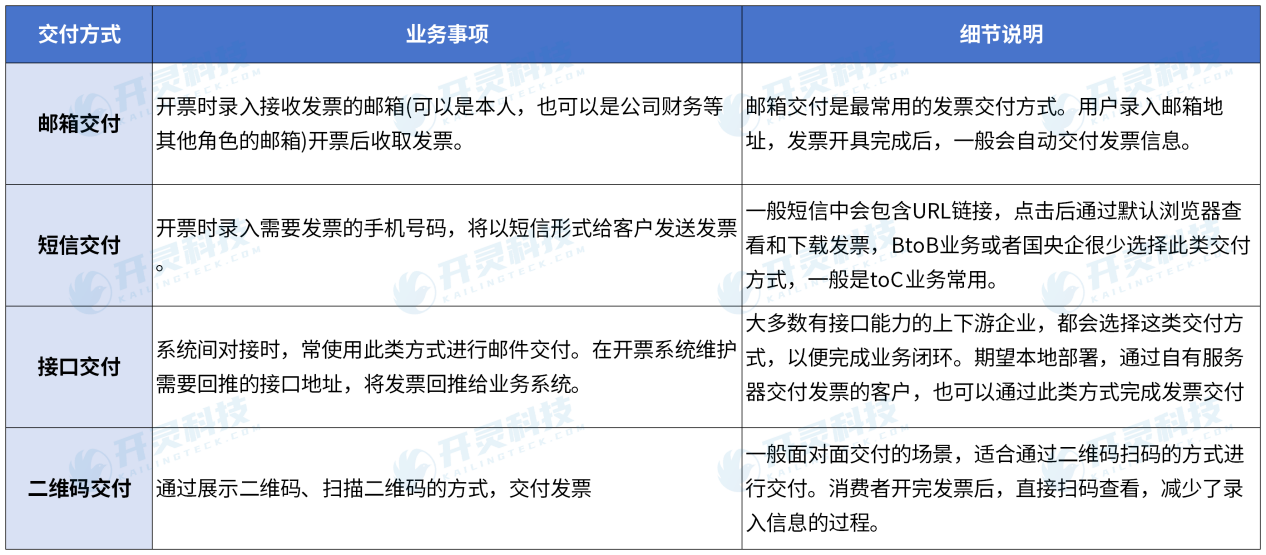
After invoice issuance is completed, it needs to be delivered to the enterprise or consumer. Common delivery methods include email delivery, SMS delivery, API delivery, QR code delivery, etc. Considering the characteristics of the Chinese market, it also supports delivery of e-invoices after printing on A4 or A5 paper, to meet the needs of the elderly market or some companies that must have paper materials. In general, invoice delivery in other countries is mainly based on email delivery.
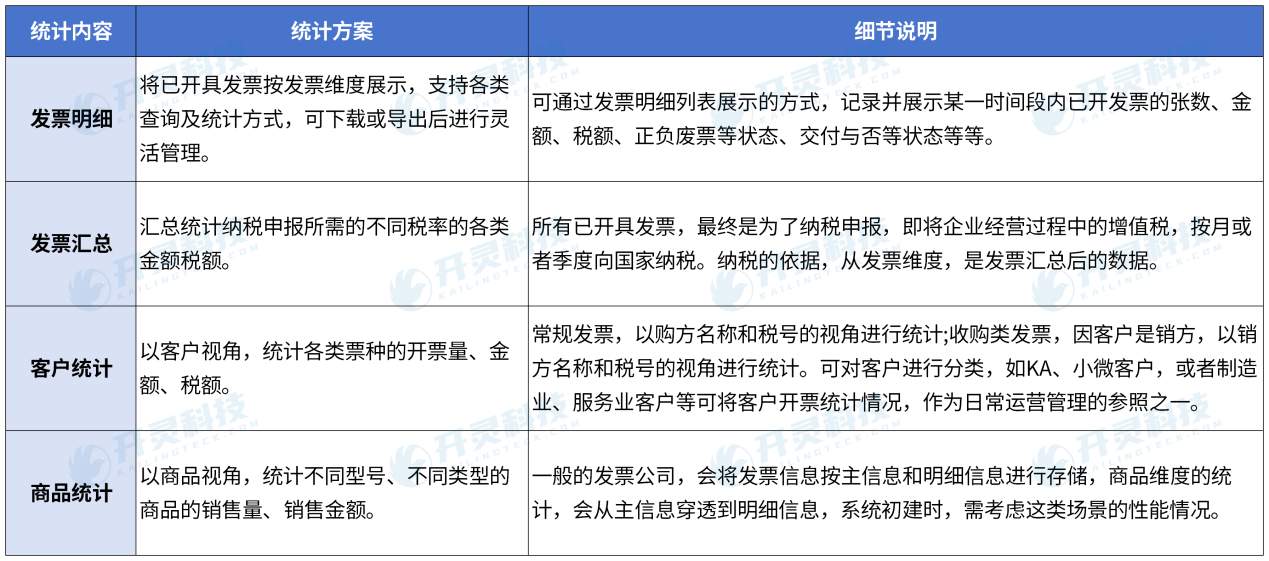
Data statistics functions are of great significance to enterprise operations management. Enterprises expect to manage daily operations through data, so they pay attention to data statistics results and assign relevant positions to analyze the statistical results to support operational decisions. At the same time, when connecting systems, invoice detail information, invoice summary information, and other content can be used for data comparison, as well as the prior summary of output VAT information required for tax filing. Common statistical content includes summarizing amounts and tax amounts by tax rate, etc. In summary, the full-process design of enterprise invoicing business covers all stages from data preparation to invoice delivery, involving business data processing, invoice issuance, and subsequent processing. Through scientific and reasonable design, enterprises can build an efficient and accurate invoice management system, thereby improving financial operation efficiency and better adapting to the development requirements of the digital era. For more business-finance-tax digitalization needs, please consult Kailing Technology:https://www.kailingteck.com/ 。 As a comprehensive business-finance-tax digitalization solution service provider, Kailing Technology provides business-finance-tax management digital transformation products and operational services for various government agencies, institutions, and large, medium, and small enterprises. The product line includes: Solutions for sales contract management system, procurement contract management system, fully digitalized Leqi interface project, automatic output VAT invoicing system, invoice issuance for individuals system, employee expense control and reimbursement system, input VAT invoice management system, supply chain collaborative reconciliation system, imaging OCR recognition system, automatic financial bookkeeping system, electronic accounting archives system and other businesses, comprehensively advancing the digitalization process across various fields. If you have any business-finance-tax digital transformation needs, welcome to contact us. Beijing Kailing Technology will serve you wholeheartedly.
|