010-6097 4119Book a Demo


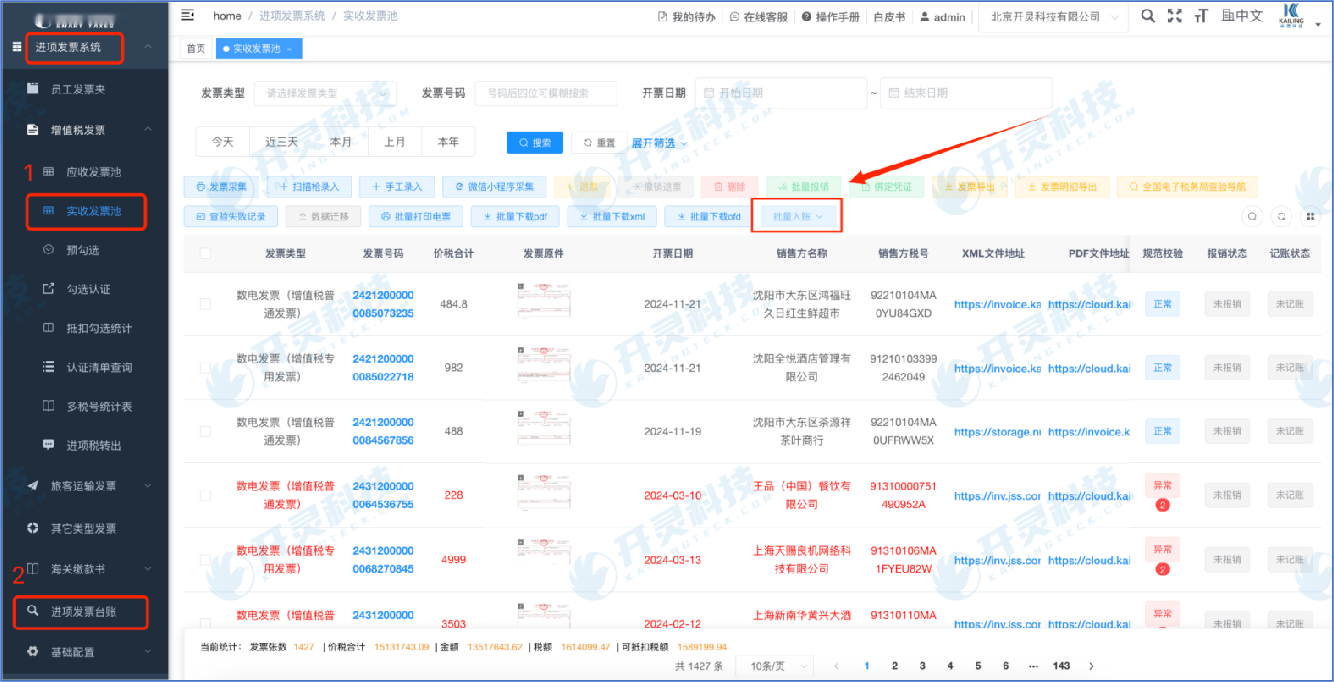
Fully digitalized e-invoice, automatically downloading XML file format for archiving: a new path for tax compliance under China Golden Tax Phase IVPublished: 2025-04-22 17:25 I. China Golden Tax Phase IV and VAT reform: urgency under the policy backgroundWith the comprehensive popularization of the China Golden Tax Phase IV system, the intelligence and precision of tax supervision have significantly improved. Through big data analysis and multi-department information linkage, the system achieves penetrating supervision of the entire enterprise operation process. At the same time, VAT reform continues to advance, and electronic invoices are gradually replacing traditional paper vouchers to become the core carrier of enterprise business-finance-tax management. Against this backdrop, tax compliance has shifted from "passive response" to "proactive prevention and control," and enterprises urgently need to establish digital management systems that meet policy requirements to avoid tax risks caused by invoice management oversights. II. Challenges and opportunities brought by the widespread adoption of e-invoicesAlthough the widespread application of e-invoices has improved transaction efficiency, it has also brought new management challenges: 1. Duplicate reimbursement risk: employees may exploit the repeat-printable nature of electronic invoices for fraudulent reimbursement; 2. Tampering and red-ink reversal risks: Invoice information is maliciously tampered with or unilaterally reversed by suppliers, causing financial data distortion; 3. Archiving compliance pressure: according to the Measures for the Administration of Accounting Archives, fully digitalized e-invoices must be archived in XML source file format, and retaining only PDF/OFD files may face non-compliance risks. How to achieve full lifecycle management of electronic invoices has become a key issue for corporate tax compliance. III. XML source file archiving: the "hard threshold" for tax complianceNational policy clearly requires that fully digitalized e-invoices must be stored as XML source files, with advantages including: ▪ Tamper-proof: XML files have structural characteristics, and any modification can be identified by the system; ▪ Traceable: complete records of the entire process of invoice issuance, circulation, and booking; ▪ Adapts to regulation: XML is a standardized format recognized by tax authorities, facilitating subsequent audit verification. If an enterprise books only paper printouts without simultaneously saving the XML source files, it directly violates the provisions of the Ministry of Finance Document No. 6, facing back taxes, late fees, or even administrative penalties. IV. Tax digitalization solutions: full-process automation for precise XML file management and risk warningsWithKailing TechnologyAs a representative tax digitalization service provider, it provides enterprises with one-stop solutions through technological innovation: 1. Omnichannel invoice data collection and synchronizationThrough connecting the enterprise input VAT invoice system with the electronic tax bureau, real-time synchronization of fully digitalized e-invoice data forms a "receivable invoice pool" and an "actual received invoice pool." The receivable invoice pool directly obtains the full invoice information from the electronic tax bureau, including XML source files and PDF/OFD format files of fully digitalized e-invoices; the actual received invoice pool collects invoices actually received by the enterprise through multiple channels such as scanners, high-speed cameras, and WeChat mini-programs (including digital images of paper invoices), ensuring that invoice data is "collected to the fullest extent."
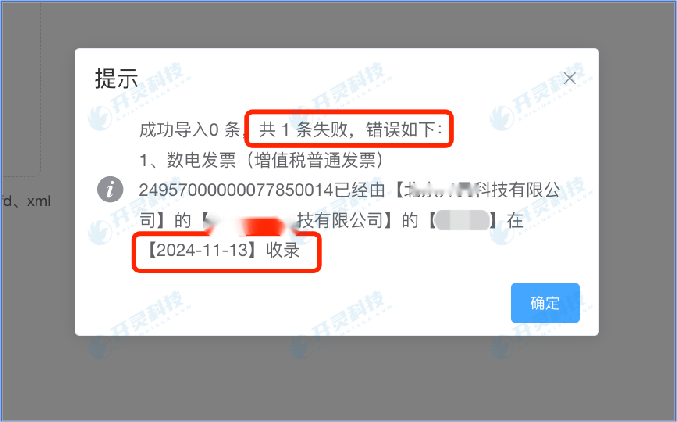
2. Automated matching and intelligent XML file downloadBased on key information such as invoice number and invoicing date, the system automatically matches receivable and actually received invoices and precisely locates the XML source file corresponding to fully digitalized e-invoices. For successfully matched invoices, the system automatically downloads the XML file from the Electronic Tax Bureau and stores it in a structured format according to the archiving format prescribed by the Ministry of Finance, while associating the corresponding PDF/OFD files and business data such as reimbursement forms and accounting vouchers, forming a "one invoice, one archive" electronic archive system.
3. Multi-dimensional verification and risk early warningDuring the archiving process, the system simultaneously completes invoice duplicate checking, authenticity verification, and invoice face information comparison (such as seller/buyer name, tax ID, amount, etc.). Through OCR technology and real-time verification against tax digital account data, if inconsistent invoice information or duplicate reimbursement is found, a tax risk warning is triggered immediately, eliminating the risk of fraudulent invoices being recorded. In addition, the system supports batch selection of the tax bureau's accounting status, preventing financial accounting confusion caused by malicious red-letter reversal by suppliers from the source.
V. Technical Empowerment: Restructuring the Value System of Enterprise Tax Management1. Improve the level of tax compliance and build a solid risk defense line Automatically archiving XML files meets the policy requirements for electronic invoices of "authentic source, secure storage, and verifiable and traceable," avoiding the risk of administrative penalties and credit rating downgrades caused by non-compliant archiving. At the same time, through real-time data comparison and risk alerts, enterprises can dynamically monitor the compliance of input VAT invoices, effectively preventing tax risks such as fake invoicing and duplicate reimbursement, and upgrading management from "post-event correction" to "pre-event prevention." 2. Strengthen VAT management, facilitate reform implementation In VAT reform, the promotion of fully digitalized e-invoices aims to optimize invoice circulation efficiency and reduce enterprise tax compliance costs. By automatically archiving XML files, enterprises can quickly extract invoice metadata for input deduction, tax filing, and tax analysis, improving the precision of VAT management. For example, the system supports batch export of XML data to connect with enterprise ERP systems, achieving seamless integration of invoice data and accounting processing, and supporting "full-chain" digital VAT management. 3. Promote tax digital transformation, unleashing management efficiency Kailing Technology business-finance-tax digitalizationThe solution breaks the limitations of traditional paper invoice management. Through full-process automation of "data collection—intelligent processing—compliant archiving—risk monitoring," it helps enterprises build an efficient electronic archives management system. Enterprises no longer need to manually download and organize XML files, greatly reducing repetitive work for finance staff and allowing them to devote more energy to tax planning and business-finance integration, truly achieving "driving tax management upgrades with digital tools." Driven by both China Golden Tax Phase IV and VAT reform, corporate business-finance-tax management is accelerating its transformation toward digitalization and automation. As the tax regulatory system continues to upgrade, only by embracing technological innovation and relying on the strength of professional service providers,Only then can enterprises move forward steadily in a complex regulatory environment and achieve two-way empowerment between tax management and enterprise development. By introducingKailing TechnologyProfessional tax digitalizationSolutions, building an invoice management system centered on XML source files and guaranteed by risk warnings, so enterprises can not only meet policy compliance requirements but also improve operational efficiency and build a solid "firewall" for tax security. For more customized solutions, welcome to consult Kailing Technology:https://www.kailingteck.com/ 。 As a comprehensive business-finance-tax digitalization solution service provider, Kailing Technology provides business-finance-tax management digital transformation products and operational services for various government agencies, institutions, and large, medium, and small enterprises. The product line includes: Solutions for sales contract management system, procurement contract management system, fully digitalized Leqi interface project, automatic output VAT invoicing system, invoice issuance for individuals system, employee expense control and reimbursement system, input VAT invoice management system, supply chain collaborative reconciliation system, imaging OCR recognition system, automatic financial bookkeeping system, electronic accounting archives system and other businesses, comprehensively advancing the digitalization process across various fields. If you have any business-finance-tax digital transformation needs, welcome to contact us. Beijing Kailing Technology will serve you wholeheartedly.
|