010-6097 4119Book a Demo


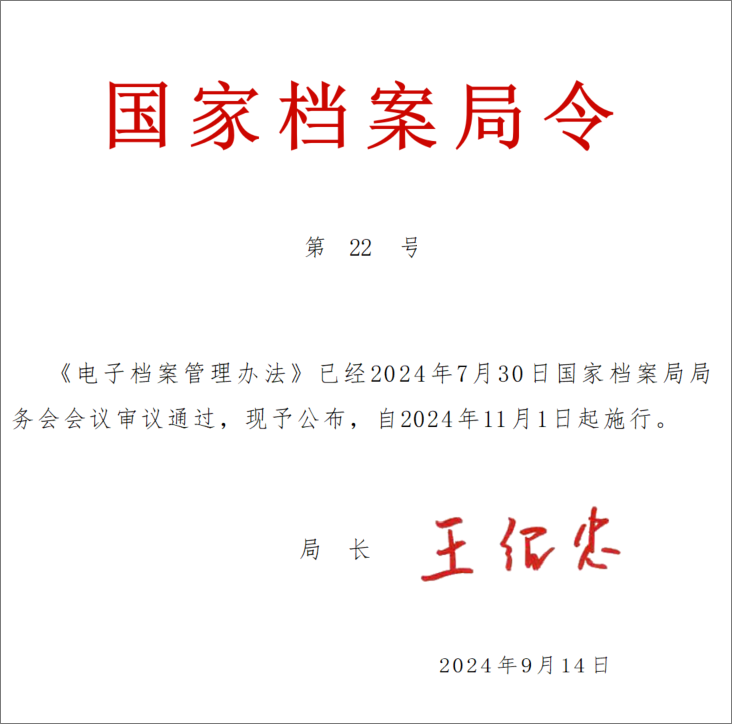
The Electronic Archives Management Measures are implemented from November 1, focusing on full-process management of archive businessPublished: 2024-10-25 16:54 Recently, the National Archives Administration issued Order No. 22, releasing the "Measures for the Management of Electronic Archives." These Measures will take effect on November 1, 2024. The Measures for the Management of Electronic Archives mainly regulate "electronic document archiving and all subsequent stages of electronic archives management," and comprehensively set out the full life cycle of electronic archives from archiving to preservation and use, transfer, backup, opening for utilization, and destruction.
General Provisions of the Measures for the Management of Electronic Archives:Scope of application and analysis of management requirements The "General Provisions" section consists of eight articles in total, mainly providing rules on the legislative purpose and basis, scope of application, management requirements and effectiveness, basic configuration guarantees, and electronic archive security protection requirements. The definition of electronic archives is clear:Electronic archives refer to various information records formed, processed, transmitted, and stored with the aid of computers and other electronic devices by organs, organizations, enterprises and institutions, other organizations, and individuals in the course of performing statutory duties or handling affairs, which have preservation value for the state and society and are filed and preserved. This clear definition clarifies the formation process, storage medium, and value attributes of electronic archives, providing a clear boundary for subsequent management and use. The two categories of applicable subjects are clear:The applicable entities mainly include two categories: first, archive-forming units, such as government agencies, organizations, enterprises and institutions, and other organizations; second, archives, collectively referred to as "organizations." This clarifies the responsibilities and obligations of these entities in electronic archive management, ensuring that the entire process from formation to archiving and preservation of electronic archives has corresponding entities responsible for management. Basic safeguard requirements are strict:Organizations need to be equipped with archive informatization infrastructure and establish complete management mechanisms, standards and specifications systems, security systems, and professional talent teams to meet the actual needs of electronic archive management. This series of requirements aims to ensure the standardization, normalization, and security of electronic archive management work, providing a solid foundation for the long-term preservation and effective utilization of electronic archives. The effect of electronic archives is emphasized again:MingIt is clearly stipulated that electronic archives have the same effect as archives on traditional media and can be used as vouchers in electronic form. This provision emphasizes the status of electronic archives in law and practical application, eliminates doubts about the effect of electronic archives, and promotes the widespread application and recognition of electronic archives in various fields. Comprehensive specifications for full-process management of electronic archives: covering the entire lifecycle The management of electronic archives involves multiple links from document formation to final disposition. The following provides a detailed explanation of its full-process management, covering the entire lifecycle of electronic archives. 1. Organization and archiving of electronic filesThe "Arrangement and Archiving of Electronic Documents" section contains six articles in total, setting out provisions on the overall requirements for electronic document archiving, archiving formats, arrangement of archived electronic documents, and cataloging of electronic archives. ▪ Archiving format requirements: Electronic files should be archived together with metadata, and must be open, not bound to software or hardware, display-consistent, convertible, and easy to utilize, while also supporting conversion to long-term preservation formats. This ensures the readability and extensibility of electronic files after archiving, so they can still be effectively utilized in different future technical environments. ▪ Technical Requirements: When archiving electronic files and metadata, non-open compression technologies and non-open encryption technology measures shall not be used, and metadata describing the content, structure, and background information of electronic files as well as metadata of the entire management process must be completely collected. This ensures the originality and integrity of electronic files and provides comprehensive and accurate data support for subsequent archive management and utilization. ▪ Special archiving requirements: For the archiving of electronic official documents of Party and government organs, the digital signature information of electronic seals is not retained, only the seal graphic is retained. This is a provision made based on the actual situation and security needs of official document management, simplifying archiving operations and data storage while ensuring the validity of official documents. 2. Transfer and receipt of electronic archivesThe "Transfer and Receipt of Electronic Archives" section contains four articles in total, clarifying the time limits, methods, and procedures for the transfer and receipt of electronic archives, as well as special requirements for transferred archives. ▪ Transfer and receipt period: it is stipulated that electronic archives must be transferred to archives repositories on a regular basis; for electronic archives that are highly specialized or need to be kept confidential, the transfer period may be extended; electronic archives that have not reached the national transfer period may, after responsibilities and rights are clarified, be transferred to archives repositories for custody in advance. This flexible period provision takes into account the characteristics of different types of archives and also ensures timely archiving and centralized management of archives. ▪ Transfer and receipt methods: including online transfer and offline transfer. Online transfer must be conducted on networks and information systems that meet security management requirements, while offline transfer requires storage media that meet security management requirements. These two methods meet archive transfer needs in different scenarios and ensure the security and convenience of archive transfer. ▪ Transfer and receipt procedures: both parties must conduct authenticity, integrity, usability, and security testing of electronic archives, and transfer may proceed only after they pass. Electronic archives do not retain the digital signature information of electronic seals, only the seal graphic; files encrypted by technical means must be decrypted and have encryption measures removed before transfer. This series of strict procedures ensures the quality and security of transferred archives and prevents problems such as data loss or damage during transfer. 3. Disposition and preservation of electronic archivesThe "Preservation and Disposal of Electronic Archives" section contains seven articles in total, covering electronic archive preservation, backup, conversion and migration, expiration appraisal, and destruction. ▪ Retention requirements: the custody scope includes unified management of electronic archives and digitization results of traditional carrier archives. National archives have special requirements, requiring the construction of application systems to support the full-process management from receipt to destruction, the construction of dedicated local area networks, and the provision of servers, storage, security, and other facilities and equipment to centrally manage archive digital resources. This ensures standardization and professionalism in the custody of electronic archives and improves the efficiency and security of archive management. ▪ Backup requirements: the backup scope includes electronic archive data and the electronic archive management system. The number of backups should be at least three complete data sets, "one online application set and two backup sets." The backup method uses a combination of online and offline methods, and at least two types of media among magnetic media, optical media, microfilm, etc. should be selected for offsite backup. Important archives should be backed up offsite, and where conditions permit, a disaster recovery system can be built. These detailed backup requirements ensure the security and reliability of electronic archive data and prevent data loss caused by unexpected situations. ▪ Conversion and migration requirements: the migration process must be managed throughout the entire process of "before, during, and after." Beforehand, technical analysis and risk assessment are conducted; during the process, records are retained; afterward, four-property testing is conducted. The scope of conversion and migration includes archive data and archive systems. This ensures a smooth transition and preservation of data quality during the archive conversion and migration process. ▪ Appraisal requirements: regularly appraise expired electronic archives, and those that still need to be retained should have their retention period redefined. This ensures the rationality of electronic archive storage and avoids unnecessary storage space occupation and resource waste. ▪ Destruction requirements: Destruction of electronic archives requires completing relevant approval procedures; unauthorized destruction is prohibited. They must be thoroughly deleted from online storage devices, disaster recovery backup systems and offline storage media, and the destruction scope, quantity, size, as well as reviewer, operator and other information must be recorded. This strict destruction procedure ensures the safe destruction of electronic archives and prevents archive information leakage. 4. Openness and utilization of electronic archivesThe "Preservation and Disposal of Electronic Archives" section contains six articles in total, stipulating the opening requirements, utilization channels, reuse of archive data resources, and archive sharing of electronic archives. ▪ Open Requirements: Must Comply with National Laws and Regulations; Archives Shall Regularly Publish Catalogs of Open Electronic Archives Through Websites or Other Means. This Ensures the Legality and Transparency of Electronic Archive Opening and Facilitates Public Access to and Use of Archive Information. ▪ Utilization channels: Make full use of channels such as government affairs networks and the internet, and establish archive digital resource utilization service platforms on corresponding networks according to different service targets and utilization scopes. This broadens the utilization channels of electronic archives and improves the efficiency and service quality of archive utilization. ▪ User requirements: Users shall not copy or tamper with electronic archives without authorization, nor damage national interests, public interests, or the lawful rights and interests of other entities. This regulates user behavior, safeguards the security and integrity of electronic archives, and protects the lawful rights and interests of all parties. ▪ Reuse of archive digital resources: use information technologies such as artificial intelligence to carry out work such as compilation and research, exhibitions, and the construction of thematic databases. This promotes the in-depth development and utilization of electronic archives and provides society with more valuable information resources. ▪ Electronic archive sharing: archive authorities promote cross-regional, cross-level, and cross-departmental sharing and utilization of digital archive resources. This helps break down information silos, realize resource sharing, improve the utilization efficiency of archive resources, and provide better support for social development. Kailing Digital Archive Management System: an outstanding solution for full-category, full-lifecycle online management of electronic archives The Kailing Digital Archive Management System provides enterprises with a comprehensive electronic archive management solution, covering the full-category, full-lifecycle online management process from pre-archiving to final utilization, ensuring the efficiency, accuracy, and security of archive management. 1. Pre-archiving platformAccording to archive sources and process types, collection is performed automatically, along with automatic completeness verification. For verification anomalies, the cause can be viewed and the user can choose to complete the attachments or mark it as normal.。 The pre-archiving page can be embedded and integrated with accounting systems and review processes to achieve in-process compliance management。
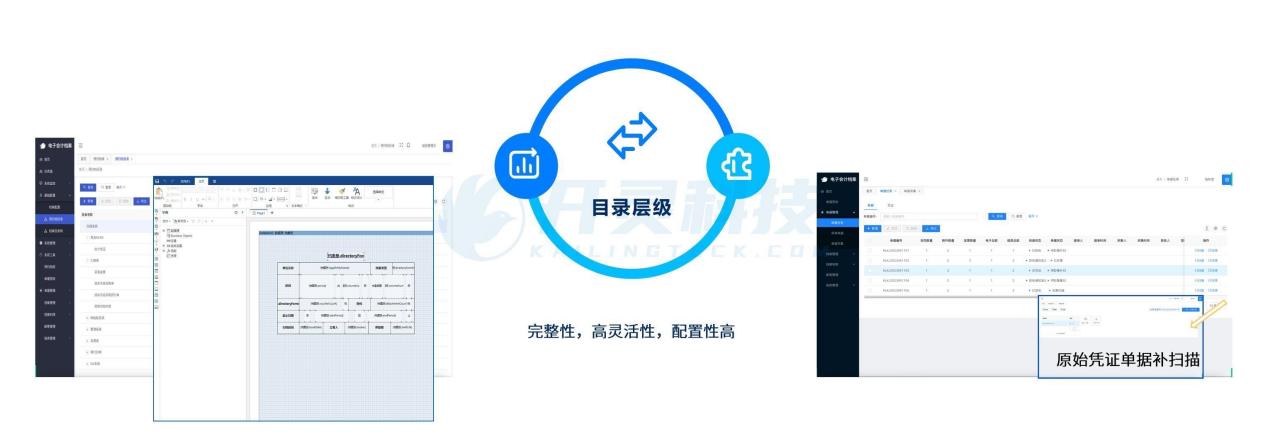
2. Archive Receipt▪ API retrieval/template generation Configure according to the customer's current situation, data source system。Data hierarchy structure, metadata attribute definitions, and association relationships between data. Data is obtained from interfaces, and required layout files can be flexibly and independently configured according to business needs. ▪ Scan/scheduled capture and attachment Paper/other materials—these original voucher files without system support can be automatically classified and archived through image scanning/capture and automatic OCR。
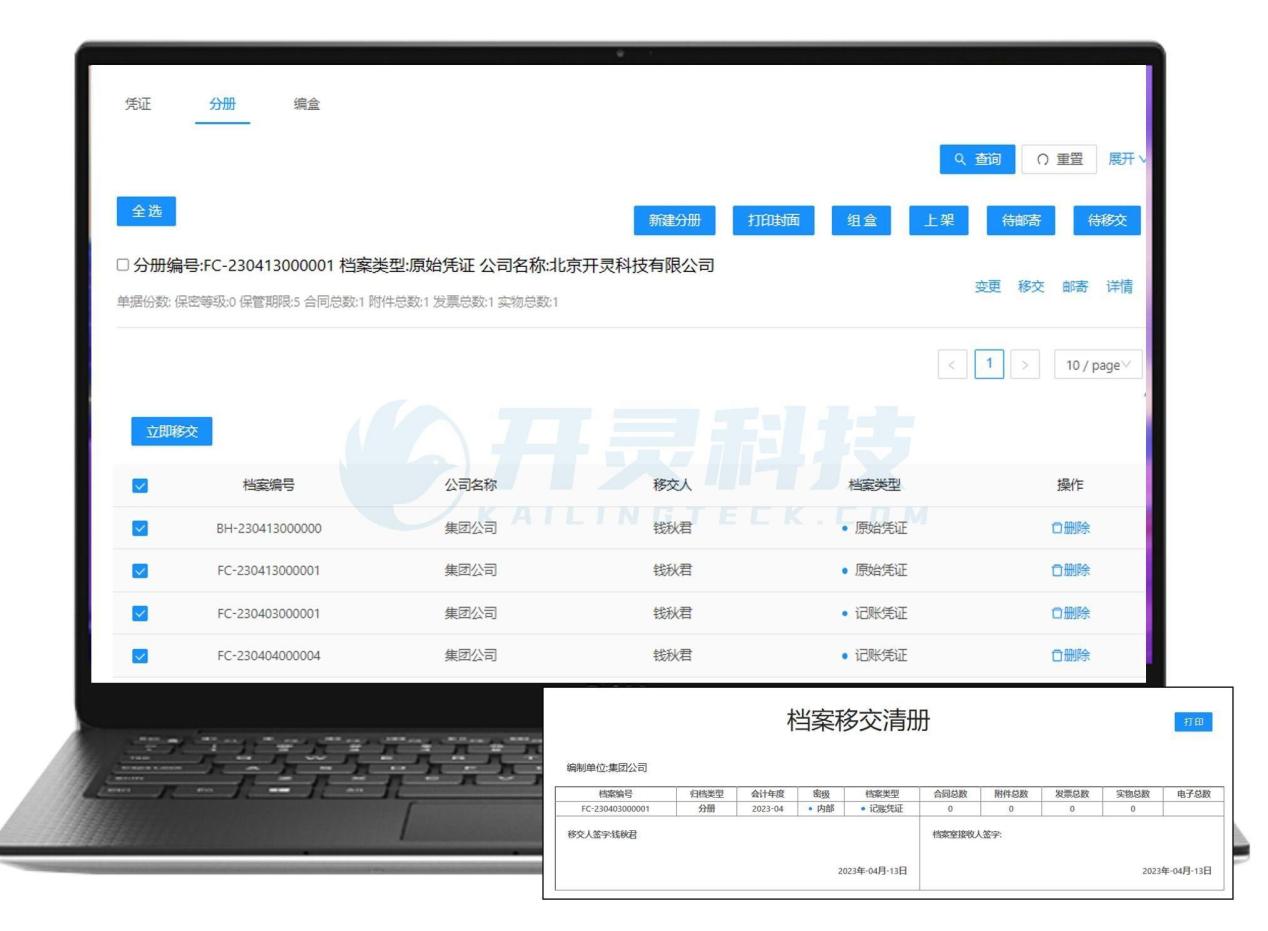
3. Archive ManagementAfter archive arrangement is completed, the system supports a series of subsequent standard actions for archives, including stamping filing seals, process approval filing, and layout file conversion. These functions strictly meet the compliance requirements of archive management standards, ensuring that archive management work complies with relevant laws, regulations and industry standards, and safeguarding the legal effect and long-term preservation value of archives. 4. Archive appraisal and disposalThe system meets various appraisal needs involved in the archive lifecycle management process, such as opening appraisal, destruction appraisal, classification-level appraisal, and retention period appraisal. In each appraisal process, the system automatically retains detailed operation traces, providing strong support for the traceability of archive management and ensuring the accuracy and fairness of archive appraisal work. 5. Archive Transfer and ReceiptAfter completing file assembly/box compilation, financial archives can be transferred in batches, and a transfer list is generated; the corresponding receiving position receives a pending archive receipt task, and signing is completed by scanning the barcode。
6. Archive utilizationThrough advanced retrieval methods such as full-text search and conditional search, users can quickly locate the archive materials they need. For archives without permission, the system combines borrowing management functions to enable online borrowing approval and authorization for electronic and physical archives, ensuring the security and standardization of archive utilization. At the same time, the system also supports process-based management of archive compilation and reuse, improving the utilization value of archive resources and providing strong support for enterprise business development and decision-making. 7. Intelligent archive managementWith advanced technologies such as RPA (robotic process automation), OCR (optical character recognition), and intelligent AI, it achieves automatic collection, automatic classification, automatic cataloging, and intelligent search of archives. These intelligent functions help organizations uniformly manage electronic and paper archives, deeply integrate archive management with business, improve the efficiency and quality of archive management, reduce labor costs, and provide enterprises with more convenient and efficient archive services. 8. Archive tamper preventionThe system adds electronic signatures to collected electronic files, giving each electronic archive strong tamper-proof capability. This tamper-proof capability is not limited to electronic archives, but also extends to the archiving of all digital results, enabling tamper-proof archiving of any information and data files in business systems, ensuring that all digital results are traceable, verifiable and trustworthy, and providing solid protection for the security of enterprise digital assets. Kailing Electronic Archives Management SolutionIt meets the full-process management requirements of archive business and is an innovative model in the field of archive management. Supported by advanced technology, it brings users an efficient, convenient, and secure archive management experience. To learn more about Kailing's comprehensive digital archive management system, you are welcome to communicate and consult in the comments section or via private message, or directly call the consultation hotline to contact Kailing Technology! As a comprehensive business-finance-tax digitalization solution service provider, Kailing Technology provides business-finance-tax management digital transformation products and operational services for various government agencies, institutions, and large, medium, and small enterprises. The product line includes: Solutions for businesses including sales contract management system, procurement contract management system, fully digitalized Leqi interface project, output automatic invoicing system, employee expense control and reimbursement system, input VAT invoice management system, supply chain collaborative reconciliation system, image OCR recognition system, automatic financial bookkeeping system, and electronic accounting archives system, comprehensively driving the digitalization process across various fields. If you have any business-finance-tax digital transformation needs, welcome to contact us. Beijing Kailing Technology will serve you wholeheartedly.
|