010-6097 4119Book a Demo


Focusing on the development background of fully digitalized e-invoices, exploring the key points of Leqi accessPublished: 2024-10-21 16:42 With the rapid rollout of fully digitalized e-invoices, more and more enterprises have shifted their attitude toward Leqi access from "watching from the sidelines" to "actively joining." Compared with manual invoice issuance and use on the Electronic Tax Bureau web portal, the Leqi Direct Connection method of invoice issuance and use, with its security, efficiency, flexibility, and stability, has gradually become the first choice for large enterprises in business-finance-tax digital and intelligent transformation. So what is "Leqi"?There are matters enterprises need to focus on during the process of applying for access to the "Leqi Platform." What preparations should be made? Today let us learn about Leqi Direct Connection services through this article. What is "Leqi"? Leqi is a platform through which the State Taxation Administration provides eligible enterprises, via direct connection between the tax system and the enterprise's own information system, with rule-open, standard-unified digitalized e-invoices and other tax-related services (hereinafter referred to as the "Leqi Platform"). It is an important component of "China Golden Tax Phase IV" smart taxation and complements other China Golden Tax Phase IV systems such as the data support platform, the unified electronic tax bureau, and the tax network trusted identity system. Currently, the capabilities mainly opened by Leqi include basic fully digitalized e-invoice issuance and usage, data exchange, and tax-related information queries. In the future, it will also expand capabilities related to tax filing and tax-related risk control, thereby continuously improving the invoice service experience of large enterprises, improving collection and management efficiency, reducing collection and payment costs, and promoting enterprise development. Leqi's service objects and access conditionsitems Leqi for self-use means that the Leqi services provided by the enterprise's own information system apply only to the entity itself and its subordinate entities, and not primarily for obtaining economic benefits (hereinafter referred to as "Leqi self-use direct connection services"). Its service targets include two categories: "direct connection entities" and "user entities". Currently, Leqi self-use direct connection services mainly target large and medium-sized enterprises. The Leqi Self-Use Direct Connection Service Specification Guidelines (hereinafter referred to as the Leqi Specification Guidelines) issued by provincial tax bureaus all set certain entry thresholds for the service targets of Leqi self-use direct connection services. Those meeting the entry thresholds may submit an access application to the competent tax authority in their location through the direct connection unit, and after approval, the direct connection unit may authorize user units to use the relevant capabilities. According to"Leqi Normative Guidelines": the provisions on the service targets and access conditions of the Leqi Direct Connection service are as follows:
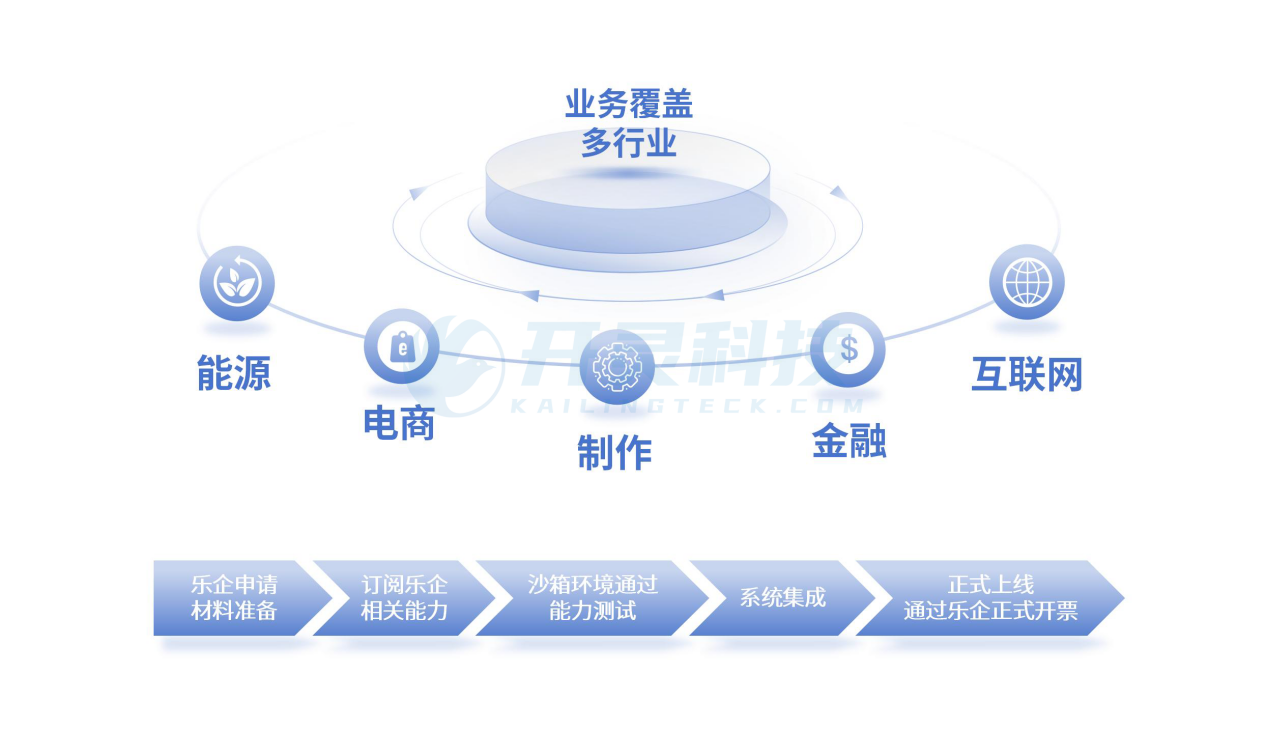
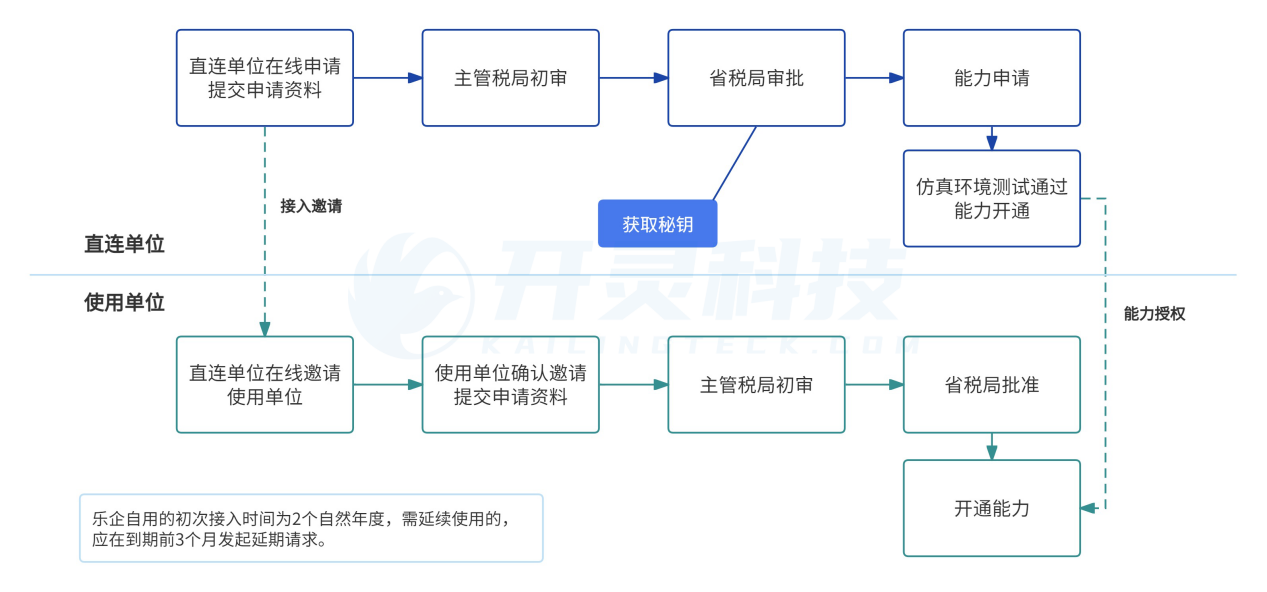
Access process and key matters for Leqi self-use direct connection services
To ensure the successful implementation of the Leqi Direct Connection project, enterprises should focus on the following matters during the Leqi access process, including the preparation stage, application stage, and post-launch operation and maintenance stage: Key Point One: Business-Finance-Tax Integration Business Review and Solution Design An enterprise's invoices and taxes are all generated by its business operations and are closely linked to its business operations and financial processing. The bureau side will, through Leqi Direct Connection, open the tax bureau's verification rules related to enterprise invoices and tax business. These verification rules can serve as control rules for the enterprise's business-finance system, performing rule verification and risk prevention and control when enterprise invoice-related and tax-related business occurs, which helps reduce the enterprise's tax compliance costs. Therefore, in Leqi Direct Connection projects, comprehensively sorting out the enterprise's business-finance-tax integration business and designing reasonable solutions, combining the verification rules provided by Leqi, establishing a unified tax rule engine within large enterprises, and using it as a carrier to integrate and connect with enterprise business and financial systems, realizing tax rule front-loading, business-finance-tax data from the same source, and business-finance-tax integration, tapping the value of tax data, and empowering business judgment and analysis, is an inevitable trend in the digital and intelligent transformation of tax management. Key Point Two: Business-Finance-Tax System Integration The construction of a Leqi Direct Connection project often involves a large amount of data interaction with an enterprise's business systems and financial systems, including input and output VAT invoice management, expense/procurement reimbursement, and tax source information collection. The formats of these data may be inconsistent and the quality may vary, requiring cleaning, integration, and standardization, which takes considerable time and effort and requires enterprises to prepare in advance. At the same time, system integration involves different technical fields and standards, also requires a large amount of time and effort for interface development and debugging, and also requires solving data interaction and business logic integration issues between different systems, which is also a major challenge for enterprises. Key Point Three: Preparation of application materials When applying for Leqi access, enterprises need to prepare a series of application materials in accordance with the requirements of the Leqi Specification Guidelines, and go through three-level approval by the competent tax authority of the direct connection unit, the provincial bureau, and the tax headquarters. When preparing application materials, it is recommended to focus on local access standards, as well as explanations of the enterprise's IP address, enterprise software copyright and usage rights certificates, and enterprise informatization capabilities. At the same time, because local tax bureaus differ to some extent in their openness to Leqi access and handling experience, it is recommended to fully communicate with the local tax bureau before submitting Leqi application materials, avoiding project delays caused by bureau-side approval time issues such as non-compliant materials. Key Point Four: Capability subscription testing and activation After the Leqi application is approved, the Leqi platform testing center will provide a sandbox testing environment for the direct connection unit. The enterprise needs to cooperate in sandbox testing and joint debugging. After passing the test, a test report is generated and submitted to the tax authority before official launch. Usually the Leqi platform testing center provides a certain amount of testing and joint debugging time based on the number of capabilities subscribed to by the enterprise. Enterprises should pay special attention to the time limits for sandbox testing and joint debugging. Enterprises need to quickly cooperate with the Leqi platform testing center to complete testing and joint debugging within the specified time and in compliance with security and standardization requirements, troubleshoot a series of possible issues in system interaction, carry out interface development, data structure, data security, data format conversion, and connected business logic, etc., which places high demands on enterprises' technical strength and experience. Key Point Five: Continuous operations and maintenance after go-live An enterprise's business scenarios are constantly changing, while the Leqi platform's versions, interfaces, and capabilities are also continuously iterating and updating. According to the provisions of the Leqi Specification Guidelines, when functional upgrades occur on the Leqi platform, the tax authority will issue a version upgrade notice, and directly connected units shall complete system transformation and interface testing within 30 days; the initial access period for Leqi self-use is 2 calendar years, and if continued use is required, an extension request shall be initiated 3 months before expiration; if the owner of Leqi self-use terminates the provision of tax-related services such as fully digitalized e-invoices to its user units, it shall file for termination of service with the competent tax authority of the directly connected unit at least 30 days in advance. Therefore, after enterprises connect to Leqi, how to establish an effective operational assurance mechanism, quickly respond to business changes and iterative updates of the Leqi platform, and avoid adverse effects on enterprise business development is also a key matter to evaluate when connecting to Leqi. Kailing TechnologyProvide comprehensive Leqi service capabilities, including comprehensive sorting of business-finance-tax integration scenarios, system integration solution design, consulting services related to Leqi applications, system construction, and continuous operations and maintenance services.Kailing TechnologyHas successfully assisted a large number of enterprises in achieving Leqi Direct Connection invoicing, has rich experience and best practices in Leqi project construction, and can help enterprises successfully implement Leqi Direct Connection projects. As a comprehensive business-finance-tax digitalization solution service provider, Kailing Technology provides business-finance-tax management digital transformation products and operational services for various government agencies, institutions, and large, medium, and small enterprises. The product line includes: Solutions for businesses including sales contract management system, procurement contract management system, fully digitalized Leqi interface project, output automatic invoicing system, employee expense control and reimbursement system, input VAT invoice management system, supply chain collaborative reconciliation system, image OCR recognition system, automatic financial bookkeeping system, and electronic accounting archives system, comprehensively driving the digitalization process across various fields. If you have any business-finance-tax digital transformation needs, welcome to contact us. Beijing Kailing Technology will serve you wholeheartedly.
|