010-6097 4119Book a Demo


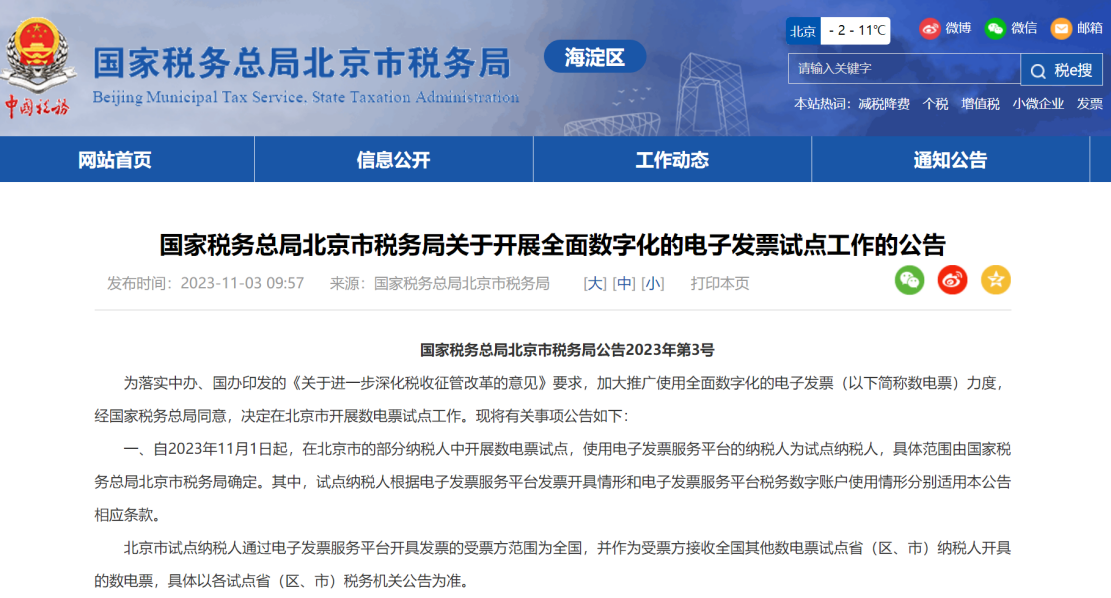
The era of "fully digitalized e-invoices" has arrived, major enterprises please take up the challenge!Published: 2023-11-15 15:25 For November, what everyone most needs to pay attention to is the further promotion of the fully digitalized e-invoice pilot. In response to national requirements (as shown in the figure below, the full text is on the official website of the "Beijing Municipal Tax Service, State Taxation Administration"), and to intensify the promotion of fully digitalized e-invoices, the digital transformation of business-finance-tax has become an inevitable trend in enterprise development.
Starting November 1,Beijing, Shandongand 7 other regions joined the pilot for issuing fully digitalized e-invoices。As of now, except for Tibet, all other 35 regions nationwide can issue digitalized electronic invoices. Digitalized electronic invoices issued by pilot taxpayers through the electronic invoice service platform can be received by invoice recipients in all provinces. With the accelerated promotion of fully digitalized e-invoices, the invoicing scope is further expanded!
In this process, the promotion of "fully digitalized e-invoices" is becoming increasingly important for enterprises, and its profound impact and advantages for enterprises are gradually emerging. The specific content will be provided by a service provider in the field of business-finance-tax digitalizationBusinessBeijing Kailing Technologyto let you understand. First, let's briefly understand what "fully digitalized e-invoices" are. “Fully Digitalized E-invoice(fully digitalized e-invoice)"Yes“Fully digitalized e-invoices”abbreviation, it relies on the electronic invoice service platform, does not exist in paper form, does not require medium support, and does not require application or collection; it has the same legal effect as paper invoices, but offers the advantages of a simpler invoice collection process, more convenient invoicing and invoice use, and integrated booking and archiving.Fully digitalized e-invoiceInvoice face information of paper invoicesComprehensive digitalization, multiple invoice types are integrated and merged into a single electronic invoice type, with unified nationwide coding, total invoicing amount quota management, and automatic circulation and delivery.
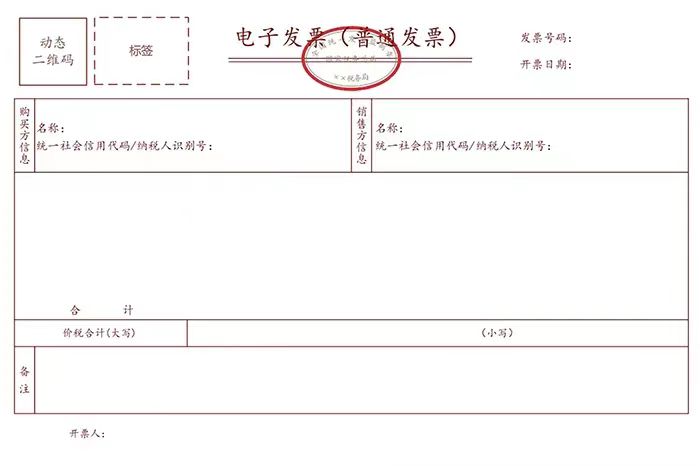
So,After the promotion of "fully digitalized e-invoices,"WillWhat does it mean for enterprisesForwardImpactWhat about? Invoice issuance process: more efficient. Before invoicing, if paper invoices (paper-electronic invoices) are used, it is necessary to apply for invoice type verification, apply for tax control equipment, and obtain the paper invoice number range from the competent tax authority.AndForFor fully digitalized e-invoices, no need for invoice type verification, no need to apply for tax control equipment, and no need to obtain invoice number ranges. In comparison, the fully digitalized e-invoice process is simpler, with no cumbersome preparation work. Invoice issuance restrictions: more flexible. The invoice quantity and face amount limit management of paper-electronic invoices are the same as those of paper invoices, and invoices can only be issued within the given number of copies and limit. Taxpayers need to apply to increase the invoice layout and quantity. However, fully digitalized e-invoices adopt a "credit-based system," which means taxpayers can issue invoices of any amount and any number of copies within a given total quota, without additional application or approval. Invoice face display: more intuitive. The invoice face of fully digitalized e-invoices is more concise, removing the address column, bank account number column, invoice code, invoicer, and ciphertext area from paper electronic invoices. Buyer and seller information is displayed side by side, making it more intuitive and readable. In addition, the invoice number of a fully digitalized e-invoice is 20 digits, containing information such as year, administrative division code, issuance channel, and sequence code, while the invoice number of a paper electronic invoice is only 8 digits, compiled by year and in batches. In addition, paper electronic invoices have an 8-line limit, while fully digitalized e-invoices cancel this limit and abolish the list invoicing model of paper electronic invoices. Invoice type composition: richer. Paper-electronic invoices only include VAT electronic ordinary invoices and VAT electronic special invoices. However, fully digitalized e-invoices, through tagged and elementized design, have designed explicit tags and specific elements, unifying the "7+10" standard invoice types into electronic invoices. This not only covers VAT invoices but also includes ordinary invoices such as motor vehicle invoices, second-hand vehicle invoices, electronic itineraries for air transport passenger tickets, railway electronic passenger tickets, and medical invoices. In comparison, the connotation and extension of fully digitalized e-invoices are richer and more diverse than paper-electronic invoices. Invoice delivery methods: more convenient. After a paper-electronic invoice is issued, the issuer needs to manually deliver the invoice electronic data format file (such as OFD, etc.) to the invoice recipient via email, SMS, etc. After a fully digitalized e-invoice is issued, the invoice electronic data file is automatically sent to the tax digital accounts of both the issuer and the recipient, and various invoice data can be automatically aggregated, making it more convenient and efficient. National legal supervision: more standardized. As the state strengthens tax supervision, enterprises need to use more standardized and secure invoices to reduce their own risks and costs. Fully digitalized e-invoices offer higher security and standardization, which can improve enterprises' compliance and credibility in this regard. Tax authorities can also monitor and manage enterprises' invoicing in real time through online platforms, improving the efficiency and accuracy of supervision. Although "fully digitalized e-invoices" have many advantages, for ordinary enterprises, there will also be some difficulties and problems in application: Tax system integrationQuestion: The promotion of fully digitalized e-invoices requires enterprises to connect with tax systems. However, differences may exist across regions and tax types, bringing certain challenges to enterprise tax system integration. At the same time, upgrades and updates of tax systems also require enterprises to continuously follow up and adjust integration plans to ensure system stability and reliability. EmployeePracticeQuestion: The application of fully digitalized e-invoices requiresRelatedEnterprise employees haveRelatively strongofIT implementationCapabilities andFinance and TaxKnowledge. If enterprise employees lack these skills and knowledge, substantial time and resources must be invested in training, increasing the enterprise's training costs. At the same time, new employees and new businesses may also require retraining and adaptation, which also brings certain challenges to enterprise training and management. System stability and reliabilityQuestion: The application of fully digitalized e-invoices needs to rely onSystem and Technology, if the system fails or is unreliable, it may affect the enterprise's normal operations and customer experience. Therefore, enterprises need to choose reliable technology and systems and establish sound technical support and maintenance mechanisms to ensure system stability and reliability. So here comes the question! How should the above difficulties and pain points be resolved? The answer is—Beijing Kailing Technology Co., Ltd.Both can help you solve it. Core advantages:As a professional, efficient, and reliable "business-finance-tax digitalization" solution provider, Beijing Kailing Technology can provide professional business-finance-tax digitalization consulting and implementation services to help your enterprise apply fully digitalized e-invoices more smoothly and better complete business-finance-tax digital transformation. Professional team:The team has senior talent deeply engaged in the business-finance-tax field, with a deep understanding of the current state and future trends of enterprise business-finance-tax operations management, and leverages industry experience to provide customers with suitable system management solutions and IT services. Based on rich professional knowledge and experience in the business-finance-tax field, and using new concepts and new technologies, the team accurately grasps the integrated management needs of business, finance, tax, imaging, and electronic archives, helping enterprises achieve automated, intelligent, and digital transformation of business-finance-tax, enabling their business-finance-tax users and management organizations to achieve more efficient operations, smarter management, and release more value.
Service commitment: the Beijing Kailing Technology team deeply understands customers' business needs and pain points, providingProfessional consulting services. Help customers sort out business processes and formulate digital transformation strategies, and according to customers' actual situations and needs,Provide personalized solutions。 If you have any business-finance-tax digital transformation needs, welcome to contact us,Beijing Kailing Technology will serve you wholeheartedly。 |