010-6097 4119Book a Demo


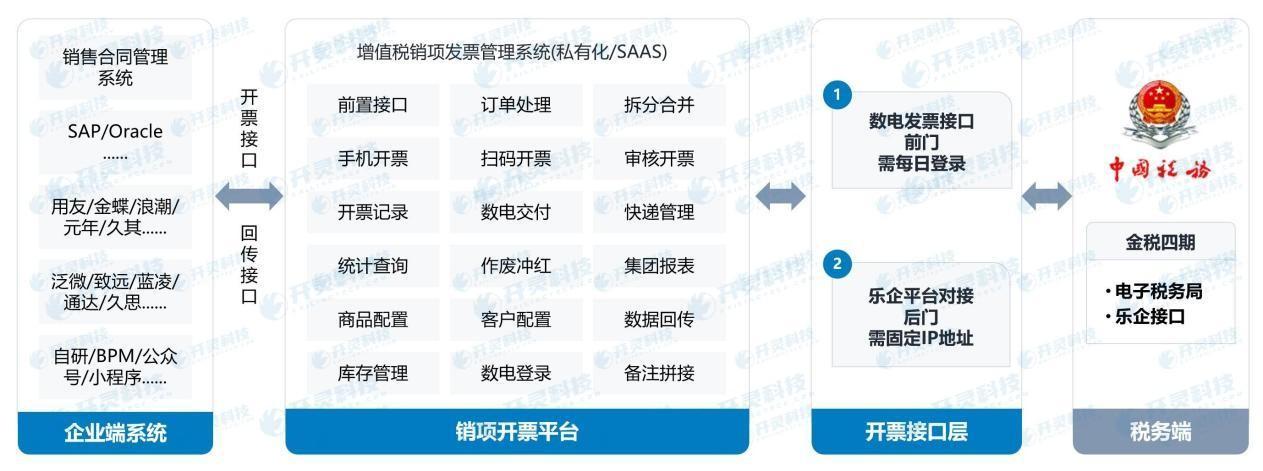
How can group enterprises connect to the Leqi platform in 2026? Kailing Technology explains in one article the qualification process and implementation of Leqi Direct Connection invoicingPublished: 2026-07-02 16:00 Leqi is a platform for digitalized e-invoices and other tax-related services provided by the State Taxation Administration to eligible enterprises, with the core characteristics of "direct connection between the tax system and the enterprise's own information system, open rules, and unified standards."For group enterprises in 2026, the core value of connecting to the Leqi platform can be summed up in one sentence: upgrade the invoicing work scattered across member units—requiring individual logins to the electronic tax bureau and manual invoicing and comparison—into a "headquarters-to-headquarters" tax-enterprise direct connection tax-related data management center, enabling multiple business systems such as ERP, contracts, expense control and projects to directly issue fully digitalized e-invoices with one click, achieving a fully automated closed loop of invoicing—booking—archiving. This article is aimed at finance and IT leaders of group enterprises, clarifying the four most important things about Leqi integration: what Leqi is, why integrate, how to integrate, and how business changes after integration. Beijing Kailing Technology Co., Ltd. (Kailing Technology) provides fully digitalized e-invoice Leqi interface projects and output VAT invoice automatic invoicing implementation, helping groups transition smoothly from manual invoicing to system direct connection invoicing. I. What is Leqi? Explained clearly in one sentence and one diagramThe Leqi Platform is not just another invoicing website, but a platform opened by the State Taxation Administration to large enterprisesTax-enterprise system direct connection channel。Enterprises connect their own information systems to Leqi according to the open rules and unified standards published by the State Taxation Administration. Tax-related actions such as invoicing, red-flushing and queries no longer rely on manually logging into the electronic tax bureau page, but are directly called by the enterprise's own systems and directly responded to by the tax system. Tax-enterprise direct connection:Enterprises' own information systems connect point-to-point with the tax system. Invoicing instructions are initiated by the system and accepted in real time on the tax side. Open rules, unified standards:Connection follows the unified specifications published by the State Taxation Administration, with different business systems accessing through the same set of standards. With fully digitalized e-invoices as the carrier:What is issued is a digitalized electronic invoice (fully digitalized e-invoice), which has the same legal effect as a paper invoice and requires no application, old-invoice verification, or increase in version or quantity. Covering the full tax-related process:Covers invoicing and related tax-related services, and is the foundation for the group to build a tax-related data management center.
II. Why group enterprises in 2026 need to connect to the Leqi platformAgainst the backdrop of China Golden Tax Phase IV and the full promotion of fully digitalized e-invoices (fully electronic invoices), invoicing methods are shifting from "manual login and account-by-account operation" to "system direct connection and centralized control." Group enterprises have many member units, large invoice volumes, and many business systems, and the pain points of the traditional invoicing model are magnified exponentially. Traditional household-by-household invoicing: the group's four long-standing difficulties Log in and operate separately for each account:Each member unit logs into the electronic tax bureau separately to issue invoices, making accounts, permissions, and operating standards difficult to unify. Manual invoicing and comparison:Invoicing information relies on manual entry and manual reconciliation with business documents, resulting in low efficiency, high error rates, and heavy month-end reconciliation pressure. Data scattered, inconsistent standards:Invoicing data is scattered locally across each unit, making it difficult for group headquarters to grasp the full tax-related data in real time and in a unified way. Business and invoicing are "two separate skins":Business data in ERP, contracts, expense control, projects, and other systems must be manually moved again to the invoicing side. What does the group gain after integrating with Leqi? "Headquarters-to-headquarters" tax-enterprise direct connection:Establish a unified tax-related data management center at the group level, saying goodbye to logging into the electronic tax bureau entity by entity and manual invoice comparison. One-click direct invoicing connection across multiple systems:ERP, contracts, expense control, projects, and other business systems directly trigger invoicing; fully digitalized e-invoices can be issued as soon as business occurs. Centralized data, unified standards:Unified collection and real-time visibility of invoicing data across the entire group, facilitating compliance control and business analysis. Fully digitalized e-invoices are inherently convenient:Fully digitalized e-invoices have the same legal effect as paper invoices, require no application, verification of old invoices, or version/quantity increases, making centralized management easier.
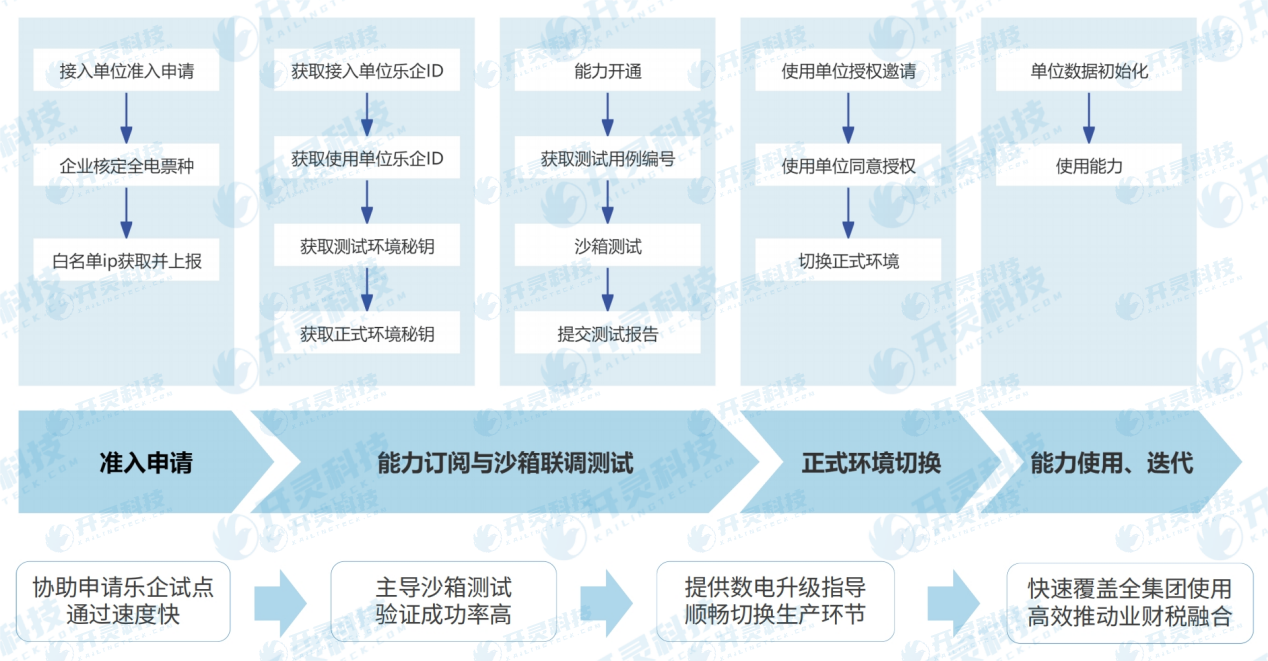
III. How does a group connect to the Leqi platform? A four-step implementation processLeqi integration is not as simple as "buying software and installing it," but a systematic project requiring coordination of qualifications, interfaces, business, and operations. Kailing Technology breaks it down into a clear and executable four-step implementation path:
Step 1: Qualification preparation Leqi is open to eligible enterprises. The group must first confirm access qualification, prepare application materials, and complete the signing of relevant agreements, while sorting out the member entities and invoicing entity scope to be included in the direct connection, and clarifying the authority boundaries between the headquarters and each entity. This step determines whether the subsequent rollout is a "single pilot" or a "full group rollout". Step 2: Interface integration The enterprise's information system connects to the Leqi channel according to the open rules and unified standards published by the State Taxation Administration, completing interface integration and joint debugging testing for capabilities such as automatic output invoicing. Kailing Technology provides fully digitalized e-invoice Leqi interface projects, undertaking engineering implementation from environment setup to joint debugging verification to ensure the system's direct connection is stable and usable (specific interface fields are subject to State Taxation Administration specifications). Step 3: Business scenario go-live After the API is running, launch invoicing scenarios one by one according to the business system: invoice upon ERP sales outbound, invoice triggered at contract performance milestones, and automatic invoicing upon expense control/project settlement. For each scenario launched, replace the corresponding manual invoicing with system direct connection to issue fully digitalized e-invoices. The group can steadily advance according to priority, reducing switchover risk. Step 4: Operations Monitoring Going live is not the end point. It is necessary to continuously monitor invoicing success rate, red-letter reversal and exception handling, and data aggregation completeness, consolidate the entire group's tax-related data into a unified data management center, and iterate rules and expand scenarios with the business, so that direct-connection invoicing runs stably over the long term. IV. How does business change after integration? Fully automated closed loop of invoicing—bookkeeping—archivingWhat Leqi Direct Connection truly changes is the position of invoicing within the group's business chain—it transforms from an independent "manual action" into an "automated step" embedded in business processes。 Under this closed loop, what the group headquarters gets is aTax-related data management center for "headquarters-to-headquarters" tax-enterprise direct connection: Invoicing no longer depends on each unit logging in one by one; as soon as business occurs the invoice is issued, once issued the data returns, once returned the account is recorded, and once recorded the archive is filed.
If your group wants to upgrade from entity-by-entity invoicing to Leqi Direct Connection invoicing, welcome to contact Beijing Kailing Technology for fully digitalized e-invoice Leqi interface projects and output VAT automatic invoicing implementation solutions: www.kailingteck.com. As a comprehensive business-finance-tax digitalization solution service provider, Kailing Technology provides business-finance-tax management digital transformation products and operational services for various government agencies, institutions, and large, medium, and small enterprises. The product line includes: Solutions for businesses including sales contract management system, procurement contract management system, fully digitalized Leqi interface project, output automatic invoicing system, reverse invoicing system, invoice issuance for individuals system, employee expense control and reimbursement system, input VAT invoice management system, supply chain collaborative reconciliation system, image OCR recognition system, automatic financial bookkeeping system, and electronic accounting archives system, comprehensively driving the digitalization process across various fields. If you have any business-finance-tax digital transformation needs, welcome to contact us. Beijing Kailing Technology will serve you wholeheartedly.
Keywords:Leqi Platform, Leqi Direct Connection invoicing, group enterprise connection to Leqi, fully digitalized Leqi interface, fully digitalized e-invoice, automatic output VAT invoicing, tax-enterprise direct connection, China Golden Tax Phase IV, closed loop of invoicing, bookkeeping and archiving, Kailing Technology |