010-6097 4119Book a Demo


Long unable to obtain input invoices when purchasing scrap steel, waste paper, and waste plastics? Kailing Technology reverse invoicing helps renewable resource enterprises achieve five-flow integration and compliant traceabilityPublished: 2026-07-01 15:25 Renewable resource recycling enterprises dealing in scrap steel, waste paper, waste plastics, etc. have long been unable to obtain VAT input invoices. The root cause is that the upstream sellers are individual natural persons - they can neither issue special VAT invoices nor break the habit of cash transactions. The more the recycling enterprise purchases, the more input invoices it lacks, and profits are devoured by output VAT.The compliant solution is "reverse invoicing": According to the State Taxation Administration Announcement No. 5 of 2024, qualified resource recycling enterprises can issue invoices in reverse to individual sellers, thereby compliantly obtaining VAT input invoices. On this basis, Kailing Technology's reverse invoicing system integrates the "self-certification flow, contract flow, business flow, tax flow, and fund flow" into one with full traceability, automatically verifying whether the seller entity is compliant before invoicing, allowing renewable resource enterprises to "securely deduct what should be deducted and retain every piece of evidence that should be retained," fundamentally resolving the two major risks of profits being eroded by taxes and audit tracing.
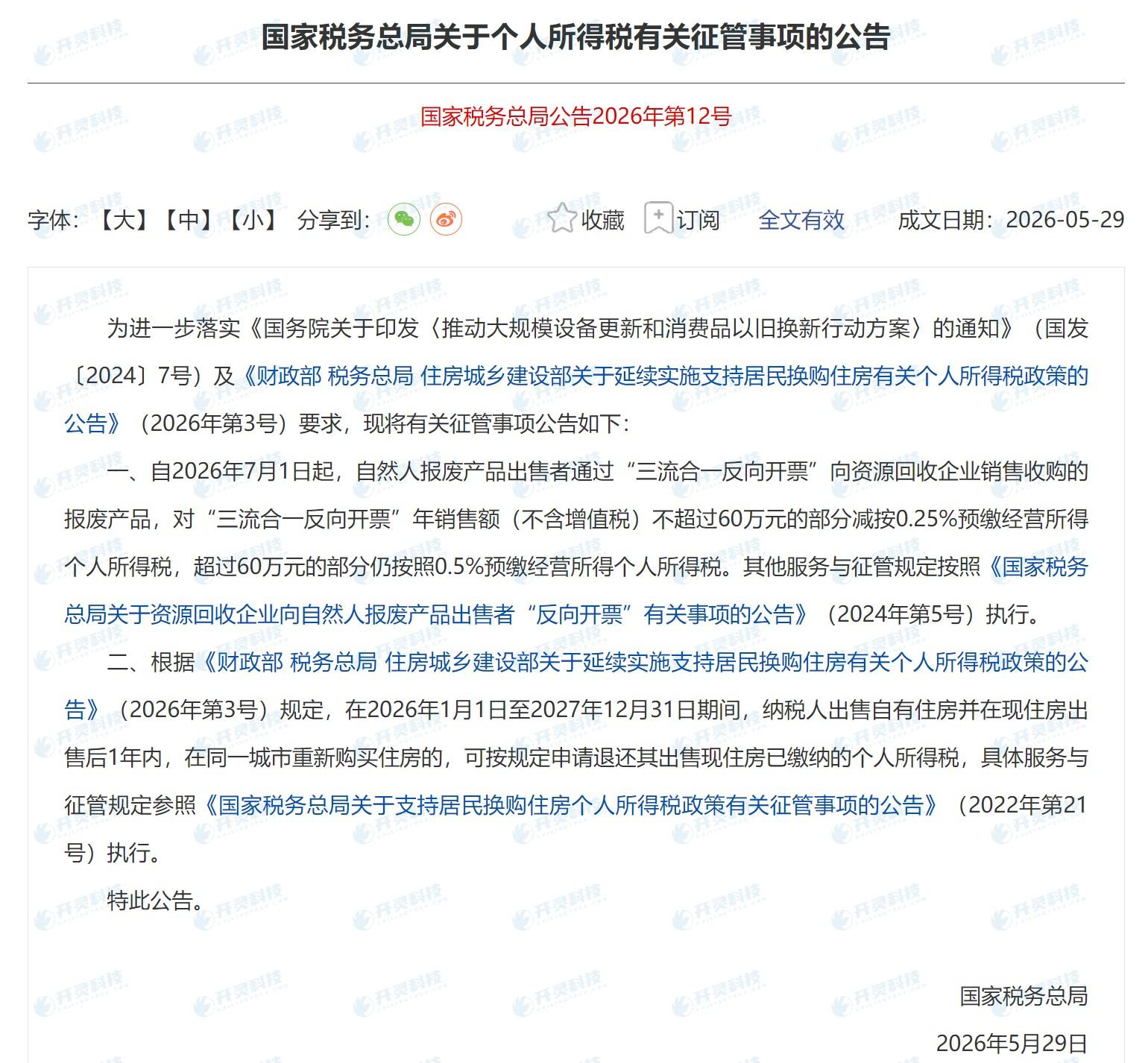
I. Why have renewable resource enterprises long lacked input invoices?Renewable resources such as scrap steel, waste paper, waste plastics, and scrap copper and aluminum are mostly collected cartload by cartload from individual peddlers and individual recyclers in the streets and alleys. The problem lies precisely at this "most upstream" point: The supplier is an individual natural person:Individual suppliers are neither general taxpayers nor mostly registered self-employed individuals, so they cannot issue special VAT invoices, and recycling enterprises cannot obtain input VAT invoices. Cash transactions are difficult to trace:Goods receipt commonly uses cash settlement, with no bank transaction records as fund vouchers, making it difficult to self-prove business authenticity. Missing input, profits eroded by taxes:With no input to deduct, output tax is borne almost in full. Renewable resources are already low-margin, and once the tax burden rises, little profit remains. High audit risk, ledgers hard to trace:Recording invoices without proper documentation or buying invoices to offset accounts are high-risk actions; documents from receiving, weighing, and payment stages are scattered, making it very difficult to piece together a complete evidence chain afterward. One-sentence summary: it is not that enterprises do not want compliance, but that in the past there was no path that could "allow retail business to obtain invoices compliantly and automatically retain evidence." Reverse invoicing is precisely the policy starting point of this path. II. Reverse invoicing: the policy basis for compliantly obtaining input invoicesThe policy starting point for reverse invoicing is Announcement No. 5 of 2024 of the State Taxation Administration (effective April 29, 2024): When an enterprise engaged in renewable resource recycling purchases scrapped products from individual sellers of scrapped products, the recycling enterprise can "reverse" issue invoices to the sellers, and the enterprise thereby obtains input VAT invoices compliantly. This turns the past deadlock of "individuals cannot issue invoices" into a viable path of "the enterprise itself issuing and obtaining invoices compliantly". The state is still continuously optimizing this path.The Announcement of the State Taxation Administration on Matters Concerning the Administration of Individual Income Tax (No. 12 of 2026), which will take effect on July 1, 2026, further reduces the burden on natural person sellers—for those who sell scrapped products through "three-flow integration" reverse invoicing, the prepaid individual income tax on the portion of annual sales (excluding VAT) ≤ 600,000 yuan is reduced to 0.25%, meaning the recycling ecosystem is becoming increasingly standardized and enterprises using reverse invoicing are finding it increasingly worry-free. It should be emphasized that the policy requirement is "three-flow integration," while the Kailing system provides "five-flow integration" traceability, which is more complete than the minimum policy requirement.
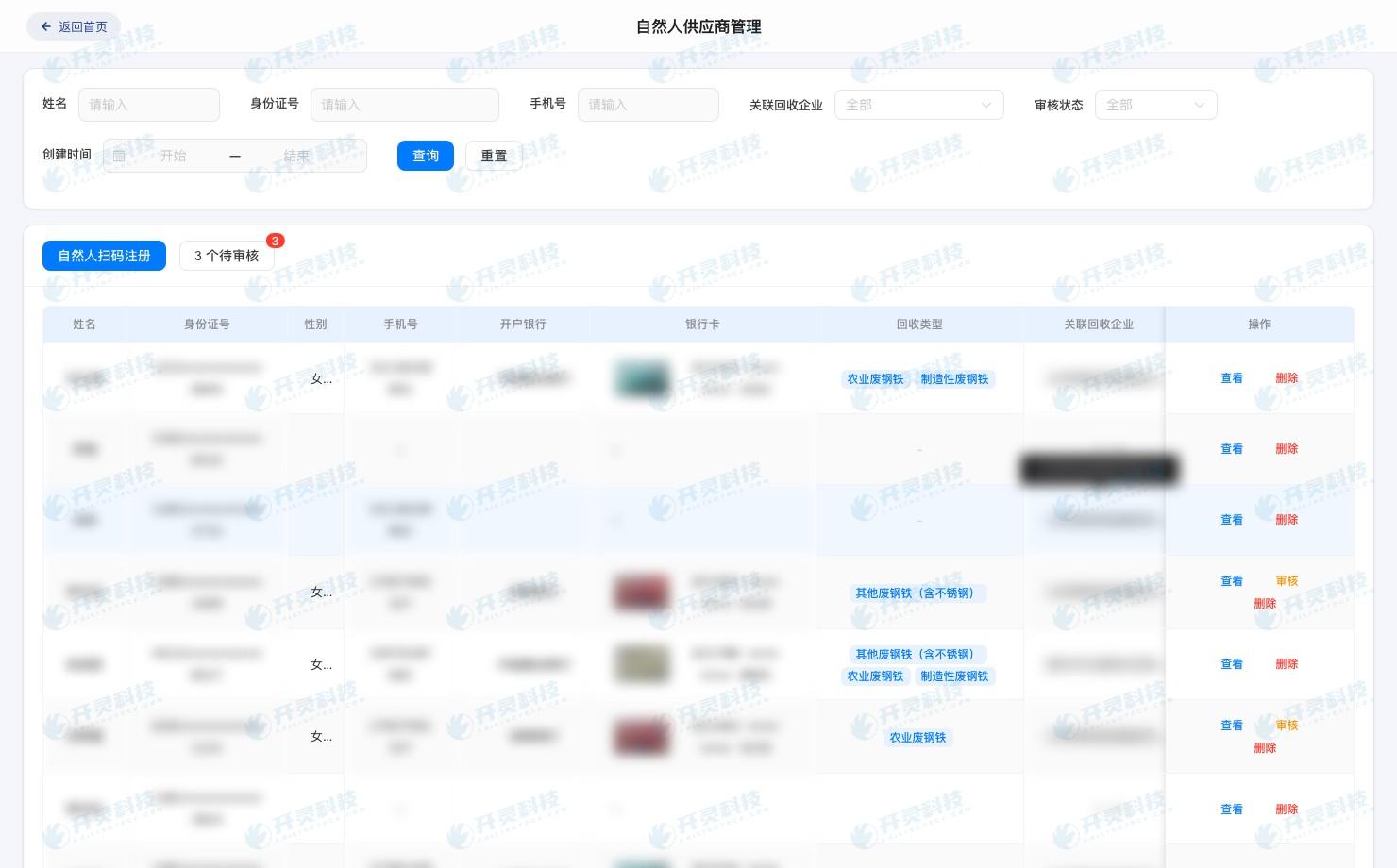
III. Kailing 'Five Flows in One': more complete full-process traceability than the policy's three flowsTax audits never recognize a single invoice, but rather the complete evidence chain of "business genuinely occurring." Kailing Technology's reverse invoicing system breaks down a single purchase into five mutually corroborating "flows," each automatically traced in the system, so it is clear at a glance which items are missing and which are complete. Below, each is broken down one by one in the actual order of operations. 1 | Self-verification flow: natural person supplier filing + entity verification before invoicingFor first-time cooperation, individual suppliers first create a file in the system: scan the code to register, upload identity information for qualification review, and form a traceable supplier file. The key is—before invoicing, Kailing automatically verifies whether the seller entity is compliant and automatically blocks objects that cannot serve as natural person sellers (such as legal representatives, directors, supervisors, senior managers, and registered self-employed individuals), achieving "issue with confidence for those who can, block in advance for those who cannot," plugging the risk of tax supplements and fines from invoicing the wrong object at the source.
2 | Contract Flow: Electronic signing + face-scan real-name verificationPurchase cooperation is confirmed through electronic signing, combined with face-scanning real-name authentication, so that "who sold, what was sold, and at what price" forms a legally effective contract voucher, constituting the contract flow among the five flows. This step not only ensures clear rights and responsibilities for both parties, but also lays a foundation of authenticity for subsequent tax and fund stages. 3 | Business flow: Goods order management · Receiving inspection and warehousingIndividual suppliers deliver to the door, and the system manages goods orders: receiving, weighing, acceptance, and warehousing are recorded item by item, with weight, category, unit price, and amount clear. For heavy-duty transport vehicles over 12 tons, Kailing can also connect directly to BeiDou GPS, making transport trajectories evidence of real business occurrence and forming a solid business flow.
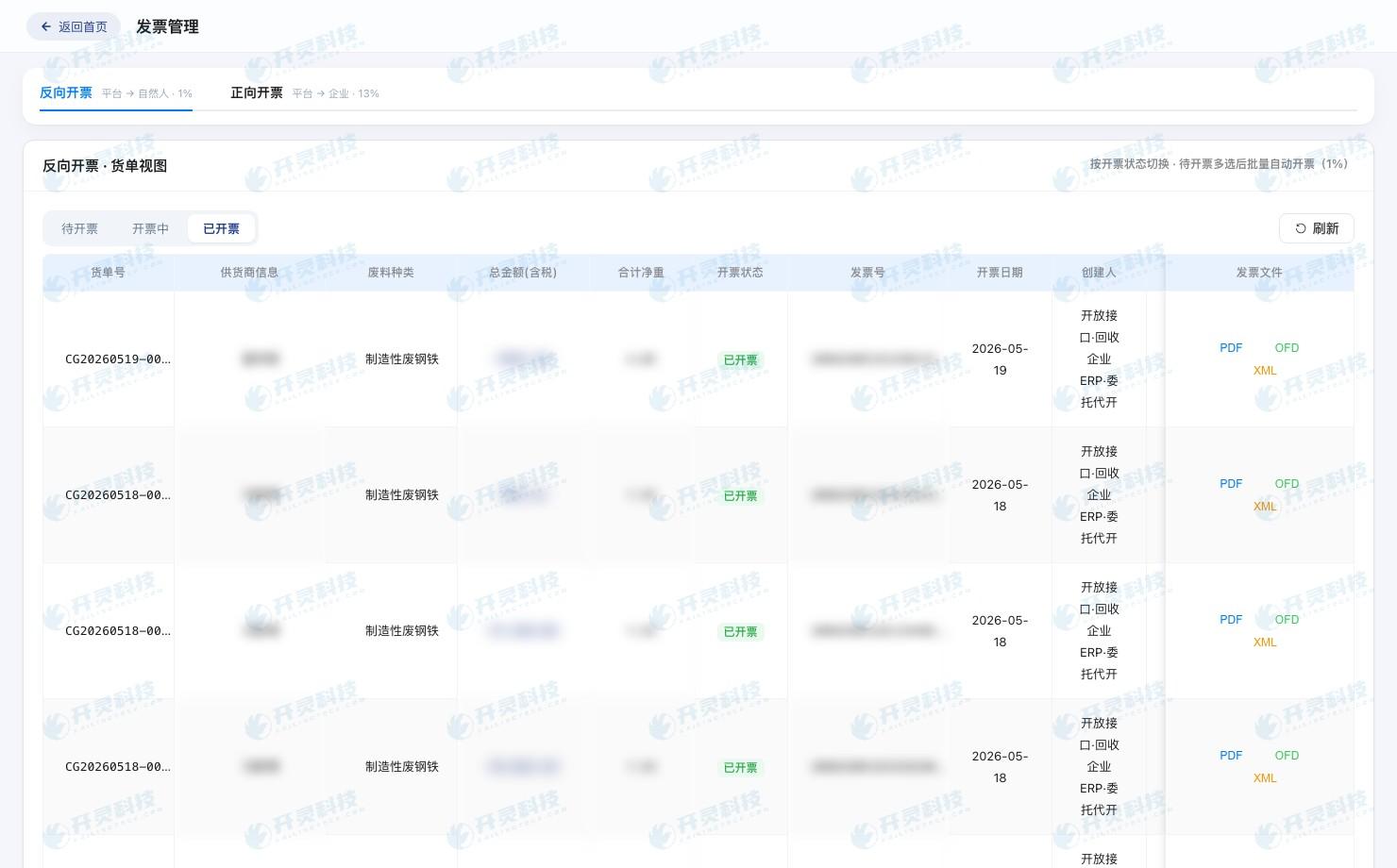
4 | Tax flow: one-click reverse invoicing, automatic archivingAfter the cargo document is confirmed correct, issue invoices with one click in the "Reverse Invoicing · Cargo Document View"—call the electronic tax bureau interface directly without login, and if issued incorrectly, one-click red reversal is available; issued invoices support multi-format download in PDF, OFD, and XML, and are automatically archived to form the tax flow. The entire set of actions compresses the past cumbersome process of "logging into the tax bureau, filling in elements, and issuing one by one" into "one click," making each invoice issuance fast and accurate.
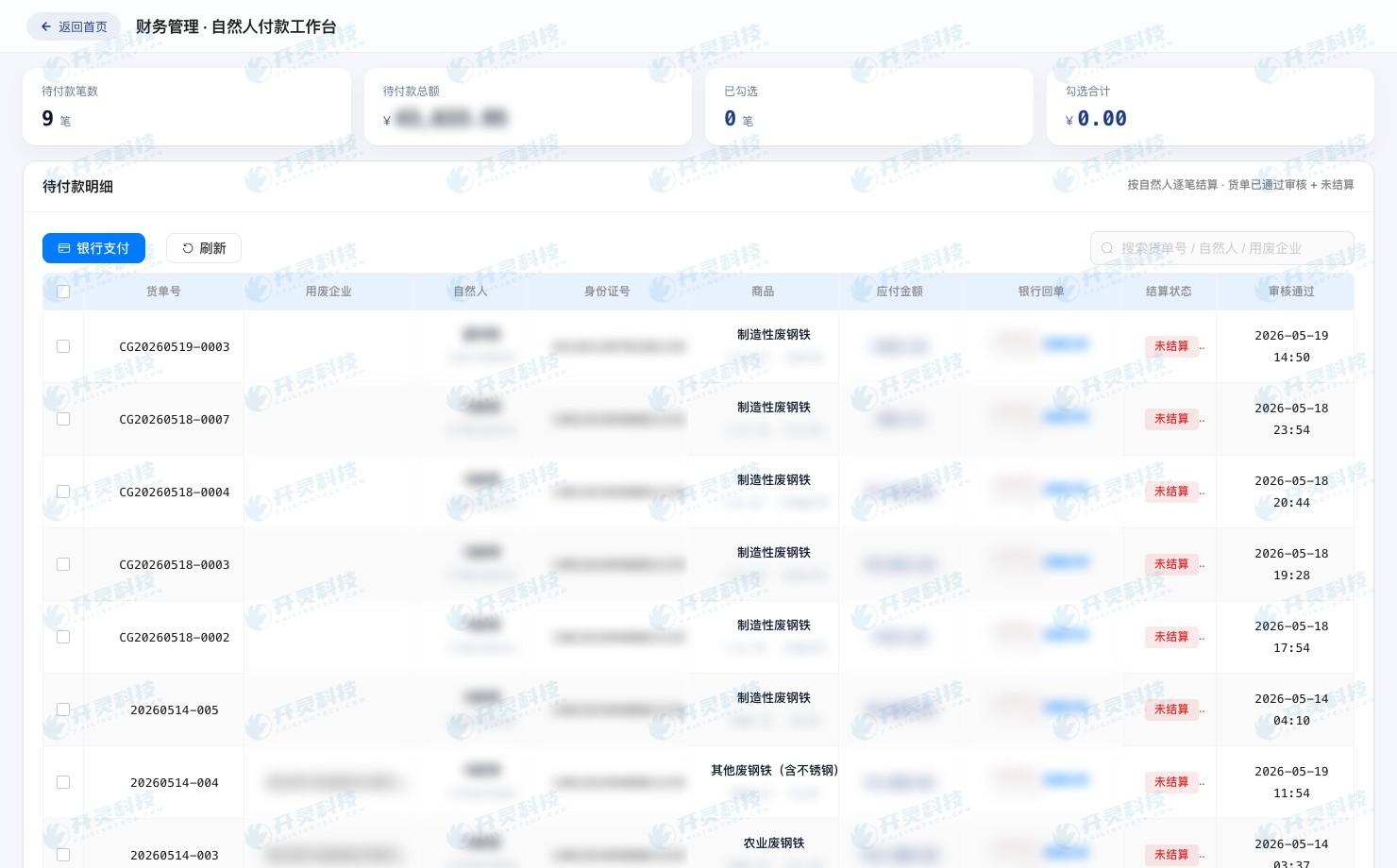
5 | Fund flow: bank-enterprise direct connection payment, eliminating cashThe payment step goes through the finance payment workbench and initiates payment directly through bank-enterprise direct connection—saying goodbye to cash transactions. Every payment has a bank receipt as fund evidence, and fund flow corresponds one-to-one with goods documents and invoices. Traceable fund flow is one of the strongest proofs that business truly occurred, and it is also the link most valued in inspections.
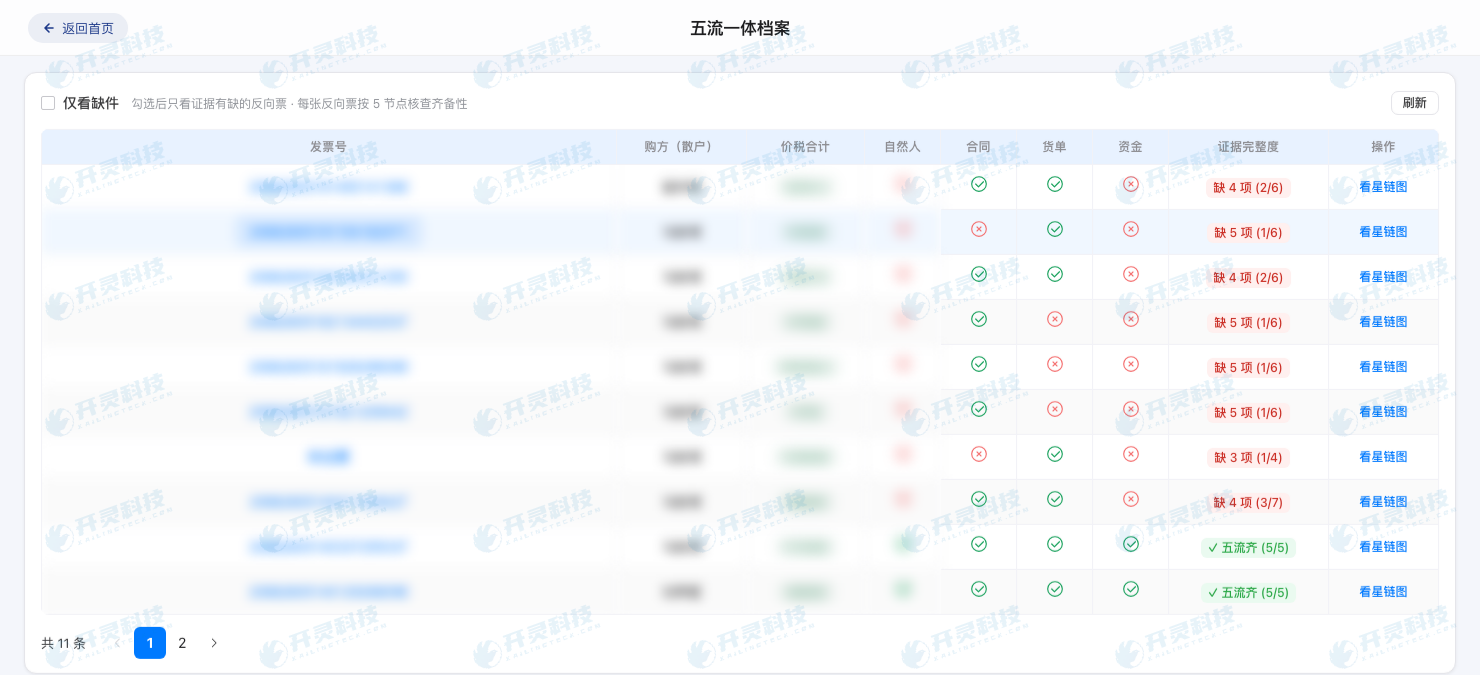
6 | Five-flow integrated archives: evidence completeness at a glanceOnce the five flows—self-certification, contract, business, tax, and funds—are complete, the system automatically consolidates them into a "Five-Flows-in-One Archive," with evidence completeness visualized—which transaction has all five flows complete and which is still missing items can be seen at a glance. When an audit comes, the complete evidence chain can be presented simply by retrieving the archive, resolving the long-standing difficulty of hard-to-trace ledgers.
Long unable to obtain input invoices when purchasing scrap steel, waste paper, and waste plastics? Welcome to Kailing Technology to learn about reverse invoicing and the five-flow integration compliant traceability solution: www.kailingteck.com. As a comprehensive business-finance-tax digitalization solution service provider, Kailing Technology provides business-finance-tax management digital transformation products and operational services for various government agencies, institutions, and large, medium, and small enterprises. The product line includes: Solutions for businesses including sales contract management system, procurement contract management system, fully digitalized Leqi interface project, output automatic invoicing system, reverse invoicing system, invoice issuance for individuals system, employee expense control and reimbursement system, input VAT invoice management system, supply chain collaborative reconciliation system, image OCR recognition system, automatic financial bookkeeping system, and electronic accounting archives system, comprehensively driving the digitalization process across various fields. If you have any business-finance-tax digital transformation needs, welcome to contact us. Beijing Kailing Technology will serve you wholeheartedly.
Keywords:reverse invoicing, renewable resource recycling, VAT input invoice, five flows in one, compliant traceability, scrap steel/scrap paper/scrap plastics, trade-in, No. 5 of 2024, Kailing Technology, business-finance-tax digitalization |