010-6097 4119Book a Demo


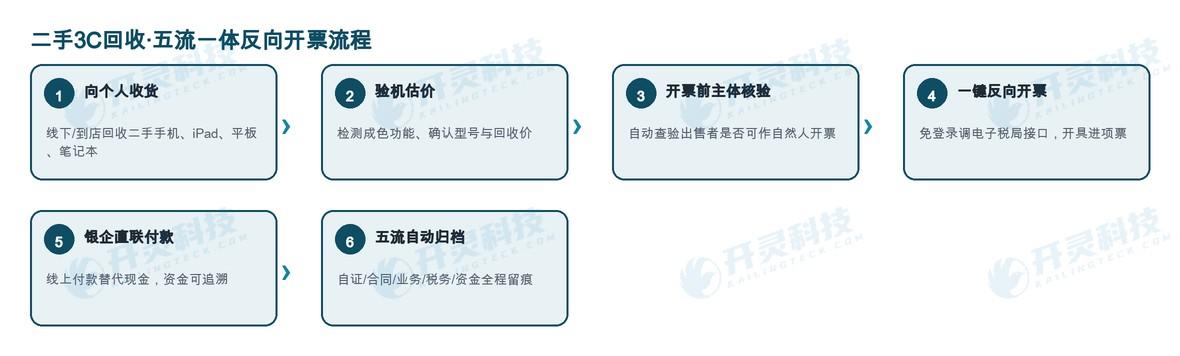
Recycling second-hand phones and iPads from individuals yields no input invoices? Kailing Technology's Five Flows in One reverse invoicing helps you obtain invoices compliantlyPublished: 2026-06-30 14:47 Second-hand 3C recycling enterprises recycle second-hand phones, iPads, tablets, and laptops from individuals and have long been unable to obtain input VAT invoices. The root cause is:The seller is a natural person who cannot issue special VAT invoices; the recycling enterprise pays cash but has no compliant input VAT voucher. The lack of input VAT causes profits to be eaten away by taxes, makes ledgers hard to trace, and creates high audit risk.The solution is clear — according to Announcement No. 5 of 2024 of the State Taxation Administration, resource recycling enterprises may issue "reverse invoices" to individual sellers;With Kailing Technology's five-flow integrated reverse invoicing system,After goods receipt and machine inspection, reverse invoicing is done with one click. Before invoicing, the seller entity is automatically verified, and the self-proof flow/contract flow/business flow/tax flow/fund flow are all traced throughout.
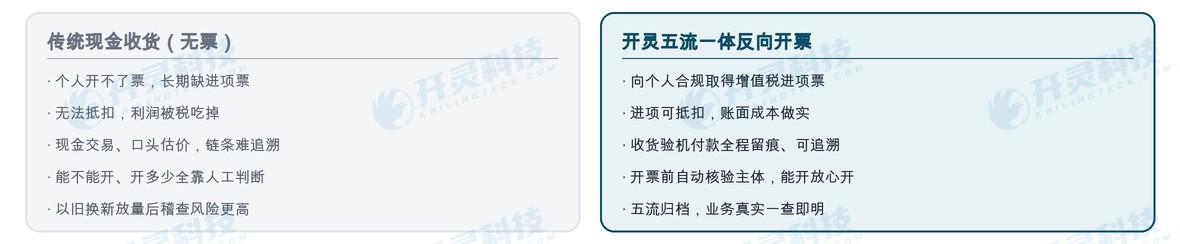
I. Why Can't Second-Hand 3C Recycling Always Obtain Input VAT Invoices?Second-hand phone, iPad, tablet, and laptop recycling relies heavily on individual small-scale sellers for supply. Unlike corporate suppliers, individual sellers are neither general taxpayers nor, in most cases, willing to go to the tax bureau to issue invoices on their behalf, so recycling enterprises fall into a long-term dilemma: goods are received and money is paid, but input VAT invoices cannot be obtained. Cannot issue invoices at the source:An individual selling old equipment is a sporadic transaction and will almost never proactively issue a VAT invoice; recycling enterprises often receive only a receipt or even no voucher at all. Missing input, profits eaten by taxes:Without input VAT invoices, input tax cannot be deducted, book costs cannot be substantiated, which amounts to paying tax on full gross revenue, and recovered profits are severely eroded. Hard to leave traces along the chain, high inspection risk:Cash receiving and verbal valuation, with each link from receiving to machine inspection to payment lacking verifiable written and fund records, make it very difficult to prove the authenticity of the business once an audit occurs. Entity compliance relies on manual monitoring:Which individuals can issue invoices and how much quota they can issue depends entirely on manual judgment by sales staff; issuing to the wrong target leads to subsequent tax supplements and penalties.
II. Reverse invoicing: enabling recycling enterprises to obtain input VAT invoices from individuals in a compliant wayThe policy basis for reverse invoicing is the "State Taxation Administration Announcement No. 5 of 2024" (effective from April 29, 2024):Enterprises engaged in resource recycling may issue "reverse invoices" to natural person sellers of scrapped products.Second-hand phones, iPads, tablets, and laptops fall under the framework of end-of-life/remanufactured products. After obtaining the corresponding qualifications, second-hand 3C recycling enterprises can issue reverse invoices to individual sellers, compliantly filling in the input VAT invoices that could not be obtained in the past. Simply put,In the past it was "the seller issues an invoice to the buyer"; reverse invoicing is "the recycling enterprise receiving the goods issues an invoice back to the individual seller", institutionally solving the problem that individuals cannot issue invoices, so that the input chain of recycling enterprises is no longer interrupted. Policies Are Still Being Continuously Optimized (Favorable Background) State support for reverse invoicing is still increasing. The "Announcement of the State Taxation Administration on Matters Concerning the Collection and Administration of Individual Income Tax" (No. 12 of 2026, issued on May 29, 2026,Effective July 1, 2026) further clarifies: for natural persons selling scrapped products to resource recycling enterprises through "three-flows-unified reverse invoicing", for the portion of annual sales (excluding VAT) not exceeding 600,000 yuan, the individual income tax prepayment rate on business income is reduced from 0.5% to 0.25%, and the recycling enterprise handles filing on behalf as required. This means individual sellers are more willing to cooperate with invoicing, and companies find reverse invoicing increasingly worry-free. It is worth noting thatThe minimum policy standard is the "three flows in one," while the Kailing system achieves "five flows in one" traceability, which is more complete than policy requirements and better able to withstand audit scrutiny. III. Trade-in programs drive a surge in recycling volume, and compliant invoice acquisition requires full-process traceability even moreA larger industry tailwind comes from consumer goods trade-ins. The Notice on Implementing the Large-Scale Equipment Renewal and Consumer Goods Trade-In Policy in 2026 (NDRC Environmental and Resources [2025] No. 1745, issued on December 30, 2025) specifies:In 2026, the consumer goods trade-in program will continue, with digital product subsidies expanded to mobile phones, tablets, smart watches (bands), smart glasses, etc., and 6 categories of home appliances including computers, with a unified national subsidy standard. Trade-in programs have exchanged massive numbers of old phones and old tablets out of consumers' hands,Old devices are accelerating into the second-hand 3C recycling market, and recycling volume is surging accordingly—this is precisely the window for second-hand 3C recycling companies to expand their business.But the larger the recycling volume, the more prominent the problems of missing input VAT invoices and profits being eaten away by taxes, and the demand for compliant invoice acquisition also rises accordingly. At the same time, Notice No. 1745 particularly emphasizes the need toStrictly crack down on subsidy fraud, subsidy arbitrage, and "price increases before subsidies" and other behaviors. This means regulators place higher requirements on the business authenticity of each link in recycling and subsidies. To walk steadily in this round of dividends, recycling enterprises must prove that "the goods were truly received, the price was truly paid, and the invoices were compliantly issued"—and this precisely relies on the full-process traceability of five flows in one. IV. Traditional cash receipt of goods vs. Kailing reverse invoicing: what's the difference?The same is true when recycling second-hand 3C devices from individuals: whether reverse invoicing is used and whether five-flow traceability is used makes the accounting results and compliance confidence completely different.
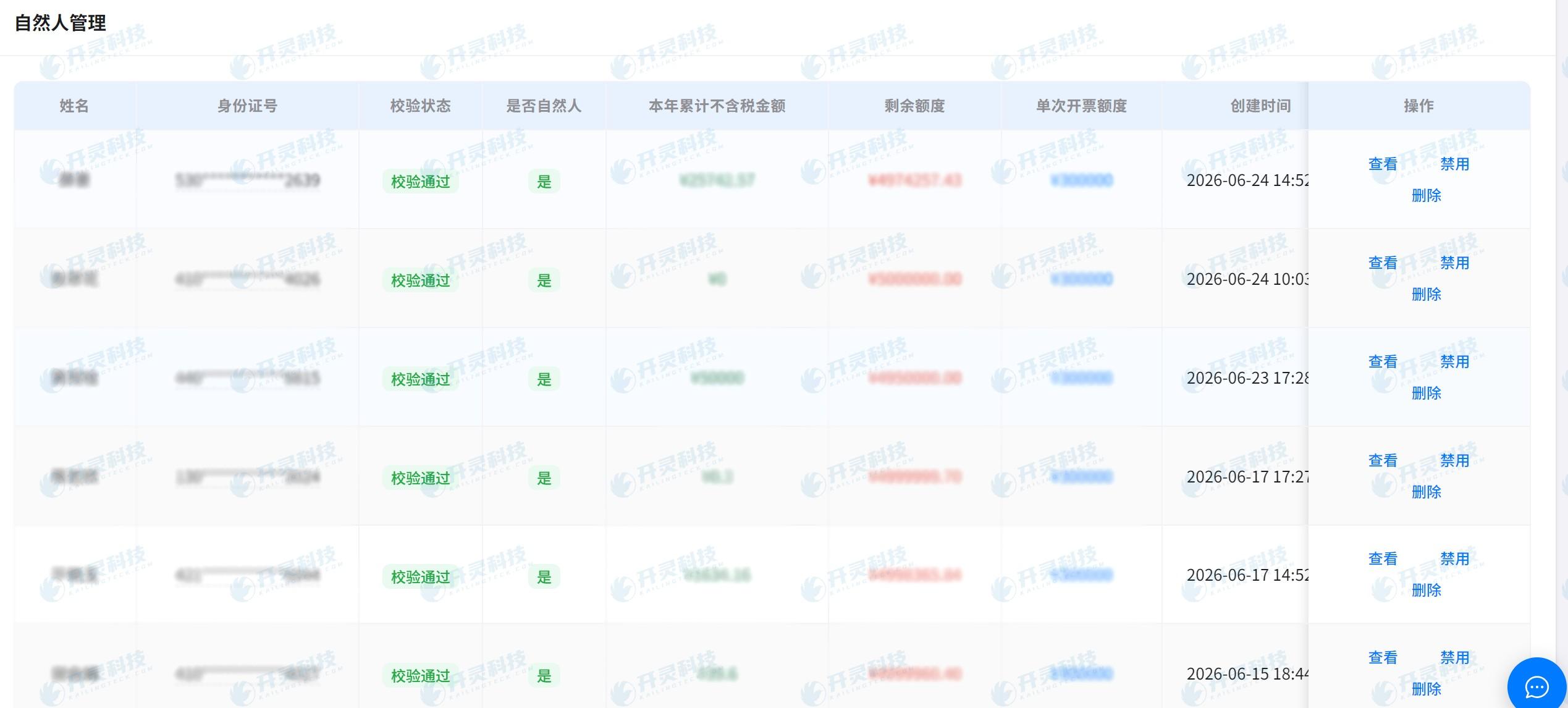
V. Kailing five-flow integration: full traceability from verification to payment (actual system screenshots)The Kailing reverse invoicing system turns every action in second-hand 3C recycling into verifiable data,Five flows in one: self-certification flow, contract flow, business flow, tax flow, and funds flow, this is more complete than the minimum requirement of the policy's "three-flow integration." Below, following the order of the invoice acquisition chain, see how each link in the system leaves a trace: Step 1: Individual supplier management — verify before invoicing, with controllable quotas The most common pitfall in reverse invoicing is "issuing to the wrong target." Before invoicing, Kailing automatically verifies the seller entity: legal representatives, directors/supervisors/senior managers (directors/supervisors/senior managers), and registered individual industrial and commercial households cannot be individual sellers for reverse invoicing, and the system automatically blocks them; annual/single invoicing quotas can also be set per individual, so what can be issued is issued with confidence and what cannot be issued is blocked in advance, avoiding tax recovery and penalties for issuing incorrectly.
Step 2: Contract records — electronic signing solidifies both purchase-sale and authorization In the goods receipt stage, through electronic signing + face-scan real-name verification, purchase and sale contracts and reverse invoicing authorization letters are signed online, the contract flow is traceable, and business authenticity is verifiable.
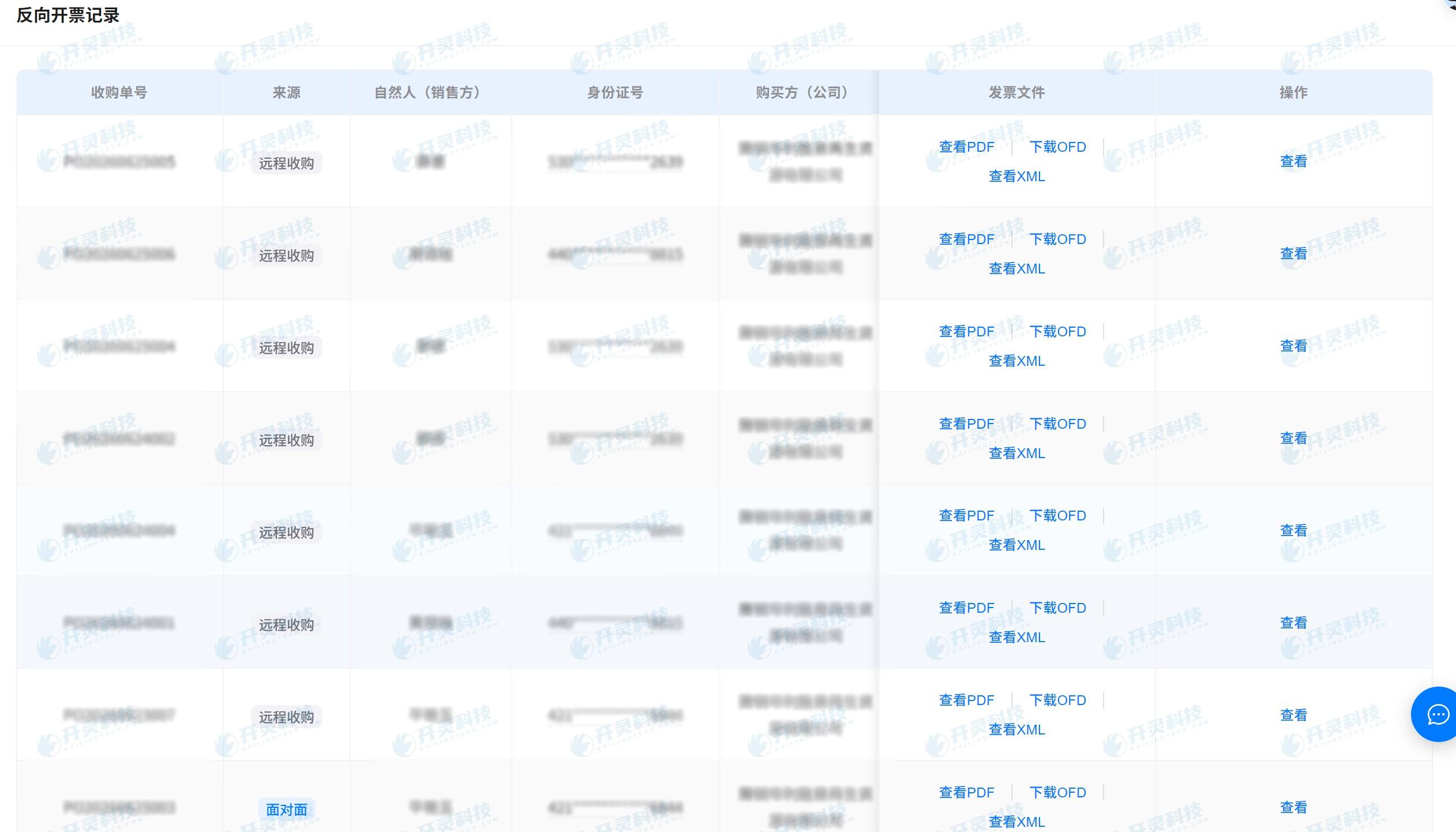
Figure 5 Contract records: electronic signing · purchase and sales contract + reverse invoicing authorization letter Step 3: Reverse invoicing records — one-click issuance, invoices downloadable in all formats Call Electronic Tax Bureau interfaces without login; after machine verification and valuation, one-click reverse invoicing and one-click reversal; invoice PDF/OFD/XML can be downloaded, the tax flow is fully traced, and input VAT invoices are compliantly recorded.
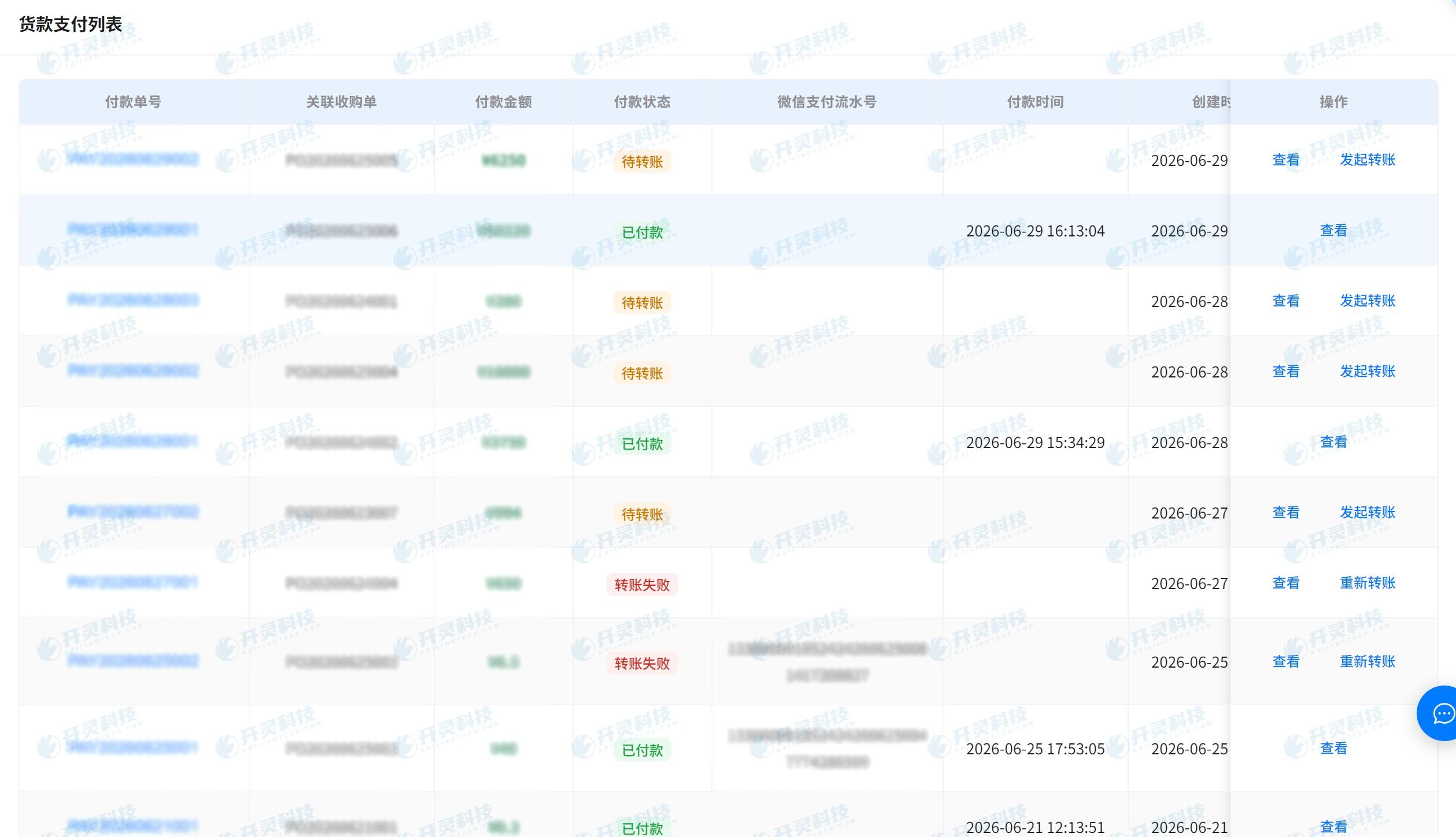
Step 4: Payment for Goods - Online Payment Replacing Cash, Traceable Funds Online payment via bank-enterprise direct connection replaces cash, with every collection payment having a corresponding record and the entire fund flow leaving a trail, forming a complete evidence chain together with the preceding four flows.
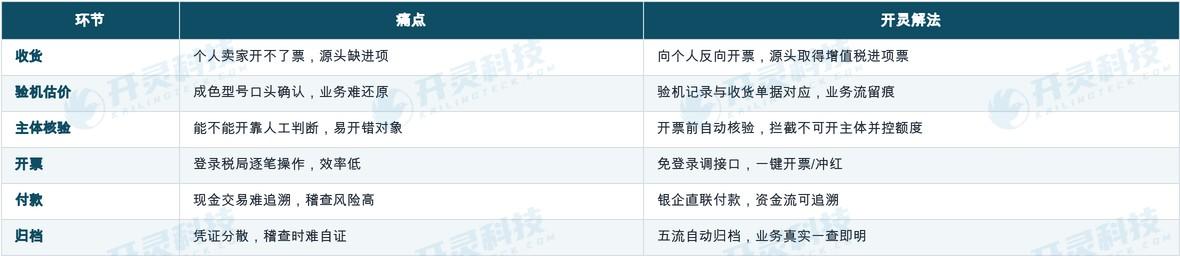
Six, Kailing has a corresponding solution for the pain points at every stageA certain second-hand mobile phone recycling chain previously mainly purchased goods with cash at stores. It collected thousands of used phones per month but could hardly obtain input invoices, resulting in inflated book profits and a heavy tax burden; a certain 3C digital recycling platform, due to online ordering and a long door-to-door recycling chain, often had its business authenticity questioned by tax authorities. After trade-in policies drove up recycling volumes, both types of enterprises used Kailing's five-flow integrated reverse invoicing to link goods receipt, device inspection, invoicing, payment, and archiving into a verifiable compliance chain.
Second-hand 3C recycling players who want to seize the trade-in dividend, compliantly obtain input VAT invoices, and keep the entire process from goods receipt to archiving traceable are welcome to learn about Kailing Technology's five-flow integrated reverse invoicing system: www.kailingteck.com . As a comprehensive business-finance-tax digitalization solution service provider, Kailing Technology provides business-finance-tax management digital transformation products and operational services for various government agencies, institutions, and large, medium, and small enterprises. The product line includes: Solutions for businesses including sales contract management system, procurement contract management system, fully digitalized Leqi interface project, output automatic invoicing system, reverse invoicing system, invoice issuance for individuals system, employee expense control and reimbursement system, input VAT invoice management system, supply chain collaborative reconciliation system, image OCR recognition system, automatic financial bookkeeping system, and electronic accounting archives system, comprehensively driving the digitalization process across various fields. If you have any business-finance-tax digital transformation needs, welcome to contact us. Beijing Kailing Technology will serve you wholeheartedly.
Keywords:reverse invoicing,Resource recycling reverse invoicing,Second-hand phone recycling, second-hand 3C recycling, VAT input invoices, five-flow integration, trade-in, natural person verification |