010-6097 4119Book a Demo


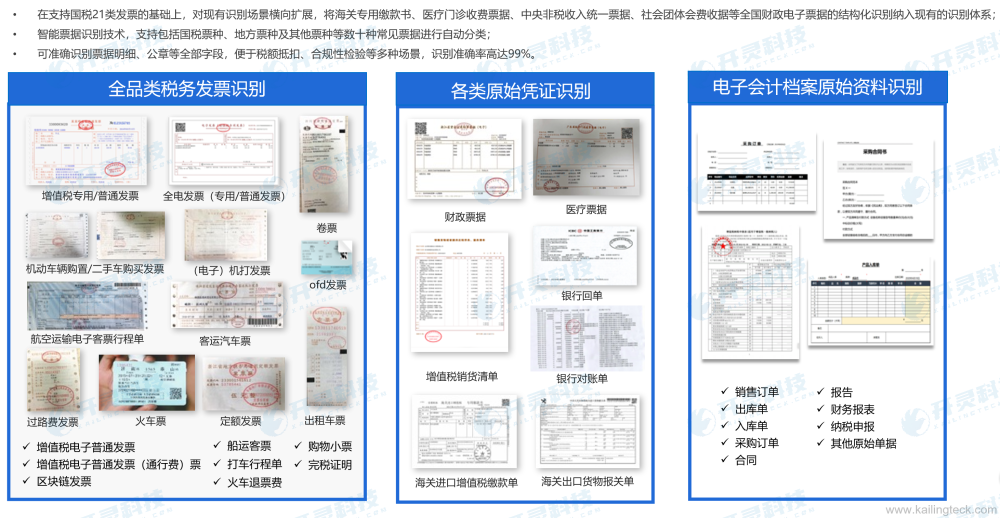
Kailing Technology OCR global receipt AI recognition extracts key information and combines it with internal enterprise processes to improve data flow efficiencyPublished: 2026-06-10 18:11 I. Invoice Entry: The Most Easily Overlooked Bottleneck in Enterprise ProcessesIn an enterprise's business processes, there is a type of work that happens in large volumes every day but is rarely confronted as an "efficiency problem"—manually entering information from paper documents into systems. During reimbursement, finance must enter the amount, tax number, and seller name item by item against the invoice; during procurement, they must check whether the three-party information of the goods receipt, invoice, and contract is consistent; in cross-border business, they must also translate foreign-language invoices from overseas suppliers before entry. These actions look simple, but processing each document takes a few to a dozen minutes. When an enterprise has to process thousands or even tens of thousands of documents per month, manual entry is no longer "a quick task," but a real process bottleneck—it slows reimbursement approval, slows procurement reconciliation, slows the financial month-end close, and also creates a large number of data errors caused by manual entry. What makes it worse is this: many enterprises don't lack good systems—ERP, OA, expense control, and archive systems are all in place—but the "entry point" for data is still stuck at manual input. No matter how advanced the system is, if the source data is typed in character by character by hand, the efficiency of the entire chain is locked down at the very first step. II. Recognition is not the goal; circulation is the valueThere are many OCR products on the market, but most stop at the level of "turning images into text." Once recognition is done, the result is handed to you as a block of text or an Excel sheet—how to use it afterward, how to connect it to business systems, how to enter the approval process—the enterprise must figure that out on its own. Kailing Technology's AI OCR is designed differently. Recognition is only the first step; the real value lies in:Let recognition results flow directly into enterprise internal processes and become structured data that can be circulated, verified, and archived. Simply put: scan an invoice, information is automatically extracted, automatically filled into the corresponding business form, and the next process is automatically triggered. No manual "transfer" action is needed in between. III. What Kailing Technology AI OCR Can RecognizeDomestic full-category business-finance-tax invoicesCovers 21 categories of national tax invoices and various local invoice types: VAT special and general invoices, fully digitalized e-invoices, machine-printed invoices, fixed-amount invoices, train tickets, flight itineraries, taxi receipts, toll fees, passenger bus tickets, shopping receipts, tax payment certificates, etc. Not just recognizing basic invoice information, but also extracting deep fields such as detail lines, invoice special seal content, consumption type labels, and passenger identity information. Accuracy rate above 99%. Financial write-off documentsBank receipts, customs declarations, customs import VAT payment slips, fiscal bills, medical bills, sales orders, purchase orders, inbound/outbound slips, financial statements, and more — these original vouchers that appear frequently in daily financial write-offs are all within the recognition scope.
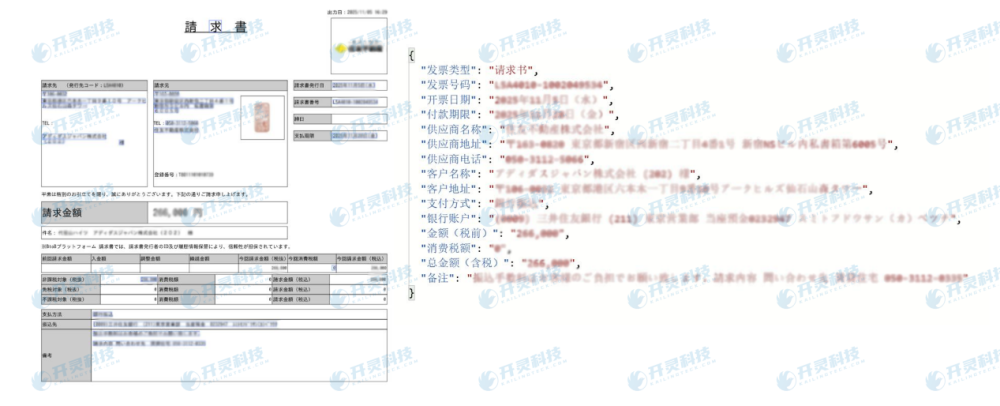
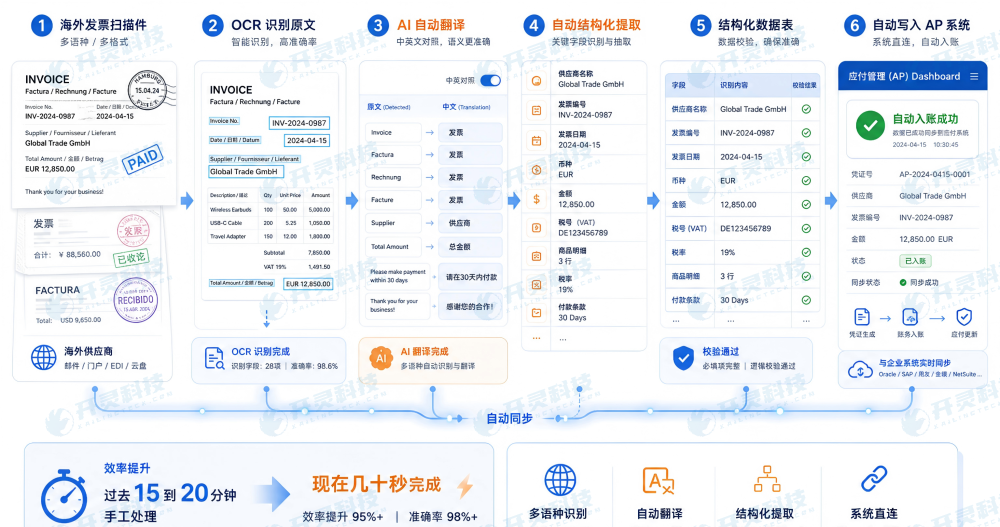
Overseas Multilingual DocumentsSupports multi-language receipt recognition including English, Japanese, Korean, Thai, and Vietnamese. The system first recognizes the original content, then automatically translates it into Chinese through AI semantic parsing, ultimately outputting structured data. For cross-border e-commerce, foreign trade enterprises, and manufacturers with overseas supply chains, this means no longer needing to manually translate overseas suppliers' invoices, receipts, and shipping documents one by one.
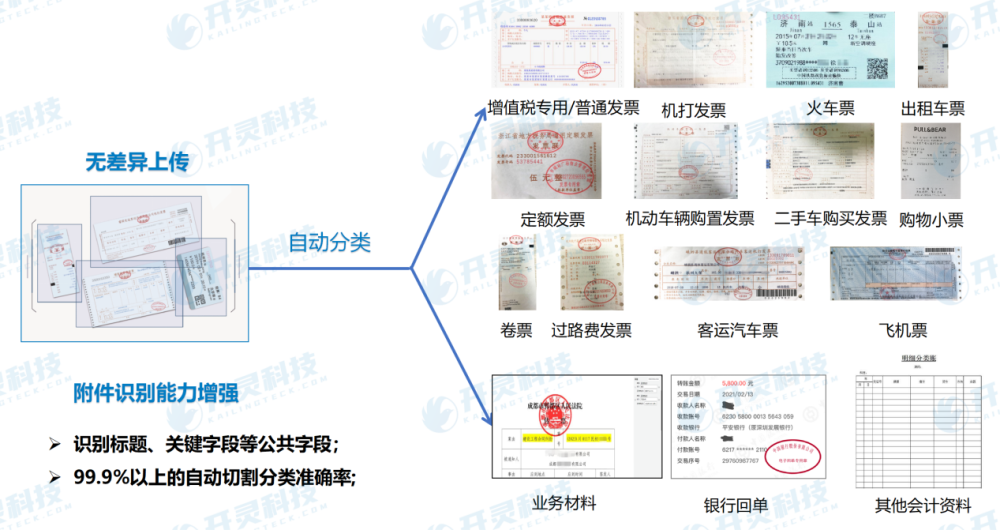
Automatic cutting of mixed-pasted invoicesIn actual financial scenarios, reimbursement personnel often paste multiple receipts on the same sheet of paper for scanning. Kailing Technology's AI model can automatically recognize boundaries, cut and separate them, classify each one, and then recognize and return them independently. This capability has been patented and supports processing of more than ten mixed pasted receipts.
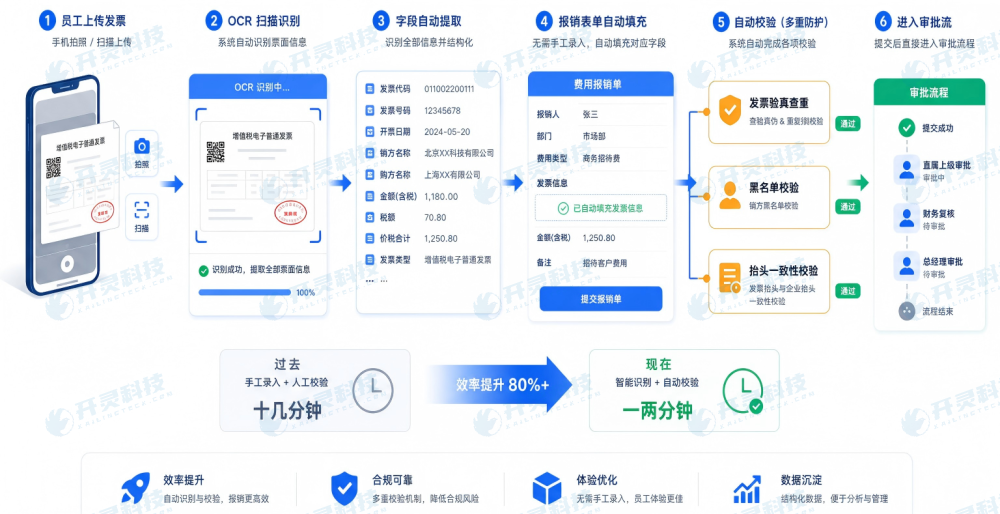
IV. How to integrate with internal enterprise processesNo matter how strong the recognition capability is, if it cannot connect with the enterprise's existing processes, it is just a "usable tool" rather than a "valuable system." The core value of Kailing Technology AI OCR lies precisely in that it is not an isolated product, but a foundational capability layer that can be embedded into various enterprise business scenarios. Embedded into the expense control reimbursement processAfter employees take photos or scan invoices, OCR automatically recognizes all information on the invoice face and automatically fills it into the corresponding fields of the reimbursement form. The system simultaneously completes invoice authenticity verification and duplicate checking, blacklist verification, and header consistency verification. Employees do not need to manually enter any content, and after submitting the reimbursement form it directly enters the approval flow. In the past, it took more than ten minutes to enter and submit an expense report; now it is shortened to one or two minutes.
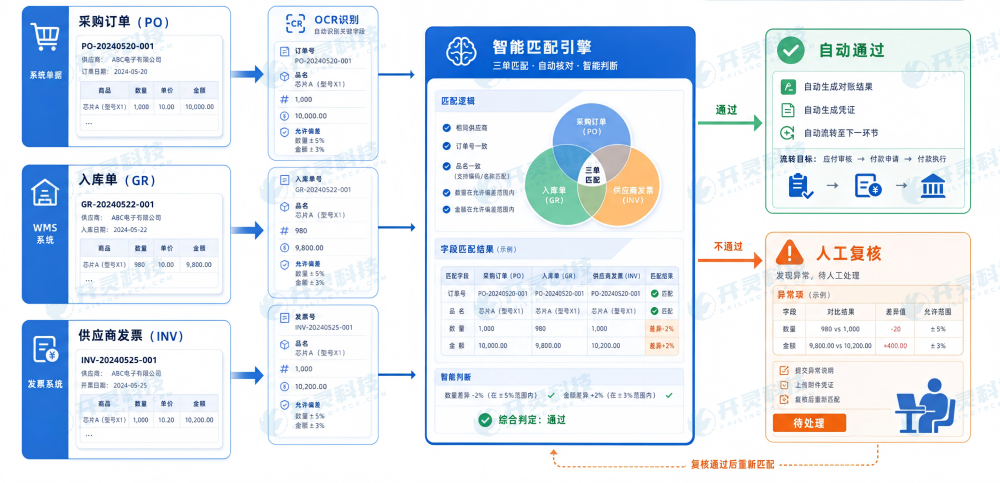
Embedded into the procurement reconciliation processIn procurement scenarios, enterprises need to check whether the 'purchase order—warehouse receipt—supplier invoice' three-way match is consistent. The traditional approach is for finance to manually compare amounts, quantities, and item names one by one. After OCR recognizes the three types of documents, the system automatically extracts key fields for intelligent matching: whether the order number corresponds, whether the item name and quantity are consistent, and whether the amount is within the allowed deviation range. Matches that pass are automatically circulated, and exceptions are flagged for manual review. Reconciliation work that previously took one person half a day is now completed by the system in a few minutes.
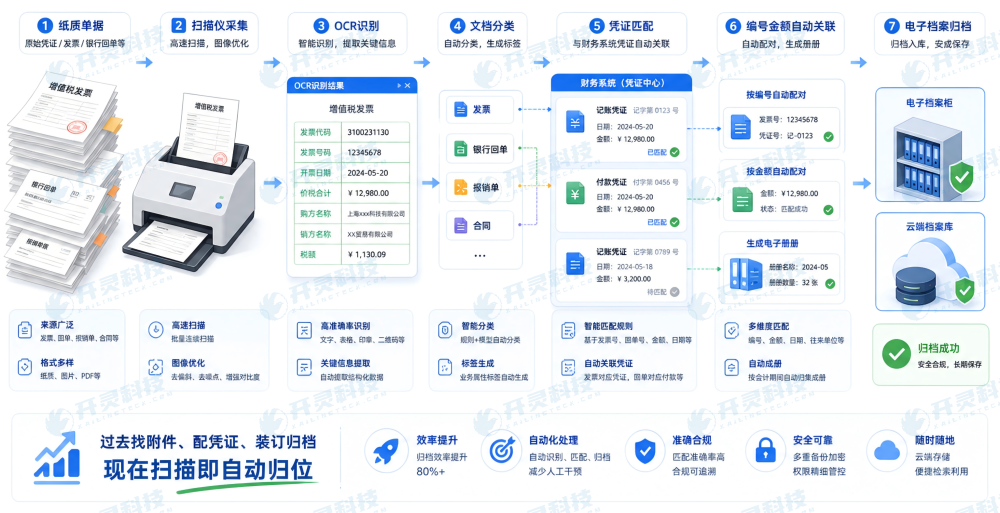
Embedded into electronic accounting archives archivingAfter paper original vouchers are scanned, OCR automatically recognizes and classifies them. The recognition results are automatically linked to accounting vouchers in the financial system—which invoice corresponds to which voucher, which receipt belongs to which payment—and the system automatically matches them into volumes based on numbers and amounts. The work that used to give finance the biggest headache—"finding attachments, matching vouchers, binding and archiving"—has become a matter of running documents through a scanner and letting the system automatically put them in place.
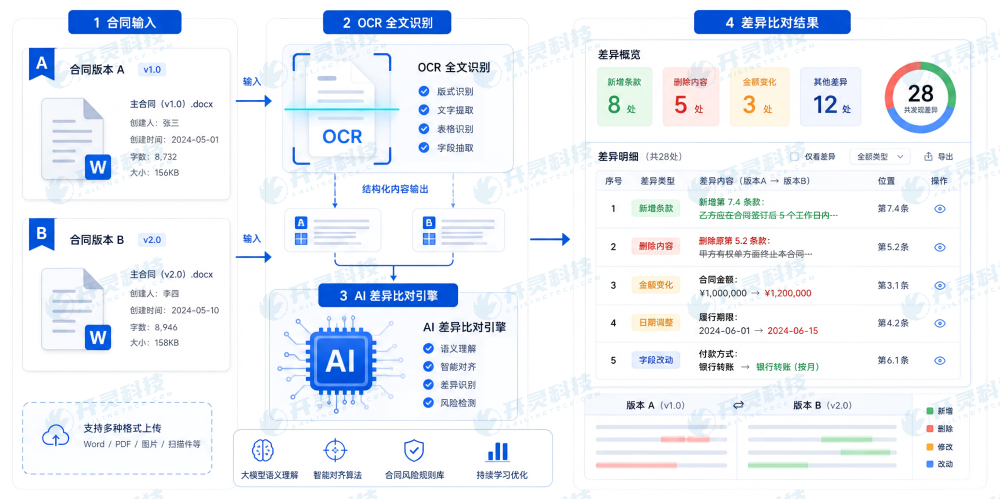
Embedded into the contract management processNeed to compare differences between two contracts? After OCR recognizes the full text, AI automatically marks modification points between the two versions—added clauses, deleted content, amount changes, date adjustments—at a glance. Legal and business teams no longer need to compare line by line and word by word manually.
Embedded into the cross-border financial processFor invoice scans sent by overseas suppliers, OCR recognizes the original text, AI translates into Chinese, and structured extraction of fields such as supplier name, amount, currency, tax number, and commodity details is automatically filled into the enterprise's accounts payable management system. In the past, cross-border finance teams spent 15 to 20 minutes manually processing each overseas invoice; now it is shortened to tens of seconds.
V. Several key points at the technical levelPrivate deployment, no data leakage. For industries sensitive to data security, such as finance, healthcare, and manufacturing, Kailing Technology supports fully private deployment of the OCR engine on the enterprise's own servers. All document data is processed on the internal network and does not pass through any external channel. Self-trainable AI models. If an enterprise has special document types (such as industry-specific documents, internal routing forms, etc.), it can use the annotation tools provided by Kailing Technology to train recognition models on its own. It supports multiple methods such as box selection extraction, table cell extraction, and regular expression extraction, with no coding required. Compatible with various input devices. Supports multiple image collection methods such as mobile phone photo capture, scanners, and document cameras, compatible with formats such as jpg, png, pdf, and ofd. No device restrictions, no scenario limitations. High-concurrency processing capability. Supports batch upload, batch recognition, and batch return. Enterprises with monthly processing volumes of 100,000 invoices can also run smoothly without queuing due to large volumes. VI. Efficiency Improvement Is Not an Abstract ConceptAfter embedding OCR recognition capabilities into enterprise processes, efficiency gains are reflected in every specific step: Reimbursement form entry time drops from 15 minutes to 2 minutes. Three-way matching in procurement goes from half a day of manual work to minute-level automation. Archiving goes from concentrated month-end overtime to daily automatic flow. Overseas receipt processing goes from 20 minutes per document to tens of seconds per document. These saved hours multiplied by thousands of invoices per month equals real human cost savings. More importantly, data accuracy improved from 95% for manual entry to over 99% for machine recognition—fewer errors mean less rework, fewer risks, and fewer audit issues. Invoice recognition is nothing new, but "what to do after recognition" is what truly determines value. Kailing Technology AI OCR is positioned not as a recognition tool, but as an accelerator for enterprise data flow. What it solves is not the question of "whether this invoice can be understood," but whether the information on this invoice can automatically, accurately, and instantly flow into the next business step. When the data entry point no longer relies on manual work, the efficiency of the entire business chain can truly be unleashed. If you would like to learn about the technical integration method of AI OCR recognition capabilities or apply for testing, welcome to consult Kailing Technology:https://www.kailingteck.com/ 。 Kailing TechnologyAs a comprehensive business-finance-tax digitalization solution service provider, we provide business-finance-tax management digital transformation products and operational services for various government agencies, institutions, and large, medium, and small enterprises. The product line includes: Sales contract management system, procurement contract management system, fully digitalized Leqi interface project, output automatic invoicing system,Reverse invoicing system,Solutions for the invoice issuance for individuals system, employee expense control and reimbursement system, input VAT invoice management system, supply chain collaborative reconciliation system, image AI OCR recognition system, automated financial bookkeeping system, electronic accounting archives system, and other businesses, comprehensively advancing the digitalization process across various fields. If you have any business-finance-tax digital transformation needs, welcome to contact us. Beijing KailingKailing TechnologyWe will serve you wholeheartedly.
#OCR Recognition #Image Recognition System #Invoice Recognition #Overseas Invoice Recognition #Global Invoice Recognition System #Paperless Office #Intelligent Finance #Digital Business-Finance-Tax |