010-6097 4119Book a Demo


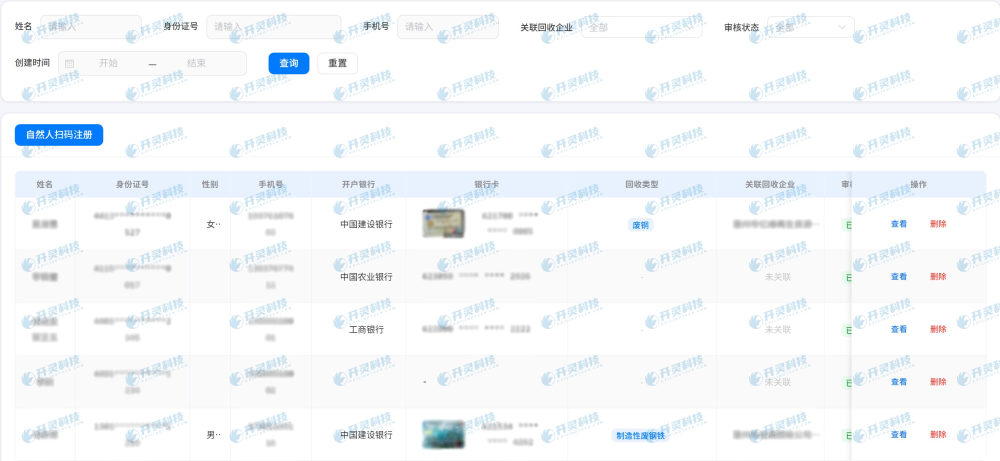
Steel plants, as waste-using enterprises, frequently receive tax investigation letters? Kailing Technology's five-flow-in-one reverse invoicing platform makes every scrap steel purchase stand up to penetrating verificationPublished: 2026-06-10 18:09 If you are the finance head of a steel plant that uses scrap steel as its main raw material, you are most likely no stranger to the words "investigation assistance letter." In recent years, the frequency of scrap-using enterprises receiving tax investigation letters has increased significantly. The reason is not complicated: the scrap steel procurement chain has long been a major disaster area for false invoicing. The upstream recycling segment is a mixed bag, with some enterprises fabricating transactions through "circular transfers" and "invoice passing," and the downstream endpoints of these false invoicing activities—scrap steel-using plants—often become the first stop for tax authorities to follow the trail. The logic of a tax investigation letter is straightforward: if one of your suppliers has been found to have problems, the tax authority needs to verify whether the transaction between you and this supplier is genuine. If you can produce complete business evidence proving the transaction indeed occurred, then you are a "good-faith acquirer" and losses are limited; if you cannot, you may be deemed to have "knowingly participated" or "failed to perform review obligations," with consequences including input VAT transfer-out, back taxes plus late fees, and in serious cases even a determination of false invoicing. The problem lies in: the scrap steel procurement management of many steel plants is indeed extensive. It is not that the transactions are untrue, but that real transactions lack systematic evidence retention. When the assistance investigation letter arrives, it is often too late to then dig through weighbridge tickets, find contracts, and retrieve payment receipts—either the materials are scattered everywhere and cannot be pieced together, or too much time has passed and the details do not match. I. What Is China Golden Tax Phase IV's Penetrating Verification Looking AtIn the past, tax audits were more about "spot-checking a few transactions to see whether invoices were real." The logic has now changed. Under China Golden Tax Phase IV, verification is "penetrating"—it does not just look at your link, but cross-compares multiple dimensions such as capital flow, goods flow, and invoice flow to verify the consistency of the entire chain. For steel plants using scrap, the tax authorities focus on comparing these sets of relationships: Whether invoices match weighbridge tickets. How many tons of scrap steel did you put into storage, and how much was the invoice amount? Converted at the current market price, do the numbers match? If the invoice amount far exceeds the market value corresponding to the actual inbound quantity, there is an anomaly. Whether the payment object and invoicing party are consistent. The invoice was issued by Company A, but was the money paid to Company A? If the funds flowed to Company B or a personal account, the authenticity of the transaction is questionable. Whether the logistics records support the flow of goods. Where was the scrap steel transported from? Is there any transport record? If the invoice shows 5,000 tons of scrap steel purchased from Shandong, but no logistics evidence can be found from Shandong to your factory, problems arise. Whether the transaction frequency and supplier scale are reasonable. A small company with registered capital of 100,000 yuan supplies you 30 million yuan of goods every month—such an obviously unreasonable transaction scale will be automatically flagged by the model. The frightening part of penetrating verification is that it does not require your invoice itself to have problems; as long as any of the above relationships does not match, it is enough to trigger a deep investigation. II. The real dilemma of steel plants: the transaction is real, but it is difficult to proveFor the vast majority of scrap steel plants, scrap steel procurement genuinely happens—the trucks really arrive, the weighbridge really records, and the goods really go into the furnace. But "real" and "able to prove it is real" are two different things. The traditional management approach for scrap steel procurement usually works like this: the weighbridge prints a thermal paper receipt, the driver signs, and finance uses the receipts and invoices for bookkeeping at month-end. Contracts may or may not exist (who signs contracts with individual suppliers?), logistics documents may or may not be kept, photos may or may not have been taken, and payment receipts are in the online banking system but not linked to any specific truckload of goods. This information is scattered among different people, different systems, and different time periods. Normally it seems fine, but once a mutual investigation letter arrives, finance must piece together all the evidence for certain transactions within a very short time—and often cannot assemble it completely. Not because the transaction is fake, but because "evidence management" has never been treated as a serious matter. III. Kailing Technology's Solution: Let Evidence Be Generated Automatically When Transactions OccurThe core value of Kailing Technology's five-flow-in-one reverse invoicing platform for scrap steel plants is not just "being able to invoice," but "being able to prove." The platform links every step of scrap steel procurement—from individual sellers entering the site to payment arrival—into a complete data chain. Each step is automatically traced and linked, ultimately forming an evidence package that can be retrieved at any time. 1. Supplier record creation: first get "who is selling" clearBefore the first supply, individual suppliers or small recyclers complete real-name file creation on the platform: facial scan authentication, ID card collection, bank card binding, and signing of an electronic procurement agreement and reverse invoicing authorization letter. The system automatically performs identity verification—confirming that the person is not a corporate legal representative, supervisor, senior executive, or sole proprietor, and confirming that the annual cumulative invoicing amount does not exceed 5 million. Non-compliant individuals are directly blocked and not allowed to enter subsequent processes. The value of this step lies in: when a tax investigation letter asks "Do you know who this supplier is," you can produce a complete identity file, contract records, and verification logs.
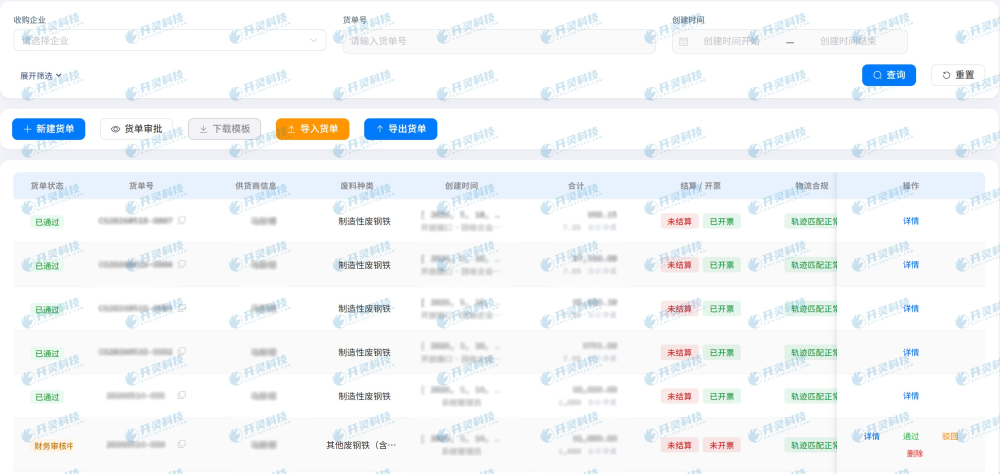
2. Weighing at plant entry: record "how the goods arrived"After a scrap steel transport vehicle enters the plant, the system records the license plate number, takes photos of the front and rear of the vehicle, and collects weighbridge ticket data (supporting direct connection to an electronic weighbridge ticket system for automatic capture). The quality inspection step records information such as scrap steel category, grade, and impurity ratio. Trucks of 12 tons or more support direct connection to the Beidou system to obtain transport trajectories; small vehicles support uploading paper logistics documents. These data are automatically bound to the transaction. When a tax investigation letter asks "Where was this batch of scrap steel transported from?" you have tracking, photos, weighbridge tickets, and timestamps.
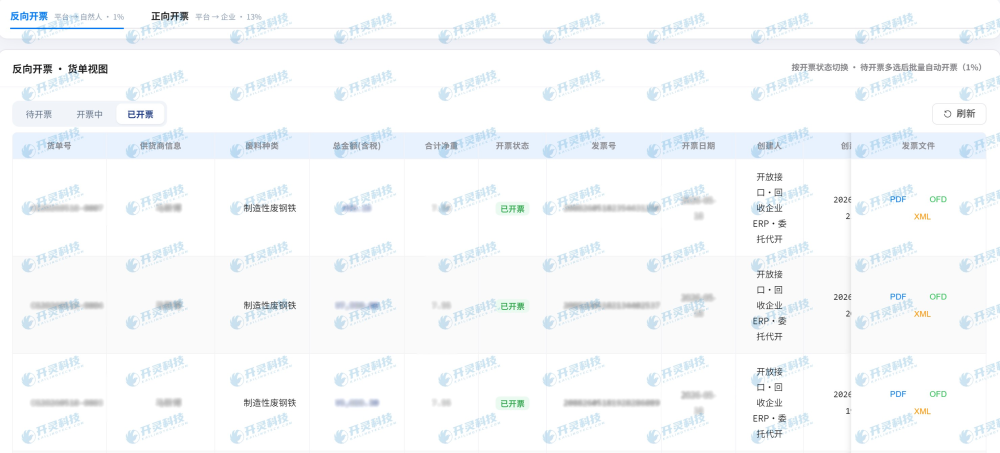
3. Reverse invoicing: Lock down "how the invoice is issued"After quality inspection passes and the settlement amount is confirmed, the system automatically triggers reverse invoicing. Directly connected to the electronic tax bureau interface, it issues fully digitalized e-invoices with the "scrap product purchase" label in login-free mode. Taxes and fees are automatically calculated and withheld. Invoicing amount = weighbridge ticket weight × agreed unit price, strictly consistent with the purchase order data. There is no situation where "the invoice face amount does not match the actual warehousing volume," because the data comes from the same source.
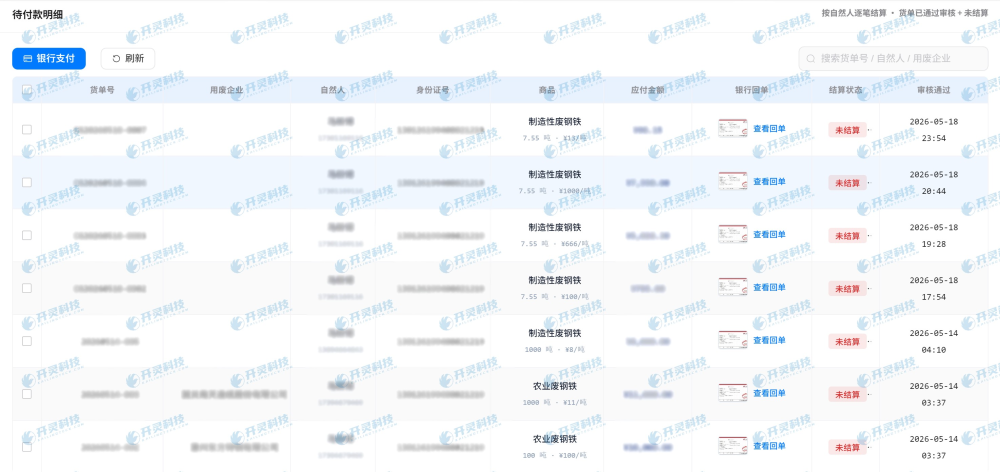
4. Payment closed loop: lock down "who the money is paid to"After invoicing is completed, the system triggers payment. Through bank-enterprise direct connection, the payment is transferred to the supplier's own bank card bound at the time of profile creation. The receipt is automatically returned and linked to this transaction. Payment object = invoicing object = contract signer = deliverer; the identities of all four are strictly consistent. There is no mismatch between fund flow and business flow.
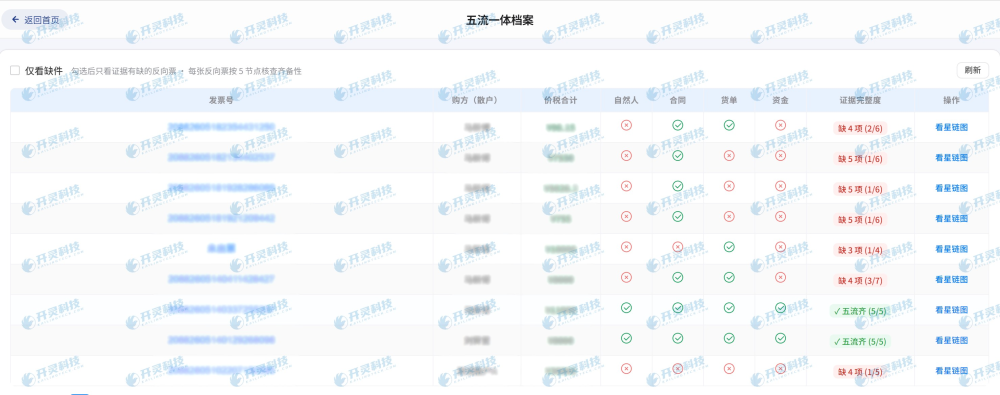
5. Five-flow archiving: one-click export when a verification letter arrivesEach transaction automatically forms a complete evidence package: electronic agreement + identity verification record + receipt (including weighbridge ticket, photos, quality inspection) + logistics trajectory + fully digitalized e-invoice source file + bank receipt. No matter what question the tax authorities ask, the system can provide the corresponding evidence within minutes. No need for finance to rummage through files, no cross-department coordination, no retroactive signing or recording.
IV. From "passively responding to inspections" to "active defense"Under the traditional model, steel plants' attitude toward assistance investigation letters is "deal with it when it comes"—passive response, hastily pieced-together materials, and the outcome depends entirely on luck. After accessing the Kailing Technology platform, the logic is reversed: a complete evidence chain is automatically generated at the moment each transaction occurs. Whether or not a joint investigation letter arrives, the evidence is there. If it comes, export it with one click to respond; if not, this data equally serves daily business management. What is more important is that the platform's built-in identity verification and quota control mechanisms reduce from the source the probability that enterprises "accidentally receive goods from problematic suppliers." When every supplier has passed real-name authentication and identity verification, and every transaction has a complete five-flow closed-loop record, tax authorities' trust in you will naturally increase — because your data can withstand penetration. Scrap steel plants using scrap frequently receive mutual investigation letters; the root cause is not that the enterprises themselves have problems, but that the historical non-compliance of the entire scrap steel procurement chain has branded the industry as "high risk." To remove this label, it does not rely on luck, but on proving in a systematic way that "every purchase of mine is authentic and verifiable". This is exactly what Kailing Technology's five-flows-in-one platform does: let evidence be naturally generated during transactions, make compliance a daily routine, and make the arrival of a cooperative investigation letter no longer an emergency firefight, but a calm retrieval of information. To learn more about the reverse invoicing solution for waste-using enterprises or to book a system demo, please consult Kailing Technology:https://www.kailingteck.com/h-col-127.html 。 As a comprehensive business-finance-tax digitalization solution service provider, Kailing Technology provides business-finance-tax management digital transformation products and operational services for various government agencies, institutions, and large, medium, and small enterprises. The product line includes: Solutions for businesses including sales contract management system, procurement contract management system, fully digitalized Leqi interface project, output automatic invoicing system, reverse invoicing system, invoice issuance for individuals system, employee expense control and reimbursement system, input VAT invoice management system, supply chain collaborative reconciliation system, image OCR recognition system, automatic financial bookkeeping system, and electronic accounting archives system, comprehensively driving the digitalization process across various fields. If you have any business-finance-tax digital transformation needs, welcome to contact us. Beijing Kailing Technology will serve you wholeheartedly.
#Reverse Invoicing Solution #Reverse Invoicing System #Resource Recycling Enterprise Reverse Invoicing Solution #Agricultural Product Procurement Reverse Invoicing Solution #Digital Business-Finance-Tax |