010-6097 4119Book a Demo


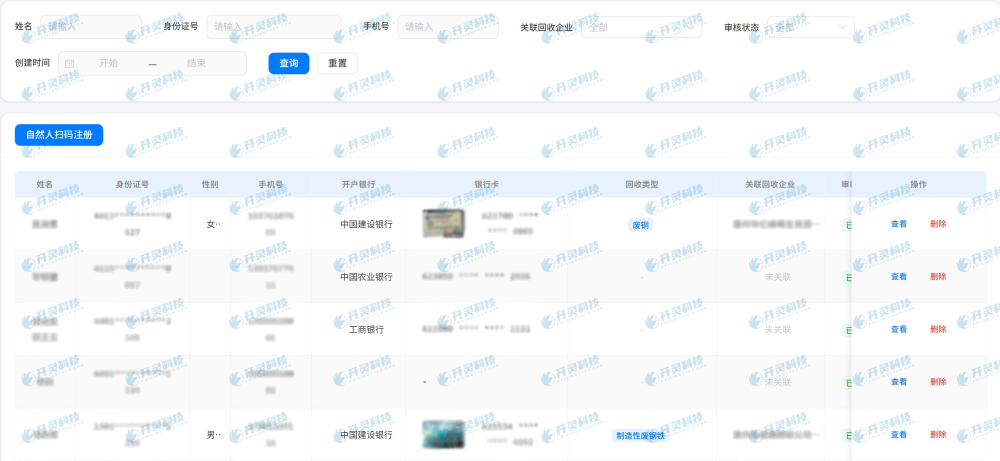
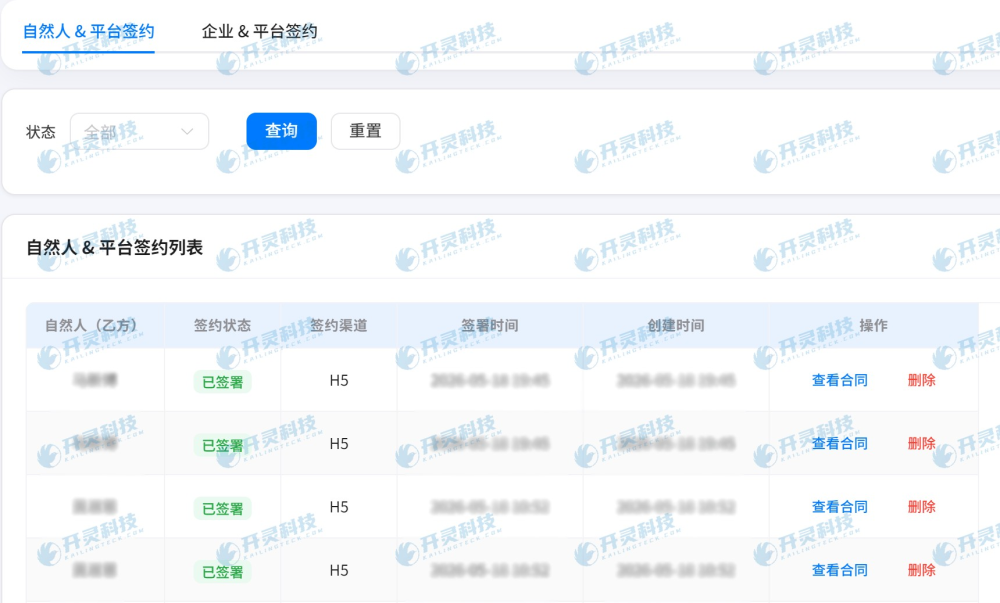
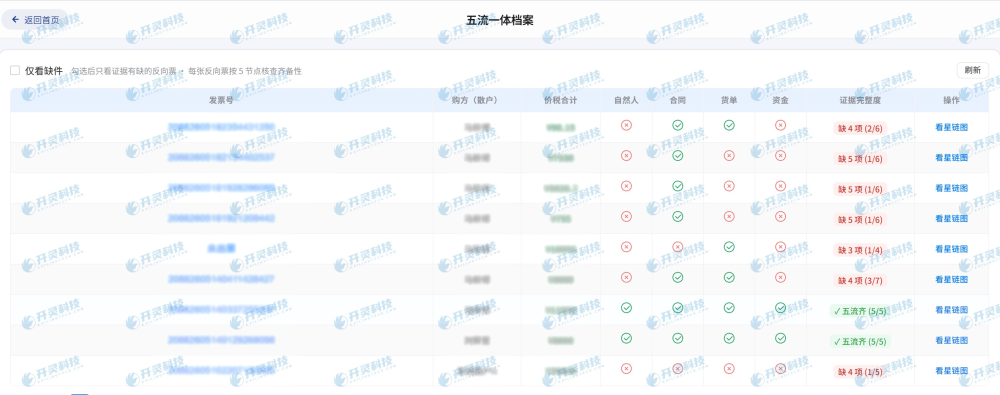
In the scrap resource recycling industry, how to ensure "five flows integrated compliant reverse invoicing"; Kailing Technology's solution supports the digital transformation of the circular economyPublished: 2026-05-19 16:30 I. Reverse invoicing is not difficult; what is difficult is proving "this transaction is real"After resource recycling enterprises obtain reverse invoicing qualifications, many assume the problem is solved—they can now issue purchase invoices to individual sellers themselves, input tax is available, and the tax burden is reduced. But after actually operating for a period of time, you will find that invoicing itself is only the final step. What the tax bureau really cares about is not "whether you issued an invoice," but "on what basis are you issuing this invoice." The audit logic of China Golden Tax Phase IV has upgraded from "checking invoices" to "checking chains." Behind a reverse invoicing purchase invoice, tax authorities will ask: Where is the purchase agreement? Who delivered the goods? How were they transported? Do the weighing data and invoice amount match? To whom was the money paid? Is the payment account the same as the invoicing entity? If these questions cannot be answered, or the data across each stage does not match, this invoice may be determined to be "unreal business," with consequences equivalent to false invoicing. So the compliance essence of reverse invoicing is not "invoicing", butBuild a complete, verifiable evidence chain in which all stages corroborate one another. Kailing Technology defines this chain as "five flows in one"—contract flow, business flow, logistics, tax flow, and capital flow, with the five lines fully closed within the same transaction. II. Kailing Technology solution: five-flow integrated compliant reverse invoicingFirst flow: Contract flow — the legal anchor of the transaction relationshipThe starting point of every purchase transaction is the establishment of a clear legal relationship between the enterprise and the individual seller. Before individual sellers make their first delivery, Kailing Technology's system completes the signing of two core documents: Resource Recycling Agreement: Clarify commercial terms such as purchase category, pricing method, settlement cycle, and quality standards. Consent Certificate for Reverse Invoicing and Tax Payment on Behalf: The individual explicitly authorizes the enterprise to issue purchase invoices on their behalf and handle tax payment, which is the legal prerequisite for reverse invoicing. Three signing methods are supported: electronic signature (connected to third-party electronic contract platforms), online handwritten signature, and photo upload of paper contracts. Before signing, individual sellers need to complete face-scanning real-name authentication. The system automatically collects the front and back of the ID card and bank card information, and performs identity verification — confirming that they are not a legal representative, supervisor, senior executive, or individual industrial and commercial household. After contract signing is completed, the individual profile of the retail customer is established: identity information, bank account, contract number, and the starting value of the 5 million annual quota are all entered into the database. Each subsequent transaction can directly reuse them without repeated signing.
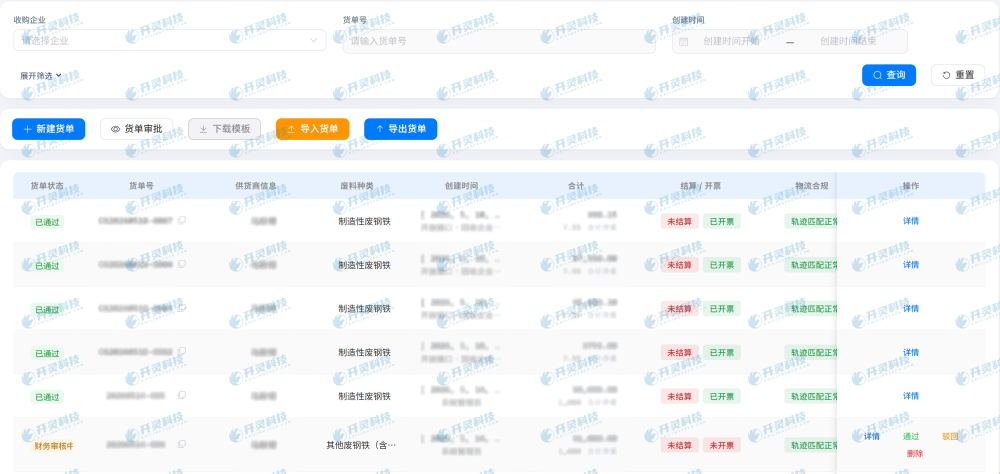
Second flow: Business flow — factual records of the transaction processGoods move from individual sellers to enterprise warehouses, and all business documents generated in this process constitute the core evidence of transaction authenticity. Delivery Note: The individual creates it in the system before delivery (or the enterprise creates it on their behalf), recording category, estimated weight, and license plate number. At this step the system automatically verifies the individual's cumulative annual invoicing quota and blocks it if it exceeds 5 million. Goods receipt note (including weighbridge ticket): After goods arrive, they are weighed; weighbridge ticket data can be entered manually or automatically captured via direct connection to the electronic weighbridge system. Photos of the front and rear of the transport vehicle and actual photos of the goods are taken simultaneously and bound to the transaction. Quality inspection sheet: Inspect and grade goods quality to determine the final pricing grade. The system supports setting random assignment rules for quality inspectors to prevent fraud risk from fixed personnel dealing with the same individual over the long term. Settlement statement: Automatically generate the settlement amount based on weighbridge weight × agreed unit price, and enter the approval process. These four documents are automatically linked in the system, forming a complete business record from "goods entry" to "amount confirmation." Any missing or contradictory data at any step will be flagged with an alert in the system.
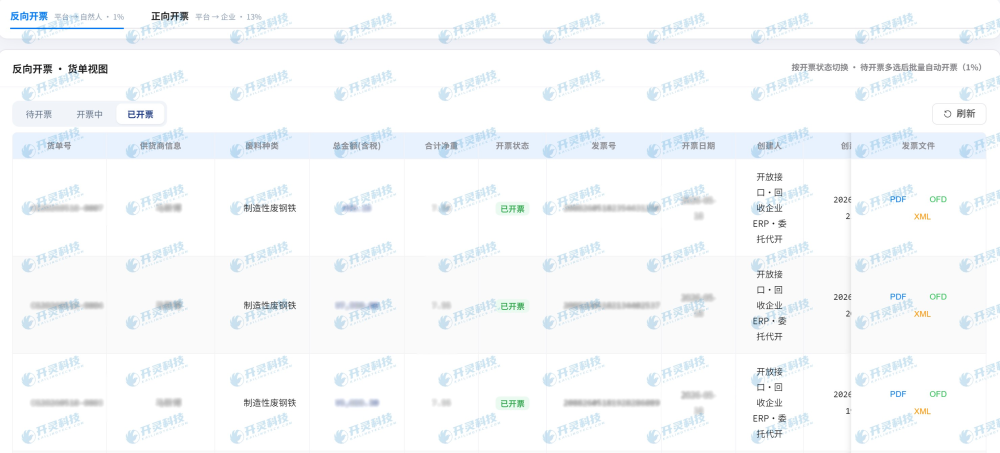
Third flow: Logistics — spatial evidence of the transportation stageIn tax audits, "whether goods are actually transported" is an important dimension for determining transaction authenticity. One typical feature of false invoicing is "invoices without goods"—invoices were issued but the goods never physically moved. Kailing Technology's system provides two methods of logistics evidence collection: Automatic acquisition of Beidou trajectory: heavy trucks of 12 tons or more are required by national regulations to install Beidou GPS systems. The system can directly connect to the Beidou platform to obtain transport trajectory data and automatically associate it with the corresponding delivery note. Upload of paper logistics documents: For small transport vehicles (under 12 tons), support photo upload of paper transport documents as supplementary evidence. The value of logistics data lies in this: it can prove from the spatial dimension that "this batch of goods was indeed transported from point A to point B," forming cross-verification with the timestamp and license plate number on the weighbridge ticket. The Fourth Flow: Tax Flow - The Compliance Loop of Invoice IssuanceThe most core link among the five flows. After settlement approval is passed, the system automatically completes the entire reverse invoicing process: Quota verification: Query in real time the individual's cumulative invoicing amount for the current year, confirming it does not exceed the 5 million cap. Automatic invoicing: Directly connect to the Electronic Tax Bureau interface, with no manual login required; the system invokes invoicing capabilities in login-free mode and automatically issues fully digitalized e-invoices labeled "scrap product acquisition". Automatic tax and fee calculation: VAT = tax-exclusive sales amount × 1% Urban construction tax = VAT × 5% Education surcharge = VAT × 3% Local education surcharge = VAT × 2% Individual income tax prepayment = tax-exclusive sales amount × 0.5% (enterprise agency service, filed the following month) Red-flush reversal support: In case of returns or amount adjustments, the system supports one-click initiation of the negative invoice (red-offset) process, also without logging in to the electronic tax bureau. Source file archiving: The source files of invoices in PDF, OFD and XML formats are automatically downloaded and saved, meeting the management requirements of electronic accounting archives.
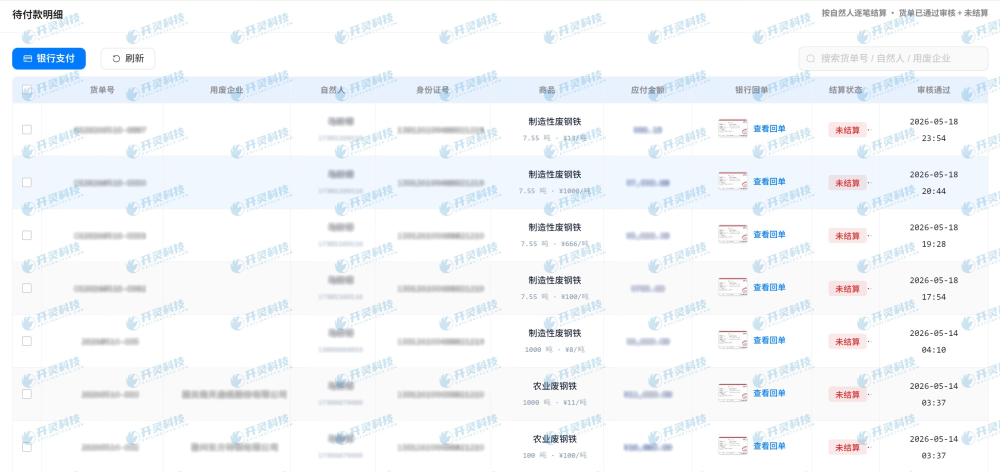
Fifth flow: Fund flow—the destination of money must be clearChina Golden Tax Phase IV's monitoring of capital flows is unprecedented. The comparison of bank statements with invoice information is one of the basic logics of tax early warning models. Kailing Technology's system provides two modes at the payment stage: Automatic payment via bank-enterprise direct connection: After settlement approval and invoicing are completed, the system automatically triggers a bank transfer, with payment directly reaching the bank card bound by the individual seller. The bank receipt is automatically returned and linked to the transaction. It is recommended to use a China Merchants Bank general account (free interface), dedicated account for dedicated use, with clear and auditable fund flows. Offline payment + receipt upload: For enterprises that have not yet enabled bank-enterprise direct connection, support manual upload of bank receipts after offline transfer, with the system automatically matching them to the corresponding transaction. Whichever method is used, the final effect achieved is:Payment object = invoicing object = contract signer = deliverer, the identities of the four are consistent, and the fund flow fully matches the business flow.
III. Management upgrade after closure of the five flowsWhen the five flows are automatically collected under the same transaction in the system, the enterprise gains not only compliance protection but also an overall leap in management capability: Audit response: For any transaction, retrieve the complete evidence package with one click — contract, delivery note, weighbridge ticket, quality inspection sheet, vehicle photos, logistics trajectory, invoice, bank receipt. Whatever the tax authority asks for is available, and response time changes from "rummaging for three days" to "exporting from the system in three minutes". Individual supplier profile: Each individual seller's transaction frequency, cumulative amount, category preferences, and quota usage progress are clear at a glance. Enterprises can use this to optimize procurement strategies, identify high-quality supply sources, and anticipate quota bottlenecks. Financial efficiency improvement: Invoicing is no longer finance's work but a natural product of business processes. The finance team is freed from "chasing invoices, supplementing invoices, and reconciling" and shifts to cost analysis and tax planning. Eliminate cash black holes: All transactions are completed through bank transfers, with cash transactions reduced to zero. Fund flows are transparent and traceable, which both reduces on-site management risks and provides clean transaction records for enterprise financing.
State policy support for the circular economy continues to increase, but the premise of support is "transparent operation." The introduction of the reverse invoicing policy essentially gives the resource recycling industry a proper path for compliant operation. The threshold for taking this path is not high—the policy is already in place, and the technology is already mature. What Kailing Technology does is turn "five flows in one" from a management concept into an out-of-the-box system capability, enabling every recycling enterprise to run compliance through, run it smoothly, and run it profitably without adding extra manpower. Kailing Technology will join hands with the entire industry, taking compliance as the cornerstone and technology as the engine, to jointly promote the standardized and intensive development of the renewable resource industry and share the dividends of circular economy development:https://www.kailingteck.com/h-col-127.html 。 As a comprehensive business-finance-tax digitalization solution service provider, Kailing Technology provides business-finance-tax management digital transformation products and operational services for various government agencies, institutions, and large, medium, and small enterprises. The product line includes: Solutions for businesses including sales contract management system, procurement contract management system, fully digitalized Leqi interface project, output automatic invoicing system, reverse invoicing system, invoice issuance for individuals system, employee expense control and reimbursement system, input VAT invoice management system, supply chain collaborative reconciliation system, image OCR recognition system, automatic financial bookkeeping system, and electronic accounting archives system, comprehensively driving the digitalization process across various fields. If you have any business-finance-tax digital transformation needs, welcome to contact us. Beijing Kailing Technology will serve you wholeheartedly.
#Reverse Invoicing Solution #Reverse Invoicing System #Resource Recycling Enterprise Reverse Invoicing Solution #Agricultural Product Procurement Reverse Invoicing Solution #Digital Business-Finance-Tax |