010-6097 4119Book a Demo


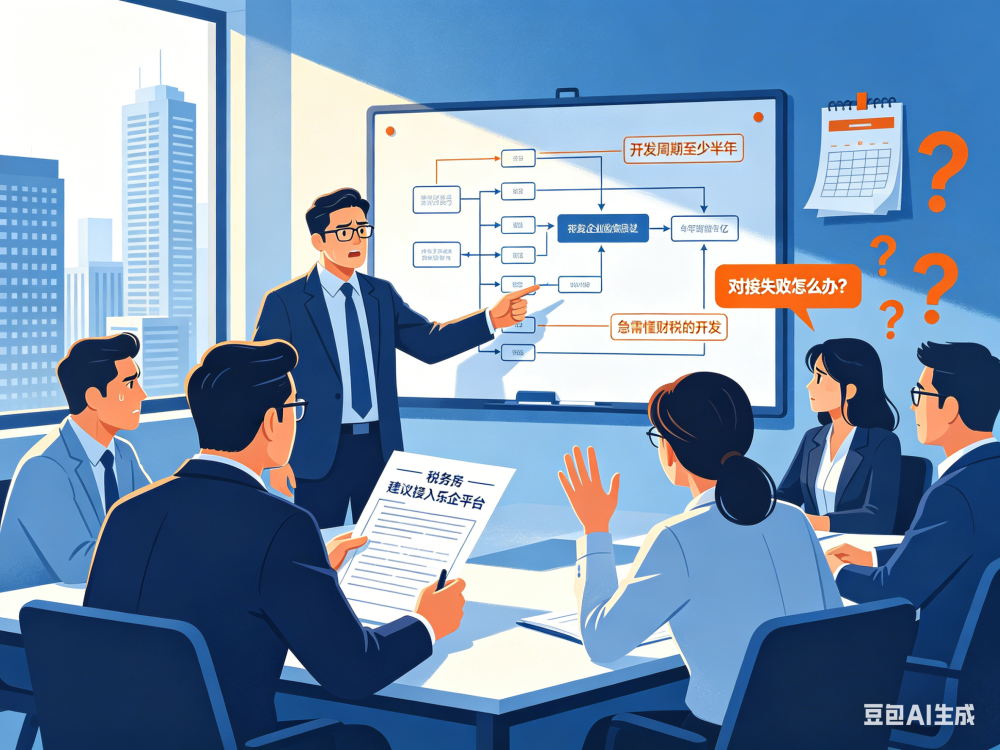
Where is the difficulty in fully digitalized Leqi platform connection? Kailing Technology provides a full-package service of application guidance + technical integration + sandbox testingPublished: 2026-05-12 16:05 A real decision-making scenarioYou are the finance lead of a group enterprise with annual revenue exceeding 100 million. The tax bureau has notified you: it is recommended to connect to the Leqi platform as soon as possible. You had the IT department evaluate it, and the feedback was: "We can understand the API documentation, but the development cycle is at least six months, and we'd need to hire two developers who understand business-finance-tax operations." You also asked the finance team, and the answer you got was: Logging in to the electronic tax bureau every day to issue invoices manually is indeed slow, but what exactly can Leqi help us solve? What if the integration fails and affects normal invoicing? This is the real state of most companies when facing Leqi—You know you need to do it, but you're not sure how, who should do it, how long it will take, or how much it will cost.
The six "unexpected things" of Leqi integrationMany enterprises only discover after launching a Leqi project that the real difficulty is not "getting one interface to work," but a series of unexpected complexities: I didn't expect there to be so many application materials. Leqi access is not just a matter of filling out a form. It requires preparing a complete application main document, technical plan, security commitment, equity relationship proof, etc., and also multiple rounds of communication and confirmation with the tax bureau. Many enterprises spend two or three months just preparing materials. I didn't expect validation rules to be so detailed. The Leqi interface only returns "failure" for parameter passing errors and does not tell you where the error is。Red-letter invoice, blue-letter invoiceVerification rules are complex.Mismatches between tax codes and tax rates, incorrect remark formats, detail lines exceeding limits… any one of these can block invoicing, and troubleshooting is extremely time-consuming. I didn't expect to have to create the layout files myself. After successful invoicing, Leqi only returns raw XML data. PDF and OFD invoice layout files need to be synthesized by the enterprise itself—including pagination logic for multi-page details and special layout for negative red invoices—which is itself an independent development project. I didn't expect sandbox testing to be given only 72 hours. After each capability application is approved, all test cases must be run within 72 hours. Overtime means reapplying and requeuing. For teams without a ready-made test environment, this time window is almost impossible to pass in one attempt. I didn't expect such big differences between invoice types. Special VAT invoices, general VAT invoices, electronic invoices, and invoices with specific elements (such as refined oil, construction services, passenger transport, etc., more than 20 types) — each invoice type has different verification logic, layout templates, and process parameters, which means each invoice type must be developed anew. I didn't expect subsequent upgrades to be the norm. The Leqi Platform itself continues to iterate, with new invoice types, rule changes, and interface version upgrades occurring from time to time. Enterprises need to continuously invest manpower to follow up on compatibility, otherwise the system may be unable to issue invoices at any time.
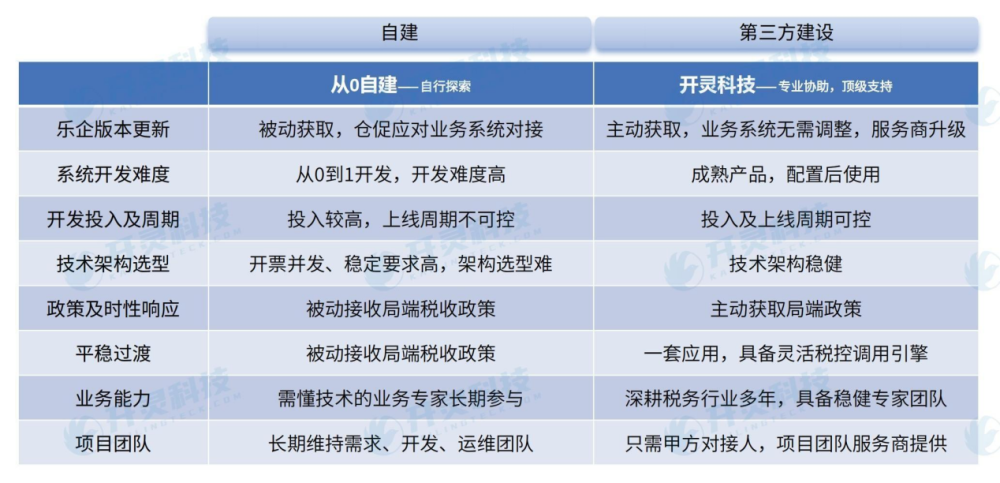
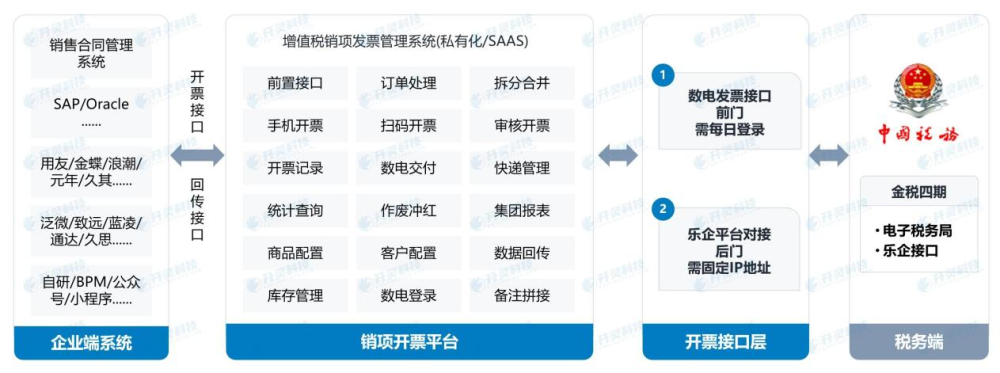
The hidden costs of in-house developmentBased on actual project experience estimates, the workload for an enterprise to self-develop Leqi integration is roughly: Output adaptation: approximately 722 person-days (including interface modification, red-ink reversal process, 194 validation rules, 20 types of invoices with specific elements, Web interface development, etc.) Input adaptation: approximately 272 person-days (including 41 interface integrations, invoice collection, selection certification, bookkeeping confirmation, etc.) After conversion, the development cost alone is close to 2.5 million yuan. Add internal coordination costs, the time lost to repeated debugging, and ongoing operations and maintenance investment for every subsequent upgrade—the actual total cost far exceeds this figure. The more critical question is:The in-house team has no experience of pitfalls. The error messages of the Leqi interface are extremely minimal; the same "failure" may have a dozen or more underlying causes. Teams without hands-on experience will spend a great deal of time "guessing the error." Kailing Technology's approach: keep the complexity to ourselvesWhat Kailing Technology provides is not a piece of software, but a complete "from zero to go-live" delivery: Application stage — the enterprise only needs to seal. From qualification assessment, application strategy design, and full documentation preparation to tax bureau communication and coordination, Kailing handles everything on your behalf. The enterprise's involvement is limited to confirming content and printing and stamping. Infrastructure — a turnkey project. Server procurement (ownership belongs to the enterprise), fixed IP configuration, and system deployment and launch, all completed in one stop. Enterprises do not need to separately build an operations and maintenance team. Sandbox testing—bring your environment. Kailing provides a pre-configured visual testing environment covering test cases for all invoice types, with dedicated personnel accompanying a 72-hour testing window to ensure passing on the first attempt. Technical Integration — One Interface to Get It Done. The original red-flush process required calling at least 3 sets of interfaces; Kailing encapsulated them into 1 universal interface. The modification workload for front-end business systems is minimized, supporting direct integration with mainstream systems such as Yonyou, Kingdee, SAP, Oracle, Weaver and Seeyon. Delivery model — source code + copyright all yours. The system's full source code is delivered, and software copyright is legally transferred. Enterprises have complete technological autonomy and can conduct secondary development independently, fully complying with the State Taxation Administration's compliance requirement of "no third-party hosting." Long-term operation and maintenance—upgrades without interruption. Questions responded to within 10 minutes, general questions closed the same day. For policy changes (new invoice types, interface upgrades), compatibility adaptation is completed within 5 working days without affecting business.
Actual results after launchAfter Leqi integration is completed, the enterprise's invoicing and invoice receipt processes will undergo fundamental changes: Invoicing side: After the business system generates an order, invoicing is automatically triggered, with no manual operation, no need to log in to the electronic tax bureau, and no need for tax-control equipment. It supports splitting and merging, discount handling, and mixed issuance of multiple invoice types, with no upper limit on daily processing volume. Invoice receipt side: The enterprise's full invoice pool is automatically synchronized daily, and employees select directly from the invoice folder when seeking reimbursement, with no upload or verification needed. Passenger transport invoices are automatically grouped by passenger name, greatly reducing the financial review workload. Control side: Group headquarters builds uniformly, subsidiaries share capabilities, invoicing data is aggregated in real time, and BI reports are generated with one click.
Which enterprises are suitable for starting now?Enterprises meeting any of the following conditions are advised to evaluate Leqi access: Tax credit rating A/B, annual revenue over 50 million Total invoice issuance and receipt volume in the previous 12 months exceeds 10,000, or the amount exceeds RMB 100 million Group enterprises with many subsidiaries, many tax numbers, and large invoicing volume Livelihood-guarantee industries such as hospitals, thermal power, and public transportation (may apply for a lowered threshold) If you are not sure whether you meet the conditions, Kailing Technology can first conduct a free qualification pre-assessment and provide a clear conclusion and the optimal application path:https://www.kailingteck.com/h-col-123.html 。 As a comprehensive business-finance-tax digitalization solution service provider, Kailing Technology provides business-finance-tax management digital transformation products and operational services for various government agencies, institutions, and large, medium, and small enterprises. The product line includes: Solutions for businesses including sales contract management system, procurement contract management system, fully digitalized Leqi interface project, output automatic invoicing system, reverse invoicing system, invoice issuance for individuals system, employee expense control and reimbursement system, input VAT invoice management system, supply chain collaborative reconciliation system, image OCR recognition system, automatic financial bookkeeping system, and electronic accounting archives system, comprehensively driving the digitalization process across various fields. If you have any business-finance-tax digital transformation needs, welcome to contact us. Beijing Kailing Technology will serve you wholeheartedly.
#Leqi Direct Connection #Fully Digitalized Leqi Solution #Leqi Interface #Fully Digitalized E-Invoice #Leqi Integration #Digital Business-Finance-Tax #China Golden Tax Phase IV #Business-Finance-Tax Integration |