010-6097 4119Book a Demo


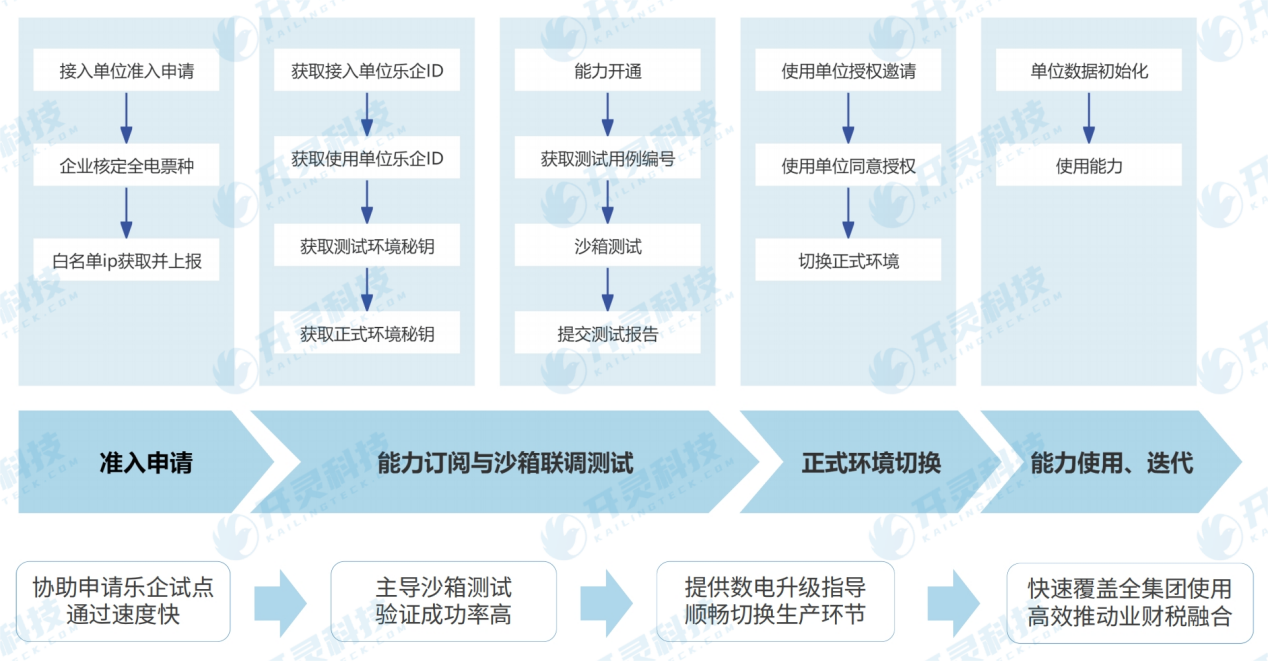
Kailing Technology Analysis: Key steps and considerations for large enterprises to connect to the fully digitalized Leqi interfacePublished: 2026-03-11 17:51 Against the backdrop of the comprehensive rollout of China Golden Tax Phase IV, fully digitalized e-invoices have become the core vehicle for corporate business-finance-tax digitalization, and the Leqi platform, as the official channel for direct tax-enterprise connection, has become the optimal choice for large enterprises to achieve "business, finance, and tax" integration thanks to its open rules and unified standards. Beijing Kailing Technology, as a professional service provider deeply engaged in the business-finance-tax digitalization field, draws on massive practical cases to break down the key steps and core considerations for large enterprises connecting to the fully digitalized Leqi interface, helping enterprises achieve efficient and compliant implementation. I. Core Understanding of the Leqi InterfaceLeqi (NaturalSystem) is a tax-enterprise direct connection platform through which the State Taxation Administration provides fully digitalized e-invoices and other tax-related services to eligible enterprises. By opening tax policies, business rules, and technical interface specifications in the form of "capability documents," it supports enterprises in embedding invoicing, invoice receipt, and other tax-related business into their own business systems, achieving seamless integration between business transactions and business-finance-tax processing. Its access modes are divided into three categories: "self-use" (internal group use), "joint use" (shared by commercial platforms and merchants), and "other use" (third-party service providers serving SMEs). Large enterprises mostly adopt the "self-use" mode, covering the full-scenario tax-related needs of the head office and its subordinate member units. II. Key steps for large enterprises to connect to the Leqi interface(1) Access application stage: qualification verification and material preparation 1. Qualification self-check: Directly connected units must meet tax credit rating A/B, have no major tax violations in the past three years, and the directly connected unit and the user unit must have total operating revenue of more than 50 million yuan in the previous year, or a total invoice issuance and receipt volume of no less than 10,000 in the past 12 months,If below 10,000 invoices, the invoicing amount must be no less than 100 million yuan; standards may be appropriately lowered for livelihood-guarantee industries. The user unit must be a branch, group member, or affiliated enterprise of the direct connection unit, with tax credit rating A/B/M. 2. Material preparation: need to prepare enterprise qualification documents, equity relationship certificates, software copyright or authorization certificates for self-owned information systems, network and data security guarantee solutions, etc. It is recommended that a professional team assist in writing the application documents to ensure compliance with tax authority standards and reduce the risk of review rejection. 3. Application submission: Submit the access application through the Electronic Tax Bureau Leqi Digital Open Platform. Direct connection entities must simultaneously complete user entity invitations, clarifying the association relationship and the competent tax authority. (II) Activation and configuration stage: key acquisition and capability subscription 1. Access review and key acquisition: after the tax authority approves the review, the enterprise will obtain the Leqi ID (ptbh) and encryption key, and must process request messages strictly in accordance with encryption standards to ensure data transmission security. 2. Capability subscription and sandbox testing: Apply individually for required capabilities according to business needs. After application, sandbox testing must be completed within 72 hours. The testing content covers the entire process, including interface calls, data transmission, and business process verification. After passing the test, submit a test report. 3. Official activation: After the tax authority reviews the test report, the corresponding Leqi Direct Connection capabilities are activated, and the enterprise can enter the production environment configuration stage. (3) System integration stage: business adaptation and interface integration 1. Business process design: based on the enterprise's actual scenarios, develop adaptation modules between its own business system and the Leqi interface, including pre-invoicing information acquisition, invoicing process execution, and red-letter reversal process handling, strictly following the interface call sequence to avoid invoicing failures. 2. Interface integration development: Complete the integration of Leqi interfaces with enterprise ERP, OA, CRM, and other systems, supporting functions such as automatic order data synchronization, automatic invoice issuance and push, and real-time invoicing result callbacks, achieving "invoicing upon business generation". 3. Verification rule configuration: Configure custom verification rules for key steps such as invoicing data parameter passing, tax code and tax rate matching, and buyer information accuracy, making up for the limitation that Leqi Direct Connection interfaces only return "success/failure" feedback. (4) Go-live operations and maintenance phase: testing, verification, and continuous optimization 1. Full-scenario testing: conduct multi-dimensional testing in the production environment, including issuance of different invoice types, splitting and merging of large-amount orders, red-letter invoice reversal, and handling of exceptional scenarios, to ensure system stability and data accuracy. 2. Personnel training: conduct operational training for finance, IT, and business personnel, focusing on invoicing processes, exception handling, interface monitoring, etc., to ensure smooth business progress. 3. Operations support: establish an interface call monitoring mechanism to track interface response status in real time; complete operational work such as change reporting, version update adaptation, and qualification renewal applications as required by tax authorities to ensure continuous service availability.
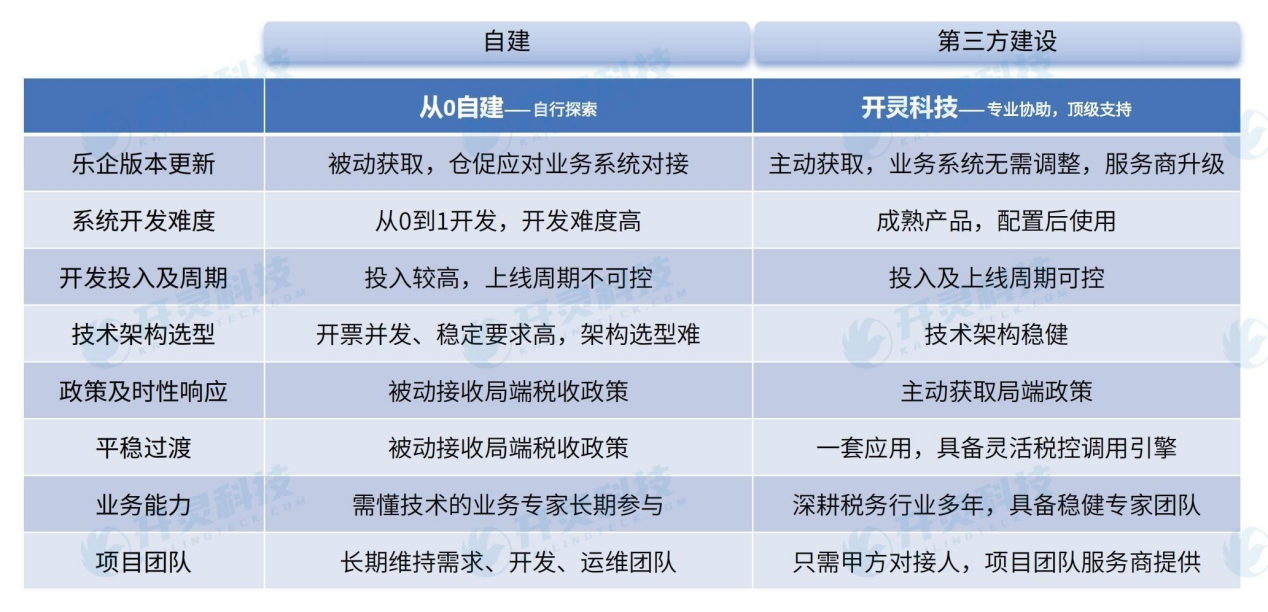
III. Core Considerations During the Access Process(1) Qualification and compliance risk prevention and control - Strictly verify the proof of association between the direct connection unit and the user unit, ensuring compliance with the requirement of "the same head office and branch, group enterprise, or equity control relationship," avoiding review rejection due to unclear association relationships. - Comply with cybersecurity and data security regulations, truthfully report major changes to tax authorities, bear joint liability arising from user units' illegal and non-compliant acts; store data as required and embed risk control rules, and open verification interfaces to tax authorities. - Continuously monitor changes in tax credit rating to avoid a downgrade affecting Leqi usage eligibility. (II) Breakthroughs in key technical integration difficulties 1. Process design challenges: Leqi only provides basic interface capabilities; reverse processes such as invoicing and red-letter reversal must be designed by enterprises themselves. For example, issuing a red-letter invoice requires first querying the red-letter confirmation list and detail information, then executing the invoicing operation. Incorrect interface call sequence will directly cause failure. It is recommended to draw on mature solutions to reduce self-development trial-and-error costs. 2. Data processing challenges: after successful Leqi Direct Connection invoicing, only XML files are returned; PDF and OFD format files must be synthesized by the enterprise itself, and format construction for multi-line invoice details requires dedicated development; at the same time, it is necessary to adapt to the differentiated validation logic and parameter-passing requirements of more than 20 types of invoices with specific elements, with each invoice type requiring separate adaptation. 3. Sandbox testing difficulty: All scenarios of the applied capabilities must be tested within 72 hours; failure requires resubmitting the application. It is recommended to set up a visual test environment in advance to efficiently complete API debugging and process verification. (3) Cost and efficiency balance strategy - In-house development vs external procurement decision: large enterprises developing Leqi interfaces in-house require investmentRelatively high cost, and must bear subsequent upgrade and operation and maintenance costs. Choosing a professional service provider's "turnkey project" enables full source code delivery and copyright transfer, meeting independent and controllable requirements while reducing development cycles and trial-and-error costs. - System integration adaptation: ensure that the Leqi interface connects with the enterprise's existing ERP and OA、Financeand other systems for deep compatibility, supporting two-way data flow to avoid "information silos"; prioritize solutions that support centralized management of multiple company entities and multiple tax numbers to improve group-wide control efficiency. (4) Long-term operations and maintenance management requirements - Reporting of matter changes: If key information such as the legal representative, financial officer, or institutional address of the directly connected unit or user unit changes, it must be submitted to the competent tax authority through the Leqi platform in a timely manner; changes in affiliated relationships must be reported within 3 days. - Version update adaptation: after the tax authority issues a notice of functional upgrade to the Leqi platform, directly connected units must complete system modification and integration testing within 30 days to ensure business is not affected. - Qualification Continuation Management: The initial validity period of Leqi access qualification is 2 calendar years. An extension request must be initiated 3 months before expiration to avoid termination of qualification. III. Kailing Technology's professional support advantagesLarge enterprises connecting to the Leqi interface involves multiple stages such as qualification review, technical development, and compliance control, with strong professional requirements and complex processes. Kailing Technology, with itsPowerfulBusiness-finance-tax digitalization experience, providing full-lifecycle support for enterprises: 1. Full-process agency: providing one-stop services including Leqi material preparation, filing coordination, and communication with tax authorities; the enterprise only needs to cooperate with printing and sealing. 2. Technical empowerment: Provide visual sandbox testing environments and mature interface adaptation solutions, covering difficulties such as invoicing process design, format file synthesis, and multi-system integration, shortening the go-live cycle. 3. Compliance assurance:Can provide as agreedFull source code delivery and copyright transfer, meeting the tax requirement of "not using third-party hosting," while also providingOperations and maintenance support to ensure the system remains continuously compatible with policy updates. 4. Scenario adaptation: supports full-scenario needs such as group management and control, multi-invoice type issuance, automatic input tax deduction, and electronic accounting archive filing, and has successfully served many large enterprises.
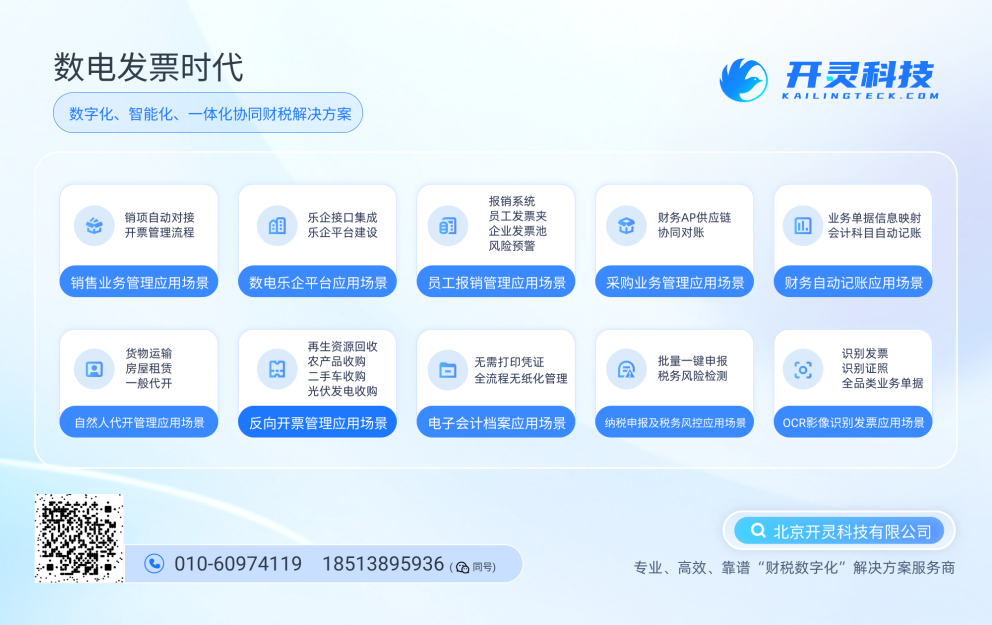
Connecting to the fully digitalized Leqi interface is a key step in the business-finance-tax digital transformation of large enterprises, and it requires strictly following the four principles of "qualification compliance, standardized processes, technical adaptation, and proper operations and maintenance." Through the empowerment of professional service providers, the access threshold and compliance risks can be effectively reduced, achieving full-process automation from business transactions to business-finance-tax processing. If you need a customized access solution or want to view implementation cases in the same industry, you can contact Kailing Technology for dedicated support:https://www.kailingteck.com/h-col-123.html 。 Kailing TechnologyAs a comprehensive business-finance-tax digitalization solution service provider, we provide business-finance-tax management digital transformation products and operational services for various government agencies, institutions, and large, medium, and small enterprises. The product line includes: Sales contract management system, procurement contract management system, fully digitalized Leqi interface project, output automatic invoicing system,Reverse invoicing system,Solutions for the invoice issuance for individuals system, employee expense control and reimbursement system, input VAT invoice management system, supply chain collaborative reconciliation system, image AI OCR recognition system, automated financial bookkeeping system, electronic accounting archives system, and other businesses, comprehensively advancing the digitalization process across various fields. If you have any business-finance-tax digital transformation needs, welcome to contact us. Beijing KailingKailing TechnologyWe will serve you wholeheartedly.
#Leqi Direct Connection #Fully Digitalized Leqi Solution #Leqi Interface #Fully Digitalized E-Invoice #Beijing Leqi Integration #Digital Business-Finance-Tax #China Golden Tax Phase IV #Business-Finance-Tax Integration |