010-6097 4119Book a Demo


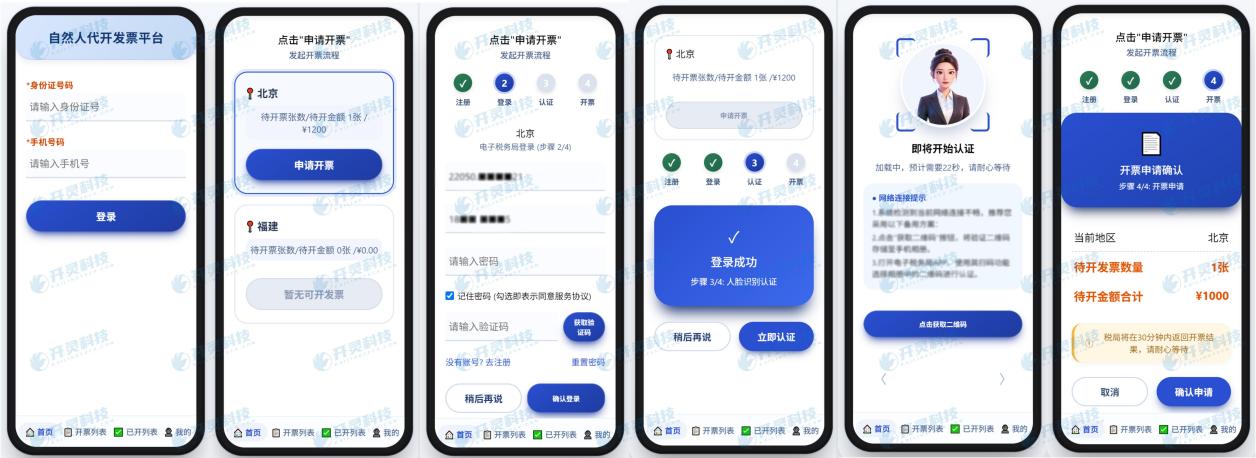
How do publishing houses issue invoices for author remuneration? Kailing Technology's individual invoicing APP makes remuneration invoicing more efficient and publishing houses more compliantPublished: 2026-03-09 17:35 In the publishing industry, royalty payment is the core link connecting publishers and authors. However, it is precisely this seemingly simple step that has long troubled the finance departments of publishing enterprises. On one side is authors' apprehension about the invoicing process, and on the other is publishers' urgent need for compliant invoices. The contradiction between the two has become increasingly prominent under the regulatory backdrop of China Golden Tax Phase IV's "data-driven tax governance." For the same manuscript fee invoicing, what exactly are the differences between the traditional processing method and Kailing Technology's individual invoicing APP? I. Author experience: from forced cooperation to proactive completionUnder traditional models, when authors receive manuscript fees, they often simultaneously receive an "invoicing request" from the publisher. For most authors, this means needing to understand tax knowledge, fill out complex forms, and even take time specifically to go to the tax bureau to queue for processing. A social sciences author once sighed: "Writing a book is already tiring enough, and I still have to spend half a day dealing with invoicing. Sometimes I think I might as well not issue it." This experience directly leads to low author cooperation, making it difficult for publishers to ensure invoice collection rates. Empowered by the Kailing Technology individual invoicing APP, authors only need to enter the exclusive invoicing page through the H5 link or mini-program entry sent by the publisher. After completing identity authentication by face scan, the system automatically brings in the manuscript fee amount and publisher information, and the author can pay taxes online after confirming it is correct. The entire process takes no more than 5 minutes, with no need to download an additional APP, no need to learn tax knowledge, and no need to make offline trips. From "forced cooperation" to "proactive completion," invoicing is no longer a psychological burden for authors, but a natural extension of manuscript fee settlement. II. Financial efficiency: From "person watching person" to "fully automated"Looking back at the traditional manuscript fee invoicing process, publishing house finance staff often play the dual roles of "expediter" and "instructor." They need to contact authors one by one, explain invoicing methods, verify information accuracy, and follow up on invoicing progress. When dealing with authors in different regions, they also face the troubles caused by differences in local tax policies. A finance director of a publishing group admitted: "After manuscript fees are paid each month, the finance team spends at least a week handling invoicing matters. Labor costs are high, but efficiency is very low." Even more troublesome is that the long invoicing cycle directly leads to delayed financial settlement, affecting the author experience and slowing down the publisher's overall operational pace. Kailing Technology's individual invoicing APP completely changes this situation. Through a unified management backend, publishers can view the invoicing progress and status of all authors in real time; the system automatically pushes to-do reminders and automatically completes information verification and tax calculation. Finance staff no longer need to chase each person individually and only need to monitor the overall situation in the backend. From "people watching people" to "full automation," the publishing house's financial efficiency has achieved a qualitative leap. After a certain education publishing house introduced Kailing Technology, the manuscript fee invoicing cycle was shortened from an average of 7 days to within 3 days, and financial labor costs were reduced by 70%.
III. Tax Compliance: From "Hidden Risks" to "Complete Evidence Chain"One of the core features of China Golden Tax Phase IV is "penetrating supervision," which requires that the business authenticity of every expenditure be verifiable. Under the traditional model, although publishers pay manuscript fees, they often can only obtain scattered copies of authors' ID cards, handwritten receipts, or even only "white slips" for bookkeeping. Such scattered materials are difficult to form a complete evidence chain. Once a tax audit occurs, publishers find it hard to prove the authenticity of the business and face the risk of tax supplements, fines, and even reputational damage. Kailing Technology's individual invoicing APP builds a complete "four flows consistent" evidence chain. The system automatically links author contracts, payment vouchers, business delivery records, and compliant invoices; all materials are stored in a structured way and support one-click retrieval. Every invoice can be traced back to a complete business background, meeting all requirements of tax verification. From "hidden risks" to "complete evidence chain," the publishing house has completely eliminated tax hazards caused by manuscript fee invoicing issues. After the aforementioned education publishing house introduced Kailing Technology, compliant invoice coverage increased from less than 60% to over 98%, saving more than RMB 2 million in tax risk costs annually.
IV. Technical Implementation: From "Manual Intervention" to "Intelligent Integration"At the technical level, the traditional model relies heavily on manual operations. Finance personnel need to manually verify author information, calculate tax amounts, fill out application forms, and even visit tax bureaus offline for processing. This model is not only inefficient but also prone to errors, especially when dealing with authors across different regions, where differences in local tax policies further increase operational difficulty. Kailing Technology's individual invoicing APP achieves seamless integration with publishers' existing ERP and financial systems through API/SDK interfaces. The system has a built-in tax rule library for all provinces and cities nationwide, automatically adapting to the individual income tax withholding and prepayment logic for manuscript remuneration income, and intelligently calculating VAT, surcharges, and individual income tax. More importantly, the system connects compliantly with the Electronic Tax Bureau, achieving full-process automation from invoicing application, review, and payment to invoice issuance. From "manual intervention" to "intelligent integration," technology truly becomes a force that empowers business rather than a burden on finance personnel.
V. Industry value: from "passive response" to "active empowerment"Across the publishing industry, the issue of invoicing for manuscript fees has long been regarded as a "necessary evil," with publishers responding passively and authors cooperating passively. This situation not only affects financial efficiency but also constrains the building of trust between publishing enterprises and authors. The emergence of Kailing Technology's individual invoicing APP completely reverses this situation. Publishers shift from "requesting invoices from authors" to "providing invoicing services for authors," and authors shift from "being forced to cooperate" to "easily completing it." This transformation not only improves invoicing efficiency and compliance, but also enhances authors' trust in and satisfaction with publishers. From "passive response" to "proactive empowerment," Kailing Technology is redefining the financial collaboration relationship between publishing houses and authors. For the same manuscript fee invoicing, there are all-around differences between the traditional model and Kailing Technology's solution, from experience to efficiency and from compliance to technology. In today's increasingly strict tax supervision, publishers can no longer shift invoicing responsibility to authors, but should use technical means to achieve compliant, automated, and efficient manuscript fee settlement. If you are alsoInvoice-relatedFor problem troubles, welcome to contact Kailing Technology, and let us build an exclusive compliant invoicing solution for you. If you need to further understandAdapted to your industry'sFor a specific invoicing plan, or if you want to obtain personalizedSolution interpretation, communicate at any time to obtain exclusive service:https://www.kailingteck.com/h-col-126.html 。 As a comprehensive business-finance-tax digitalization solution service provider, Kailing Technology provides business-finance-tax management digital transformation products and operational services for various government agencies, institutions, and large, medium, and small enterprises. The product line includes: Sales contract management system, procurement contract management system, fully digitalized Leqi interface project, output automatic invoicing system,Reverse invoicing system,The invoice issuance for individuals system, employee expense control and reimbursement system, input VAT invoice management system, supply chain collaborative reconciliation system, image AI OCR recognition system, automated financial bookkeeping system, electronic accounting archives system, and other business solutions comprehensively advance digitalization across various fields. If you have any business-finance-tax digital transformation needs, welcome to contact us. Beijing Kailing Technology will serve you wholeheartedly.
#IndividualsInvoicingSolutions #IndividualsInvoicingSystem #Invoice Issuance for Individuals API Interface #Batch IndividualsInvoicingInterface #Nationwide invoice issuance for individuals solution #Author manuscript fee invoice management #Digital Business-Finance-Tax Compliance #Enterprise Tax Risk Control |