
Jingneng Information | Financial AI Digital Employees and AI Capability Building
Enterprise overview
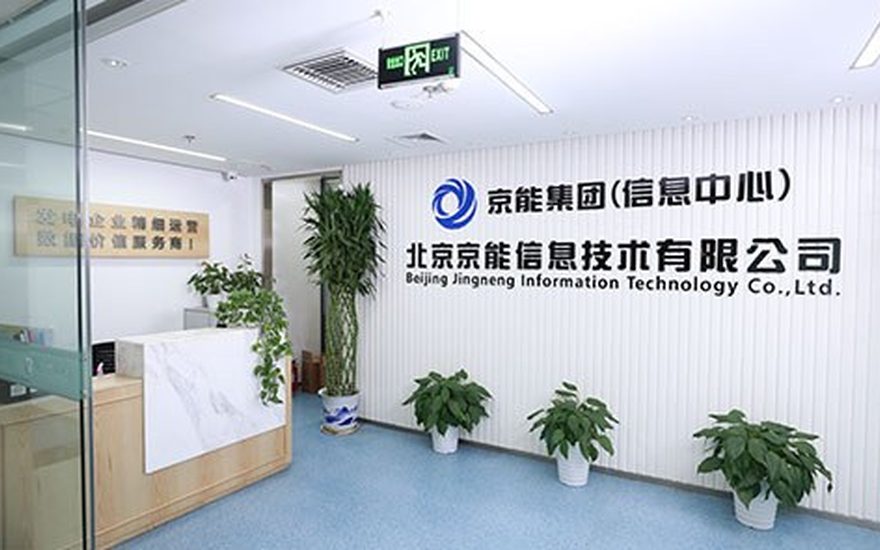
Beijing Jingneng Information Technology Co., Ltd. was founded in 2006 and is an enterprise within the Beijing Energy Group (Jingneng Group) system. In 2019 it was designated as the Jingneng Group Information Center. It is a Beijing municipal-level enterprise science and technology research and development institution, a national high-tech enterprise, and a Zhongguancun high-tech enterprise. With energy enterprises as its main service targets, the company positions itself as a "leading data value service provider for smart operations of energy enterprises." It has obtained 97 software copyrights, 10 utility model patents, and 1 invention patent; 10 self-developed new products have passed Beijing new technology and new product certification, and it has passed multiple qualification certifications including CMMI3, ISO9001, ISO14001, ISO27001, ISO20000, CCRC information security services, and IDC.
Business pain points
- Serving a large number of individual users and enterprise customers, with dense transaction volumes and small, scattered per-transaction amounts, invoicing requests may be initiated at any time. The business system and invoicing capability are independent of each other. After each transaction is completed, customer information, amounts and product details must be manually transcribed item by item to the invoicing side, and after invoicing the invoice number is backfilled into the business system. Manual transcription becomes a fixed consumption as business volume grows, and transcription itself is also a source of errors
- When data standards differ on the two sides, reconciliation requires manual item-by-item comparison, and problems often surface only at month-end. Personalized requirements are difficult to solve through configuration, and modifying existing business processes to accommodate generic products instead raises overall costs and implementation risks. After the rollout of fully digitalized e-invoices, invoice acquisition, issuance, and archiving all need to link with business systems, and fragmented approaches are no longer sustainable.
Solutions
- Complete interface integration on both sides according to agreed fields; invoicing information is automatically passed in from the business system, invoices are automatically issued, and results are automatically returned; business documents correspond one-to-one with invoices, and manual transcription and backfilling are eliminated.
- Adaptation development according to the customer's actual business rules, so existing processes do not need to be changed to accommodate the system
- After integration, data on both sides is synchronized in real time, abnormalities trigger automatic alerts, and reconciliation and traceability no longer rely on manual work
- Ultimately embeds invoicing capabilities into existing business workflows, allowing users to complete all operations within a familiar interface
- At the same time, this integration method is accumulated as a standard, so subsequent new systems or new scenarios can be connected according to the same set of rules