
An employee submitted the same invoice for duplicate reimbursement and finance did not discover it? Kailing Technology's reimbursement system automatically verifies and checks duplicates with triple interception to eliminate the risk of multiple claims on one invoice
An employee submitted the same invoice for duplicate reimbursement and finance did not discover it? Kailing Technology's reimbursement system automatically verifies and checks duplicates with triple interception to eliminate the risk of multiple claims on one invoice
The same invoice reimbursed twice without finance noticing is a pitfall almost every company using manual or semi-automated reimbursement processes has stepped into—the reason is simple: comparing hundreds or thousands of invoice numbers, headers, and tax numbers by eye simply cannot prevent "one invoice, multiple reimbursements." The solution of Kailing Technology's reimbursement system (LingDong Reimbursement) is to make "verification + duplication checking" into a system-level triple automatic interception: duplicate collection is prompted and intercepted on the spot when invoices enter the folder, multi-dimensional risk verification (title/tax number/seal/blacklist) is performed during entry, and re-entry is intercepted during reimbursement with automatic locking of the invoice's tax posting status after reimbursement is initiated. Three checkpoints set up defenses layer by layer, turning one-invoice-multiple-reimbursement, false reporting, and malicious red-flushing from "caught afterward by finance with the naked eye" into "automatically blocked beforehand by the system", eliminating duplicate reimbursement risks from the source.
"Duplicate reimbursement is not because finance is careless, but because human eye comparison simply cannot prevent it—what should be blocked should be automatically blocked by the system at the three nodes of invoice entry, reimbursement, and posting. |
▍1. Why can the same invoice be reimbursed twice?
First explain clearly how "one invoice reimbursed multiple times" happens. The reason an invoice can be reimbursed repeatedly is often not that employees intentionally commit fraud, but that the process lacks an automatic verification checkpoint:
- Same invoice into the pool through multiple channels: One e-invoice may simultaneously enter WeChat card wallet, email, and chat records. When an employee submits it again through another entry point, or photographs the paper copy and attaches the original again, "multiple copies of the same invoice" appear in the system.
- Difficult to compare across months and across people: This month Zhang San reported it, and next month Li Si brings the same one to report again—across departments and across accounting periods, finance simply cannot remember who reported which one.
- Misreading the header and tax ID: When reimbursement documents pile up, with wrong invoice titles, tax numbers missing a digit, or sellers on the blacklist, checking them one by one by eye makes errors only a matter of time.
- Malicious reversal after booking: After some invoices are reimbursed and recorded, the seller reverses or voids the invoice. If the system does not lock the accounting status, someone may exploit the loophole for secondary use.
The common thread of these four types of loopholes is that every step relies on "people remembering, seeing accurately, and not omitting." Once business volume grows, the manual defense line will inevitably be breached. Kailing Technology's reimbursement system's approach is to set up an automatic interception at each of the three key nodes of invoice circulation.
▍II. Triple interception: one checkpoint each at invoice entry, reimbursement, and booking

The three checkpoints correspond to the three stages of the invoice lifecycle: entering the pool, reimbursement, and booking. They are not duplicate checkpoints, but each manages one segment—the first blocks duplicate "invoices," the middle blocks problematic "elements," and the last locks the already-booked "status." The following breaks them down one by one.
▍III. First layer of interception: automatic prompt for "duplicate collection" when filing into the folder
To reimburse an invoice, it must first enter the "smart invoice folder." Kailing supports collecting invoices through multiple channels such as QR code scanning, photo capture, WeChat card package, chat record files, and email - more channels also mean a higher risk of duplicate entry into the folder. The system does two things at this step: when the same invoice is repeatedly collected, it prompts on the spot and does not allow duplicate addition; non-compliant invoices (blacklisted goods or sellers, incorrect title) can be set with strong control and directly disallowed from entering the folder.
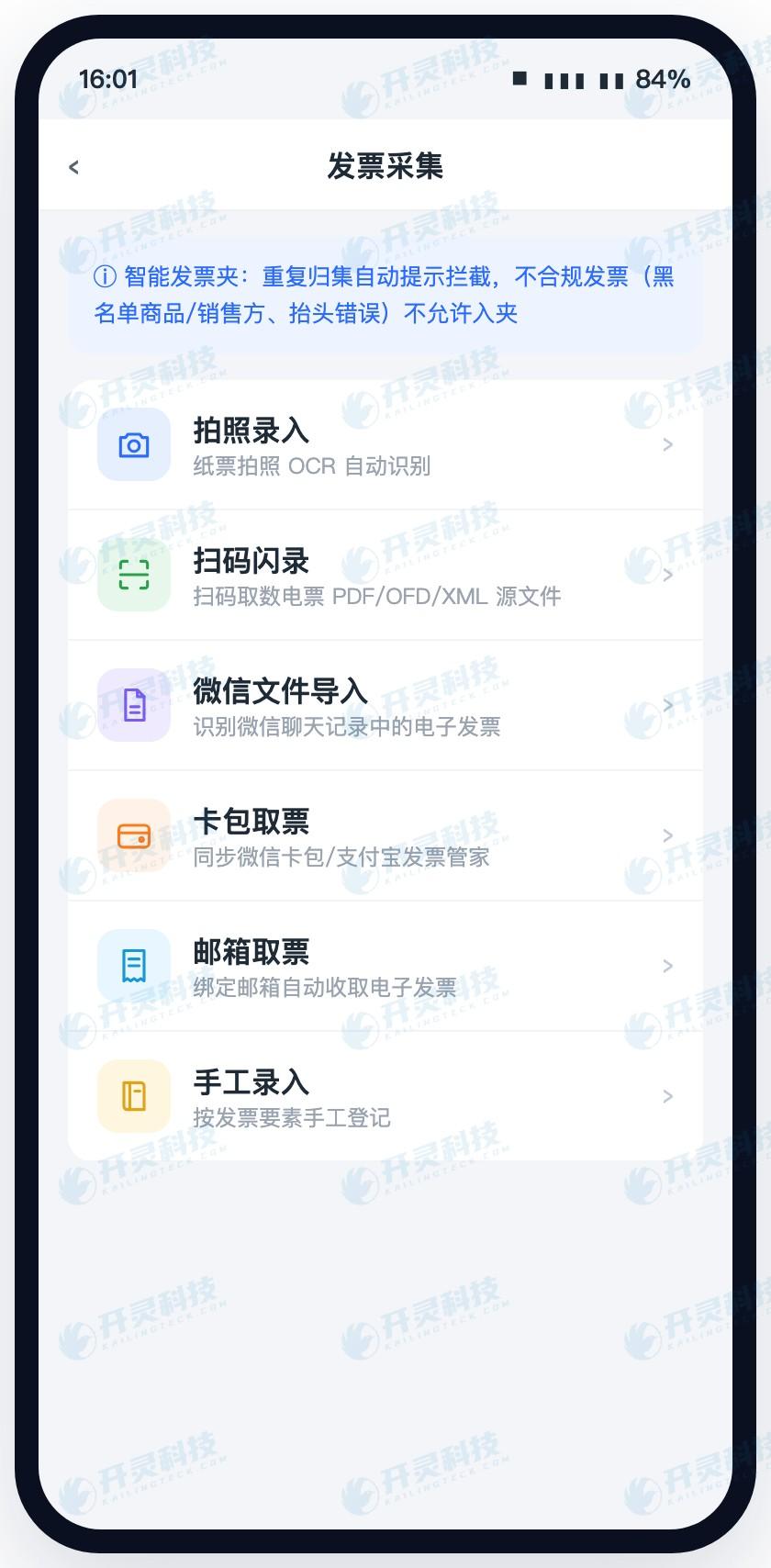
Figure 2 Smart invoice folder · multi-channel collection: duplicate collection is automatically prompted and intercepted, and non-compliant invoices are not allowed into the folder
The value of this layer lies in "treating the disease before it occurs"—blocking duplicate invoices outside the reimbursement process. When an employee syncs an invoice from the card package that is already in the folder, the system immediately prompts that it already exists, cutting off the possibility of "multiple copies of the same invoice" at the entrance, and all subsequent steps are built on clean data where "one invoice has only one copy."
▍IV. Second interception: multi-dimensional risk checks, going item by item through header, tax ID, seal, and blacklist
Once invoices enter the pool, the second verification follows immediately. The Kailing reimbursement system performs multi-dimensional automatic verification on each invoice, completing in one pass what used to require checking one by one by eye:
- Header and tax ID: Check whether the purchaser's header, taxpayer identification number, address and telephone, and bank account number are consistent with the entity, and immediately flag warnings on the spot for incorrect headers or missing digits in the tax number.
- Authenticity comparison: Paper invoice numbers are compared with electronic tax bureau data to verify authenticity, preventing fake and cloned invoices from entering.
- Signature anti-tampering: E-invoices verify signatures to identify whether they have been tampered with, preventing PDFs from being submitted after altering the amount or header.
- Blacklist interception: Invoices hitting blacklisted goods or blacklisted sellers are directly marked as risky, and abnormal suppliers are simultaneously included in monitoring.
The verification results are directly displayed in the "Standard Verification" column of the "Invoice Pool," so it can be seen at a glance whether each invoice is "Normal" or in an abnormal state such as "Taxpayer Identification Number inconsistent" or "Enterprise name inconsistent," and finance no longer needs to compare character by character.
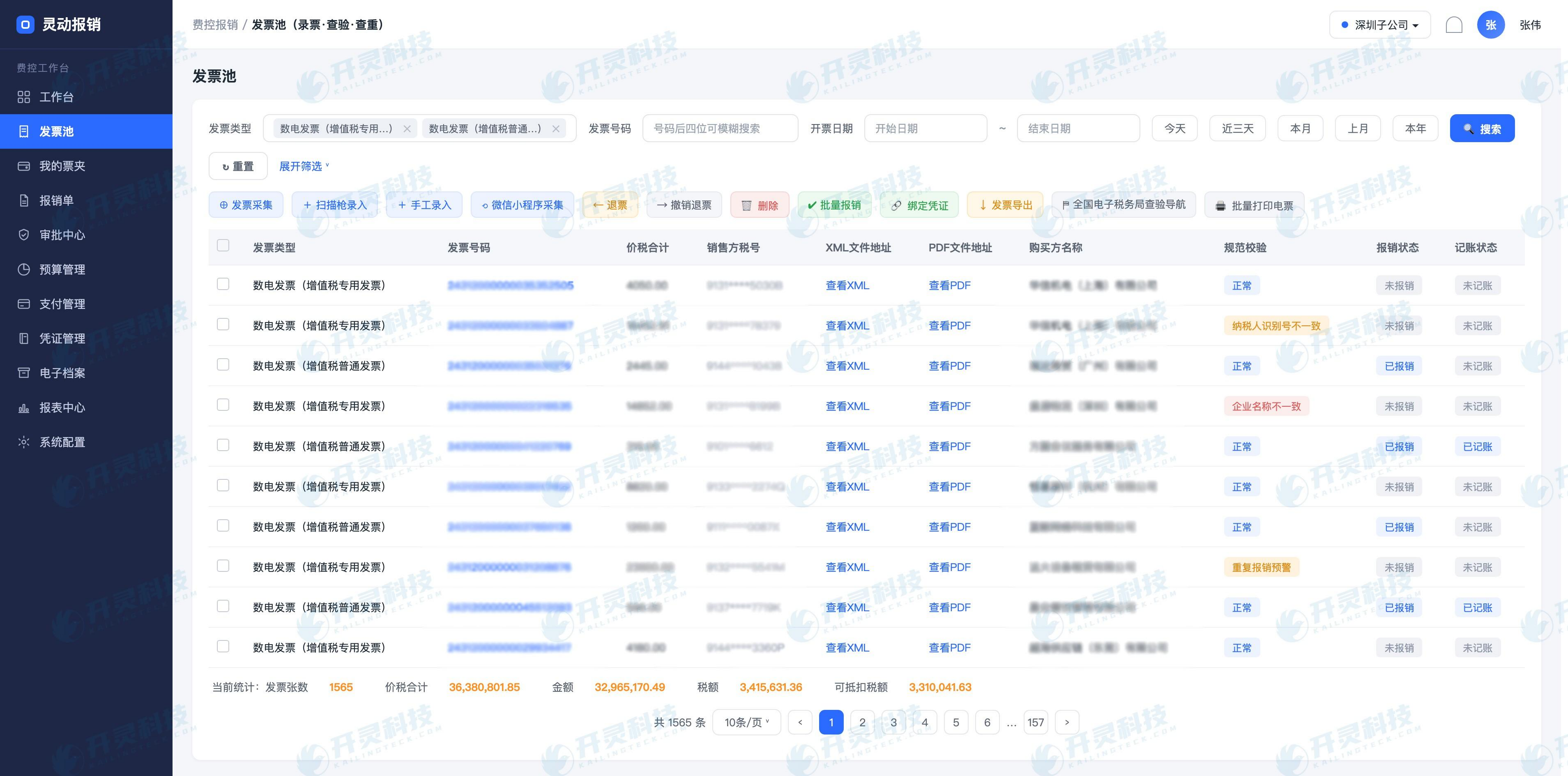
It is worth noting the "duplicate reimbursement warning" mark in the invoice pool. Even if a certain invoice luckily bypasses the folder interception, the system will still separately flag suspected duplicate reimbursement invoices in yellow at the invoice pool level as a warning, which is equivalent to adding another fallback to the first layer of interception, leaving duplicate invoices nowhere to hide.

▍V. Third interception: duplicate reimbursement interception + invoice locking on posting to prevent red-letter reversal
The last barrier is at the reimbursement and booking stage. When an employee selects invoices from the invoice folder to initiate reimbursement, the system performs duplicate-entry interception—if the invoice has already been reimbursed or is in another reimbursement form, the system intercepts it in real time and does not allow resubmission, blocking "double reimbursement of the same invoice" right at the initiation action.
More critically, the "invoice locking" after bookkeeping. After an employee initiates reimbursement, this invoice's tax accounting status is automatically locked (booked - pre-tax deduction/non-deduction, reversal of booking, etc.), and the status is managed by the system. This way, even if the invoice is voided or reversed on the seller's end after reimbursement is booked, no one can exploit it for a second use in the system—institutionally eliminating malicious reversal practices such as "reimburse first, reverse later, then reimburse again."
"Folder entry blocks duplicates, validation blocks anomalies, reimbursement locks status—three checkpoints each guard a segment, and every path for multiple reimbursement of one invoice is blocked. |
▍VI. What triple interception brings to finance
Make verification and duplicate checking a system-level triple interception. The most direct change is that finance shifts from "after-the-fact firefighting" to "before-the-fact immunity":
- Risk control: One invoice used multiple times, false reporting, fake invoices, and malicious red-letter reversal are automatically blocked at the three nodes of invoice entry, reimbursement, and posting, greatly reducing compliance risk.
- Efficiency improvement: Header, tax number, authenticity, and duplicate checking no longer rely on manual item-by-item verification, and finance focuses energy on the abnormal invoices that truly require judgment.
- Traceable: Each invoice's verification results, reimbursement status, and posting status are traceable throughout the process, so during audits or internal reviews the complete evidence chain can be presented by retrieving the file.
Kailing Technology's reimbursement system is fully self-developed, supports localized deployment, does not resell customer data, and is compatible with domestic innovation environments such as Dameng and Kylin OS, allowing enterprises to close duplicate reimbursement loopholes while keeping data firmly in their own hands.
▍FAQ
Q: If an employee reimburses the same invoice in two separate claims, can the system really detect it automatically?
A: Yes. The Kailing reimbursement system sets checkpoints at three nodes: when invoices enter the folder, duplicate aggregation is immediately prompted and duplicate addition is not allowed; the invoice pool marks suspected duplicate invoices in yellow with a "duplicate reimbursement warning"; when reimbursement is initiated, re-entry is intercepted, and invoices already reimbursed or being reimbursed cannot be submitted again, achieving automatic duplicate checking from entry to reimbursement.
Q: What exactly does multi-dimensional risk verification check?
A: It mainly includes whether the title and taxpayer identification number, address and telephone, and bank account number are consistent with the entity; comparison and verification of paper invoices with the Electronic Tax Bureau for authenticity; anti-tampering verification of electronic invoice signatures; and interception of blacklisted goods/sellers. Verification results are displayed directly in the "Compliance Verification" column of the invoice pool, such as "Normal / Taxpayer identification number inconsistent / Enterprise name inconsistent."
Q: What is "locking the invoice posting status to prevent red-ink reversal"?
A: After an employee initiates reimbursement, the system automatically locks the invoice's tax posting status (posted - pre-tax deductible/non-deductible, posting reversed, etc.). In this way, even if the invoice is voided or reversed by the seller after reimbursement posting, it cannot be reused a second time in the system, institutionally eliminating the malicious practice of "reimburse first, reverse later, then reimburse again."
Q: Can non-compliant invoices be blocked from the reimbursement process?
A: Yes. The smart invoice folder supports strong controls. Non-compliant invoices that hit blacklisted goods/sellers or have incorrect titles are directly not allowed into the folder. Anomalous invoices and anomalous suppliers are also included in monitoring, reducing problem invoices entering the reimbursement process at the source.
Still worried that employees submit one invoice multiple times and finance can't catch it by eye? Welcome to Kailing Technology to learn about the reimbursement system's automatic verification and duplicate-check triple interception solution: www.kailingteck.com .
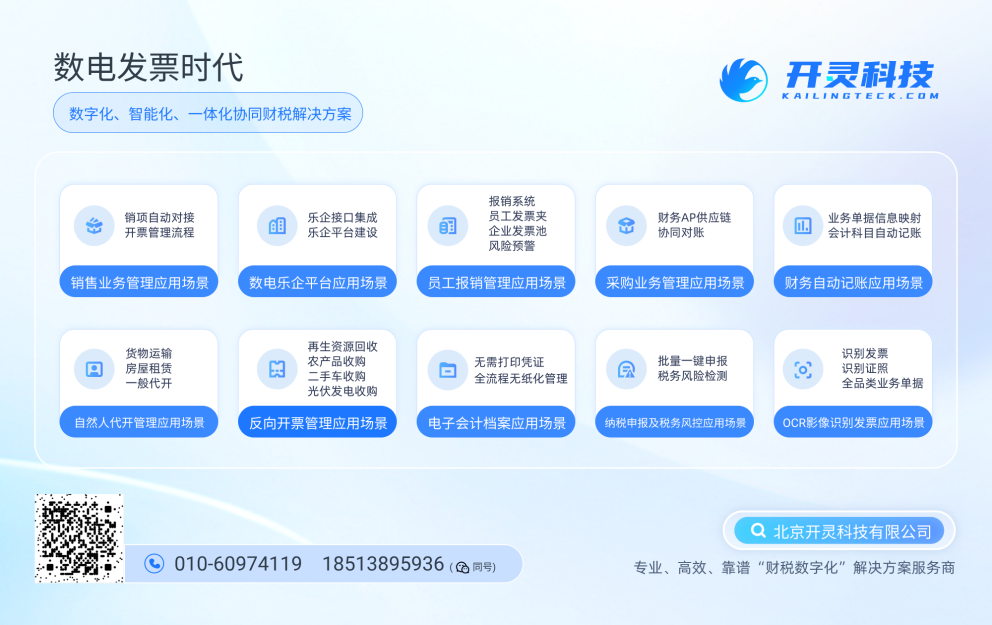
As a comprehensive business-finance-tax digitalization solution service provider, Kailing Technology provides business-finance-tax management digital transformation products and operational services for various government agencies, institutions, and large, medium, and small enterprises. The product line includes:
Solutions for businesses including sales contract management system, procurement contract management system, fully digitalized Leqi interface project, output automatic invoicing system, reverse invoicing system, invoice issuance for individuals system, employee expense control and reimbursement system, input VAT invoice management system, supply chain collaborative reconciliation system, image OCR recognition system, automatic financial bookkeeping system, and electronic accounting archives system, comprehensively driving the digitalization process across various fields.
If you have any business-finance-tax digital transformation needs, welcome to contact us. Beijing Kailing Technology will serve you wholeheartedly.
Keywords: Duplicate reimbursement, multiple reimbursement of one invoice, invoice verification and duplicate checking, triple interception, multi-dimensional risk verification, invoice locking to prevent red-ink reversal, agile reimbursement, expense control reimbursement system, Kailing Technology, fiscal and tax digitalization
As a comprehensive business-finance-tax digitalization solution service provider, Kailing Technology provides business-finance-tax management digital transformation products and operational services for various government agencies, institutions, and large, medium, and small enterprises. The product line includes: solutions for sales contract management system, procurement contract management system, fully digitalized Leqi interface project, automatic output invoicing system, reverse invoicing system, invoice issuance for individuals system, employee expense control and reimbursement system, input VAT invoice management system, supply chain collaborative reconciliation system, image AI OCR recognition system, automatic financial bookkeeping system, electronic accounting archives system, etc., comprehensively driving the digitalization process across various fields.
Consultation Hotline: 18513895936 / 010-60974119 Location: Beijing