
Is invoicing for live pigs tax-exempt? Self-produced pigs from farmers are exempt; pigs bought and resold are not | Kailing Technology agricultural product procurement compliance solution
"Is invoicing for live pigs tax-exempt?" The answer depends on who is selling the pigs: when a farmer sells pigs it has raised itself, this constitutes an agricultural producer selling self-produced agricultural products and is exempt from VAT; when a purchaser or transporter resells pigs obtained elsewhere, this is not self-production and does not qualify for this exemption. For slaughterhouses and meat processing enterprises, this distinction directly determines whether they can issue purchase invoices themselves and whether they can calculate input tax at 9%. This article explains the invoicing methods for three types of sellers—farmers, cooperatives, and transporters—and introduces how the Kailing Technology agricultural product procurement compliance solution verifies farmers' self-production status and links the evidence for a pig from barn to invoice.
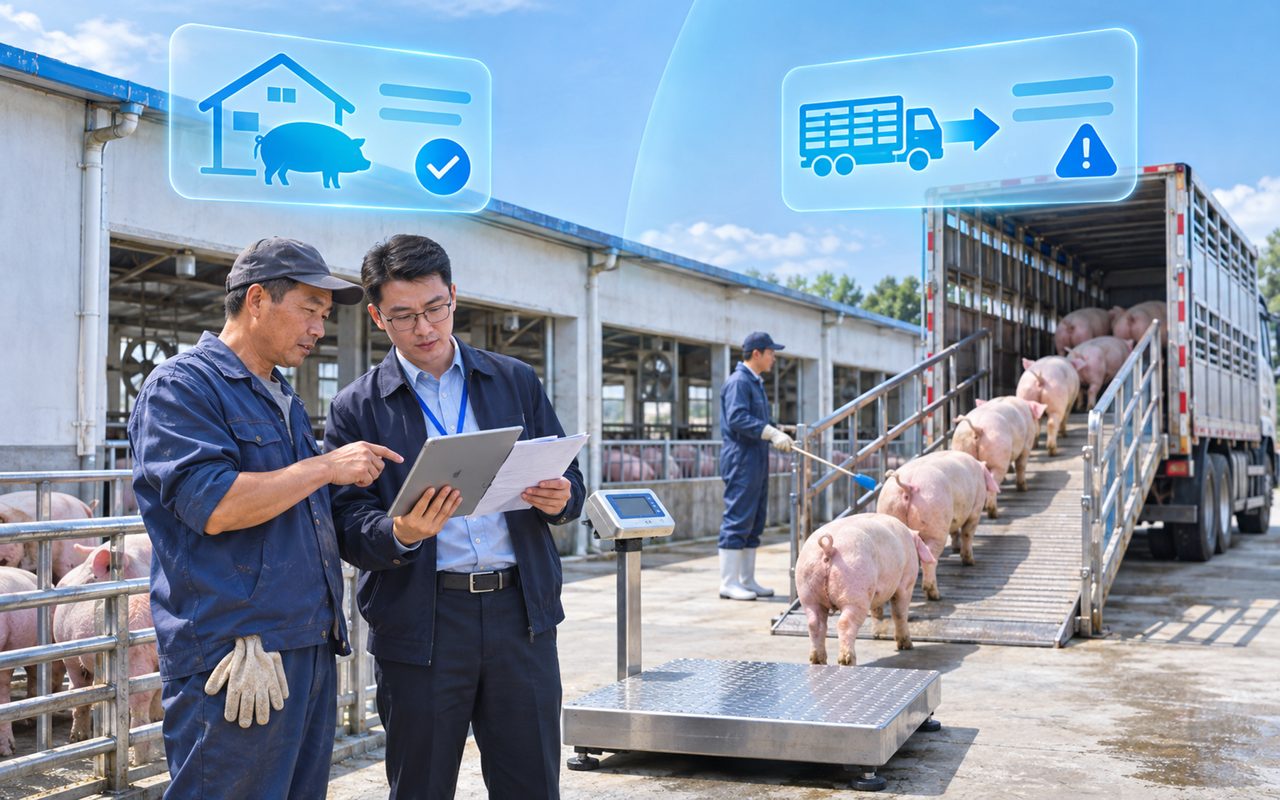
▍Farmer self-production: tax-exempt, purchase invoice may be issued by the purchaser
According to VAT-related regulations, self-produced agricultural products sold by agricultural producers are exempt from VAT; the Annotations on the Scope of Taxation of Agricultural Products includes artificially raised and bred pigs, cattle, sheep, and other livestock products. Selling live pigs raised by the farmer itself is a typical case of self-production exemption.
If the individual farmer is unable to issue invoices, the slaughter or processing enterprise, as the purchaser, may issue an agricultural product purchase invoice and calculate input tax based on the purchase price at the 9% deduction rate. If the farmer has registered as an individual business, it may also issue tax-exempt invoices itself.
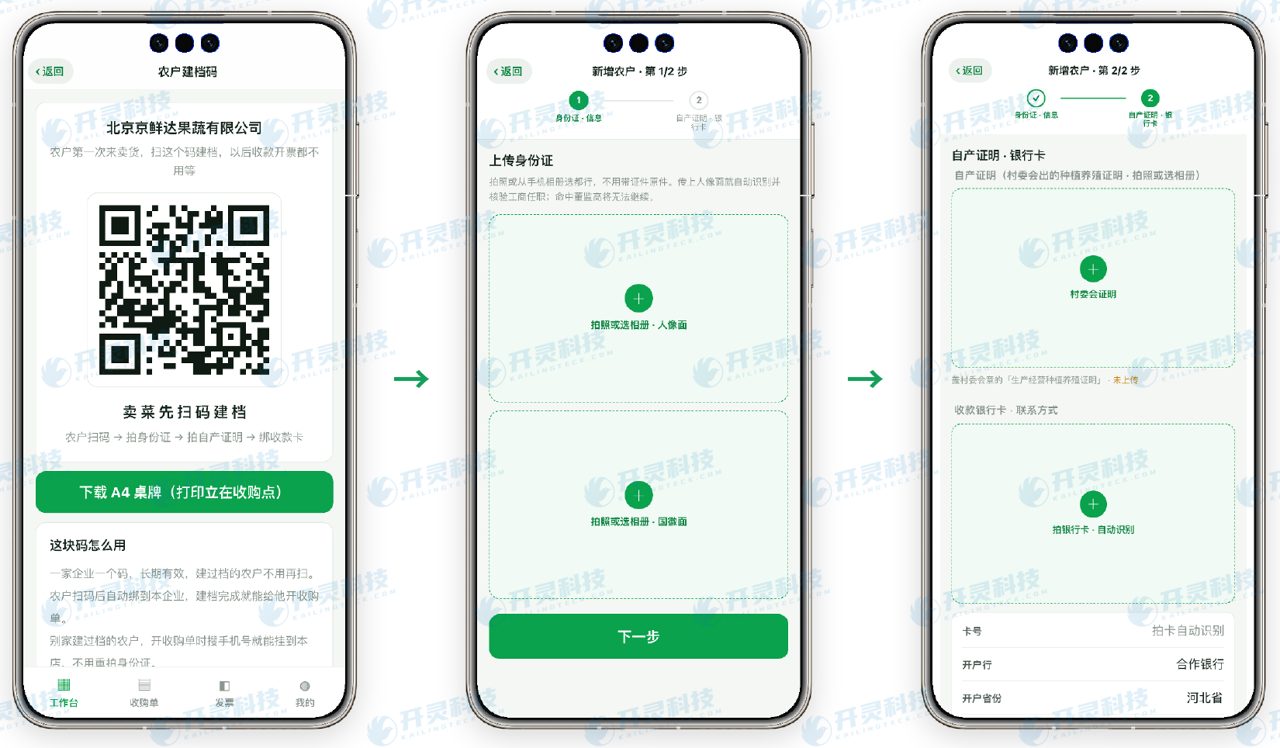
Kailing Technology farmer file creation: uploading farming certificate (information desensitized)
▍Bought and resold: not exempt, purchase invoice cannot be issued
In the live pig circulation chain there are many purchasers and brokers who collect pigs from multiple farmers, consolidate them, and sell them to slaughterhouses. Such transactions do not constitute agricultural producers selling self-produced agricultural products and do not enjoy the self-production exemption: general taxpayers selling purchased live pigs calculate output VAT at the 9% rate, and small-scale taxpayers pay at the prescribed levy rate.
For a slaughterhouse, when buying pigs from a transporter, the transporter should issue invoices in accordance with regulations, and the slaughterhouse cannot issue an agricultural product purchase invoice to the transporter. Treating a transporter as a farmer and issuing a purchase invoice is the most common and most dangerous error in live pig procurement.
| "The same truckload of pigs is exempt self-production when sold by the farmer, but not when sold by the purchaser." |
▍Three types of sellers: invoicing methods at a glance in one table
The table below summarizes the three common types of sellers in live pig procurement and their invoicing methods; the specific rules are subject to the competent tax authority's interpretation.

Invoicing methods for three types of sellers in live pig procurement
As can be seen from the table, only the first category allows the purchasing enterprise to issue purchase invoices itself. The key to the judgment is whether it can be proven that the pigs were indeed raised by the seller.
▍How to prove "raised by oneself"
To prove that live pigs are self-produced, common materials include: a farming certificate issued by the village committee, farming-related certificates such as the animal epidemic prevention conditions qualification certificate, quarantine certificates at the time of sale, and whether the farming scale matches the delivery volume. A farmer with a stock of only a few dozen pigs delivering several hundred within a short period requires further verification.
The Kailing Technology agricultural product procurement compliance solution requires uploading materials such as a farming certificate when creating a farmer file, and completes verification of ID card and bank card and facial comparison; when dispatched purchasers collect pigs on site, they select a farmer with an existing file to create an order, take photos of the front of the vehicle, the rear of the vehicle, and the goods on site, enter the number of pigs and weight, and payment can only be made after the farmer confirms on their own mobile phone.
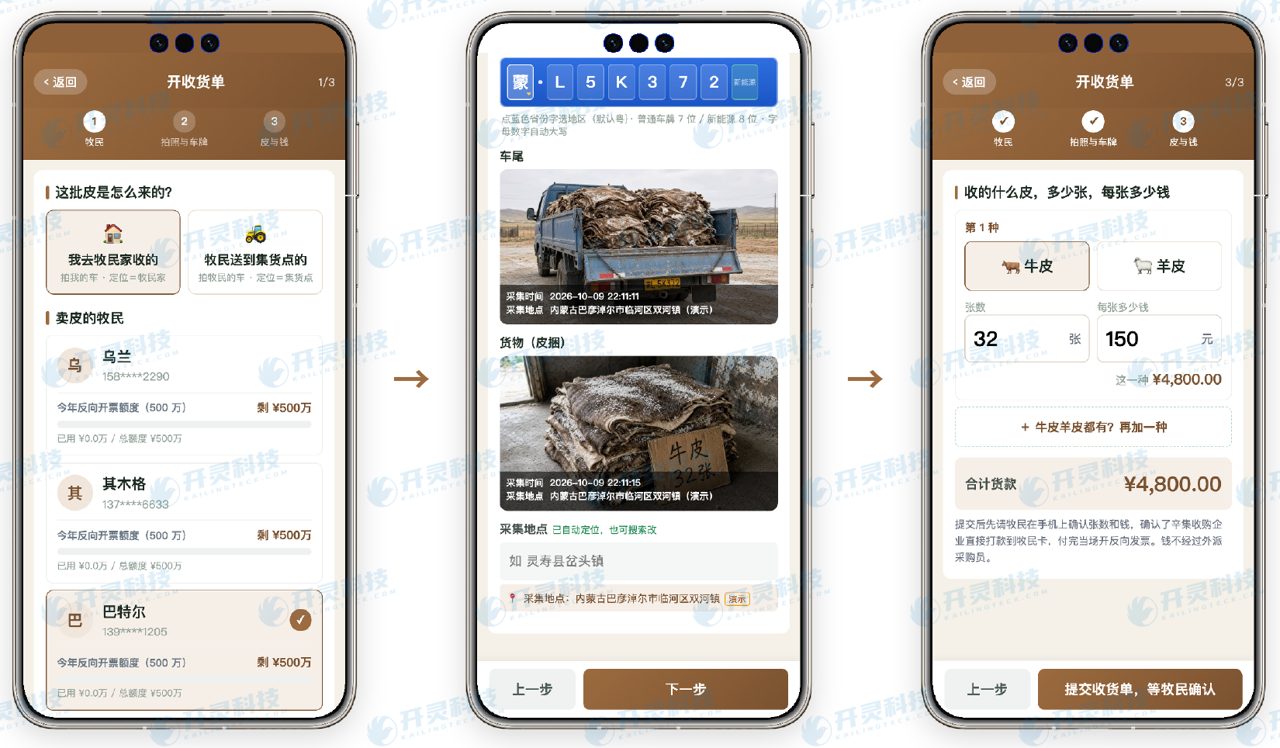
Kailing Technology on-site procurement: on-site order creation and photo evidence (information desensitized)
▍Invoice upon payment, with five flows unified for evidence retention
After the farmer confirms, payment is made to the farmer's own bank card, and upon successful payment an agricultural product purchase invoice is issued simultaneously, with the formatted file automatically retained. The five evidence items—self-certification, contract, business, tax, and funds—are attached to the same purchase, forming one file per household and one file per invoice.
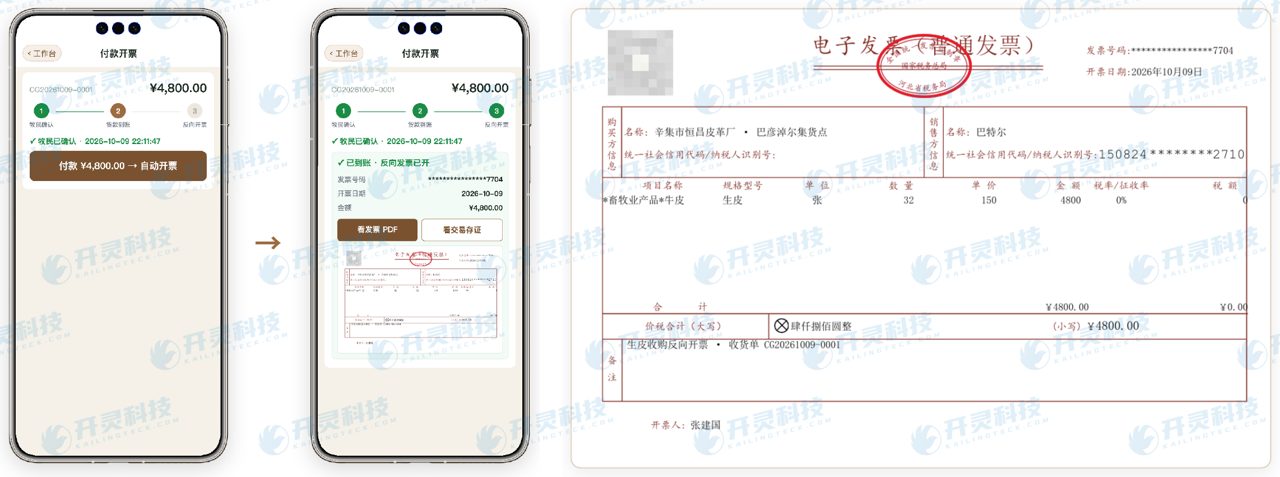
Kailing Technology issues invoices simultaneously after payment for pig collection (information desensitized)
The system also alerts on five types of situations: same card, high frequency, abnormal volume, off-price, and different location. For example, if the same bank card receives pig payments for multiple farmers, or a farmer's delivery volume far exceeds its registered scale, a verification prompt is triggered, helping enterprises keep transporters out of purchase invoicing.
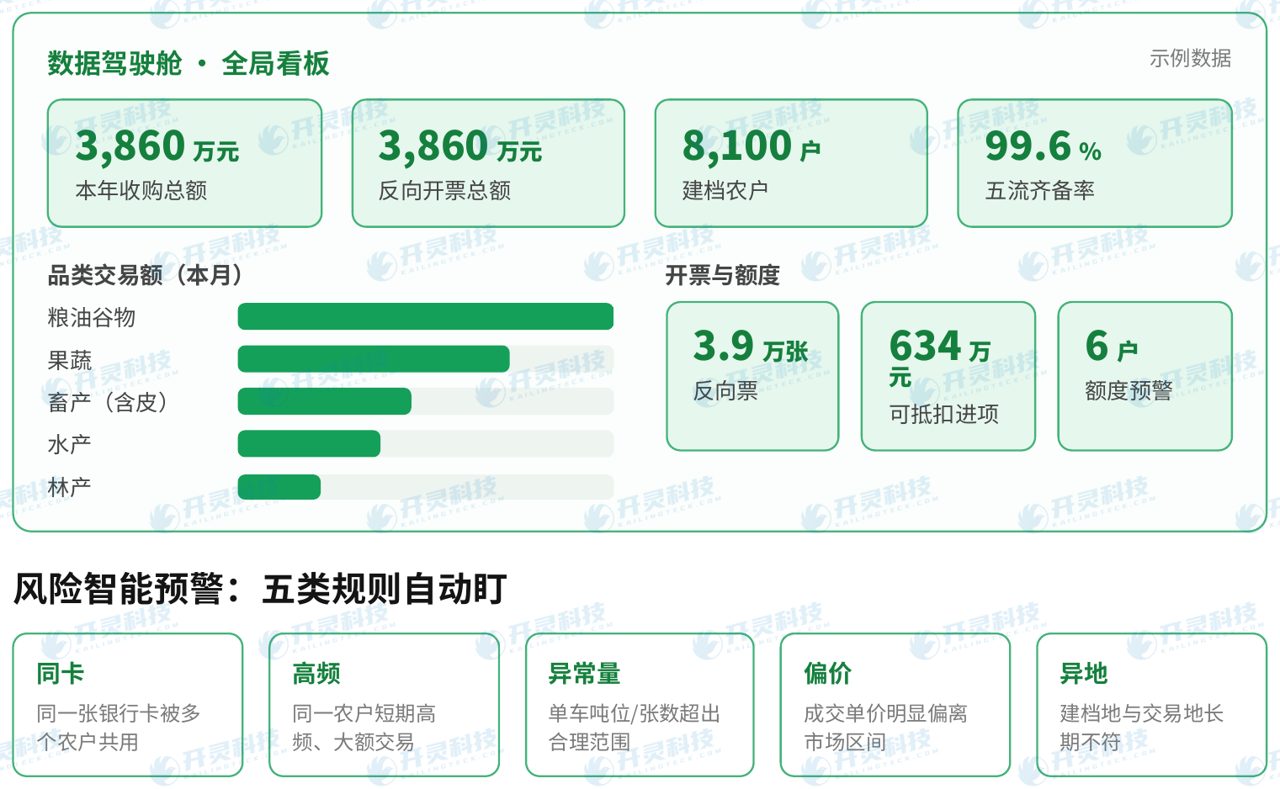
Kailing Technology procurement cockpit: five types of risk alerts (sample data)
▍Three checkpoints for slaughter enterprises
The first checkpoint is at file creation. Before a new farmer's first delivery, identity is verified, a farming certificate is uploaded, and the system records its farming scale; those unable to provide a farming certificate are treated as transporters and required to issue invoices themselves. The second checkpoint is at procurement. When collecting pigs on site or delivering to the plant, photos are taken on site, orders are created by number of pigs and weight, the farmer confirms by scanning the code, and delivery volumes noticeably exceeding the farming scale trigger a verification prompt. The third checkpoint is at payment. Payment is made only to the farmer's own bank card, and the same card receiving pig payments for multiple households triggers an automatic alert.
Once the three checkpoints are in place, the recipients of purchase invoices are basically limited to genuine farmers; for purchases that genuinely need to be made from purchasers, it is sufficient to obtain invoices issued by the counterparty through the normal procurement process, with the two types of business managed separately and accounted for separately in the system.
▍Common misconceptions in live pig procurement
Misconception one: believing that "any pig is tax-exempt." The exemption requires an agricultural producer selling self-produced agricultural products; resold live pigs do not enjoy this exemption. Misconception two: believing that "a broker collecting on behalf can also have a purchase invoice issued." When a broker delivers on behalf of multiple farmers, records should be established per household, confirmed per household, and paid and invoiced per household; it cannot be issued in the broker's single name. Misconception three: believing that "paying cash for pigs is more convenient." Cash payments cannot prove the flow of funds, and once verified, it is difficult to prove the transaction is genuine.
Avoid these three pitfalls so that slaughter enterprises can keep input VAT deductions stable and pig purchases can withstand audits.
▍What else enterprises should watch after issuing purchase invoices
After purchase invoices are issued, enterprises should regularly review three things: first, whether the farmer's delivery volume matches its registered scale, and update the file promptly when the scale changes; second, whether the same farmer's delivery frequency is abnormal, for example, a marketing cycle noticeably shorter than a normal farming cycle; third, whether the payment account is always the farmer's own. The procurement cockpit of the Kailing Technology agricultural product procurement compliance solution displays these indicators by farmer and automatically alerts on anomalies, based on which finance and procurement can arrange spot checks.
In addition, if materials such as farming certificates in the farmer's file have expiration dates, the system will remind users to update them before expiry, avoiding the use of expired materials to support purchase invoices.
▍Summary in one sentence
Whether invoicing for live pigs is tax-exempt depends on just one point: whether the person selling the pigs raised them itself. If raised by itself, it is exempt and the purchaser may issue a purchase invoice; if bought and resold, it is not exempt and the seller issues invoices itself. Once this point is verified clearly, most of the invoicing issues in live pig procurement are resolved.
▍FAQ
Q: Is invoicing for live pigs sold by farmers tax-exempt?
A: A farmer selling live pigs it has raised itself constitutes an agricultural producer selling self-produced agricultural products, which is exempt from VAT.
Q: Is reselling live pigs by a purchaser tax-exempt?
A: Not exempt. Reselling purchased live pigs is not self-production; general taxpayers calculate and pay VAT at the 9% rate.
Q: Can a slaughterhouse issue a purchase invoice to a live pig purchaser?
A: No. Purchase invoices apply only to purchasing self-produced agricultural products from individual agricultural producers; the purchaser should issue invoices itself in accordance with regulations.
Q: How much can be deducted when purchasing live pigs from farmers?
A: The input tax is calculated based on the purchase price stated on the agricultural product purchase invoice and the 9% deduction rate.
To distinguish self-production from resale in live pig procurement and have a solid basis for deductions, welcome to learn about the Kailing Technology agricultural product procurement compliance solution: https://www.kailingteck.com/fxncp/ .
As a national high-tech enterprise, Kailing Technology focuses on the digital and intelligent transformation of enterprise business-finance-tax and operations management, providing software products, system integration, implementation and delivery, and operational services for various government agencies, institutions, group enterprises, and SMEs.
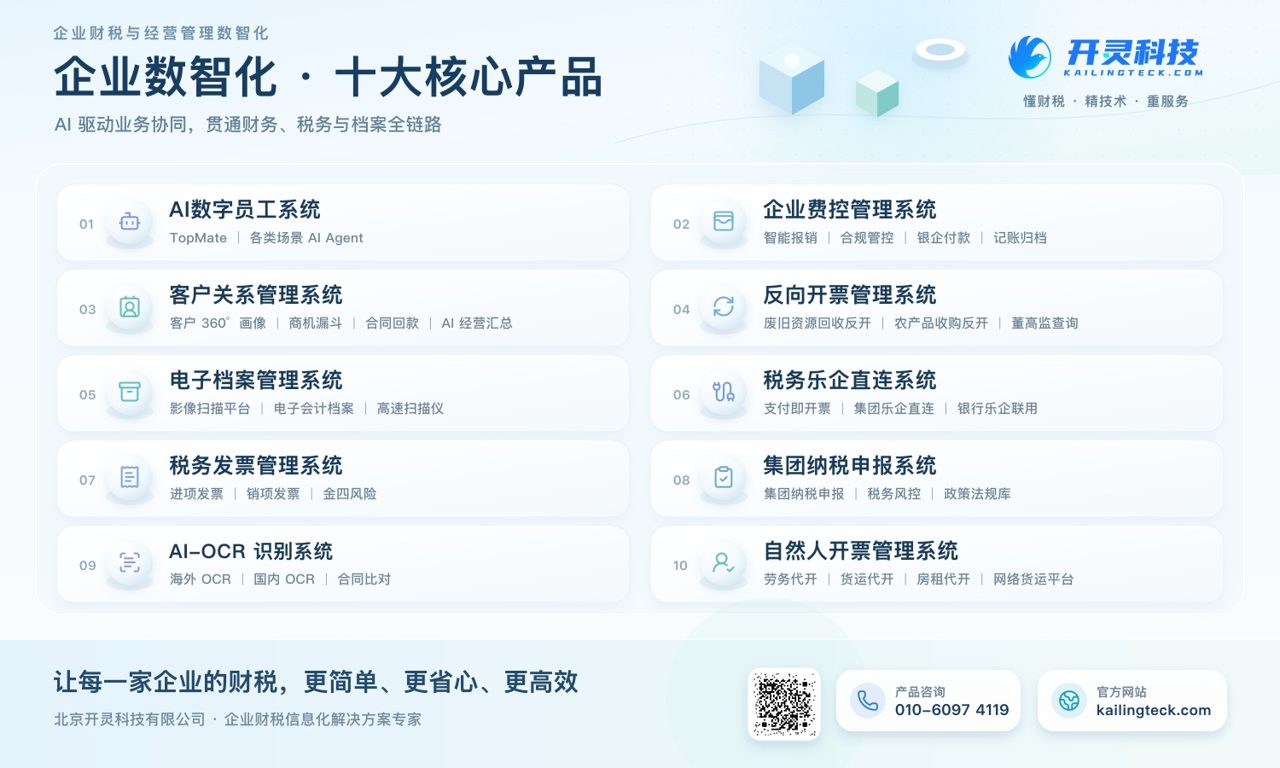
The company has now formed ten core product lines, including: AI digital employee system, enterprise expense control management system, customer relationship management system, reverse invoicing management system, invoice issuance for individuals management system, electronic archives management system, tax fully digitalized e-invoice Leqi system, tax invoice management system, group tax filing system, and AI OCR recognition system. It is committed to connecting enterprise business, finance, tax, funds, and archive data to help customers improve operational efficiency, business-finance-tax compliance capabilities, and digital management levels.
If you have any business-finance-tax digital transformation needs, welcome to contact us. Beijing Kailing Technology will serve you wholeheartedly.
Keywords: Is invoicing for live pigs tax-exempt, live pig purchase invoice, is invoicing by farmers tax-exempt, live pig self-production and self-sales invoice, live pig resale VAT, Kailing Technology agricultural product procurement compliance solution, five flows unified
As a comprehensive business-finance-tax digitalization solution service provider, Kailing Technology provides business-finance-tax management digital transformation products and operational services for various government agencies, institutions, and large, medium, and small enterprises. The product line includes: solutions for sales contract management system, procurement contract management system, fully digitalized Leqi interface project, automatic output invoicing system, reverse invoicing system, invoice issuance for individuals system, employee expense control and reimbursement system, input VAT invoice management system, supply chain collaborative reconciliation system, image AI OCR recognition system, automatic financial bookkeeping system, electronic accounting archives system, etc., comprehensively driving the digitalization process across various fields.
Consultation Hotline: 18513895936 / 010-60974119 Location: Beijing