
The price of swimming crabs is determined only after acquisition and grading; how are invoices checked? The Kailing Technology agricultural product acquisition reverse invoicing system associates farmers, grading and payment by batch
Swimming crabs are first weighed in total when landed at the farming site, and then graded by specification, vitality and damage after arriving at the factory. The initial weight and the final settlement amount are not a single-line multiplication. The Kailing Technology agricultural product acquisition reverse invoicing system saves the farmer, arrival and grading results by batch, and then connects the confirmed price to payment and acquisition invoices.

▍Fix the batch and farmer at the pond first
The acquirer records the farmer's identity, self-production status, harvest time, pond or receiving location, number of baskets and initial weight. The weight of packaging baskets, ice and water needs to be distinguished from the net weight basis; when multiple households share a vehicle, batch labels are attached separately and transport handover is established. In this way, even if sorting happens after arrival at the factory, it is known which farmer each basket came from.
Pond-side photos and handover records help restore the condition of the goods, but final pricing must still be based on the acceptance and grading results agreed by both parties. If there is loss in transit, first check the seal, transport duration, and quantity at the plant, then determine the attribution of the difference.
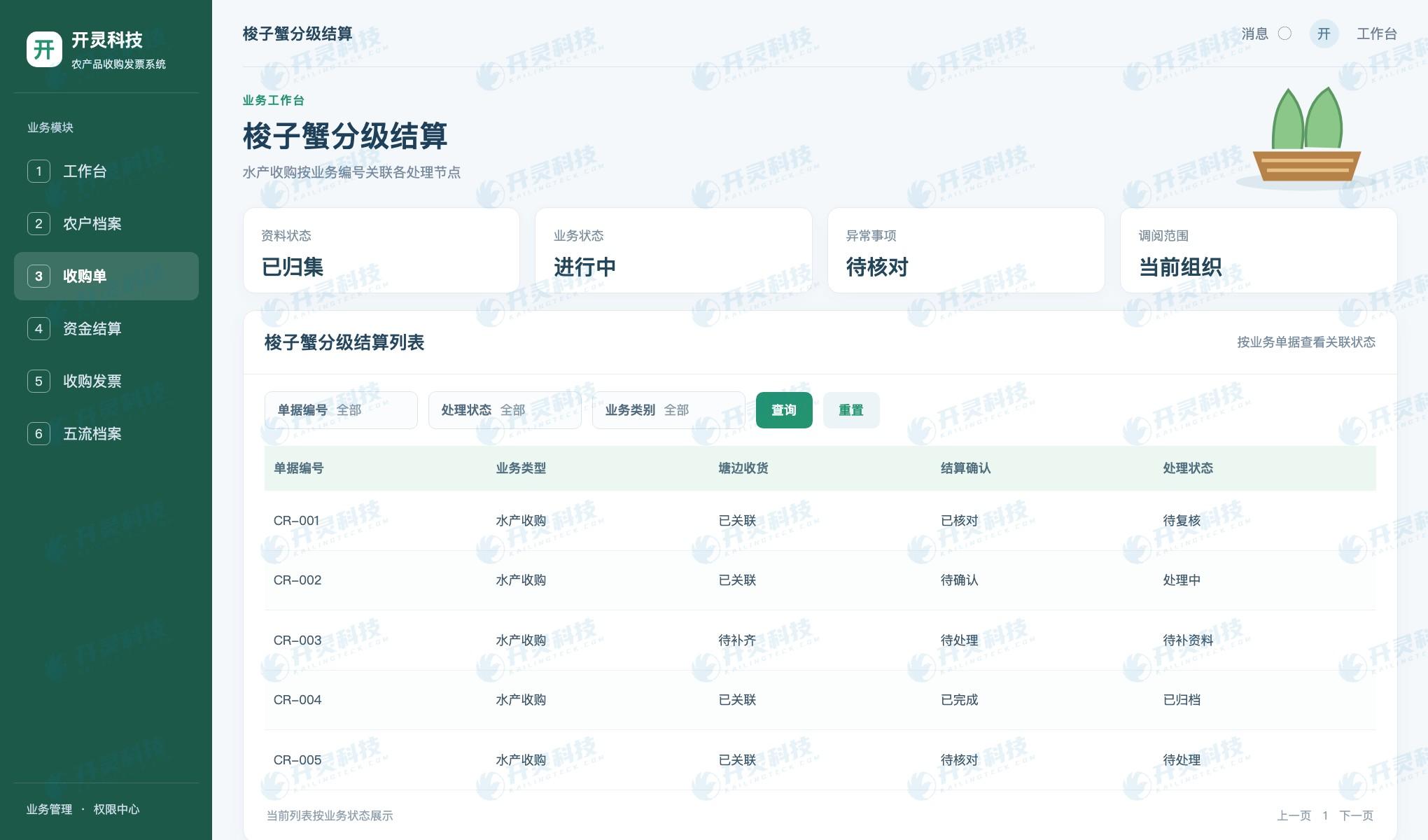
Swimming crab grading settlement business list
▍Grading records for each purchase batch
Plant acceptance can be classified by specification, vitality, damage, impurities, etc. For each grade, record the quantity, unit price, and handling result, and list returned or separately handled portions separately. If the same household has two batches of swimming crab arriving at the plant at different times, the grading details should also be kept separately, and a monthly average grade must not cover specific transactions.
The settlement statement formed after grading should be recalculable: the priced weight of each grade multiplied by the corresponding price, then deducting items confirmed by both parties. If prices are adjusted temporarily, record the effective time and confirmation process. What finance sees is the grade-by-grade composition, not just a lump sum.
▍Farmer confirmation is the gate before payment
The enterprise gives the grading details and settlement amount to the farmer for confirmation, then initiates payment. Bank receipts are linked to purchase orders; when a batch is paid in installments, record each amount and the unpaid balance. For disputed batches, keep them in pending confirmation status and do not mix goods that have not reached agreement into payments for other batches.
When issuing agricultural product purchase invoices, check the applicable conditions of the purchasing entity, the farmer's self-produced attribute, the product, quantity, and price. The invoice amount should correspond to the confirmed settlement result, and invoice status and payment status should be displayed separately.
▍Five-flow evidence shows the complete process of change
The Kailing Technology system connects farmer documents, transaction confirmation, pond-side receiving, cold-chain handover, factory grading, bank payment and invoices. Looking up an invoice shows which grades of crab make up its amount; looking up a pond-side receiving slip shows which acceptance adjustments were made before final settlement.
If there is one extra or one missing box at the plant, the anomaly should stop at the specific batch and mark the handling position. Converting the difference into an average unit price only at month-end cannot be explained to farmers and makes it difficult to restore the actual transaction during spot checks.
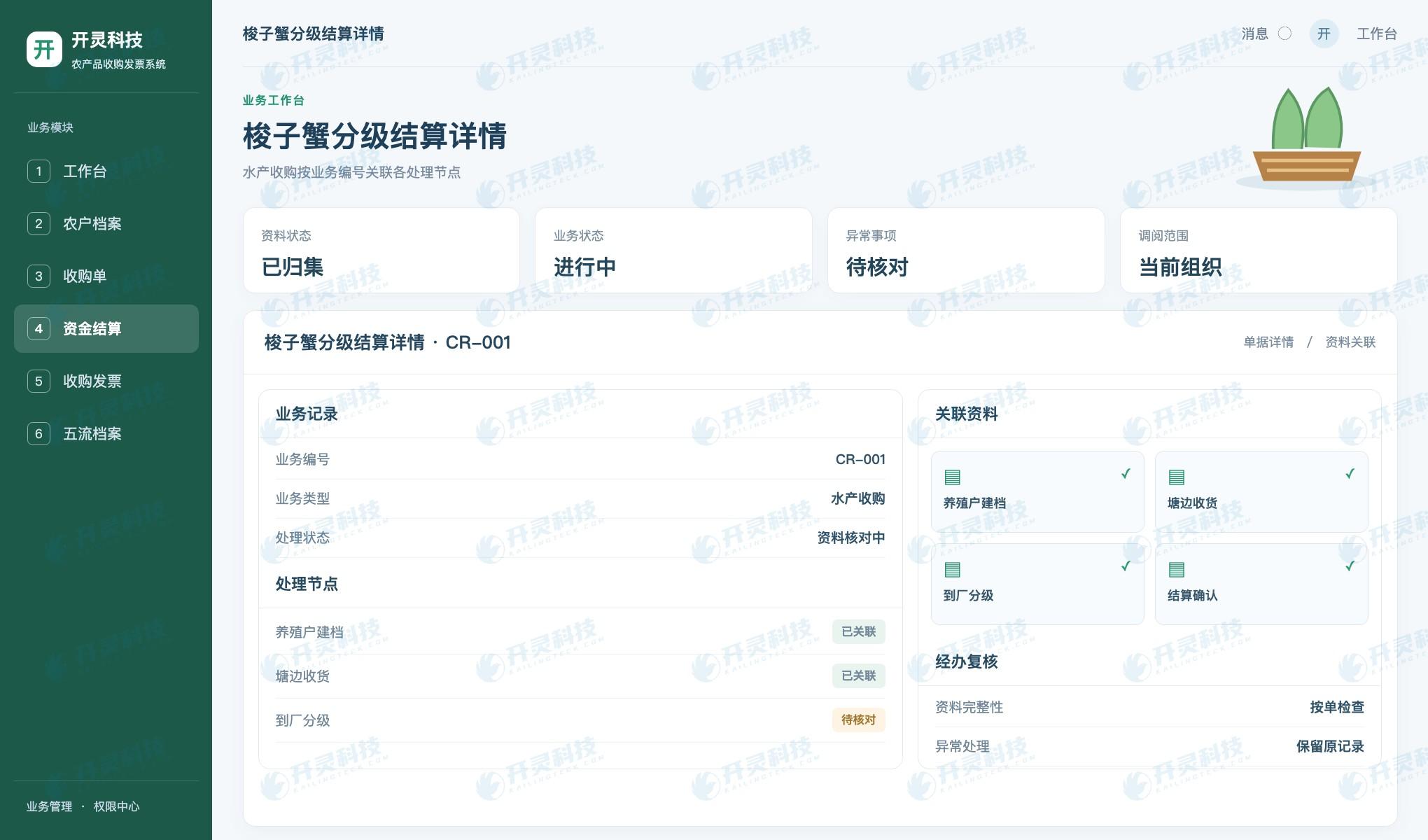
Swimming crab grading settlement documents and document association
▍Verify with grading dispute scenarios
For trial operation, select a batch of transactions with two grades, some damaged goods, and one household's payment returned. Sales staff trace forward from the pond-side batch to factory grading, finance traces backward from the invoice to farmer confirmation and amounts at each grade, and the cashier checks payment status. Only when the quantities and amounts of all three paths correspond can the business chain truly be connected.
For seasonal peaks, the system can arrange to-dos by "pending grading, pending confirmation, pending payment, paid but not invoiced," so on-site staff handle fresh goods first while finance can still catch up with invoices and payments the same day.
▍How quantities are conserved before and after grading
The total net weight received at the pond side, the net weight accepted at the plant, and the aggregate of each grade should be mutually explainable. Ice water, packaging, and in-transit loss need to be recorded separately; after grading, damaged, returned, and pending goods should also have destinations. Simply adding the quantities of Grade A and Grade B may omit non-priced portions.
Price calculation must be based on the actual priced quantity. For each grade, list the unit price, quantity, and subtotal, then aggregate them into the amount payable to the farmer; if there are deductions or supplementary payments, state the agreed basis.
Business staff can check this detail before farmer confirmation. If a correct total is pieced together from incorrect grade allocations, disputes may still arise later.
▍Cold-chain handover is independent evidence
Before aquatic products are graded at the factory, they may go through loading, sealing, cold-chain transport and unloading. The system saves handover time, vehicle and photos by batch, making it easy to explain in which segment the quantity change occurred. Cold-chain documents explain the transport process and do not replace farmer identity or grading settlement.
When multiple households share a truck, seals and basket labels help distinguish owners; if mixed boxes are found at the plant, on-site personnel should first verify attribution, then form household-specific prices. The whole-truck difference must not be averaged across all farmers.
Kailing Technology solutions place these steps in the five-flow evidence chain, so that when checking invoices you can see the change process from pond side to payment.
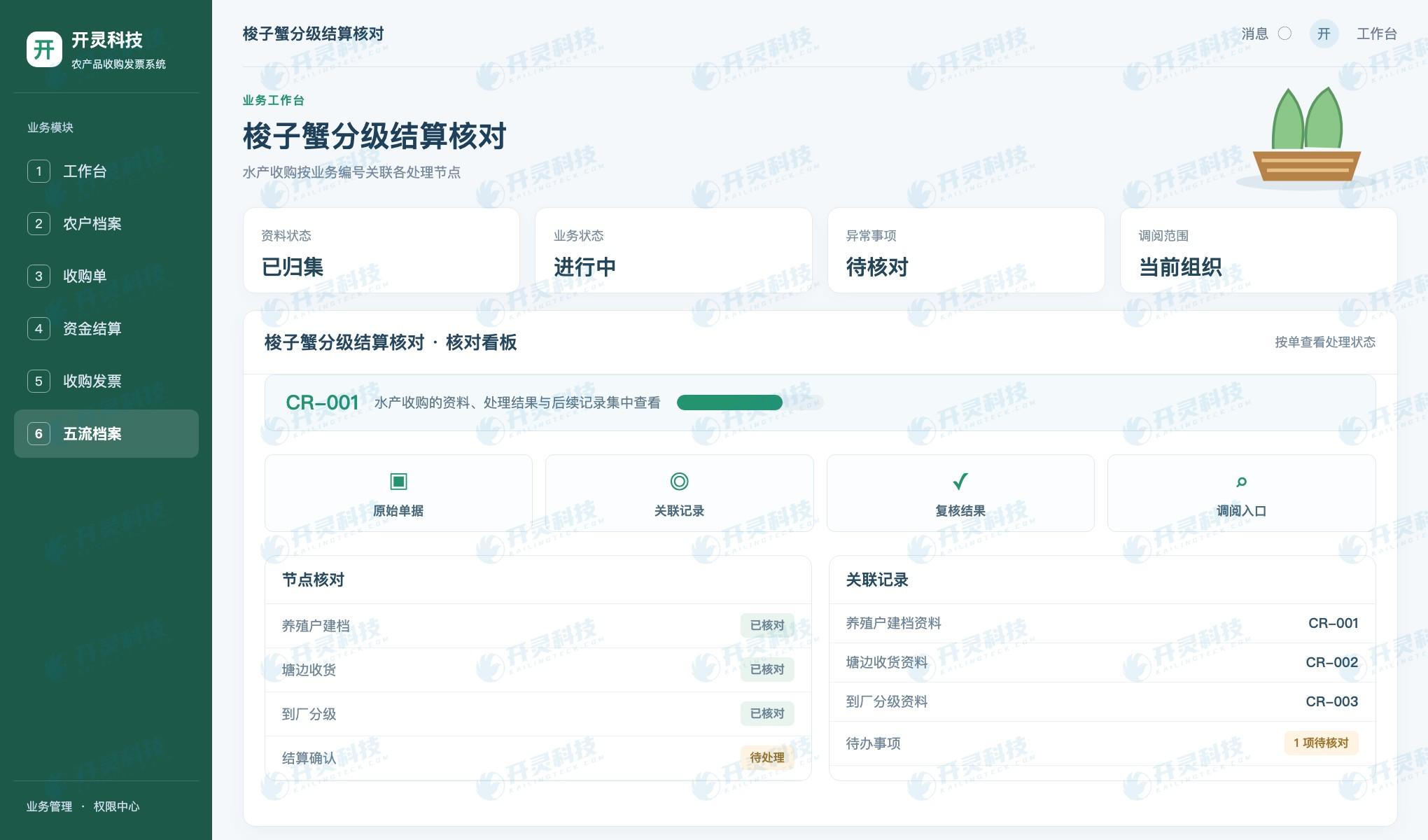
Swimming crab grading settlement node check
▍Handling order for disputed batches
If the farmer does not agree with the grading, first save the original receiving data, quality inspection photos, and communication between both parties, and then have authorized personnel review. When the review conclusion changes the amount, the system records the original settlement and the new settlement to avoid deleting old records.
Batches that have already been paid or invoiced need further checking of differences and invoice handling; batches not yet completed should have subsequent steps suspended. Other undisputed batches can proceed independently without stopping the whole truck.
During trial operation, focus on price adjustments after grading, partial returns, and cross-day payments. Every change must explain how quantity and amount are formed, so that farmer purchase invoices can withstand item-by-item recalculation.
▍Timeliness and vouchers for fresh goods
The vitality and grade of swimming crabs change with transport time, so the times at the pond, loading, arrival at the factory and grading should be recorded continuously. If late arrival at the factory causes quality differences, this can be analyzed based on handover, photos and transport records, rather than vaguely saying "loss" after the fact.
Business staff should distinguish grading loss from packaging moisture, as different causes correspond to different settlement methods. The payable amount is formed only after both parties confirm, and the invoice references this confirmation result. Retaining both the original weighing and the final grading can explain why the invoice quantity or amount differs from the initial measurement at the pond.
In the peak aquatic season there are many batches, and managers can view pending grading, grading disputes, payment returns and invoicing failures separately. The process does not need to stop entirely because of a few exceptions; the system locks the exception to the specific farmer and batch.
The Kailing Technology agricultural product purchase reverse invoicing system gradually consolidates real-time business facts into a verifiable purchase order. When finance looks at the invoice later, they can still know which grade, which weighing, and which payment supported the amount at that time.
▍Effective basis for graded prices
Swimming crab of the same specification may have different quotes in different purchase periods. The system saves price versions and applicable time points, and grading results reference the correct version.
If the farmer objects to the vitality grade, the review should retain the original grading, re-inspection photos, and final confirmation, and should not directly overwrite the old value. Payment and invoicing are handled based on the final confirmation result.
Only when grading, price, and quantity can all be traced back can the complete change from pond-side weighing to invoice amount be explained.
Farmers can view the quantity of each grade and the final payment for their own batches, without needing to understand other people's goods on the whole truck. If re-inspection at the plant changes the grade, the system shows the reason for adjustment, the reviewer, and the confirmation time. When finance traces back from the invoice, they can also see the grading changes, rather than mistakenly assuming the invoice amount was arbitrarily changed after payment.
▍FAQ
Q: Can the initial weight at the pond be used directly as the invoicing quantity?
A: Verification should be based on the confirmed priced quantity after agreed acceptance and grading.
Q: What should be retained when grading leads to a price reduction?
A: Retain the original receipt, graded quantities, price changes, and farmer confirmation.
Q: Can multiple batches from one household be paid together?
A: It can be arranged by transaction, but it must be decomposable into each purchase order and amount.
Visit Kailing Technology to learn about related products and implementation plans: https://www.kailingteck.com/fxncp/ .
As a national high-tech enterprise, Kailing Technology focuses on the digital and intelligent transformation of enterprise business-finance-tax and operations management, providing software products, system integration, implementation and delivery, and operational services for various government agencies, institutions, group enterprises, and SMEs.
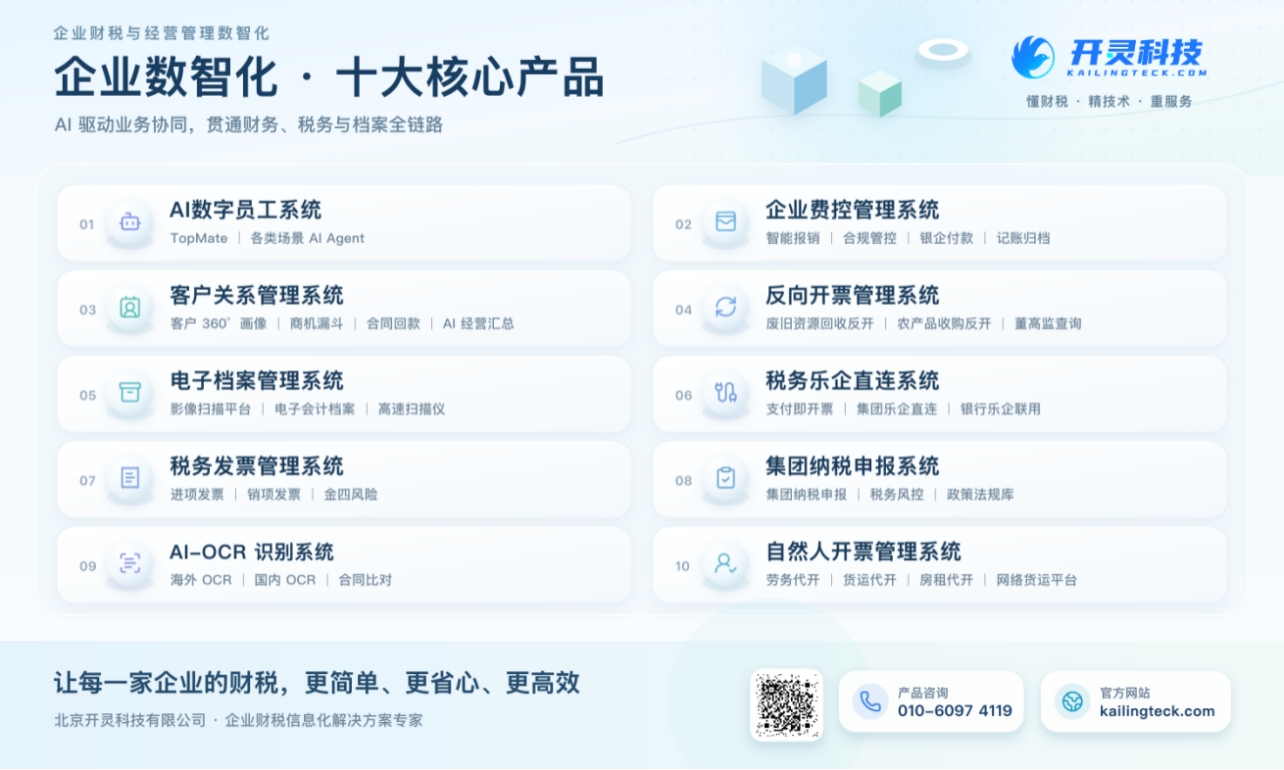
The company has now formed ten core product lines, including: AI digital employee system, enterprise expense control management system, customer relationship management system, reverse invoicing management system, invoice issuance for individuals management system, electronic archives management system, tax fully digitalized e-invoice Leqi system, tax invoice management system, group tax filing system, and AI OCR recognition system. It is committed to connecting enterprise business, finance, tax, funds, and archive data to help customers improve operational efficiency, business-finance-tax compliance capabilities, and digital management levels.
If you have any business-finance-tax digital transformation needs, welcome to contact us. Beijing Kailing Technology will serve you wholeheartedly.
Keywords: Swimming crab acquisition invoices, aquatic product grading, farmer payment, five-flow evidence, Kailing Technology
As a comprehensive business-finance-tax digitalization solution service provider, Kailing Technology provides business-finance-tax management digital transformation products and operational services for various government agencies, institutions, and large, medium, and small enterprises. The product line includes: solutions for sales contract management system, procurement contract management system, fully digitalized Leqi interface project, automatic output invoicing system, reverse invoicing system, invoice issuance for individuals system, employee expense control and reimbursement system, input VAT invoice management system, supply chain collaborative reconciliation system, image AI OCR recognition system, automatic financial bookkeeping system, electronic accounting archives system, etc., comprehensively driving the digitalization process across various fields.
Consultation Hotline: 18513895936 / 010-60974119 Location: Beijing