
We already use an expense control system; do we still need a separate electronic accounting archives system? How does Kailing Technology's electronic accounting archives management system connect?

The expense control system already saves invoices, reimbursement forms, and approval records. Why should finance still consider electronic accounting archives? The key is that after reimbursement processing ends, vouchers, receipts, ledgers, and reports must be organized, kept, and accessed long-term according to accounting archive rules. Kailing Technology connects expense control with the electronic accounting archive management system, allowing business documents to continue into a manageable archive lifecycle.

▍Expense control handles processing, archives handle long-term management
Expense control focuses on invoice collection, verification, expense standards, approval, payment, and voucher creation. Electronic accounting archives must receive electronic accounting materials, organize them by category, year, and retention period, and complete detection, numbering, archiving, access, and expiration appraisal. The two handle different stages of the same expense; interface integration is more important than building duplicate invoice folders.
Attachments already stored in expense control do not mean these materials have completed accounting archive arrangement. Enterprises need to confirm whether the original invoice files, reimbursement forms, approval records, vouchers and bank receipts are complete, and whether they can be retrieved by original order relationships.
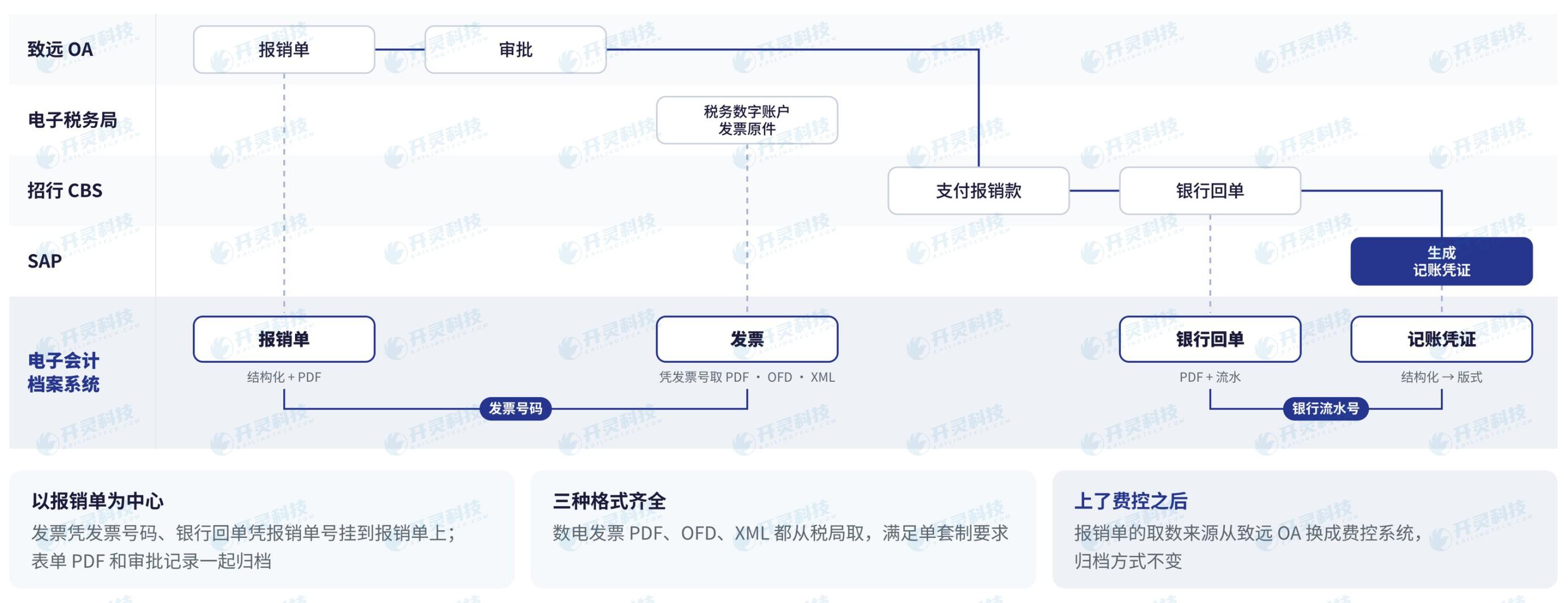
▍First determine which materials are handed over
Take a travel expense reimbursement form as an example: upstream there are invoices and itinerary materials, in the middle there is expense attribution and approval, and downstream there are payment receipts and accounting vouchers. When the archive system receives these materials, it must retain the business order number, voucher number, document number and file metadata in order to link them by rule.
Beyond the expense control system, ledgers, reports, vouchers, and bank receipts in ERP still need to be included in the corresponding archiving scope. Kailing Technology's electronic accounting archive management system places files formed by multiple systems into the same archive view through material receiving and business association.
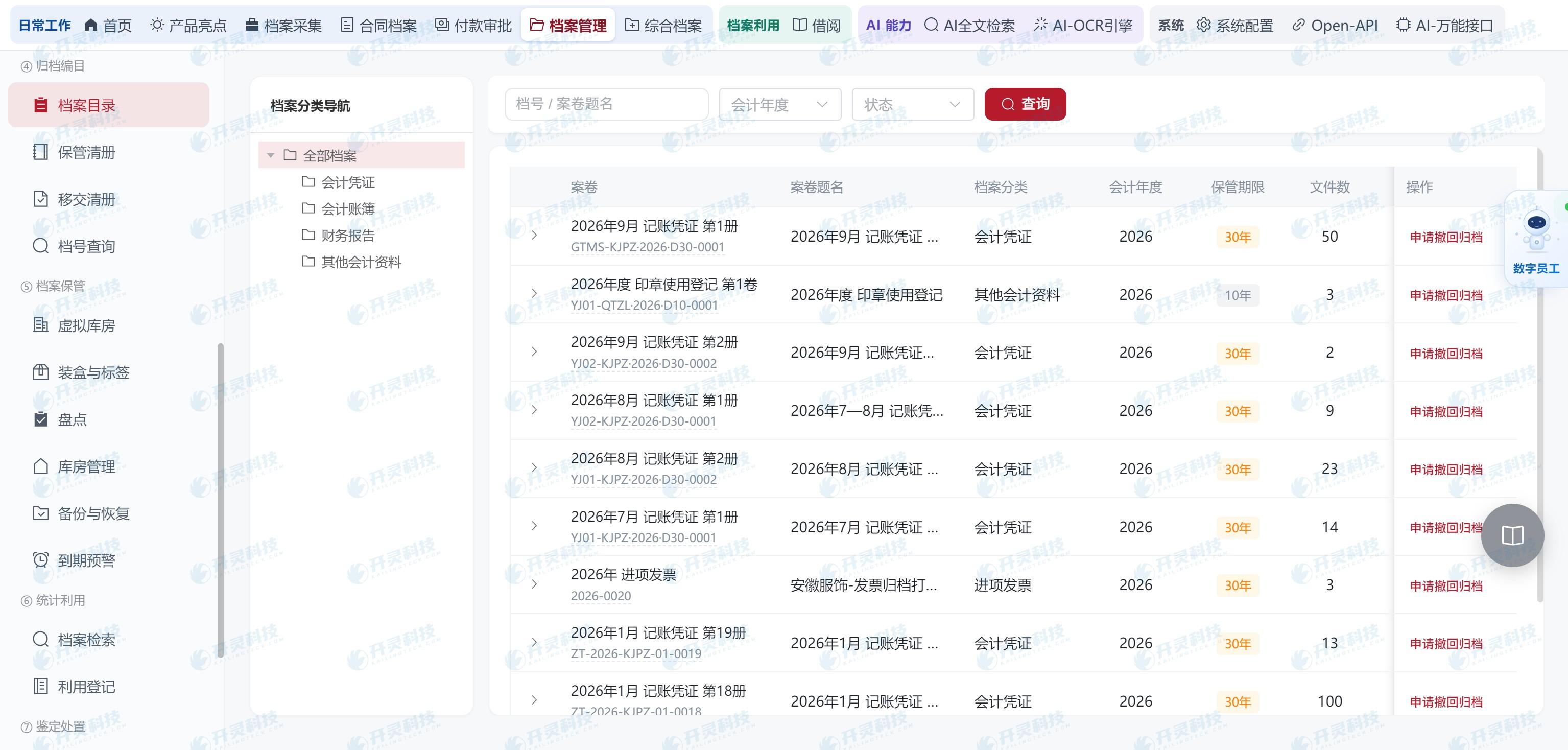
▍Perform completeness and usability checks before archiving
The archive system can check required attachments by rule, whether files can be opened, and whether metadata corresponds, and form a pending list for abnormal materials. After the handler completes missing receipts or adjusts incorrect associations, the materials enter sorting and archiving. The relationship between vouchers and invoices explains better than "upload succeeded" whether the archives are usable.
The four-property inspection covers authenticity, integrity, usability and security; the specific items are determined by enterprise policies and system configuration. Inspection results cannot replace the review of the original economic business, but they keep archived materials queryable and verifiable over the long term.
▍Reflect the value of division of labor during retrieval
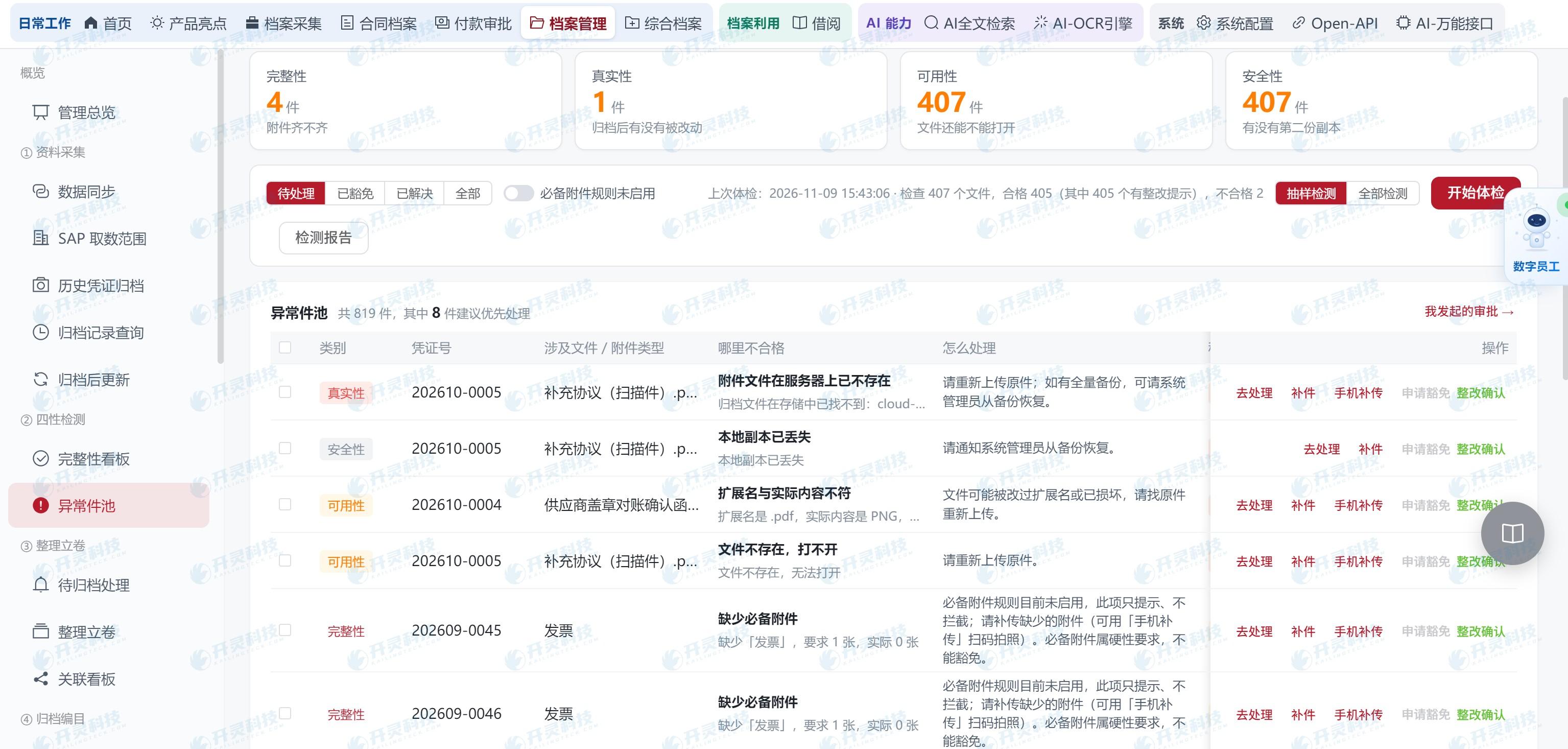
When auditors query a certain expense within their permissions, they can expand the reimbursement form, invoices and bank receipts from the accounting voucher, instead of exporting separately from multiple systems. The archive system records query, borrowing and utilization behavior; the expense control system continues to handle daily business processing.
If the enterprise's expense control already has a simple attachment repository, it should still assess whether it meets requirements for retention periods, archive numbers, four-property inspection, backup and expiry appraisal. The Kailing Technology solution integrates according to existing system boundaries, so that finance staff do not have to manually organize another copy of the same materials.
▍Handover table from reimbursement completion to archive receipt
Enterprises can list the items that a travel expense reimbursement form needs to hand over: original invoice files, expense form, approval records, bank receipts, accounting vouchers and necessary business attachments. For each item, specify the originating system, number, receiving time point and responsible person.
This handover table helps reveal that although the expense control system has invoices, receipts are on the bank platform and vouchers are in ERP. The Kailing Technology archive system receives through association rather than requiring finance to manually copy into a folder.
When red-letter reversals, cancellations or voucher adjustments occur upstream, the archive side should receive the change relationships and retain the old status. If only the first successful data is received, the archives will gradually deviate from the accounting facts.
▍What each system is responsible for
Expense control continues to handle employee form filling, risk verification, approval, and payment; the archive system organizes by accounting category after the business is completed, performs four-property detection, assigns archive numbers, keeps, accesses, and appraises. Clarifying this line of responsibility prevents employees from submitting the same invoice twice on both sides during implementation.
Interface joint debugging not only checks whether files can be transferred, but also verifies the organization, year, voucher number and original business order number. When materials are missing, the archive side returns the exception to the corresponding role for handling.
If the enterprise already has an expense control attachment retention function, it can assess item by item whether it covers the complete archive management requirements under regulations such as Order No. 79, then determine the integration and division of labor.
▍Implementation sequence for connecting the two systems
Step one is to inventory the existing files, fields, and statuses in expense control and confirm whether original invoices can be obtained; step two is to verify how ERP vouchers and bank receipts are obtained; step three is to map order numbers, organizations, and years. Only when materials can be accurately associated first will archiving rules have reliable input.
The pilot might as well start with travel reimbursement, because it involves multiple invoices, approval, and payment at the same time. Select one normal order, one red-reversal order, and one order whose receipt arrives late, to test whether the archive side can display different statuses and ultimately complete them all.
Then configure accounting categories, retention periods, four-property detection, and archive numbers. Archive administrators query associated materials from vouchers, and finance verifies the handover result from the original reimbursement form. After both parties confirm, expand to procurement payment and other businesses.
The connection between Kailing Technology's expense control and archive systems ultimately reduces duplicate organizing and cross-platform searching for materials. The enterprise's existing system investment becomes the entry point for archive materials, while the archive system undertakes long-term management and controlled utilization.
▍FAQ
Q: Is the invoice folder in expense control the same as electronic accounting archives?
A: The invoice folder focuses on business processing; archives also involve arrangement, retention periods, inspection, retrieval and disposal.
Q: If we already have another vendor's expense control, can it still be integrated?
A: An integration plan can be developed based on the existing system interfaces, fields and document formats, and accepted using samples.
Q: How long after reimbursement is archiving done?
A: Determined by the enterprise's accounting treatment and archiving system; the system can configure receiving and archiving nodes.
Visit Kailing Technology to learn about related products and implementation plans: https://www.kailingteck.com/eaa/ .
As a national high-tech enterprise, Kailing Technology focuses on the digital and intelligent transformation of enterprise business-finance-tax and operations management, providing software products, system integration, implementation and delivery, and operational services for various government agencies, institutions, group enterprises, and SMEs.
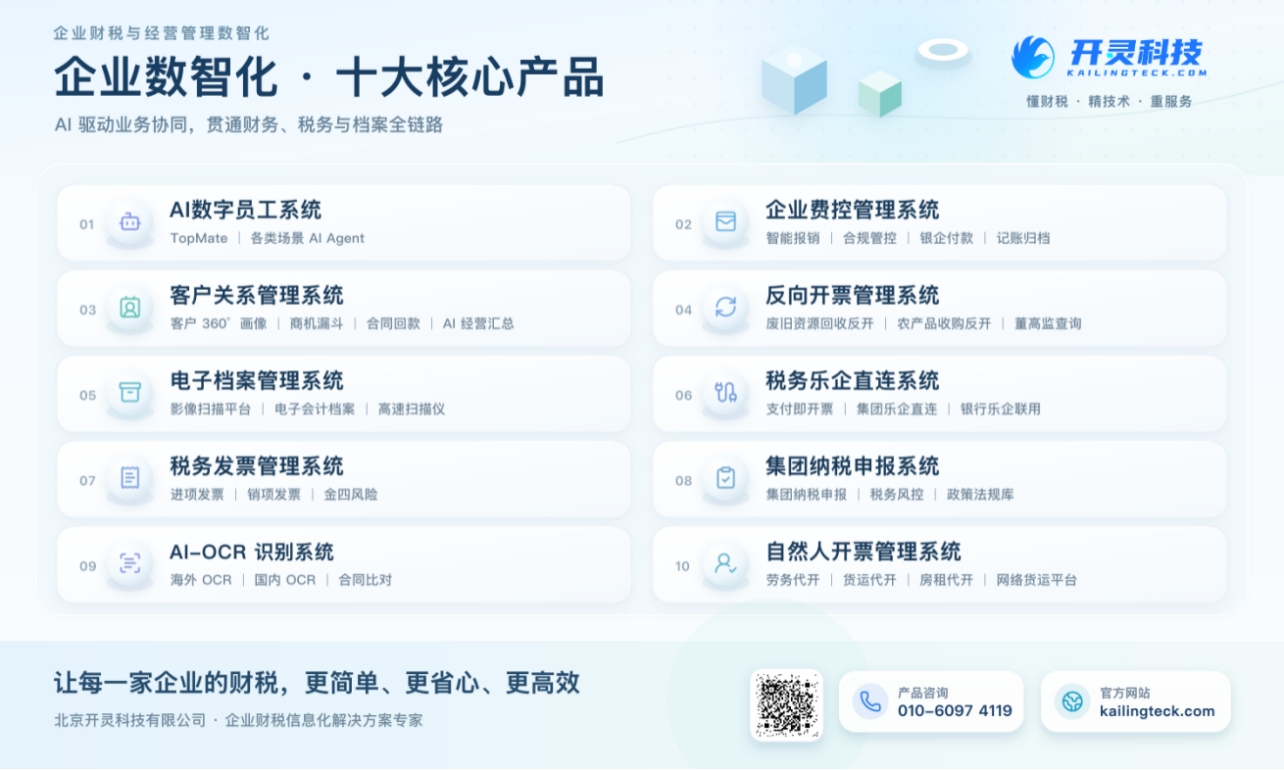
The company has now formed ten core product lines, including: AI digital employee system, enterprise expense control management system, customer relationship management system, reverse invoicing management system, invoice issuance for individuals management system, electronic archives management system, tax fully digitalized e-invoice Leqi system, tax invoice management system, group tax filing system, and AI OCR recognition system. It is committed to connecting enterprise business, finance, tax, funds, and archive data to help customers improve operational efficiency, business-finance-tax compliance capabilities, and digital management levels.
If you have any business-finance-tax digital transformation needs, welcome to contact us. Beijing Kailing Technology will serve you wholeheartedly.
Keywords: Expense control and electronic accounting archives integration, electronic voucher archiving, archive system, Kailing Technology
As a comprehensive business-finance-tax digitalization solution service provider, Kailing Technology provides business-finance-tax management digital transformation products and operational services for various government agencies, institutions, and large, medium, and small enterprises. The product line includes: solutions for sales contract management system, procurement contract management system, fully digitalized Leqi interface project, automatic output invoicing system, reverse invoicing system, invoice issuance for individuals system, employee expense control and reimbursement system, input VAT invoice management system, supply chain collaborative reconciliation system, image AI OCR recognition system, automatic financial bookkeeping system, electronic accounting archives system, etc., comprehensively driving the digitalization process across various fields.
Consultation Hotline: 18513895936 / 010-60974119 Location: Beijing