
Multiple outlets are all purchasing scrap aluminum; how can finance reconcile invoice and payment uniformly? The Kailing Technology renewable resource reverse invoicing system aggregates five-flow compliance records by outlet.

When headquarters finance reviews scrap aluminum purchases, it often receives weighbridge tickets, settlement tables and payment lists in different formats from various outlets. Matching summary amounts does not mean every batch of goods, every seller and every invoice matches. The Kailing Technology resource recycling reverse invoicing system aggregates records from the dual perspectives of outlet and purchase order, enabling headquarters to drill down from the summary table to transactions.

▍Outlets first use consistent business numbers
The first step in multi-outlet management is to unify the basis for purchase orders, trips, material grades, and settlement statuses. Each scrap aluminum receipt records the outlet it belongs to, the actual seller, the weighbridge, and the acceptance inbound result, and on-site staff supplement photos and confirmation materials according to permissions. Headquarters does not need to require all outlets to upload a manual report on the same day, but instead views real-time processing status by business number.
Special businesses such as site transfers and cross-site collection on behalf also need to record which location the goods actually passed through, who completed acceptance, and who initiated payment. Receiving locations cannot be inferred solely from the finance-affiliated company; otherwise, when headquarters checks material flow, it easily sees false discrepancies such as "invoice at site A, goods at site B."
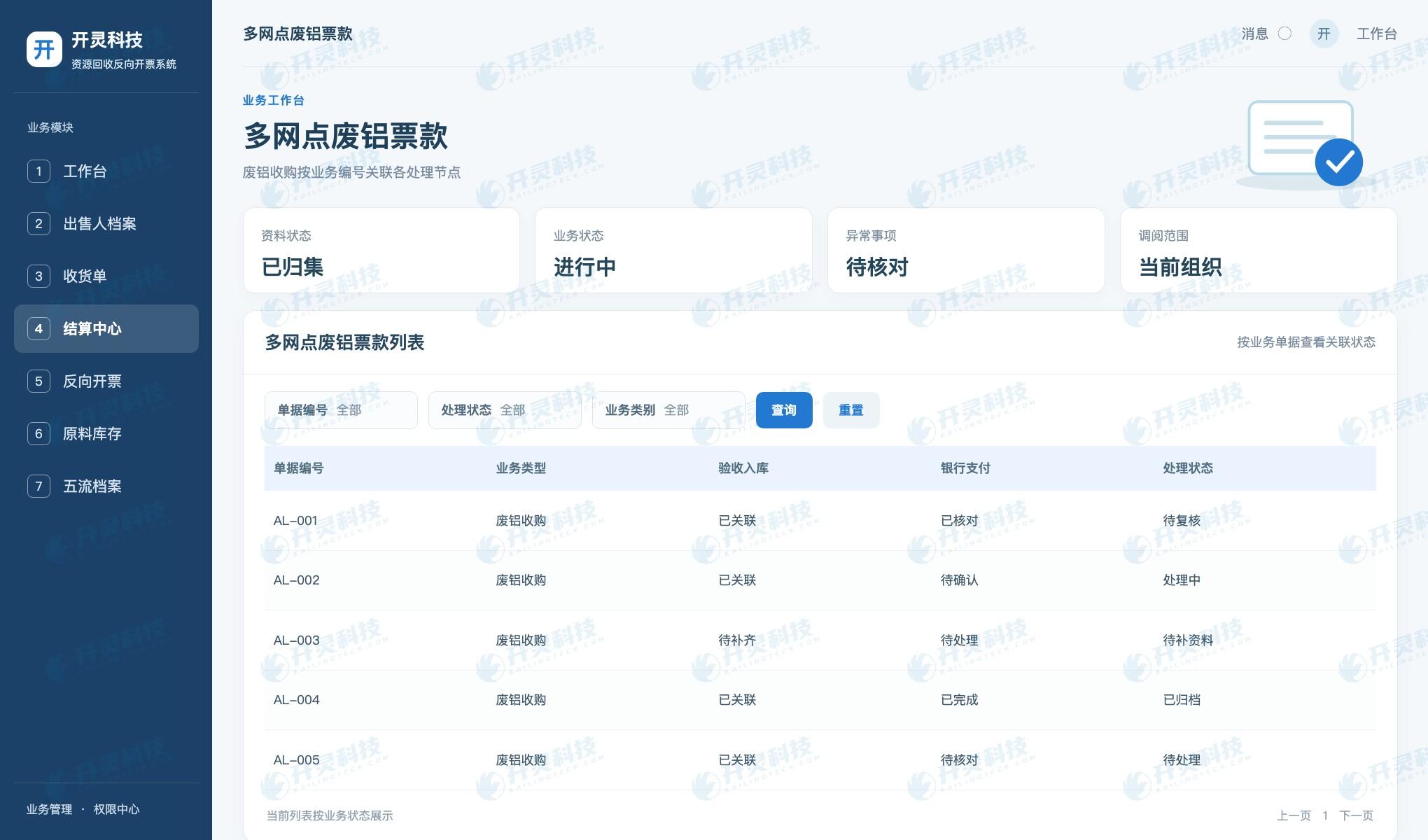
Multi-outlet scrap aluminum invoice-payment business list
▍Split invoice-payment reconciliation into per-order and summary
Line-by-line verification first checks whether the confirmed settlement amount, payment instruction, bank result, and reverse invoice amount correspond. For batch payments, retain each purchase order's amount within the payment batch; when one person delivers multiple times, do not match a single invoice only to the day's total receipts. Site summaries count pending payment, paid but not invoiced, invoice-payment consistent, and abnormal pending review by period.
Differences seen by headquarters should be able to open the original order: whether it is a payment return, invoice issuance failure, or settlement change after impurity deduction. Placing only red figures in reports would push handling responsibility back to outlet phone communication; the system makes differences point to specific order numbers and positions.
▍Five-flow materials are collected by outlet but judged by transaction
Identity verification, transaction confirmation, goods acceptance, fund results, and invoices are five different types of evidence. Headquarters can view each site's completeness rate for each type of material this month, but whether each transaction is complete still requires returning to the seller and corresponding purchase order. One set of business materials uploaded by a site cannot replace the weighbridge tickets and payment records for each truckload of scrap aluminum.
Permissions should also match the outlet organization: on-site personnel maintain their store's receipts, regional finance reviews invoice-payment within their jurisdiction, and headquarters views cross-outlet anomalies and summaries. Cross-organization access retains operation records, so that centralized supervision and business division of labor both hold.
▍Duplicate sellers across outlets must also be identified
An individual may sell scrap aluminum at different sites. When creating records, the same seller is uniformly identified, identity, payment account, and applicable conditions are verified, and cross-site frequency and cumulative transactions are observed. Duplicate names should not be mistakenly merged, and the same person should not be treated as different entities because each site created a separate record.
If the payment account name does not match the seller, delivery is by proxy, or the actual seller is unclear, the system flags it for review; the site first verifies the facts, then decides subsequent invoice handling. Headquarters looks at cross-site risk clues, but final judgment is still based on specific transaction materials.
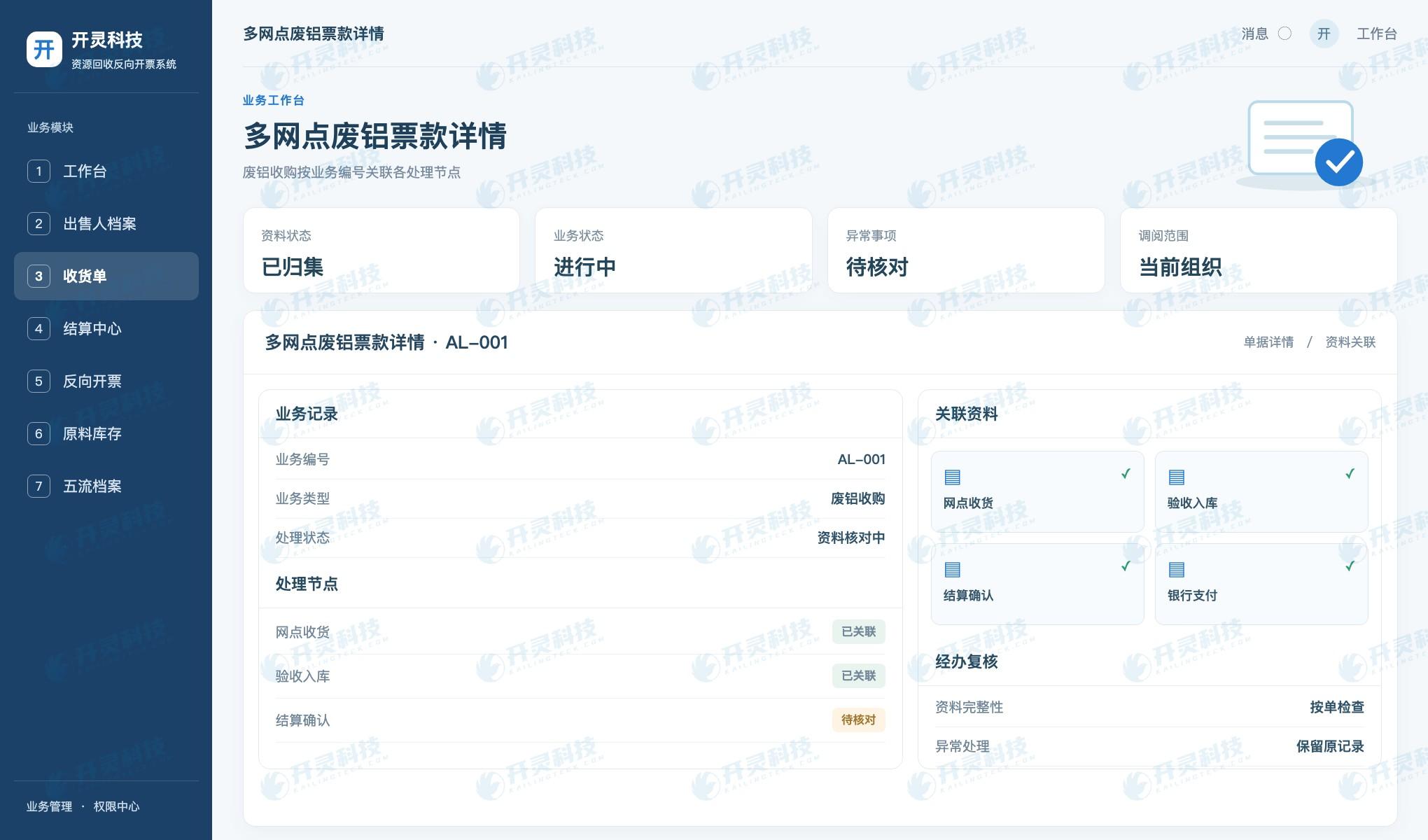
Multi-outlet scrap aluminum invoice-payment document and material association
▍Arrange review at month-end using the exception list
Each month, headquarters pulls anomalies grouped by outlet: received but unsettled, settled but unpaid, paid but not invoiced, invoice amount inconsistent with settlement, and missing five-flow nodes. First handle documents that may affect filing or supplier settlement, then review historical materials that have been pending for a long time.
The Kailing Technology system aggregates by outlet and drills down to purchase orders, so the anomaly list is not a summary table that cannot be traced for accountability. Finance can require outlets to supplement specific weighbridge tickets, bank receipts or confirmation records, and review completion status on the original business order.
▍Trial operation must cover differences between outlets
You can select three outlets for trial operation: one with high business volume, one with low business volume, and one with cross-store transfers. Enter different scenarios using the same set of fields and numbering, and check whether headquarters can separately summarize, drill down, and export reconciliation evidence. Large differences are usually not due to outlets not cooperating, but because acceptance methods, pricing rules, or payment processes have not yet been unified.
Turn these differences into configurable rules and exception handling paths, and then extend to more outlets. The benefit of centralization is that finance no longer repeatedly assembles tables, and the site can also reconcile invoices, payments and evidence at once when business occurs.
▍How headquarters and outlets divide operational responsibilities
Sites are responsible for on-site order creation, photography, weighing, and seller confirmation; regional staff can review grading and settlement; headquarters finance coordinates payment and invoicing. Approval and viewing permissions are configured by organizational level, so headquarters can detect anomalies while preventing one site from modifying another site's original receipts.
If the enterprise uses centralized payment, sites should submit confirmed settlement statements, and headquarters generates payment batches. Bank results are written back to each site document, so the site knows whether funds actually arrived. Centralized payment should not leave only a total transaction record at headquarters while sites still call finance to ask.
Cross-store delivery especially requires clear attribution: the actual receiving site, the cost-bearing site, and the invoicing enterprise may not be the same concept. The enterprise first determines business standards, then configures system fields and report dimensions.
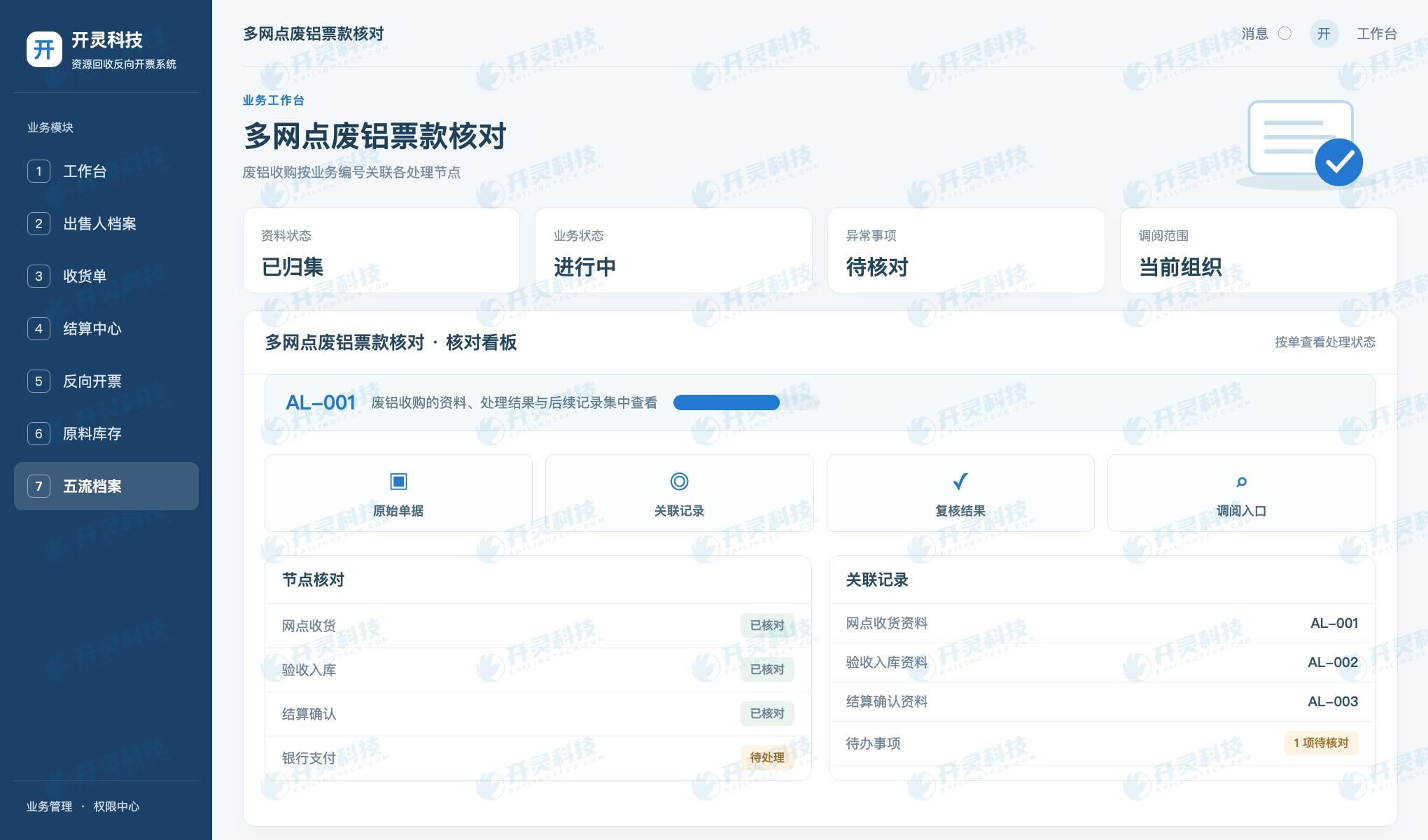
Multi-outlet scrap aluminum invoice-payment node reconciliation
▍Beyond invoice-payment summary, also look at transaction quality
Even if an outlet's total invoice and payment amounts for the month are equal, one scrap aluminum purchase order may be overpaid and another underpaid, exactly offsetting each other. When headquarters views reports, it should be able to drill down to each transaction and compare settlement amount, bank success amount and invoice coverage amount.
Gaps in the five-flow materials are also displayed per document. If a site frequently lacks weighbridge photos, this indicates a problem in the on-site collection process; if paid-but-not-invoiced cases occur repeatedly, the invoicing conditions, interfaces, or financial processing timing may need adjustment. Different anomalies have different owners.
Queries can be made across outlets for repeat sellers, but frequent cross-outlet transactions cannot be automatically deemed non-compliant. The system provides clues, and reviewers judge based on transaction facts and applicable rules.
▍Phased rollout is more stable than one-time expansion
First use representative outlets to determine fields and document statuses, then connect centralized payment and invoicing, and finally add cross-outlet reconciliation. At each stage, headquarters and outlets jointly verify a set of samples, to avoid the system only satisfying management reports while increasing on-site burden.
When importing historical data from the old system, distinguish transactions with complete five-flow materials from records with only amount summaries. Missing materials should be displayed truthfully, and must not be batch-marked as "verified" just to unify progress.
The Kailing Technology solution ultimately helps headquarters form a drillable view: which purchases occurred at each outlet, which already have matching invoice and payment, and which still require supplementary evidence or handling. Management actions are triggered by specific transactions rather than vague totals.
▍A reconciliation sample table headquarters can understand
The sample table can set outlet, purchase order, seller, goods grade, net weight upon warehousing, settlement amount, payment flow, invoice number and missing five-flow items. Headquarters can click any difference to directly see the original attachments and the person responsible for the to-do.
When viewing summaries, management can compare abnormal counts and processing durations by site, but site rankings cannot replace line-by-line verification. For sites with large short-term fluctuations, first check whether new business, price adjustments, or staff changes occurred, then decide on training or rule adjustments.
Finance and sites agree on a daily closing time; late-arriving receipts or invoice results continue to be written back to the original order. In this way, the figures headquarters sees the next day can distinguish truly incomplete documents from those whose information is still in transit.
▍FAQ
Q: Does headquarters need to see the personal data of all outlets?
A: Configure viewing permissions by position and organizational scope; cross-outlet statistics can display status, and accessing details requires authorization.
Q: How to reconcile when the same person delivers across outlets?
A: Identify sellers uniformly, and separately retain each outlet's purchase orders, settlement and payment.
Q: Can batch payments retain only the total receipt?
A: It should be possible to expand the correspondence between the total payment and the amount of each purchase order.
Visit Kailing Technology to learn about related products and implementation plans: https://www.kailingteck.com/fxzy/ .
As a national high-tech enterprise, Kailing Technology focuses on the digital and intelligent transformation of enterprise business-finance-tax and operations management, providing software products, system integration, implementation and delivery, and operational services for various government agencies, institutions, group enterprises, and SMEs.
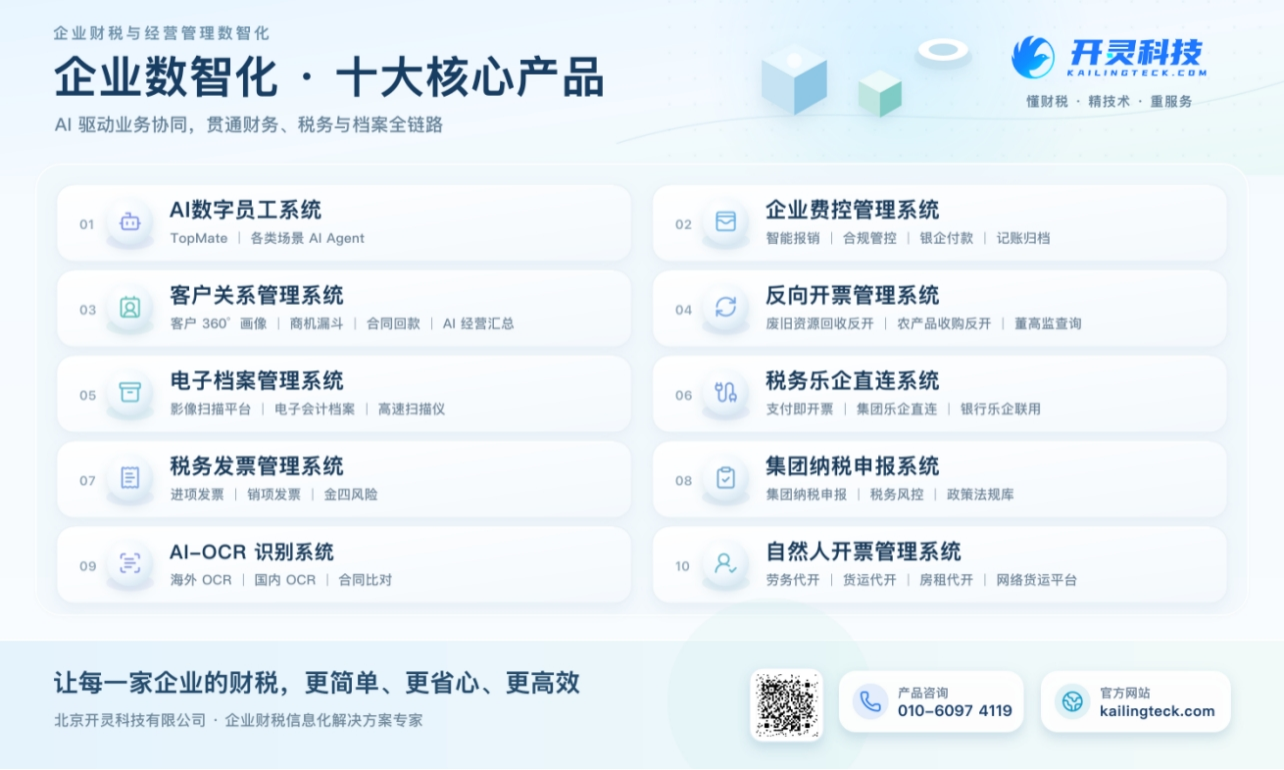
The company has now formed ten core product lines, including: AI digital employee system, enterprise expense control management system, customer relationship management system, reverse invoicing management system, invoice issuance for individuals management system, electronic archives management system, tax fully digitalized e-invoice Leqi system, tax invoice management system, group tax filing system, and AI OCR recognition system. It is committed to connecting enterprise business, finance, tax, funds, and archive data to help customers improve operational efficiency, business-finance-tax compliance capabilities, and digital management levels.
If you have any business-finance-tax digital transformation needs, welcome to contact us. Beijing Kailing Technology will serve you wholeheartedly.
Keywords: Multi-outlet scrap aluminum purchasing, reverse invoicing invoice-payment reconciliation, five-flow compliance, Kailing Technology
As a comprehensive business-finance-tax digitalization solution service provider, Kailing Technology provides business-finance-tax management digital transformation products and operational services for various government agencies, institutions, and large, medium, and small enterprises. The product line includes: solutions for sales contract management system, procurement contract management system, fully digitalized Leqi interface project, automatic output invoicing system, reverse invoicing system, invoice issuance for individuals system, employee expense control and reimbursement system, input VAT invoice management system, supply chain collaborative reconciliation system, image AI OCR recognition system, automatic financial bookkeeping system, electronic accounting archives system, etc., comprehensively driving the digitalization process across various fields.
Consultation Hotline: 18513895936 / 010-60974119 Location: Beijing