
How does Kailing Technology's electronic accounting archive management system connect the "last mile" of financial archive management?
The enterprise has already implemented electronic reimbursement and automatic voucher generation, yet month-end archiving still requires finance to download attachments, rename files, bind them, or retrieve bank receipts from multiple folders. The so-called "last mile" of archives management is turning the materials generated after business processing into accounting archives that have archive numbers, can be searched, and can be preserved. Kailing Technology's electronic accounting archives management system connects receipt, organization, inspection, and utilization.

▍The last mile starts with material handover
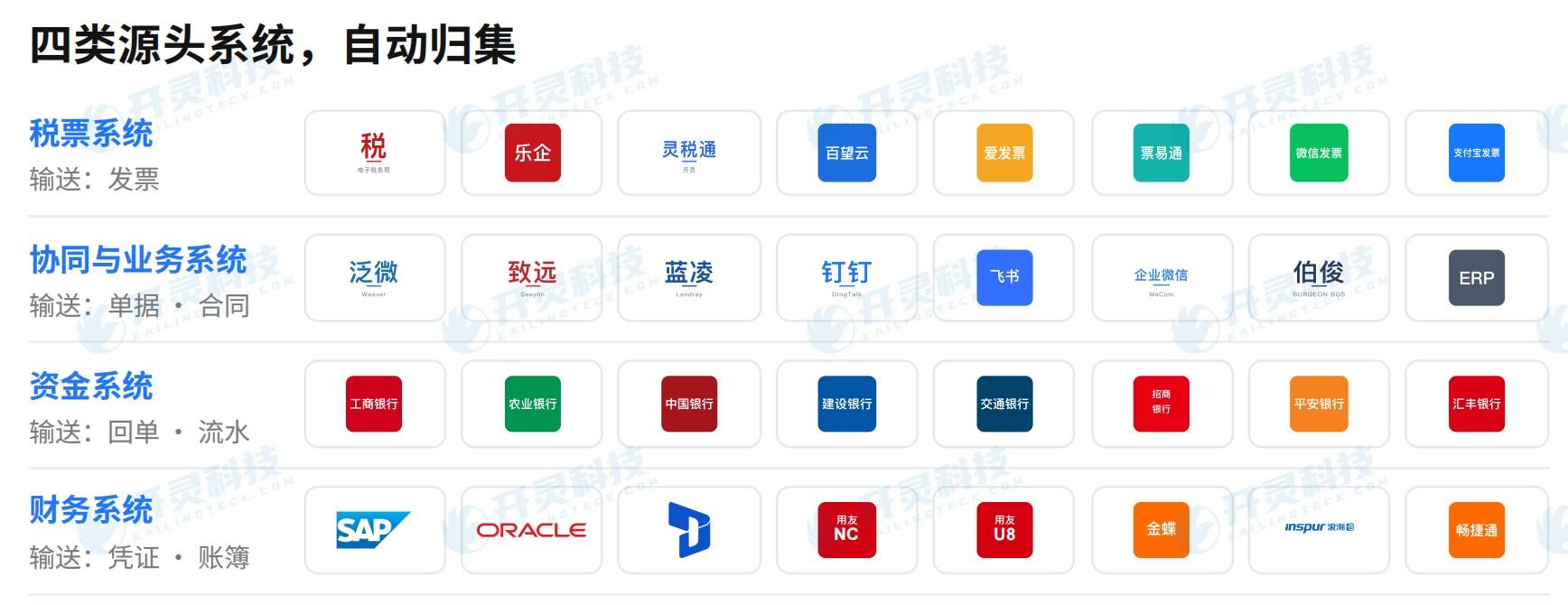
Financial materials are scattered across expense control, ERP, invoicing, and banking platforms. When the archive system receives them, it retains the original business number, file type, creation time, and corresponding organization. If only PDFs are imported in bulk without metadata, manual naming and one-by-one matching are still needed later, and digitalization stops at file moving.
The Kailing Technology solution can collect materials through system interfaces, file reception, or scanning; the specific method is determined by upstream system capabilities. For each type of material, the responsible department, handover time point, and exception supplementary path must first be clarified.
▍Linking rules replace manual attachment assembly
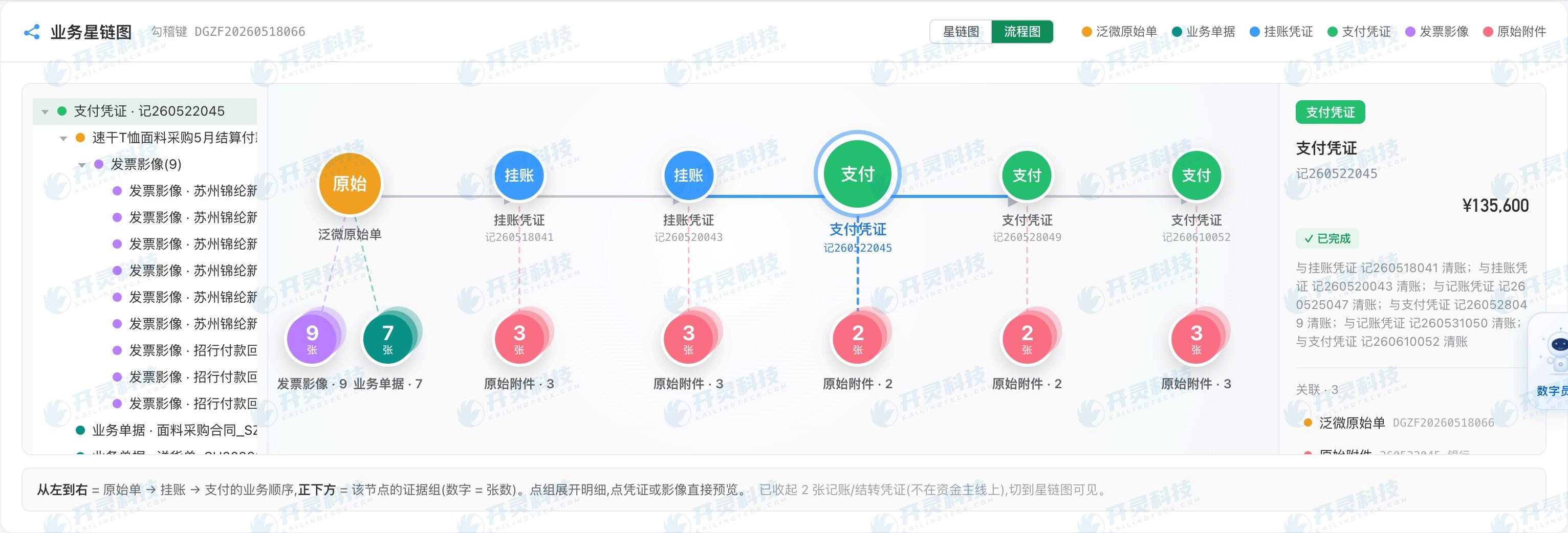
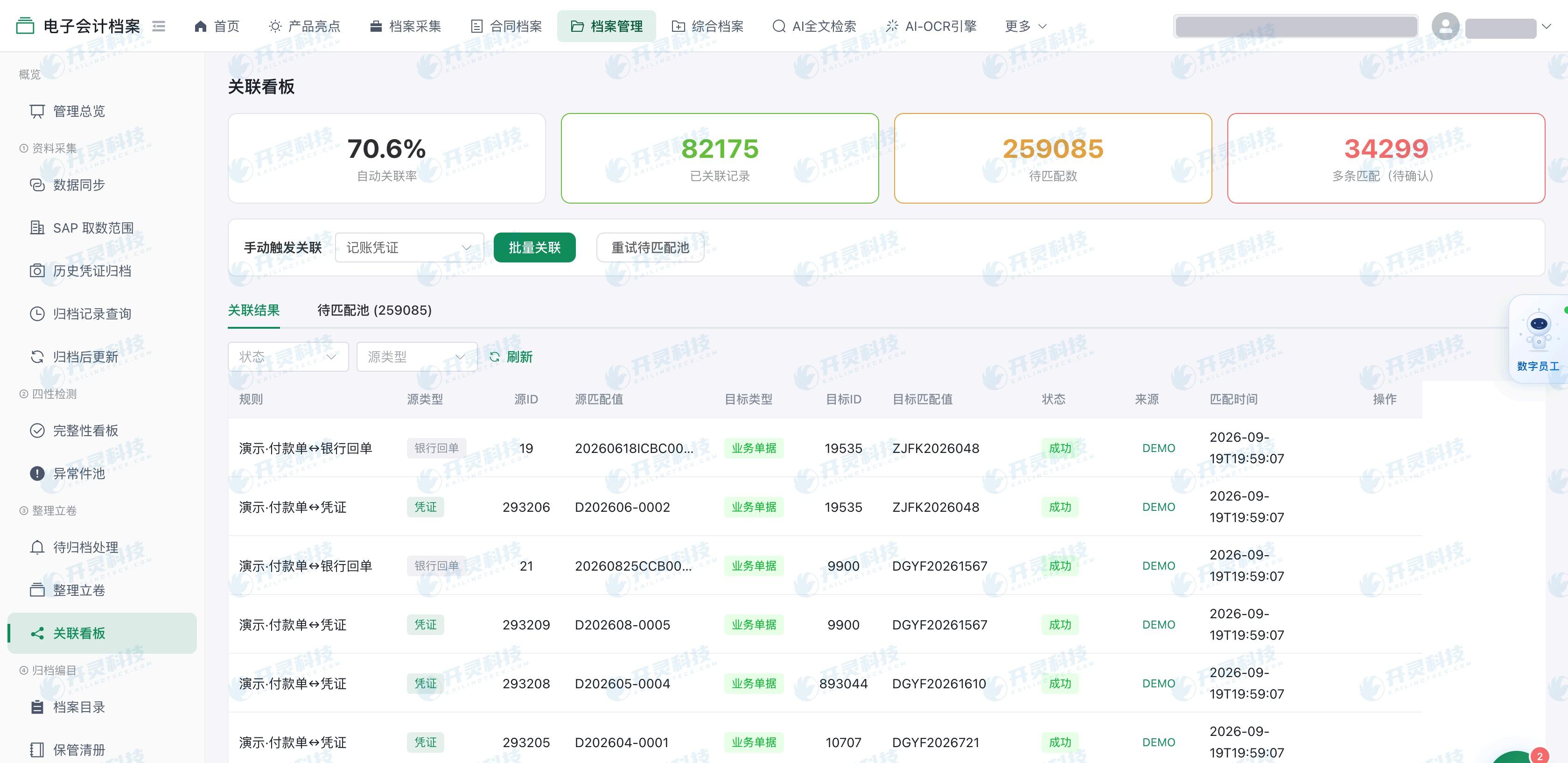
Payment orders and bank receipts, reimbursement forms and invoices, vouchers and source documents rely on business document numbers and fields to establish relationships. Documents matched by rules are automatically attached, while unmatched ones enter a pending review queue; manual handling also leaves a record. This way, archiving no longer depends on finance remembering which folder each bank receipt is stored in.
When a transaction spans months for payment or one voucher links to multiple invoices, the relationship may be one-to-many or many-to-many. The system needs to retain details rather than forcing attachments into a single "attachments complete" status.
▍Connect organization, archive numbering, and inspection into a closed loop
After materials are collected, organize and bind them into volumes by fiscal year, category, organization, and retention period, forming archive numbers or box information. Before filing, check that files are complete, openable, not abnormally modified, and that permissions and backup arrangements are in place; problematic materials enter exception handling.
The Accounting Archives Management Measures and DA/T 94-2022 provide management requirements and electronic accounting archive specifications respectively. Enterprises should confirm classification, retention periods, and electronic preservation conditions based on their own materials and policies; the system turns these rules into executable workflows.
▍Verify whether archiving is truly complete during retrieval
When an audit needs to check a payment, being able to find the invoice, contract, bank receipt, and approval materials from the voucher number shows that the prior association is valuable. The Kailing Technology system supports search by directory, conditions, and associations, and manages the utilization process through permissions, borrowing, and operation logs.
If a material can be found at inbound but cannot be opened years later, the last mile is likewise not complete. Enterprises must also regularly check format readability, backups, and media status, and retain migration and handling records.
▍Implementation starts from one high-frequency business scenario
You can first choose travel reimbursement or procurement payment, map out the upstream material list, field mapping, and archive handover points. Test with samples of normal, supplementary, red-ink reversal, cross-month, and late bank receipt cases, then expand to other businesses.
The Kailing Technology electronic accounting archive management system connects daily finance work with long-term management. Results should not be judged only by the number of imported files, but more by whether all relevant materials for a transaction can be found after archiving and whether exceptions can be tracked and handled promptly.
▍Complete materials matter more than centralized files
At month-end, finance exports all attachments to a shared drive. The files appear centralized, but problems such as missing bank receipts, invoices without originals, and mismatched voucher numbers may still exist. The last mile requires checking whether materials are complete according to business relationships.
The Kailing Technology system's association rules make reimbursement forms, payment forms, and vouchers point to each other, and unmatched materials enter the processing list. Finance no longer guesses one by one based on file names, and archive administrators can clearly require which upstream position to supplement materials.
Archive receipt batches and processing times should leave traces, making it convenient to track late-arriving materials and cross-month adjustments.
▍Long-term management cannot stop at the current year's archiving
After materials are archived, they still face system upgrades, format changes, backup recovery, and permission adjustments. Enterprises should regularly check whether electronic files are readable and retain migration and repair records; materials with retention periods should be appraised first when they expire.
Decree No. 79 stipulates the retention periods and destruction procedures for accounting archives; electronic form does not shorten management responsibility. The Kailing Technology archive system manages retention periods and expiration matters by rule, helping archivists shift from ad hoc file searching to continuous management.
Borrowing and consultation should both leave records of the object, personnel, and time, so that archive utilization also has a traceable process.
▍Phased implementation helps ensure real adoption
First select two high-frequency businesses, reimbursement and payment, and list the materials, interfaces, and exception samples for each. Then test association, inspection, file assembly, and consultation, and then connect other categories such as ledgers and reports. Covering all historical files at once may hide problems in a large volume of imported data.
Success criteria for the pilot can be set as: the original documents and accounting results of a business order can be found from each other, missing items have an owner, archive numbers and retention periods comply with policy, and authorized personnel can still open files years later.
The Kailing Technology electronic accounting archive management system advances "storing files" to "materials can be found, relationships can be explained clearly, and they remain usable over the long term."
▍Make archive results traceable by business
After submitting a reimbursement, the expense control handler usually no longer pays attention to archives. If the archive system finds that an invoice lacks the original file or the receipt has not arrived, the specific issue should be returned to the original business order and responsible role, rather than only creating an unhandled to-do in the archive backend.
After business staff supplement materials, the archive side rechecks links and the four properties, then archives by classification. The supplement time, handler, and original status are retained so auditors can understand why materials were later than the booking date.
Status feedback is also needed between archives and business systems. For example, if a voucher has already been archived and a red-flush or correction occurs later, the original association will not be deleted without a trace; instead, a new association or processing record is formed.
The Kailing Technology solution's way of measuring the last mile is that materials completed in business processing can be handed over in an orderly manner, missing items are handled, and after archiving they can still be quickly found in full according to permissions.
▍Reduce repetitive work for archive administrators
Material receiving rules can automatically assign items to pending organization queues by category; successfully matched attachments are directly linked to vouchers; problematic files separately display the reason for missing items.
Archive administrators focus their energy on checking exceptions, reviewing archive quality, and managing retention periods, no longer renaming invoices and receipts one by one.
The Kailing Technology system brings upstream numbers into the archiving stage, which is the foundation for reducing repetitive work.
Usage after archiving can also reveal process problems in reverse: if audits frequently cannot find bank receipts, the payment platform's return transmission should be checked; if electronic invoices can be opened but voucher relationships are missing, number mapping should be checked. The Kailing Technology system's exception and retrieval records provide clues for these improvements, turning the last mile into continuously maintainable work rather than a major cleanup repeated every year. Enterprises can review unarchived documents and historical supplementary results monthly and clarify responsibility for the next round of improvement.
▍FAQ
Q: Is the last mile just uploading attachments?
A: It also includes linking, classification, inspection, archive number, custody, and retrieval.
Q: How should late-arriving bank receipts be handled?
A: Keep the pending-supplement status; when the receipt arrives, link it by business number and review it.
Q: Can paper materials also be included in the same management?
A: Paper items can be registered and linked to electronic materials; original custody follows applicable regulations.
Visit Kailing Technology to learn about related products and implementation plans: https://www.kailingteck.com/eaa/ .
As a national high-tech enterprise, Kailing Technology focuses on the digital and intelligent transformation of enterprise business-finance-tax and operations management, providing software products, system integration, implementation and delivery, and operational services for various government agencies, institutions, group enterprises, and SMEs.
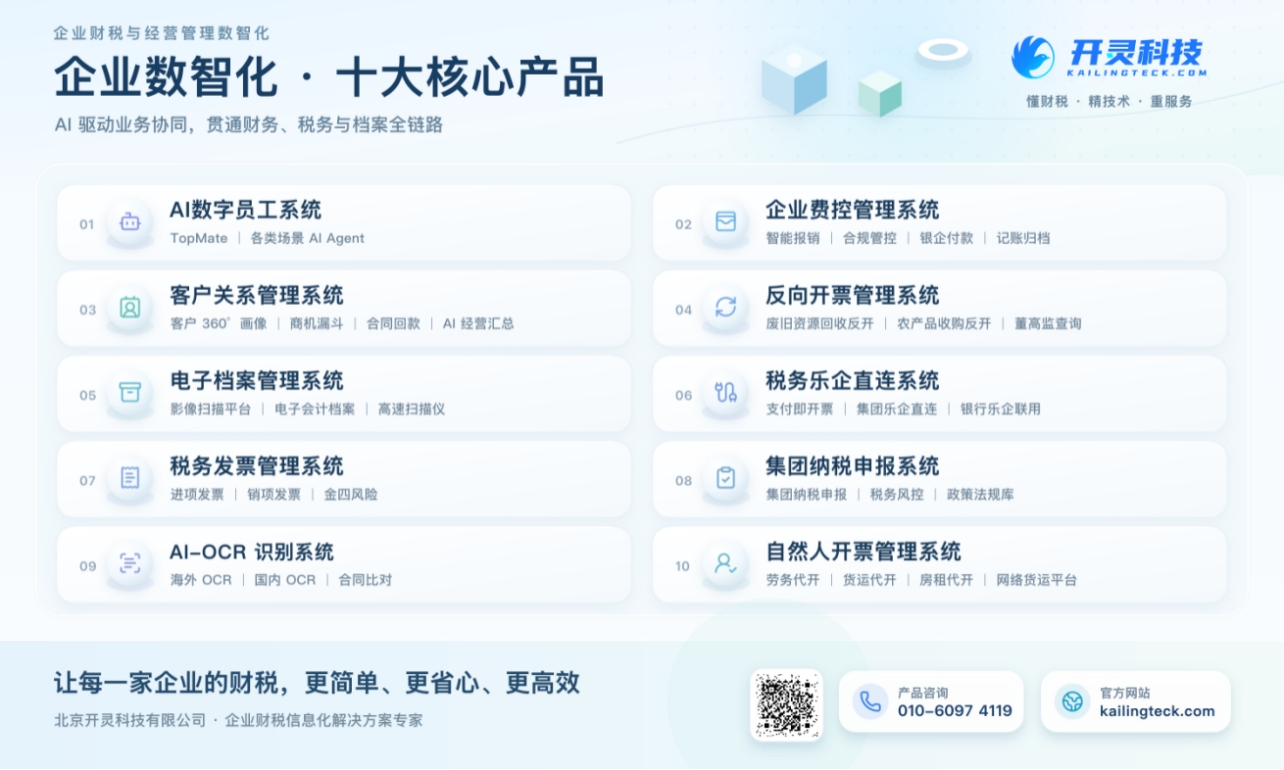
The company has now formed ten core product lines, including: AI digital employee system, enterprise expense control management system, customer relationship management system, reverse invoicing management system, invoice issuance for individuals management system, electronic archives management system, tax fully digitalized e-invoice Leqi system, tax invoice management system, group tax filing system, and AI OCR recognition system. It is committed to connecting enterprise business, finance, tax, funds, and archive data to help customers improve operational efficiency, business-finance-tax compliance capabilities, and digital management levels.
If you have any business-finance-tax digital transformation needs, welcome to contact us. Beijing Kailing Technology will serve you wholeheartedly.
Keywords: The last mile of financial archives, electronic accounting archive filing, automatic linkage, Kailing Technology
As a comprehensive business-finance-tax digitalization solution service provider, Kailing Technology provides business-finance-tax management digital transformation products and operational services for various government agencies, institutions, and large, medium, and small enterprises. The product line includes: solutions for sales contract management system, procurement contract management system, fully digitalized Leqi interface project, automatic output invoicing system, reverse invoicing system, invoice issuance for individuals system, employee expense control and reimbursement system, input VAT invoice management system, supply chain collaborative reconciliation system, image AI OCR recognition system, automatic financial bookkeeping system, electronic accounting archives system, etc., comprehensively driving the digitalization process across various fields.
Consultation Hotline: 18513895936 / 010-60974119 Location: Beijing