
Should live sheep purchases be settled by head or by weight, and how should invoices be issued? Kailing Technology's agricultural product purchase reverse invoicing system retains self-production proof, measurement, and payment records by household

Live sheep purchases may be negotiated at a per-head price or priced by weighed weight. If the contract says per head but the settlement statement shows only kilograms, it is difficult for finance to explain the invoice amount. Kailing Technology's agricultural product purchase reverse invoicing system aggregates self-production materials, quantity or weighing basis, final settlement, and payment results by farmer, so the measurement basis is determined before invoicing.

▍First determine the transaction counterparty and the farming attributes
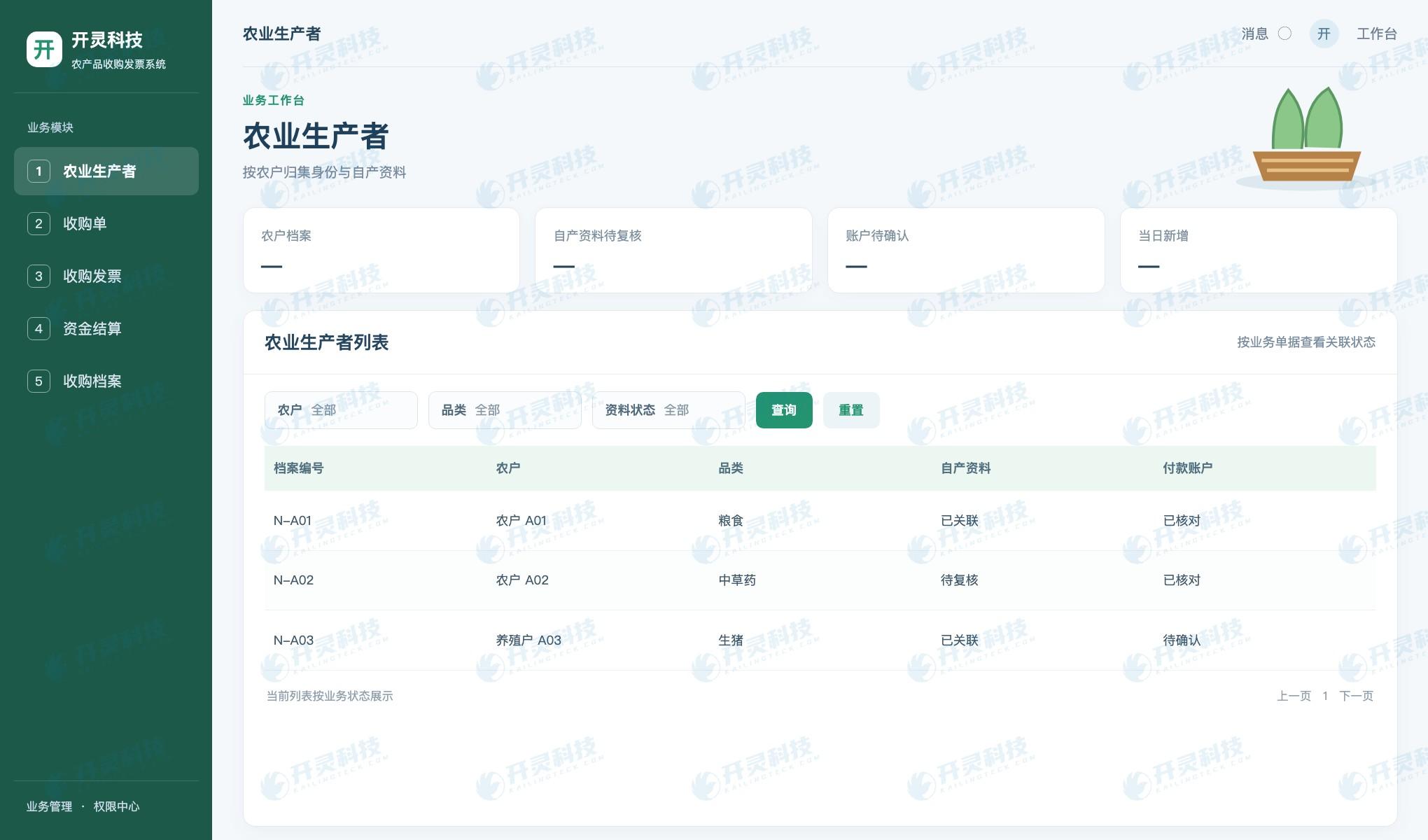
Purchase points should verify the farmer actually selling, identity, and self-production-related materials, and confirm that the live sheep purchased are those raised by that farmer. The driver or broker who herds the sheep to the site may only be transport and liaison personnel and cannot automatically replace the seller. When multiple households share a vehicle, establish a purchase order for each household, recording sheep ownership and on-site confirmation.
Quarantine, transport, and on-site acceptance materials play different roles from tax invoices, and enterprises retain them according to applicable requirements. The system can link farmer files to the current purchase, enabling finance to see verified materials and items to be supplemented; when material status changes, an old "passed" mark must not obscure new problems in the current transaction.
Verify farming households against self-production materials
▍By head and by weight are two different settlement agreements
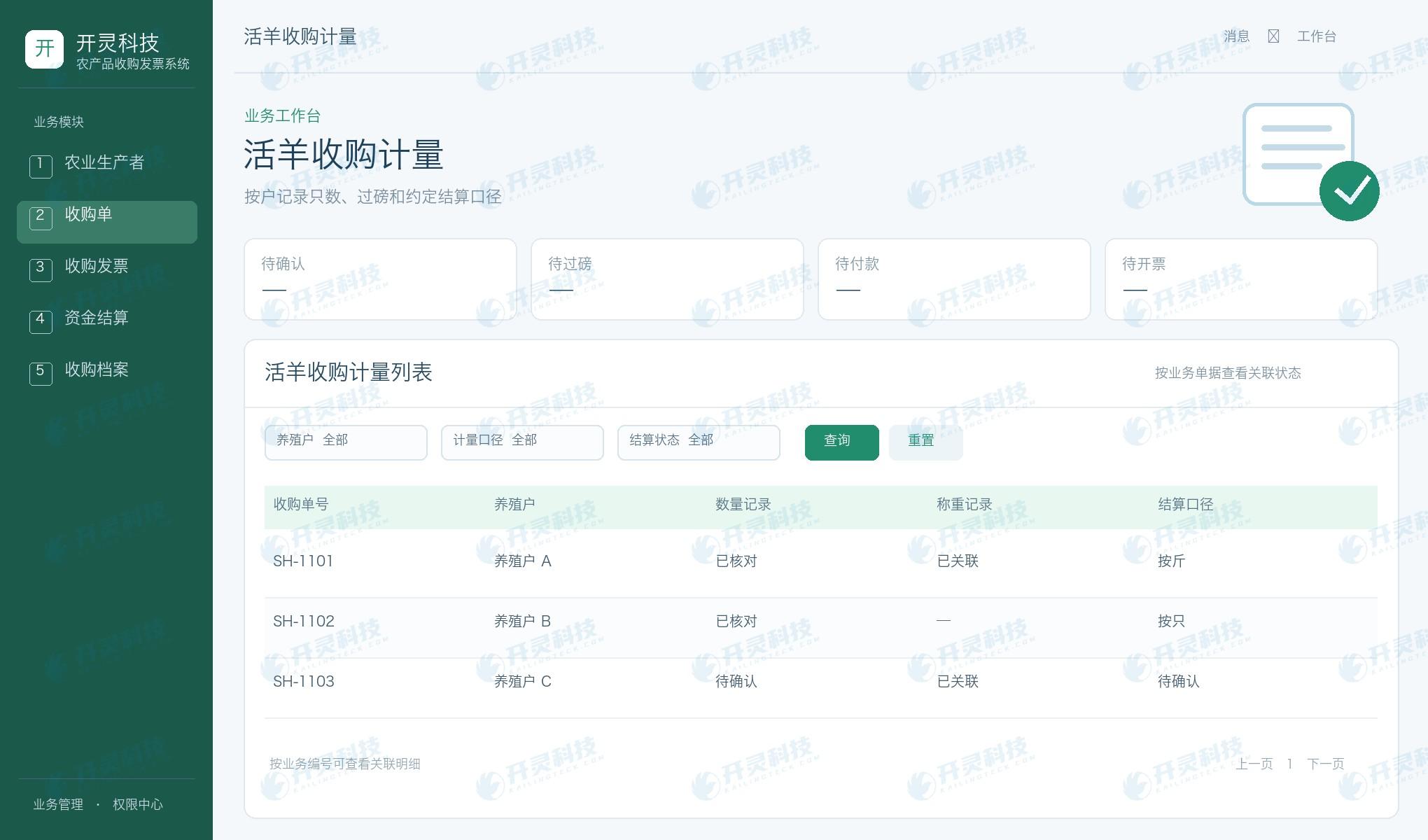
When purchasing by head, the core is to clearly record the number of heads, grade, or per-head pricing; when purchasing by weight, the weighing method, gross weight, tare weight, and priced weight must be recorded. Some transactions use head count as the handover quantity and weight as the pricing basis; both sets of data should be retained, but pricing may only be calculated on the actually agreed basis.
If sheep are returned, die, or are downgraded during acceptance en route, it should be stated at which step the change occurred and how the original document was adjusted. On-site verbal handling such as "just add a little by weight" cannot be recalculated afterward. The Kailing Technology system can retain the measurement method, settlement version, and confirmation by both parties in the purchase order, giving the invoice quantity and amount a basis.
▍Recheck each household's receivable before payment
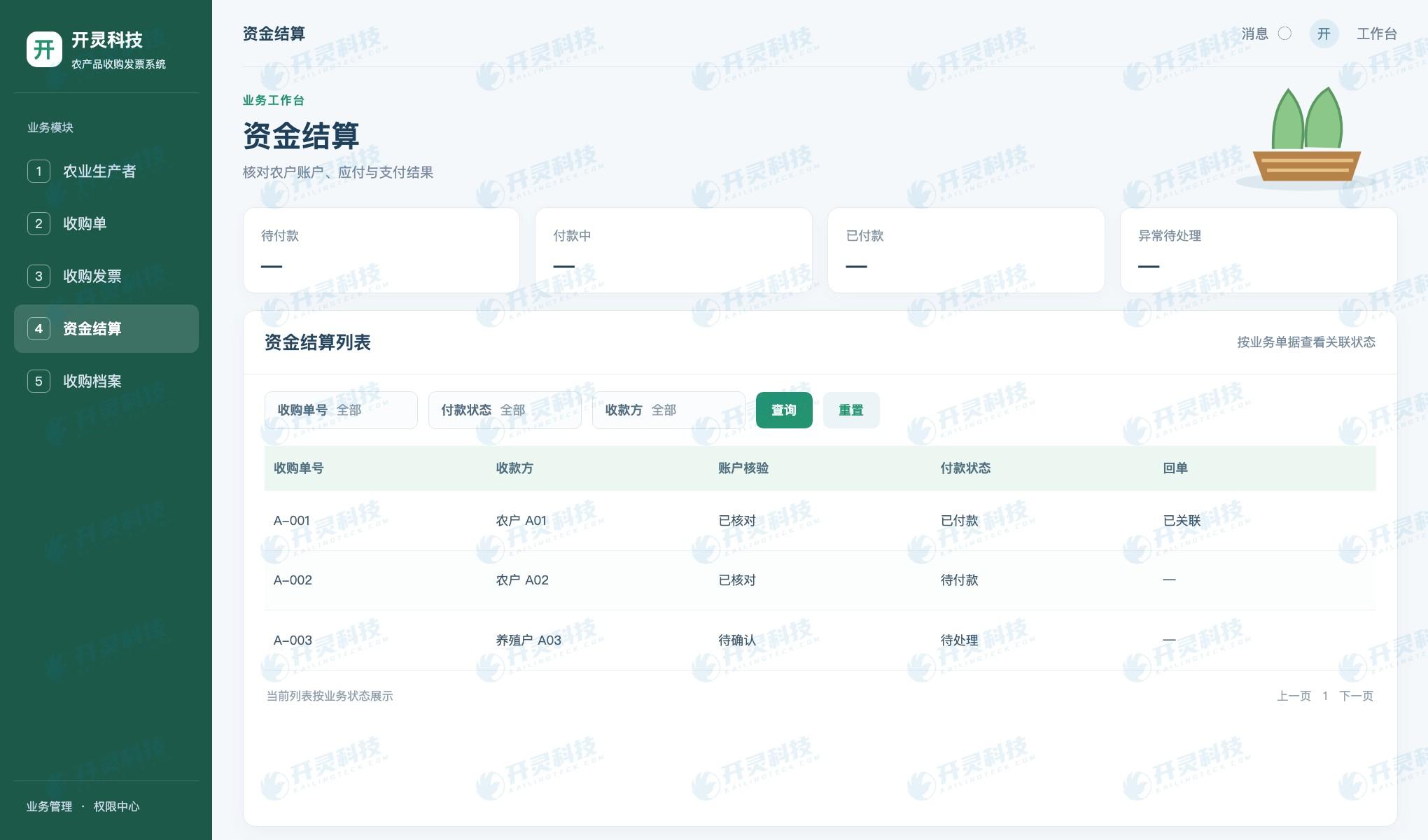
One vehicle may belong to several farming households, and bank payments must verify accounts and payable amounts by household. If a broker collects on behalf, first verify the transaction and the entrusted relationship and review according to enterprise rules; you cannot pay all the goods money into the same account just because the broker organizes the vehicles. Split payments must also show the paid and unpaid amounts for each household.
After the cashier's payment result is written back to the original purchase order, finance can check whether the payee matches the farming household's information. Payment returns or account changes must be recorded separately. The system displays fund results alongside measurement settlement, making it easy to spot exceptions where "the sheep count is right, but the payee is wrong."
Measurement records for live sheep by head or by weight
▍Invoices correspond to confirmed self-production purchases
Purchase invoices should be issued according to applicable tax rules, actual self-produced transactions, and confirmed settlements. Finance verifies the farmer, live sheep category, quantity, pricing basis, and amount, then links the invoice number and electronic file to the original purchase order. The per-head and per-weight bases must not be mixed in the same record without explaining the conversion.
The Kailing Technology agricultural product purchase reverse invoicing system allows invoices, payments, and acceptance to be cross-checked by household. If settlement adjustments occur after invoicing, the original records should be retained and invoice and payment differences handled according to regulations; the archives should show why the original amount differs from the final amount.
▍Use two pricing samples for acceptance testing
Before system launch, select five types of business: per-head, per-weight, dual records of head count plus weight, multi-household shared vehicle, and sheep returns. Have purchasers confirm that on-site operations will not omit anything, have finance independently recalculate payables from records, and then trace back from invoices to farmer and measurement materials.
A truly usable system should not force all live sheep transactions into one measurement template. Enterprises should first clarify business agreements and position responsibilities; Kailing Technology's solution then retains transaction evidence by household and flags exceptions requiring manual review, helping keep invoices and payments clear even during procurement peaks.
View payment results by household
▍Live sheep transactions require looking at both quantity and counterparty
Pricing by head also requires accurate handover head counts. On site, ear tags or batches, health and specification acceptance, returned quantities, and final purchase quantities can be recorded; pricing by weight also requires confirming the weighing equipment, measurement time point, and tare method. Differences between the two pricing methods should be reflected in the settlement statement, not exist only in oral agreements.
If a farming household is represented by a family member, the system distinguishes the identity verification subject, the on-site handover person, and the actual payee. For live sheep from multiple households arriving in one vehicle, the original quantity of each household and the method of separate measurement must be retained; the amount receivable for each household must not be inferred merely because the vehicle's total weight is available.
Sheep of different weights, appearances, and breeds may use different prices. Acceptance staff record the grade and the basis for adjustment, and have the farming household confirm before settlement. If sick, weak, or non-compliant sheep are found, the quantity returned or otherwise handled should remain consistent with the final invoice and payment amount.
When checking a purchase invoice, finance should look at both the farming household's self-production materials and the specific measurement basis and confirmed settlement method. If the invoice uses a quantity unit, it should be consistent with the actual purchase and tax issuance rules. The system can flag logical conflicts in the documents before submission, such as "settled per head but filled in a weight unit price."
For implementation, one household can first be selected for each of the two common models to run the full process, then same-truck multiple households and mid-way sheep returns can be tested. The system does not decide which price the enterprise should adopt; it enables the already agreed price to be jointly verified by procurement, farmers, and finance.
▍How to verify the same vehicle load of live sheep by household
When multiple households' live sheep arrive in the same truck, first distinguish the sheep and handover records by farmer, then measure each household's quantity or weight. If weighing equipment only supports whole-truck weighing, verifiable data must be formed according to a pre-agreed per-household method; weight cannot be allocated by experience after the truck is unloaded. Each household confirms its own result before proceeding to payment and invoicing.
The pricing method is specified in the contract or purchase order. For transactions priced per head, weight can also be recorded as auxiliary information; for transactions priced per jin, the number of head should also be recorded as a handover basis, but the two must not be freely interchanged at settlement. Finance can see which field is only acceptance information and which field is actually used for price calculation.
If one household has sheep returned or is downgraded, the adjustment affects only that household. The system retains the original handover, review opinions, and new settlement; payments and invoices for other households should not be recalculated indiscriminately because of an exception on the same vehicle.
For transactions where the pricing method changes temporarily, settlement details should be regenerated before confirmation. For example, if the original agreement was by head and later changed to by weight due to weight differences, both the original quote and the new basis should be retained, and the farmer should be asked to confirm. The unit price field cannot simply be changed in the system, leaving finance unable to determine why the invoice amount changed.
Once the settlement version is confirmed, payments and invoices reference the same version, avoiding different figures being taken from different sources.
▍FAQ
Q: Must live sheep purchases always be priced both by head and by weight?
A: Not necessarily. Settle according to the actual agreement; if both the handover quantity and the priced weight exist, they should be recorded separately.
Q: When a broker brings live sheep from multiple households, to whom is the invoice issued?
A: First confirm the actual self-production seller, and retain purchase, measurement, payment, and invoice records by household.
Q: How are already-issued invoices handled after sheep are returned?
A: Retain the basis for the return and settlement changes, verify payments made and invoices, then adjust according to the applicable rules.
Visit Kailing Technology to learn about related products and implementation plans: https://www.kailingteck.com/fxncp/ .
As a national high-tech enterprise, Kailing Technology focuses on the digital and intelligent transformation of enterprise business-finance-tax and operations management, providing software products, system integration, implementation and delivery, and operational services for various government agencies, institutions, group enterprises, and SMEs.
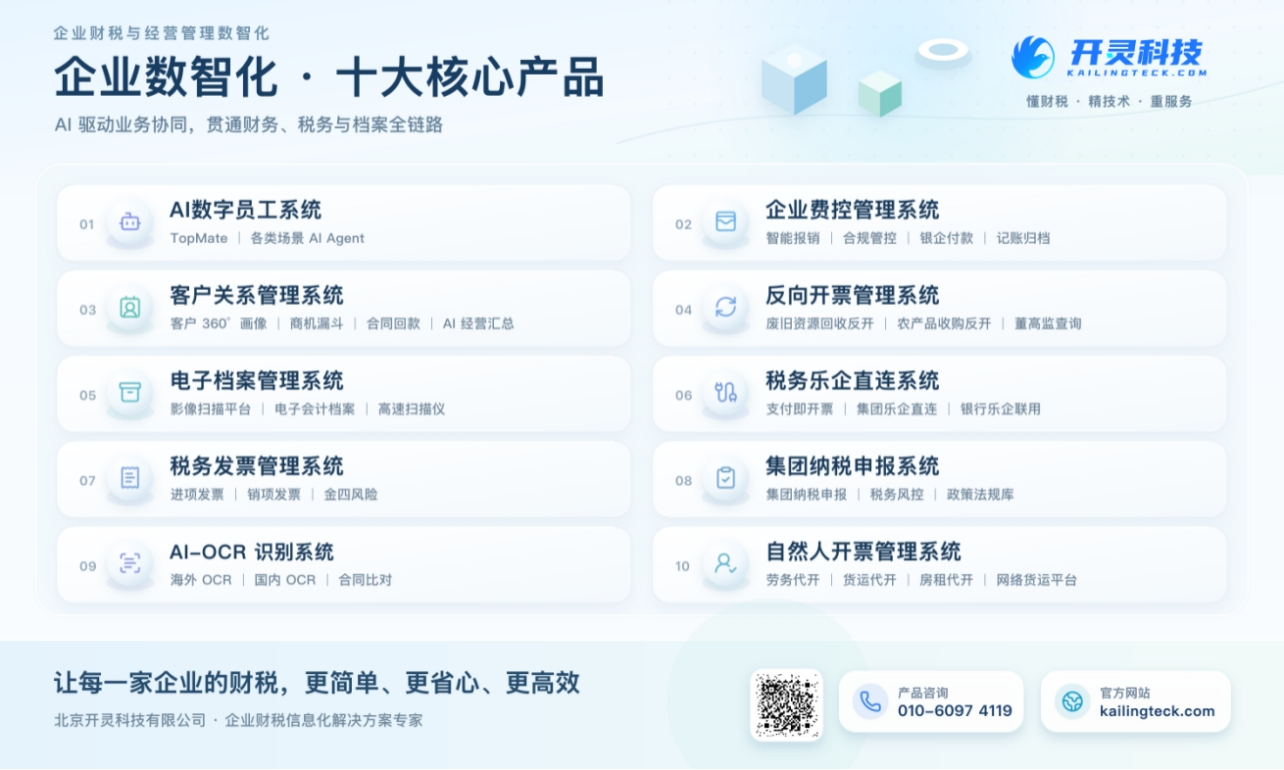
The company has now formed ten core product lines, including: AI digital employee system, enterprise expense control management system, customer relationship management system, reverse invoicing management system, invoice issuance for individuals management system, electronic archives management system, tax fully digitalized e-invoice Leqi system, tax invoice management system, group tax filing system, and AI OCR recognition system. It is committed to connecting enterprise business, finance, tax, funds, and archive data to help customers improve operational efficiency, business-finance-tax compliance capabilities, and digital management levels.
If you have any business-finance-tax digital transformation needs, welcome to contact us. Beijing Kailing Technology will serve you wholeheartedly.
Keywords: Live sheep purchase invoices, per-head and per-weight settlement, farmer self-production, payment records, Kailing Technology
As a comprehensive business-finance-tax digitalization solution service provider, Kailing Technology provides business-finance-tax management digital transformation products and operational services for various government agencies, institutions, and large, medium, and small enterprises. The product line includes: solutions for sales contract management system, procurement contract management system, fully digitalized Leqi interface project, automatic output invoicing system, reverse invoicing system, invoice issuance for individuals system, employee expense control and reimbursement system, input VAT invoice management system, supply chain collaborative reconciliation system, image AI OCR recognition system, automatic financial bookkeeping system, electronic accounting archives system, etc., comprehensively driving the digitalization process across various fields.
Consultation Hotline: 18513895936 / 010-60974119 Location: Beijing