
How do you invoice and reconcile for end-of-life vehicle recycling? Kailing Technology's resource recycling reverse invoicing system summarizes vehicle collection, payment, and invoices by vehicle
End-of-life vehicle recycling materials naturally cluster by vehicle: vehicle identification number, owner and deliverer, receipt records, dismantling materials, payment, and invoices. If these materials are stored only by month, cashiers and finance find it difficult to check the settlement result for each vehicle. Kailing Technology's resource recycling reverse invoicing system uses the vehicle as an index, helping enterprises put vehicle collection, payment, and invoices together.

▍Establish per-vehicle files based on vehicle identification numbers
At vehicle collection, first record the vehicle identification number, license plate, delivery time, document materials, and the relationship between owner and deliverer. The deliverer may be handling on behalf of another party; the fact that they signed on site does not mean invoices and payment should all be attributed to them. Identity and authorization materials should be saved with the vehicle for later verification of the actual transaction counterparty.
Enterprises also need to verify their own qualifications related to end-of-life motor vehicle recycling and dismantling, and whether the transaction meets the applicable conditions for resource recycling reverse invoicing. End-of-life vehicle purchases differ from general scrap metal intake in regulatory materials, and a single generic scrap material note cannot carry all information. The system can link qualification verification, vehicle files, and natural person files to each other.
The same vehicle may have records for frame, engine, and accompanying accessories. On-site vehicle intake, weighing, and subsequent dismantling occur separately, so business documents must distinguish time and responsibility. The vehicle identification number is the tracking entry point and should not be treated as the sole basis for price or invoice amount.
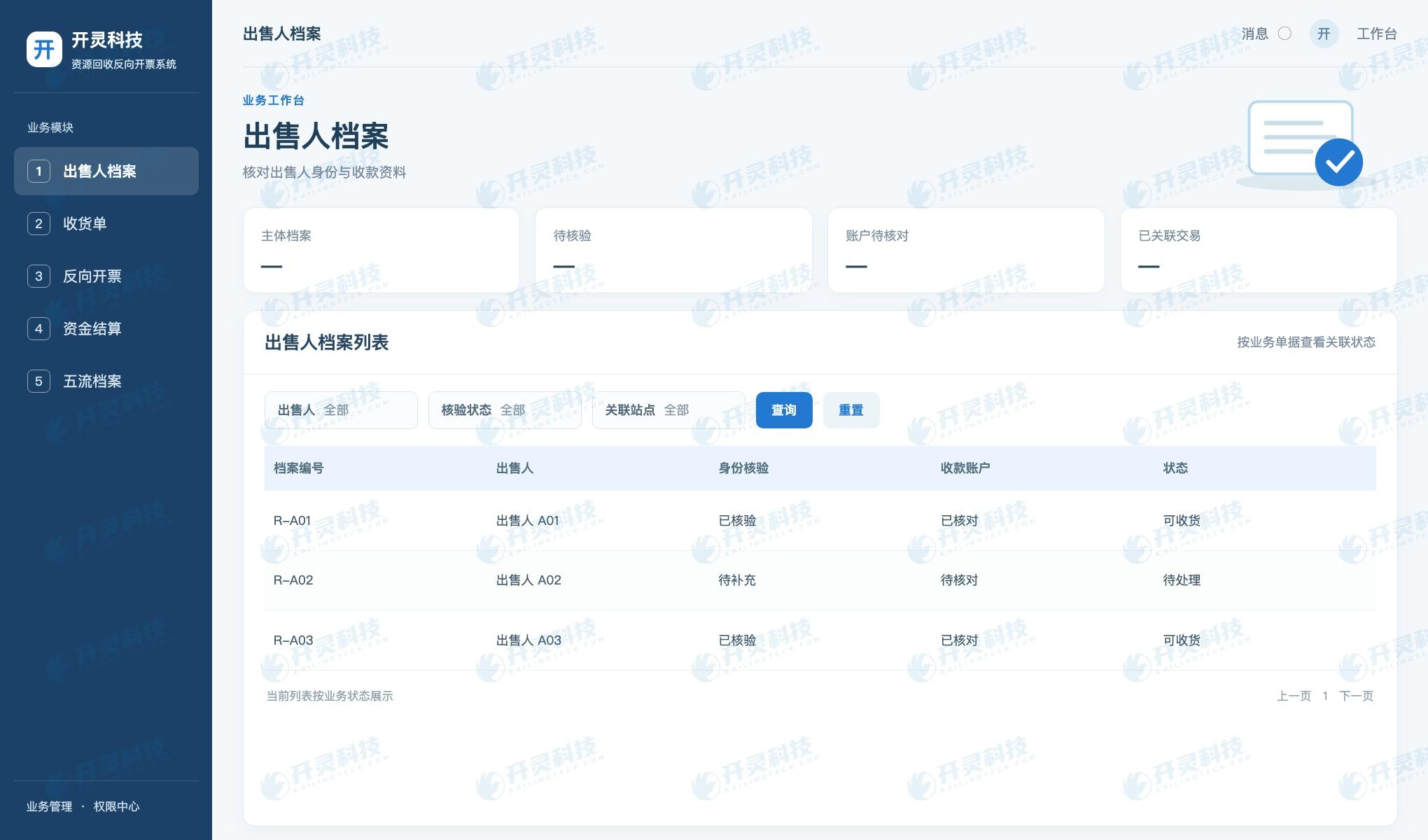
Vehicle seller identity file
▍How vehicle collection prices correspond to delivery records
The vehicle purchase price may be affected by model, condition, missing parts, transportation, and mutual agreement. After confirming the vehicle condition and parts list on site, the final settlement statement is formed. If towing fees or other costs are borne by one party, the handling method should be clearly stated in the settlement; it is not advisable to reflect only an unexplained difference in the total payment amount.
Before payment, finance verifies the payee against the actual seller and handles entrusted vehicle handover with authorization materials. When one person hands over multiple vehicles, payment can be combined, but the receipt must be allocated to each vehicle; if one vehicle is paid in installments, the unpaid balance and each payment result must also be shown.
The statuses of vehicle collection, dismantling, and settlement are not necessarily synchronized. Vehicles pending supplementary vehicle documents, with vehicle condition disputes, or with payment failures should remain in the exception queue, and statuses must not be manually changed to completed for month-end reports. Kailing Technology's system keeps exceptions on the per-vehicle chain for handlers to process.
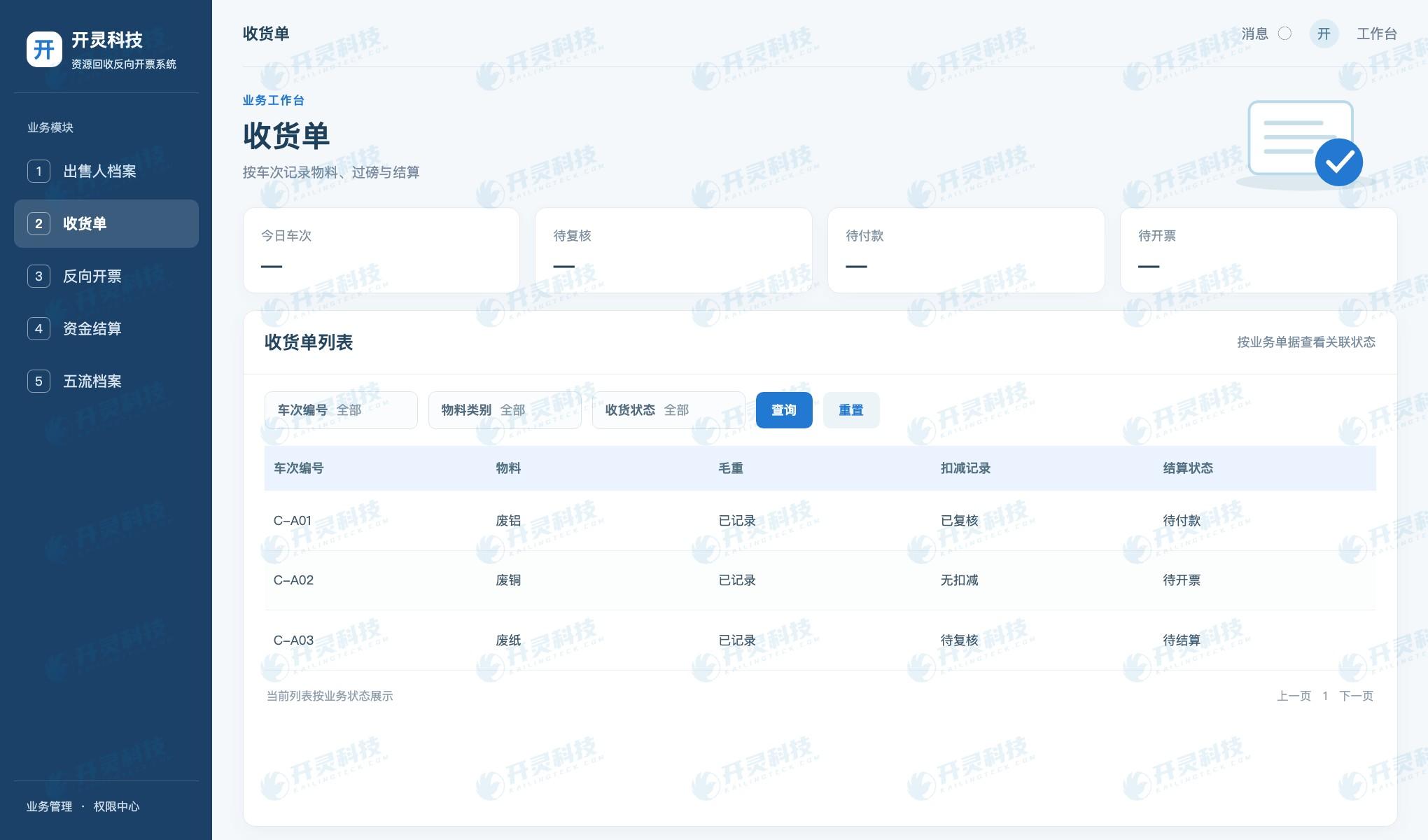
Vehicle receipt and settlement records
▍File reverse invoices and vehicle invoices separately
When handling reverse invoicing for end-of-life vehicle purchases, the enterprise must first confirm that the transaction and seller meet applicable requirements. The issuer verifies the seller, confirmed purchase amount, end-of-life product information, and corresponding single vehicle, then links the invoice number and electronic file back to the vehicle file.
End-of-life motor vehicle business also involves professional materials such as vehicle handover and recycling and dismantling. These are not the same type of document as VAT invoices; when archiving, the name, status, and acquisition time can be listed separately per vehicle. Tax invoices can explain an invoicing result, but cannot replace evidence of vehicle source and receipt.
When a vehicle is returned, settlement is adjusted, or an invoice needs a red-letter reversal, the original vehicle file should retain historical versions. Finance needs to know why the vehicle changed from the original price to the new price, and the system should also preserve the relationship between old invoices, new invoices, and payment adjustments.
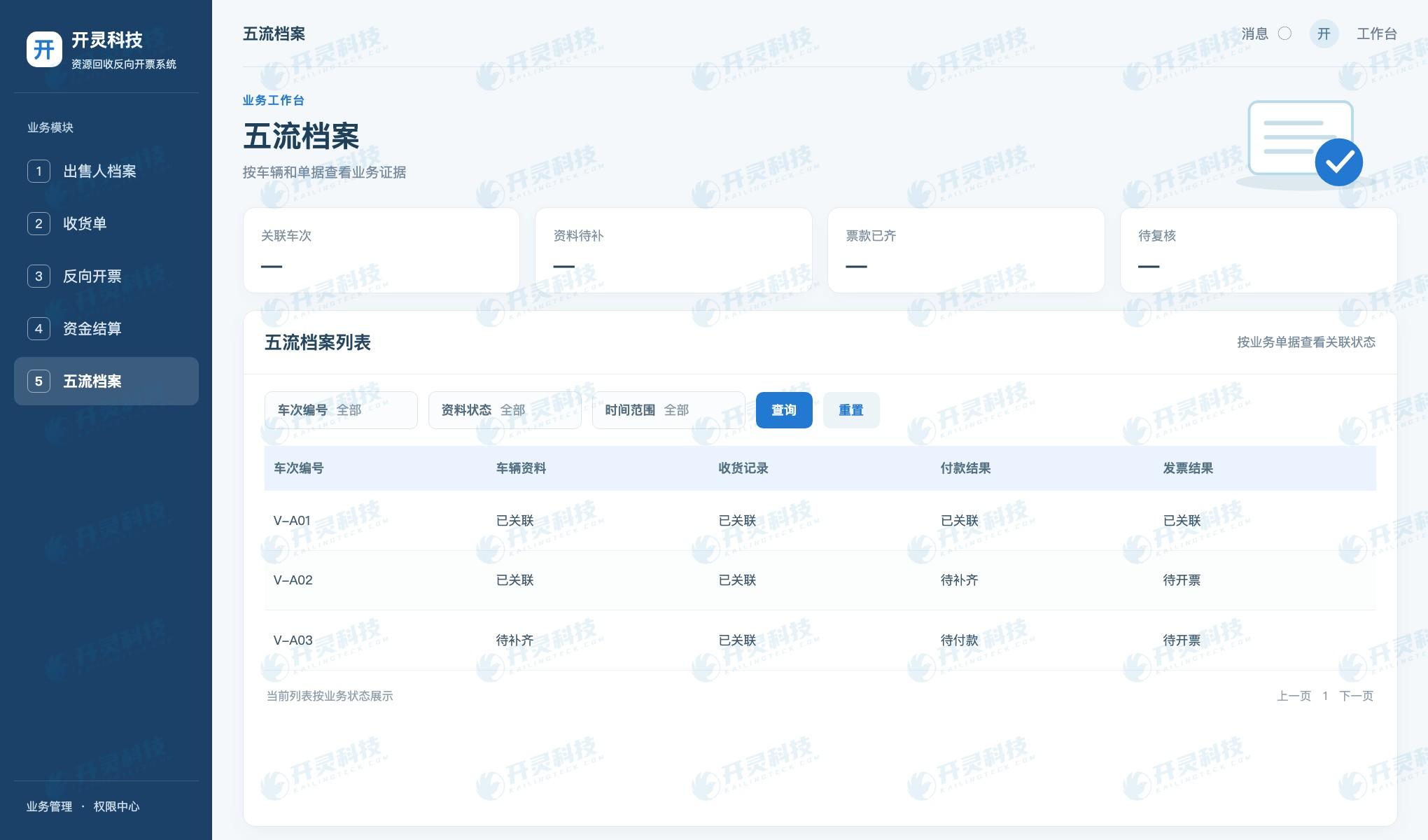
Summarize vehicle collection, payment, and invoices by vehicle
▍Balance per-vehicle reconciliation and multi-vehicle summary
Single-vehicle reconciliation starts from the vehicle identification number, checking the owner and seller, vehicle intake confirmation, settlement, payment, and invoices. Multi-vehicle summary filters records pending payment, pending invoicing, and missing materials by seller, site, or period. Verify single vehicles first, then summarize the general ledger, so that a summary table does not mask gaps in individual vehicles.
During go-live acceptance, test self-delivery, entrusted delivery, multiple vehicle deliveries by the same seller, and per-vehicle settlement adjustments separately. For each scenario, have business staff and finance trace back from their respective pages to confirm that the entity and amount correspond.
Kailing Technology's resource recycling reverse invoicing system builds a business index around vehicles, helping enterprises connect on-site, financial, and tax information. Handling specific vehicles must also follow applicable industry management requirements and enterprise internal control processes.
▍How per-vehicle documents are handed over to different positions for continuation
Gate staff or vehicle receivers are responsible for basic vehicle information, arrival time, and handover counterpart; inspectors are responsible for vehicle condition, missing parts, weighing, and on-site photos; business managers confirm prices and special deductions; finance reviews the actual seller, payee, and invoices. The status after each role submits should be visible so the next person knows whether they are handling confirmed data or a draft still awaiting supporting documents.
The entrusted delivery scenario most needs a single-vehicle index. The authorization letter only explains the handling relationship; the business relationship among the owner, actual seller, and payee must also be verified. If vehicle documents and transaction counterparty are inconsistent, business personnel should first explain and supplement materials; invoice staff should not guess temporarily on the invoicing screen. The system's identity files and vehicle files need to open each other bidirectionally.
Dismantling materials are often formed gradually after vehicle collection, so it should not be required that all documents be complete on the same day. The per-vehicle file can separately show that vehicle collection is complete, dismantling records are pending upload, payment is made, and invoices are pending processing. Different statuses are updated by different roles, and managers filter missing items by vehicle. When materials arrive late, retain the actual acquisition time to avoid backfilling distorting the time sequence.
During reconciliation, sample by vehicle identification number, then check payment batches and invoice numbers. If the same seller delivers multiple vehicles in a month, the total summary should equal the sum of each vehicle's confirmed amount and reasonable adjustments; if a difference is found, enter handling from the single-vehicle exception. This kind of book-to-physical reconciliation serves daily settlement and also facilitates later review of vehicle flow and tax materials.
▍Use one vehicle's timeline to check documents
When managers spot-check, they can view the times of appointment or entry, handover, acceptance, price confirmation, payment, and invoicing in sequence by vehicle identification number. When a step is later than the normal order, the system should be able to show the reason: for example, the seller is confirmed only after documents are completed, or settlement is formed only after the vehicle condition dispute is resolved. The timeline must not be concealed by later backfilling.
A vehicle's tax invoices, bank receipts, and dismantling documents may be uploaded by different positions. The file automatically shows missing items by vehicle, and each responsible person only supplements their own materials; finance reviews completeness before including it in period reconciliation. Multi-vehicle summary reports should be expandable to this per-vehicle timeline, avoiding a situation where the summary amount appears to match but individual vehicles cannot be explained.
▍FAQ
Q: If an entrusted person hands over an end-of-life vehicle, can the invoice be issued directly to the entrusted person?
A: The actual seller and authorization relationship should be confirmed, and invoicing and payment handled accordingly.
Q: How to reconcile when multiple vehicles are paid for at once?
A: Allocate the payment receipt by vehicle and retain the settlement and invoice relationship for each vehicle.
Q: Can only one copy of vehicle documents and reverse invoices be kept?
A: The two types of materials serve different evidentiary purposes and should be collected separately and linked to each other in the per-vehicle file.
Q: How to correct a wrongly entered vehicle identification number?
A: The vehicle collection position should first verify the correct identification number based on the vehicle documents, then retain the original value, reason for modification, and handler approval in the per-vehicle file. If the vehicle is already linked to a payment or invoice, check in sync whether the linked objects need adjustment. The system must not silently replace the old number, otherwise the corresponding file will not be found later using the original paper handover record.
Q: How to summarize when the same vehicle owner hands over two end-of-life vehicles at once?
A: Both vehicles can be viewed together under the seller's file, but each vehicle should have independent receipt, vehicle condition, settlement, and invoice relationships. If one bank transfer pays for two vehicles, list the allocation in the payment record; if one vehicle's documents are pending, the other vehicle's status should not be changed to abnormal as well. Summary reports can aggregate by owner, but per-vehicle vouchers should still be expandable.
Visit Kailing Technology to learn about related products and implementation plans: https://www.kailingteck.com/fxzy/ .
As a national high-tech enterprise, Kailing Technology focuses on the digital and intelligent transformation of enterprise business-finance-tax and operations management, providing software products, system integration, implementation and delivery, and operational services for various government agencies, institutions, group enterprises, and SMEs.
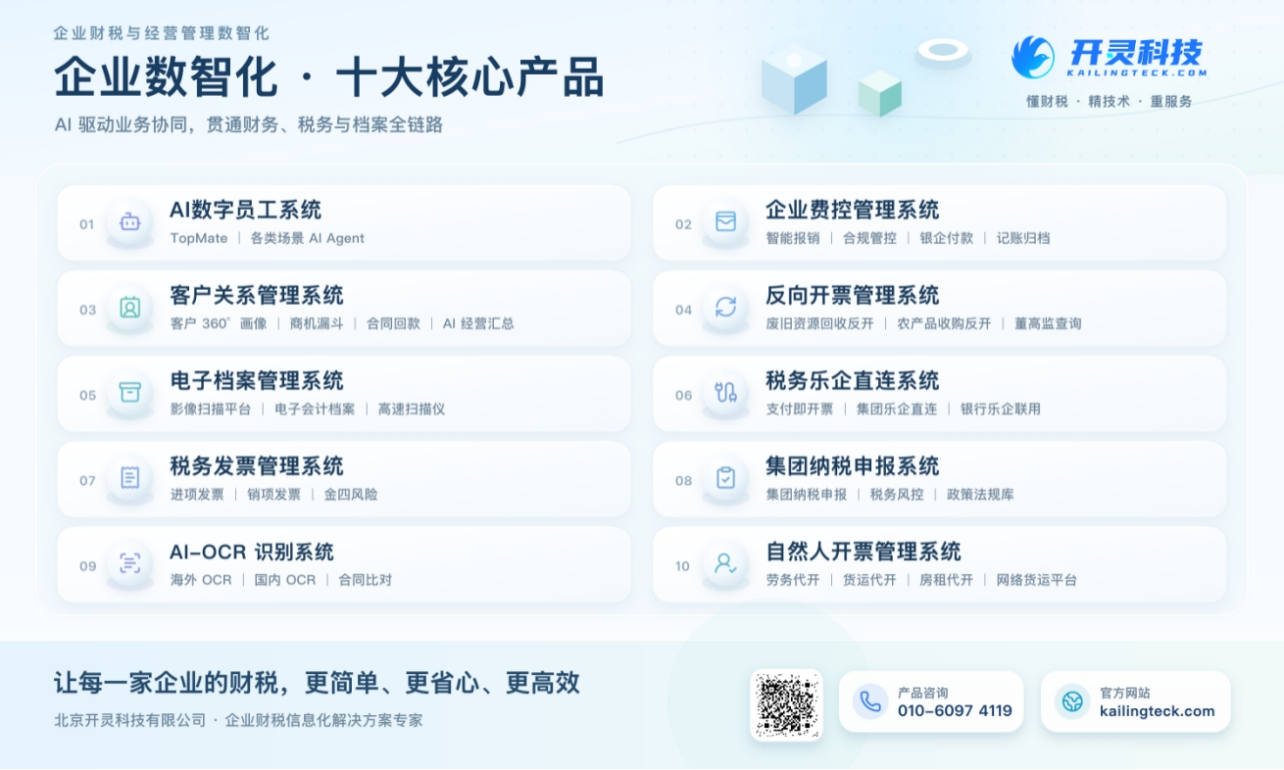
The company has now formed ten core product lines, including: AI digital employee system, enterprise expense control management system, customer relationship management system, reverse invoicing management system, invoice issuance for individuals management system, electronic archives management system, tax fully digitalized e-invoice Leqi system, tax invoice management system, group tax filing system, and AI OCR recognition system. It is committed to connecting enterprise business, finance, tax, funds, and archive data to help customers improve operational efficiency, business-finance-tax compliance capabilities, and digital management levels.
If you have any business-finance-tax digital transformation needs, welcome to contact us. Beijing Kailing Technology will serve you wholeheartedly.
Keywords: End-of-life vehicle recycling reverse invoicing, per-vehicle reconciliation, vehicle purchase documents, Kailing Technology resource recycling system
As a comprehensive business-finance-tax digitalization solution service provider, Kailing Technology provides business-finance-tax management digital transformation products and operational services for various government agencies, institutions, and large, medium, and small enterprises. The product line includes: solutions for sales contract management system, procurement contract management system, fully digitalized Leqi interface project, automatic output invoicing system, reverse invoicing system, invoice issuance for individuals system, employee expense control and reimbursement system, input VAT invoice management system, supply chain collaborative reconciliation system, image AI OCR recognition system, automatic financial bookkeeping system, electronic accounting archives system, etc., comprehensively driving the digitalization process across various fields.
Consultation Hotline: 18513895936 / 010-60974119 Location: Beijing