
How to issue purchase invoices to farmers for live pig purchases? The Kailing Technology agricultural product purchase reverse invoicing system links purchase orders, weighing results, and payments
Live pig purchases usually have several time points: farmer delivery, on-site inspection, weighing, settlement, and payment. Even if the number of head is correct, the weight and payee may still be inconsistent. The Kailing Technology agricultural product purchase reverse invoicing system links farmer information, weighing results, payments, and purchase invoices around the purchase order, so each batch of live pig transactions can be checked independently.
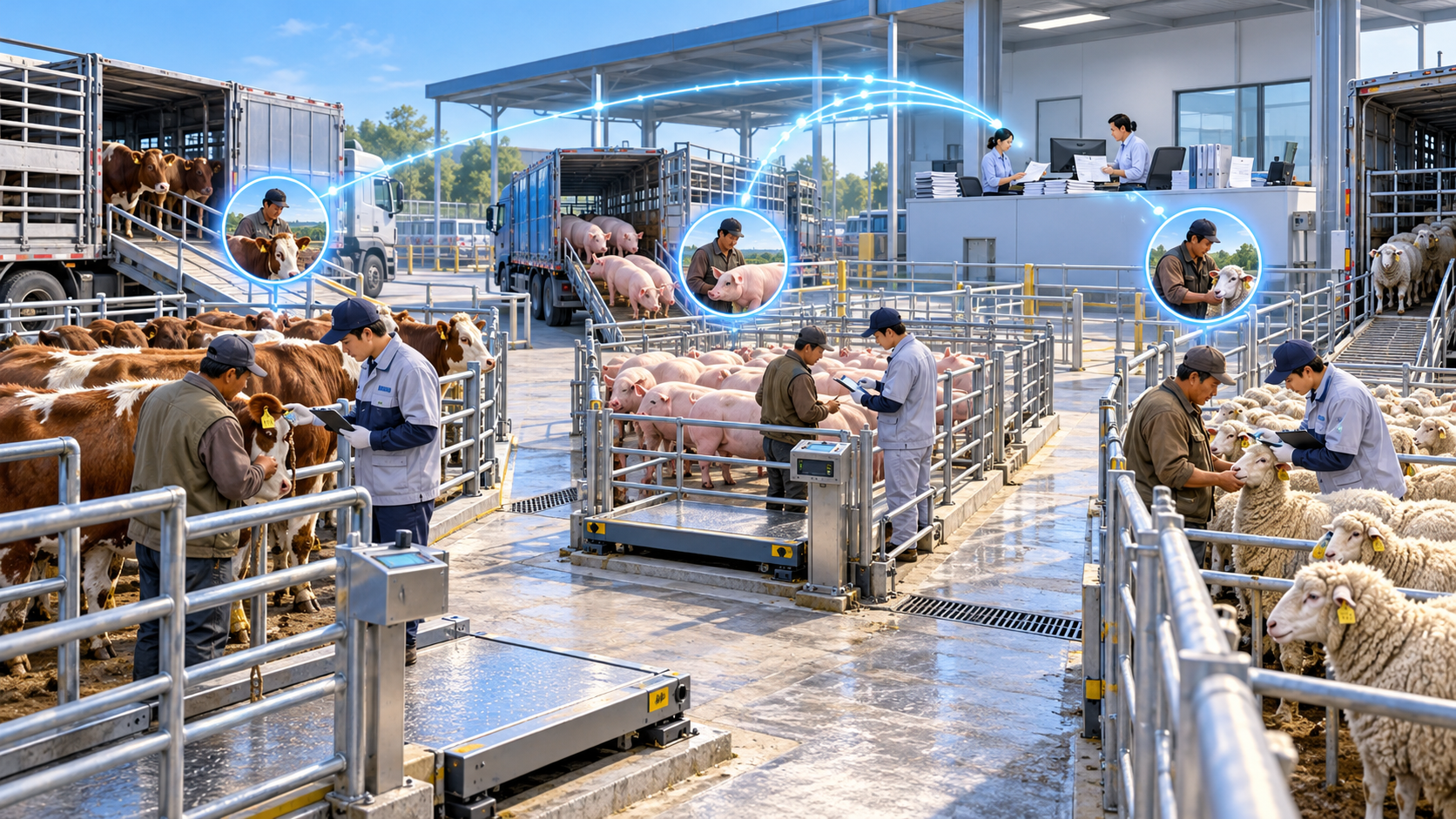
▍First map farmers to delivery batches
When creating farmer profiles, verify identity, farming operation status, self-produced sales materials, and receiving account. The carrier, submitter, and farmer may be different roles, and the purchaser should register them separately in the purchase order. If purchased through an intermediary, the invoice path for directly purchasing self-produced agricultural products from farmers cannot simply be reused.
A vehicle may carry live pigs from multiple farmers. The vehicle serves as a transport clue, but the business must still split out batches, head counts, and acceptance results by actual seller. If the whole vehicle is recorded under one farmer, even if the subsequent invoice and payment amounts are equal, it cannot explain how much each farmer sold.
The Kailing Technology system can reference farmer profiles and self-produced materials when creating orders, prompt for missing items, and retain the reviewer. For batches whose materials are pending confirmation, on-site acceptance should first continue recording facts, while the invoicing step waits for subject verification to be completed.
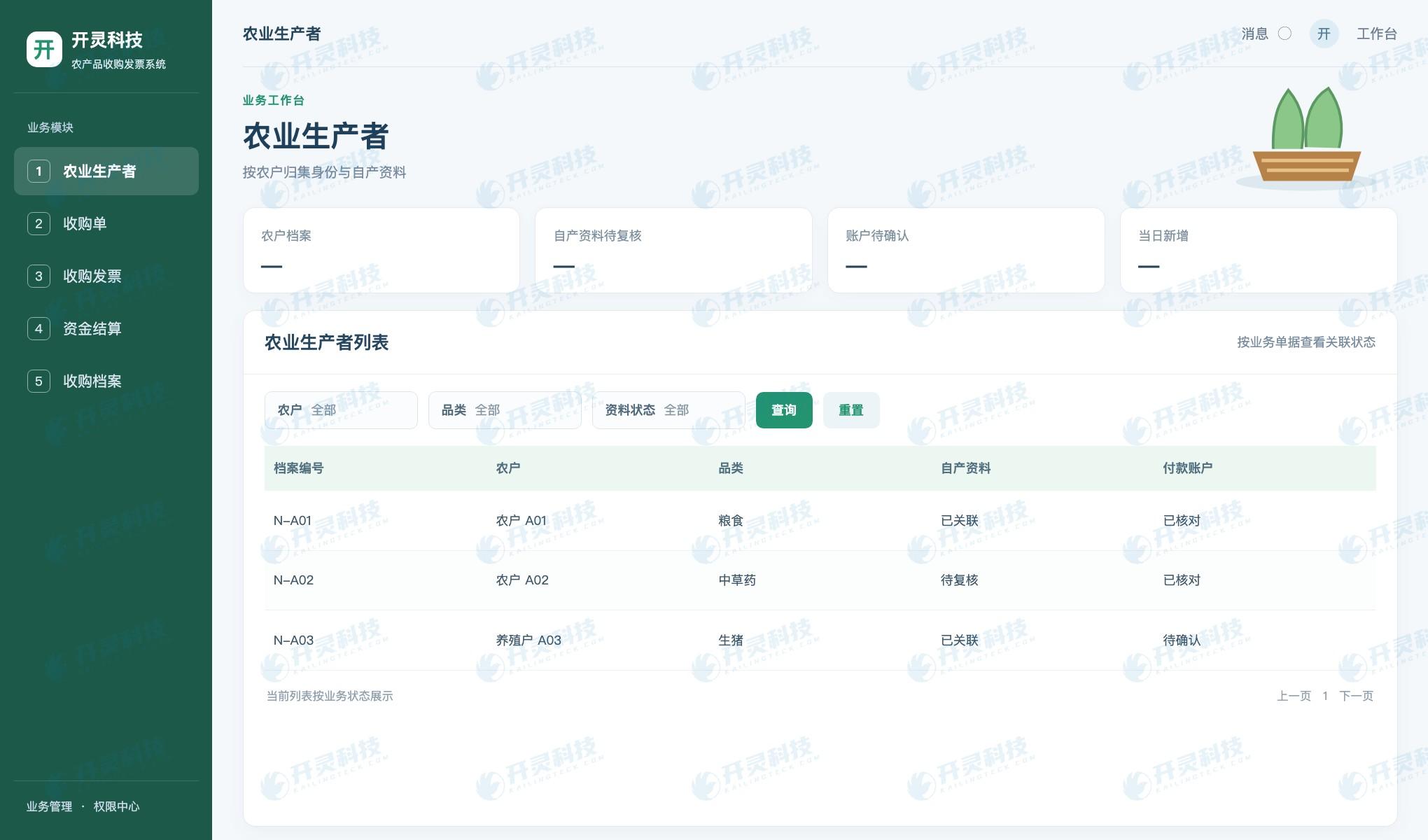
Farmer profiles and self-produced materials
▍Head count, weighing, and acceptance each serve a purpose
After live pigs arrive, the purchase order needs to record the transport vehicle, handover time, number of head, weighing records, and on-site inspection. The number of head indicates delivered quantity, while weighing indicates pricing weight; the two cannot substitute for each other. Individuals returned or failing inspection requirements should be explicitly handled out of the settleable batch.
Weighbridge readings or paper weigh tickets should have a number, time, and confirmer. If re-weighing, batch unloading, or cross-vehicle transfer occurs, the before-and-after relationship should be retained. Finance should form a settlement statement based on the final confirmed acceptance quantity and price, rather than inferring weight backward from an invoice.
If the purchase point uses existing weighbridges and inspection systems, implementation requires confirming data fields, interface frequency, and manual correction permissions. The Kailing solution links weighing results to purchase orders, while inspection remains based on actual on-site records.
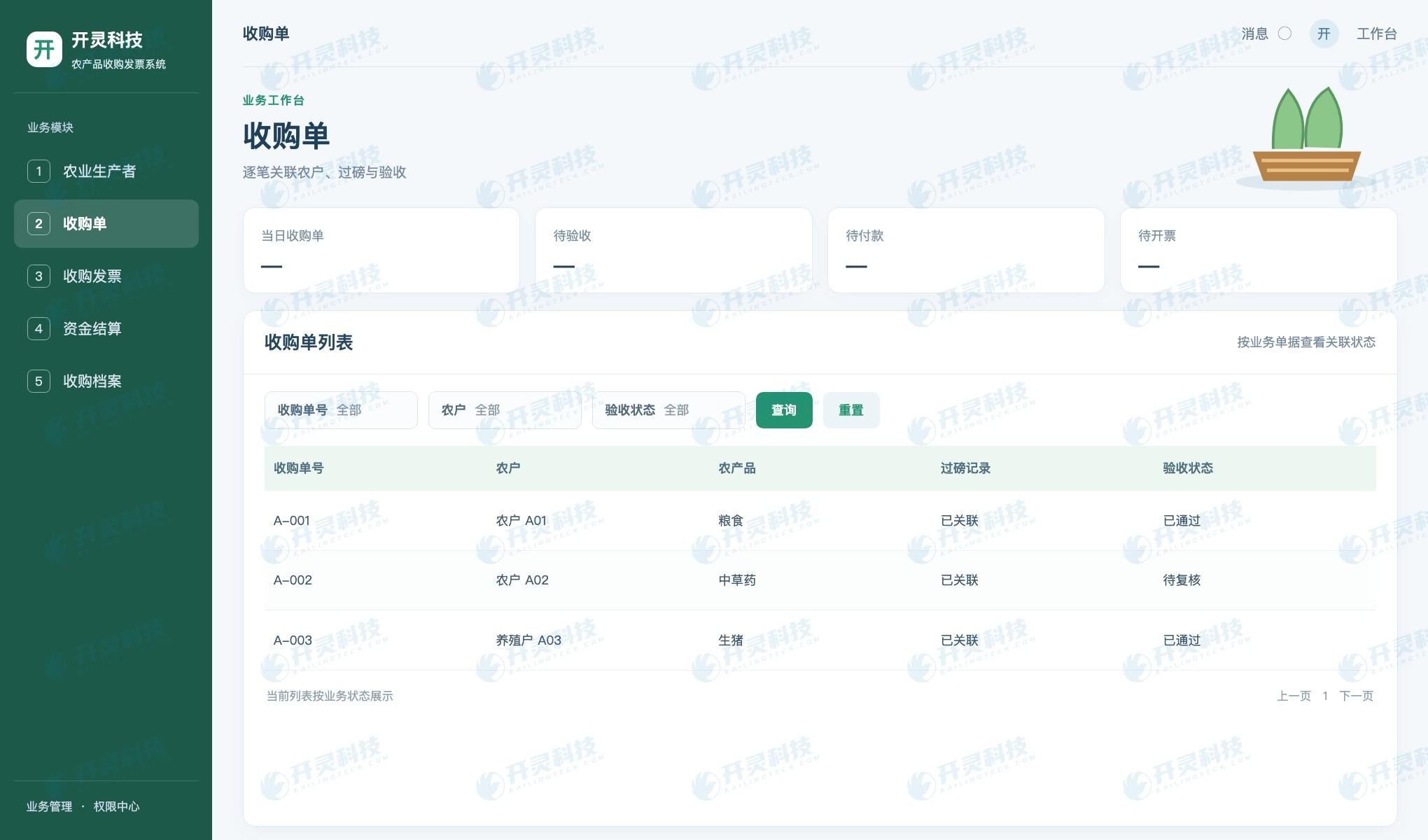
Live pig purchase orders and weighing results
▍Before invoicing, check whether the invoice and payment point to the same farmer
At payment, verify the payee account name, farmer archive, and settlement result. Cash or collection by others increases explanation costs; use traceable account payments where possible and retain confirmation materials for special cases. Consolidated payments must be allocated to each purchase order, and partial payments must show the balance.
Before issuing an agricultural product purchase invoice, recheck the farmer's self-produced status, category, settled quantity, and amount. The invoice number and file should return to the purchase order and be linked to payment status. Unpaid does not mechanically mean invoicing is impossible, but any invoice-payment difference should have a clear business reason and follow-up handler.
The Kailing Technology agricultural product purchase reverse invoicing system displays acceptance, payment, and invoices by batch. Finance can query multiple deliveries from a given farmer, and can also trace back from an invoice to the specific weigh ticket.
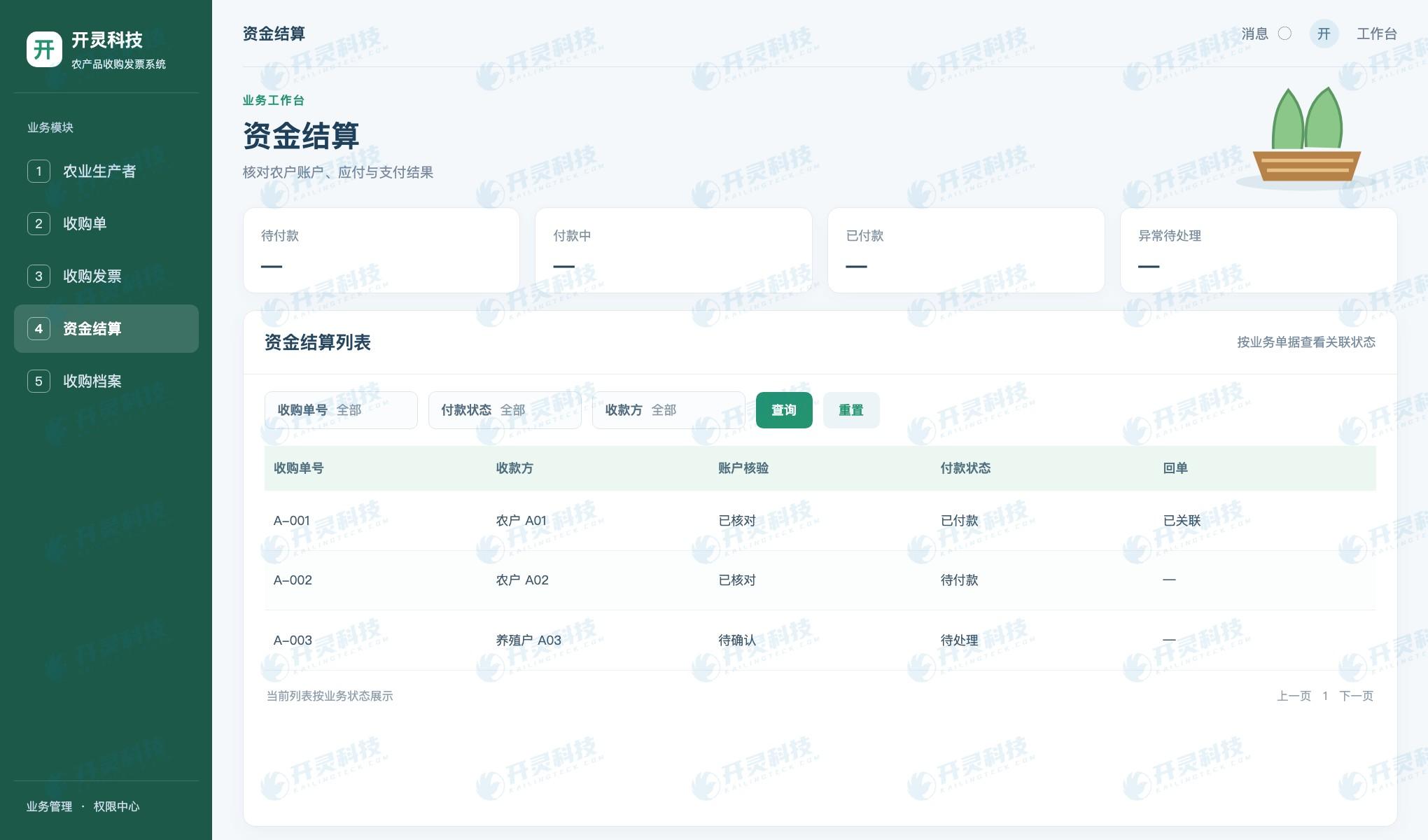
Farmer payments and receipts
▍Use delivery exceptions to test the business chain
Acceptance samples can cover one truck with multiple households, multiple trucks for the same household, re-weighing and returns. Business staff break down from the trip to the farmer, and finance looks back from the invoice to the batch, weight and payee. If any step involves "guessing the allocation from the total," it indicates that the ledger structure needs strengthening.
Settlement adjustments should retain the old version's quantity, reason, approval, and whether they affect payments already made or invoices already issued. Audit spot checks care more about whether the adjustment process is genuine and continuous than about the system finally showing a neat amount.
Enterprises can regularly check farmers with pending payments, invoice failures, and self-production documents about to expire. Only by leaving exceptions under specific purchase orders and responsible persons can they be handled promptly during peak purchasing season, rather than leaving differences to month-end.
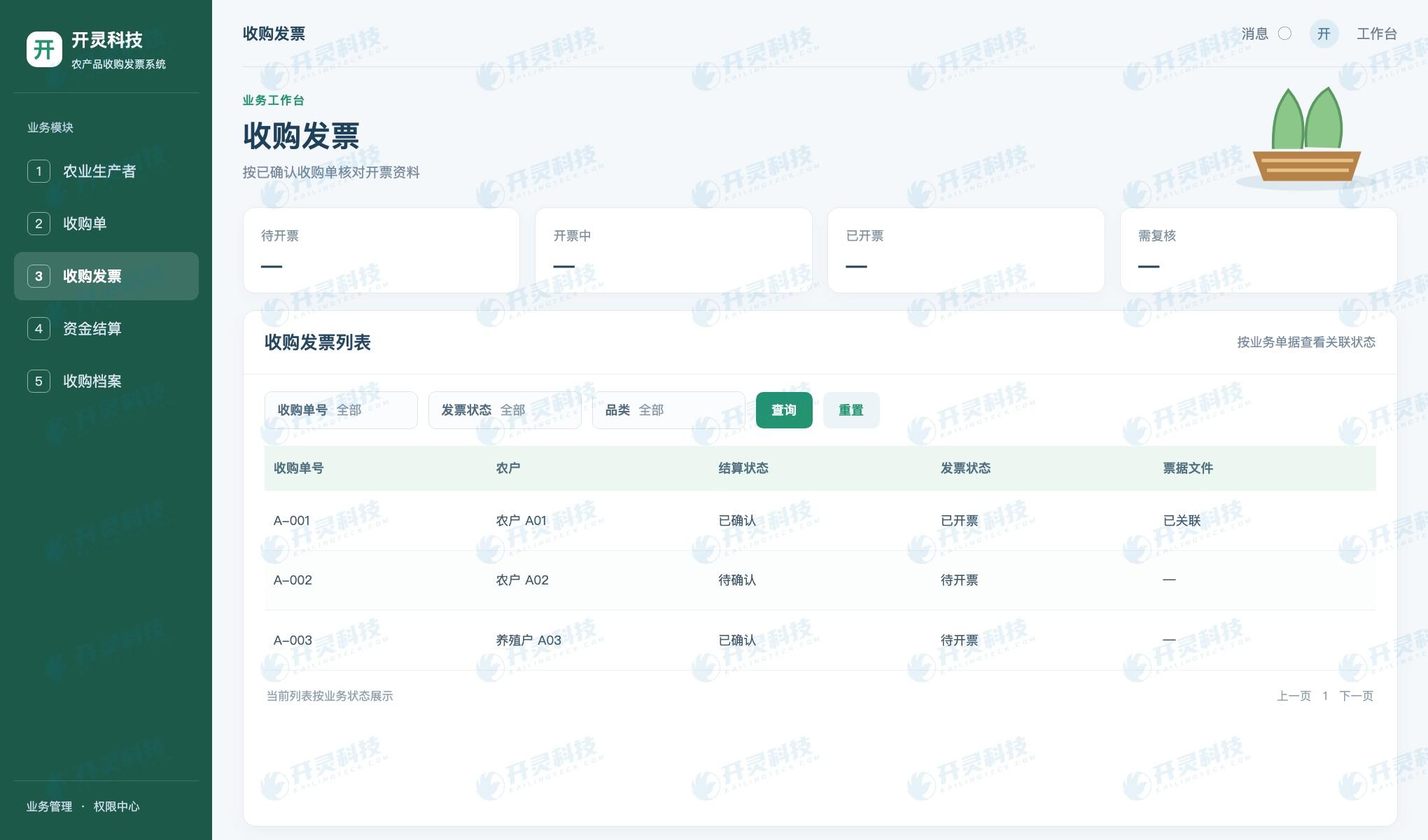
Purchase invoice status
▍Handle the intersecting cases of one vehicle with multiple households and reweighing
When one vehicle simultaneously transports live pigs for two farmers, the shared transport information can be saved by vehicle, and then separate purchase details can be created for each farmer. Each household's head count, weight, grade, and settlement are confirmed independently, avoiding mistaking a transport relationship for an ownership relationship. When finance enters from one household's invoice, they see only the portion that household actually sold; when entering from the vehicle, they can view the whole-vehicle split.
When re-weighing, distinguish whether it is re-weighing the whole vehicle, weighing after unloading by household, or adjusting a batch due to failed acceptance. Different reasons correspond to different calculation methods. The system should retain the original weigh ticket, re-weigh ticket, and adjuster, and not directly overwrite old figures with new ones. If payment or invoicing has already occurred, finance should also determine how to handle the difference.
If a farmer's account is changed during the peak purchasing season, the pending payment list should not automatically apply the new account to all historical transactions. It should be clear from which purchase order the new account takes effect, and paid and in-progress payment instructions should retain their original traces. For special collection on behalf, verify authorization first, then decide whether to allow it.
Enterprises can select a combined sample of multi-household vehicles, reweighing, returns, and installment payments for a complete drill. From on-site handover to invoice documents, every figure can be traced back to weighing and settlement; when an exception occurs, the system shows the handling role and next action. Only in this way can a clear per-transaction account be maintained during high-frequency purchasing.
▍Give farmers a clear settlement receipt
After the purchase is completed, farmers care about the number of head, weight, deductions, and when they will receive payment. Enterprises can provide confirmed settlement details based on the purchase order, and business staff can explain discrepancies against the original weighing and inspection records. If the information is held only at the weighbridge office and finance calculates it again separately, it is difficult to respond quickly when farmers raise objections.
After payment, match the bank result with the receipt; after invoicing, verify the invoice amount. The enterprise has a unified handling standard for exception orders internally, so farmers do not need to repeatedly confirm between the purchasing point, cashier, and finance. When the same household delivers multiple times, each batch is independently traceable, preventing an unpaid amount from a previous transaction from being mistakenly counted in the next.
If the purchasing enterprise has multiple sites, farmer profiles should avoid duplicate creation while allowing each site to record different delivery batches. Headquarters should view total transaction volume by farmer, and sites should handle daily acceptance by vehicle trip; only when the two views point to the same identity and payment information can efficiency and verification both be achieved.
▍FAQ
Q: If one vehicle carries pigs from multiple farmers, can only one purchase order be issued?
A: Retain separable details according to the actual seller, so that each farmer's head count, weight, and settlement can be independently verified.
Q: After reweighing, how is the invoice amount kept correct?
A: Base it on the confirmed acceptance and settlement results, and retain the original weighbridge tickets and reweighing differences.
Q: What if the payer and the invoicing target are inconsistent?
A: First verify the transaction, authorization, and account relationships; do not assume the entity is correct merely because payment succeeded.
Q: If the live pig head count is correct but the weight is inconsistent, what should be checked first?
A: First check whether the weighing record corresponds to a whole vehicle, a single household, or batch unloading, then verify reweighing, returns, and acceptance adjustments. Head count and weight express different facts; correct head count cannot be used to infer that the settlement weight is correct. Finance should calculate the payable amount based on the confirmed acceptance results and retain an explanation of differences in the purchase order.
Q: Can a farmer who delivers multiple times share one self-production document?
A: Stable entity information can be reused in the archives, but each purchase must still point to the applicable period, category, and actual delivery. If the information status changes, or the delivered category does not match the original registration, it should be re-verified. The system links farmer archives with each purchase order, making it easy to query which version of the information was used for which transaction.
Visit Kailing Technology to learn about related products and implementation plans: https://www.kailingteck.com/fxncp/ .
As a national high-tech enterprise, Kailing Technology focuses on the digital and intelligent transformation of enterprise business-finance-tax and operations management, providing software products, system integration, implementation and delivery, and operational services for various government agencies, institutions, group enterprises, and SMEs.
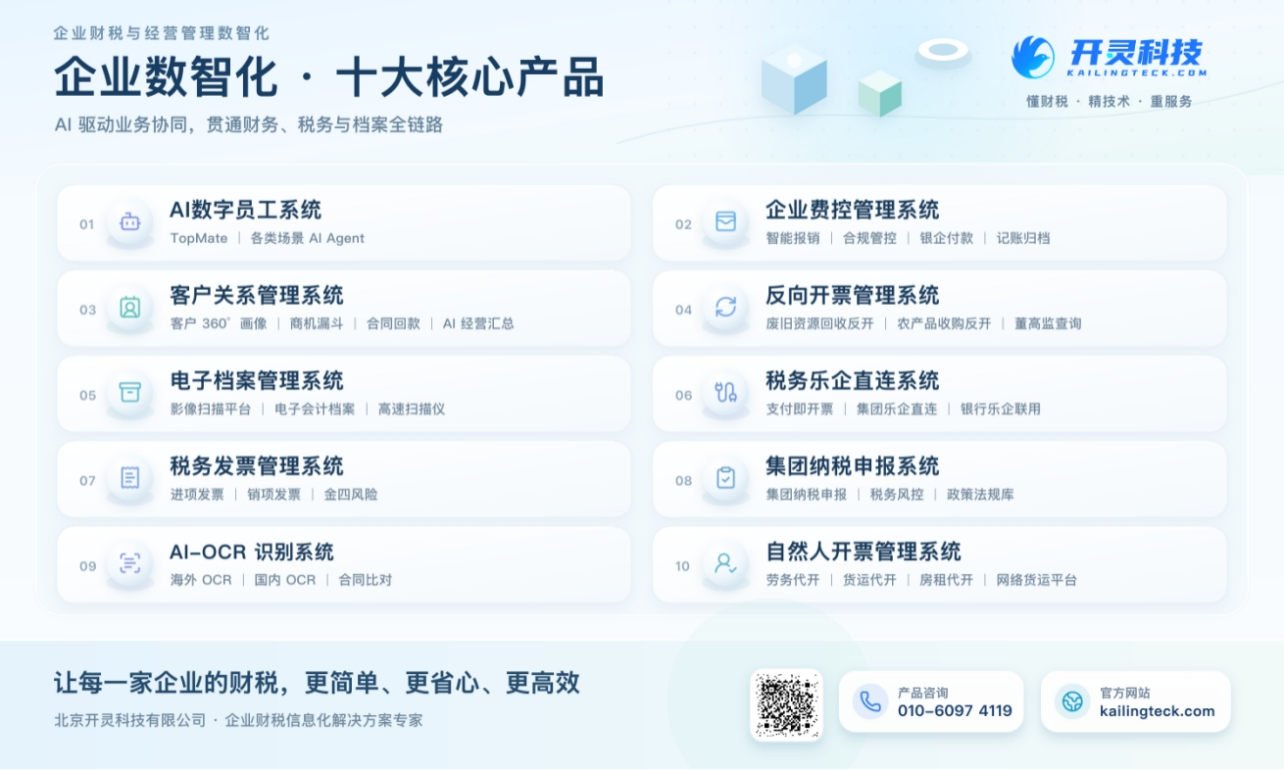
The company has now formed ten core product lines, including: AI digital employee system, enterprise expense control management system, customer relationship management system, reverse invoicing management system, invoice issuance for individuals management system, electronic archives management system, tax fully digitalized e-invoice Leqi system, tax invoice management system, group tax filing system, and AI OCR recognition system. It is committed to connecting enterprise business, finance, tax, funds, and archive data to help customers improve operational efficiency, business-finance-tax compliance capabilities, and digital management levels.
If you have any business-finance-tax digital transformation needs, welcome to contact us. Beijing Kailing Technology will serve you wholeheartedly.
Keywords: Live pig purchase invoices, farmer weighbridge tickets, agricultural product purchase payments, Kailing Technology agricultural product purchase reverse invoicing system
As a comprehensive business-finance-tax digitalization solution service provider, Kailing Technology provides business-finance-tax management digital transformation products and operational services for various government agencies, institutions, and large, medium, and small enterprises. The product line includes: solutions for sales contract management system, procurement contract management system, fully digitalized Leqi interface project, automatic output invoicing system, reverse invoicing system, invoice issuance for individuals system, employee expense control and reimbursement system, input VAT invoice management system, supply chain collaborative reconciliation system, image AI OCR recognition system, automatic financial bookkeeping system, electronic accounting archives system, etc., comprehensively driving the digitalization process across various fields.
Consultation Hotline: 18513895936 / 010-60974119 Location: Beijing