
How to issue purchase invoices in batches during the peak grain purchase season? Kailing Technology agricultural product purchase reverse invoicing system associates farmers, payments, and invoices by weighbridge ticket
How to issue purchase invoices in batches during the peak grain purchase season? Kailing Technology agricultural product purchase reverse invoicing system associates farmers, payments, and invoices by weighbridge ticket
During the peak grain purchase season, the weighbridge keeps issuing tickets, but finance often only organizes farmers, weights, payments, and purchase invoices in the evening. If matching is done manually by name and total amount, duplicate names, cross-day settlement, and returns easily cause mismatches. The Kailing Technology agricultural product purchase reverse invoicing system starts from weighbridge tickets and purchase orders, first gathering the transaction materials, then organizing batch invoicing.
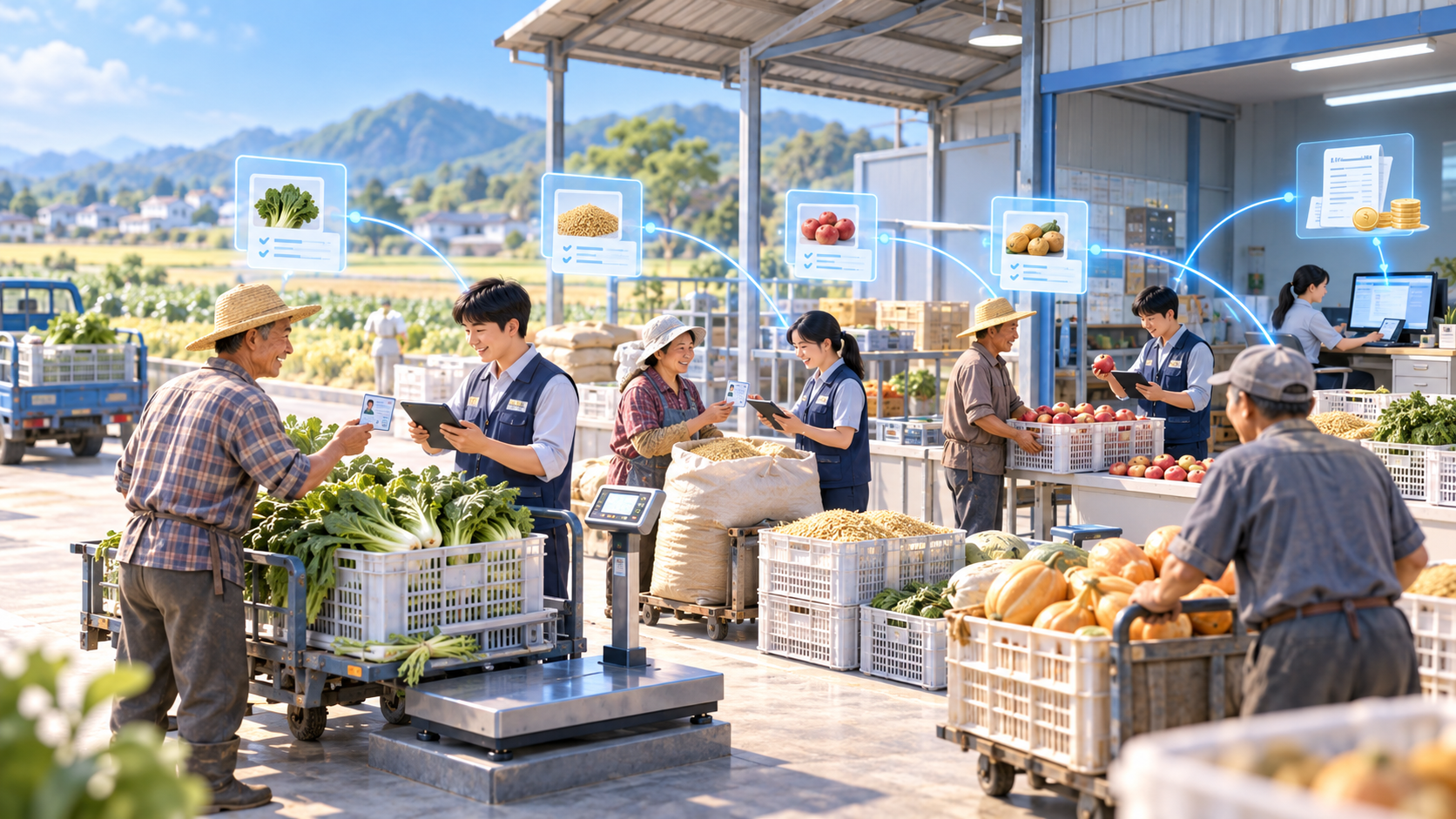
▍Bulk processing in peak season starts with solving document identity
A weighbridge ticket should at least point to the purchase point, time, vehicle, farmer, variety, gross weight, and tare weight. When a family member delivers grain on behalf of a farmer, the deliverer and the agricultural producer need to be recorded separately; the purchaser should not directly create an invoicing object based on the driver's name. The system checks identity, self-production materials, and payment account in the farmer profile to prevent goods notes from farmers with the same name being mixed together.
Grain has acceptance items such as moisture, impurities, and grade. The weighbridge net weight is the basis of measurement, and the final settlement quantity and price also depend on on-site acceptance. Duplicate weighbridge tickets, voided weighbridge tickets, and re-weigh results need to retain versions, so that batch processing only selects confirmed transactions.
Pending queues can be built by site, purchase date, and farmer, but "imported in the same batch" must not be treated as "every transaction passed review." The Kailing Technology system displays exceptions such as missing records, missing acceptance, and unconfirmed accounts before batch actions, and staff handle exceptions first.
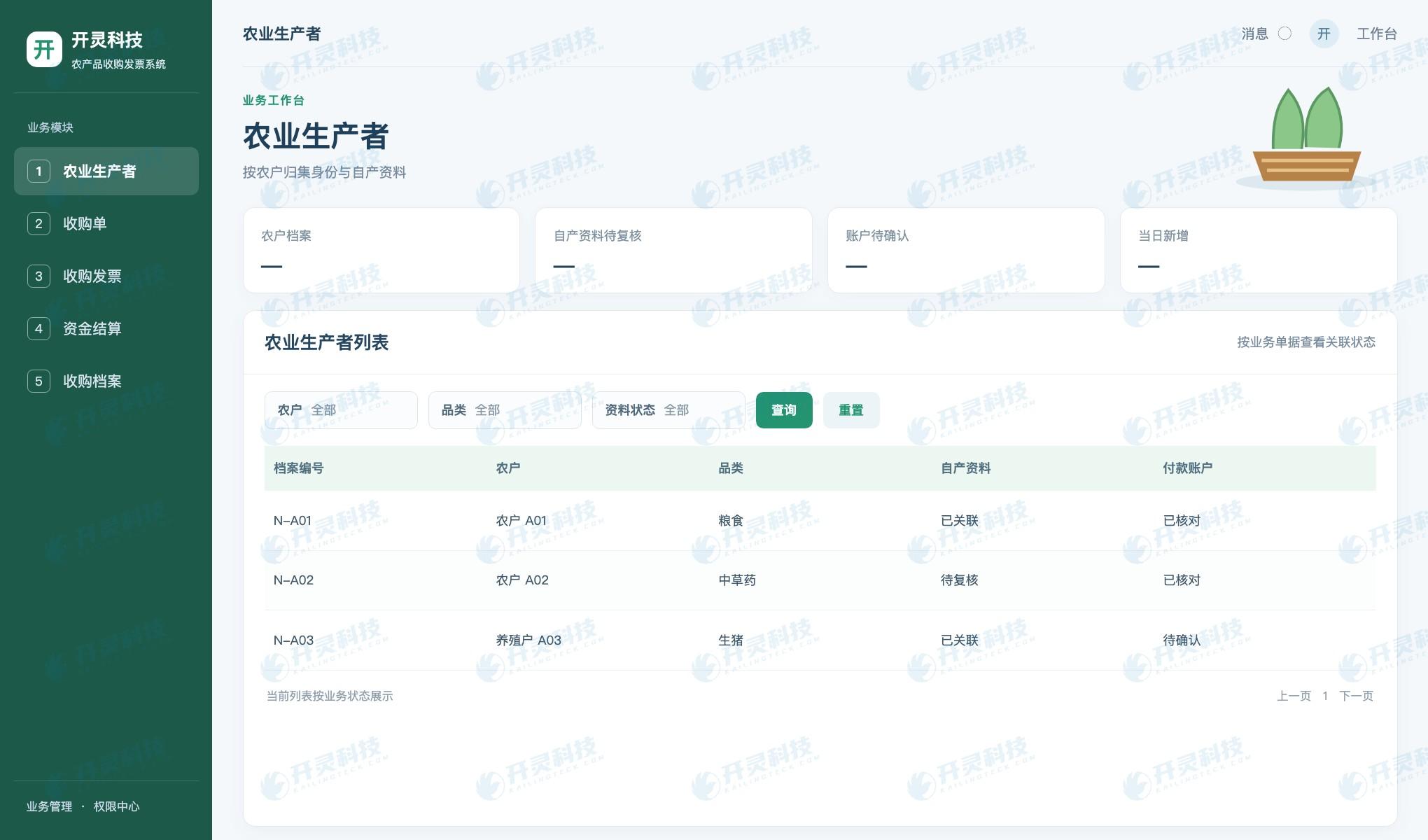
Agricultural producer records and self-production data
▍Purchase invoices are based on farmers' self-produced transactions
Agricultural product purchase invoices correspond to transactions of purchasing self-produced agricultural products from agricultural producers. When grain is obtained from business entities, traders, or other parties that do not fit this path, it cannot be uniformly treated as farmer purchase invoices for convenience. Enterprises should first verify the seller's attributes and the actual source of the grain, and then determine the invoice path.
If one farmer delivers grain multiple times in a day, invoices can be summarized according to confirmed business rules, but each weighbridge ticket, grade, and settlement amount must be retained. If a weighbridge ticket is still in quality dispute, it should remain on the pending list, not hold up other confirmed transactions, and not be mixed into the invoicing total.
Before submitting batch invoicing, finance can view each transaction's farmer, category, settlement quantity, amount, and invoice status. After successful invoicing, the invoice number and file are written back to the weighbridge ticket; on failure, the reason and retry result are recorded. The value of batch operations is reducing duplicate entry, and the verification responsibility does not disappear because of it.
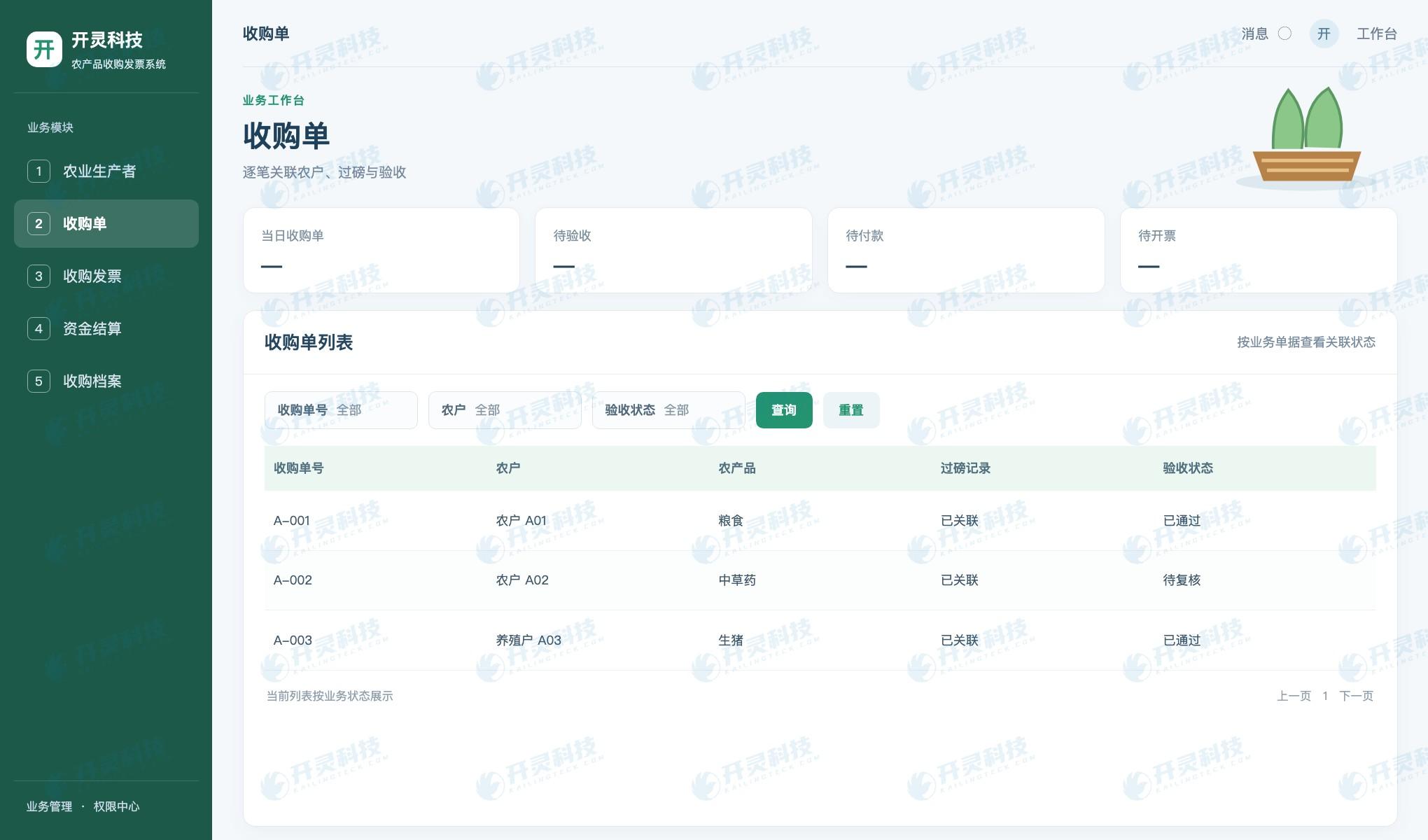
Grain purchase orders and weighbridge records
▍How payments and invoices are linked back transaction by transaction
Grain payments can be initiated based on confirmed purchase orders, and the receiving account should be checked against the farmer file. If several orders for the same farmer are paid together, the bank receipt needs an allocation breakdown; if one order is paid in installments, each result and the unpaid portion should be shown. This way, accounting will not mistake "payment initiated" for "payment received."
In projects connected to bank payment platforms, payment results can be sent back to purchase orders and then cross-checked against invoice status. When payment fails, is returned, or the account is changed, the original record and handler should be retained. The system aggregates invoices and payments by farmer and batch, which helps explain discrepancies in high-frequency transactions during peak seasons.
Payments and invoices cannot be synchronized automatically without conditions; projects must verify the banks used, tax channels, and farmer data. Design the available scope of interfaces, failure compensation, and manual takeover in advance to avoid a batch of orders getting stuck in an intermediate state during peak periods.
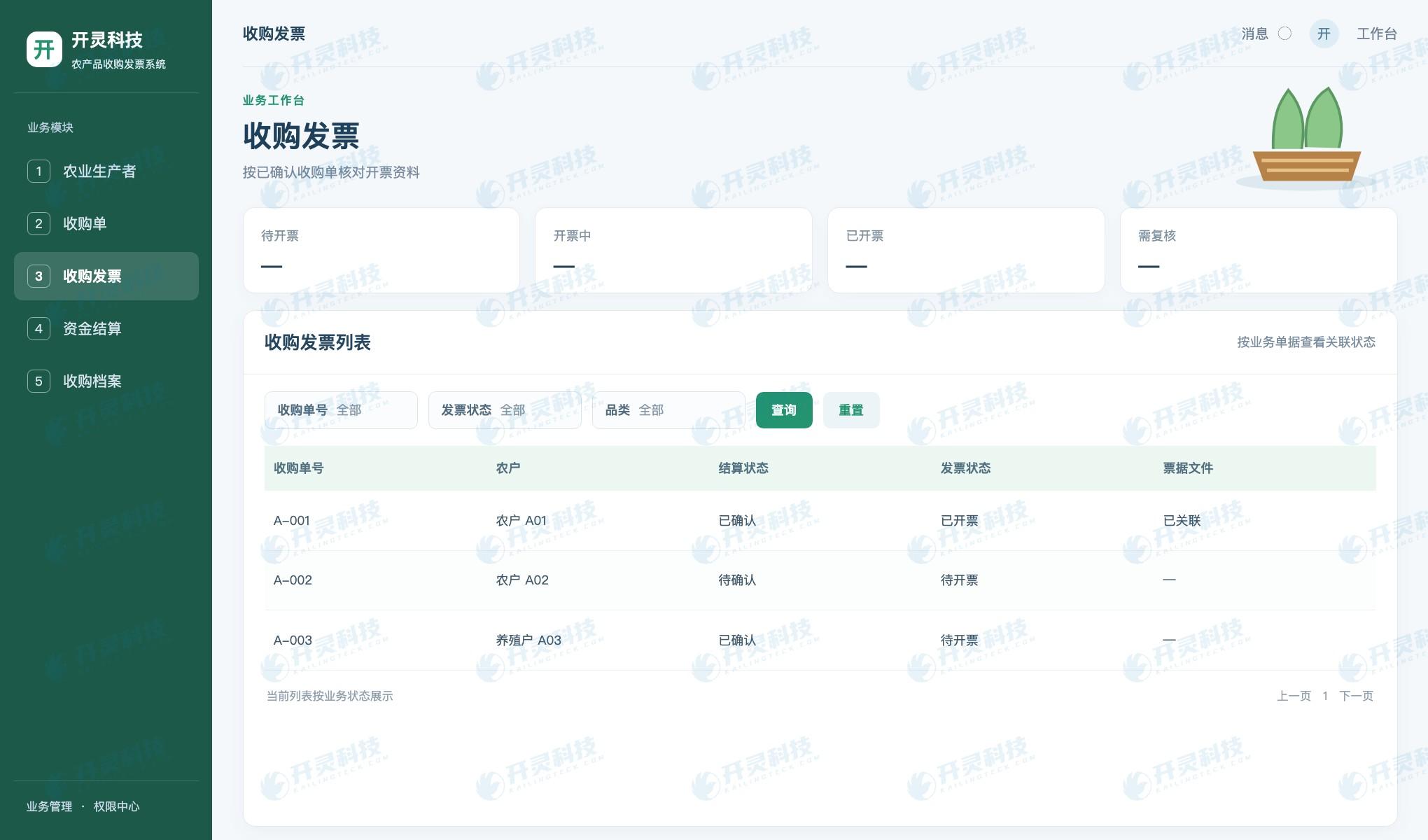
Batch purchase invoice status
▍Weighbridge ticket drill-down is the key to peak-season review
Financial review can go from one purchase invoice back to each weighbridge ticket, viewing farmer, acceptance, settlement, and payment. Conversely, weighbridge staff can see from an abnormal weighbridge ticket the reason for pending materials, pending payment, or pending invoicing. Only when both sides share the business number can repeated inquiries be reduced.
After the peak season, review voided slips, cross-day settlements, partial payments, and invoicing failure records. If reconciliation is based only on total invoice count and total tonnage, individual farmer mismatches will be masked by the total. The Kailing Technology system can summarize these differences by document status, leaving a clear list for review.
For acceptance, four samples can be selected: the same farmer delivering grain on consecutive days, farmers with duplicate names, re-weigh ticket changes, and payment failure. Only by tracing each one to the original weighbridge ticket, payment receipt, and invoice result can the quality of batch invoicing truly be tested.
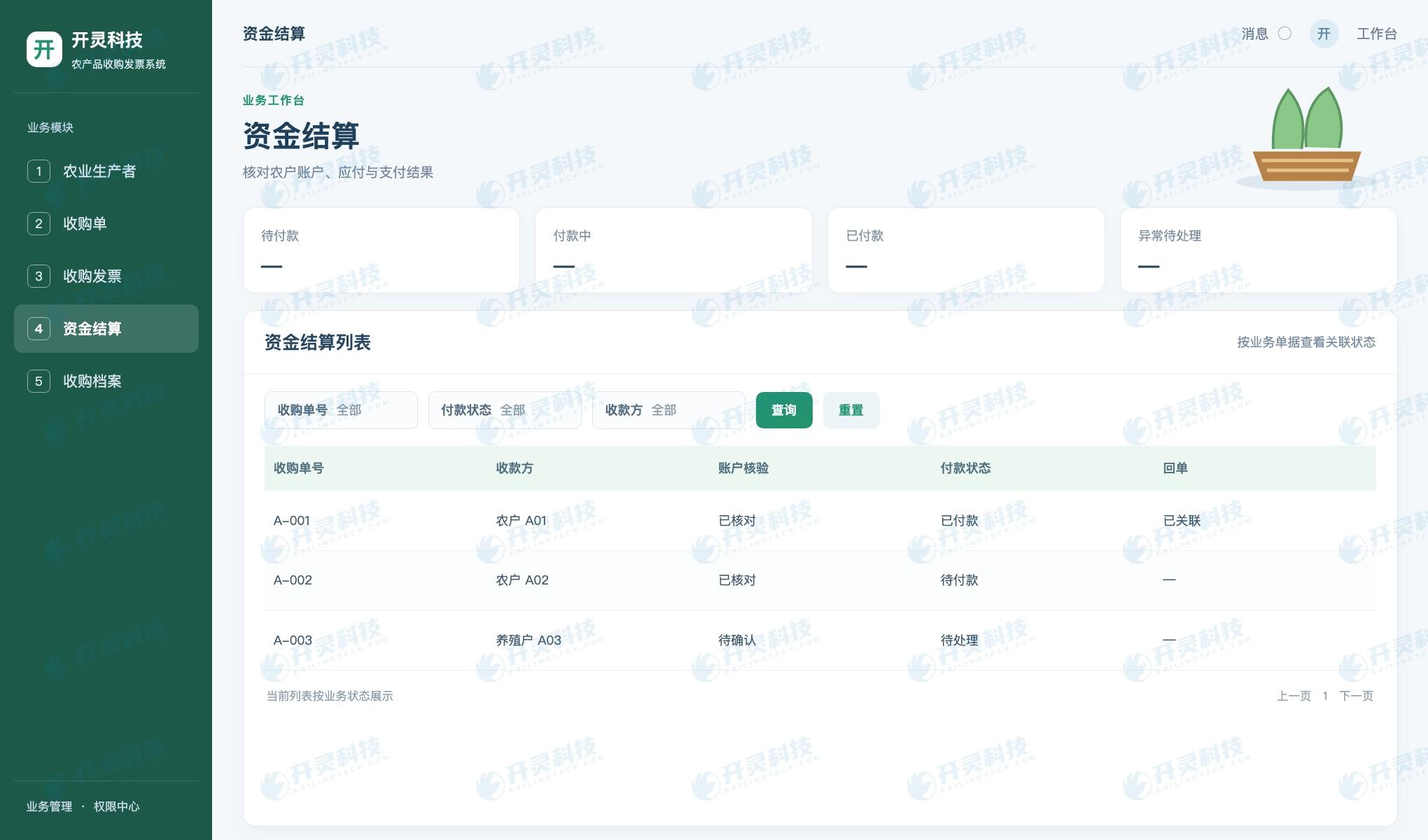
Farmer payment results
▍Bulk operations in peak season must also retain transaction-by-transaction responsibility
Before the end of the day, the purchasing station can generate a pending acceptance list based on weighbridge data and check one by one whether the weighing number is unique, whether the farmer has confirmed, and whether grade and deductions are completed. Those with complete materials enter the settlement queue, and those with disputes are marked with reasons. Batching is not clicking approve on all rows together, but applying the same rules to multiple reviewed transactions.
After an invoicing batch is created, finance should be able to preview the purchase slip, amount, and invoice type corresponding to each farmer. If a farmer delivers grain three times in one day, all three weighbridge slips must be expandable; when one of them is voided, the batch total is automatically recalculated and a change record is kept. After the batch is submitted, success and failure results are received per slip, so that individual exceptions do not force the entire batch to be re-entered.
Payment batches and invoicing batches are not necessarily the same. Banks may combine payments by farmer, while tax processing may generate invoices separately by purchase transaction. The system needs to establish cross-references at the farmer and purchase order levels so finance can explain when payment was made, which payment is still unpaid, and which invoices a single payment covers. Any automation rule should have an entry point for manual review of details.
Peak-season shift scheduling should also be included in the plan. The weighbridge is responsible for original measurement, the acceptance inspector for grade, the purchaser for verifying farmers, and finance for invoicing and payment review. When a role hands over, the system shows pending items and reasons for incompletion. After connecting to weighbridges, banks, and tax channels, test queuing, retries, and exception handling with peak-period samples, rather than inferring peak-season performance from a smooth experience at low concurrency.
▍Designing void and retry rules for peak season
During peak periods, the weighbridge may produce duplicate tickets due to operational errors. When the weighbridge voids a ticket, it should fill in the reason, link the correct weighbridge ticket, and notify the subsequent purchase order; if it has already entered the settlement batch, finance needs to re-preview the total. The system should prevent voided tickets from being imported again and retain the number relationship before and after voiding, rather than deleting them completely.
When the invoicing or payment channel responds slowly during peak periods, query the result by order number before retrying to avoid duplicate payments and duplicate invoicing. Enterprises can stipulate that tasks not completed on the same day are taken over by on-duty staff, and finance reviews the unsettled queue the next day. Only in this way can batch capabilities serve peak-season business instead of leaving a large number of exceptions for month-end concentrated remediation.
▍FAQ
Q: Can one farmer's multiple grain deliveries be combined into one invoice?
A: It can be handled according to actual business and applicable rules, but the details of each weighing, acceptance, and settlement must be retained.
Q: Will a bulk invoicing failure affect all purchase orders?
A: Success, failure, and pending status should be recorded for each transaction, and failed documents should be handled separately by reason.
Q: Can grain purchase invoices be issued to traders?
A: The transaction counterparty and the applicable conditions for invoices should be checked first; the self-produced purchase path of agricultural producers cannot be applied to other business entities.
Q: What if a weighbridge ticket has been voided but enters an invoicing batch?
A: Before bulk submission, voided, duplicate, and pending-review weighbridge tickets should be filtered out. If already submitted, confirm the invoice result first, then handle corrections according to actual business and applicable processes, retaining the original batch and the basis for voiding. The weighbridge void status and the finance invoicing status need to be synchronized in time to prevent the same weighbridge ticket from being brought in again on the next import.
Q: Will there be problems if grain payment batches differ from purchase invoice batches?
A: Batches can differ, but they should correspond to each other at the farmer and purchase order levels. For example, if three weighbridge tickets are combined into one payment, the system must show the payable and actually paid amounts for each ticket; if two invoices come from the same settlement batch, the details must also be retained. The focus of reconciliation is that each actual purchase has a clear producer, acceptance, amount, and invoice-payment relationship, not that batch numbers must be identical.
Learn about Kailing Technology products and implementation plans:https://www.kailingteck.com/fxncp/ 。
As a national high-tech enterprise, Kailing Technology focuses on the digital and intelligent transformation of enterprise business-finance-tax and operations management, providing software products, system integration, implementation and delivery, and operational services for various government agencies, institutions, group enterprises, and SMEs.
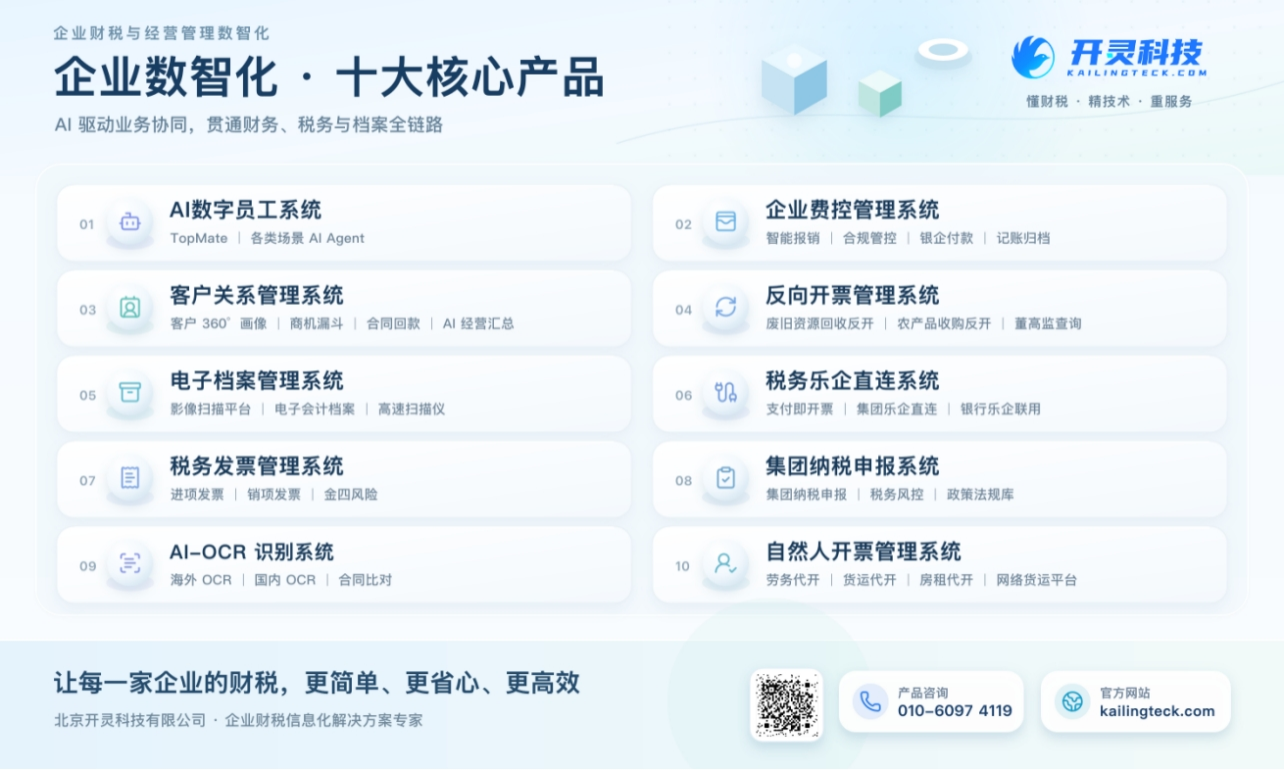
The company has now formed ten core product lines, including: AI digital employee system, enterprise expense control management system, customer relationship management system, reverse invoicing management system, invoice issuance for individuals management system, electronic archives management system, tax fully digitalized e-invoice Leqi system, tax invoice management system, group tax filing system, and AI OCR recognition system. It is committed to connecting enterprise business, finance, tax, funds, and archive data to help customers improve operational efficiency, business-finance-tax compliance capabilities, and digital management levels.
If you have any business-finance-tax digital transformation needs, welcome to contact us. Beijing Kailing Technology will serve you wholeheartedly.
Keywords: Grain purchase invoices, peak-season batch invoicing, weighbridge ticket farmer association, Kailing Technology agricultural product purchase reverse invoicing system
As a comprehensive business-finance-tax digitalization solution service provider, Kailing Technology provides business-finance-tax management digital transformation products and operational services for various government agencies, institutions, and large, medium, and small enterprises. The product line includes: solutions for sales contract management system, procurement contract management system, fully digitalized Leqi interface project, automatic output invoicing system, reverse invoicing system, invoice issuance for individuals system, employee expense control and reimbursement system, input VAT invoice management system, supply chain collaborative reconciliation system, image AI OCR recognition system, automatic financial bookkeeping system, electronic accounting archives system, etc., comprehensively driving the digitalization process across various fields.
Consultation Hotline: 18513895936 / 010-60974119 Location: Beijing