
What materials are needed for scrap aluminum recycling reverse invoicing? The Kailing Technology resource recycling reverse invoicing system links receiving, payment, and invoices by vehicle trip
What materials are needed for scrap aluminum recycling reverse invoicing? The Kailing Technology resource recycling reverse invoicing system links receiving, payment, and invoices by vehicle trip
When scrap aluminum enters the plant, the driver hands over a truckload of goods, but finance then faces the seller's identity, weighbridge slips, grade details, settlement slips, payment receipts, and invoices. The materials are scattered across different roles, making it hard at month-end to tell which delivery a given invoice corresponds to. The Kailing Technology resource recycling reverse invoicing system uses the vehicle trip and receiving slip as the thread to put the materials required for reverse invoicing back into the same transaction.

▍First check the applicable conditions of the seller and the enterprise
Reverse invoicing starts with determining the entity. Resource recycling enterprises should verify whether they themselves have the applicable eligibility, whether the seller is the individual who actually sold the scrapped products, and obtain their consent at first processing. On-site proxy delivery and entrusted driving of vehicles are not the same as selling goods; a driver cannot be directly recorded as the seller just because the driver registered at the gate.
At registration, at least verify identity documents, contact information, the receiving account, and confirmation materials related to the transaction. If the seller already has a business entity status that requires self-issuance of invoices, or if employment information triggers further verification, first hand the doubts to business and finance for confirmation. Kailing Technology's subject verification for reverse invoicing is placed at the front end of receiving, which can reduce rework caused by discovering a mismatched subject only after the invoice has been submitted.
An enterprise's eligibility and an individual's cumulative sales amount should be continuously updated, not checked only once at initial record creation. The system can retain verification dates, results, and review handling, so that subsequent multi-vehicle transactions using the same entity record still have a traceable basis.
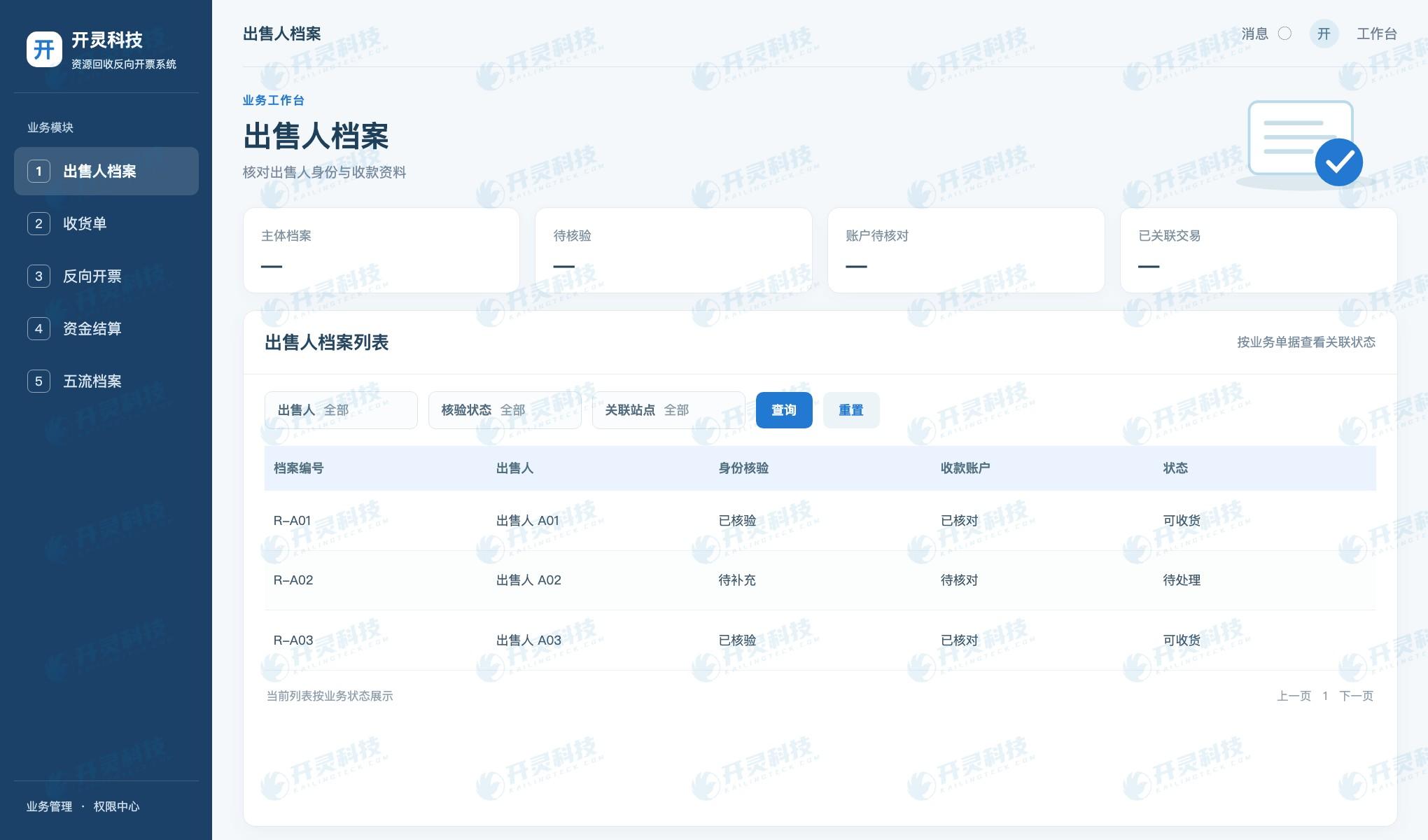
Seller records and identity verification
▍What receiving materials should be retained for one vehicle of scrap aluminum
After the gatehouse registers the vehicle and arrival time, the weighbridge creates gross weight, tare weight, and net weight records; acceptance staff then record actual grades such as profiles, castings, and thin sheets separately. A mixed-load truck can have one overall vehicle trip, but cannot have only one unexplainable total. There should be stable numbers among the vehicle trip, weighbridge ticket, and receiving details, making it convenient for finance to review by truck.
When moisture deduction, impurity deduction, returns, or re-sorting occur after weighing, retain the original measurement, adjustment reason, reviewer, and settlement result confirmed by both parties. On-site photos, quality objection handling, and inbound/outbound records each have their uses, and one photo cannot replace the weighing result. Corresponding attachments should be attached under that truck's receiving note, not scattered in personal chat records.
If one truck contains goods from different sellers, the receiving note should further break out seller and grade details, and must not merge all quantities under the same natural person for convenience. The subsequent invoice amount comes from the confirmed settlement details, and the system retains the relationship between batch and vehicle trip, so it can explain why there are multiple invoices for the same truck, or why multiple receipts together form one settlement.
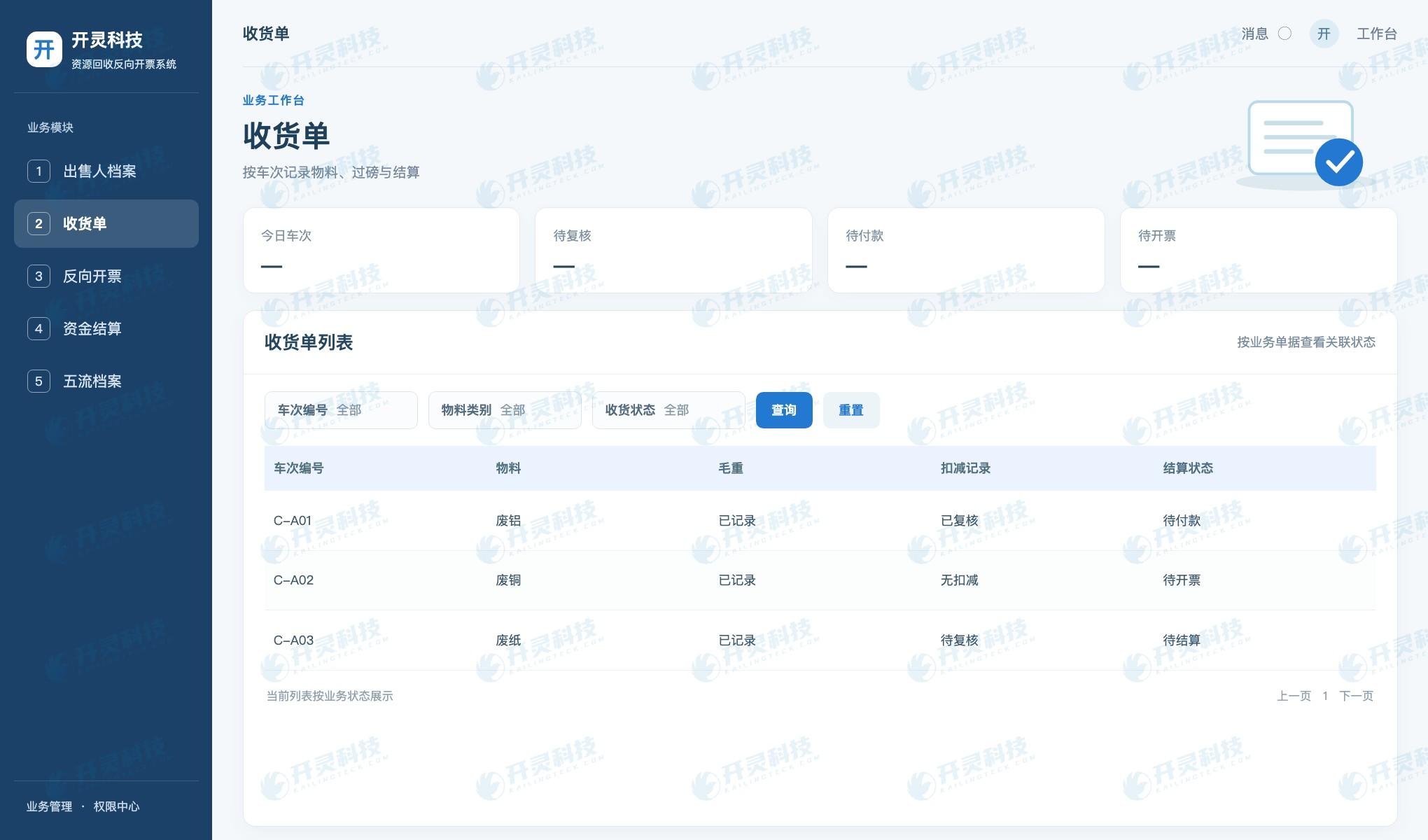
Record receiving and weighing by vehicle trip
▍How payment materials and invoices are cross-checked
Completion of receiving does not mean immediate invoicing. Finance should first verify the settlement amount and payee, then link the payment instruction to the seller profile and vehicle trip. Only after the receiving account, payment amount, and time recorded on the bank receipt are checked against the business documents can the fund status be written back to the receiving record; payment failures or partial payments must show the actual result.
At the invoicing stage, check again the seller, category, confirmed amount, and applicable invoice type. The invoice number, issuance date, electronic file, and, when adjustment is needed, the red-ink reversal relationship should all return to the same vehicle trip. If a slip is changed after receiving and settlement, first assess the impact on paid amounts and issued invoices, then handle the difference according to the process, avoiding a situation where the system shows only the final number and loses the change process.
Kailing Technology's resource recycling reverse invoicing system places receiving, payment, and invoices under the same business index, so finance can look up the vehicle from the invoice and also look up the invoice from the weighbridge slip. This association also facilitates summarizing pending items by site, material, and individual; however, the actual acceptance and review of each step still need to be completed by the corresponding roles.
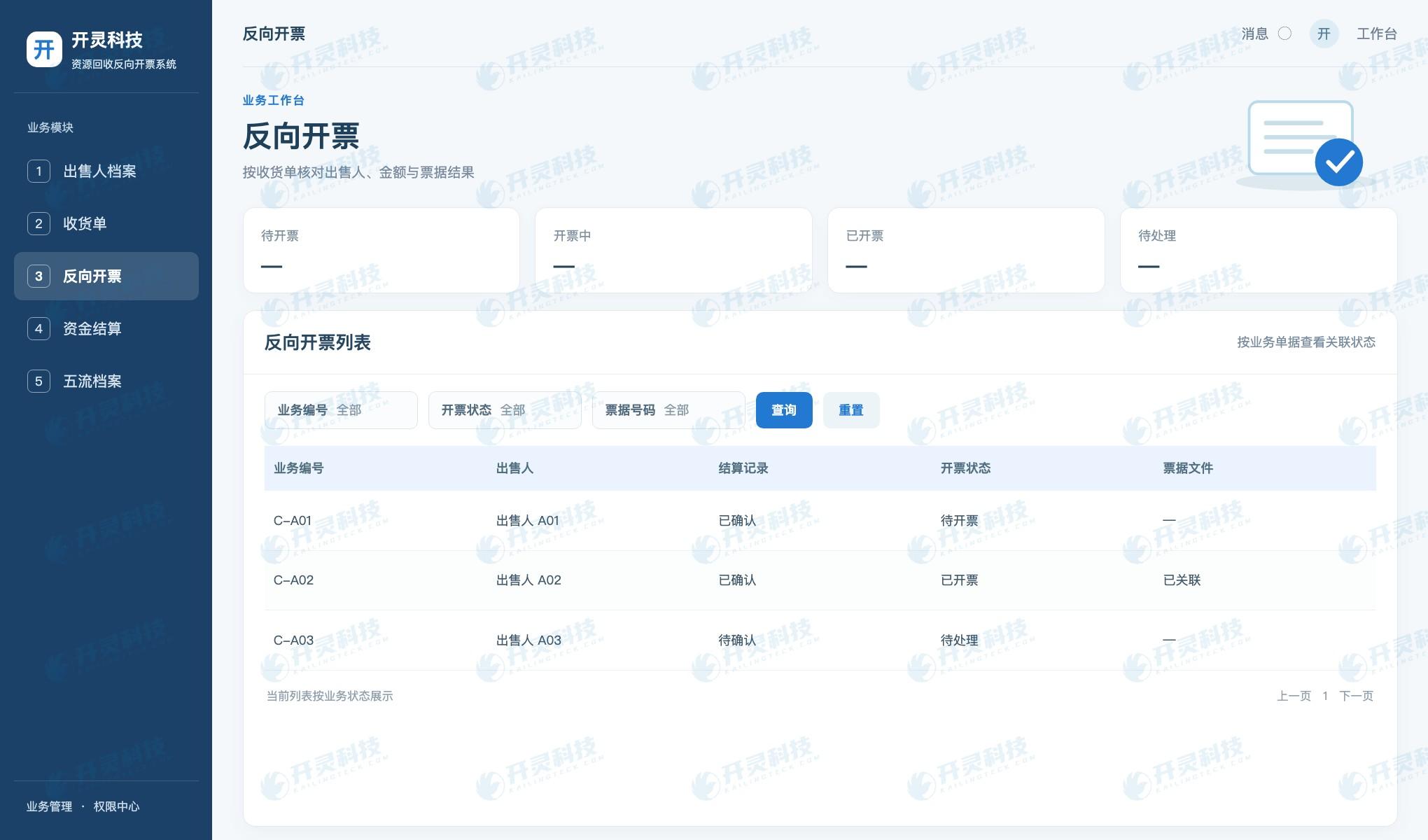
View reverse invoicing status by receiving slip
▍Using vehicle trip archives to answer post-event verification
When archiving materials, entity proof, transaction agreements, receipt and weighing, invoices, and fund records should be retrievable by vehicle trip. Enterprises can use these five categories as an internal "five flows" management framework, with the focus on finding missing items and mutual corroboration, not on assembling five file names. If a weighbridge ticket lacks seller confirmation, the responsible person and supplementary entry node should be displayed.
When checking a transaction, you can go in two directions: from the vehicle trip to the seller, settlement, receipt, and invoice; or from the invoice back to the vehicle trip, acceptance, and weighing details. If one end cannot be traced, it usually means there is a problem with the numbering, status, or attachment relationship. Regularly selecting abnormal transactions such as price changes, partial payments, and red-ink reversals for review makes it easier to find institutional gaps than only spot-checking normal slips.
For go-live acceptance, one vehicle of mixed scrap aluminum can be selected as a sample, letting gate staff, weighbridge, acceptance, cashier, and tax personnel each complete their duties, and then having finance independently trace back. The effectiveness of the Kailing Technology solution should be judged by whether materials can be reconstructed by vehicle trip, not just by whether the invoice button was clicked successfully.
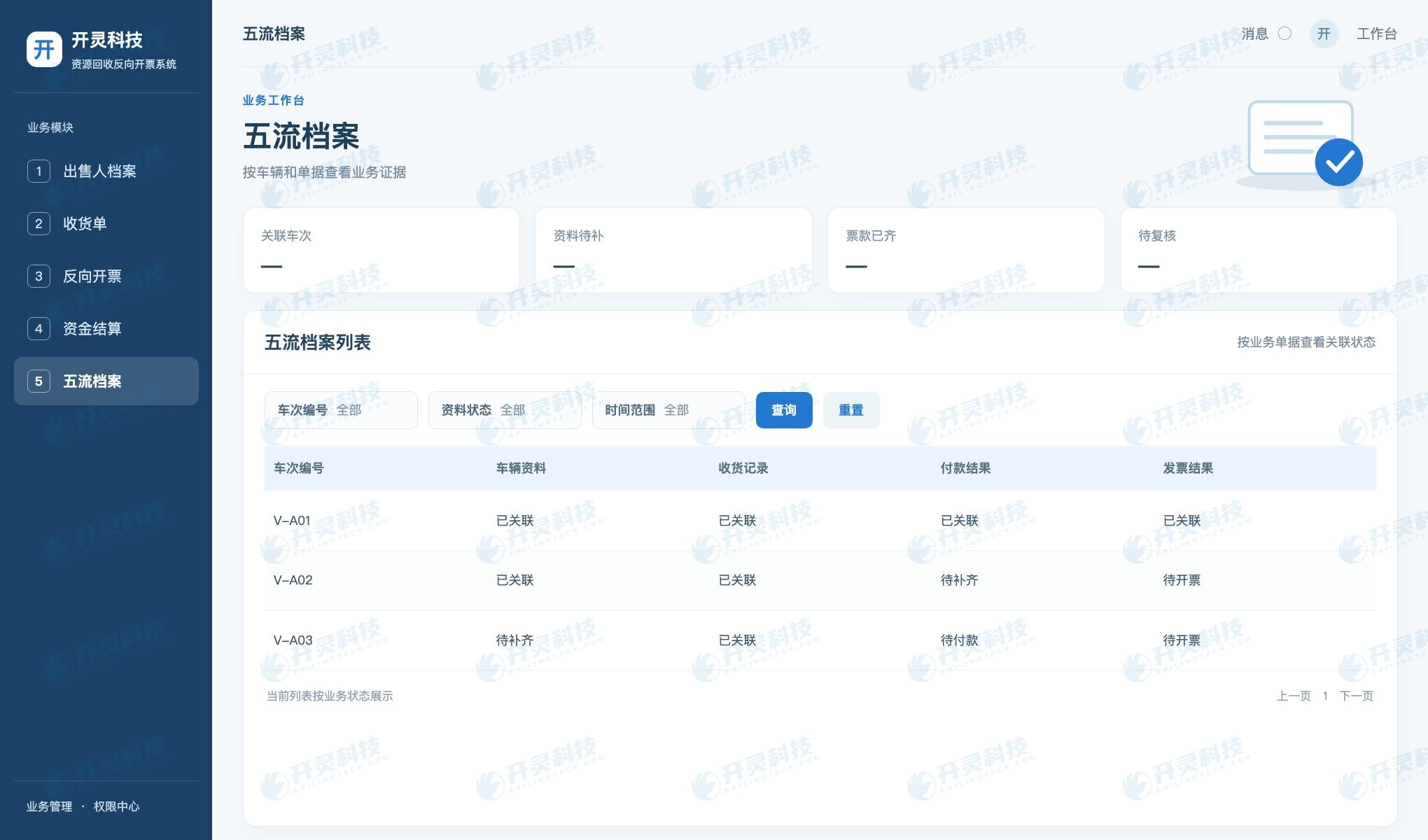
View transaction archives by vehicle trip
▍Giving site and finance an executable materials checklist
At the scrap aluminum receiving site, check before the vehicle leaves: whether the seller has been registered and has agreed to the process, whether the driver is only delivering on behalf of someone else, whether the weighbridge record can be matched to the vehicle, whether mixed grades have been separated, and whether disputed weights have been confirmed by both parties. The site does not need to decide tax treatment on behalf of finance, but it must promptly fix the facts that cannot be re-photographed or re-weighed later. After the receiving slip is submitted, the person in charge checks the attachments, and missing materials are completed against the specific vehicle trip rather than waiting until month-end to question all sites.
When finance receives the settlement statement, first check the entity, then calculate quantity and amount. If the grade details are inconsistent with the total weight, first check whether there are returns, sorting losses, or entry errors; if the amount does not match the unit price product, look for adjustment items and approval records. Only after the amount review passes does it enter the payment and invoicing queue. The system keeps each discrepancy next to the original document, so finance does not need to download weighbridge tickets and rebuild a spreadsheet.
Before payment, the cashier rechecks the payee account name against the seller's identity and determines whether the vehicle trip has already been included in another payment batch. Payment application submission, bank acceptance, and receipt return are recorded separately; when a bank return occurs, the original instruction and reason can be traced from the vehicle trip. Invoice staff obtain amounts from confirmed settlement statements and check whether the same vehicle trip already has an invoice or an invoice pending red cancellation, to avoid duplicate issuance.
During spot checks, managers can designate one invoice and have the position staff find the seller's consent materials, vehicle records, weighbridge tickets, grade settlement, and bank receipts within a limited time. Any missing step is recorded as a process problem, specifying which position should supplement the evidence or modify the rules. As samples accumulate, the enterprise can configure common omissions as pre-submission reminders, turning the vehicle-trip file from a one-time cleanup into continuous formation.
▍FAQ
Q: If only the driver signs when scrap aluminum enters the plant, can a reverse invoice be issued directly to the driver?
A: The actual seller must be confirmed first. The driver may only be a carrier or delivery agent, and the seller identity, transaction, and payment information must correspond to each other.
Q: How should materials be retained when multiple scrap aluminum grades are mixed in one vehicle?
A: Retain the total vehicle trips and the acceptance, weight, and settlement details for each grade, and record the basis for deductions or adjustments.
Q: Can a payment receipt replace receiving evidence?
A: No. The payment receipt only indicates the payment result; it still needs to correspond to actual receiving, weighing, and settlement.
Q: Should vehicle trips, receiving notes, and invoices use the same number?
A: The three can retain their own numbers; the key is to establish a stable mapping. The vehicle trip represents vehicle entry, the receiving note carries grade and acceptance, and the invoice reflects the confirmed transaction result. When one vehicle is split among multiple sellers, or multiple vehicles of the same seller are settled together, the numbers are not necessarily one-to-one. The system should save the split or merge relationships and allow viewing the other two types of records and related payments from any number.
Q: Is manual review still needed after materials are complete?
A: Yes. Complete materials only mean that files and fields exist; whether grading, deductions, seller identity, and settlement are genuine still needs to be reviewed by role personnel. The system can first flag missing certificates, unlinked weighbridge tickets, mismatched accounts, or duplicate invoices, and then business and finance handle the specific reasons. For situations such as price changes, red-letter reversals, and cross-batch payments, retaining review conclusions is especially important.
Learn about Kailing Technology products and implementation plans:https://www.kailingteck.com/fxzy/ 。
As a national high-tech enterprise, Kailing Technology focuses on the digital and intelligent transformation of enterprise business-finance-tax and operations management, providing software products, system integration, implementation and delivery, and operational services for various government agencies, institutions, group enterprises, and SMEs.
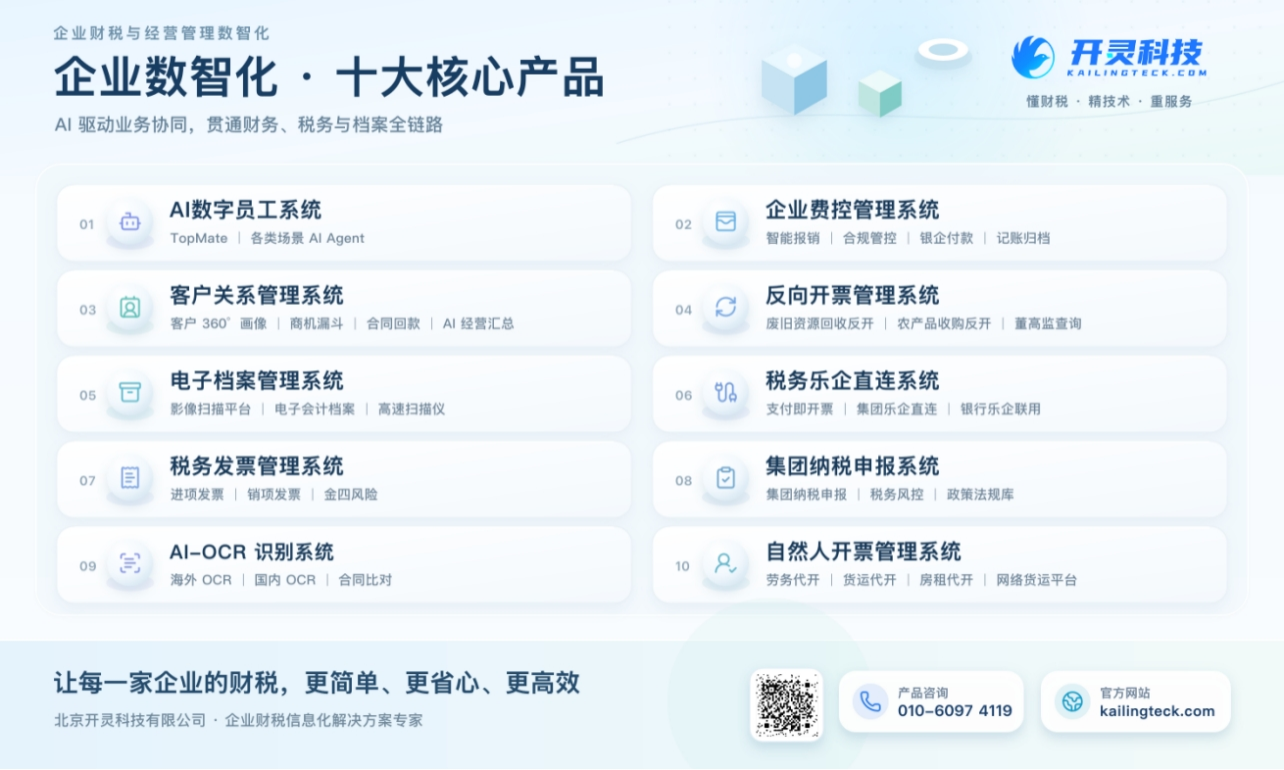
The company has now formed ten core product lines, including: AI digital employee system, enterprise expense control management system, customer relationship management system, reverse invoicing management system, invoice issuance for individuals management system, electronic archives management system, tax fully digitalized e-invoice Leqi system, tax invoice management system, group tax filing system, and AI OCR recognition system. It is committed to connecting enterprise business, finance, tax, funds, and archive data to help customers improve operational efficiency, business-finance-tax compliance capabilities, and digital management levels.
If you have any business-finance-tax digital transformation needs, welcome to contact us. Beijing Kailing Technology will serve you wholeheartedly.
Keywords: Scrap aluminum recycling reverse invoicing, Kailing Technology resource recycling reverse invoicing system, vehicle trip management, receiving payment invoicing
As a comprehensive business-finance-tax digitalization solution service provider, Kailing Technology provides business-finance-tax management digital transformation products and operational services for various government agencies, institutions, and large, medium, and small enterprises. The product line includes: solutions for sales contract management system, procurement contract management system, fully digitalized Leqi interface project, automatic output invoicing system, reverse invoicing system, invoice issuance for individuals system, employee expense control and reimbursement system, input VAT invoice management system, supply chain collaborative reconciliation system, image AI OCR recognition system, automatic financial bookkeeping system, electronic accounting archives system, etc., comprehensively driving the digitalization process across various fields.
Consultation Hotline: 18513895936 / 010-60974119 Location: Beijing