
How to compliantly automate invoicing after payment for resource recycling and agricultural product purchases? The Kailing Technology Leqi joint-use invoicing upon payment solution synchronizes transaction, fund and invoice data
Receipt has been confirmed and finance has clicked pay; why does the invoice still need to be re-entered in another system? Resource recycling enterprises facing individual sellers of scrapped products, and agricultural product purchasing enterprises facing self-produced farmers, both want to obtain invoices consistent with the transaction as soon as possible after payment. But the two businesses cannot share the same set of tax judgments. The Kailing Technology Leqi joint-use invoicing upon payment solution must first connect the applicable platform and original business data, and then handle the entity, funds and invoices separately according to the rules for reverse invoicing and agricultural product purchase invoices.
▍First confirm the Leqi integrated-use role, so automatic invoicing has a real trigger source
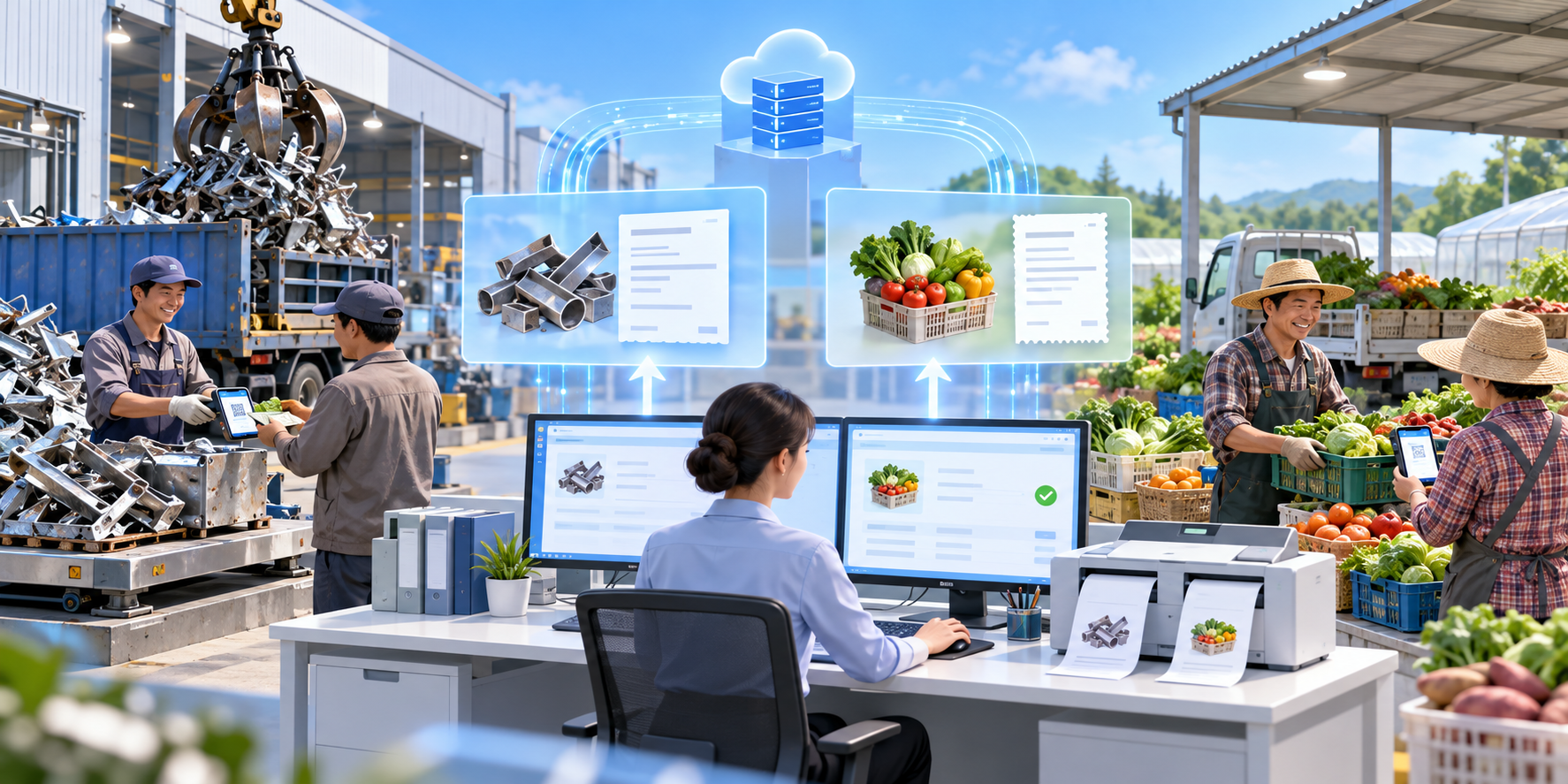
Leqi integrated use is provided by qualified direct-connection units to user units that have no controlling relationship and conduct transactions relying on their own information systems, as tax-related services. The key is not only the tax interface: the user unit's original transaction or fund receipt/payment data must be generated in the direct-connection unit's own information system. Resource recycling or agricultural product purchasing enterprises need to first choose a bank, payment institution, or platform that has opened the corresponding capabilities, and complete account, invitation, and user unit confirmation; Kailing is responsible for the implementation and interface integration of the enterprise's goods receipt, settlement, and archive systems with the partner platform, and does not present itself as a bank or Leqi direct-connection unit.
Before payment, the enterprise side should have confirmed the seller or farmer, goods, quantity, unit price and amount payable. After the data enters the partner platform, the platform forms the original transaction or payment records and triggers invoice processing according to the enabled capabilities and tax rules. If only the enterprise's online banking receipt is sent to the invoicing program without traceable original data on the platform side, it should not be promoted as Leqi joint-use "invoicing upon payment". Interface design should preserve the mutual mapping of enterprise goods order number, platform transaction number, payment number and invoice result.
▍Resource recycling: reverse invoicing must first pass entity and scrapped product rules
When individuals sell scrapped products, qualified resource recycling enterprises can determine whether reverse invoicing applies according to State Taxation Administration Announcement No. 5 of 2024, verifying enterprise qualifications, sellers and goods. The enterprise first completes verification of the seller's identity and cumulative sales amount, goods acceptance and settlement; the partner platform forms original transaction and fund data based on the access scenario. Only after the individual confirms according to the applicable process and completes relevant tax matters can payment, invoice issuance and result return form a closed loop. Announcement No. 12 of 2026 involves a specific individual income tax prepayment basis in "three-flow unified reverse invoicing" and cannot be treated as the rules for agricultural product purchase invoices.
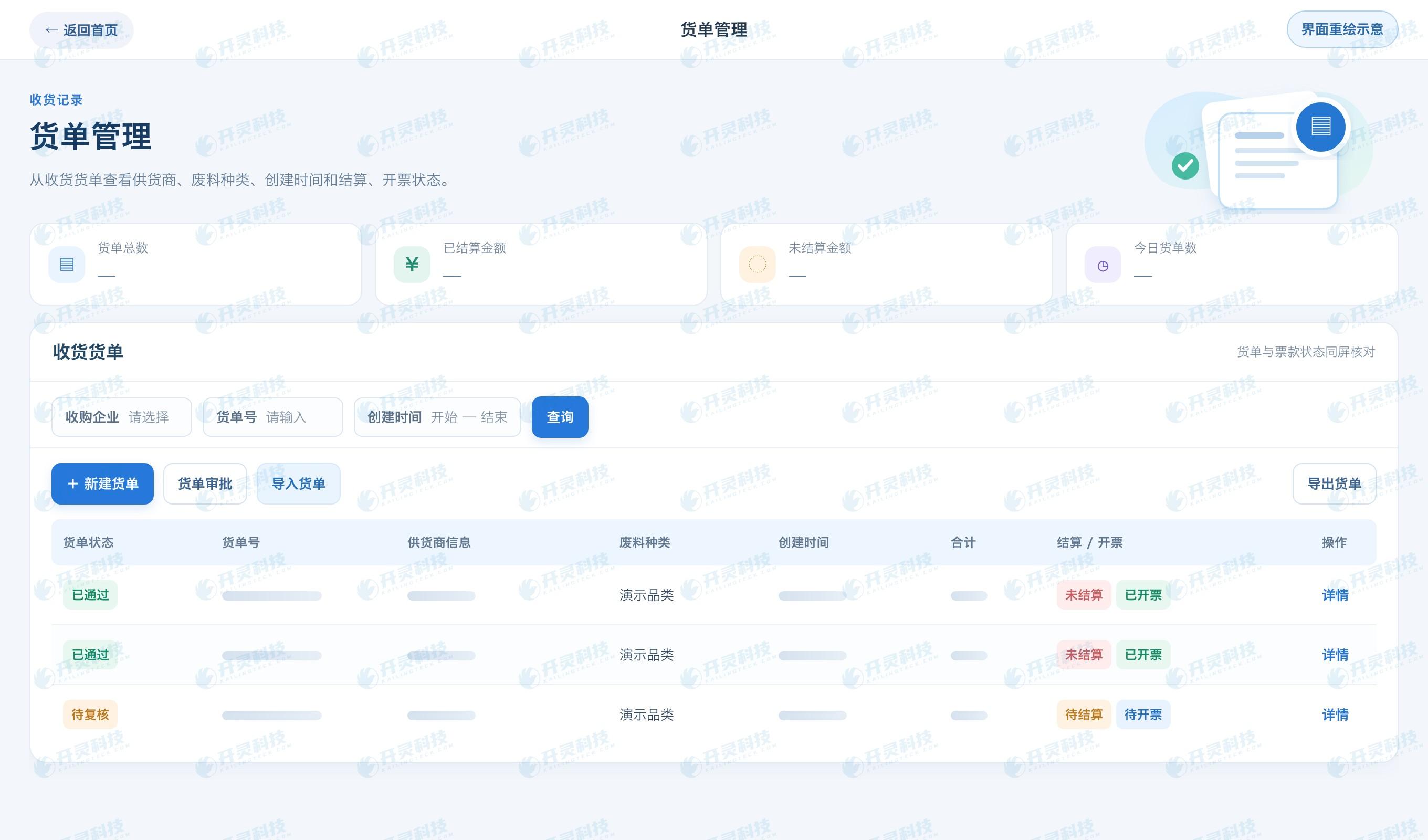
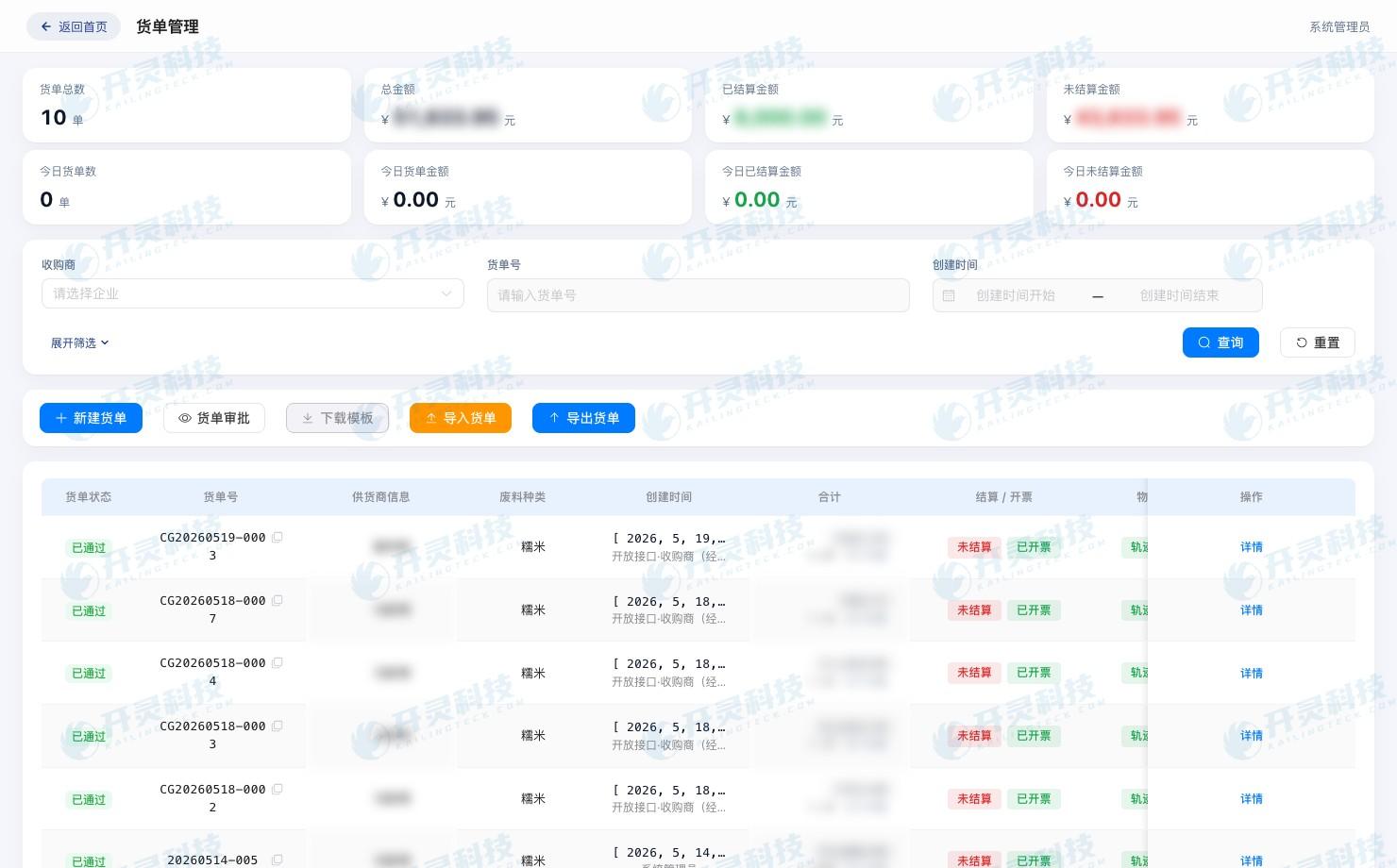
Resource recycling goods order interface illustration
Kailing's enterprise-side system should correspond confirmed receipt orders with platform transaction numbers and receive payment status, invoice numbers, failure reasons, and necessary tax results. If payment fails, the invoicing task must not assume success; if the natural person has not completed confirmation, the business should stop at the pending node. If a return or price adjustment occurs after invoicing, handle the relationship between red-letter reversal and refund according to actual tax rules, and retain the original transaction status. This kind of linkage is closer to real business than the claim that "pressing the payment button will definitely issue an invoice."
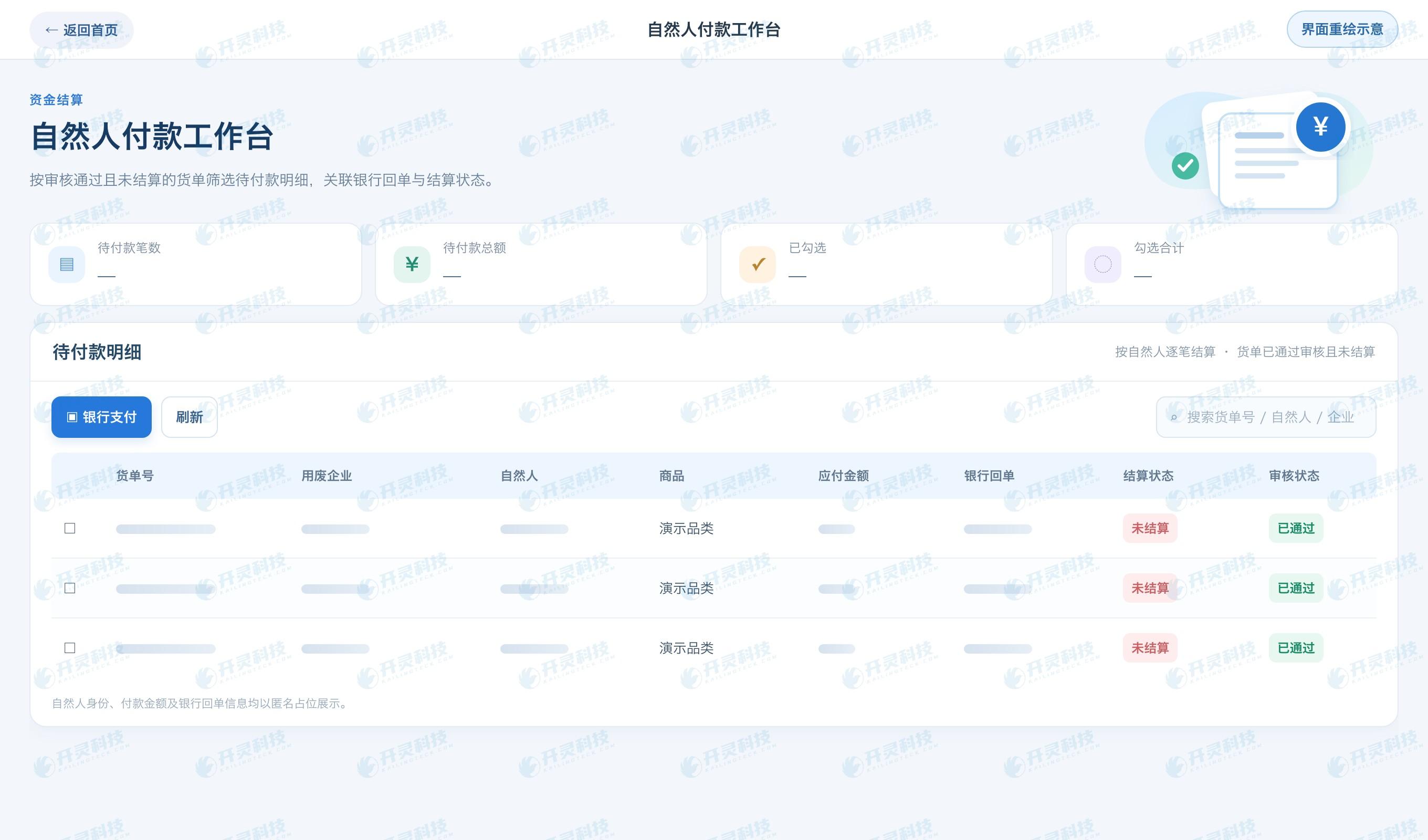
Resource recycling individual payee workbench illustration
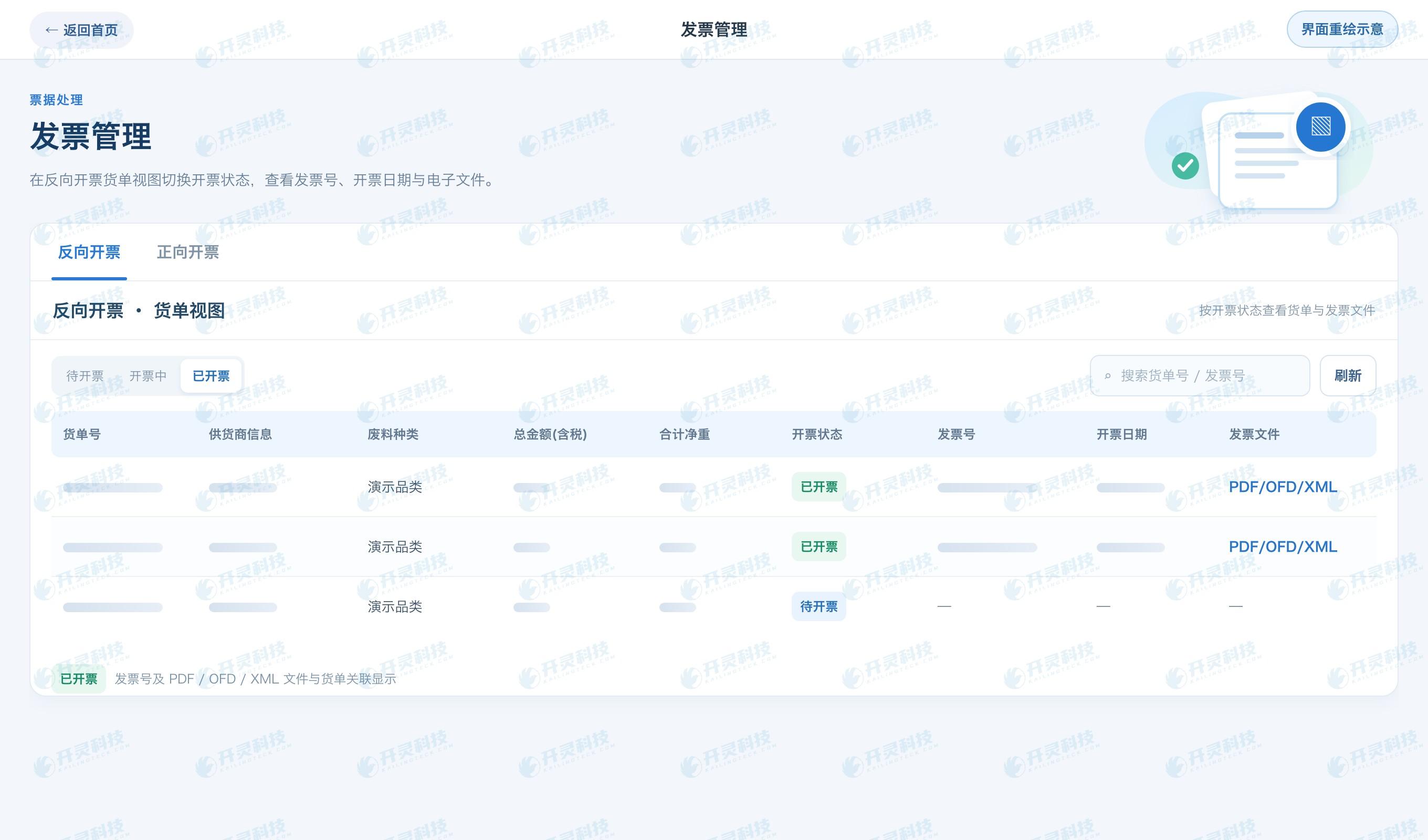
Schematic view of resource recycling reverse invoicing goods order
▍Agricultural product purchases: payment corresponds to the self-produced agricultural product purchase invoice
Agricultural product purchasing enterprises deal with agricultural producers delivering self-produced primary agricultural products, and should first verify farmer identity, self-production attributes, goods scope, and acceptance settlement. Some regions already have practices of generating electronic agricultural product purchase invoices through payment linkage, but the platform, invoice type, farmer operations, and activation conditions are subject to the actual capabilities of the competent tax authority and the cooperating direct connection platform. Enterprises cannot apply Announcement No. 5 on resource recycling and the individual income tax treatment for natural person scrapped products to agricultural products, nor can they uniformly describe farmer brokers as self-production sellers.
Sample agricultural product receiving note
After farmer files and self-production information are confirmed and a purchase order is formed through weighing or measuring, the cooperating platform records the transaction and original payment data. When the enterprise pays online, the platform triggers the agricultural product purchase invoice according to the capabilities already opened, and the invoice number and payment result are returned to the enterprise system. If one payment covers multiple batches of goods from the same household, the invoice should still be traceable to each confirmed purchase order; if multiple households deliver goods in one vehicle, the seller, amount, and receiving account should be confirmed separately for each household.
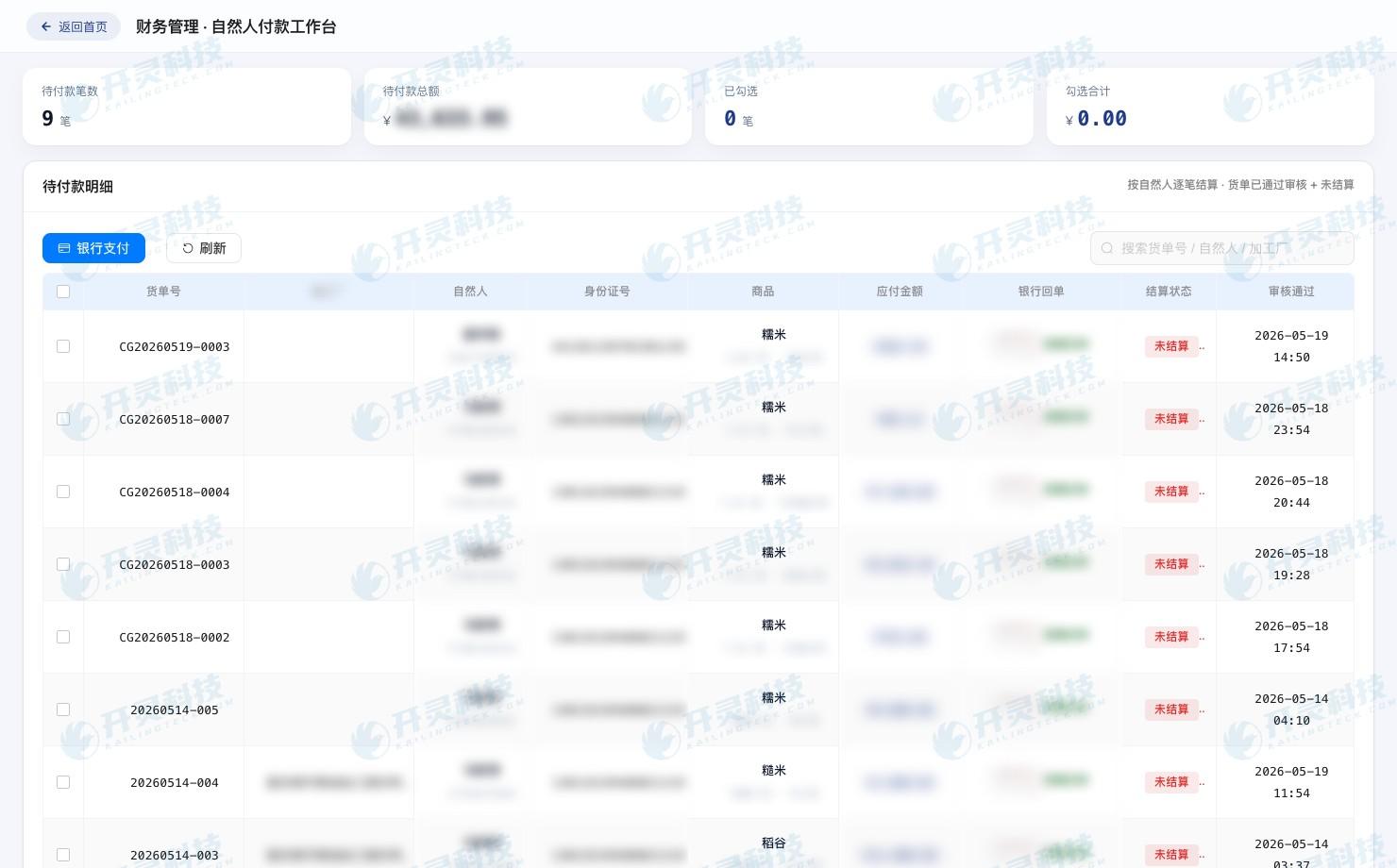
Example of an agricultural product purchase payment workbench
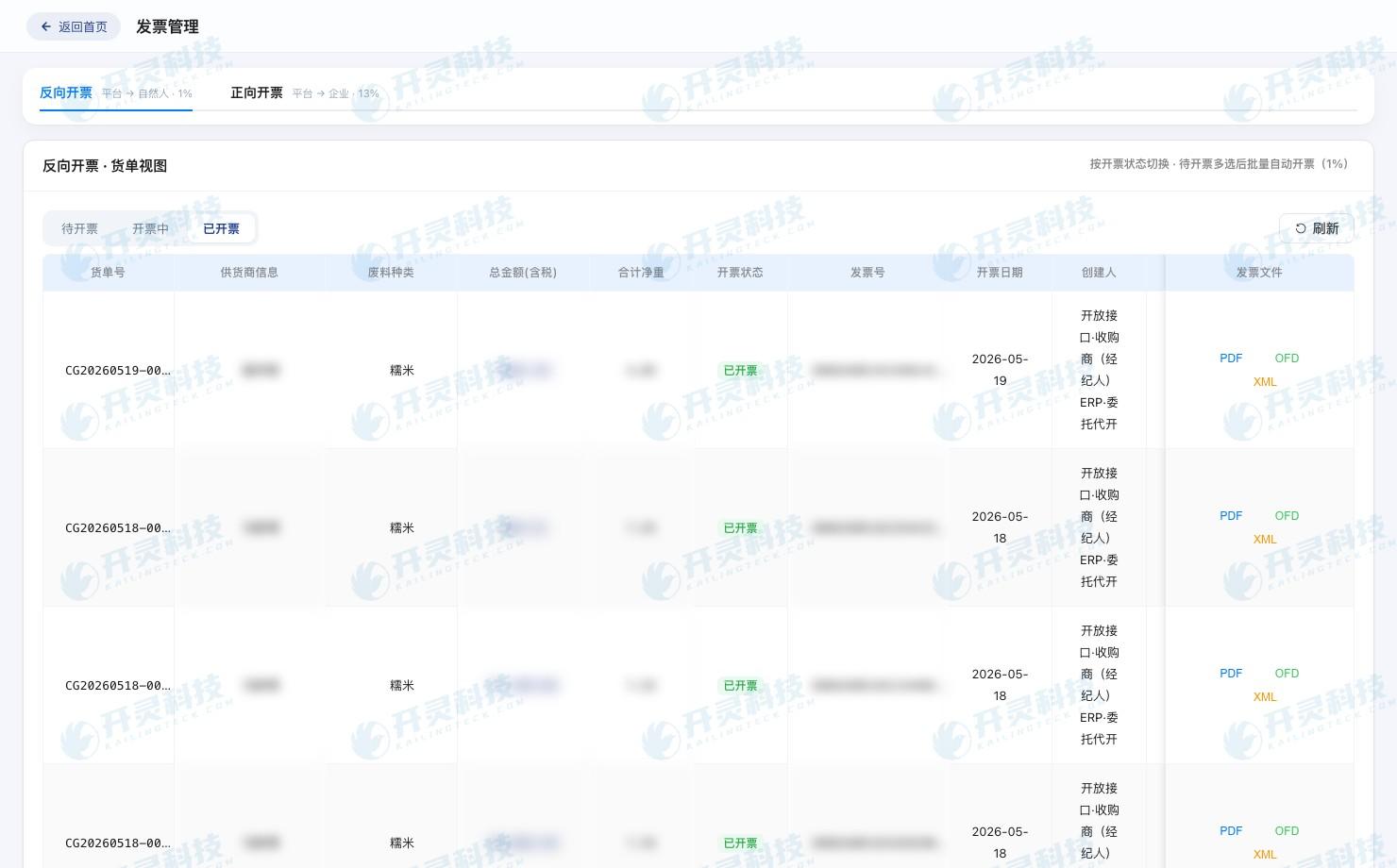
Sample agricultural product purchase invoice note
▍The common implementation focus is data mapping, exception status, and evidence write-back
The common engineering task of both paths is to put the enterprise business number, platform original order or payment number, and invoice number into a set of reconcilable associations. The interface must handle timeouts, duplicate requests, partial payments, refunds, invoice failures, and red-letter reversals; check status before retrying, to avoid duplicate payment or duplicate invoicing for one transaction. Financial reconciliation should not only compare totals but also spot-check whether a given invoice can be traced back to the original goods order, original payee, and platform payment result.
Division of responsibilities should also be clarified before go-live. On-site roles confirm goods, business reviews the entity and settlement, the partner platform saves original transaction or fund receipt and payment data and provides enabled joint-use services, finance reviews abnormal invoice and payment items, and technical personnel maintain interface status and logs. If data inconsistency occurs at any step, it should be clear who pauses, who supplements evidence and who retries. Otherwise, even if the system completes interface connectivity, exception orders will still be unclaimed across multiple platforms.
Kailing Technology's Leqi combined-use payment-triggered invoicing solution can also consolidate receipt, contract or agreement, entity materials, invoices, and fund results into enterprise-side archives. The tax-side payment, invoicing, and applicable tax links and the enterprise-side five-flow evidence management support each other around the same transaction; the five flows do not replace tax judgment. At launch, use four types of samples for acceptance: resource recycling natural person not confirmed, farmer self-production materials missing, payment failure, and return red-letter reversal, rather than only showing a demo order with one smooth invoice issuance.
▍FAQ
Q: Can resource recycling and agricultural product purchases share one invoice rule?
A: No. Resource recycling is judged under the reverse invoicing conditions for scrapped products, while agricultural products are judged separately under the rules for self-produced agricultural producers and purchase invoices.
Q: Is an invoice definitely generated immediately after successful payment?
A: It depends on platform capabilities, confirmation by the natural person or farmer, tax and business validation, and interface status; failures should retain pending results.
Q: Can Leqi integrated use be achieved with only bank receipts?
A: The original transaction or fund data meeting the integrated-use requirements must also be generated in the direct-connection unit's own information system, and the entity, business, and invoice associations must be completed.
Accurately connect payments with their respective applicable purchase invoice rules. Learn about Kailing Technology's Leqi joint-use pay-and-invoice solution: www.kailingteck.com .
As a national high-tech enterprise, Kailing Technology focuses on the digital and intelligent transformation of enterprise business-finance-tax and operations management, providing software products, system integration, implementation and delivery, and operational services for various government agencies, institutions, group enterprises, and SMEs.
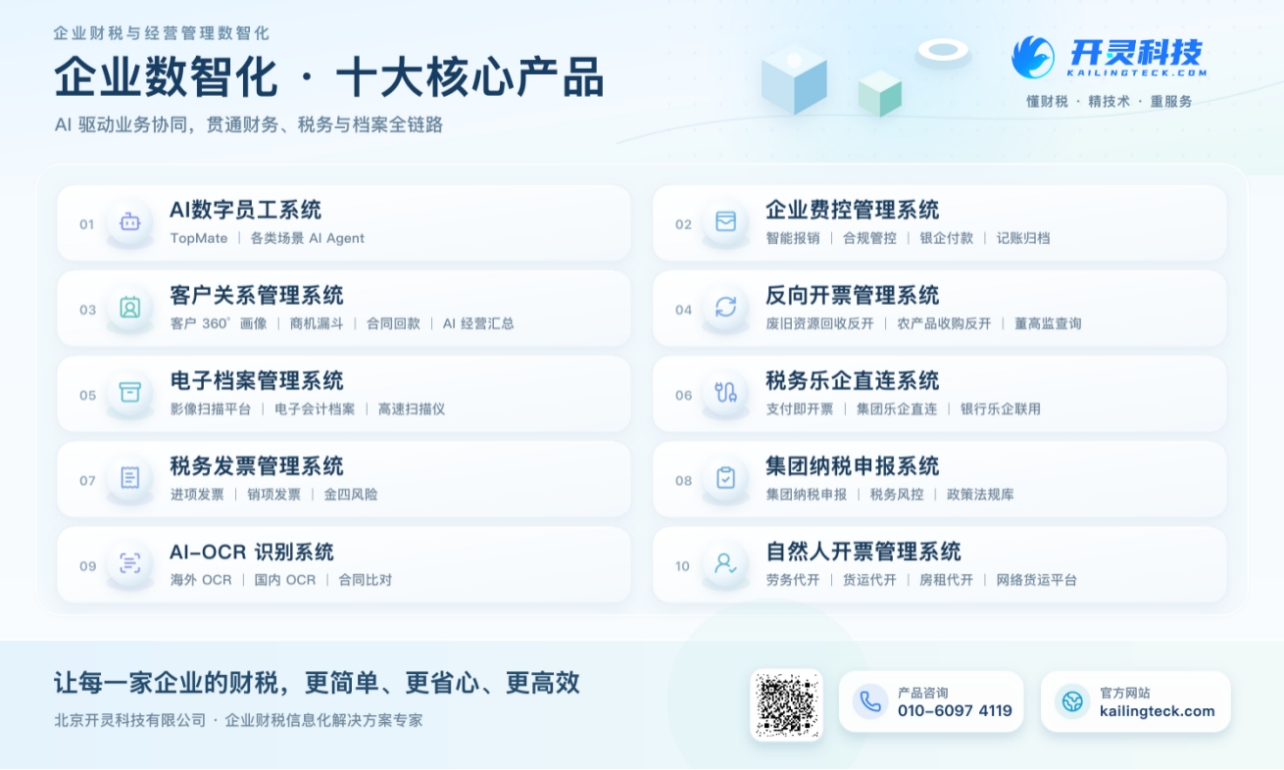
The company has now formed ten core product lines, including: AI digital employee system, enterprise expense control management system, customer relationship management system, reverse invoicing management system, invoice issuance for individuals management system, electronic archives management system, tax fully digitalized e-invoice Leqi system, tax invoice management system, group tax filing system, and AI OCR recognition system. It is committed to connecting enterprise business, finance, tax, funds, and archive data to help customers improve operational efficiency, business-finance-tax compliance capabilities, and digital management levels.
If you have any business-finance-tax digital transformation needs, welcome to contact us. Beijing Kailing Technology will serve you wholeheartedly.
Keywords: Leqi integrated payment-triggered invoicing, Kailing Technology Leqi integrated use, resource recycling reverse invoicing, agricultural product purchase invoice, transaction-fund-invoice synchronization
As a comprehensive business-finance-tax digitalization solution service provider, Kailing Technology provides business-finance-tax management digital transformation products and operational services for various government agencies, institutions, and large, medium, and small enterprises. The product line includes: solutions for sales contract management system, procurement contract management system, fully digitalized Leqi interface project, automatic output invoicing system, reverse invoicing system, invoice issuance for individuals system, employee expense control and reimbursement system, input VAT invoice management system, supply chain collaborative reconciliation system, image AI OCR recognition system, automatic financial bookkeeping system, electronic accounting archives system, etc., comprehensively driving the digitalization process across various fields.
Consultation Hotline: 18513895936 / 010-60974119 Location: Beijing