
ERP direct connection to tax authority for automatic invoicing: Kailing Technology empowers leading aerial work manufacturer Zhongji United with Yonyou U9 automatic invoicing and PDF/OFD/XML invoice return, closing the business-finance-tax loop
In the business-finance-tax digitalization of manufacturing enterprises, an invoicing system is not an isolated tool. Sales business occurs in ERP, invoice issuance depends on tax capabilities, and invoicing results must return to the business system for query, delivery, red-letter reversal, and statistics. As long as any one link still relies on manual transfer, it is difficult for the business flow, invoice flow, and data flow to truly close the loop.
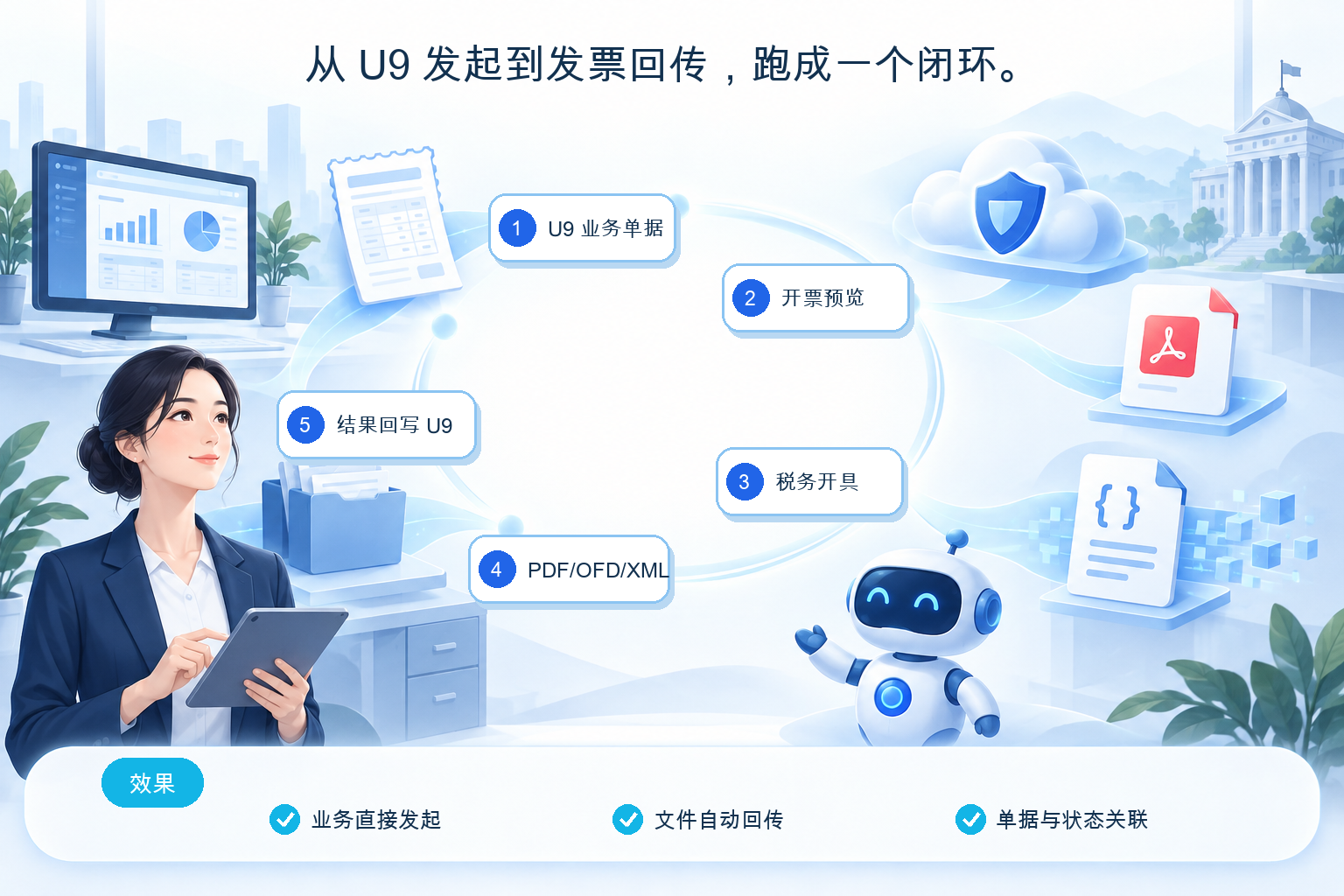
Around this core scenario, Kailing Technology built a tax invoice management platform for Zhongji United (Beijing) Technology Co., Ltd., connecting with Yonyou U9 to enable invoicing initiated from U9, automatic issuance on the tax side, and the return of PDF, OFD, and XML multi-format invoice files and invoicing status, so that invoices start from business documents and ultimately return to the business system.
▍1. Customer introduction: a leading manufacturer deeply engaged in aerial safety work equipment
Zhongji United focuses on aerial safety work equipment and intelligent safety systems, with products covering tower lifts, climb assist devices, fall protection systems and offshore platform cranes, serving wind power, construction, industry, fire protection, communications, power and other industries. According to public information on its official website, the company has more than 900 employees, more than 60 invention patents and more than 170 global certifications, exports products to more than 70 countries and regions, and has been recognized as a manufacturing single champion demonstration enterprise and a national-level specialized, refined, distinctive and innovative "little giant" enterprise.
A rich product portfolio and wide service coverage also mean sales invoicing must handle multiple entities, multiple scenarios and various delivery requirements. The core of this project is not simply moving existing invoicing actions online, but connecting Yonyou U9, the invoice management platform and tax issuance capabilities into a sustainably operating business chain.

▍2. Project background: the ERP has business data, but invoicing still needs the "last mile"
Yonyou U9 carries sales business and document data, but actually completing invoicing also involves data validation, invoice preview, tax issuance, e-invoice delivery, invoicing status write-back, and subsequent voiding, red-letter reversal, and statistics. If stable interfaces are lacking between systems, finance personnel often need to repeat operations across multiple screens: finding documents from the ERP, entering invoicing information, downloading invoice files, and then writing the results back to business records.
Such breaks not only increase the workload but also easily cause business documents and invoice status to be out of sync. Sales personnel cannot promptly confirm whether invoicing has been completed, finance personnel need to check repeatedly, and when subsequent business such as returns or discounts occurs, the original invoice relationship must be traced again. Therefore, the key goal of this project is to make U9 the entry point for business initiation, let the invoicing platform handle issuance and management, and automatically return results to U9.
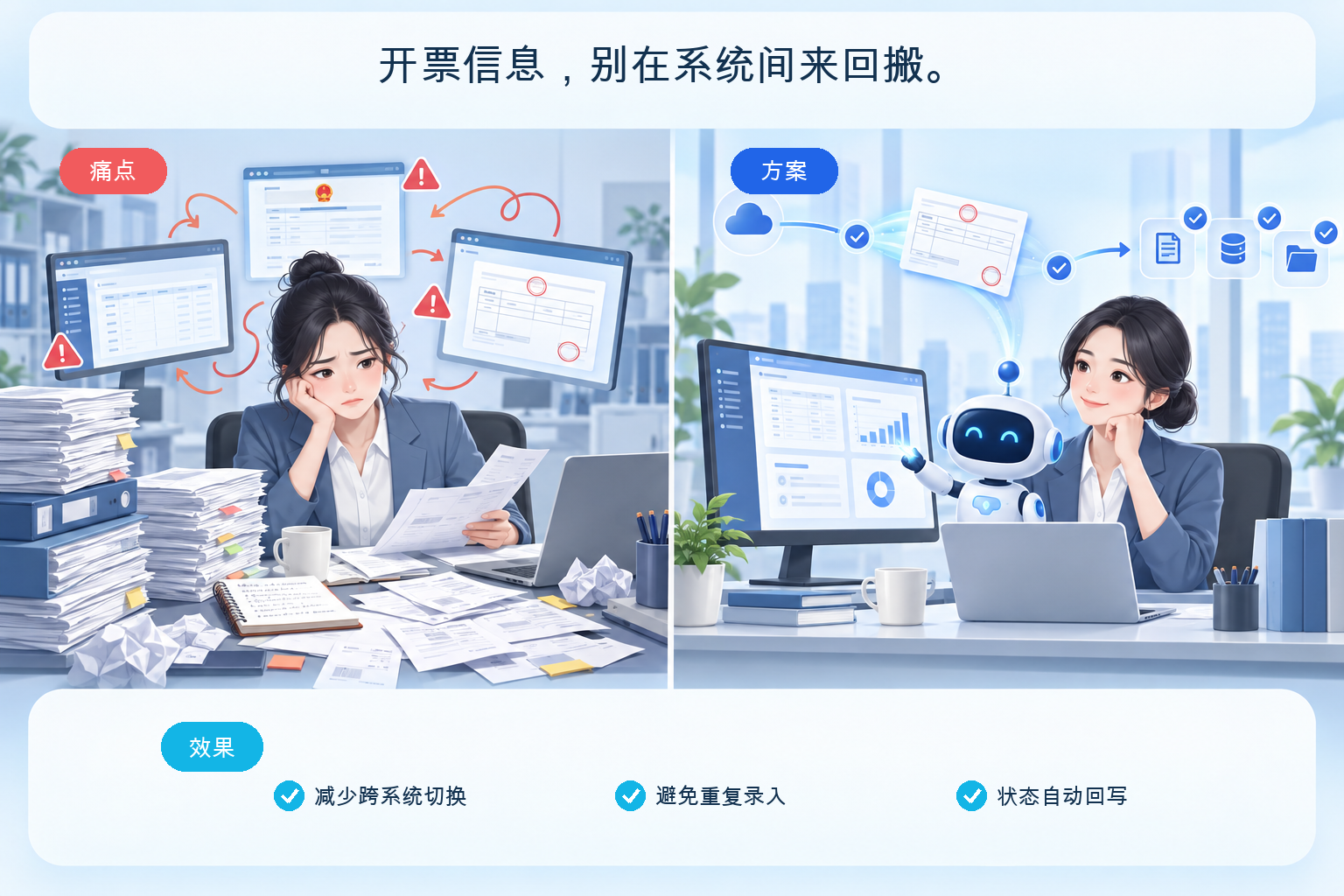
▍3. Solution: Yonyou U9 direct connection to the invoice platform and tax issuance capabilities
Based on the actual business of Zhongji United, Kailing Technology established an interface between UFIDA U9 and the LingShuiTong invoice information management platform, forming a complete chain of invoicing application, preview confirmation, tax issuance, document return, status synchronization, and subsequent management.
1. U9 automatically triggers invoicing, reducing duplicate entry across systems
Once a business document meets invoicing conditions, U9 automatically triggers an invoicing request and passes the required business information to the invoice platform. The platform handles subsequent validation and issuance, so finance staff no longer need to export, copy and re-enter the same data from U9. For scenarios requiring manual confirmation, key information can be checked through the invoice preview embedded in U9 before formal issuance.
2. Support both tax-control invoices and fully digitalized e-invoices, with unified issuance and delivery
The project scope also considers the automatic issuance requirements of tax-control invoices and fully digitalized e-invoices. Electronic invoices can be sent in batches after issuance; scenarios involving paper invoices can be handled with batch printing capabilities. Different invoice types and delivery methods enter the same management process uniformly, reducing switching between multiple entry points by business personnel.
3. Return in multiple formats (PDF, OFD, XML) to re-link invoices with business
After invoice issuance is completed, the platform writes the invoicing result back to U9 and returns PDF, OFD, and XML invoice files as required by the project. PDF and OFD are convenient for viewing, downloading, and business use, while XML can provide a data foundation for subsequent structured processing. Once the relevant files are linked to business documents, sales, finance, and subsequent management personnel can query invoices within the original business chain without having to search for and download them one by one in different systems.
4. Real-time status synchronization covering voiding, red-letter reversal and statistical management
In addition to forward invoicing, the solution also considers subsequent processing such as paper invoice voiding and general red-letter reversal, and returns relevant statuses to U9 in real time. The invoicing platform uniformly consolidates invoicing records and supports statistics by detail and summary, helping finance grasp invoicing situations under different tax numbers and different business documents, making invoicing, delivery, and subsequent processing statuses easier to track.
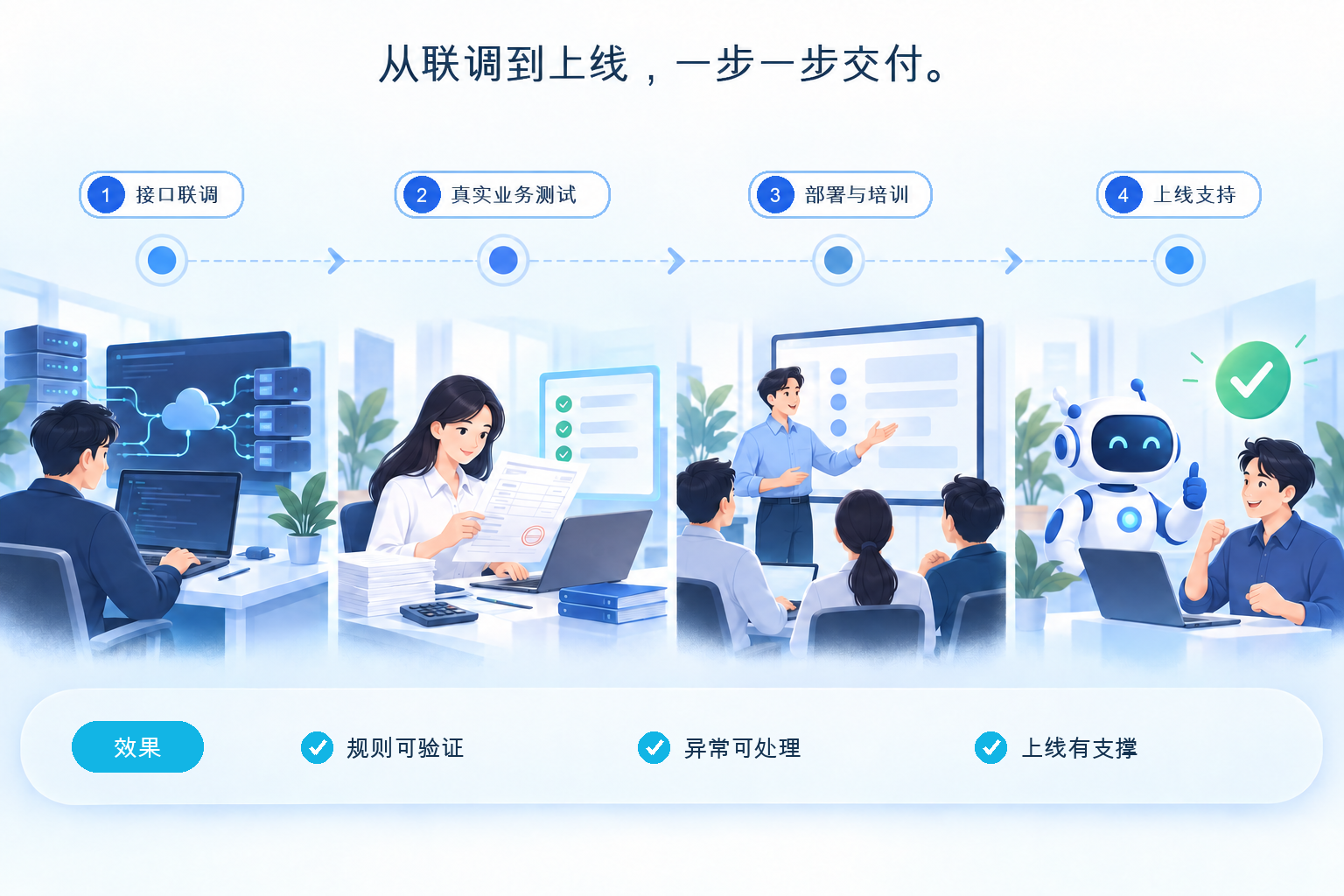
▍4. Project implementation: completing interface joint debugging and user testing around real business
The difficulty of an ERP direct connection project often lies not in a single interface, but in business rules, exception handling and system responsibility boundaries. Kailing Technology runs project management throughout implementation, conducts joint debugging around the U9 interface, and uses real business data for user testing to progressively verify the invoicing request, result write-back and subsequent processing chain.
During the deployment and implementation phase, the project simultaneously completes system configuration, user training, and go-live support, enabling finance and business personnel to use the new processes according to their existing responsibilities. For different access methods such as single-page integration or API integration, the approach is determined in conjunction with Zhongji United's existing U9 environment, ensuring that invoice capabilities enter the original business system rather than adding another isolated information entry point.
▍5. Project value: moving from "completing invoicing" to a business-finance-tax loop
Through this project, Zhongji United connects ERP business data, tax issuance, and invoice file management, forming a unified invoicing service capability for 3 tax numbers.
- Business side: Applications are initiated directly from U9 and results are received, reducing cross-system searching and duplicate entry.
- Finance portal: Invoicing, sending, printing, voiding, red-letter reversal, and statistics are managed in a unified chain, making the process clearer.
- Data side: PDF, OFD and XML files are linked to business documents, supporting both manual review and subsequent structured use.
- Management portal: Invoicing status is written back promptly, facilitating collaboration between sales and finance around the same result and laying the foundation for subsequent reconciliation, archiving, and business-finance-tax data applications.
For equipment manufacturing enterprises, automatic invoicing is not simply about pursuing "unmanned operation," but about putting rules upfront, writing results back, and keeping exceptions within processable workflows. Only when ERP, the invoice platform, and tax capabilities truly work together can invoicing transform from a finance action into a digital node connecting sales fulfillment, financial accounting, and tax management.
▍6. Conclusion
The Zhongji United tax invoice management platform project uses Yonyou U9 as the business entry point and the Kailing Technology Lingshuitong platform as the invoicing and management hub, enabling automatic invoicing, status write-back and PDF/OFD/XML invoice file return, closing the complete chain from business documents to tax issuance and back to the ERP.
This is also a typical path for manufacturing enterprises to advance business-finance-tax integration: without changing usage habits of core business systems, professional finance and tax capabilities are embedded into existing processes through interfaces, so that data travels more and personnel switch less, and every invoicing has a source, a result, and a record.
▍About Kailing Technology
As a national high-tech enterprise, Kailing Technology focuses on the digital and intelligent transformation of enterprise business-finance-tax and operations management, providing software products, system integration, implementation and delivery, and operational services for various government agencies, institutions, group enterprises, and SMEs.
The company has now formed ten core product lines, including: AI digital employee system, enterprise expense control management system, customer relationship management system, reverse invoicing management system, invoice issuance for individuals management system, electronic archives management system, tax fully digitalized e-invoice Leqi system, tax invoice management system, group tax filing system, and AI OCR recognition system. It is committed to connecting enterprise business, finance, tax, funds, and archive data to help customers improve operational efficiency, business-finance-tax compliance capabilities, and digital management levels.
Note: The customer introduction and customer images are sourced from public information on the official website of Zhongji United; the project functional scope is organized based on the project agreement and project materials provided by the user. The images are for case illustration only, and copyright belongs to the original rights holders.
As a comprehensive business-finance-tax digitalization solution service provider, Kailing Technology provides business-finance-tax management digital transformation products and operational services for various government agencies, institutions, and large, medium, and small enterprises. The product line includes: solutions for sales contract management system, procurement contract management system, fully digitalized Leqi interface project, automatic output invoicing system, reverse invoicing system, invoice issuance for individuals system, employee expense control and reimbursement system, input VAT invoice management system, supply chain collaborative reconciliation system, image AI OCR recognition system, automatic financial bookkeeping system, electronic accounting archives system, etc., comprehensively driving the digitalization process across various fields.
Consultation Hotline: 18513895936 / 010-60974119 Location: Beijing