
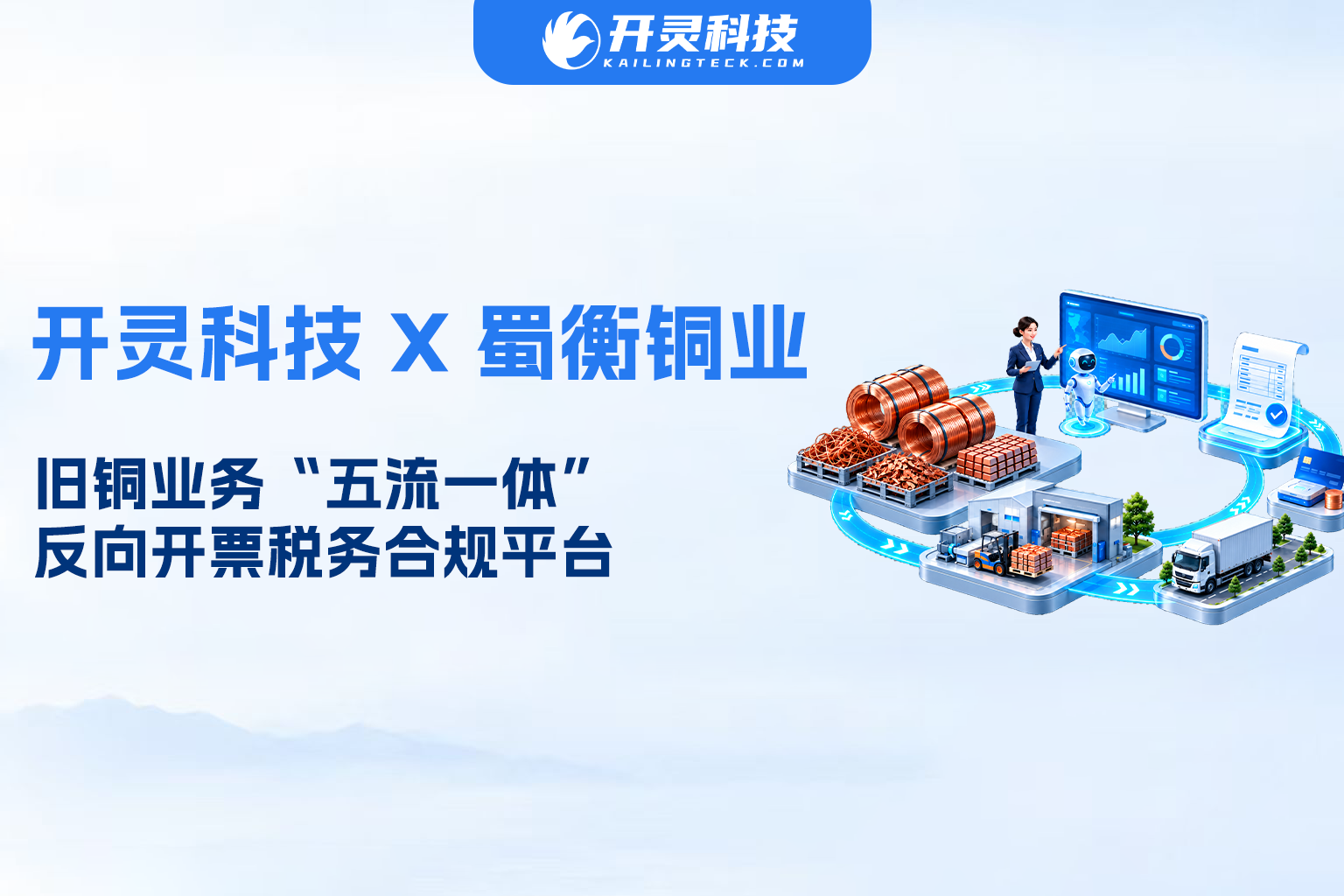
Kailing Technology, together with Industrial and Commercial Bank of China Chongqing Branch, launches the five-flows-in-one reverse invoicing tax compliance platform for Chongqing Shuzheng Copper's scrap copper business
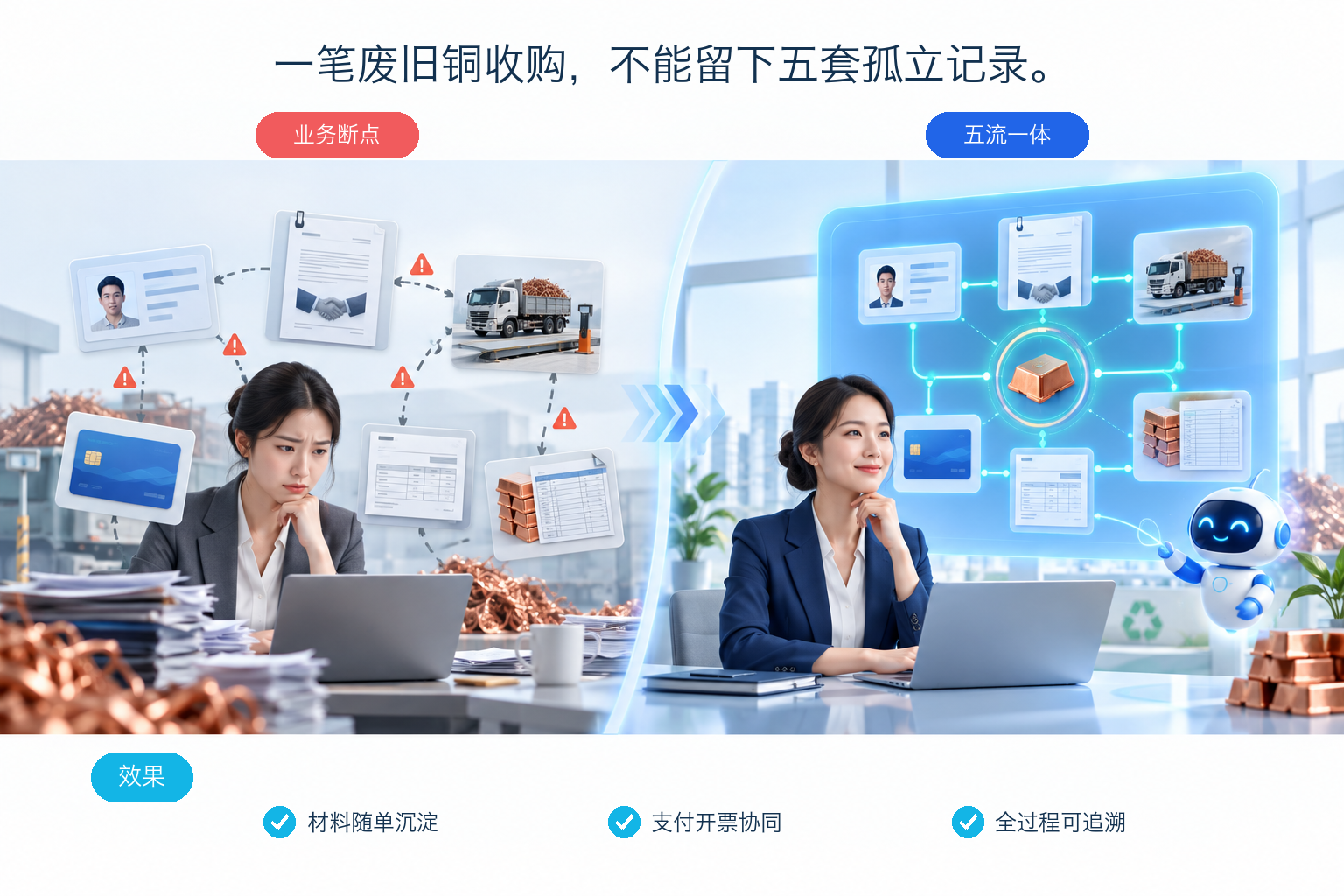
Scrap copper acquisition may look like a transaction of receiving goods, making payment, and issuing invoices, but when it truly comes to tax compliance, a series of questions must be answered: where the goods came from, who sold them, whether the contract is complete, whether vehicle and weighing records can be matched, how the settlement amount was formed, to whom the payment was made, what the invoice basis is, and whether the entire transaction can be traced back at any time. If any link is broken, proving the authenticity of the business becomes difficult.
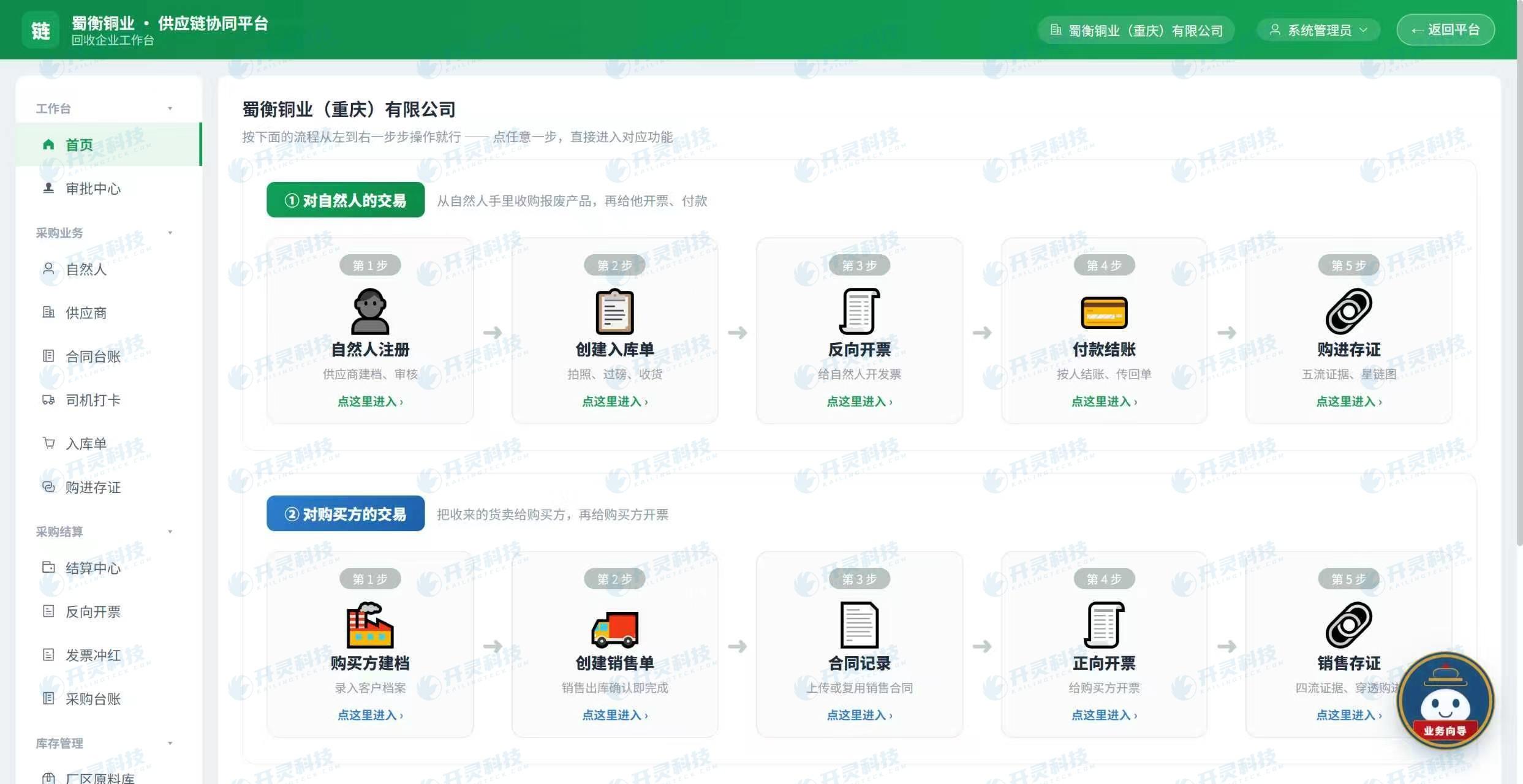
Around this scenario, Kailing Technology, together with Industrial and Commercial Bank of China Chongqing Branch, built and launched a resource recycling business management system for Shuheng Copper (Chongqing) Co., Ltd. The platform adopts private deployment and, with natural person scrap copper acquisition as the main line, connects suppliers and contracts, delivery and warehousing, approval and settlement, bank payment, reverse invoicing, inventory ledgers, and attachment evidence preservation, while also covering enterprise procurement, finished goods warehousing, finished goods sales, and internal transfers, forming a "five flows in one" tax compliance foundation for resource recycling business.

▍1. Policy and business background: reverse invoicing answers "where does the invoice come from", while authenticity materials answer "is the business valid"
Announcement No. 5 of 2024 of the State Taxation Administration clarifies that, starting from April 29, 2024, when natural person sellers of scrapped products sell scrapped products to resource recycling enterprises, eligible resource recycling enterprises may issue invoices to sellers in reverse. At the same time, the announcement also requires enterprises to retain materials that can prove the authenticity of the business, including acquisition contracts or agreements, transport invoices or vouchers, cargo weighbridge tickets, transfer payment records, etc., and to establish acquisition ledgers.
Therefore, reverse invoicing does not end once the invoice is issued. For scrap copper acquisition enterprises, what matters more is to make natural person identity, contracts, goods warehousing, measurement data, settlement, payment, invoices, and attachments form a corresponding relationship around the same transaction. Information previously scattered across paper materials, chat records, bank receipts, business spreadsheets, and invoicing systems needs to enter a unified, queryable, and traceable business chain.
▍2. Project goals: not only build a reverse invoicing channel, but also establish a resource recycling business management foundation
Shuheng Copper's existing business involves individual supply, enterprise supplier procurement, scrap material requisition, finished goods warehousing, finished goods sales, and internal finished goods transfers. The project requirements explicitly state that six types of business processes must complete document, status, approval, ledger, and query management within a unified platform; individual acquisitions and enterprise procurement follow "warehousing first, settlement later," with clear responsibility boundaries between inventory increase and final settlement price; and attachments such as contracts, weighbridge tickets, vehicle and cargo photos, invoices, and receipts are permanently preserved with the business.
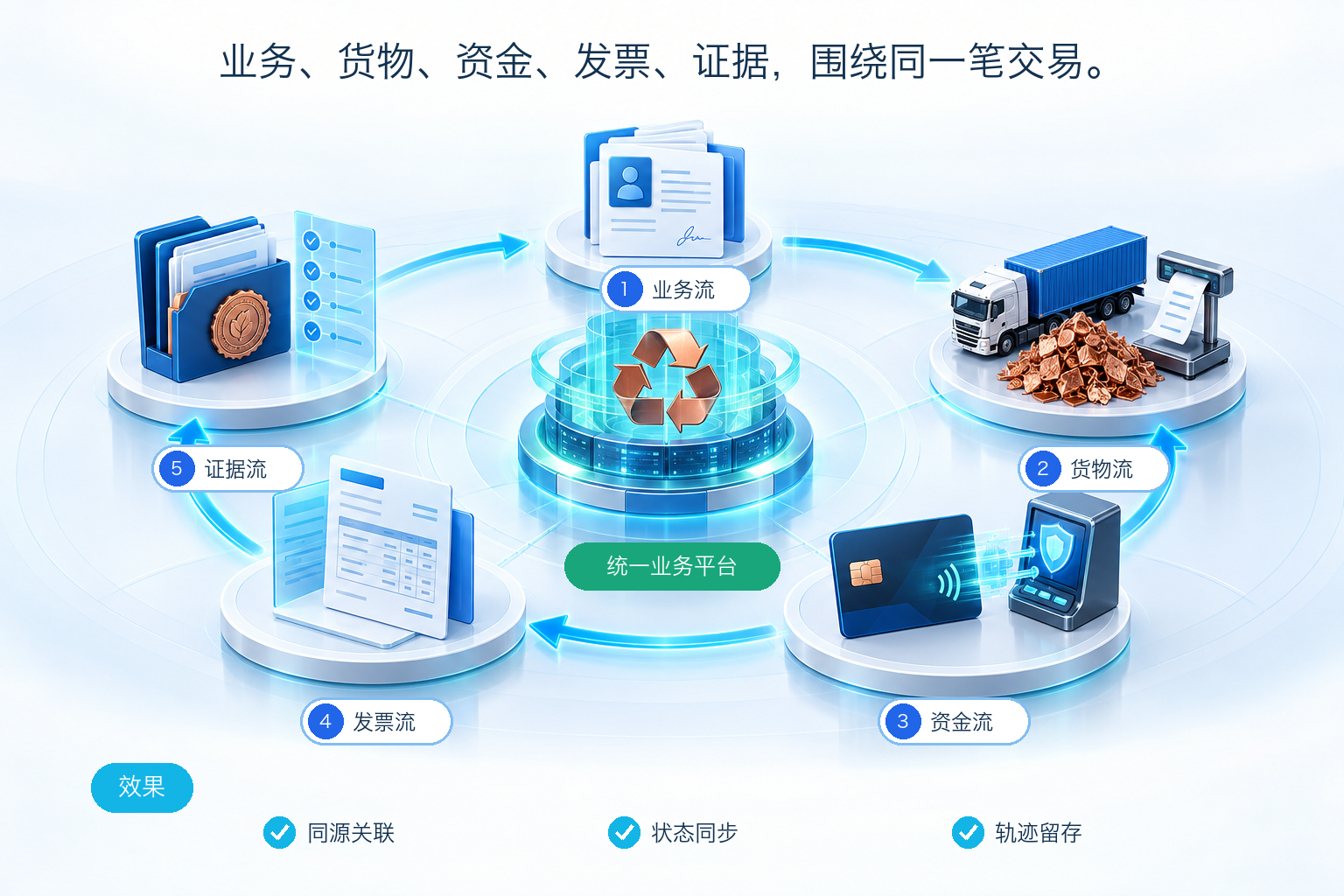
Based on this boundary, Kailing Technology concretely implements "five flows in one" as five types of linkable data:
- Business flow: Registration, contracts, warehousing, settlement, approval, and status flow for individual or enterprise suppliers.
- Goods flow: Driver, vehicle, delivery photos, front/rear vehicle photos, weighbridge tickets, units of measurement, and inventory transaction records.
- Fund flow: Settlement basis, payment status, bank payment results, and receipts.
- Invoice flow: Reverse invoicing for individuals, input VAT invoices for enterprise procurement, forward invoicing for sales, and invoice-payment status.
- Evidence flow: Declarations, contracts, identity documents, transport and weighbridge materials, receipts, invoices, approvals, and operation logs.
▍3. Core solution: running individual procurement, bank payment and reverse invoicing as one chain
1. Verify individuals before creating records to clarify the transaction party
The platform supports two methods: self-registration by individuals and registration on their behalf by enterprises. The system accumulates basic information such as name, ID number, mobile number, bank card, and address, and supports age control, identity information verification, facial verification, and SMS confirmation according to project rules. Only after individual profiles pass review may they sign contracts and participate in subsequent acquisition business, establishing from the source a profile of who is selling.
2. Contracts, delivery, weighing and warehousing are recorded with each order, making goods sources verifiable
After an individual signs the reverse invoicing declaration and the acquisition contract, the delivery and warehousing order is associated with the individual and the valid contract, recording actual warehousing data such as material, specification, unit of measure, gross weight, tare weight, and net weight, while also saving attachments such as driver, vehicle, cargo photos, front/rear vehicle photos, and weighbridge tickets. After the warehousing order passes the configured approval process, raw material inventory is increased and an inventory transaction record is generated.
3. One-to-one correspondence between warehousing and settlement, with locked quantities and justified prices
The project adopts the rule of one warehousing order corresponding to one settlement order, without merging or batching. The settlement order automatically brings out the individual, contract, material, specification, and warehousing quantity; the settlement quantity is fixed as the confirmed warehousing quantity, and price and amount are back-calculated from each other. After final confirmation, the settlement order is permanently locked, and both payment and invoicing are based on the confirmed settlement order, avoiding drift in standards among quantity, price, and invoice payment for the same batch of goods.
4. ICBC payment scenarios coordinate with reverse invoicing, returning invoice and payment status to business documents
The platform configures bank payment and reverse invoicing capabilities according to project requirements. In the ICBC pay-and-invoice scenario, invoicing can be triggered according to interface rules after successful payment; when using the tax invoicing channel, the invoice basis remains locked to the confirmed settlement statement. Individual orders thus link entity, contract, warehousing, settlement, payment, invoice, inventory, and attachments into a complete data chain.
5. Enterprise procurement, finished goods sales and internal transfers are all included in the inventory loop
In addition to individual acquisitions, the platform also manages enterprise supplier contracts and procurement warehousing, payment receipts, and input VAT invoices; on the finished product side, it manages production warehousing, sales contracts, shipping, accounts receivable settlement, receipts, and output VAT invoices, and maintains inventory continuity through requisition, lending, return, transfer requisition, and exception handling. Unified measurement unit conversion, inventory counting, and inventory adjustment rules further reduce differences in standards between business systems and finance and tax records.
▍4. Compliance capabilities: every invoice can be traced back to real business materials
1. Individuals onboard by scanning a code, with registration and review kept within the platform
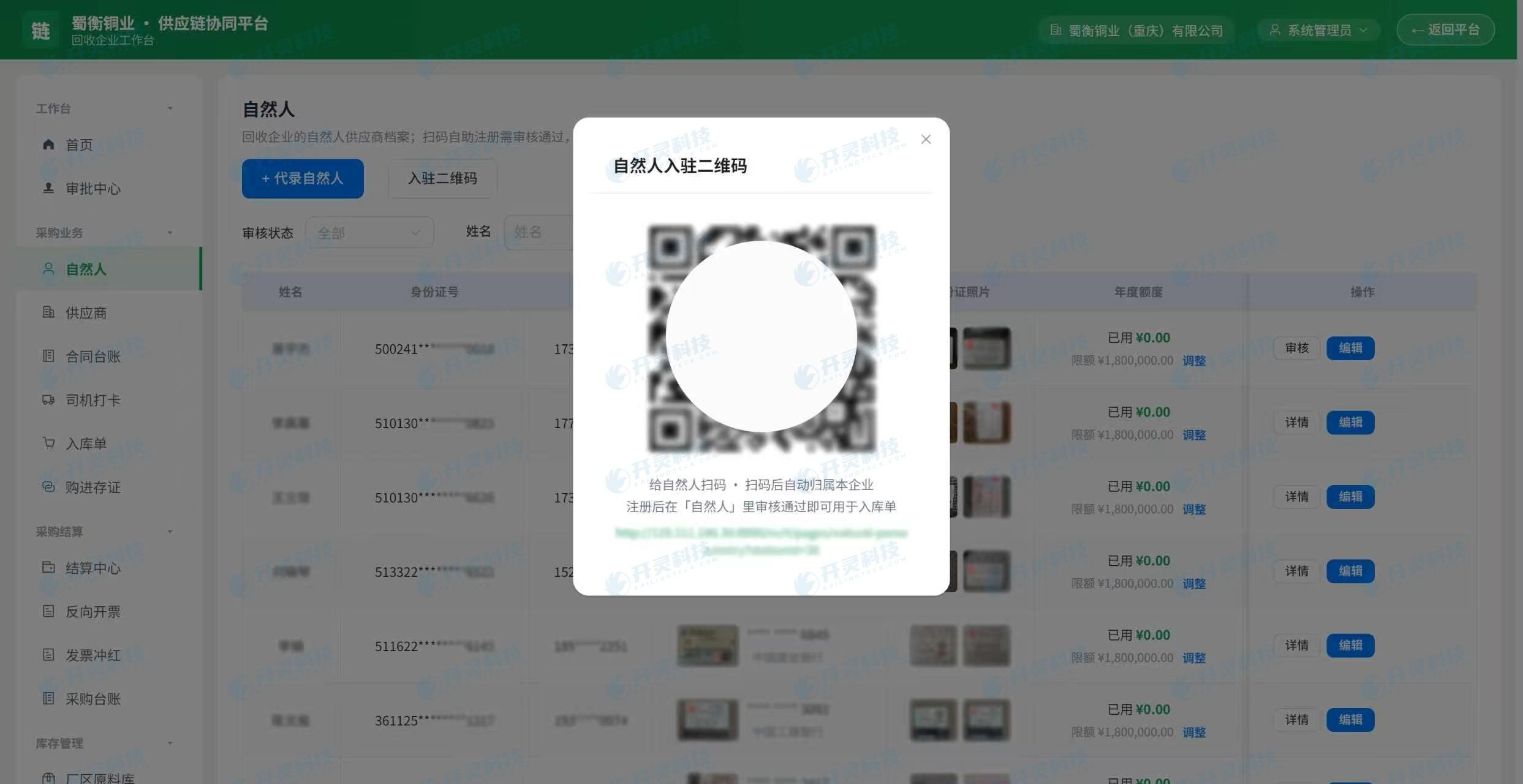
Individuals can enter the registration process via a dedicated QR code, and enterprises can also create records on their behalf based on actual business. Registration materials, review status, contract performance, annual transaction limits, and related business are managed under the same entity profile, facilitating operations for business personnel and providing a consistent entity basis for subsequent warehousing and reverse invoicing.
2. Full audit trail for approval, modification and voiding
The system supports configuring approval nodes by department, role, or designated personnel. Changes to key fields require re-approval; settlement statements cannot be directly modified after confirmation; voiding, rejection, resubmission, inventory adjustment, and exception handling all retain reasons and records. The approval trail simultaneously records process version, node sequence, handler, action taken, comments, and time, helping enterprises trace from results back to processes.
3. Attachments permanently linked; interface failures do not overwrite business facts
Attachments such as contracts, declarations, identity documents, vehicle documents, driver information, cargo photos, weighbridge tickets, invoices, receipts, inventory count sheets, and exception explanations are bound to specific business documents, retaining the uploader and time. Interface calls use a duplicate-prevention mechanism, and failure reasons, request times, and retry records are retained, so that already-formed business states are not disrupted by temporary unavailability of external interfaces.
4. Permissions, data masking and auditing jointly protect business data
The platform assigns permissions by department and role for adding, modifying, viewing, submitting for approval, approving, voiding, stocktaking, inventory adjustment, and exporting; sensitive fields such as ID numbers, bank cards, and mobile numbers are displayed according to permissions and masked in ordinary queries. Logins, configuration changes, document operations, approvals, and interface imports all enter audit records, balancing business usability and data security.
▍5. Implementation and delivery: private deployment, verified item by item around real business
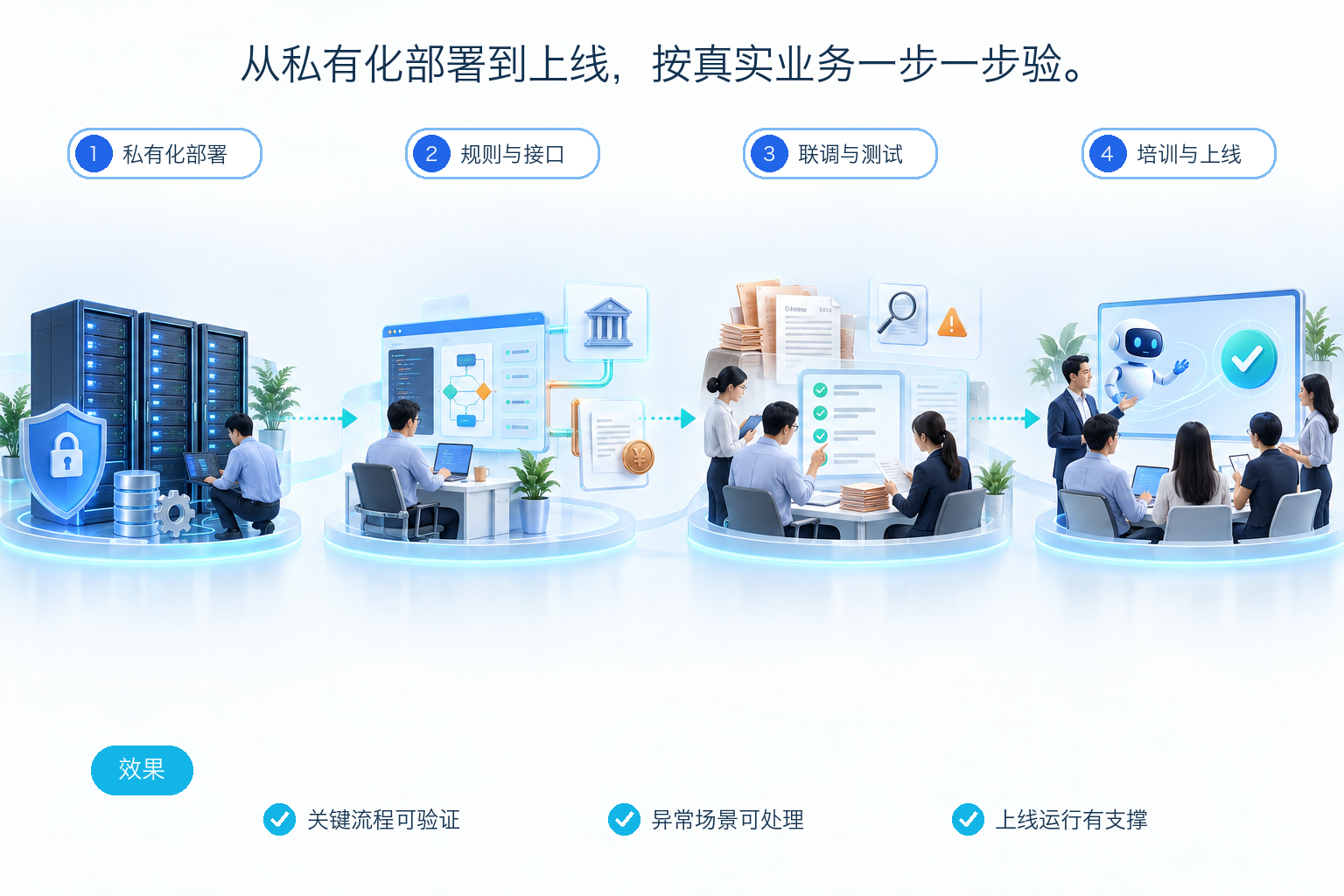
Resource recycling projects involve business, finance, tax, inventory, and bank interfaces. The implementation focus is not simply installing software, but embedding rules into every document status and exception scenario. Based on private deployment, Kailing Technology sequentially completes environment and permission configuration, master data and approval template setup, bank and invoicing interface integration testing, real business testing, training, and go-live support.
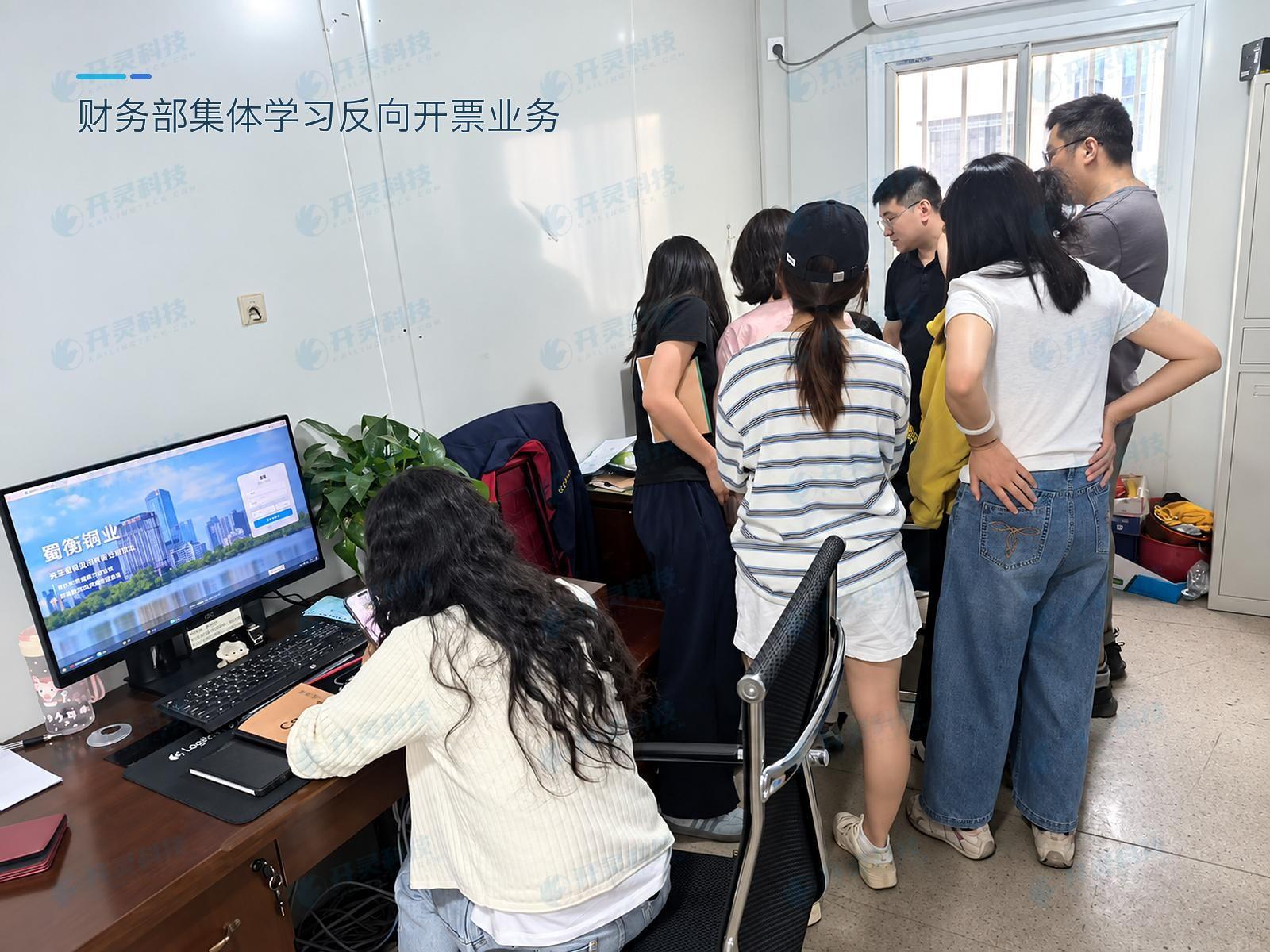
The testing covers scenarios such as individual registration and review, contract association, delivery and warehousing, inventory increase, settlement locking, payment and reverse invoicing, as well as interface failures, duplicate invoices, insufficient inventory, approval rejection, settlement errors, overdue transfers, and damage or loss. After verification through real operations, the new processes will be handed over to business, warehouse, procurement, sales, and finance personnel for use.
▍6. Project value: moving from "able to invoice" to "authentic business, consistent invoice and payment, traceable process"
With the launch of the resource recycling business management system, Shuheng Copper integrates individual waste copper acquisitions, enterprise procurement, inventory, sales, and internal transfers into unified management, and connects key invoicing and payment stages through ICBC payment scenarios and reverse invoicing capabilities. The value brought by the platform is not adding another system, but returning originally dispersed business evidence to the same transaction chain.
- Business staff: Complete filing, contracts, warehousing, settlement, and queries at one entry point, reducing repeated transmission of materials.
- Warehouse keeper: Inbound, outbound, stocktaking, adjustments and transfers all generate inventory records, making sources and destinations clearer.
- Finance personnel: Settlement, payment, receipts, and invoices collaborate around the same document, reducing the risk of invoices and payments being disconnected from business.
- Management personnel: Restore the business process through approval trails, attachments, and operation logs, so exception handling has records to check.
- Tax compliance: Continuously accumulate contracts, transport, weighbridge, transfer, invoice, and ledger materials to provide systematic support for proving business authenticity.
For scrap steel, scrap copper, scrap aluminum, and other renewable resource enterprises, this is also a replicable path for digital reverse invoicing construction: starting from real transactions, with inventory and settlement as the skeleton, payment and invoicing as key nodes, and attachments and auditing as evidence, upgrading "invoicing compliance" from a single action into a continuously operating business mechanism.
Kailing Technology, together with Industrial and Commercial Bank of China Chongqing Branch, launched the five-flows-in-one reverse invoicing tax compliance platform for Shuzheng Copper, which has already connected individual acquisition, goods warehousing, approval and settlement, bank payment, reverse invoicing, and purchase evidence retention, and extended to enterprise procurement, finished product sales, and inventory management.
When every scrap copper transaction can be matched to the corresponding entity, contract, goods, amount, payment, invoice, and evidence, reverse invoicing is no longer an isolated financial operation but becomes a common entry point for resource recycling enterprises to standardize business, achieve tax compliance, and digitalize management.
▍About Kailing Technology
As a national high-tech enterprise, Kailing Technology focuses on the digital and intelligent transformation of enterprise business-finance-tax and operations management, providing software products, system integration, implementation and delivery, and operational services for various government agencies, institutions, group enterprises, and SMEs.
The company has now formed ten core product lines, including: AI digital employee system, enterprise expense control management system, customer relationship management system, reverse invoicing management system, invoice issuance for individuals management system, electronic archives management system, tax fully digitalized e-invoice Leqi system, tax invoice management system, group tax filing system, and AI OCR recognition system. It is committed to connecting enterprise business, finance, tax, funds, and archive data to help customers improve operational efficiency, business-finance-tax compliance capabilities, and digital management levels.
Note: Some images in this article are sourced from screenshots of the Shuheng Copper system and on-site photos; the project functional scope is organized based on the project agreement and project materials provided by the user. The images and text are for case illustration only, and copyright belongs to the original rights holders.
As a comprehensive business-finance-tax digitalization solution service provider, Kailing Technology provides business-finance-tax management digital transformation products and operational services for various government agencies, institutions, and large, medium, and small enterprises. The product line includes: solutions for sales contract management system, procurement contract management system, fully digitalized Leqi interface project, automatic output invoicing system, reverse invoicing system, invoice issuance for individuals system, employee expense control and reimbursement system, input VAT invoice management system, supply chain collaborative reconciliation system, image AI OCR recognition system, automatic financial bookkeeping system, electronic accounting archives system, etc., comprehensively driving the digitalization process across various fields.
Consultation Hotline: 18513895936 / 010-60974119 Location: Beijing