
How to recognize multilingual overseas receipts with varying formats? Kailing Technology's overseas receipt OCR recognition system extracts key fields and connects to the reimbursement process

A Korean taxi receipt, a Japanese hotel document, and a Mexican government receipt may each have language, date, amount, and payment method written in different positions. Employees manually translate and then fill out reimbursement forms, but finance still has to go back to the original image to check. The construction focus of Kailing Technology's overseas invoice OCR recognition system is to first classify invoice types, extract the fields actually needed for reimbursement, and hand over the original image, recognized values, and manual corrections together to the expense process. Existing sample tests can demonstrate the feasibility of some invoice types, but cannot replace full-language acceptance.

▍First break "invoice recognition" into classification, data extraction, and verification
Overseas receipts do not have unified fields and source file structures like China's fully digitalized e-invoices. Taxi tickets, restaurant receipts, and hotel invoices in the same country may also have different layouts; phone screenshots add blur, cropping, glare, and multiple languages. Before recognition, first determine which fields reimbursement needs: merchant, date, currency, tax-inclusive amount, tax or service fee, payment method, and trip or accommodation information, then choose the extraction method by receipt type. Without a list of business fields, even recognizing more text will be hard to put into approval.
Kailing Technology's overseas receipt sample test materials use a general Invoice model together with custom models for special receipt types. Korean taxi receipts in Korean and Singaporean bilingual Chinese-English ride-hailing screenshots are recognized through scenario-trained models, while some English hotel, dining, and Mexican Spanish receipts are tested with the general model. The materials report extraction results on specific samples and note that Arabic receipts are not yet supported; this cannot be generalized to mean that all French, Russian, Japanese, and other receipts are already reliably recognized.
Classification routing must retain "unknown invoice type." If an image is mistakenly judged as a hotel invoice, the system may read the room number as the invoice number and the deposit as the actual paid amount. Low confidence, missing fields, unbalanced amount totals, or multiple invoices photographed together should enter the manual review queue, and the original files should be retained. The reasons for recognition failure are themselves the basis for subsequently expanding samples and training models.
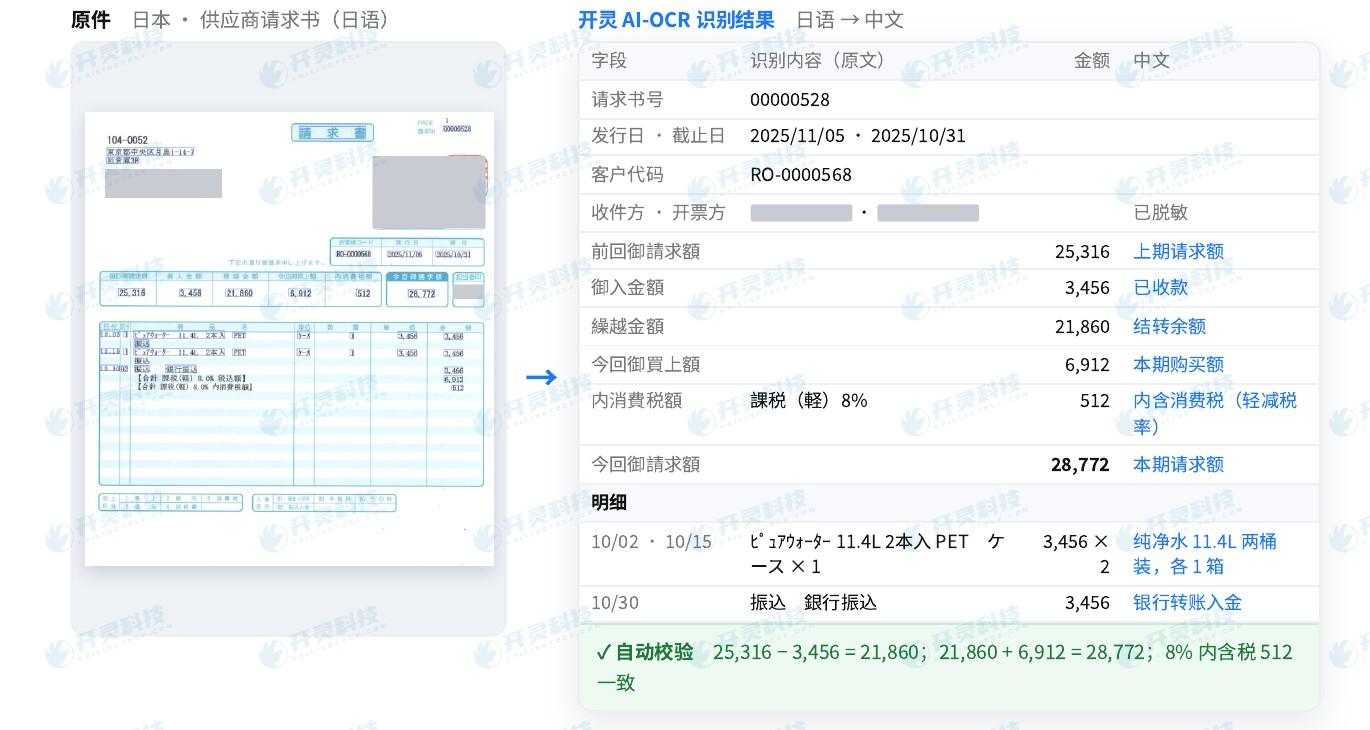
▍Unify multilingual fields while still retaining the original text and currency
Different invoices may write the merchant, tax type, and date in local languages; the system can output unified field names but must not erase the original text. It is recommended that each key field retain the recognized original text, normalized result, source location, and manual modification traces at the same time. Currency should be returned as an international currency code to avoid confusion caused by writing only "yuan" or "$"; exchange rate conversion should determine the date and exchange rate source according to the enterprise's financial system, and OCR itself is only responsible for reading the original invoice amount and currency.
Dates are especially easy to misread: the year-month-day order, local time zone, accommodation start and end dates, and invoice date may differ. If a reimbursement form accepts only one "date," finance finds it hard to determine the period to which the expense belongs. Transaction date, document date, and travel date should be mapped separately, and fields that cannot be determined should be marked as pending verification. For fields that require checking the original text, such as merchant name or tax ID, the document location can be displayed for manual comparison.
Seals, signatures, and tax formats cannot be replaced by OCR character recognition results. The sample materials include tests on some domestic seal information and also point out that seal numbers, shapes, and other aspects require further training; overseas invoice types are more dispersed. The system can indicate whether the invoice face has relevant marks, but the authenticity, reimbursability, and tax treatment of invoices are still judged by enterprises according to systems and local materials.
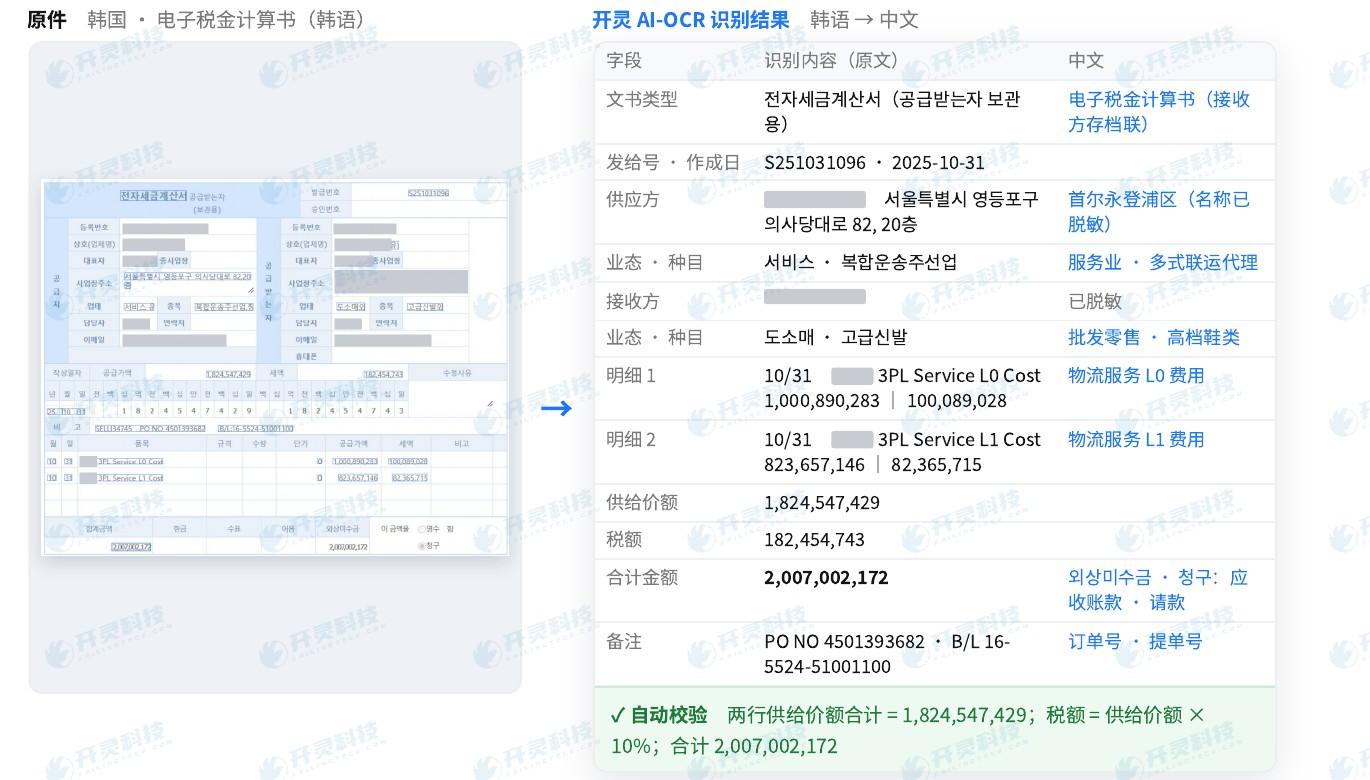
▍When connecting to the reimbursement process, structured fields must return to the original image
Recognition results should not be exported only as an Excel sheet. The interface should at least transmit the receipt's unique number, original image or source file location, receipt type, language, merchant, date, amount, currency, verification status, and manual correction records. The reimbursement system attaches the receipt to the expense item, and the employee submits it after checking; the reviewer can open the original image from the reimbursement form and see which fields were automatically recognized and which were modified by a person. In this way, even if the model is retrained, historical reimbursements can still be explained based on the evidence at that time.
Integration must also handle cases such as one image containing multiple receipts, the same receipt uploaded repeatedly, refunds or reversals, and both photo and PDF inputs. For multi-page hotel bills, the total may need to be extracted while retaining detail pages; for ride-hailing screenshots, the displayed order amount must be distinguished from the actual paid amount. When the interface returns a failure, employees must not mistakenly believe the receipt has entered the reimbursement process; a pending status and a retry entry point should be shown.
Kailing Technology's overseas receipt OCR recognition system can serve as a front-end collection capability for expense control and reimbursement, but the specific integration depth with the enterprise's existing expense system, language scope, receipt type list, and accuracy must be tested based on desensitized samples provided by the enterprise. The more the samples cover real low-quality photos and special formats, the more reliable the implementation judgment.
▍During acceptance, group by invoice type and anomaly rather than reporting only one overall accuracy rate
It is recommended to separately measure receipt classification accuracy, key field hit rate, currency and amount consistency rate, manual correction rate, and unprocessable ratio; then group by country or region, language, receipt type, and photo quality. A single overall accuracy rate would mask the fact that "hotel receipts are very accurate while taxi receipts often err." For reimbursement business, errors in amount, currency, and date carry greater risk than differences in merchant short names, so different review thresholds should be set.
Acceptance samples should include both previously seen layouts and new supplier layouts; do not use only receipts seen during training. After manual correction, decide whether to enter model optimization, to avoid treating error corrections directly as ground truth. The recognition and interface solution provided by Kailing Technology should ultimately be evaluated by whether reimbursement staff refill less, reviewers can verify original images, and exception forms are traceable, not by the effect of one display image on all overseas receipts.
▍FAQ
Q: Can reimbursement be made directly after OCR extracts the amount?
A: The original image should be retained, and employees and reviewers should check the currency, date, business items, and policy requirements.
Q: Will currencies be automatically converted to RMB?
A: The recognition solution can standardize the output of currency codes; the conversion date and exchange rate source should be separately determined by the enterprise's financial rules.
Q: What should be done if recognition of a new invoice format fails?
A: It enters manual review, the failure reason and correction result are recorded, and then whether to expand the custom model is evaluated.
Make overseas invoice fields extractable and original images verifiable. Learn about Kailing Technology overseas invoice OCR recognition solution: https://www.kailingteck.com/ai-ocr/ .
As a national high-tech enterprise, Kailing Technology focuses on the digital and intelligent transformation of enterprise business-finance-tax and operations management, providing software products, system integration, implementation and delivery, and operational services for various government agencies, institutions, group enterprises, and SMEs.
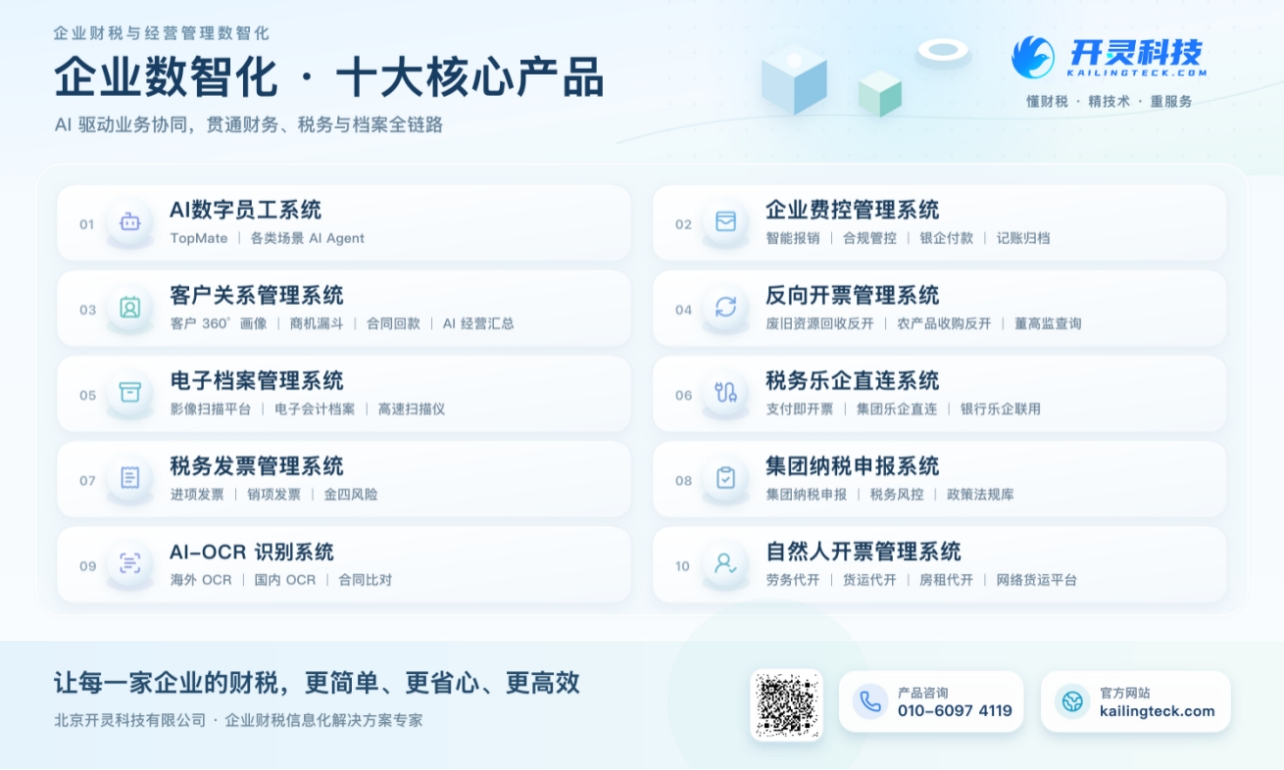
The company has now formed ten core product lines, including: AI digital employee system, enterprise expense control management system, customer relationship management system, reverse invoicing management system, invoice issuance for individuals management system, electronic archives management system, tax fully digitalized e-invoice Leqi system, tax invoice management system, group tax filing system, and AI OCR recognition system. It is committed to connecting enterprise business, finance, tax, funds, and archive data to help customers improve operational efficiency, business-finance-tax compliance capabilities, and digital management levels.
If you have any business-finance-tax digital transformation needs, welcome to contact us. Beijing Kailing Technology will serve you wholeheartedly.
Keywords: Kailing Technology overseas receipts OCR, multilingual receipt recognition, international receipt recognition, overseas reimbursement, receipt field extraction
As a comprehensive business-finance-tax digitalization solution service provider, Kailing Technology provides business-finance-tax management digital transformation products and operational services for various government agencies, institutions, and large, medium, and small enterprises. The product line includes: solutions for sales contract management system, procurement contract management system, fully digitalized Leqi interface project, automatic output invoicing system, reverse invoicing system, invoice issuance for individuals system, employee expense control and reimbursement system, input VAT invoice management system, supply chain collaborative reconciliation system, image AI OCR recognition system, automatic financial bookkeeping system, electronic accounting archives system, etc., comprehensively driving the digitalization process across various fields.
Consultation Hotline: 18513895936 / 010-60974119 Location: Beijing